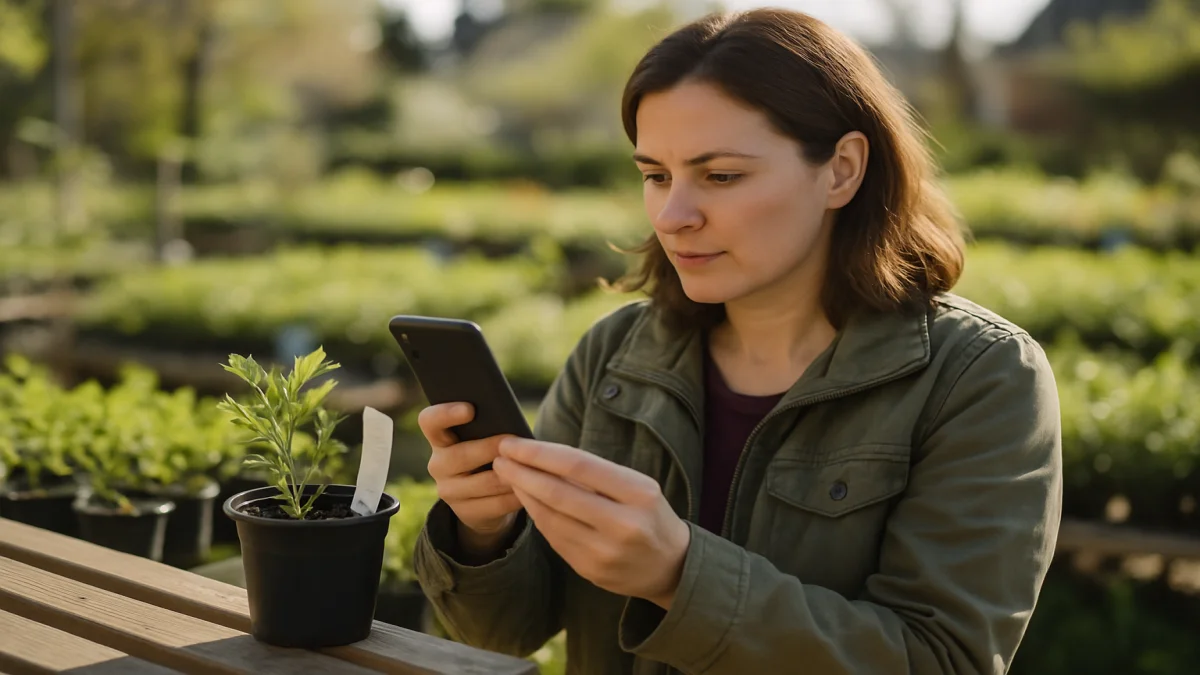
I’ve heard from many gardeners who have regretted their decisions. One described how a plant they bought 25 years ago, labeled ‘native,’ ended up becoming an invasive nightmare. This experience illustrates how essential it is to verify plant labels to avoid costly mistakes down the road.
This guide walks you through the exact steps to verify whether a plant is truly native to your county before you spend a dime. It is built around three free public databases (BONAP, USDA PLANTS, and iNaturalist), a 90-second county-map check anyone can learn, and the specific cultivar-spotting tricks that even seasoned native gardeners miss. By the end you will have a personal “approved list” you can build in one afternoon and reuse every spring.
The Wisteria Mistake: A Mislabeled Plant Can Run Your Yard for 25 Years
Ask anyone who has tried to remove mature Asian wisteria, English ivy, or running bamboo from a quarter-acre suburban lot how that project went. The answer is rarely a sentence. It is usually a sigh, a date in the past tense, and a number. Most often the number of summers spent fighting roots that travel under fences and resprout from fragments the size of a thumbnail.
FREE: Wildlife Garden Starter Guide
Get our 12-page PDF with the 25 best plants for pollinators, simple habitat tips, and a printable checklist — all 100% free.
No spam. Read our Privacy Policy.What’s particularly disheartening is that most gardeners don’t intend to create destructive environments. Many simply trust the labels they see in garden centers. It’s frustrating to think that some sellers continue to offer invasive species, leaving first-time gardeners unaware of the risks.
The cost of that single mistake is rarely small. Native landscapers in the Mid-Atlantic routinely quote $4,000 to $9,000 for professional removal of established Asian wisteria from a residential lot. That is before replacement plants, mulch, and the two or three seasons of follow-up monitoring needed to catch resprouts. It is, in the most literal sense, a decade of yard work bought for the price of a $14 nursery pot.
Why “Native” Has No Legal Meaning on a Plant Tag in 2026
Here is the part that surprises most homeowners: there is no federal law in the United States that defines what “native” can mean on a plant tag. Unlike “organic” (which is regulated by USDA) or “non-GMO” (which has third-party verifiers), the word “native” is unregulated marketing copy. A nursery in Florida can label a Japanese knotweed as “native to North America” and the only consequence is a one-star Google review.
This loophole gets exploited in three predictable ways. First, regional ambiguity: a tag will claim “native” because the plant is native to somewhere on the continent, even if it has never grown wild within 1,500 miles of your county. Second, taxonomic substitution: a familiar common name like “honeysuckle” or “wisteria” gets attached to a non-native species because the buyer is unlikely to demand the Latin binomial. Third, sheer carelessness. Staff who do not know the difference and managers who never asked.
The seed-mix aisle is even rougher. House Digest’s reporting on big-box wildflower packets found mixes that were 1.83% pure seed and 98.15% filler. Meaning the entire promised meadow was less than two cents on the dollar real plant material, and the rest was sterile chaff or, worse, generic “wildflower” species that thrive anywhere on the planet. A 2023 KITV investigation in Honolulu documented an Oahu big-box store selling an outright invasive labeled as a Hawaiian native. That story is not unique. It is just the one that made the news.
The take-home is blunt: in 2026, “native” on a plant tag is a vibe, not a fact. Verification has to live with the buyer.
The Common Name Trap That Fools Even Veteran Gardeners
The single biggest source of native-plant mistakes is not malicious. It is two plants sharing a common name and one of them being invasive. Common names overlap across hemispheres in ways the casual shopper has no way to anticipate.
Three examples that show up in suburban yards every spring:
- Honeysuckle. “Honeysuckle” can refer to Lonicera sempervirens (coral honeysuckle, a hummingbird magnet native to the eastern U.S.) or to Lonicera japonica (Japanese honeysuckle, a top-tier invasive that smothers entire woodland edges). Both get sold as “honeysuckle” in unmarked pots.
- Bittersweet. American bittersweet (Celastrus scandens) is a native vine that fits in a small yard. Oriental bittersweet (Celastrus orbiculatus) is on every Northeast invasive watchlist and can pull down a mature oak. They look nearly identical at the nursery stage.
- Columbine. Eastern red columbine (Aquilegia canadensis) and European columbine (Aquilegia vulgaris) get sold side by side, often on the same rack, with the European species naturalizing aggressively in cooler climates.
If you only ever read the common name on the tag, you have a coin-flip chance with these pairs. If you read the Latin binomial, the question is settled in the next ninety seconds. That is the whole point of step one.
Step One: Convert Every Common Name to a Latin Name Before You Open Your Wallet
The first move on any plant you are considering. Whether you are standing in front of it at a big-box store, scrolling an online nursery, or evaluating a free curbside division. Is to find the scientific name. Two words, italicized, genus and species. If the tag does not list it, ask. If the website does not list it, leave the tab. If the seller cannot produce it within five minutes, the answer is no.
This is not pedantry. The Latin name is the only string of characters that means the same thing to a botanist in Texas, a database in Maryland, and a forum in Oregon. Common names are local nicknames; Latin names are passports.
For shopping in person, three habits make this almost frictionless:
- Photograph every tag before you put a plant in the cart. Most people skim the tag, set it back, and forget. A photo lets you verify back at home and return what does not check out.
- Ignore everything in single quotes. A name like Echinacea purpurea ‘White Swan’ tells you the species is right (E. purpurea) but the part in quotes is a cultivar. More on this in Step Three.
- Watch for “x” or “×” between two words. An x in the middle of the name (e.g., Heuchera × brizoides) means it is a hybrid, often a horticultural cross that was never part of any wild ecosystem.
Online, a quick rule: if a product page leads with the common name in 32-point font and only mentions the Latin name in the third paragraph, the seller is not optimizing for buyers who care about ecology. That alone is not disqualifying, but it is a signal to slow down and verify.
Step Two: Use BONAP NAPA to Confirm a County-Level Match in 90 Seconds
Once you have the Latin name, the verification itself takes less time than checking out at a grocery store. The tool is the Biota of North America Program’s North American Plant Atlas. Bonap.net/napa. And it is the most accurate county-level plant range map available to the public. It is free, it does not require an account, and it has been quietly maintained by botanists for decades.
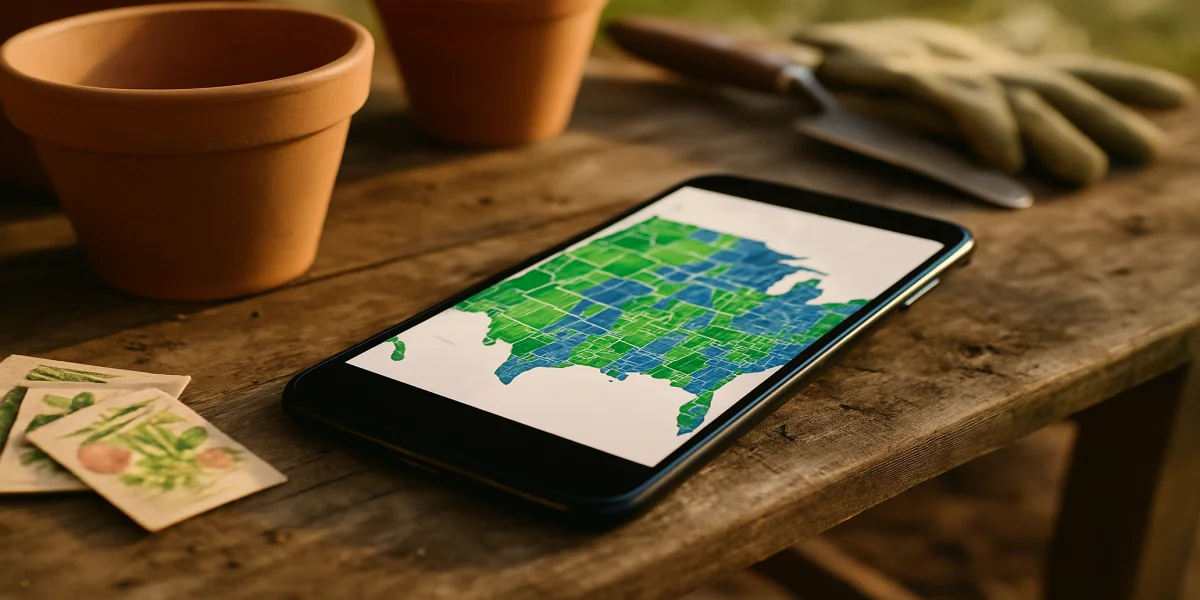
The 90-second routine:
- Open bonap.net/napa in any browser.
- Type the genus, hit enter, and click the species you want.
- You will see a U.S. map color-coded by county.
- Read the legend: dark green means the species is native to that state. Bright (county-level) green means it has been recorded as native in that exact county. Yellow means rare. Light blue means present-but-not-native (introduced or naturalized) in that county. Dark blue means introduced at the state level.
- Find your county. If it is bright green, you have a verified native match for your area. If it is light blue, the plant exists in your county but is not historically part of your local ecosystem. If it is white, no record either way.
That last distinction matters. A “white” county is not necessarily a no. It might just mean no one has formally documented the plant there yet. That is your cue to cross-check on the USDA PLANTS Database (plants.usda.gov), which has its own distribution records. USDA PLANTS is easier to navigate but is updated less aggressively than BONAP, so a fresh BONAP read usually wins ties.
For the truly cautious. Meaning anyone who has lived through one wisteria removal. A third confirmation step is to search the species on iNaturalist and filter for research-grade observations within 50 miles of your zip code. iNaturalist will not tell you whether a plant is native, but it will tell you whether real botanists in your region have logged it growing wild. A species with twenty research-grade observations in your county is almost certainly part of the local landscape; a species with zero may be a horticultural import that never escaped a garden bed.
Save a screenshot of the BONAP result on your phone, in a folder titled by your county. Doing this once per species means you never repeat the lookup; over a single spring you will accumulate a personal “approved list” you can scroll past at the register.
Step Three: Spot the Cultivar Tells (Single Quotes, Trademark Symbols, Patent Numbers)
Even when a plant passes the county check, one more layer matters: cultivar versus straight species. The shorthand:
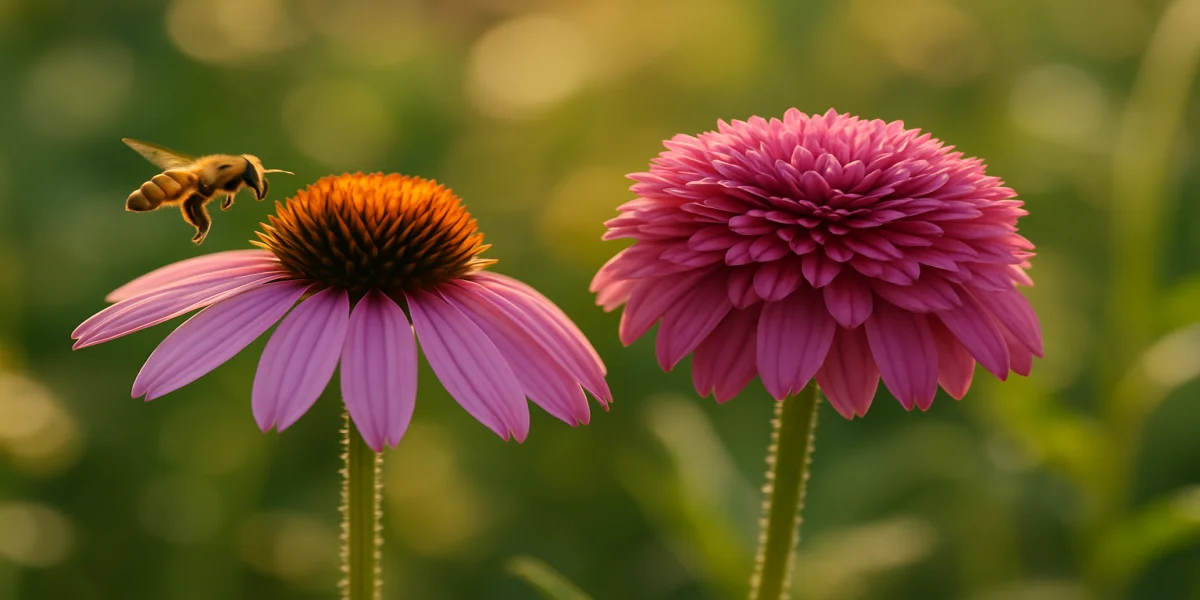
- Straight species. The wild form, exactly as it would appear in a meadow with no human selection. Tag reads only the genus and species (e.g., Asclepias tuberosa).
- Cultivar. A selected variant with a specific human-chosen trait (color, height, leaf pattern). Tag reads the genus and species plus a name in single quotes (e.g., Asclepias tuberosa ‘Hello Yellow’).
- Trademarked or patented variety. Same idea as a cultivar, but with a ™, ®, or “PP” plant patent number on the tag.
Why this matters for your yard: cultivars can have altered flower shapes, sterile pollen, double-flowered structures that bees cannot navigate, or leaf colors that no longer feed native caterpillars. A widely cited Mt. Cuba Center research project on echinacea cultivars found that some commercial cultivars hosted dramatically fewer pollinator visits than their straight-species cousins; in some trials, the showiest “designer” cultivars saw near-zero pollinator activity even when planted side-by-side with the unbred species. The Xerces Society’s published guidance is to default to straight species whenever you can buy them, and to treat cultivars as ornamental. Not ecological. Purchases.
This does not mean every cultivar is a waste. A cultivar of a true county-native species is still a long step better than a non-native ornamental. The order of preference, from highest to lowest ecological value, is:
- Straight species, county-native (best. Your wildlife evolved with it).
- Cultivar of a county-native species (acceptable, especially if it visibly preserves flower form).
- Straight species native to your state but not your county (often fine, especially in dispersed populations).
- Non-native, non-invasive ornamental (cosmetic only, no ecosystem support).
- Non-native invasive (the wisteria trap. Never).
For seed mixes specifically, demand a per-species breakdown by weight or count. Mixes that hide percentages or list ingredients only as “wildflower seed” are the same packets House Digest flagged for being almost entirely filler. Reputable native-seed houses (Prairie Moon, Roundstone, Ernst Conservation, regional state-extension partners) publish full species manifests with percent composition. If a label cannot give you that, the safer move is to spend the same money on three nursery plugs of a verified species instead.
But I’m Not a Botanist, Won’t This Slow Down Every Garden Center Trip?
The honest reaction, the first time anyone reads through this routine, is that it sounds like homework. Pulling a phone out at the nursery to type a Latin name into a county database is not how most weekend gardeners imagine spring. The objection deserves a straight answer instead of a brush-off.
The truth is the routine is only slow the first time you do it. Verification is a per-species cost, not a per-trip cost. After the first afternoon. Say, twenty species you actually want in your yard. You will have a screenshot library on your phone that turns every future trip into a one-step “is this on my approved list?” check. That step takes about as long as scanning a coupon.
The reality is that a single mislabeled plant can end up costing more in removal than the savings gained by not verifying species before planting. For those with physical limitations or strict neighborhood guidelines, taking the time to verify what you plant can save a lot of trouble later.
Two practical accommodations make this realistic for actual humans:
- Batch the verification at home, not at the register. Walk the nursery aisle with a phone in airplane mode if you want. Photograph every tag, head home, and run the BONAP check over coffee. Return the day after with a list. Most nurseries will hold plants for 24 hours; the ones that will not are the ones to skip.
- Lean on local native-plant societies. Almost every state has a native plant society that publishes a regional list of “almost always safe” species and a corresponding list of “almost always wrong” sellers. Cross-reference once and you have eliminated 80% of the verification load before you ever open BONAP. The Native Plant Society of New Jersey, the Texas Native Plant Society, and the Wild Ones chapters in the Midwest are obvious starting points; nearly every other state has an equivalent.
If your HOA is the friction. And for many readers it is. The single best document you can keep on your phone is a printed list of HOA-approved native species sourced from your state extension office, paired with the BONAP screenshots that prove each one is a county match. An HOA member who challenges your “messy” yard tends to back down quickly when the homeowner answers in scientific names with citations. That is not legal advice, but it is the lived experience of every native gardener who has stopped getting violation letters.
What Changes the First Saturday You Walk Out of a Big-Box Empty-Handed
The first measurable change after running this routine for a single weekend is that you start walking past plant tags faster, not slower. The aisle becomes legible. A tag that fails Step One. No Latin name visible. Gets a half-second glance and moves you on. A tag that passes Step One but fails the BONAP county check on your phone gets a polite no. By the third trip, what felt like homework feels like reading.
The second change is harder to measure but more durable: the cost of being wrong drops to near zero. There is no more wisteria fear. There is no more “did I just plant the bad version of bittersweet?” lying awake at 11 p.m. The verification step closes the loop on the single highest-stakes uncertainty in native gardening, which is whether the thing you are about to put in the ground is going to feed the ecosystem or eat it.
The transformation in a garden is evident when it comprises only county-approved plant species. Such gardens attract specialized pollinators and maintain a balanced ecosystem. I’ve come across many success stories of gardeners who have created thriving meadows from verified lists.
None of this requires a degree, a paid app, or a subscription. It requires a phone, a free database, and the patience to do the lookup once per species. The cost is one careful afternoon. The return is a yard that no future homeowner will need a chainsaw to undo.
Frequently Asked Questions
Are USDA PLANTS and BONAP saying different things? Which one wins for native verification?
BONAP is generally more current and more granular at the county level, while USDA PLANTS is easier to read but updated less aggressively. When the two disagree, BONAP is the more conservative reference for native status. The practical move is to start on BONAP, then sanity-check on USDA PLANTS. If both agree, you are done. If they disagree, treat the BONAP result as primary and add an iNaturalist research-grade observation check before buying.
Is “native to North America” enough, or does it really need to be my county?
For ecological function, county matters. A milkweed native to Texas is not necessarily a useful host for monarch caterpillars in Vermont, and a goldenrod native to Maine may behave like a weed in Florida. The county-level check is what separates “native to the continent” from “native to your specific local food web.” If your goal is a true wildlife habitat. And not just a marketing label. County is the right unit.
Are cultivars always bad for pollinators?
No. Cultivars of a county-native species can still be useful, especially if they preserve the flower shape and pollen accessibility of the wild form. The cultivars to watch out for are double-flowered varieties (which can lock pollinators out), sterile hybrids (no pollen at all), and color-selected variants that fail to register on the visual cues bees and butterflies rely on. When in doubt, plant straight species first and use cultivars as accent plants. Not the backbone of a habitat.
What about online seed mixes. Can I verify those?
Yes, but the verification target is the per-species manifest, not the marketing copy. A seed mix is just a bag of individual species; if the seller publishes a percent-by-weight list, run BONAP on each species and decide whether the mix is worth your money. If the seller only offers a vague “regional pollinator blend” without species names, treat it as filler until proven otherwise. The reporting on big-box wildflower packets being mostly chaff applies almost exclusively to mixes with no manifest.
I bought a plant before knowing this. Should I rip it out?
It depends on the species. For known invasives (Asian wisteria, English ivy, burning bush, Japanese honeysuckle, Norway maple, callery pear), the answer is yes, and sooner is cheaper than later. For non-native but non-invasive ornamentals, the calculus is different. They offer little ecosystem support but they are not actively harming your yard or the surrounding land. Many native gardeners replace them gradually over three to five years rather than yanking everything at once. A useful step-by-step on building the replacement plan is in our foolproof native plant garden recipe, which walks through layout patterns by USDA zone.
For the source database itself, the public BONAP atlas is here: bonap.net/napa.
Want More Wildlife Garden Tips?
Join 5,000+ nature lovers getting our weekly tips on creating wildlife-friendly gardens.
No spam, unsubscribe anytime. Privacy Policy
Emma Harrington
Emma Harrington is a wildlife habitat researcher and content editor with a passion for backyard conservation. She has spent over a decade translating ecological science into practical tips anyone can follow — from selecting native plants to building wildlife-friendly habitats. Her work focuses on helping homeowners transform ordinary yards into thriving ecosystems for bees, butterflies, hummingbirds, and other beneficial wildlife.