
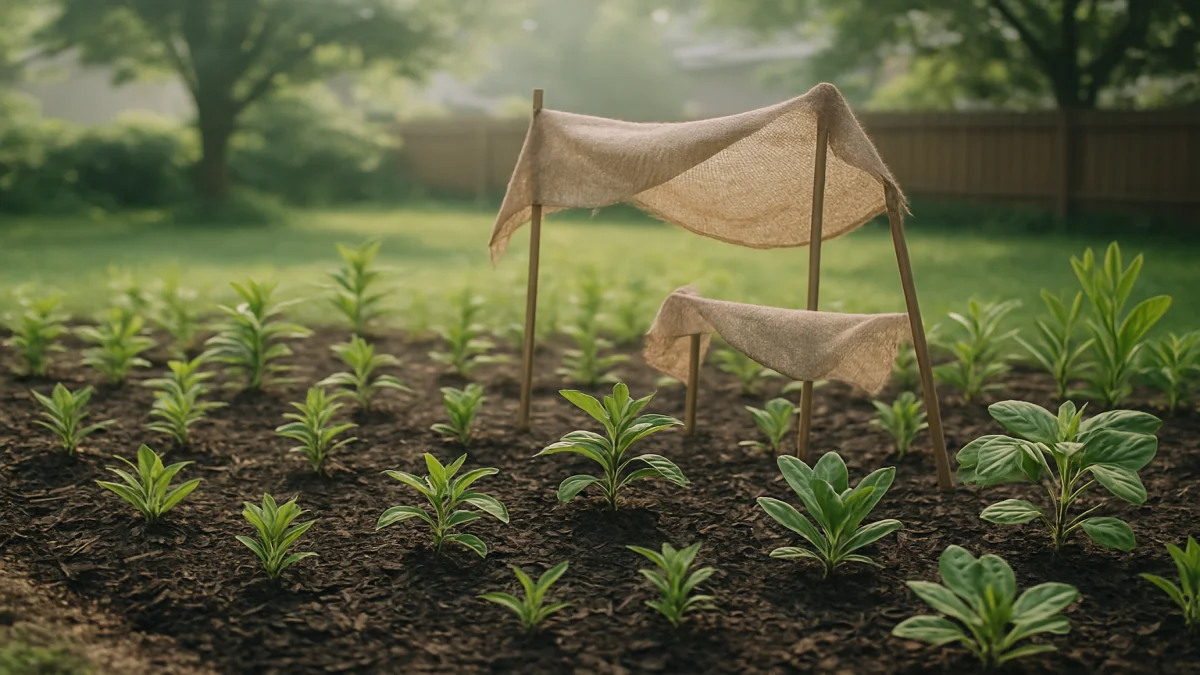
To save newly planted natives through a June heat wave, water deeply at the root zone every 48 to 72 hours, mulch with two inches of shredded leaves to drop soil temperature 10 to 15 degrees, and shade west-facing transplants with burlap on stakes for the worst three afternoons. Plants installed less than eight weeks ago have not grown the deep root mass that older natives use to ride out heat, and they will collapse in a single 95 degree afternoon if you treat them like an established bed.
You can spot the symptoms before the leaves go crispy. A reader emailed me last June about $340 of liatris and bee balm plugs she had set out over Memorial Day weekend. By the time the National Weather Service issued a heat advisory ten days later, the leaves were curling downward at midday and flat by 6 p.m. She thought she had a watering frequency problem. She had three problems stacked on top of each other, and only one of them was about water. This is the playbook I sent her, expanded with field notes from my own Zone 6a yard where I have lost and learned from enough June transplants to fill a notebook.
Why a June Heat Wave Kills First-Year Natives Faster Than Established Beds
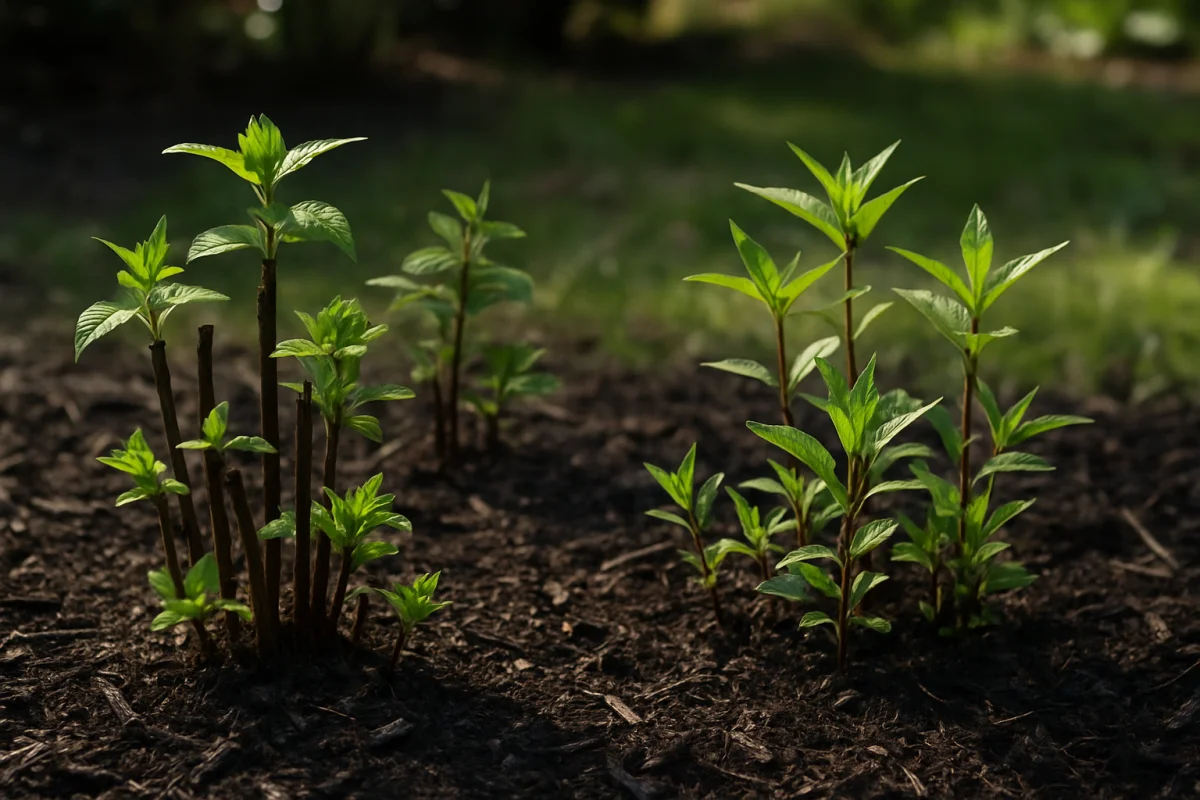
Native plants earn their drought reputation in years three and four. By then, the taproot on a young coneflower has driven four to six feet down, and the rhizomatous matrix under a stand of bee balm spreads wide enough to pull moisture from soil two zones cooler than the surface. None of that exists in a plug or quart you put in the ground six weeks ago.
What you actually planted is a transplant with a root ball the size of a small fist sitting in a backfill of disturbed soil. The native species tag promises drought tolerance. The plant on day 42 does not have the infrastructure yet to deliver on that tag.
FREE: Wildlife Garden Starter Guide
Get our 12-page PDF with the 25 best plants for pollinators, simple habitat tips, and a printable checklist — all 100% free.
No spam. Read our Privacy Policy.Three forces compound during a heat wave. First, air temperature above 90 degrees increases transpiration sharply. A small plant can lose 60 percent of the water in its leaves in a single afternoon. Second, soil temperatures in unmulched beds in full sun routinely hit 115 to 130 degrees Fahrenheit in the top three inches, which cooks fine feeder roots faster than the plant can grow new ones. Third, the disturbed backfill around a new transplant dries out at roughly twice the rate of undisturbed surrounding soil because it has not yet rebuilt its capillary structure. According to the USDA Forest Service Climate Change Resource Center, soil temperatures above 95°F dramatically reduce root respiration efficiency in most temperate-zone perennials.
The plant that looks drought-tolerant on the catalog page is, in week 6, simply a small plant under triple stress. The good news: you can defuse all three stressors with low-cost gear and one afternoon of work.
How Do I Know if My New Transplants Are in Real Trouble?
Heat stress has a predictable visual sequence. Catch it at stage one or two and the plant will recover with no lasting setback. Catch it at stage four and you are usually replanting in fall.
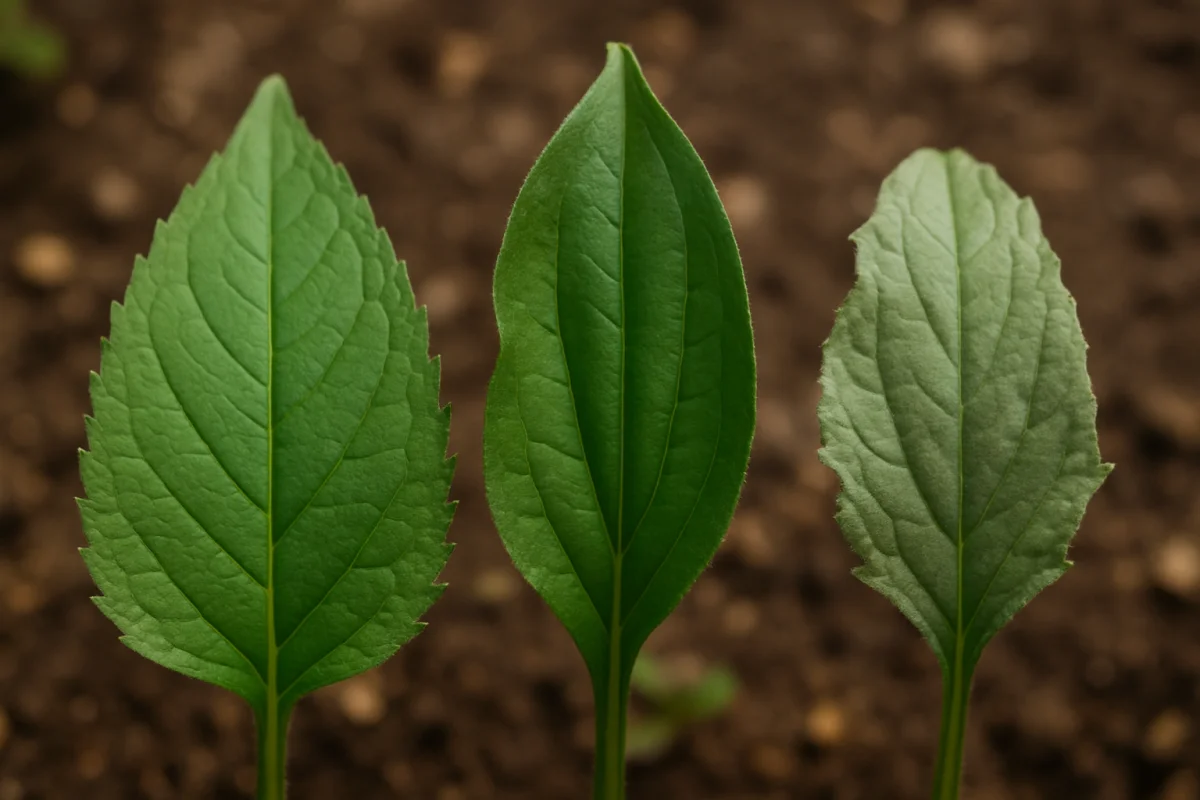
Stage one is leaf cupping. Leaves fold inward along the midrib, usually at midday, and flatten by morning. The plant is conserving surface area to slow water loss. This is normal stress signaling and not yet a crisis, but it is the signal to start the heat-wave protocol the same evening.
Stage two is afternoon wilt with overnight recovery. By 3 p.m. the entire plant looks slack and limp. By 6 a.m. the next day it has rebounded. Soil moisture is borderline. Water deeply within 24 hours.
Stage three is wilt that does not recover overnight. The plant is now drawing on stored water in stems and crowns. Roots are dying. Without intervention in the next 48 hours, you are losing the plant.
Stage four is leaf scorch. Brown crispy margins, especially on the side facing west or southwest. The fine roots are dead. Even if you flood-water now, the plant cannot uptake water faster than it loses it. Cut back to two inches above the crown and treat as a fall replant gamble.
The 48-to-72-Hour Deep Water Cycle (Not the Daily Sprinkle Trap)
The most common mistake during a heat wave is shifting to light daily watering. Daily surface water trains roots to stay shallow, which is exactly the opposite of what a first-year native needs in July, August, and September. It also evaporates within hours from soil that is already at 115 degrees and never reaches the root zone.
Deep watering means putting down enough volume to soak the top 8 to 10 inches of soil and then waiting until the top 3 inches dry out before going again. For most clay-loam suburban soils in a heat wave, that cycle is 48 to 72 hours per plant. For sandy soil, 36 to 48 hours. For heavy clay, 72 to 96 hours.
The technique that works without a drip system is the slow saucer. Bury a one-gallon nursery pot (the black plastic kind from your last plug order) at a 45 degree angle next to each new transplant, with the rim flush to soil level. Fill it to the top from a watering can. The pot acts as a holding reservoir that drains over 10 to 20 minutes directly into the root zone instead of running off the surface. One gallon per plug, two gallons per quart-size transplant, four gallons per gallon-size transplant.
I started doing this in 2023 after losing a row of seven Liatris ligulistylis to a single 97 degree weekend even though I had watered every morning. The buried-pot method costs nothing if you save your nursery pots, and it cut my first-summer mortality from roughly 30 percent to under 5 percent across three years of data in the same bed. If you want to scale this past 20 transplants, a basic four-port drip kit from a big-box store runs around $40 and does the same job with less hauling. Covered in detail in the budget vs premium drip irrigation breakdown.
Mulch: The Two-Inch Layer That Drops Soil Temperature 15 Degrees
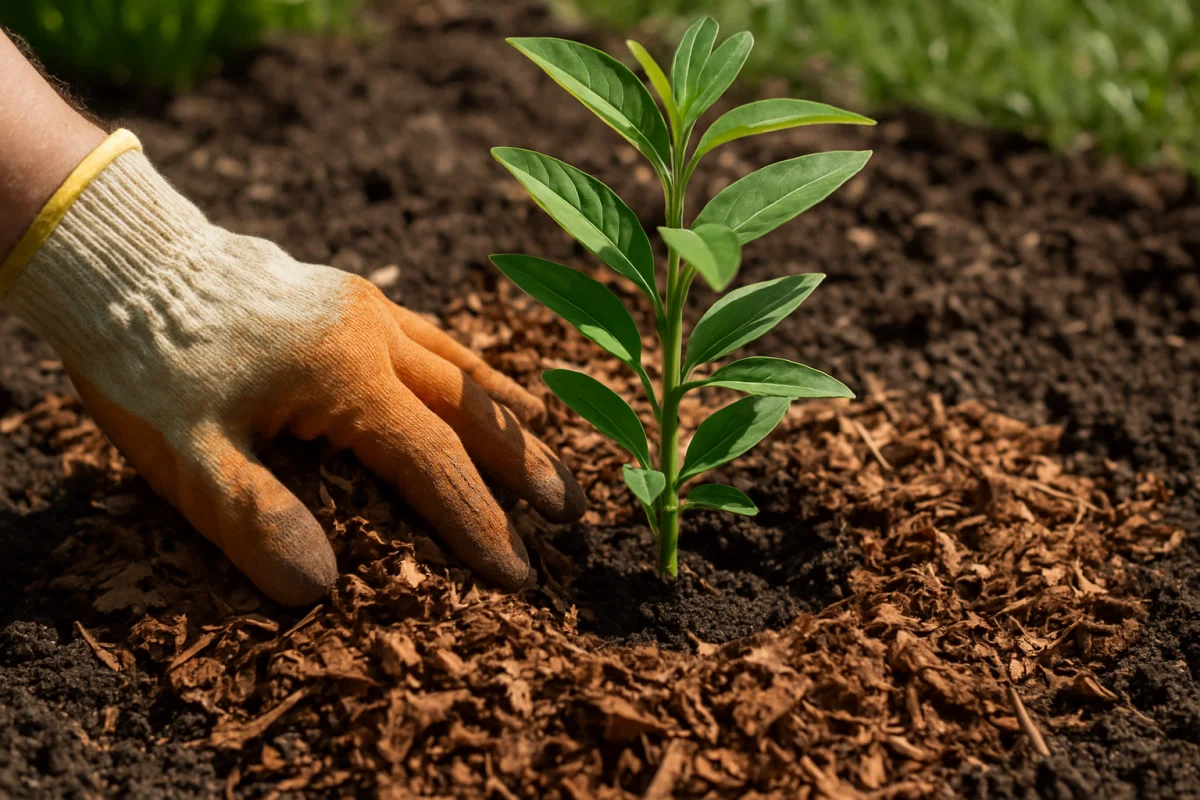
Mulch is not aesthetic during a heat wave. It is a thermal blanket that decides whether the fine roots in the top three inches of soil survive the afternoon. Bare unmulched soil in full sun routinely hits 130 degrees at noon. Two inches of shredded leaf mulch keeps the same soil at 78 to 85 degrees. That difference is the gap between recoverable stress and root cooking.
Three rules for heat-wave mulch on new transplants:
- Two inches, not four. Thick mulch traps heat in the layer below and reduces oxygen to the crown. Two inches is the working depth.
- Pull it back two inches from each stem. A mulch volcano around the crown invites stem rot once you do water deeply, and during a heat wave the wet collar at the base becomes a fungal incubator.
- Shredded leaf or aged hardwood, never fresh dyed bark. Dyed bark mulches sold at big-box stores in 2 cubic foot bags often have a pH and decomposition profile that pulls nitrogen from the soil exactly when your stressed transplants need to retain it. Stockpile last fall’s leaves in a 4×4 wire bin behind the garage and you will not buy mulch again.
If you are skeptical about the soil temperature numbers, run a meat thermometer 2 inches deep into your bare bed at 2 p.m. on a 93 degree day. Then run it through 2 inches of leaf mulch. The number will move you to act before the rest of the heat wave hits.
Shade Cloth, Burlap, and the West-Side Hack That Saves $200 in Plants
This is the step most native gardeners skip because it feels like fussing. Skip it during a 95+ degree heat wave and you will replant. The west and southwest exposures take the hardest afternoon radiation, and a plant that handled morning sun fine for six weeks gets cooked from 2 p.m. to 6 p.m.
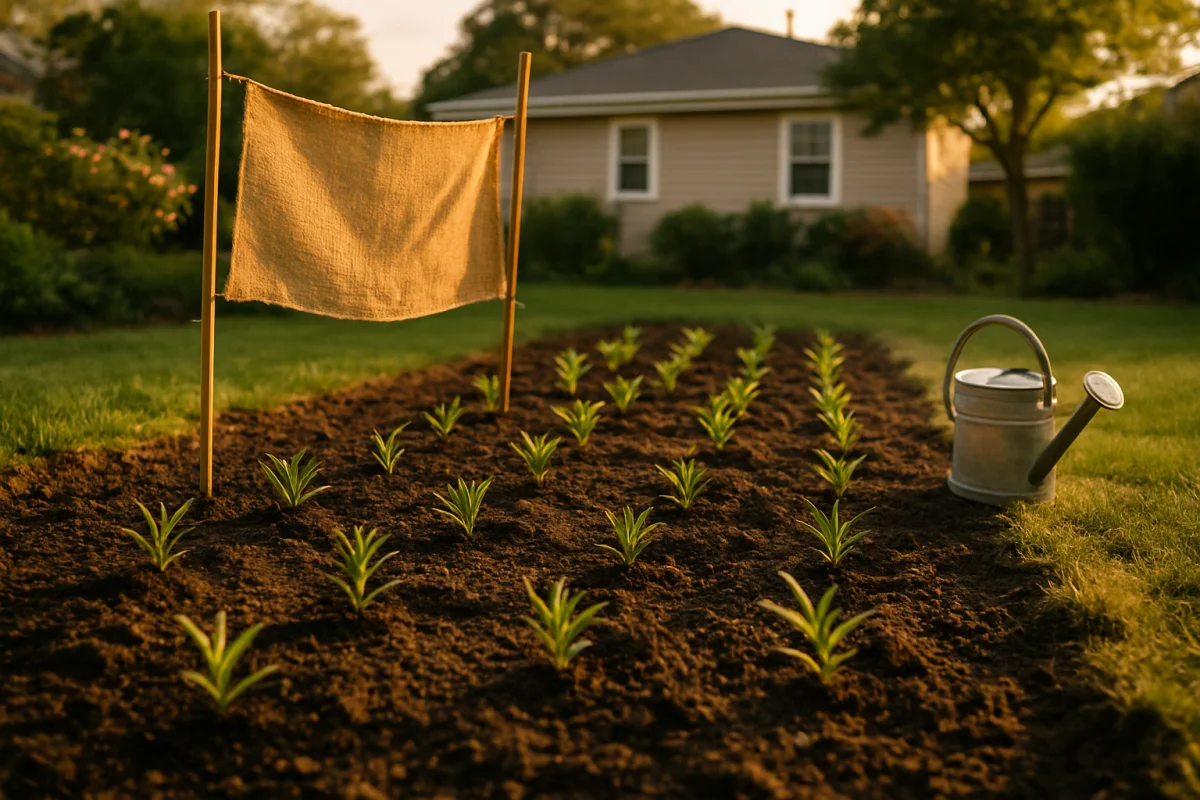
The setup costs $14 and 20 minutes. Drive two 4-foot bamboo or rebar stakes into the ground 18 inches west of the bed line, spaced about 3 feet apart. Drape a square of burlap (40 percent shade equivalent) or a 30 percent shade cloth panel across the stakes with clothespins. The panel only needs to block sun from 1 p.m. to 5 p.m. on the worst three afternoons of the heat wave. Remove it the morning after the heat advisory lifts.
For three or four plants you can use a folding lawn chair tipped on its side. I used a plastic deck chair to shade a row of Eutrochium fistulosum (joe-pye weed) in July 2024 for three afternoons. The chair looked ridiculous from the driveway. All seven plants survived. The neighbor who initially complained came over six weeks later asking what was blooming in that bed because the joe-pye was over seven feet tall and full of swallowtails. If you are worried about how the temporary setup looks to neighbors or an HOA board, the HOA-safe curb appeal playbook covers the cue-of-care framing that lets you do this without triggering a letter.
Compare Your Tools: What to Buy, What to Skip, What to DIY
Heat wave protection draws a lot of marketing toward expensive solutions. Most of them are unnecessary. Here is a comparison of common heat-wave intervention tools by cost, effectiveness, and what they actually solve.
| Tool / Method | Cost | What it solves | Verdict for first-year natives |
|---|---|---|---|
| Buried nursery-pot saucer | $0 (reuse) | Deep root-zone delivery, no runoff | Best for under 20 plants. Cuts mortality dramatically. |
| Four-port drip kit, big box | $35-50 | Hands-off deep watering at scale | Best for 20+ plants. Pair with a $15 hose timer. |
| Burlap on stakes (west side) | $8-14 | Afternoon shade on worst exposures | Worth it for any plant set out within 8 weeks. |
| 30 percent shade cloth panel | $18-25 | Same as burlap, more durable | Worth it if you reuse it for fall transplants. |
| Shredded leaf mulch (stockpiled) | $0 | Soil temperature, moisture retention | Essential. Two inches, pulled back from stems. |
| Dyed bark mulch, 2 cu ft | $4-6 per bag | Aesthetics only | Skip. Nitrogen tie-up during fragile establishment. |
| Foliar misting / leaf spray | $0 | Feels productive | Skip. Promotes fungal damage, does not address roots. |
| Quick-release fertilizer | $10-15 | Nothing useful right now | Skip. Stresses roots further, salts concentrate. |
| Anti-transpirant spray (e.g. Wilt-Pruf) | $15-22 | Marketed for transplant shock | Skip on perennials. Studies show neutral-to-negative on small-leaf natives. |
The pattern is clear: free or cheap solutions handle the physiology. Expensive sprays and aesthetic mulches don’t. For a deeper look at which big-box products actually deliver value (and which are repackaged junk), see how to buy real natives at Lowe’s and Home Depot.
What If the Heat Wave Hits Right After You Plant?
Sometimes you do not get a choice. The forecast looked safe on Memorial Day, the plugs arrived from the local Wild Ones chapter sale, and by the next weekend the National Weather Service has the entire region under a heat advisory. You are not going to leave $200 of plugs in their plastic flats either, because they will cook faster on the driveway than in the ground.
If you must plant 24 to 72 hours before a heat wave hits, run a three-step compressed install:
- Plant in the evening. Anywhere between 6 p.m. and dark. The plant gets 12 hours to settle before the next radiation cycle. Morning planting before a 96 degree day gives the plant 4 hours.
- Water in with a soak-and-wait double pour. First pour fills the planting hole. Wait 10 minutes for it to drain. Second pour, with another half-gallon. This eliminates air pockets that would otherwise dry out fine roots overnight.
- Pre-shade before sunrise the next day. Drive your stakes and hang burlap that same evening so you do not have to do it at 11 a.m. when the plant is already drawing on its reserves.
I did this with a flat of 32 Asclepias incarnata plugs on June 8, 2024, a Sunday evening, knowing Monday through Wednesday were forecast to hit 97 to 99. Lost two plugs. The other 30 are now a three-foot tall colony I have already divided once. The Xerces Society’s pollinator meadow establishment guidelines back this up: the highest-survival window for summer transplants is the late afternoon and early evening of a forecast cool-down day, not the morning before the spike.
When Should I Stop Watering and Let the Plant Decide?
The hardest part of heat-wave protection is restraint. Once you have done the four moves (deep water, two-inch mulch, west-side shade, no fertilizer or misting), the plant decides. Standing over it with a hose for the third time in 24 hours is not a fifth move. It is panic, and it actively harms recovery by saturating the soil to the point where remaining roots suffocate.
A first-year native that drops half its leaves during a 100 degree weekend has not died. It has gone into a defensive shutdown that looks like death. The crown is alive. Stems may green back from the base in 10 to 14 days. New leaves, smaller than the original set, will emerge from leaf axils. Resist the urge to dig it up to inspect the roots. That finishes the plant.
The exception is full collapse with no rebound by morning three. At that point gentle removal, a check of the crown (firm and white = alive; soft and brown = dead), and either replanting in a shadier spot or composting is the move. Most plants do not reach that stage if you executed the four moves on day one. The single largest cause of first-summer native losses I see across yards in my neighborhood is owners who watered, then watched, then panicked, then over-watered, then dug. The plant did not die from the heat. It died from the inspection cycle.
Frequently Asked Questions
How much water does a new native plug need during a heat wave?
One gallon per plug, two gallons per quart-size transplant, four gallons per gallon-size transplant, delivered as a single deep soak every 48 to 72 hours in clay-loam soil. Adjust faster for sandy soil (36-48 hour cycle) and slower for heavy clay (72-96 hour cycle). Light daily watering is worse than helpful. It trains shallow roots and does not penetrate to the root ball.
Should I use a sprinkler during a heat wave?
Not for new transplants. Sprinklers wet foliage (fungal risk in humid heat), waste 30 to 50 percent to evaporation in 90+ degree air, and rarely deliver enough volume in one cycle to soak the root zone. Targeted root-zone watering with a buried saucer or drip emitter delivers more usable water with less waste. Sprinklers are fine for established lawns that you are letting go dormant, not for newly planted natives.
Can I plant new natives in July or August at all?
Yes, but the survival rate is 30 to 50 percent lower than spring or fall installs unless you commit to the full heat-wave protocol for the first six weeks. Most experienced native gardeners hold summer-arrival plants in shade at the side of the house, in their original pots, until late August or early September when the worst of the heat breaks. If you do plant in midsummer, treat every plant as if a heat wave is coming next week.
Does mulching during a heat wave attract more pests?
Shredded leaf mulch and aged hardwood do not significantly attract slugs, voles, or chipmunks at the two-inch depth recommended here. Four to six-inch mulch piles do invite vole tunneling and crown rot. Slug pressure under leaf mulch can rise in cool wet weeks but is negligible during dry heat. The slugs are hiding deeper. For slug-specific issues outside heat waves, the safe slug-damage protocol covers low-toxicity options.
What about my established natives. Do they need heat-wave help too?
Generally no, if they are over three years old in your bed. Established natives have the root depth to access subsoil moisture and will look stressed at midday but recover overnight. The exception is potted natives still in containers (containers heat 20 to 30 degrees hotter than soil and dry out daily) and any plant in a hellstrip or hardscape-adjacent bed where soil volume is limited. For those edge cases, run the same protocol as for first-year transplants.
If your bed comes through this heat wave intact, you have done the hardest first-summer task there is. By year three, the same plants will laugh at a 100 degree afternoon. And a stand of natives that survived their establishment summer becomes the backbone of a yard that pulls in monarchs, swallowtails, and ground-nesting bees without you lifting a hose. For what next year looks like once these plants are established, see the framework in sleep, creep, leap and the dry-bed companion piece on native plants for dry shade under mature trees. You did not buy a yard. You are growing a habitat.
Want More Wildlife Garden Tips?
Join 5,000+ nature lovers getting our weekly tips on creating wildlife-friendly gardens.
No spam, unsubscribe anytime. Privacy Policy
Emma Harrington
Emma Harrington is a wildlife habitat researcher and content editor with a passion for backyard conservation. She has spent over a decade translating ecological science into practical tips anyone can follow — from selecting native plants to building wildlife-friendly habitats. Her work focuses on helping homeowners transform ordinary yards into thriving ecosystems for bees, butterflies, hummingbirds, and other beneficial wildlife.