
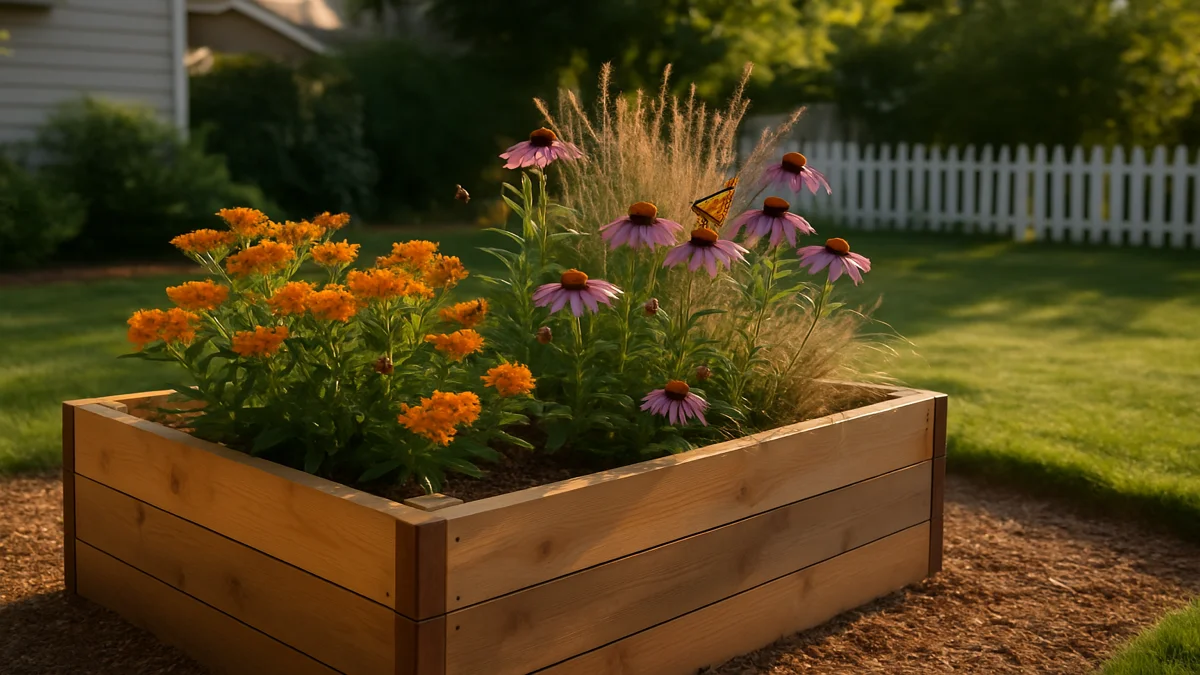
After hearing from various sources, I’ve come to realize that the core message of native gardening can be summed up this way: “After thirty-five years of managing people, gardening reminds me that life has silent, solvable problems.” This reflects what many of us sought when we replaced our lawns.
And then year two arrived. The bed you carved out in April with a borrowed mattock now sprawls into the path. The milkweed got powdery mildew. The “drought-tolerant” sedge died in the drought. Your back is sending a louder message than the cardinals are. And every time you walk out the back door, you do not feel that silent, solvable peace anymore. You feel a list.
If your native garden has stopped feeling therapeutic, you are not failing. You are running an experiment that needs a reset, not a rescue. This guide walks through what that reset looks like for a real suburban yard, with a body that has limits, a wallet that has limits, and a Saturday that already has too many other things on it. The goal is a low-maintenance native pollinator garden that you can sustain for a decade. Not a Pinterest spread you can sustain for a season.
FREE: Wildlife Garden Starter Guide
Get our 12-page PDF with the 25 best plants for pollinators, simple habitat tips, and a printable checklist — all 100% free.
No spam. Read our Privacy Policy.When the garden you built for peace starts feeling like a second job
It’s not always dead plants that signal trouble in the garden. Often, the first sign is when you start avoiding the back door. You look through the window and notice a mess where the path used to be, and suddenly you don’t feel like going outside. I’ve heard homeowners express feelings of failure when they neglect their garden, not out of laziness, but because of the emotional costs that visiting the garden brings.
I’ve come to realize that there’s a whole vocabulary among native plant enthusiasts for the struggles we face. Terms like “pure chaos mode” and “Sisyphusian task” resonate deeply. The fatigue we feel is palpable, but so is the joy of connecting with nature. It’s common for someone to arrive late to work because they couldn’t tear themselves away from their garden.
The honest read is this: native gardens deliver therapeutic value when the labor stays smaller than the reward. Once the labor outgrows the reward, the same garden that healed you starts taxing you. Recognizing the tipping point is the first reset skill, and it usually shows up in your body before it shows up in the plants.
Gardening overwhelm vs. full-blown burnout: why the difference matters
Joe Lamp’l, who has gardened publicly for decades, drew a line that matters here. Overwhelm is feeling like you cannot do it all. Burnout is feeling defeated. Overwhelm comes and goes inside a single weekend. Burnout sticks around long enough that you start questioning whether you should garden at all.
The reason this matters: the two states need different fixes. Overwhelm responds to a Saturday afternoon, a glass of cold water, and one focused two-hour session with a kneeling pad. Burnout does not. If you push through burnout the way you push through overwhelm, you will end the season more depleted, not less. Lamp’l told a story on his own podcast about cutting his tomato plants from sixty or seventy down to sixteen. And then quietly creeping back up to twenty-four the next year. Even the experts relapse.
So the diagnostic is honest: if you have skipped two weeks of water and felt relief instead of guilt, that is a burnout signal. If the thought of pulling jewelweed makes you tired before you stand up, that is a burnout signal. Naming it is what unlocks the reset. You are not quitting. You are downshifting so the garden can keep doing its actual job for you.
Why most native gardens stop feeling like stress relief by month eight
There is a predictable arc. April: euphoria. May: planting frenzy, three nursery trips, two Amazon orders, one Facebook Marketplace haul of “free perennials” that turned out to include vinca. June: the bed looks great. July: the temperature crests ninety, three transplants brown out, the goldenrod you tucked in the back has taken over the front. August: the garden is bigger than your watering schedule. By September you are looking at it like an unanswered email.
The traps are quiet but consistent. People plant too many species, often because the local nursery had them and the season was short. They plant too aggressively. Goldenrod, mountain mint, beebalm in close quarters, all spreading by rhizome. They skip mulch the first year because the bed looked tidy in May, then spend July fighting bindweed. They plant for May, not for August, so by midsummer the show ends and the maintenance begins. None of these are character flaws. They are the predictable cost of buying plants in a season of euphoria, then trying to maintain that purchase in a season of fatigue.
Climate factors stack on top. Recent USDA Plant Hardiness Zone updates shifted nearly half of US zip codes a half-zone warmer, with about 50% of the country now in a warmer half-zone than it was in 2012. Plants that handled your old summers may now scorch in your new ones. The Plant Hardiness Zone change is not just trivia. It means the same yard, the same gardener, can struggle with plants that worked five years ago. A quick way to confirm a species still fits your county is to cross-check our walkthrough on how to verify a plant is truly native to your county before you buy another flat.
The first reset move: shrinking the garden to a footprint your body can actually maintain
This is the move most gardeners refuse to make first. They will rearrange. They will mulch. They will buy a soaker hose. What they will not do is admit the bed is the wrong size for the body and schedule maintaining it. Until you fix that, every other tweak just delays the next burnout cycle.
The math is brutal but freeing. Decide how many minutes per week you can give the garden, honestly, in the worst week of summer when you are already tired. For a lot of suburban gardeners that number is sixty to ninety minutes. Now divide:
- 30 minutes for watering on a soaker schedule (twice a week in heat).
- 20 minutes for weeding once a week.
- 10–20 minutes for deadheading, staking, and noticing what is happening.
That is enough time for roughly 60 to 80 square feet of intentional native bed. A 4-by-15 strip, a 6-by-12 island, or two 4-by-8 raised beds. If your current bed is 200 square feet and you have 60 minutes a week, the reset is not a question of motivation. It is a question of arithmetic. Either the bed shrinks or the plants get less particular. Most resets do both.
The shrinking move can be staged. Pull the lowest-performing third out this season, replace it with bark mulch and a low-spreading native ground cover (creeping phlox, wild ginger, common blue violet depending on your zone). The bed shape changes. The footprint comes back inside what your body can actually carry.
Five no-fuss native plants that survive a season of neglect (and still feed pollinators)
Once the footprint is right-sized, the species list does the rest of the work. The trap most gardeners fall into is choosing for May bloom photos. The species that protect a therapeutic garden choose for July neglect. These five do that and feed pollinators while doing it.
1. Butterfly weed (Asclepias tuberosa). USDA Zones 3 to 9. The 2017 Perennial Plant of the Year for a reason. Once it sets a 24-inch taproot, it tolerates drought, neglect, poor soil, and most pest pressure. Hosts monarch caterpillars without spreading invasively. Does not transplant well. Start from plugs or seed in place. Blooms June into August.
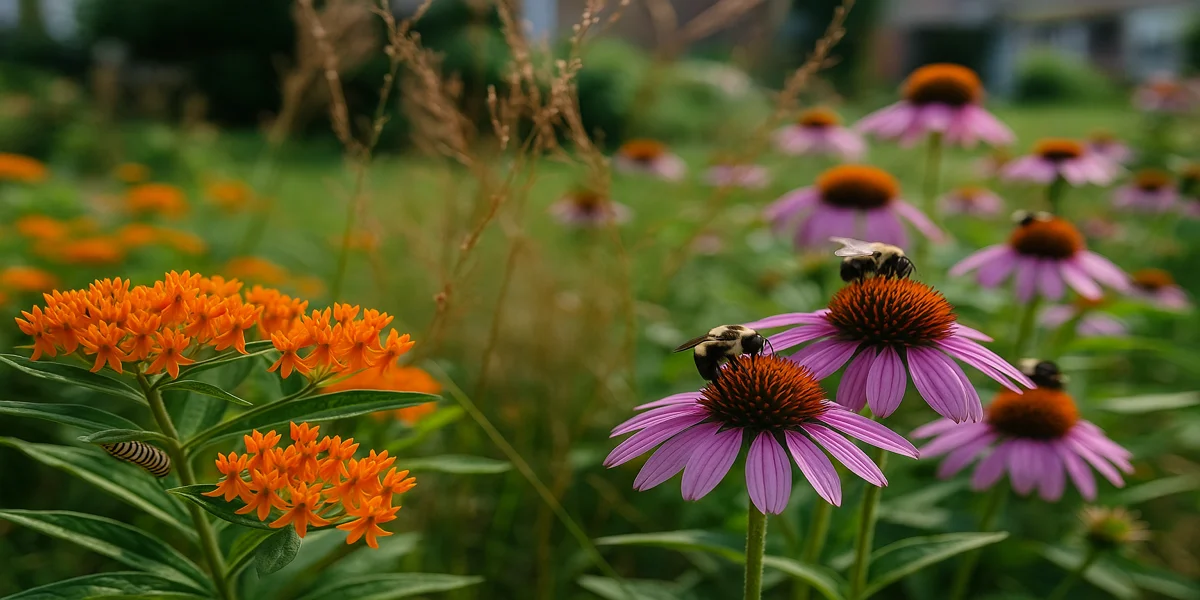
2. Purple coneflower (Echinacea purpurea). Zones 3 to 8. Drought-tolerant after year one. Bumblebees and goldfinches both work it. Bees on the flower, finches on the spent seed heads in fall. Self-seeds modestly, never thuggishly. Works in raised beds and in-ground.
3. Little bluestem (Schizachyrium scoparium). Zones 3 to 9. A native warm-season grass that anchors a bed visually and never asks for water. Turns copper-red in fall. Hosts the larvae of multiple skipper butterflies. Cut to 4 inches in late winter; that is the entire annual maintenance.
4. Mountain mint (Pycnanthemum muticum). Zones 4 to 8. Xerces Society pollinator surveys regularly rank this species among the highest-visited natives in the eastern United States, with some plot studies logging more than 70 visiting insect species in a single summer. Small bees, wasps, butterflies, even hoverflies. Spreads by rhizome but is easy to edit with a shovel each spring. Aromatic foliage means deer leave it alone.
5. Blanket flower (Gaillardia aristata). Zones 3 to 10. A short-lived perennial that earns its keep by reseeding into the gaps your other plants leave. Tolerates poor soil, salt, and heat that kills more delicate plants. Bright orange-red blooms June through frost, which is exactly when most pollinator gardens go quiet.
That is five species. Not fifty. The point of the no-fuss list is that you can plant in threes. Three of each, fifteen plants total. And have a bed that works. If you want a deeper pre-built planting layout, our foolproof native plant garden recipe by USDA zone walks through full plant counts for each region. And if your new plants look smaller than expected by August, that is normal. Read our piece on sleep, creep, leap before you assume something failed.
The waist-high pollinator bed that ended my Saturday back pain
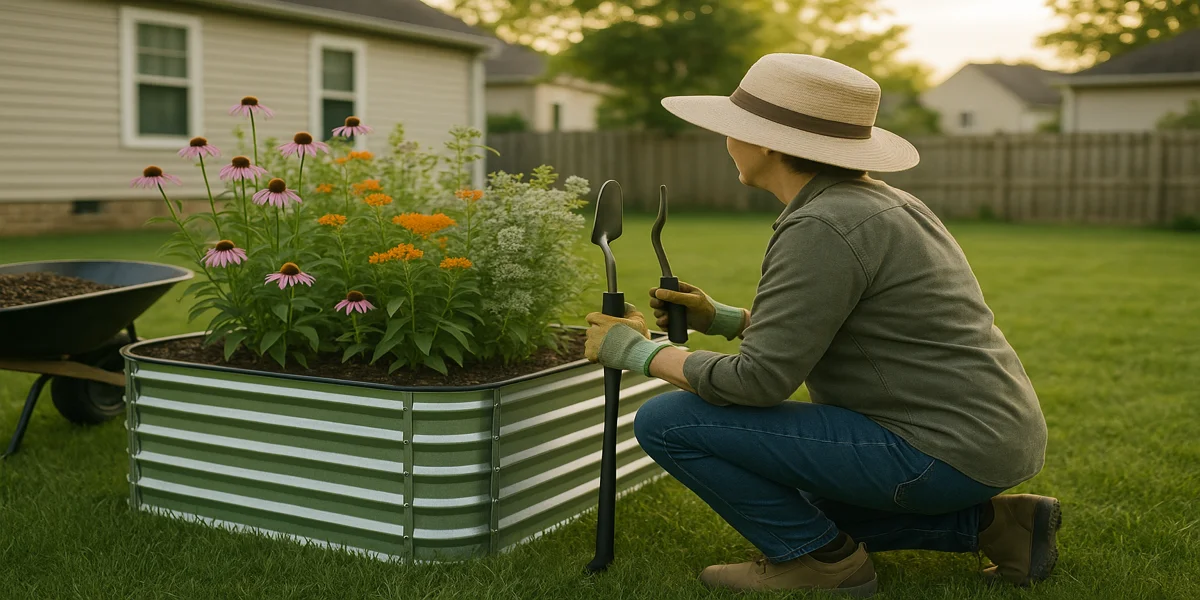
Once the species list is right, the bed itself is the next variable. The single change that converts more “I want to quit” gardeners into “I want to keep going” gardeners is raising the bed to waist height. The Arthritis Foundation has been clear on this for years: “Raised beds can be built at various heights to suit your needs and significantly reduce forward bending.” A bed at 30 inches tall lets a five-foot-six gardener weed and plant at hand level, with shoulders relaxed.
The materials matter less than the height. A galvanized stock tank from a farm supply store runs $120 to $250 and lasts 20 years. Cedar boards bolted into a 4-by-8 box at 30 inches tall run roughly $300 in lumber, plus an afternoon of assembly. Premade galvanized kits from big-box stores run $90 to $180 and assemble in an hour, though many reviewers note the panels are tedious to unwrap. One writer logged it as “10 minutes per panel” for a 6-panel kit. Plan accordingly. Whatever the material, drill drainage holes if there are none, and lay quarter-inch hardware cloth at the bottom if voles are a known problem in your yard.
Fill is where most people accidentally bankrupt themselves. The trick borrowed from the Arthritis Foundation works here too: fill the bottom third with bulky lightweight material. Packing peanuts in clean trash bags, or upturned plastic nursery pots, or the increasingly popular hügelkultur log fill. Then top with 20 inches of a 60/40 topsoil-to-compost mix. The fill drops the materials cost from a small mortgage to a manageable Saturday, and the lower weight matters if you ever want to move the bed.
One last detail that gets skipped: plan the path around the bed before you fill it. Wide enough that a wheelbarrow fits. Stable enough that you do not catch a toe on a paver edge. Position the bed so the long axis runs north-south, which gives every plant equal sun exposure and lets you reach the middle from both sides without leaning.
But I’ll feel like I’m giving up. And other reasons the reset is worth doing anyway
This is the part of the reset most gardeners skip past, and it is the part that determines whether the reset sticks. The downsizing decision triggers a real internal voice that says: smaller is failure. Smaller is lazy. Smaller is letting the HOA win. Smaller means you are not the kind of gardener who actually does this.
That voice deserves a respectful answer, not a dismissal.
The ecological math does not punish you for shrinking. Doug Tallamy’s research on suburban habitat shows that even small native patches double or triple pollinator visits compared with adjacent lawn. A 60-square-foot bed of butterfly weed and mountain mint in a real backyard outperforms a 600-square-foot bed of mislabeled big-box “wildflower mix” by every metric pollinators care about. Smaller and strict is better than bigger and confused.
The HOA argument changes when the bed reads as intentional. A neat, edged, waist-high bed with five species in clear groupings does not get the “rat nest” complaint your sprawling 200-square-foot bed got. The neighbor walking past reads it as a feature, not as neglect. If you want a deeper take on the design language that softens this, we have one in our curb appeal patterns for native gardens guide. The reset can actually defuse HOA pressure, not invite it.
The “giving up” framing is borrowed from a different kind of gardening. Vegetable gardeners scale up because every square foot produces calories. Pollinator gardeners scale up because we conflate size with seriousness. The pollinators themselves do not. They are responding to bloom density, species fit, and pesticide absence. None of which require acreage.
Cost is real, but the reset usually saves money long-term. The shrunken bed costs less in plants, less in water, less in mulch, less in replacements. A gardener who quits entirely costs more than any of those line items, because the abandoned bed becomes a compliance liability the next year.
The honest reframe: the reset is not giving up. The reset is admitting that the version of you who designed the original bed had different time, a different body, and different expectations than the version of you maintaining it. Designing for the current version is not failure. It is the only version of gardening that lasts.
What changes the first weekend you garden without ibuprofen
Two things change when the reset takes hold, and they are not subtle. The first is physical. You walk out on a Saturday morning and your back does not preemptively complain. You spend 40 minutes in the bed, you stand up without using the railing, and you make coffee instead of taking a tablet. The Arthritis Foundation guidance you ignored last year. Flat palms instead of fingertips, larger joints doing the work, frequent position changes. Starts to feel like good advice instead of nagging.
The second change is mental, and it is the one the persona research kept circling. The garden goes back to being the place where, in one user’s words, “life has silent, solvable problems.” You see the bumblebee on the coneflower. You notice the goldfinch waiting for the seed heads. You spot the monarch caterpillar on the butterfly weed and you actually have time to watch it for 10 minutes. The garden becomes a slowing-down place again, instead of an accusation.
That is the deliverable. Not a Pinterest photo. Not a 200-species native garden. A patch of yard, sized for your real life, planted with species that handle neglect, raised to a height that handles your back, designed for the longest possible streak of unbroken Saturdays where the garden does its actual job of healing you.
If you want to keep going after the reset takes hold, you can. Year three, year four, you may add another bed, another species. The reset is not a ceiling. It is a working baseline. The difference is that you are now adding from strength instead of subtracting from collapse, and that is the version of native gardening that lasts the next 30 years.
Frequently asked questions about resetting a native garden
How small can a native pollinator bed be and still help bees?
Studies on suburban pollinator visits show measurable increases at as little as 25 square feet of native planting, especially when the species are chosen for sequential bloom (early, mid, late summer). A 4-by-8 raised bed is enough to register on pollinator surveys and keep a small monarch population fed.
Will a 30-inch raised bed dry out faster than an in-ground bed?
Yes, slightly. Raised beds drain better, which is why they survive wet winters better than in-ground beds, but they also need more attentive watering in July heat. A simple soaker hose under two inches of bark mulch removes most of that risk and reduces the watering decision to “turn the spigot for 20 minutes, twice a week.”
Can I move existing in-ground natives into a raised bed without killing them?
Most asters, coneflowers, mountain mint, and grasses transplant fine in early spring or after the first hard frost in fall, before the bed wakes up or after it goes dormant. Butterfly weed is the notable exception because of its long taproot. Replant from new plugs rather than trying to dig the parent.
Does a smaller, simpler garden hurt my chances of getting NWF Certified Wildlife Habitat status?
No. The National Wildlife Federation certification requires food, water, cover, and places to raise young. Not acreage. A small bed plus a birdbath plus a brush pile in a side yard meets the criteria, and the certification sign in front of the house is exactly the kind of intentional signal that softens HOA pressure. Our walkthrough on getting your backyard certified as a wildlife habitat covers the four-element checklist.
If you’ve invested significant money into a garden bed, don’t despair at the thought of resetting it. You can always move the plants you want to keep into a smaller bed and donate the rest to a local plant swap or offer them for free. I’ve seen time and again how this process helps plants find new homes while allowing gardeners to recoup some costs.
This article shares general guidance for native pollinator gardening and is not a substitute for advice from a local extension office, master gardener, or licensed landscape professional. For ergonomic strategies tailored to a specific medical condition, consult Arthritis Foundation guidance on gardening with joint pain.
Related reading
Want More Wildlife Garden Tips?
Join 5,000+ nature lovers getting our weekly tips on creating wildlife-friendly gardens.
No spam, unsubscribe anytime. Privacy Policy
Emma Harrington
Emma Harrington is a wildlife habitat researcher and content editor with a passion for backyard conservation. She has spent over a decade translating ecological science into practical tips anyone can follow — from selecting native plants to building wildlife-friendly habitats. Her work focuses on helping homeowners transform ordinary yards into thriving ecosystems for bees, butterflies, hummingbirds, and other beneficial wildlife.