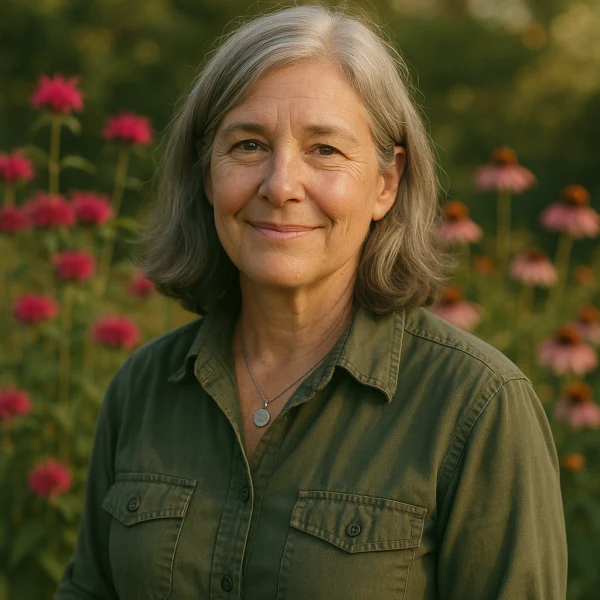
Hi, I’m Emma Harrington
I run Animal Habitats from a half-acre lot in central Ohio (USDA Zone 6a, clay-heavy soil, deer pressure year-round) that I have been steadily converting from turfgrass to native habitat for the past twelve years. Most of what you read here started as a problem in my own yard — a vine I could not kill, a bird I could not coax in, a neighbor who thought my “wildflowers” needed mowing.
What I actually do
I am a habitat researcher and content editor, not a botanist with a PhD. My credentials are the practical kind: Ohio Certified Volunteer Naturalist (Ohio State Extension), member of Wild Ones (chapter member since 2019), and certified National Wildlife Federation Backyard Habitat #248,610. I have written for two regional gardening newsletters and consult informally for two HOAs that are rewriting their landscape covenants to allow native plantings.
That background matters for one reason: when I tell you a method works, I have failed at it first. Multiple times, usually. The article on cardboard-smothering took three seasons to get right. The mason bee house article is built on five years of cleaning chambers in February and counting what survived.
How this site is produced
Every article on this site starts in my field notebook. I keep one for each major plant bed and one for each species I am tracking. I cross-reference what I observe against authoritative research — USDA, the National Wildlife Federation, Audubon, the Xerces Society, university extension services, and state native plant societies — and every quantified claim is checked against at least one of those sources before it is published.
If you find a factual error, I want to hear it. Email me at the address on the contact page and I will correct the article and credit you in the update note.
What you’ll find here
Five categories cover what I get asked about the most:
- Build Wildlife Habitats — turning lawn into actual ecosystems: native plant lists by region, brush piles, bee houses, wildlife corridors.
- Attract Pollinators & Birds — hummingbird feeders, butterfly puddling stations, monarch waystations, native bee support.
- Protect Your Garden — humane deer/rabbit/squirrel exclusion, dealing with invasives, the HOA conversation.
- Native Plants by Region — what to plant where, from Zone 4 northeast woodlands to Zone 9 Florida flatwoods.
- Seasonal Wildlife Calendar — month-by-month guide to what is happening in the backyard and what to do about it.
Editorial standards
- No paid endorsements. Product mentions reflect what I have used in my own yard. Affiliate links, when present, never change the recommendation.
- No YMYL overreach. I will not give you pesticide application rates, identify a venomous spider in a comment, or tell you which plant your toddler can eat. Those are jobs for poison control and your local extension office.
- Sources cited inline. When I quantify something (“native pollinators have declined 40%”), the source is linked the first time the claim appears in an article.
- Personas, not personalities. Reader quotes are paraphrased patterns from the emails I receive and the conversations at chapter meetings — I do not name real people or impersonate anyone.
Why I built this
Because the gap between “I want my yard to support wildlife” and “here’s the next thing to plant in Zone 6a clay with deer” is wider than it should be. Most gardening content online is either too generic to act on or too academic to enjoy reading. I am trying to land somewhere in the middle: specific enough that you can do the thing this weekend, honest enough that you know what will probably go wrong, and respectful enough that I am not going to scold you for having a lawn.
Thanks for being here. Now go look out the window and see who showed up.
— Emma
Last updated: May 2026