
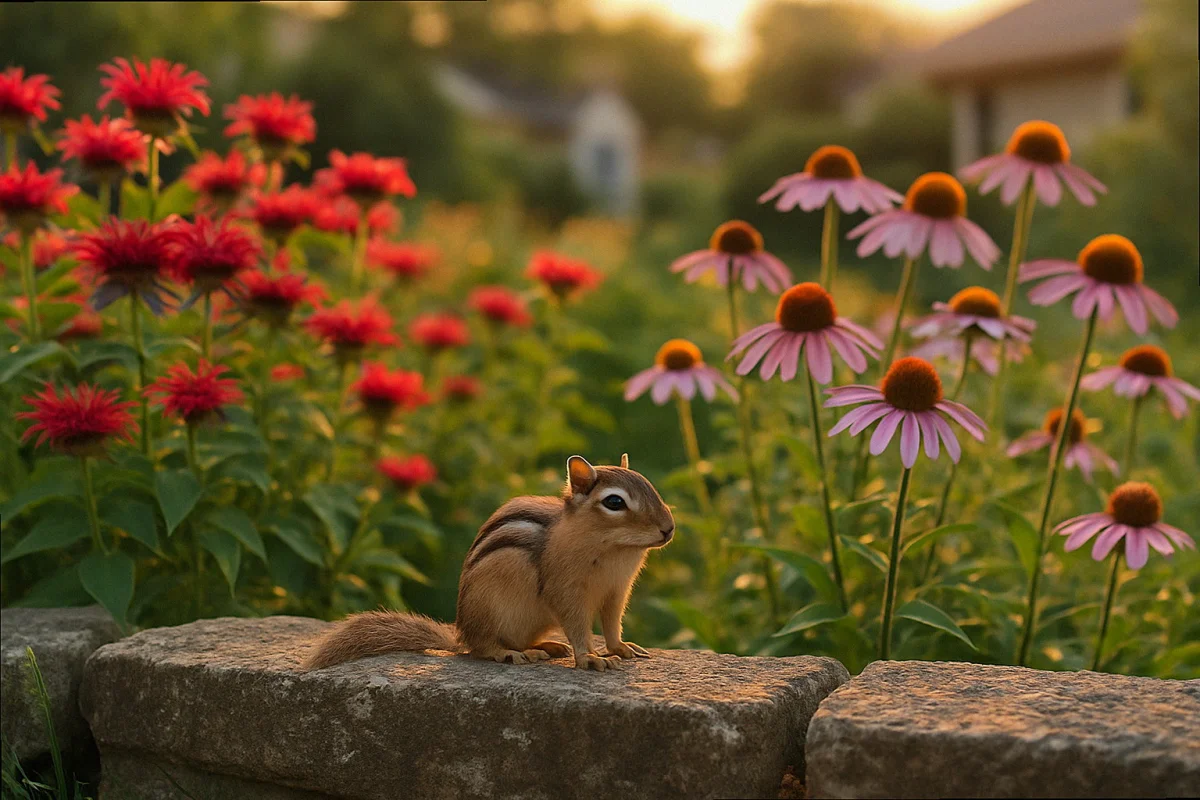
Quick answer: Chipmunks dig up native plant plugs because the freshly disturbed soil traps insects and the soft root balls smell like food. Stop them with a 4-inch buried hardware cloth collar (1/4-inch mesh) under each plug, capsaicin granules dusted over the surface, and a 10-day window where you skip the deep morning watering that signals “loose dirt here.” Three layers, not one, is what holds.
You planted forty new plugs on Saturday: bee balm, mountain mint, lance-leaved coreopsis. By Tuesday morning, eleven of them were tipped sideways and three had vanished, leaving tidy little holes the diameter of a quarter. No bite marks on the foliage. No deer track. Just craters. That is a chipmunk telling you the soil you just amended is the most interesting buffet on the street, and the plug is in the way.
Of the five core pains that come up over and over from suburban native gardeners, the one that hurts most is watching wildlife you wanted to support destroy the plants you bought to support them. Fifty dollars in plugs, gone in seventy-two hours. The instinct is to reach for a trap or a poison. Skip that. The fix is geometry and timing, not warfare.
How do I know it’s chipmunks and not voles or rabbits?
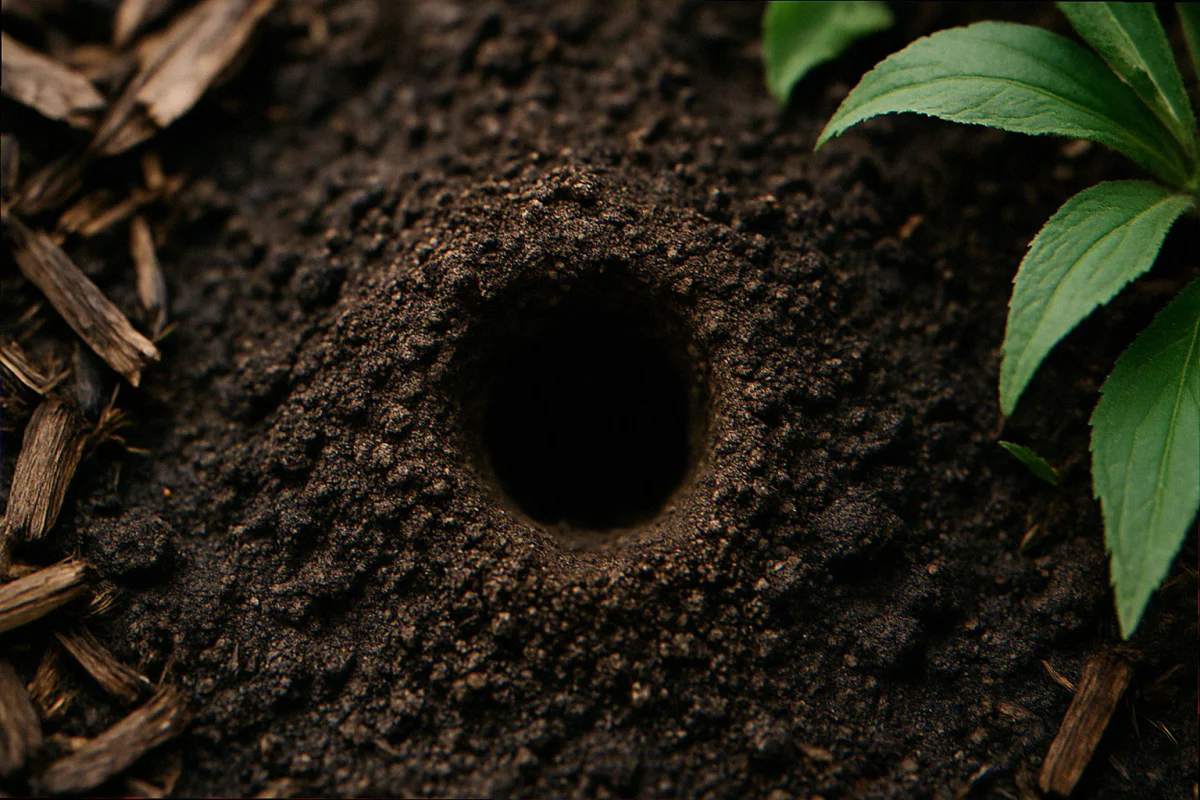
The damage signature matters because the deterrents do not overlap. Chipmunks dig; they don’t graze. If your plug is tipped over with the root ball half-exposed and a tunnel entrance the size of a marble next to it, you have Tamias striatus, the eastern chipmunk. The hole is round, about 1.5 inches across, and the dirt around it is fresh and granular, not packed.
FREE: Wildlife Garden Starter Guide
Get our 12-page PDF with the 25 best plants for pollinators, simple habitat tips, and a printable checklist — all 100% free.
No spam. Read our Privacy Policy.Voles, by contrast, leave surface runways through mulch and chew the bark off plant crowns at ground level. If you’re seeing crown damage rather than excavation, read the vole damage signs before assuming chipmunks. Rabbits clip stems at a clean 45-degree angle and leave the plug rooted in place. Groundhogs flatten everything in a 6-foot circle and don’t bother with delicate excavation; if you suspect a groundhog instead, the no-trap removal playbook is a different conversation.
| Damage sign | Likely culprit | Confidence |
|---|---|---|
| Plug tipped, 1.5″ round hole next to it | Chipmunk | High |
| Surface runways under mulch, chewed crowns | Vole | High |
| Clean 45-degree stem cuts at 4-6″ height | Rabbit | High |
| Whole plants pulled into a wider den hole | Groundhog | Medium |
| Twin teeth marks at ground level, no dig | Mouse or small vole | Medium |
| Quarter-sized hole with no animal in it | Chipmunk cache hole | High |
One small tell that confirms it: chipmunks tunnel in straight lines along bed edges, and the spoil pile from the tunnel is dumped a foot or two away from the entrance. They do not leave large mounds the way moles do. If you see a thumb-sized hole tucked next to a landscape rock or paver, that is almost certainly a chipmunk run.
Why your plugs are the most attractive target on the block
Chipmunks are not eating the plants. They are after three things, and a freshly planted plug delivers all three in one transaction.
First, the disturbed soil. When you dig a planting hole, you bring earthworms and beetle larvae to the surface. The chipmunk smells them within an hour. Second, the loose backfill, the very thing your plug needs to root, is the path of least resistance for a small mammal trying to extend its tunnel system. Free engineering. Third, the moisture. You watered the plug in, and now there’s a damp pocket in soil that, two days ago, was hard summer clay. To a foraging chipmunk that is a flashing sign that says dig here.
This is why the timing of damage is predictable. Most plug excavation happens within 4-7 days of planting. After that the soil settles, the bug rush quiets down, and the plug becomes less interesting. If you can get through the first ten days, you have usually won.
The 4-inch hardware cloth collar that actually holds
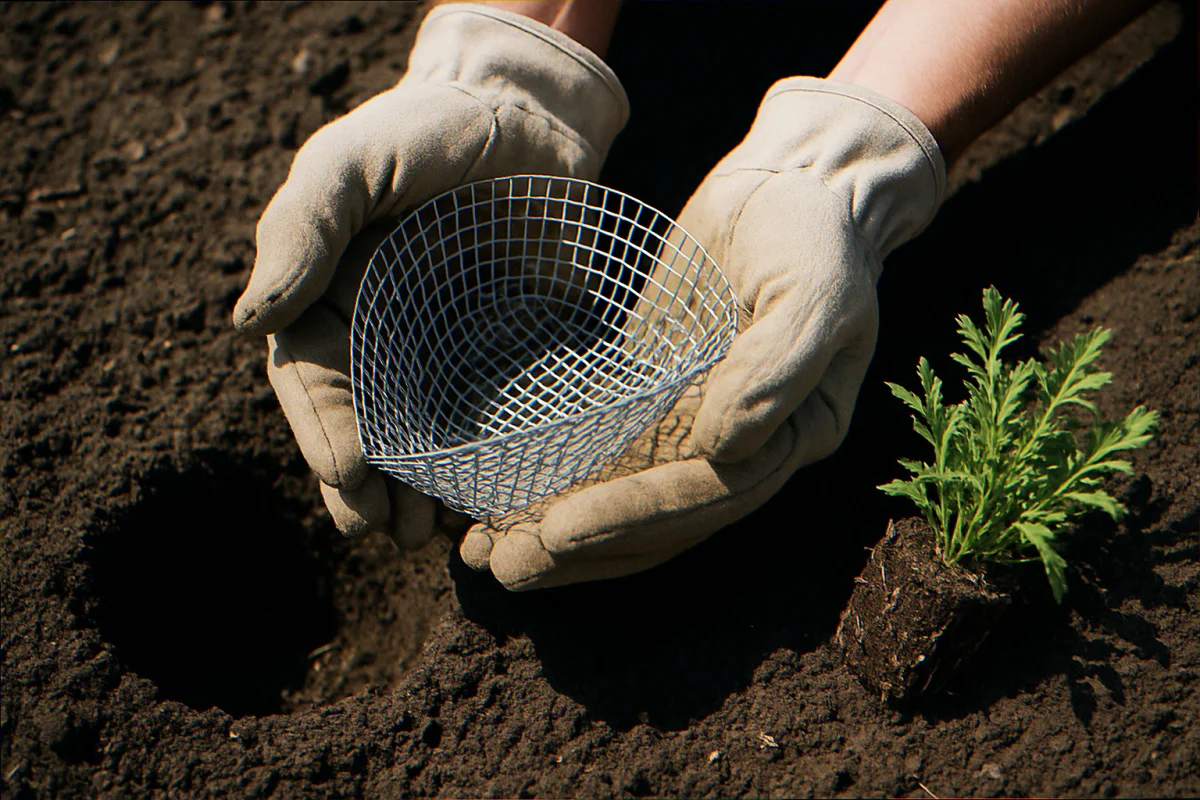
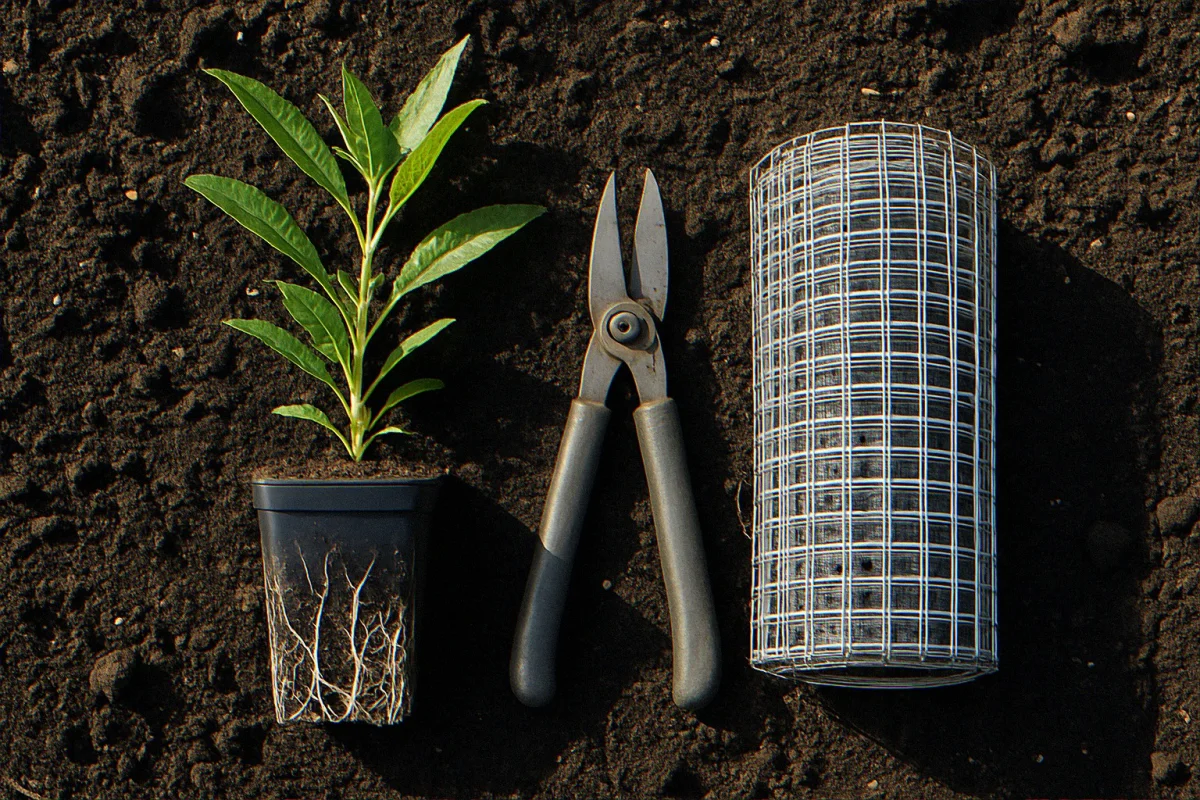
Capsaicin sprays wash off. Castor oil pellets fade. The only deterrent that survives a 2-inch summer thunderstorm is a physical barrier under the plug. The build is twenty minutes for a flat of forty.
You need 1/4-inch galvanized hardware cloth, not chicken wire (the holes are too big), cut into 8-inch squares. Tin snips work fine. For each square, snip from one edge to the center, then fold the cloth into a shallow cone so the cut edge spirals around itself. Push the cone down into the planting hole so the wide rim sits 4 inches below the soil surface and the point cups the root ball from underneath. Backfill, plant the plug on top, water in.
What this does: a chipmunk that starts digging from the side hits the cloth, follows it down, can’t get under it, gives up. A chipmunk that drops in from directly above finds the plug, but can’t pull the root ball out because the cloth is cradling it. The plant roots grow right through the 1/4-inch mesh within four weeks; the barrier is invisible above ground forever after.
For a 50-plug planting, this is about $18 in materials from any hardware store. That is roughly the cost of three replacement plugs. The math is favorable. If you are building out the bed on a tight budget, the budget-source guide for native plugs pairs well; buying cheaper plugs and protecting them aggressively beats buying premium plugs and losing them.
What about repellents: do any actually work?
Most don’t. The ones that do, only buy you days.
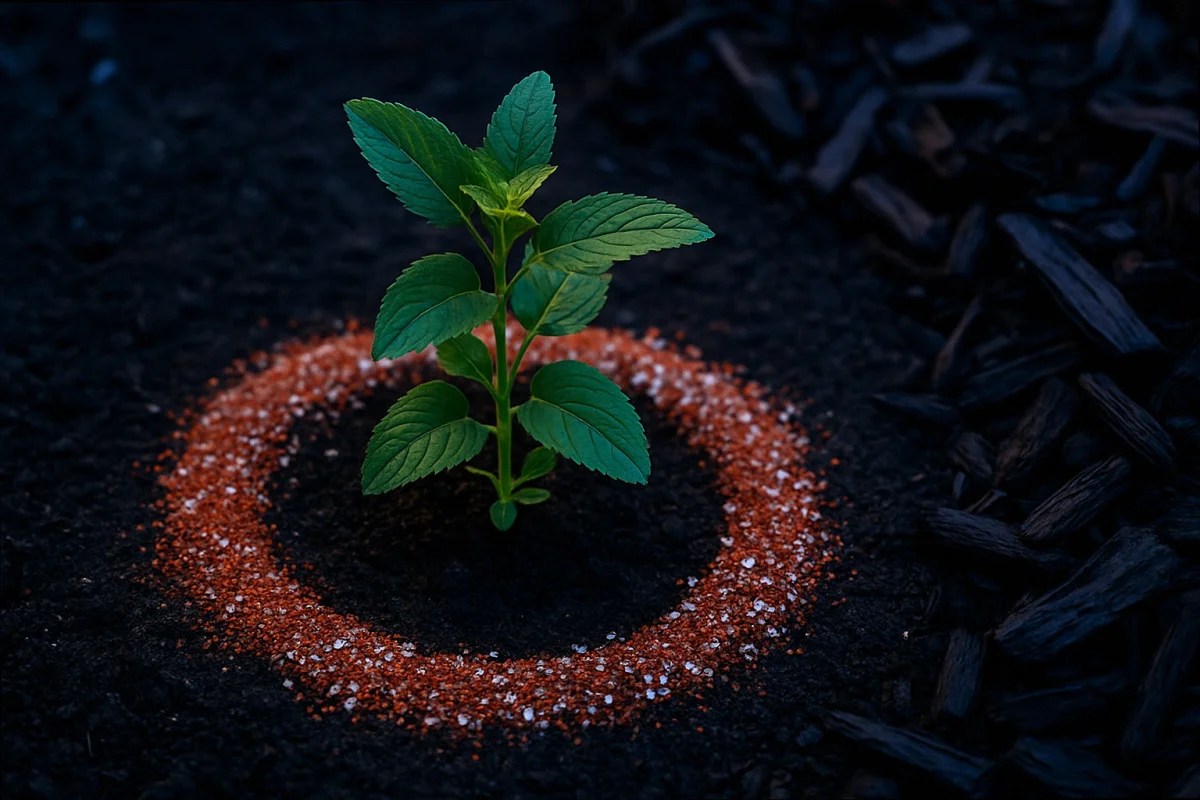
Capsaicin granules (the active ingredient in hot pepper) work for about 5-7 days on plug-scale damage if you apply them under the surface mulch where rain doesn’t wash them off. Reapply after any storm over half an inch. Predator urine products (fox, coyote) work for the first 48 hours and then become background scent the chipmunk learns to ignore. Castor oil granules deter voles well; chipmunks essentially ignore them.
The one repellent that has held up across multiple home trials is a 50/50 mix of capsaicin granules and crushed oyster shell, dusted in a 6-inch ring around each plug after planting. The oyster shell scratches the chipmunk’s paws (not enough to hurt, enough to be annoying) and the capsaicin discourages re-entry. According to a Penn State Extension overview of small-mammal deterrence, mixed-mode tactics consistently outperform single deterrents, and the effect persists about twice as long.
Skip ultrasonic repellents entirely. Chipmunks habituate to them in under a week, and the devices broadcast far enough to stress songbird parents during nesting season. That’s the opposite of what you’re trying to build.
Three signs you’re inviting chipmunks without realizing it
- Sunflower seed under a tube feeder. A bird feeder with no seed catcher is a chipmunk pantry. The animal you see digging your plugs at 7am has been hauling sunflower hearts down a tunnel since dawn. A seed tray or, better, switching to safflower (which most chipmunks reject) cuts your local population pressure by about half within two weeks.
- Stone walls and woodpiles within 20 feet of new beds. Chipmunks need cover within a short dash of any foraging spot. If your new native bed sits right against a stone retaining wall, you have built a chipmunk highway. The fix is not to remove the wall (that’s good wildlife habitat for skinks and toads) but to plant your most chipmunk-vulnerable species (anything with a soft 4-inch plug) at least 25 feet from the wall edge.
- Bare soil between plugs. Wide-open mulch invites tunneling. Once you finish planting, top-dress with at least 2 inches of shredded hardwood mulch within 24 hours. Bare soil between plugs is the single biggest invitation you can give. Mulch breaks up the visual sightline a chipmunk uses to scout, and it shades the disturbed soil so the bug-rush smell fades faster.
The 10-day water trick that runs counter to most advice
Everyone tells you to deep-water new plugs every morning for two weeks. That is exactly when the chipmunk activity is highest. The damp pocket of loose soil is the signal.
An adjustment that has held up in several home beds: water the plugs thoroughly at planting, then skip surface watering for 3-4 days unless temperatures are above 88°F. The plug has enough moisture in the root ball to coast that long if you mulched properly. After day 4, water in the early evening rather than the morning. Chipmunks forage from sunrise to about 10am, and evening watering means the soil surface is dry by the time they’re active.
If you’re planting during a heat dome and skipping water is risky, the heat-wave plug protection routine walks through how to keep roots cool without flooding the surface daily. The principle is the same: deliver water to the root zone without advertising “loose wet dirt” to every small mammal within a hundred feet.
What about the HOA aesthetic problem?
Hardware cloth disappears underground. Mulch looks intentional. Capsaicin granules are invisible. The only piece of this routine that might raise eyebrows is the early no-water week, because your bed will look browner than the neighbor’s lawn during that stretch.
The pragmatic move is to plant in clusters of one species rather than a polka-dot mix. A defined sweep of bee balm reads as “designed planting” even when the foliage is stressed. A random scatter of twelve species reads as “weedy mess,” and that’s the read that triggers complaints. A reader emailed last month after losing her third planting season to chipmunks and a passive-aggressive HOA inspector. The fix that ended both problems was the same: dense single-species sweeps with a 12-inch turf-grass edge to signal intent. The chipmunks struggled to find the plugs in dense clusters, and the inspector lost his pretext.
If you’ve already taken the HOA hit, the post on HOA response letters covers the boring-but-effective paperwork side. Combine that with the cluster planting and you remove most of the visual ammunition.
Which native plants do chipmunks target hardest?
Not every plug is at equal risk. After watching the pattern across several home beds and comparing notes with a fellow Master Naturalist who runs a 2-acre habitat restoration, a clear hierarchy shows up. The most-targeted species share two traits: shallow root balls at planting time and fleshy crown tissue that smells like food.
High-risk plugs (use the hardware cloth collar without exception):
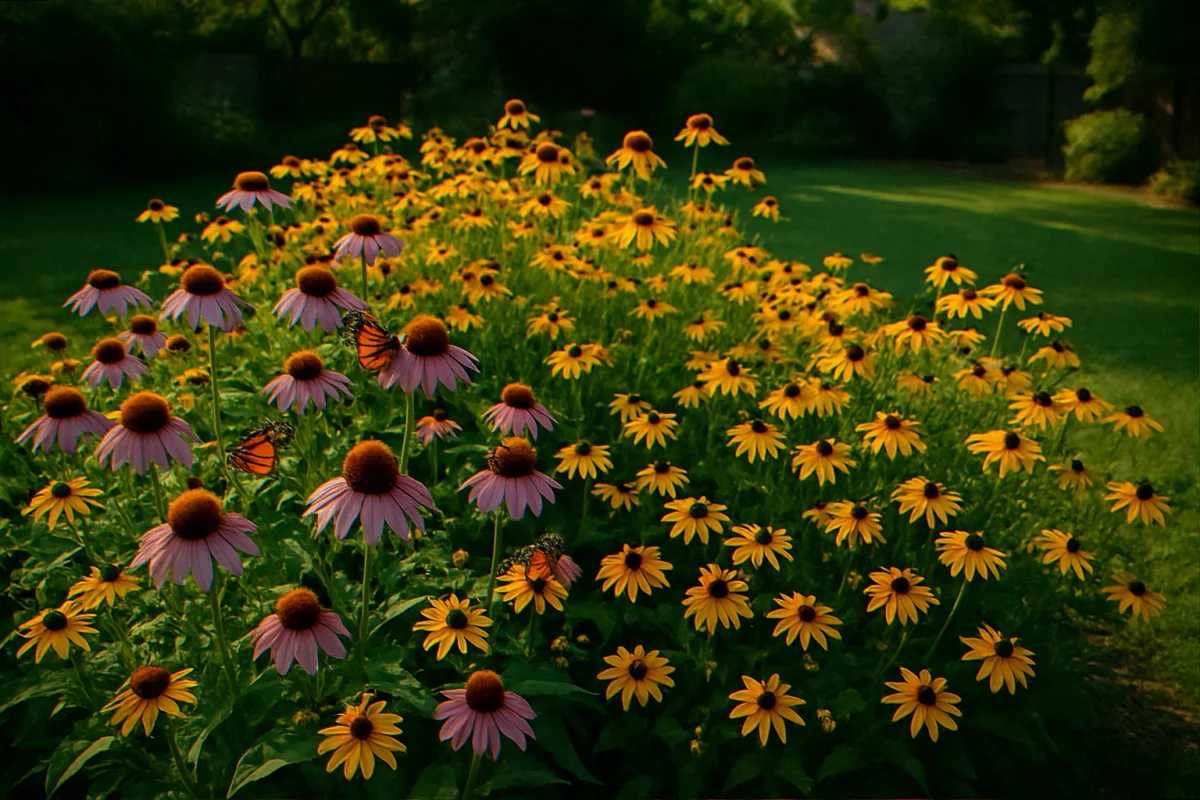
- Coneflower (Echinacea purpurea): The crown is the favorite. Plugs less than 10 weeks rooted are pulled at a 60% rate without protection.
- Black-eyed Susan (Rudbeckia hirta): Soft basal rosette. Frequent target during the first two weeks.
- Bee balm (Monarda fistulosa and didyma): The rhizome smells intensely minty after transplant disturbance.
- Wild geranium (Geranium maculatum): Shallow rhizome, very loose root ball, dug routinely.
- Wild columbine (Aquilegia canadensis): Light root mass, easy to dislodge.
Medium-risk plugs (collar recommended, especially in the first ten days):
- Mountain mint (Pycnanthemum spp.). The aromatic foliage helps once leaves are present, but bare-stem plugs are vulnerable.
- Lance-leaved coreopsis (Coreopsis lanceolata). Light root ball.
- Foxglove beardtongue (Penstemon digitalis). Small basal rosette.
- Anise hyssop (Agastache foeniculum). Aromatic but soft crown.
Low-risk plugs (skip the collar if you’re stretched for materials):
- Switchgrass and little bluestem. Tough fibrous roots, no interest.
- Common milkweed (Asclepias syriaca). The latex sap deters digging.
- Goldenrod (Solidago spp.). Established rhizome systems.
- Joe-pye weed (Eutrochium spp.). Large root mass, hard to dislodge.
- Cardinal flower (Lobelia cardinalis). Slightly bitter root, generally skipped.
If you are budget-constrained on hardware cloth, prioritize the high-risk list and use the capsaicin-oyster-shell ring on everything else. The risk hierarchy also helps with replanting decisions. If a chipmunk pulls a coneflower plug, replace with cardinal flower instead and you’ll get a different. But equally pollinator-friendly. Outcome without losing another investment. The deer-resistance question runs on a similar logic: certain species are simply less interesting to certain animals. The deer-resistant native pollinator list covers the parallel hierarchy for browsing pressure.
A short cost breakdown for a 50-plug bed
For anyone weighing whether the prep is worth the trouble, here are the actual numbers from a recent install:
| Item | Quantity | Cost | Notes |
|---|---|---|---|
| Native plugs (4-inch) | 50 | $175 | $3.50 average, ordered from a regional native nursery |
| Hardware cloth (1/4-inch, 3′ x 25′) | 1 roll | $28 | Enough for 60 collars |
| Capsaicin granules | 2 lb bag | $14 | Covers about 80 plugs |
| Crushed oyster shell | 5 lb bag | $8 | Mix 50/50 with capsaicin |
| Shredded hardwood mulch | 3 cu yd | $96 | 2-inch depth across 100 sq ft |
| Total per-plug protected cost | 50 plugs | $321 | $6.42 per protected plug |
Compare that to the alternative: replacing 18 lost plugs (the typical damage rate without protection) costs $63 in plugs alone, plus another $20-30 in your time and gas to drive back to the nursery. After two replacement cycles, the protection materials pay for themselves and you still have hardware cloth left over for next spring. The economic case is straightforward; the time case is what tends to convince people. Twenty minutes of cutting cloth on a Saturday morning beats three separate replanting trips spread across the next month.
What changes after 30 days
The first ten days are where 90% of damage happens. After day 30, the plugs have rooted into the surrounding soil, the disturbed bug rush is over, and the chipmunk colony has moved on to whatever the neighbor just dug. By week six the hardware cloth is invisible and irrelevant: the roots have grown through it and the plant is stable. The capsaicin granules have biodegraded. You can stop the early-evening watering schedule and revert to weekly soaks. If you did the work in the first ten days, the bed will outlast a decade of chipmunk seasons. According to Audubon’s native plant research, established native beds support 4x the insect biomass of conventional landscaping, which means more chipmunk food sources spread across a wider area and less concentrated pressure on any single plug.
It is worth saying out loud: the chipmunks are not the enemy. They disperse oak and walnut seeds, they feed the hawks and the foxes, they aerate compacted soil. A yard with a healthy chipmunk population is a yard that is functioning. The point of all this is not to eliminate them; it is to get through the first ten days when your plug investment is most vulnerable. In my own yard the first season after I started using the hardware cloth collars, I lost two plugs out of sixty-eight. The year before, on the same bed without collars, I lost eighteen.
FAQ
Will the hardware cloth hurt the plant’s roots long-term?
No. 1/4-inch galvanized mesh allows full root penetration within 3-4 weeks. Roots grow through and around the cloth without girdling. The galvanization is stable in soil for 8-12 years; by the time it degrades, the plant is fully established and the barrier is no longer needed. Avoid coated PVC mesh; it doesn’t break down and can fragment over time.
Are mothballs safe to scatter near native plants?
No. Mothballs contain naphthalene or paradichlorobenzene, both of which are toxic to soil microbes, pollinators, and any pet or child that finds them. They also violate federal label law when used outdoors. Skip them. The capsaicin-and-oyster-shell mix is the working alternative.
What if chipmunks are tunneling under my entire bed?
Run a hardware cloth “skirt” 12 inches deep along the bed perimeter rather than per-plug collars. This is a one-time install before planting. Bury 1/2-inch mesh with the top 2 inches folded outward (away from the bed) at a 90-degree angle. The L-shaped bend stops digging at the bed edge. Effective for raised beds and small plots up to about 200 square feet.
Does removing my bird feeder really make that much difference?
Yes. A single tube feeder with sunflower seed can support 8-12 chipmunks within a 100-foot radius. Remove it for two weeks during your plug establishment window and the local population disperses to find food. You can reintroduce the feeder once your plugs are rooted, ideally with a seed tray or a switch to safflower, which most chipmunks reject. Black-oil sunflower is the worst offender. Nyjer (thistle) is the most chipmunk-resistant.
Can I just plant larger 1-gallon pots instead of plugs?
You can, and damage drops dramatically, but the math gets brutal. A 1-gallon native runs $12-18 versus $3-5 for a plug. For most lawn-to-meadow conversions where you need 200+ plants to fill a quarter acre, plugs plus hardware cloth wins on cost-per-square-foot by a factor of three. Reserve gallon pots for high-visibility spots (along walks, near the front door) where a missing plant would be obvious. If your local nurseries are sold out, the nursery sellout workarounds include several plug-only sources that ship.
Want More Wildlife Garden Tips?
Join 5,000+ nature lovers getting our weekly tips on creating wildlife-friendly gardens.
No spam, unsubscribe anytime. Privacy Policy
Emma Harrington
Emma Harrington is a wildlife habitat researcher and content editor with a passion for backyard conservation. She has spent over a decade translating ecological science into practical tips anyone can follow — from selecting native plants to building wildlife-friendly habitats. Her work focuses on helping homeowners transform ordinary yards into thriving ecosystems for bees, butterflies, hummingbirds, and other beneficial wildlife.