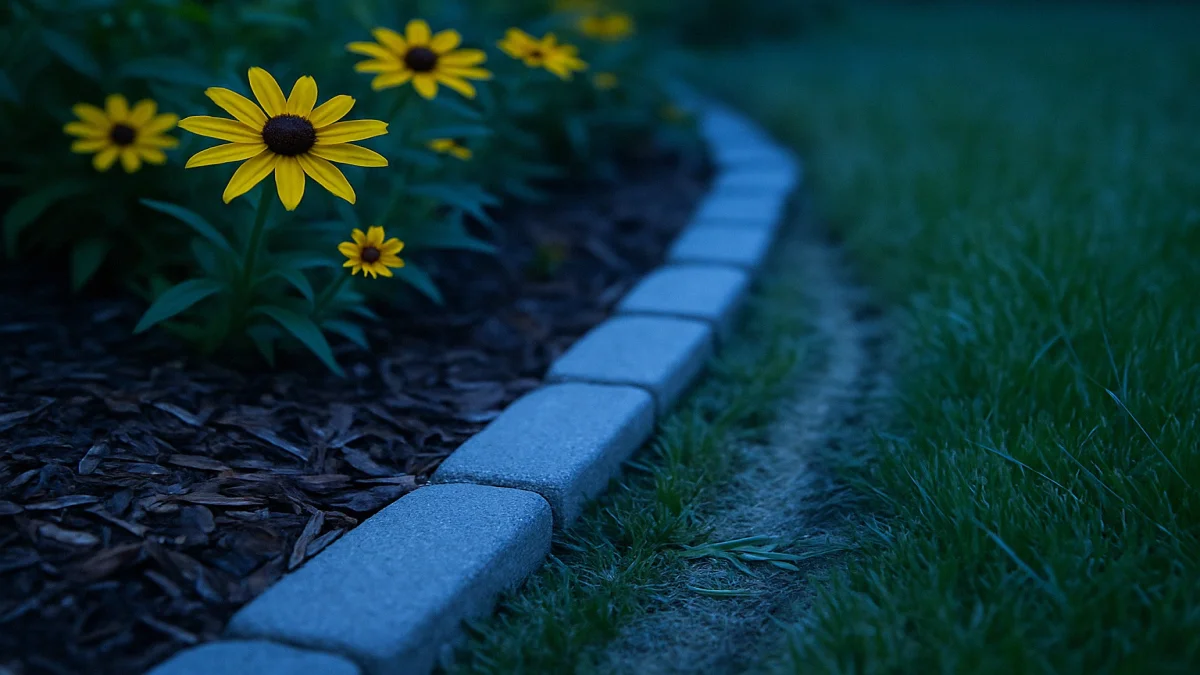
Voles leave shallow surface runways one to two inches wide through grass, mulch, and groundcover, and chew the crown and lower bark of native perennials and young shrubs flush to the soil. Mid-June, after green-up but before midsummer heat, is when fresh runways are easiest to spot and active burrows are still small enough to control without poisons or tractor-grade earthworks. The fix is hardware cloth at the crown, vegetation-free collars under woody plants, and snap traps placed inside the runway itself.
You planted thirty native perennials last September. By the second week of June, four are mysteriously gone at the soil line, stems snapped clean as if a child had stepped on them. The black-eyed Susans you bought at the native plant sale are pulled sideways, almost flat. The young serviceberry has a band of nibbled bark you can fit a pencil into. Nothing chewed leaves, nothing left tracks in the loose mulch, nothing came at the plants from above. That gap between heavy investment and invisible loss is the specific frustration this post addresses. Voles are not a rare problem. They are the most under-diagnosed reason native plantings underperform in the second year, and the damage signs show up in mid-June for almost everyone who has them.
What does fresh vole damage actually look like in a native plant bed?
Three signs together confirm voles. None of the three alone is enough, because each one can be confused with another animal.
FREE: Wildlife Garden Starter Guide
Get our 12-page PDF with the 25 best plants for pollinators, simple habitat tips, and a printable checklist — all 100% free.
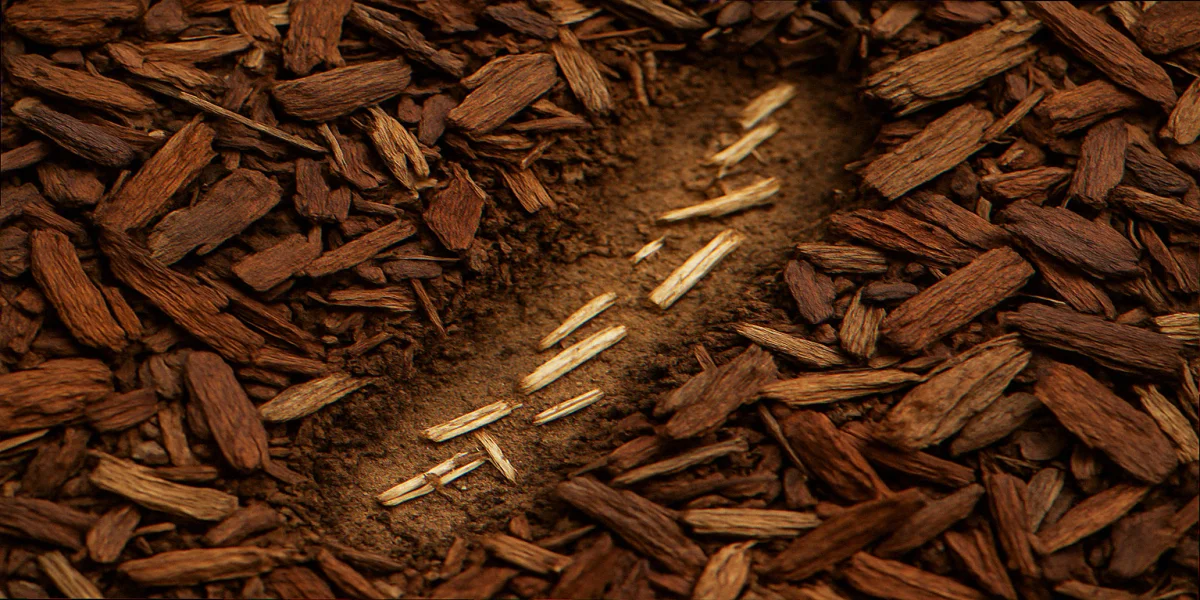
No spam. Read our Privacy Policy.The first sign is the surface runway. Voles travel above ground inside shallow, well-worn paths that flatten the grass or push aside mulch. The Internet Center for Wildlife Damage Management describes these as one to two inches wide with vegetation clipped close to the ground along the route. In June, the easiest place to find them is at the edge where lawn meets a mulched bed. Voles move along that seam like a deer along a fence line. If you brush back the mulch and find a clean little highway underneath, with droppings and small piles of clipped stem ends, you have an active route.
The second sign is the gnaw pattern. Vole incisors leave a very specific signature on roots, crowns, and the lower bark of woody plants. The marks are roughly 1/8 inch wide, 3/8 inch long, and they sit at random, non-uniform angles in irregular patches, as documented by Utah State University Extension. A rabbit, by contrast, snips a stem with a clean 45-degree cut and chews bark in obvious tooth-pair scrapes higher up. Deer rip and twist. Voles look like a small drill bit ran over the surface in scattered directions.
The third sign is the crown injury. Voles eat the growing point of a perennial flush to the soil. The plant looks pulled or pushed sideways because the crown is no longer anchoring it. Black-eyed Susan, blanketflower, beardtongue, and asters all show this beautifully when voles are at work: the plant is mostly intact in your hand when you pull it, but the bottom is chewed into a stub instead of a healthy white crown.
Why mid-June, not fall, is when you actually catch the population
Most published vole advice is timed for orchard managers, who care about winter girdling under snow cover. For a native garden, that timing is wrong by six months. By the time you see fall girdling, the breeding population has already produced two summer litters and is heading into its peak winter density. Mid-June is the strategic window because three things converge.
One: green-up is finished, so a fresh runway is visible against the new growth that should have filled it in. A patch of flattened, yellowing grass between a mulch bed and the lawn is a current-year highway, not a leftover. Two: the spring litter is just weaning, so the population is about to expand fast. Trapping or habitat removal in mid-June pulls the breeding adults before the second summer litter is born, which compounds to a much smaller fall population. Three: native perennials are big enough to find but still soft-stemmed and unprotected, so the damage is happening now and you have time to install collars before midsummer drought stress closes the bed’s recovery window.
There is one more reason. Vole populations cycle on a 2-to-5-year boom-and-bust pattern, and during local irruptions densities have been recorded above 4,000 voles per acre according to the Internet Center for Wildlife Damage Management’s biology summary. If your neighborhood is in a boom year, single-property control will not solve it, but staying ahead of the curve in June still cuts what you lose by a meaningful fraction.
Meadow vole or pine vole: which species is wrecking your bed?
The two species that damage native plantings east of the Rockies behave very differently, and the control that works for one is not optimal for the other. Treat this as a one-minute ID call, not a research project.
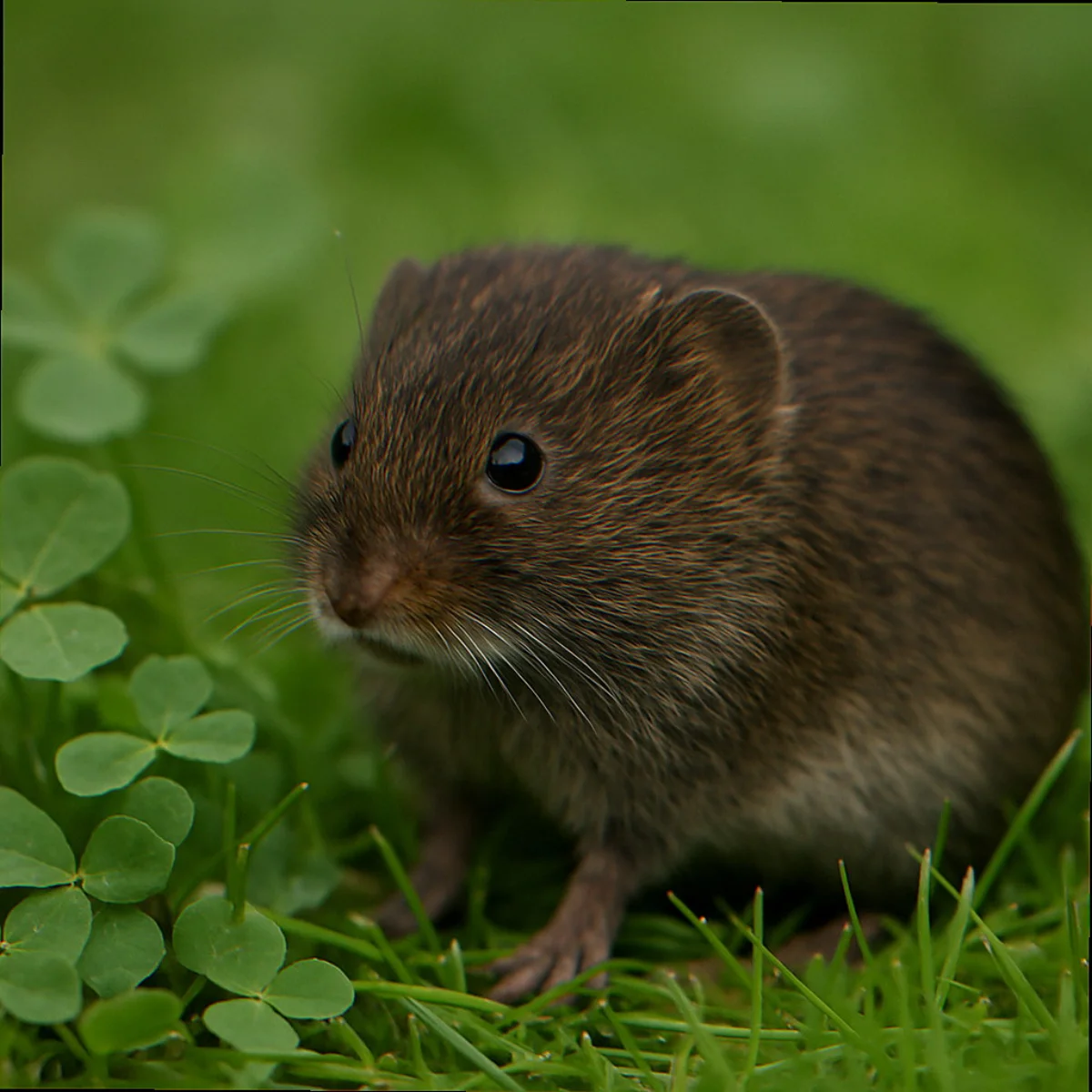
Meadow voles (Microtus pennsylvanicus) are larger, with visible eyes and ears, dark brown coats sometimes silvery underneath, and a tail one to two and a half inches long. They are active above ground and build the surface runways most gardeners notice. They prefer wet meadows, grassy edges, garden lawns, and beds with dense groundcover. If your damage is at the lawn-bed seam and you have runways visible after parting the grass, this is your species.
Pine voles, also called woodland voles (Microtus pinetorum), are smaller (about 4.5 to 5.25 inches with a stubby tail roughly the length of the hind foot), have nearly buried ears, slightly sunken eyes, and lighter brown fur. They live almost entirely underground in burrow systems that can run four feet deep, with networks of shallow tunnels under heavy organic mulch. They prefer wooded edges, abandoned fields, and the deep mulch layer most native bed converts use to smother lawn. If your damage shows up under three inches of mulch with no surface runway, and roots and crowns vanish without any visible aboveground sign, you have woodland voles.
Vole damage vs other animals — quick comparison
| Sign | Vole (meadow) | Vole (pine/woodland) | Mole | Rabbit |
|---|---|---|---|---|
| Surface runway | Yes — 1 to 2 in. wide, visible | Hidden under mulch | No | No |
| Soil mound | No | Rare, small | Yes — volcano shape | No |
| Gnaw mark style | 1/8 in. ragged, random angles | Same, on roots and crowns | Does not gnaw plants | Clean 45-degree cut |
| What is eaten | Stems, crowns, lower bark | Roots, bulbs, crowns | Earthworms and grubs | Tender new growth |
| Active in winter | Yes (under snow) | Yes (underground) | Yes | Yes |
If you want a longer read on the mole side of this question, the catalog already covers humane mole management in detail at how to keep moles out of your yard without killing them. The runway-versus-mound distinction in the table is the single most useful ID step.
Confirm the burrow with the apple test before you trap or wrap anything
Most gardeners skip this step and end up trapping a chipmunk or sealing a rabbit run. The apple test takes ten minutes and removes the guesswork.
Cut a fresh apple into half-inch cubes. Place two cubes at the entrance of every suspected burrow opening and at three or four points along any suspected surface runway. Cover each station with an inverted clay flowerpot or a piece of plywood propped on stones, so birds and the neighbor’s cat cannot access them. Mark the stations with bamboo stakes and check at 24 and 48 hours.
If the apples are gone or chewed in place, the runway is active. If the apples are untouched at 48 hours, you either misread the sign or the runway is old. This is the difference between treating a current population and wasting an afternoon installing collars around plants that have no real threat. Penn State Extension uses the same test as a baseline assessment for integrated vole management in orchards, and it works exactly as well in a 200-square-foot suburban bed.
What actually stops voles in a native plant bed?
Five interventions, ordered from most effective to least. Use the first two by default. Stack the rest only if the apple test confirms a heavy population.
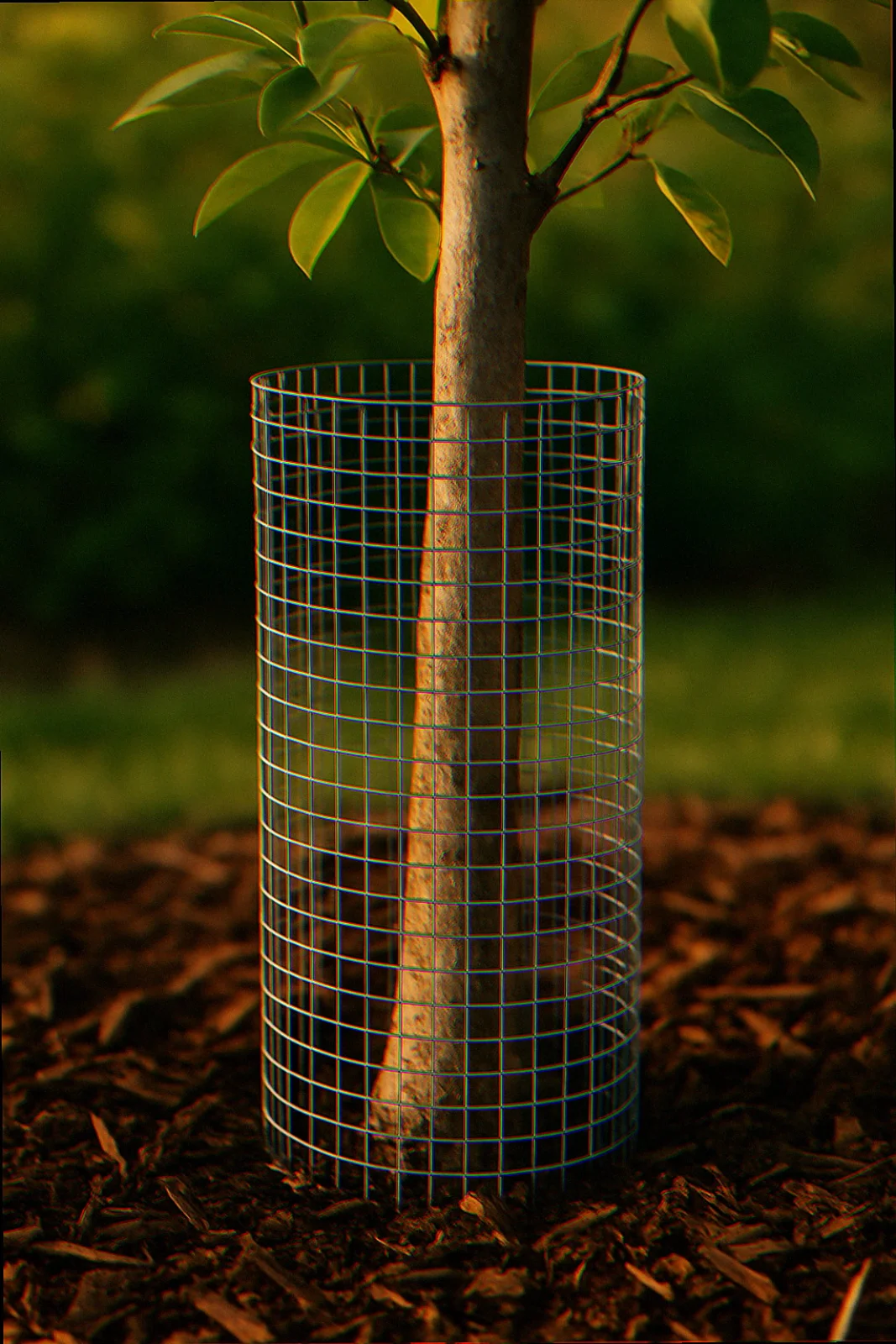
One: hardware cloth wraps on every woody plant the first three winters. Cut a strip of 1/4-inch galvanized hardware cloth 18 inches tall by long enough to fully wrap the trunk with a one-inch overlap. Bury the bottom edge two inches below grade. Hold the cylinder one inch off the bark so growth has room. The bottom edge buried below soil line is the part most installers skip, and it is the part that matters. A surface-set wrap lets voles dig under it in a single night.
Two: a vegetation-free collar of pea gravel under every shrub and tree. Pull back mulch and groundcover 15 to 18 inches from the trunk and lay three to four inches of pea gravel or crushed stone. Voles avoid open ground because they are heavily predated by hawks, owls, foxes, and house cats when they have no cover. A bare gravel collar removes their cover and pushes them out of the danger zone around the crown, which Utah State University Extension specifically recommends as the most durable single intervention.
Three: keep mulch shallow and pulled back from crowns. Pine voles colonize beds that have three or more inches of mulch piled against the base of every plant. Cap the bed at two inches and leave a two-inch ring of bare soil around each crown. The plant does not lose moisture meaningfully and the vole loses its commute.
Four: snap traps inside the runway. Standard mouse snap traps baited with a peanut butter and oat dab, placed perpendicular across an active surface runway with the trigger sitting on the path, work very well for meadow voles. Place each trap inside a covered shelter — an inverted pot, a half-buried PVC pipe, or a wooden bait station box — so songbirds, chipmunks, and pets cannot trigger them. Two traps per ten linear feet of runway is enough for a small bed. Skip glue traps and skip poison baits: both are indiscriminate, and second-generation anticoagulant rodenticides are the documented cause of secondary poisoning in 70 to 85 percent of tested hawk and owl carcasses in studies Audubon has cited.
Five: invite the predators back. A nest box for screech owls or barn owls on a property within range of even a small lawn produces meaningful pressure on the local vole population. A pair of nesting barn owls feeds its brood roughly a thousand small rodents over a single nesting season according to Cornell Lab figures. This is a slow lever — owls do not show up the year you install a box — but it is the only one that scales.
Why ultrasonic repellers and castor-oil sprays did not make this list
Both have decades of mixed-to-negative trial data. The current consensus from extension services that have actually run controlled tests is that ultrasonic devices show no reliable effect on vole behavior, and castor oil granules can move pine voles temporarily but do nothing for meadow voles. Save the money for hardware cloth.
Hardware cloth wraps and crown collars: the install that actually lasts
The longevity difference between a 20-minute install and a 5-minute install is roughly five years versus one. Here is the longer version, in the order you should do it.
Pick a cool morning. Wear leather gloves. Cut your hardware cloth into 18-inch by 14-inch strips on a flat workbench with metal snips, not wire cutters — the cleaner the cut, the less it shreds your skin when you tighten it. Score and fold a clean half-inch hem along the top edge to remove the sharp wire ends that catch birds and squirrels. For each shrub or young tree, dig a shallow trench two inches deep all the way around the trunk at a radius of three to four inches. Set the hardware cloth cylinder into the trench, overlapping the long ends by one inch, and secure the overlap with three galvanized hog rings or short twists of stainless wire. Backfill the trench, tamp lightly, and check that the cylinder stands one inch clear of the bark on all sides. For multi-stem shrubs like ninebark and viburnum, wrap each main stem individually instead of fighting one giant cylinder around the cluster.
For the gravel collar, pull mulch and any groundcover back 15 to 18 inches from the trunk before laying gravel. Skipping that step lets voles tunnel right back under the gravel within a season. The bare buffer is what matters, not the gravel itself.
A small ergonomic note. For anyone who has stripped sod and rototilled their own bed and now finds that bending over twenty plants for crown collars hurts more than the original conversion did, switch to a long-handled three-tine cultivator and a low garden stool. The total install of twenty plants is about ninety minutes. Doing them in three thirty-minute sessions across a week is gentler on a back that is already paying the conversion tax. The same logic applies if you are protecting newly planted natives during a heat wave — short sessions with proper recovery beat one heroic weekend. The catalog has a separate guide on saving newly planted natives through a June heat wave if mid-summer stress is also on the table.
The neighbor question: trapping voles in a yard that calls itself wildlife-friendly
This is the conversation almost no one online publishes and the one Sarah-type readers think about hardest. The yard signals stewardship, the certification placard is at the gate, the chickadees are nesting in the box on the maple. Then a snap trap appears in the bed and someone asks the question out loud.
The honest answer is that voles are not at risk. Microtus pennsylvanicus populations are healthy across North America, with documented densities in the thousands per acre during local irruptions and reproduction rates among the highest of any small mammal. They are also the most important prey species in temperate ecosystems by total biomass — hawks, owls, foxes, snakes, weasels, and feral cats all depend on them. Removing a small number from your bed does not dent the regional population and does not deprive predators. It does protect a 30-plant bed that represents real money and a year of physical work, and it preserves the shrub anchors that the rest of the wildlife garden is organized around.
The line that matters is the method. Snap traps under shelter, set inside an active runway, with the body removed promptly, is humane and selective. Poison bait stations, glue traps, and uncovered snap traps are not. The trade is straightforward: you tolerate the existence of voles in the landscape and you remove the specific individuals that have learned to commute through your bed.
If a neighbor or HOA letter forces the conversation in the wrong direction — the trap looks like an “extermination” issue rather than a targeted intervention — the catalog already has a full response template at HOA sent a letter about your native garden? Do this. The script there transfers cleanly to the trap question, because the underlying conflict (intentional management of a “wild-looking” yard) is the same.
What changes after one season of vole pressure removed
The first measurable change is at the next dormant season. Shrubs that were quietly losing bark at the base put on more new wood the following spring, often noticeably more than untouched neighbors. Black-eyed Susan and aster clumps come back as full clumps instead of half-circles. The bed reads “intentional” again, which solves the secondary social problem of looking neglected to a passing HOA inspector or a code officer.
The second change is harder to see and easier to feel. The bed stops eating your money. The plants you keep replacing because “voles got them” stop being a line item. The cost of conversion drops back to the one-time investment it was supposed to be, instead of an annuity to the local rodent population. For a 300-square-foot native bed planted at $4 to $7 per plug, the typical second-year vole loss is between $80 and $200 in replacement plants and time, and the hardware cloth and gravel install costs roughly $30 in materials and one Saturday morning. The math is unflattering to the do-nothing path.
The third change is the one nobody mentions. The pleasure of standing in a planted bed and not finding fresh damage. The thirty-second dawn walk that used to be a tally of losses becomes a check on what bloomed overnight. A small piece of the original promise of native gardening — that the yard becomes a place to refill attention, not spend it on damage control — comes back. The mechanism is small. The effect is not.
FAQ
Are voles eating my native plants or just the lawn around them?
Both, but the lawn damage is cosmetic and the bed damage is structural. Voles graze grass along their runways, which is annoying but reversible in two weeks of growth. The same voles chew the crowns and lower bark of perennials and young shrubs in the same trip, which kills the plant outright. If you find runways in the lawn next to a native bed, assume the bed is being hit even if you have not seen damage yet.
Can I plant my way out of a vole problem?
Partially. Voles avoid daffodils, alliums, fritillaria, and most plants with milky sap or strong volatile oils. Adding clumps of allium and a daffodil ring around the most valuable shrubs reduces grazing pressure, but it does not stop crown damage on the perennials voles do eat. Treat planting choice as one layer of defense, not the whole strategy. Hardware cloth and gravel collars do the actual work.
Will outdoor cats solve the problem?
House cats kill voles, but the trade is bad. Free-roaming cats also kill nesting songbirds, fledglings, ground-nesting bees, and small reptiles. The Cornell Lab and the American Bird Conservancy estimate free-roaming cats kill billions of native birds annually in the United States. A backyard that has solved its vole problem with a roaming cat has usually traded a small mammal problem for a much larger food-web problem. Owls, screech owls in particular, are the right scale of predator and do not also clear out the wildlife you are trying to attract.
Is it safe to leave snap traps in a yard with kids and dogs?
Snap traps inside a covered shelter — an inverted clay pot weighted with a brick, a wooden bait station, or a section of 2-inch PVC with the trap at the back — are out of reach of curious fingers and pet noses. Set traps along the runway, never at the burrow mouth, and check daily. Do not use poison bait under any circumstance if pets or children are in the yard.
How long do I need to keep hardware cloth on a young tree?
The first three full winters after planting, minimum. Many extension agents recommend leaving wraps on for five years, until the bark thickens and corks enough that vole incisors no longer easily penetrate it. Loosen and inspect each spring so the cylinder is not constricting trunk growth, and trim any groundcover that has crept up against the wrap during the season.
Further reading from the catalog: stop rabbits from eating native plant seedlings, keep groundhogs out of native gardens without traps, how to inspect bulk mulch before they dump it, and wildlife-safe garden netting alternatives.
Want More Wildlife Garden Tips?
Join 5,000+ nature lovers getting our weekly tips on creating wildlife-friendly gardens.
No spam, unsubscribe anytime. Privacy Policy
Emma Harrington
Emma Harrington is a wildlife habitat researcher and content editor with a passion for backyard conservation. She has spent over a decade translating ecological science into practical tips anyone can follow — from selecting native plants to building wildlife-friendly habitats. Her work focuses on helping homeowners transform ordinary yards into thriving ecosystems for bees, butterflies, hummingbirds, and other beneficial wildlife.