
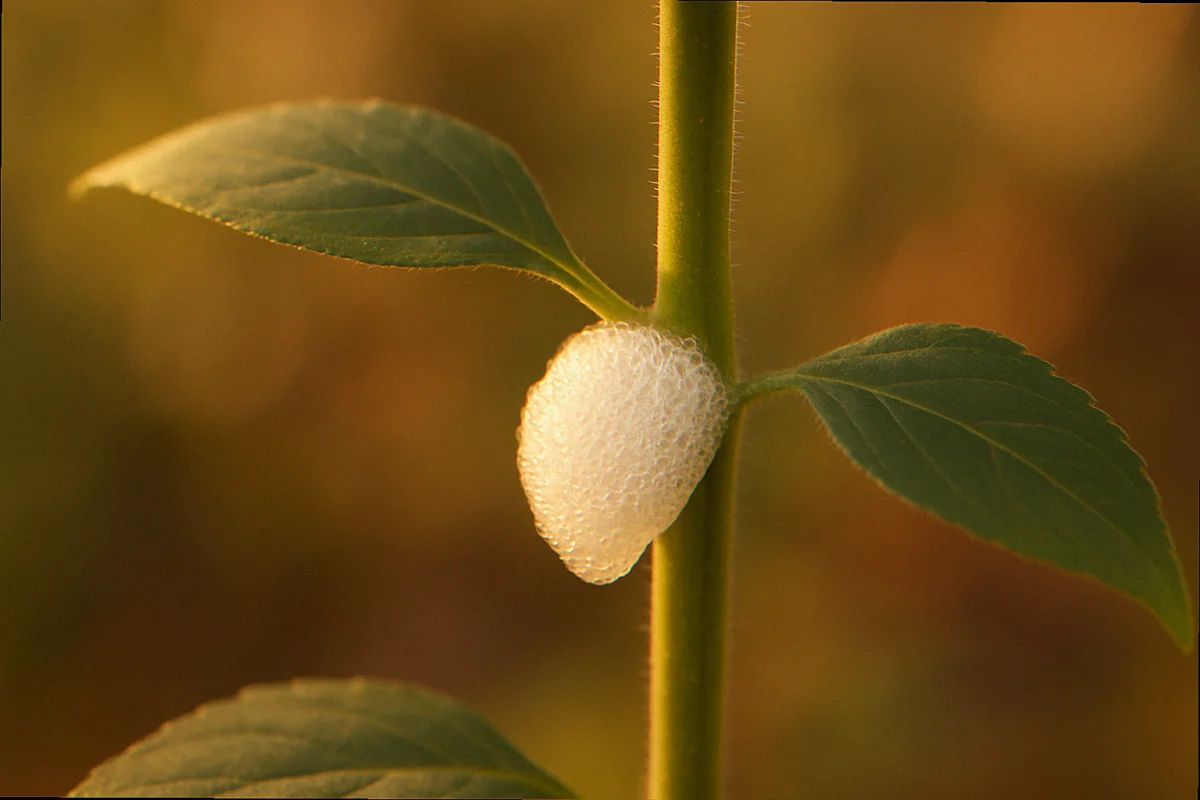
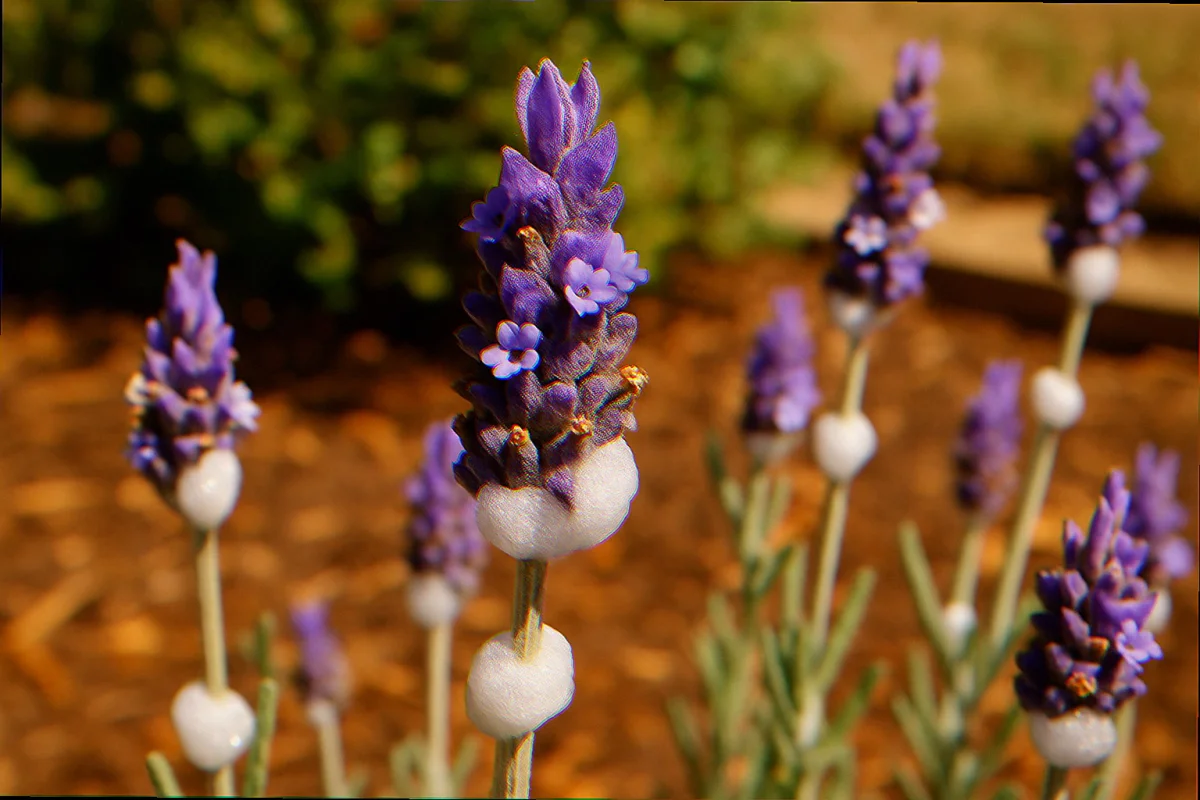
Spittlebug foam in a native bed is rarely worth treating. Each white blob shelters a single sap-sucking nymph, and on healthy bee balm, yarrow, lavender, or goldenrod the feeding causes minor cosmetic stippling rather than plant death. Wash the foam off only when you find more than ten clusters on a single stem, when the host is a brand-new transplant, or when the nymphs are clustered on the seedhead of a plant you are saving for next year.
That Foam on Your Bee Balm Is Not a Disease
Late June walks through a pollinator bed always end the same way. Someone leans over a bee balm stem, sees a wad of white froth crawling slowly down the leaf axil, and assumes the plant has caught some kind of slime mold or fungal slop. I have answered the same panicked text from neighbors three years running. The reflex is to grab the hose, blast every stem clean, and then wonder a week later whether the plant is going to recover.
The foam is alive. Tucked inside each cluster is a single soft-bodied nymph of a froghopper, part of the spittlebug family Cercopoidea. The bubble is a protective shelter the nymph manufactures from its own excreted plant sap, mixed with a sticky polymer secreted from its abdomen. Inside the foam, the nymph is hidden from predators, kept moist on a dry June afternoon, and protected from the heat of direct sun. A 2018 study in Scientific Reports showed that the foam cools the nymph by up to 10°C compared to ambient air, which is why you see it most often on warm afternoons when other insects retreat.
FREE: Wildlife Garden Starter Guide
Get our 12-page PDF with the 25 best plants for pollinators, simple habitat tips, and a printable checklist — all 100% free.
No spam. Read our Privacy Policy.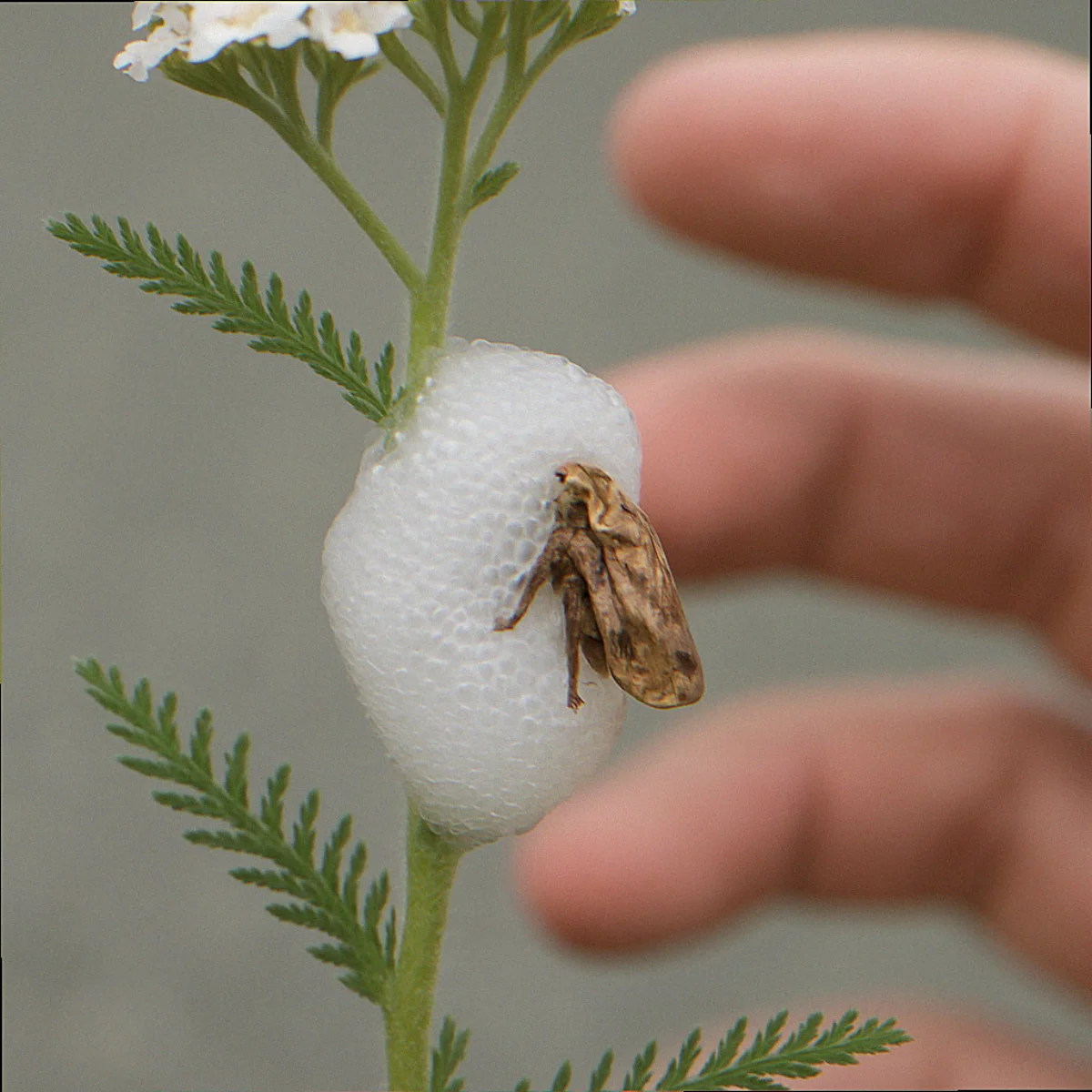
What Exactly Is the Spittle and Who Made It?
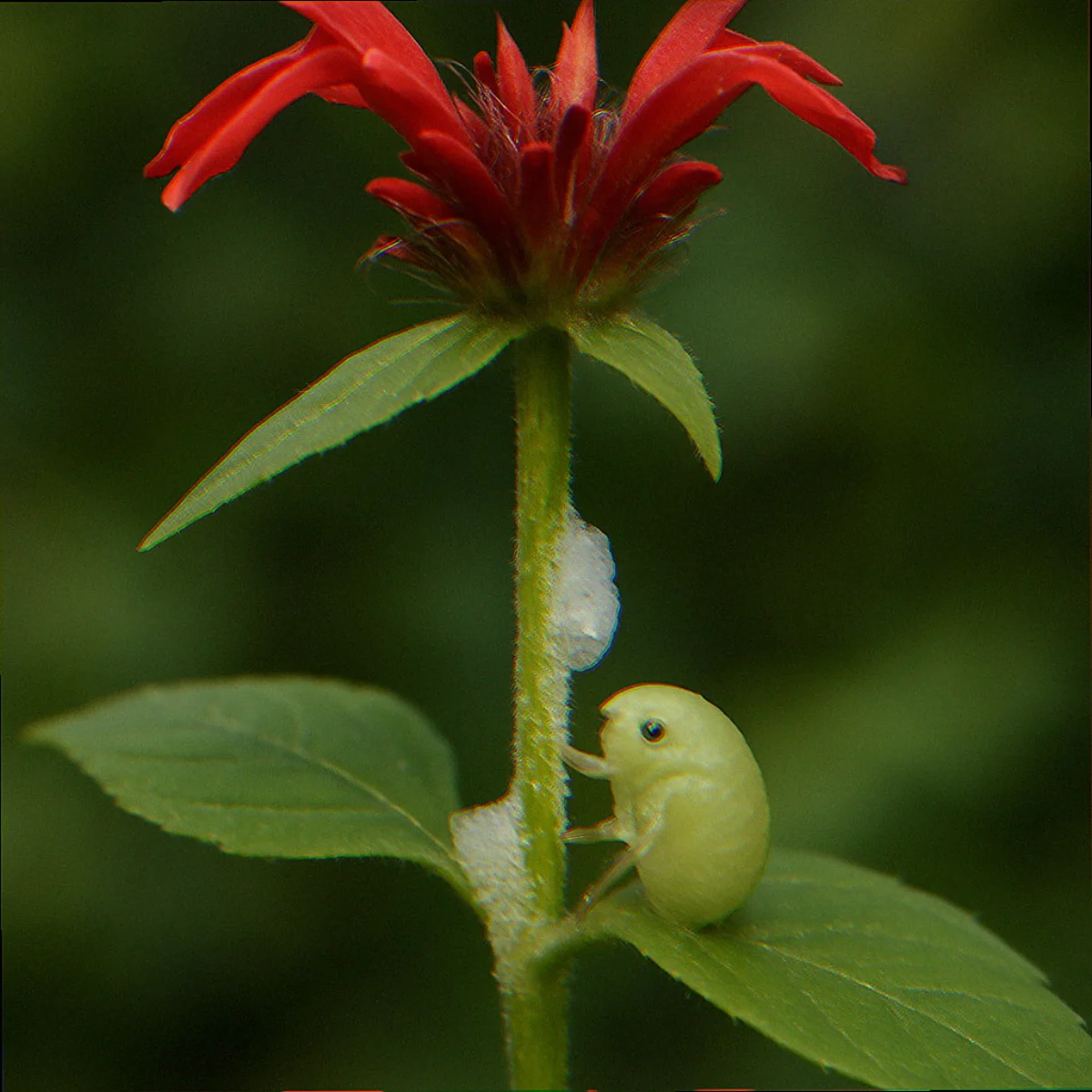
The frothy blob is the work of a meadow spittlebug, Philaenus spumarius, or one of roughly 30 other North American species in the Cercopoidea group. The adults look like tiny brown leafhoppers and can spring more than 100 times their body length when disturbed. The nymphs, the ones that produce the foam, are pale green or yellow and only about 3 to 6 mm long.
If you slide a leaf gently to the side and look into the bubble, you will see the nymph clinging head-down to the stem with a tiny piercing mouthpart, called a stylet, drilled into the plant tissue. It pulls xylem sap, processes the water out the back end, and uses abdominal motion to whip the watery output into a froth. The bubble takes about an hour to assemble after a successful molt, and the nymph remolts five times before emerging as a winged adult by mid-July in most of the Midwest and Northeast.
Foam usually appears between mid-May and early July, peaks around the longest day of the year, and disappears once the adults disperse. The University of Minnesota Extension notes that the nymphs cluster on the upper third of soft stems, especially where new leaf nodes are still expanding. That is also where the sap pressure is highest, so the bug picks its feeding site for hydraulic convenience.
Does Spittlebug Damage Actually Kill Native Plants?
The short answer is no, not in a backyard. Spittlebug nymphs pull a tiny amount of dilute sap from each stem. They are not vectors for the kind of viral or bacterial pathogens that decimate vegetables. The University of California IPM program lists spittlebugs as a “rarely damaging” pest on landscape plants, recommending no chemical control for ornamental species.
On a mature bee balm or yarrow stand, twenty or thirty foam blobs will produce nothing more than a few stippled leaves and slightly delayed flowering. Established perennials tolerate this kind of low-level feeding for a long time. Pulling out a hand lens and examining a heavily-fed stem after the nymphs leave usually shows nothing worse than a few brown punctures the size of pinheads.
Where I have seen real trouble is on first-year transplants and on the seedheads of yarrow or coneflower I am saving for cold-stratified propagation. A first-year native plug only has so many functional leaves. If a third of those leaves carry a sap-sucking guest for two weeks, the plant comes into July with less energy reserves and a smaller root system than expected. If you are running a propagation effort and need clean, plump seedheads to harvest in fall, a heavy nymph load can dry out and abort the developing seeds. Outside of those two cases, leave the foam alone.
Three Signs You Can Safely Ignore the Foam
Most foam in a native bed is one of three benign patterns. If your plant matches any of these, walk past it.
- Established perennial with fewer than ten foam clusters per stem. A mature mountain mint or wild bergamot has the leaf surface area to handle this feeding load without measurable damage. Twelve or fifteen feeding nymphs across a clump of forty stems is statistical noise.
- Foam on the lower half of older stems on a clump that has already flowered. If the flowering job is done, the plant is shifting energy into the root crown for next year. A few late nymphs near the base do not change that calculation.
- Foam on a plant species whose adults are pollinator forage. Adult froghoppers do not nectar in any meaningful way, but the foam-protected stage feeds parasitic wasps that go on to control aphids and caterpillars elsewhere in the bed. Killing the nymphs early shorts out a useful piece of the food web.
- A small cluster, three to six total nymphs, on a robust clump of mountain mint or goldenrod. These genera shrug off low-density feeding because their stems carry redundant phloem channels.
- Foam that is already drying out by mid-July. The nymphs have likely already molted to adult and left the plant. What you see is leftover residue, not active feeding.
I have a clump of Pycnanthemum muticum in the back corner of my yard that has reliably grown three to four dozen foam blobs every June for five years running. The plant has never thinned, never flowered late, never showed disease symptoms. The bumblebees do not seem to notice.
Skip the Hose. Try This Field Test Instead.
Before reaching for a spray bottle, run the following three-step test on the worst-looking stem you can find. It takes ninety seconds and will tell you whether the population is worth removing or whether the plant is fine.
First, count the foam blobs on a single representative stem. Anything under ten clusters is not a problem on an established plant. Second, gently flick one foam blob open with a fingertip and confirm there is a soft pale nymph inside, not a dried husk. Empty bubbles mean the nymph has already molted out and what you are seeing is leftover residue from last week. Third, examine the leaves just below the foam for the tell-tale stippling, a fine pattern of pale dots no bigger than a printed period. If the leaf below the foam still looks green and turgid, the damage is not yet at threshold.
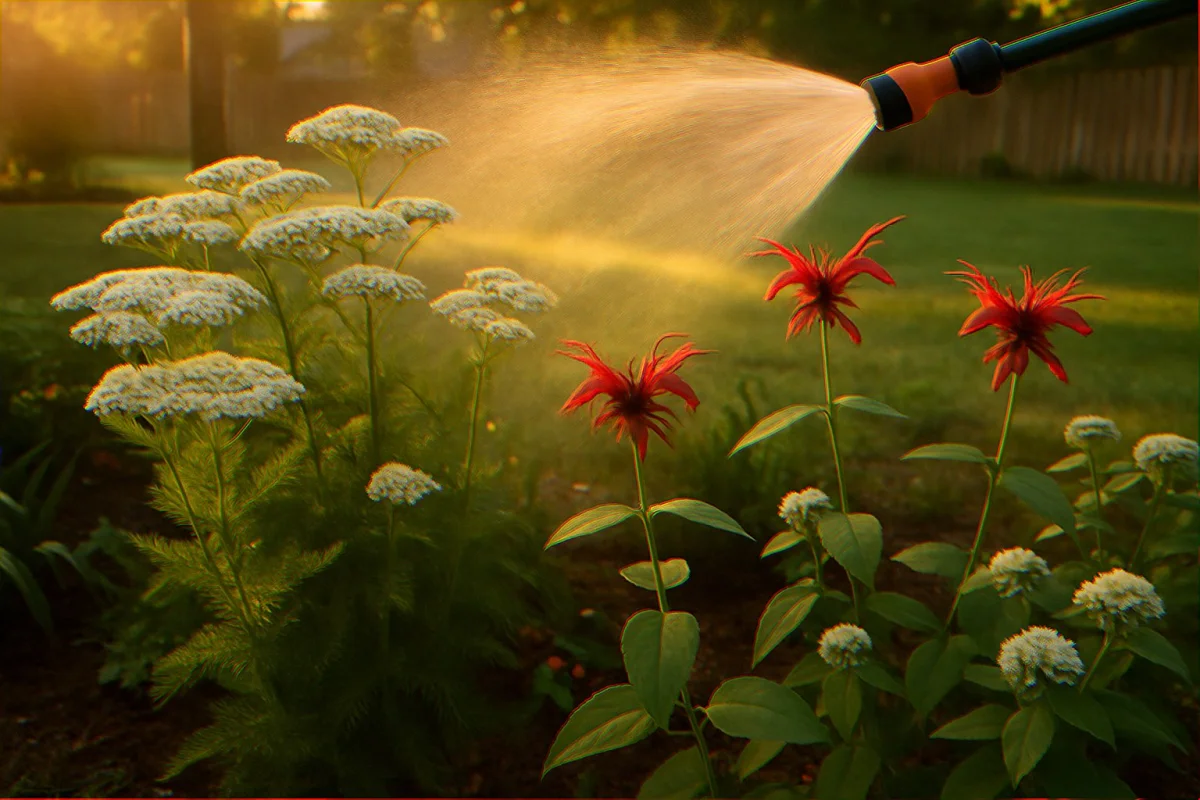
If you decide removal is justified, take a soft spray nozzle and aim it at a sharp upward angle from below the stem. The nymphs cannot reattach once dislodged onto bare ground because the new feeding site needs the same sap pressure as the original, and a dropped nymph rarely climbs back up to a fresh node. Do this work in the early morning so any wet leaves dry out before the heat of the day, and so you do not knock off any pollinators that might be working the same plant. Avoid soaps, oils, or insecticidal sprays. They kill the nymphs faster, but they also coat the leaves of plants the bees and parasitic wasps are working two feet away.
Need help spotting the difference between feeding damage and plant disease? The same eye-training applies to powdery mildew on bee balm and a few other common look-alikes that fool the first-time observer.
When Does Spittlebug Feeding Cross Into Real Trouble?
There are three scenarios where I act on spittlebug foam without much hesitation, and they are all narrow.
The first is on a young, recently-planted native plug. A four-inch pot transplant in its first six weeks of establishment is putting most of its energy into root expansion. Sap-sucking pressure during that window slows the plant’s ability to drive new roots downward, and on a dry summer it can leave the plug too shallow to survive August. If you have fewer than a hundred plugs in the ground from this spring’s planting, walk them weekly and remove foam by hand or with a hose at any meaningful density.
The second scenario is alfalfa, clover, or strawberries used as edible groundcover. Spittlebug nymphs can stunt the new shoots and reduce yield in a way that matters when you are eating the plant. The UMN extension agency reports that heavy nymph populations on strawberry plantings can cut harvest weight by 20 to 30 percent. For ornamental native beds this does not apply, but if you are mixing edibles into your pollinator zone, treat the food plants more carefully than the natives.
The third scenario is on prized seedheads you plan to harvest. If you are propagating cold-stratified native seeds for next year’s expansion, sap loss during the seed-fill stage can produce thin, hollow seeds that fail to germinate. Knock the nymphs off these specific plants and leave the rest of the bed alone.
Wash It Off Versus Leave It Alone
The decision really does come down to a side-by-side calculation. Use the table below to choose by scenario instead of by gut reflex.
| Scenario | Action | Why |
|---|---|---|
| Established perennial, under 10 foam clusters per stem | Leave alone | Below damage threshold and nymph protein feeds parasitic wasps. |
| First-year native plug | Wash off morning of detection | Limited reserves cannot tolerate sap loss during root establishment. |
| Edible groundcover (strawberry, clover) | Wash + monitor weekly | Heavy feeding can cut yield 20 to 30 percent. |
| Seedhead plant for propagation | Hand-remove nymphs at flick | Sap loss during seed fill produces hollow, infertile seed. |
| Heritage lavender or mature bee balm clump | Leave alone unless over 30 clusters | Woody shrubs and mature clumps tolerate moderate feeding indefinitely. |
| Native bed visible from a neighbor’s window | Wash + place a low signpost | Tidiness signal protects the rest of the planting from “rat nest” complaints. |
If your plant catalog needs a refresh of which species spittlebugs actually prefer, our deep-dive on deer-resistant native pollinator plants overlaps heavily with the spittlebug host list. Bee balm, yarrow, mountain mint, goldenrod, and aster all appear on both sides.
The HOA, the Curious Neighbor, and the Yuck Factor
The social side of foam-on-plants gets ignored in most extension publications, and that is a mistake. A reader emailed last month to ask whether she should hose down a curbside hellstrip on her front yard because her HOA management company had photographed the white blobs and “filed it as a sanitary concern.” Spittlebug foam triggers the same gut-level reaction as fungal slime or animal saliva. People do not know what it is, they imagine the worst, and the cost of letting that perception take hold is measured in fines or warning letters.
This is the moment where ecological purism collides with curb appeal. Leaving the foam in place protects a functioning piece of the food web. Washing it off keeps the neighborhood quiet. Both are defensible. The middle path I take in my own yard is to leave foam on plants in the back beds, where nobody walks, and to spray it off the front-yard strip where the mail carrier will see it tomorrow. Pair that with a small interpretive sign, even a printed index card laminated to a wooden stake, and the question turns from “what is wrong with that plant” into “I did not know foam was actually an insect.” For more on the dual signal, our walk-through on HOA letters about your native garden covers the language to use in a written response.
If you grew up checking native plant labels at the big-box stores, you already know the rhythm of half-purist, half-pragmatic gardening. Spittlebug foam fits the same logic. Most of the time the right call is to let it ride. Sometimes the right call is to make the yard legible to a watching neighbor. Choose the response on a stem-by-stem basis instead of a yes-or-no rule.
What Changes in the Bed Once the Nymphs Are Gone
By mid-July in most of the United States, the foam has dried up and the adult froghoppers have dispersed into the surrounding grass and tree canopy. Plants that hosted moderate spittlebug populations will look slightly stippled along the upper stems for the rest of the season, but they will flower on schedule and set seed normally. New growth above the feeding zone will come in clean.
The lasting evidence, the actual paying attention you do with a hand lens, is more durable. Once you can tell foam from disease, you stop reaching for a hose at the first odd thing in the garden. That habit changes everything downstream. You stop killing sawfly larvae that look like caterpillars but are not, you stop confusing native seedlings with weeds, and you stop spraying for pests that were doing no harm. The same eye-training applies to subtle questions like how many aphids on milkweed are too many or whether a particular cluster of stippling on yarrow leaves is feeding damage or fungal spot. A similar judgment call comes up with slug damage on native seedlings, where the right answer depends on plant maturity rather than insect count alone.
A native bed is supposed to host a long list of insects. The foam blob is one of the more dramatic visible signs that the system is functioning. When you stop treating that signal as an emergency, the rest of the garden gets quieter too. You start ignoring the small things and noticing the big ones, the new clump of milkweed coming up where you scattered seed last fall, the bumblebee colony that returns to a particular section of mountain mint year after year, the early-morning chewing damage you had been blaming on rabbits. Native gardening, done long enough, becomes a practice of seeing accurately rather than a practice of intervening loudly. Spittlebug foam is one of the cleanest places to start that practice.
FAQ
Will spittlebug foam spread from one native plant to another?
The nymph itself does not travel between plants the way an aphid colony will. A bee balm clump that has foam this June is no more likely to have it next year than any other stem in the bed. Adults migrate as a feeding wave in late summer, but each female lays eggs near the base of her plant and the nymphs hatch the following spring near that same spot. Removing foam from one plant does not protect a neighboring plant.
Should I worry about spittlebug foam on lavender?
Lavender is one of the most common host plants for meadow spittlebugs in suburban gardens. The plant is woody, deep-rooted, and tolerates the feeding without measurable damage. Unless you are managing a commercial lavender field for essential oil yield, leave the foam alone. The sticky residue washes off in the first rain. Adult froghoppers will leave the plant by late July.
Can spittlebug damage transmit any plant diseases in a backyard?
Meadow spittlebugs can carry Xylella fastidiosa, the bacterium responsible for Pierce’s disease in grape and olive crops in Europe and California. In a Midwest or East-coast suburban backyard with native ornamentals, the risk is functionally zero. If you grow grapevines or live in California olive country, contact your local extension agent for region-specific guidance. For everyone else, the disease risk does not change the calculus.
What if I have hundreds of foam clusters on a single plant?
A truly heavy load, say fifty clusters or more on a young plant, is worth treating with a strong morning hose. If the plant is in its first season, you should also check whether the plant is irrigated enough. Drought-stressed plants attract a higher density of sap-sucking insects, including spittlebugs, because their phloem is more concentrated. Watering the plant deeply once a week often does more long-term good than knocking nymphs off the stems.
Does spittlebug foam attract other pests like ants or wasps?
The foam itself is mildly bitter and not particularly attractive to ants. The nymphs inside, however, are sometimes parasitized by a tiny braconid wasp that lays its eggs through the foam. This is one of the reasons leaving moderate spittlebug populations in place can benefit the garden. The wasps that hunt them also hunt aphids and caterpillars elsewhere. You are not feeding a pest cycle, you are feeding a control cycle.
Want More Wildlife Garden Tips?
Join 5,000+ nature lovers getting our weekly tips on creating wildlife-friendly gardens.
No spam, unsubscribe anytime. Privacy Policy
Emma Harrington
Emma Harrington is a wildlife habitat researcher and content editor with a passion for backyard conservation. She has spent over a decade translating ecological science into practical tips anyone can follow — from selecting native plants to building wildlife-friendly habitats. Her work focuses on helping homeowners transform ordinary yards into thriving ecosystems for bees, butterflies, hummingbirds, and other beneficial wildlife.