
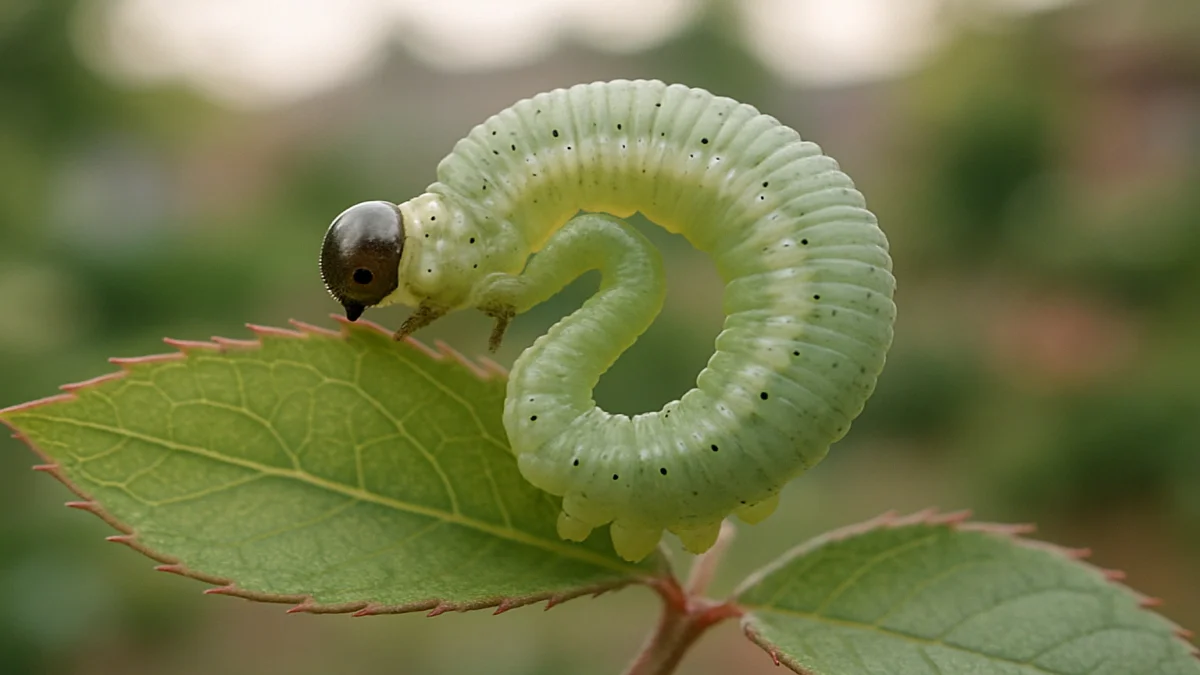
The fastest way to tell a sawfly larva from a caterpillar is to count the pairs of fleshy legs on the abdomen: sawfly larvae carry six or more pairs, caterpillars carry two to five. That single check decides whether to leave the bug alone (caterpillar, almost always a future moth or butterfly that feeds backyard birds) or treat it as a defoliating pest (sawfly, a wasp relative with no pollinator role).
I learned this the hard way my second June in the yard. A reader emailed me about the same mistake last week, which is the reason this post exists. She had a hairy, black-and-yellow cluster eating her oak sapling, recognized “caterpillar,” panicked because she had read the wrong thing on a gardening forum, and reached for neem. Two weeks later she found out she had wiped out a brood of orangestriped oakworms, which her chickadees would have stripped off that tree and fed to nestlings. The same yard the next morning had a true sawfly outbreak on her serviceberry, and she did not catch it because she was already past her ID confidence. Both bugs look like caterpillars. Neither one is. The rest of this post walks you through the 10-second test, the native plants where each one shows up in June, and what to do about each.
Why this 10-second ID test matters more in June than any other month
June is when the lines blur. Spring caterpillars of the swallowtails, sphinx moths, and oakworm complex are already feeding on natives in the Mid-Atlantic and the Great Lakes states. At the same time, the first generation of pear sawfly, rose sawfly, dogwood sawfly, and roseslug sawfly hits its peak. Walk a single native bed in the second week of June and you can see both groups in the span of ten minutes, often on plants that sit one foot apart.
FREE: Wildlife Garden Starter Guide
Get our 12-page PDF with the 25 best plants for pollinators, simple habitat tips, and a printable checklist — all 100% free.
No spam. Read our Privacy Policy.The problem is that almost every “pest control” page that ranks on a Google search treats both groups the same way. Soapy water spray, neem, bag and trash. That approach hides a small disaster: caterpillars on native woody plants are the largest single food source for nestling songbirds in summer. Doug Tallamy’s lab at the University of Delaware has documented that a single brood of chickadees needs between 6,000 and 9,000 caterpillars before fledging, and the parents collect almost all of them from native trees and shrubs in the yard or within 50 yards of the nest box. Kill the caterpillars in the second week of June, and you are pulling food out of the chick’s mouth at exactly the wrong moment.
Sawflies are the opposite story. They do not become moths. They do not feed birds in any meaningful way (a few warblers will pick them off, but the volume is nothing close to caterpillar feeding). And in a heavy year they can strip a young oak, willow, rose, or columbine in a weekend. Letting them run unchecked because you “left the caterpillars alone” costs you the plant. Knowing which one is on the leaf is the difference between supporting your yard and silently sabotaging it.
Sarah from up the road put it best when she stopped by last summer: “I keep killing the wrong thing and feeding the wrong thing. Just tell me how to look at the bug.” That is what this post is. Look at the bug. The same logic applies to most other “is this a pest” calls in a native garden, including aphids on milkweed and Japanese beetles, where the right intervention depends on accurate ID first.
How do you count prolegs without picking the bug up?
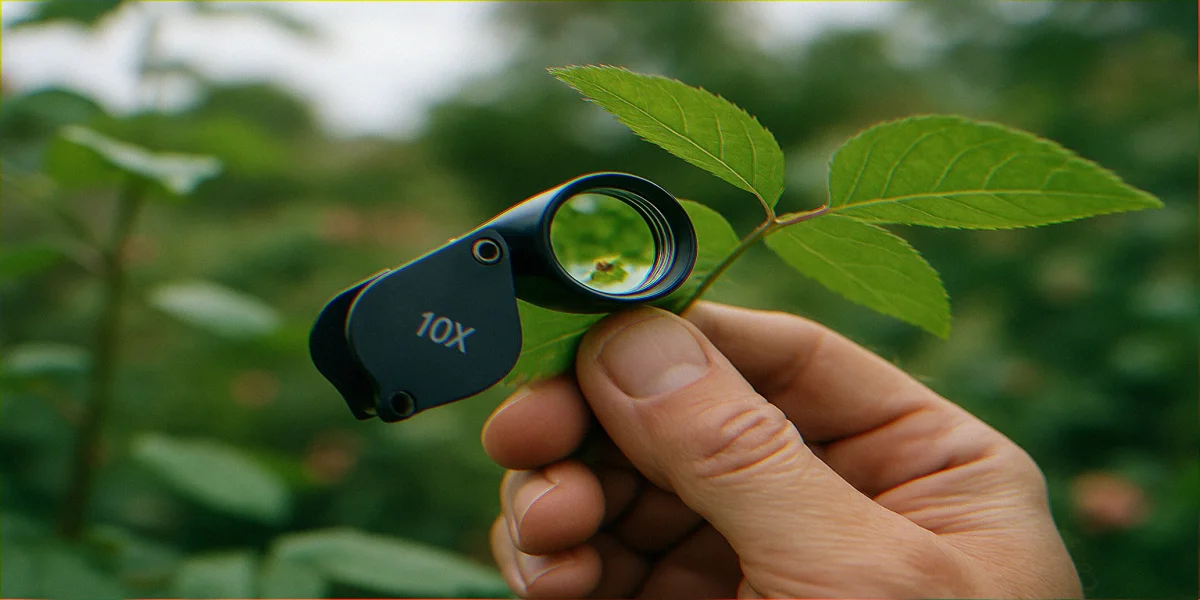
You do not need to touch the insect, and you should not. A 10x hand lens or a phone camera in macro mode is enough. Get the camera lens within four inches of the larva, focus on the underside of the body, and zoom in on the back two-thirds. The legs you see fall into two groups:
- Three pairs of jointed, hard-looking legs at the head end. Both caterpillars and sawflies have these. Ignore them for ID purposes.
- Soft, stubby, fleshy “legs” further back on the abdomen. These are the prolegs. This is the count that matters.
Count the soft pairs from front to back. Stop when you hit the rear claspers (a final pair that grips the leaf edge). Most field guides count the rear claspers as a proleg pair, and you should too.
If the answer is two, three, four, or five pairs, you are looking at a caterpillar. The vast majority of caterpillars on the trees, shrubs, and forbs of North American natives are moth or butterfly larvae, and most are harmless to the plant beyond a chewed leaf. If the answer is six, seven, or eight pairs, you have a sawfly larva. Six is the magic number. Almost every backyard sawfly in the eastern half of the country shows six or seven abdominal pairs, plus the three thoracic pairs at the head, for a total leg count that looks “too many” if you have been trained on caterpillars.
The second tell costs nothing and is even faster: look at the head capsule. Sawfly larvae have a single, smooth, glossy round eye-spot on each side of the head. Caterpillars have a cluster of six tiny ocelli arranged in a curve. From two feet away the sawfly head looks “polished” and the caterpillar head looks dusty or matte. Once you have seen the difference twice, you can call it from across the bed.
The third tell, and the one I lean on most often, is the S-curl. Disturb a sawfly larva and most species will lift the rear half of the body, curl the abdomen into a shallow S, and freeze. They do this in groups. Twenty larvae on a leaf, all in the same posture, looks like a small art installation. Caterpillars do not do this. They drop on a silk thread, walk away, or thrash side to side. If you see a tidy row of curled bugs, it is a sawfly.
Which native plants are sawfly magnets, and which are caterpillar nurseries?
Once you know what to look for, the next question is where to look. The plants in your yard sort themselves into two stacks: sawfly hosts and caterpillar hosts. Some natives appear on both lists, but the bug you find is usually predictable by host. Knowing this lets you do a fast morning walk and know which leaves to flip. (If you are not sure whether the plants in question are even truly native to your county in the first place, do that check first; the wrong cultivar can change which insects show up.)
| Native plant | Most likely June larva | ID tell on this host | Action |
|---|---|---|---|
| Native rose (Rosa carolina, R. virginiana) | Roseslug sawfly | Tiny green slug-like larvae, windowpane damage on upper leaf surface | Hose blast or hand pick |
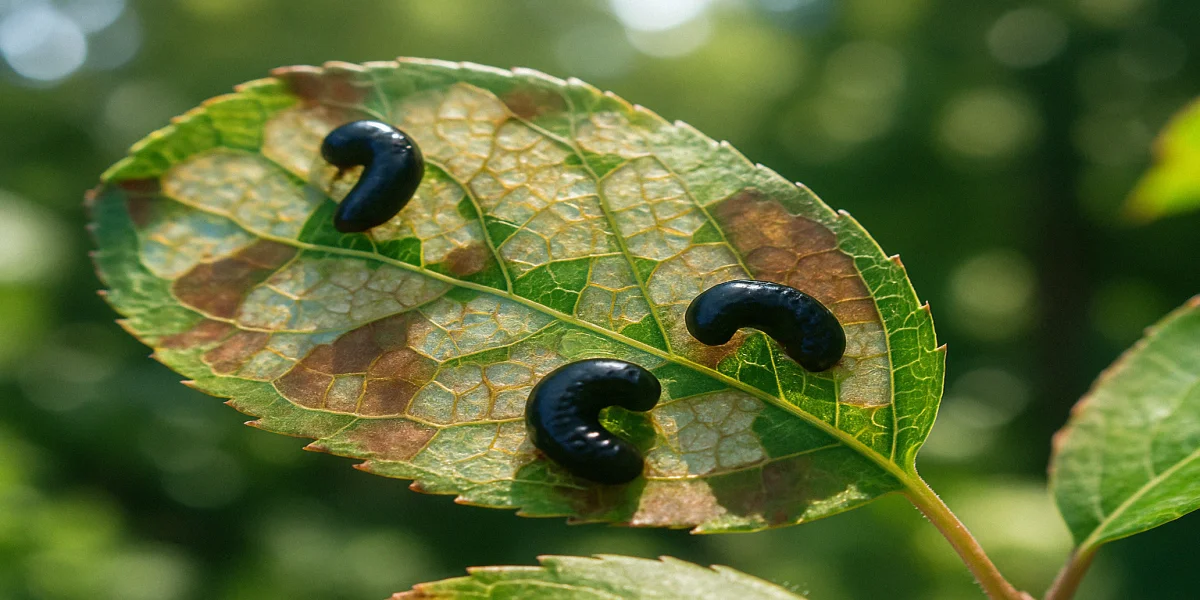
| Serviceberry, hawthorn, mountain ash | Pear sawfly (pearslug) | Dark, slimy, comma-shaped larvae, top of leaf skeletonized | Hose blast, repeat in 4 days |
| Gray dogwood, silky dogwood | Dogwood sawfly | White waxy “powdered sugar” coating on cluster of larvae | Hand pick whole cluster, drop in soapy water |
| White oak, red oak (sapling) | Caterpillar (oakworm, prominents, dagger moths) | 5 pairs of prolegs, ocelli cluster on head, no S-curl | Leave alone, feeds songbirds |
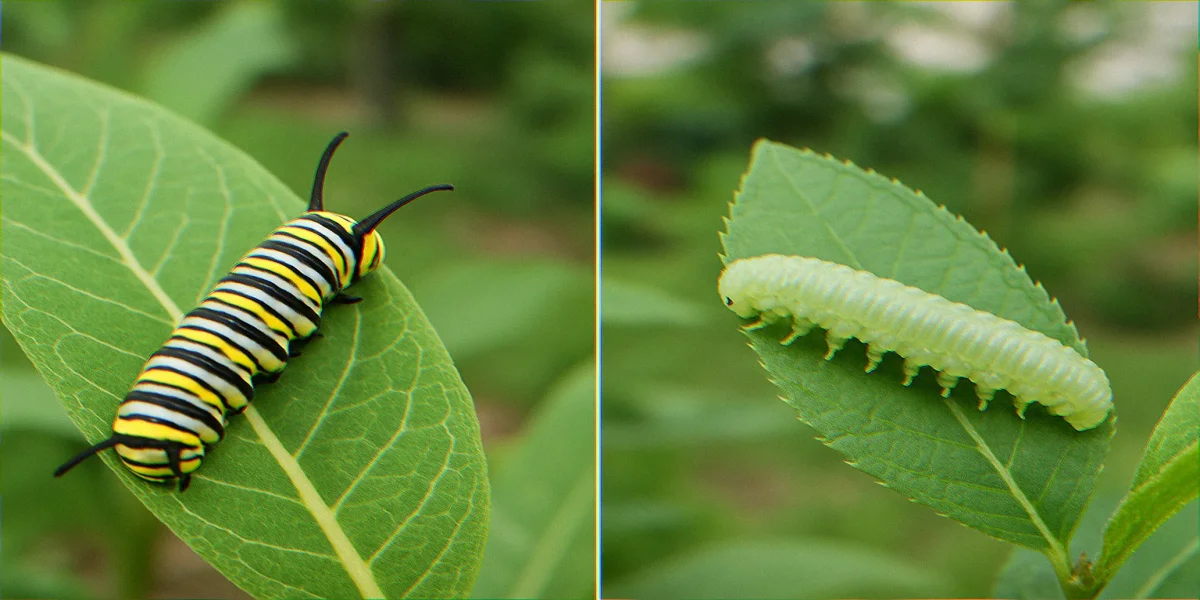
| Spicebush, sassafras | Caterpillar (spicebush swallowtail) | 5 pairs of prolegs, fake eye-spots on thorax (snake mimic) | Leave alone, future swallowtail |
| Willow (Salix) | Mixed (both sawflies and caterpillars common) | Do the proleg count, do not assume | ID first, then decide |
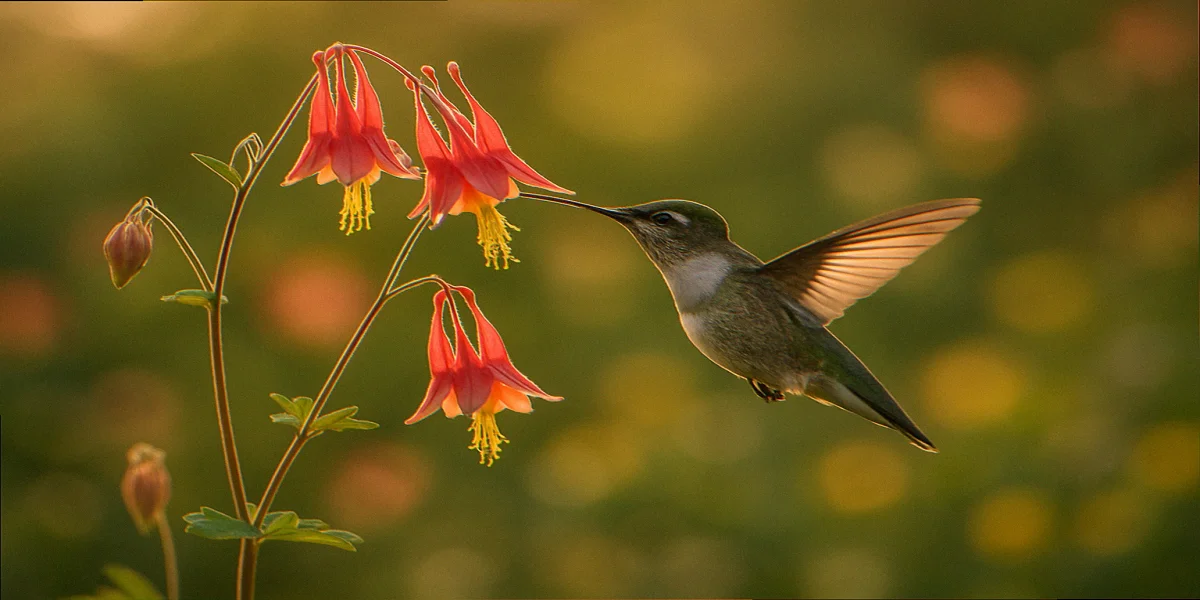
| Columbine (Aquilegia canadensis) | Columbine sawfly | Pale green, defoliates leaves down to veins in two days | Hand pick at first sign, the plant recovers |
| Milkweed (Asclepias) | Caterpillar (monarch, tussock moth) | 5 pairs of prolegs, striped body | Leave alone, ever, no matter what |
One pattern jumps out of that table. The native woody plants in the Rosaceae family (roses, serviceberries, hawthorns, pears) and the Cornaceae (dogwoods) attract sawflies first and caterpillars second. Oaks, spicebush, sassafras, milkweed, willow, birch, cherry, and most of the herbaceous native forbs are caterpillar nurseries. If you can train your eye to expect sawflies on rose and serviceberry but caterpillars on oak and milkweed, you will guess right 85% of the time before you even bend down to look.
One side note for newer native gardeners. The line between a “sawfly host” and a “caterpillar host” is not absolute. Willow gets hit by both at the same time most Junes. Cherry can host either depending on year. If you have ever pulled native seedlings thinking they were weeds, you already know the cost of guessing on natives. Take the extra ten seconds.
The S-curl trick and three other tells most gardeners miss
The proleg count is the gold standard, but it requires getting close. There are four secondary tells you can read from two or three feet away, which is useful when you are doing a fast morning walk through 20 plants and do not want to crouch over each one.
The S-curl. Already mentioned, but worth its own paragraph because it is the most reliable distance tell. Disturb the leaf with a fingertip or a stick. Sawfly larvae of every common backyard species (rose, pear, dogwood, columbine, hibiscus) will lift the rear half of the body in unison. The colony looks coordinated. Caterpillars, if disturbed, drop, walk, or thrash individually. A sawfly colony in S-curl looks like a single creature; a caterpillar group looks like a crowd of strangers.
The feeding pattern on the leaf. Sawfly larvae of the “slug” subgroup (roseslug, pearslug) scrape the upper leaf surface and leave a translucent, papery, windowpane-shaped patch. The leaf goes brown but stays in place. Caterpillars chew through the whole leaf and leave irregular holes or eaten edges. If you see a leaf that looks like a stained-glass window with brown patches, that is sawfly damage. If you see ragged edges and missing chunks, it is caterpillar feeding.
The frass (insect poop). Caterpillar frass is dry, pelletized, and falls in a cone under the host plant. Sawfly frass is sticky, wet, often greenish, and clings to the leaf. If you tap a branch and a snow of dark dots falls onto a sheet of white paper, those are caterpillar pellets. If the leaves are slick and the frass smears, sawfly.
The body fuzz. This one is not as reliable as the others, but it filters most of the easy cases. Most caterpillars on native shrubs are either smooth or have visible setae (hairs, spines, tufts, tussocks). Most sawfly larvae are either glossy and smooth or covered in a waxy white bloom that wipes off on your finger. If you see hair, it is almost always a caterpillar. If you see wax that comes off, it is almost always a sawfly.
Stop sawfly damage without harming pollinators: three methods ranked by safety
Once you have a confirmed sawfly ID, three methods cover 95% of backyard cases. They are ranked here from safest to least safe, and the third one is included only because some readers will ask about it.
Method 1: the morning hose blast. A strong jet of plain water from a garden hose dislodges most sawfly larvae from the host plant. Once they hit the soil they rarely climb back up, and predators (ground beetles, spiders, ants) clean them up within hours. Do it in the morning so the foliage dries before evening, which keeps fungal disease off the host plant. Repeat every three to four days until you stop finding larvae on the leaves. This method costs zero, has zero pollinator risk, and works against the slug-type sawflies that do the most aesthetic damage in residential yards. The downside is labor: you have to actually walk out there.
Method 2: hand pick into soapy water. Wear cheap nitrile gloves. Carry a small jar of water with one drop of dish soap. Walk the host plant, pinch off larvae or whole infested leaves, and drop them in the jar. The soap film breaks surface tension and they drown in under a minute. This method is faster than hose blasting for dogwood sawfly clusters (which are tight, easy to grab, and rarely scatter when touched) and for columbine sawfly (which sits in obvious groups on the underside of leaves). It also does not splash anything off the plant onto neighboring native forbs.
Method 3: spinosad, used carefully and only for severe outbreaks. Spinosad is a soil-bacteria-derived insecticide that works on sawfly larvae. It is allowed in organic gardening. It is also acutely toxic to bees when fresh, and remains hazardous for several hours after spraying. The Xerces Society recommends spraying only in the evening after dark, only on the affected plant, and only when bees are not visiting that plant. If you have a single rose or columbine that is being defoliated and hose blasting is not keeping up, spinosad applied at dusk to dry foliage is acceptable. Do not use it on a flowering plant during the day. Do not use it on milkweed under any circumstance, because monarch caterpillars will eat the residue. And if you are reaching for spinosad more than once a summer, the underlying problem is plant placement (host plants too close together, too crowded, or sited in stress conditions), not the bug.
What about Bt (Bacillus thuringiensis)? Bt does not work on sawflies. It is a caterpillar-specific bacterium. Many gardeners try it on a “caterpillar-looking bug” and get nothing, then assume the bug is some bulletproof super-pest. It is just a sawfly. Spinosad works; Bt does not. The same Bt confusion shows up in advice about Japanese beetle control, where the wrong product gets recommended for the wrong life stage and nothing changes in the yard.
One more option worth knowing for the slug-type sawflies: wood ash. A light dust of wood ash on the larvae sticks to their waxy coat and dries them out within a day. The Penn State extension has documented this method on roseslug and pearslug going back decades. It is harmless to bees because it is not an insecticide and the residue is gone after the next rain. The downside is that you cannot use it if you mulched with cocoa or pine fines (the white dust looks awful) and you should not use it on flowering tops where pollinators are landing.
A quick note on what not to do, because the bad advice on this is everywhere. Do not use Sevin (carbaryl). It will kill the sawfly and every bee, butterfly larva, ground beetle, and parasitic wasp on the plant for two to three weeks. Do not use neem-and-pyrethrin combination sprays. The pyrethrin half is a broad-spectrum nervous-system poison that hits monarchs and swallowtails. And do not let a “pest control company” come spray your shrubs for sawflies. The standard backpack mix they use is a synthetic pyrethroid that ends pollinator activity in your yard for a month. If you are already screening pesticide-treated plants out at the nursery, you do not want to recreate the same chemistry at home.
The HOA test: when your shrub looks lacy and the neighbors notice
This is the part nobody writes about, and it is the most common reason native plant gardeners give up on the proleg count and just spray.
Sawfly damage looks bad fast. A rose hedge that gets hit by roseslug on Sunday can have brown, windowed leaves by Thursday. From the curb, it looks like the plant is dying. If you have a neighbor who already thinks your native garden is “the rat nest yard,” this is the week they call the HOA. The instinct is to skip the careful ID, blast everything with a wide-spectrum pesticide, get the damage under control, and apologize to your conscience later.
There is a middle path. The visible damage on the slug-type sawflies is concentrated on the outermost two or three sets of leaves. If you prune those leaves off (carry a small bypass pruner on your morning walk), the plant looks tidy within an hour, and the larvae you pruned go into the soapy water jar. This is faster than waiting for a hose blast to do enough damage that the neighbor stops noticing. It also gives you a chance to do the proleg count on each pruned leaf and confirm you are removing the right bug.
For the deeper structural issue, here is what has worked for me with neighbors over the past four years. Plant the sawfly-magnet species (roses, serviceberries, dogwoods) at least one rank back from the property line. Put a caterpillar-host plant (a spicebush, a serviceberry alternative like chokecherry, an oak sapling) at the front, where it gets fed on by future butterflies and stays clean of windowpane damage. The yard reads as “intentional” from the sidewalk even if the back rank is taking sawfly hits. Curb appeal first, ecology behind. The plants do not care which order they are in, and the HOA mail volume drops by half.
And signage. A small, bought-or-homemade sign that names the host plant and the species of butterfly it feeds, planted at the front of the bed, changes the conversation. Neighbors who read “Oak sapling, host plant for 511 species of caterpillar” before they read “the bushes look ratty” tend to give the bed more grace. It is not a magic bullet. It is a friction reducer.
What should I do if I already sprayed and killed caterpillars?
If you sprayed in panic last week and now realize the green-and-yellow striped “pests” on your spicebush were spicebush swallowtail caterpillars, here is the honest answer: nothing this season. The damage to that one brood is done. The right move is to set up the system so that next June it does not happen again.
Three things to do this week, while the regret is fresh enough to motivate them.
First, walk the yard with your phone and photograph every caterpillar and sawfly larva you can find. Upload them to iNaturalist with the date and the host plant. Within 24 hours, expert volunteers will confirm or correct your ID. After ten or fifteen of these, your eye is trained. The 10-second proleg count becomes a habit, not a checklist item.
Second, take the bottles of broad-spectrum spray out of your shed and label them with a permanent marker. Write “kills caterpillars, do not use on natives” on the side of every bottle of pyrethrin, carbaryl, neem-pyrethrin combination, and any “rose and shrub” treatment that lists permethrin or bifenthrin in the active ingredients. The label will stop your hand the next time you reach for the shelf in a hurry.
Third, if you have not already, do the screening pass on whether the plants in the yard came from a pesticide-treated nursery in the first place. Some big-box rose hybrids are pre-treated with systemic insecticides at the wholesale level, and the residual chemistry can sit in the plant tissue for over a year. A sawfly that lands on a treated plant dies; a monarch caterpillar that grazes treated milkweed also dies. The screening guide for that is linked above. If you have a brand-new rose from a discount aisle and you cannot remember whether you asked about neonicotinoids, treat it as if you did not, and replace it next spring with a verified-native rose from a trusted regional native nursery.
The grief about killing caterpillars by accident is real, and so is the value of letting that grief reshape next year’s habits. The yard recovers faster than people give it credit for. Most caterpillar species have multiple broods in a summer, and the second wave (late July, August) is your second chance. Show up for it.
How do you avoid this mistake on first-year native plantings?
First-year native plants are the highest-risk category, because the gardener is anxious about losing them and the plants are small enough that any chewing damage feels existential. Three rules cut the panic to a manageable level.
Rule one: do not plant the high-risk sawfly hosts (roses, serviceberries, dogwoods) in their final spots in year one. Pot them up for a season, set the pots where you can watch them daily, and let them put on size. A two-gallon serviceberry that gets hit by pear sawfly looks alarming. A six-gallon serviceberry with a healthy canopy can lose 30% of its leaves to sawfly and shrug it off. Spacing and plant size at planting matter more than people realize for pest resilience.
Rule two: front-load the caterpillar-host species in the visible parts of the bed. Oaks, spicebush, sassafras, milkweed, and the native asters host hundreds of caterpillar species and almost no sawflies. The leaf damage is real but the visual impact is lower because the chewing is spread out across the canopy instead of concentrated in skeletonized patches. From two feet away, “an oak fed on by orangestriped oakworms” looks like “an oak with some holes.” From two feet away, “a rose fed on by roseslug” looks like “a rose that is dying.” The optics matter, especially in a front yard.
Rule three: keep a 10x hand lens in the gardening basket. Not in the shed, in the basket you actually carry. A $9 hand lens (mine is a Belomo 10x triplet that I bought after the same Amazon back-and-forth Sarah does, comparing reviews for thirty minutes) turns the proleg count into a habit you do without thinking. The barrier to identification stops being “do I want to dig out the hand lens” and starts being “what do I see.” That is the difference between knowing the right bug and guessing.
What changes in your yard once you can ID the difference
This is the part I did not believe when other native gardeners told me about it. Once you stop treating every larva on a leaf as a problem, the yard recovers quickly, and the recovery looks like more wildlife, not less.
Year one of the proleg count: you spend more time on plant inspection than you used to. You find more sawflies than you thought were there, because you are actually looking. You stop spraying about half of what you used to spray. The caterpillars you left alone get eaten by birds, parasitized by tachinid flies and braconid wasps, or pupate and disappear. The plants you stopped overreacting to come back stronger.
Year two: you find fewer sawfly outbreaks because the predator population in the yard has grown. The hose-blast routine takes less time. You stop noticing windowpane damage on the back rank of the bed because the front rank looks clean and your eye tracks to it first.
Year three: chickadees are nesting in the box. Mourning cloak butterflies are puddling on the walkway. Catbirds are working the dogwoods for caterpillars at first light. The “homegrown national park” stops being a goal and starts being a description. The proleg count is no longer a 10-second pause. It is automatic.
The plants are not the point. The plants are the apparatus. The point is the food web that runs on the leaves of those plants, and that food web only works if the caterpillars get to keep growing. The 10-second ID test is the smallest action in the yard with the largest downstream effect, and it is the thing most gardeners are not doing.
That ends the how-to. The FAQ below covers the questions readers send in most often after this comes up.
FAQ
Are sawfly larvae dangerous to touch or to pets?
No. Sawfly larvae do not sting, do not have urticating hairs, and are not toxic to dogs, cats, or chickens. A few species secrete a defensive liquid that is mildly irritating to skin (and stains clothes a faint green), but it washes off with water. If a dog eats one, nothing happens. If you pick one up bare-handed, nothing happens. The “sawfly” name comes from the saw-like ovipositor of the adult wasp, not the larva. The larvae you find on leaves cannot hurt you.
Will my native rose recover from a roseslug infestation if I do nothing?
An established native rose (two years in the ground, three-foot canopy or larger) will almost always recover even with no intervention. The damage looks ugly through July, but the rose re-flushes a clean wave of leaves in August and goes into the dormant season normally. The plants that struggle are first-year transplants and plants in stress conditions (drought, root rot, dog urine spot). If your rose is in its second year, hose blasting is enough. If it is in its first year, hand pick on top of hose blasting, and water the plant deeply twice a week through the recovery.
I cannot get close enough to count prolegs without my eyesight failing me. What is plan B?
Use your phone camera. Open the camera app, switch to 2x or 3x zoom (or use a clip-on macro lens, which costs about $15 on a budget), and take a close photo of the underside of the larva. Expand the photo on the screen. Count the soft pairs of legs on the picture, not on the bug. If you have an iPhone with a macro mode (iPhone 13 Pro and later), that lens reads the prolegs cleanly at two inches. The same trick works for the head capsule single-eye vs cluster-of-six test. Many readers over 55 tell me the phone camera is what made the ID method usable.
Is there ever a reason to spray a known caterpillar on a native plant?
Almost never in a backyard. The main exception is tent caterpillars on a small fruit tree that is also a young transplant, where complete defoliation in May would set the tree back two years. Even then, the right move is to prune out the tent at dawn (when the caterpillars are inside) and drop it in soapy water, not to spray. The other exception is invasive species control, namely gypsy moth (now called spongy moth) caterpillars during a heavy outbreak year, where the local extension office will sometimes recommend Btk on a specific narrow window. Outside of those two cases, leave the caterpillar alone. The bird that needs it is closer than you think.
What about wasps and predatory insects, do they handle sawfly outbreaks on their own?
Yes, eventually, but the lag is usually too long to save the plant on the first outbreak. Paper wasps, yellow jackets, and several species of parasitoid wasp do feed on sawfly larvae. The problem is that by the time the wasp population catches up to the sawfly population, the host plant has lost most of its leaves. In year two and three of a stable native bed, the predator population grows enough that outbreaks self-correct without intervention. In year one, you have to do the hose blast or hand pick yourself. The wasps will catch up.
Want More Wildlife Garden Tips?
Join 5,000+ nature lovers getting our weekly tips on creating wildlife-friendly gardens.
No spam, unsubscribe anytime. Privacy Policy
Emma Harrington
Emma Harrington is a wildlife habitat researcher and content editor with a passion for backyard conservation. She has spent over a decade translating ecological science into practical tips anyone can follow — from selecting native plants to building wildlife-friendly habitats. Her work focuses on helping homeowners transform ordinary yards into thriving ecosystems for bees, butterflies, hummingbirds, and other beneficial wildlife.