Quick answer. You cannot see neonicotinoid residue on a nursery plant, but you can avoid it. Ask staff for written confirmation that the plant was grown without acetamiprid, clothianidin, dinotefuran, imidacloprid, or thiamethoxam. Skip any pollinator-marketed plant that the staff cannot vouch for in writing, and run a 10-day radish bioassay on suspicious potting soil before transplanting.
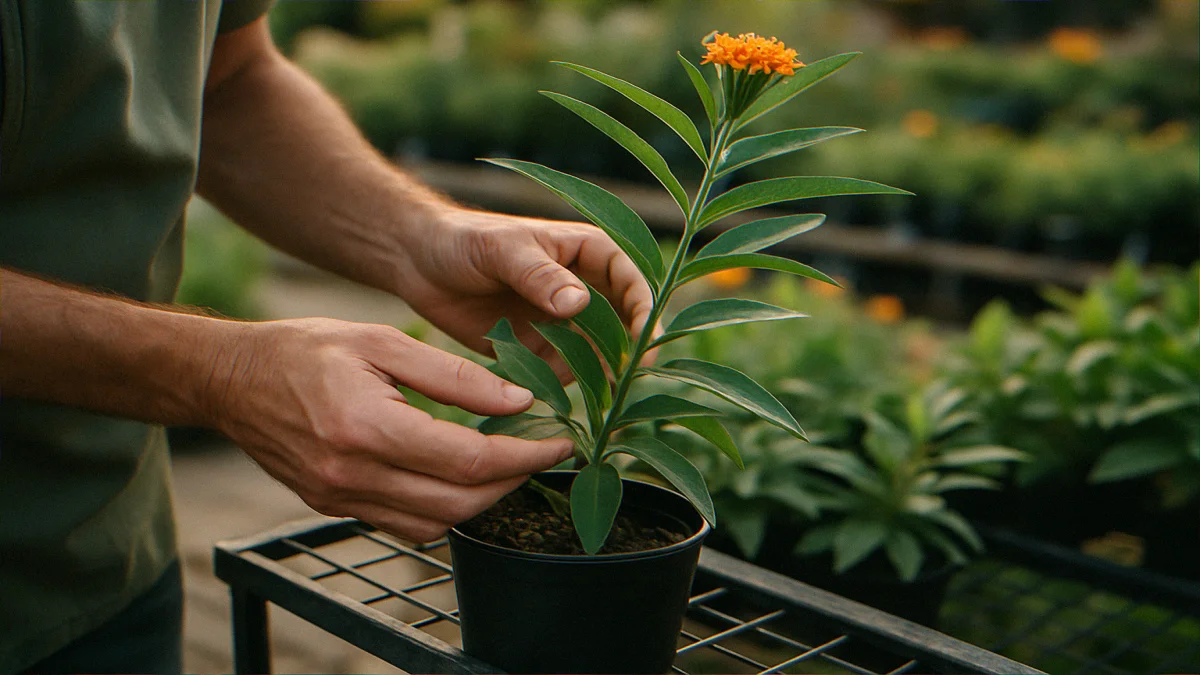
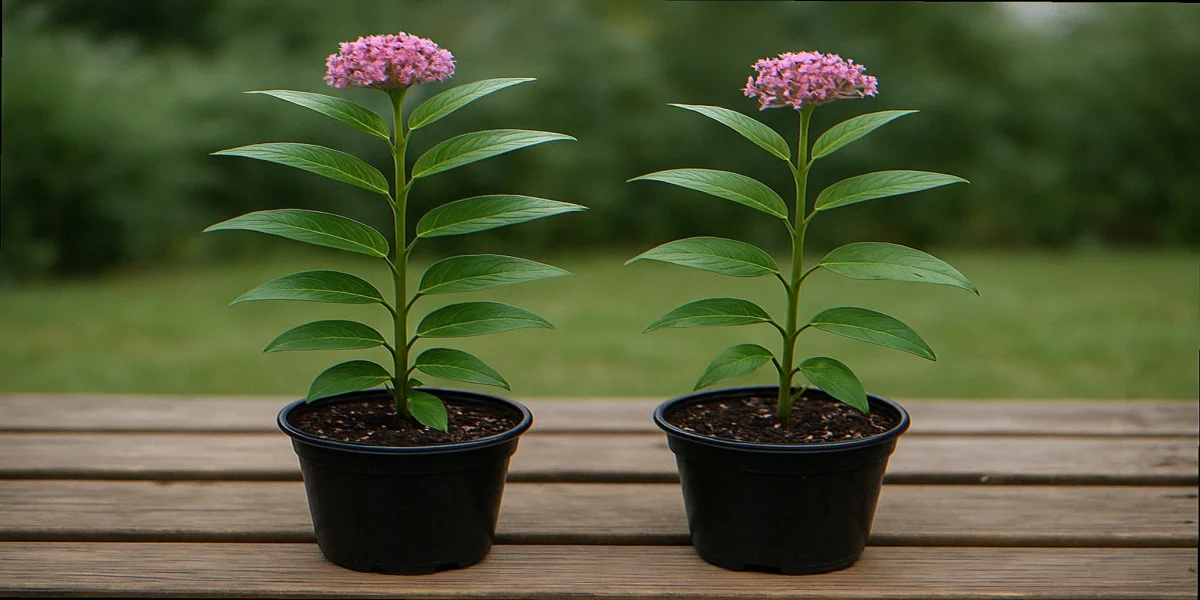
A pesticide-treated nursery plant looks identical to a clean one. Same vivid leaves, same dense bloom, same plastic tag stamped with a bee on it. The difference is invisible until a hatchling monarch caterpillar eats a leaf of milkweed that was sprayed in propagation and dies before reaching its third instar. That is the actual cost of an unverified purchase, and Sarah-style native gardeners across the suburbs are finding out the hard way every spring.
A reader emailed last month with a question that captures the whole problem in two sentences. She had bought four healthy Asclepias incarnata from a big-box display labeled “pollinator favorite.” Six weeks later, every aphid that landed on the leaves was dead within two days, and no monarch ever stayed long enough to lay an egg. The plants were doing exactly what their hidden chemistry told them to do, and her garden became a sterile trap.
What does a pesticide-treated nursery plant actually look like?
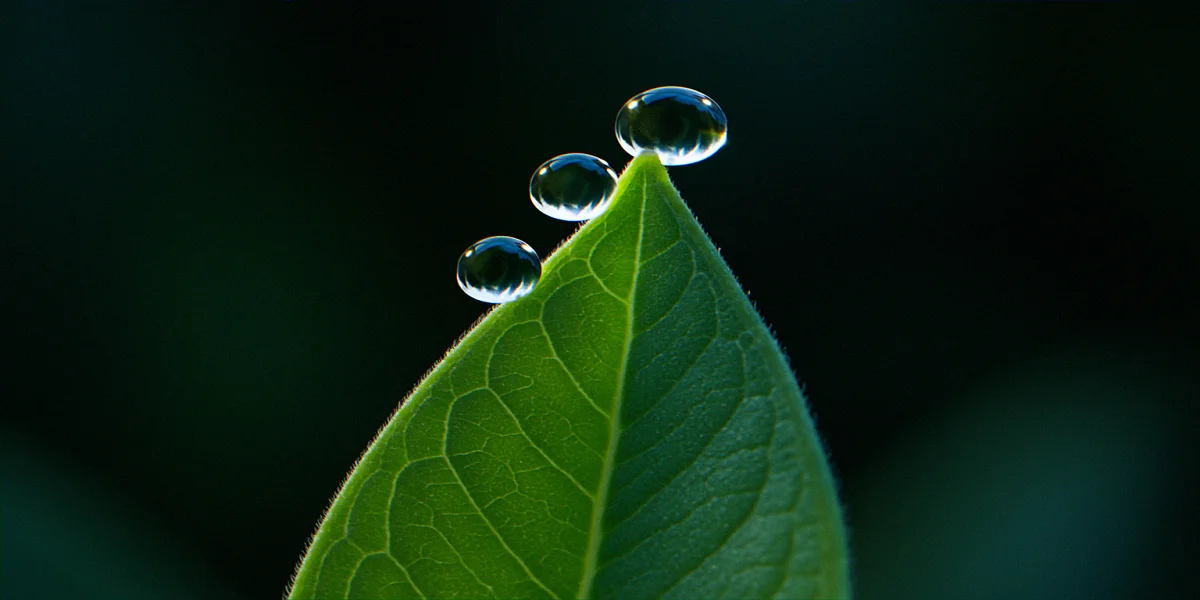
Plants treated with systemic insecticides. The neonicotinoid class. Pull the chemical into every tissue: leaves, pollen, nectar, guttation droplets at the tip of the morning leaf. The plant looks healthy because it is not being eaten. Aphids try and fall off. Spider mites do not gain a foothold. The leaves stay glossy, the new growth comes in unblemished, and the whole pot reads as the dream native specimen.
FREE: Wildlife Garden Starter Guide
Get our 12-page PDF with the 25 best plants for pollinators, simple habitat tips, and a printable checklist — all 100% free.
No spam. Read our Privacy Policy.That is the visual signature you cannot trust. A native nursery that grows its own stock under integrated pest management often has a few chewed leaves on display. Some pots show one or two yellow spots from a beetle that found the plant before it shipped. The Xerces Society guidance is blunt about this. Slightly imperfect leaves are a good sign, not a bad one, because they prove the plant has not been bathed in a long-residual systemic that paralyzes anything that bites it.
Two practical tells worth remembering. First, plants grown in greenhouses that use neonics for thrips and whitefly control will often carry residues for the entire first growing season after transplant, sometimes longer in woody perennials. Second, the residue is concentrated in the youngest leaves and the flowers. Exactly the parts that monarchs, bees, and predatory wasps interact with most. So the worst exposure happens precisely where Sarah wants to see life.
How do nurseries decide which plants get neonics?
Almost nobody at the retail level makes that call. The decision is made upstream. At the wholesale propagator, sometimes at a third-party plug grower in a different state. By the time a flat of cardinal flower arrives at the back dock of a big-box garden center, the application history is already locked in, and the retail staff may not have access to the spray log.
Home Depot has publicly stated that 98 percent of its plant inventory is now neonic-free, with the remaining 2 percent flagged because state regulations require neonic treatment for specific pests (Japanese beetle quarantine zones, for example). Lowe’s announced its own phase-out years ago. Friends of the Earth tracks the retailer commitments. More than 140 companies have made similar pledges. That progress is real, and it is also incomplete.
The honest framing is this: a major chain retailer in 2026 is more likely than not to be selling clean plants for most categories, but pollinator-marketed plants are precisely the category where any remaining gap matters the most. A 2 percent miss rate on tomato starts is one problem. A 2 percent miss rate on milkweed sold to monarch enthusiasts is a different problem, because the dose-effect for monarch caterpillars on contaminated Asclepias is well documented in the peer-reviewed literature. The asymmetry of harm is what makes this worth checking every time, not just statistically.
Small regional nurseries and Wild Ones plant sales sit at the opposite end of the supply chain. The plants are usually propagated on-site from local-ecotype seed, and the grower can answer “what was sprayed on this” with a name and a date. That is the verification chain Sarah needs, and it is the reason her instincts to drive forty minutes to a native nursery are correct even when the big-box price tag is a third of what she pays at the local place.
Where are the residues hiding on a plant you take home?
Neonicotinoids are systemic, water-soluble, and persistent. Once a plant has been drenched, sprayed, or grown from treated seed, the residue distributes through the vascular system. Lab work cited by the Xerces Society found measurable residues in the leaves, pollen, and nectar of treated plants for months after a single application, and in some woody species for more than a year.
The places that matter for wildlife exposure are:
- Pollen and nectar. What bees, butterflies, and hoverflies actually eat. This is the highest-risk exposure route for adult pollinators.
- Leaf tissue. What monarch and swallowtail caterpillars eat. This is where larval mortality happens, often silently, because dead caterpillars are gone within an hour.
- Guttation droplets. The small drops of water that bead at leaf margins in early morning. Solitary bees drink from these.
- Potting soil. If the propagator drenched the pot, the residue can persist in the rootball after transplant. Soil-dwelling beneficial insects and ground-nesting bees are exposed when the plant goes into the ground.
That last one is why a clean-looking plant can still cause trouble after you plant it. The potting medium is part of the package. If you suspect contamination, the safest move is to bare-root the plant before transplanting. Rinse the rootball, discard the original potting medium, and set the plant into your own garden soil. It is a small extra step that decouples the questionable nursery soil from your bed.
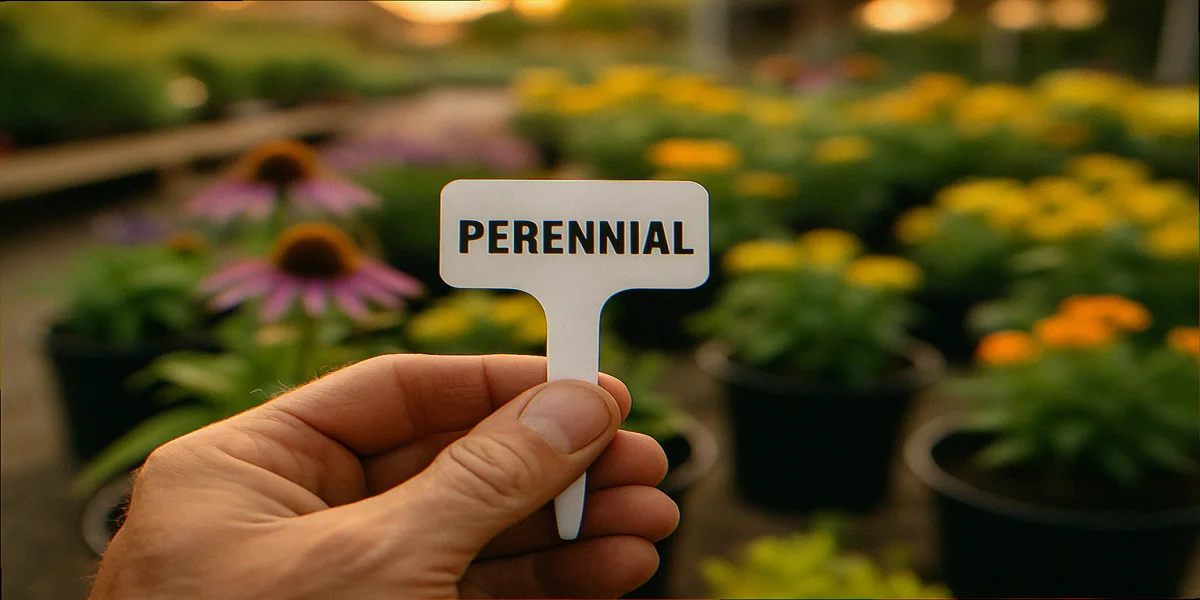
Five label phrases that signal a treated plant
Plant labels are inconsistent across retailers and frankly designed for marketing, not for the questions Sarah needs answered. Still, certain phrases on a hangtag or sticker should slow you down and trigger a conversation with staff before you pay.
- “Pre-treated for pests” or “protected against insects”. Vague language that almost always means a systemic was used in propagation. If the tag does not name the active ingredient, ask.
- Active ingredient codes including acetamiprid, clothianidin, dinotefuran, imidacloprid, or thiamethoxam. These are the five neonicotinoids most commonly found on ornamental and pollinator-marketed plants. Any one of them on a label is a hard skip for a pollinator garden.
- “Long-lasting protection”. Marketing shorthand for a persistent systemic. Three-month protection on a label means three months of residue moving through pollen and nectar.
- “Pollinator favorite” with no organic or neonic-free certification. The most cynical category. The retailer is selling on the strength of bee appeal without committing to bee safety. Treat this as a yellow flag, not a green one, and ask for the propagator’s growing protocol.
- Generic “treated for shipping” wording. Sometimes covers a neonic dip applied at the wholesaler. Specific to plants that traveled long distances.
Conversely, the labels worth trusting are USDA Certified Organic, “grown without neonicotinoids” backed by a specific propagator name, and the regional certifications used by Xerces-aligned partner nurseries. Prairie Nursery, Prairie Moon, and similar mail-order specialists publish their growing protocols openly. If a retailer cannot match that transparency, the plant is not worth the risk for a milkweed bed.
The two-question script for talking to a nursery employee
Most garden center staff will give you an honest answer if you ask the right questions. They are not trying to mislead anyone. They often just do not know the answer until someone asks. A short, polite script gets you further than a confrontation.
Question one: “Can you tell me which plants on this table were grown without neonicotinoids?” The keyword is grown. Not just whether the retailer sprayed in the store, but whether the propagator applied a systemic upstream. If staff cannot answer, ask if they can call the wholesaler.
Question two: “Is there a written list of your neonic-free suppliers?” Some retailers, especially regional chains, have moved to flagging their clean suppliers internally. Asking for the list does two things. It gets you the information when it exists, and it sends a small consumer-demand signal up the chain when it does not.
Bring the script with you on your phone if you tend to freeze at the register. The conversation takes ninety seconds and saves you from the slow grief of watching a treated milkweed kill the caterpillars that should have been the payoff of your spring. For a deeper look at vetting big-box native inventory specifically, the companion guide on buying real native plants at Lowe’s and Home Depot walks through the verification chain step by step.
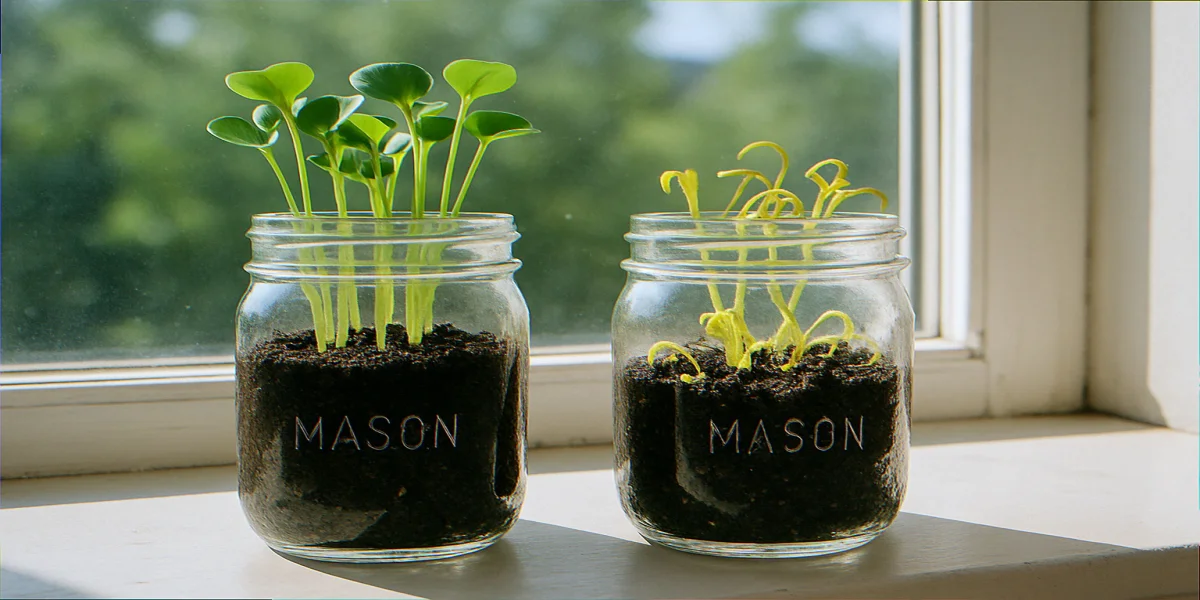
How to run a backyard radish bioassay in 10 days
If you already brought a plant home and you are not sure about its history, a simple bioassay using radish seeds tells you whether the potting medium is carrying enough residue to inhibit germination. The technique is borrowed from agricultural extension protocols, North Carolina State Extension publishes a version, and it works just as well on a windowsill as it does in a greenhouse.
The setup. Take two clean glass jars or small pots. Fill one with two cups of the suspect potting medium from the nursery rootball. Fill the other with two cups of compost or seed-starting mix you know is clean. This is your control. Plant ten radish seeds in each at a quarter-inch depth. Water both to the same moisture level. Place them side by side on a bright windowsill at room temperature.
The read. Check germination at day three, day five, and day ten. In the clean control, expect nine or ten of the ten radishes to emerge with straight stems and vibrant green cotyledons. If the suspect jar shows fewer than six germinations, or if the seedlings are twisted, curled, or showing burnt yellow leaf margins, the medium is carrying enough chemical residue to affect a sensitive plant. That is a reliable signal, even if it does not tell you which specific compound is present.
| Nursery type | Neonic likelihood | Price per plug | Verification you can ask for |
|---|---|---|---|
| Big-box chain (Home Depot, Lowe’s) | Low for general inventory, higher for pollinator-marketed specials | $4-$8 | Public retailer pledge; ask staff for supplier list |
| Regional independent nursery | Variable, often unverified | $6-$12 | Direct propagator name; in-store growing log |
| Native plant nursery (Prairie Moon, Prairie Nursery) | Very low, transparent protocols | $3-$5 in bulk plugs | Published growing standards; named seed source |
| Wild Ones / NPSO chapter plant sale | Lowest, propagated locally from regional ecotype | $2-$4 | Conversation with the volunteer who grew it |
The price comparison matters because Sarah has a budget. The chapter plant sales and the bulk native nursery plugs are the affordable end of the verification spectrum, not the expensive end. The hidden cost is the drive. Most are once or twice a year. For an annual planting calendar that gets you to the right sale at the right time, the native plant garden on a budget guide maps the seasonal windows.
What if you already planted treated milkweed?
This is the question the persona research surfaces over and over, and the honest answer is uncomfortable. If you planted treated milkweed in a monarch bed last spring, the residue may still be moving through the new growth this year. Imidacloprid and clothianidin in particular have shown soil and tissue persistence past a single growing season in lab and field studies.
What you can do. First, do not panic-pull the plants. Pulling a contaminated milkweed in May only ensures that any caterpillar that finds it gets exposed to the most concentrated residue (in the youngest leaves) before you remove it. Better to mark the plants now, watch for monarch activity, and quietly replace the bed in fall with verified neonic-free stock from a reputable native nursery or chapter sale.
Second, if you have a small bed, consider the bare-root method for next year’s replacements. Wash the rootball clean before transplant. Discard the original nursery soil into a non-pollinator part of the yard or your municipal yard waste. Not onto another wildlife bed. Top-dress the planting hole with your own clean compost.
Third, if you are worried about residues moving sideways in the soil. They generally do not move far horizontally, but they can move down with rainfall. A neighbor on the other side of a hedgerow is almost certainly fine. The bed where the treated plant lived is the bed to watch.
The HOA-equivalent obstacle for this pain is the sunk cost of last year’s purchase. The reader who emailed about her four dead-aphid milkweeds was not asking for permission to throw the plants away. She was asking whether she had to. The answer is no, but she should not buy more from the same source, and she should treat the plants as legacy until she can replace them on a budget timeline that does not punish her. For practical aphid management on milkweed without adding more chemistry, the post on aphids on milkweed covers what actually works.
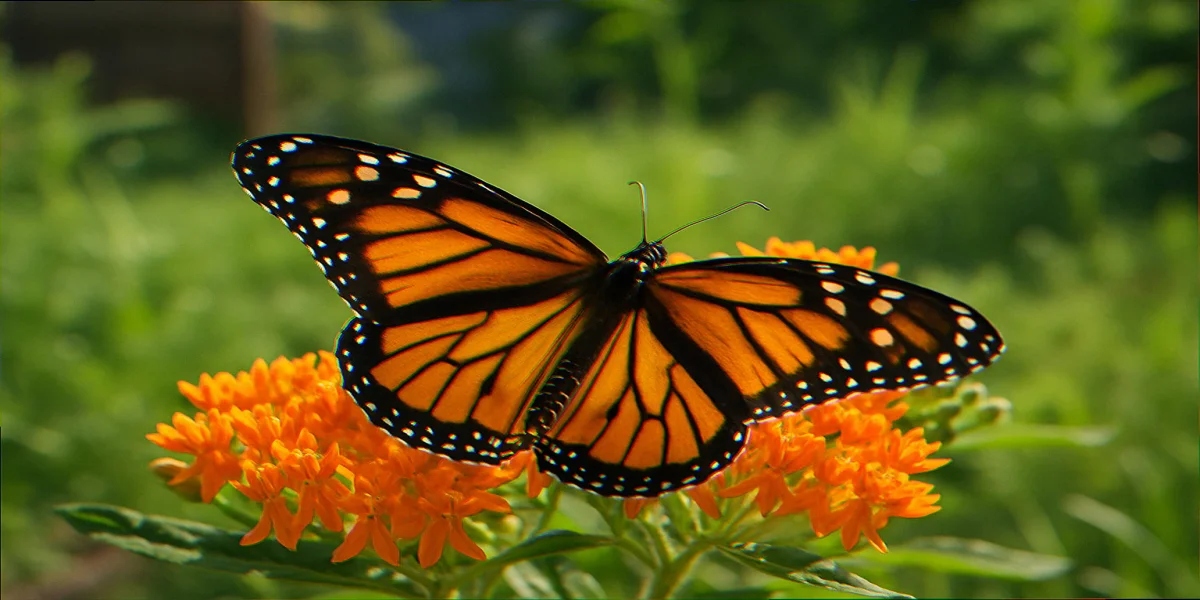
What changes after one neonic-free planting season
The shift is measurable in a single summer. Beds replanted with verified neonic-free stock typically show monarch egg deposition within four to six weeks of planting in zones where monarchs are present. Native bee species richness on the same bed climbs across the season as solitary bees discover that the nectar and pollen are no longer a slow-acting poison.
Two concrete observations from my own beds. The first season after I replaced an under-performing milkweed patch with verified plugs from a chapter sale, I counted seven monarch eggs in the first four days after the plants flowered. The aphid load on those plants was visible. A sign that the leaves were not chemically defended. And parasitoid wasps showed up to handle the aphids inside of two weeks. The bed went from sterile to busy in less than a month. The second observation is harder to quantify but easier to see: the song of small native bees buzzing over an untreated stand of mountain mint is loud in a way that a treated stand never is.
That auditory cue is what Sarah is actually buying when she pays an extra dollar a plug at the chapter sale. She is buying the noise of an alive garden. The price-per-plant comparison only matters at checkout. The price-per-pollinator comparison plays out for the next ten years.
For a wider lens on what pesticide-aware gardening looks like across categories. Including the related question of how to handle Japanese beetles without spraying neonicotinoids of your own. The post on stopping Japanese beetles without hurting pollinators pairs cleanly with this guide. And for the plant-by-plant question of which species are likely worth verifying first, the plants that attract monarch butterflies list flags the highest-value milkweeds and nectar plants to source carefully.
Two more relevant pairings. If you are still building your native-plant identity for a county-specific bed, the guide on how to verify a plant is truly native to your county handles the native-ness question that runs in parallel to the pesticide question. And the regularly updated eight pollinator-friendly plants from your garden center list shows which categories deserve the most scrutiny when you are sourcing from a major retailer.
The trustworthy authority resources on this topic are worth bookmarking. The Xerces Society buying bee-safe nursery plants PDF is the single best four-page briefing available. The National Wildlife Federation guide on nixing neonics covers the science of why this matters. And the Friends of the Earth retailer commitments tracker is updated as chains formalize or backslide on their pledges.
FAQ
Can I just spray water on the plant to wash off the pesticide?
No. Neonicotinoids are systemic, which means the active ingredient has been absorbed into the plant tissue and circulates in the vascular system. A surface rinse only addresses any residual spray on the leaf surface and does nothing about the residue inside the leaves, pollen, and nectar. The bare-root rinse-and-replace method addresses the contaminated potting medium but not the plant itself.
How long do neonics stay in a treated plant?
It depends on the species and the application rate. Soft-tissue perennials like milkweed often clear residues within one to two growing seasons. Woody perennials and shrubs treated with soil drenches can retain detectable residues for two years or longer. Several peer-reviewed studies have measured residues in tree tissue up to four years after a single trunk injection.
Is a USDA Certified Organic plant always safe?
USDA Organic certification prohibits the use of synthetic pesticides including all five common neonicotinoids during certified production. A genuinely certified plant is the most reliable signal you can get at a retail counter. The catch is that the certification refers to the growing operation, so the certificate has to apply to the propagator who grew the plant, not just the retailer reselling it. Asking which farm grew the plant clears this up.
What about systemic insecticides applied by the homeowner after purchase?
That is a separate question, and the answer is the same one Xerces and the National Wildlife Federation have published for years: do not apply soil drenches, trunk injections, or systemic granules to plants in a pollinator garden. The whole point of vetting your purchases is undone if you reintroduce systemics at the homeowner level. Reach for cultural controls, physical barriers, or selective targeted treatments instead.
Are seeds safer than starts?
Generally yes, for the simple reason that seeds carry far less residue than treated plants. USDA Certified Organic seed packets remove the residual-treatment risk entirely. Untreated regional-ecotype seed from a reputable native seed supplier (Prairie Moon, Roundstone, or a state native plant society sale) is the most defensible option for a Sarah-grade pollinator bed and tends to be cheaper than plugs by an order of magnitude.
Want More Wildlife Garden Tips?
Join 5,000+ nature lovers getting our weekly tips on creating wildlife-friendly gardens.
No spam, unsubscribe anytime. Privacy Policy
Emma Harrington
Emma Harrington is a wildlife habitat researcher and content editor with a passion for backyard conservation. She has spent over a decade translating ecological science into practical tips anyone can follow — from selecting native plants to building wildlife-friendly habitats. Her work focuses on helping homeowners transform ordinary yards into thriving ecosystems for bees, butterflies, hummingbirds, and other beneficial wildlife.