
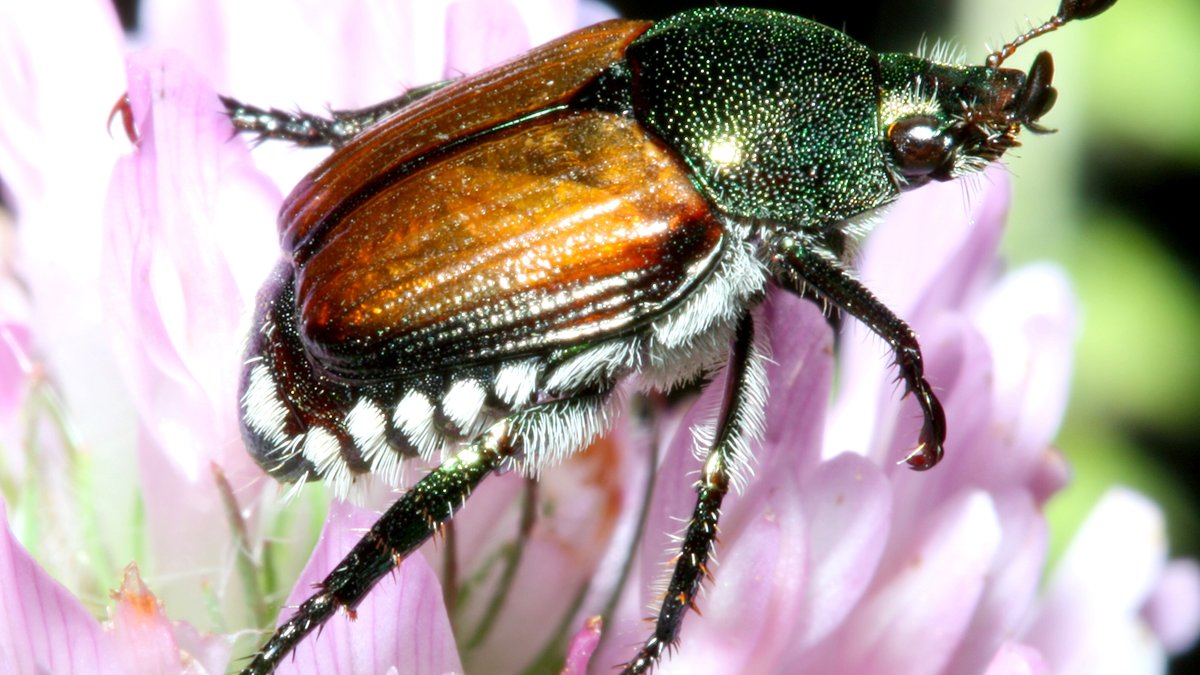
I had a row of newly-planted bee balm last June with twelve adult Japanese beetles welded to a single flower head, mating while they ate. My first instinct was to grab the Sevin bottle a previous owner had left in the garage. I didn’t. I knocked them into a yogurt cup of soapy water, watched what they did the next morning, and learned more about my yard in two weeks than I had in two years. This article is the playbook that came out of that. For the gardener who wants the beetles gone but refuses to nuke the bumblebees, hoverflies, and lady beetles working the same plants.
The hardest part of a Japanese beetle infestation is not the bugs. It is the neighbor at the property line saying “just spray, the bees will be fine.” A friend from my Wild Ones chapter put it bluntly last summer. She counted forty-three native bees on her mountain mint the week before she sprayed for beetles, and zero the week after. Three years later, the mint is still understaffed. Sevin (carbaryl) has a 16-day residual on flowering plants and the EPA itself classifies it as highly toxic to honey bees and native pollinators. The cost of “just spray” is paid by the insects you spent three years convincing to show up.
What does Japanese beetle damage actually look like up close?
Adult Popillia japonica are half-inch metallic green beetles with coppery wing covers and five tufts of white hair along each side of the abdomen. You will rarely see one alone. They release an aggregation pheromone that pulls more beetles to the same plant, which is why a single rosebush can host fifty adults by mid-morning while the bush next to it stays untouched.
The damage signature is unmistakable: skeletonized leaves where everything between the major veins is gone, leaving lacework. It is not the chewed half-moons you get from leafcutter bees (those are clean, semicircular, and a sign of a healthy native bee population, not a problem). It is not the irregular holes of caterpillars. It is a fine green net where a leaf used to be. On flowers like roses, hibiscus, and zinnia, the beetles eat the petals down to the receptacle.
FREE: Wildlife Garden Starter Guide
Get our 12-page PDF with the 25 best plants for pollinators, simple habitat tips, and a printable checklist — all 100% free.
No spam. Read our Privacy Policy.According to Penn State Extension’s landscape pest factsheet, the adult flight window runs roughly six to eight weeks from mid-June through mid-August across most of the eastern United States, with peak numbers in the first three weeks of July. Below the soil, the C-shaped white grubs feed on lawn roots from late summer through October, overwinter, and resume feeding briefly in spring before pupating and emerging as the next year’s adults. Understanding that two-stage life cycle is what separates control that works from control that wastes a season.
Why Sevin Is the Pollinator-Killing Shortcut That Backfires
Carbaryl (sold as Sevin) and pyrethroid sprays like bifenthrin and cyfluthrin are the products a panicking gardener grabs from the big-box pesticide aisle. They do kill Japanese beetles. They also kill every bee, hoverfly, lacewing, and parasitoid wasp that lands on the treated plant for the next two to three weeks. Bumblebees are particularly vulnerable because they buzz-pollinate the same flowering shrubs (roses, hibiscus, raspberries, blueberries) that Japanese beetles attack.
There is a second-order problem. The natural predators that quietly suppress Japanese beetle populations. Tachinid flies that parasitize adult beetles, tiphiid wasps that hunt the grubs in your lawn, robins and grackles that eat thirty or forty grubs in a sitting. Are all knocked out by broad-spectrum sprays. The first year you spray, you see fewer beetles. The second year you see the same number. The third year you see more, because you killed the wasps that were doing free labor in your soil.
This is what people mean when they say a yard treated with carbaryl gets stuck on the pesticide treadmill. The Xerces Society maintains a pollinator-focused pesticide guide that lays this out in detail. The short version: if a product is rated “highly toxic to bees” on the label, it does not belong on a flowering plant during bloom, ever. That covers most of what is on the Japanese beetle shelf at Lowe’s.
The Dawn Hand-Pick That Wrecks the Beetle’s Whole Day
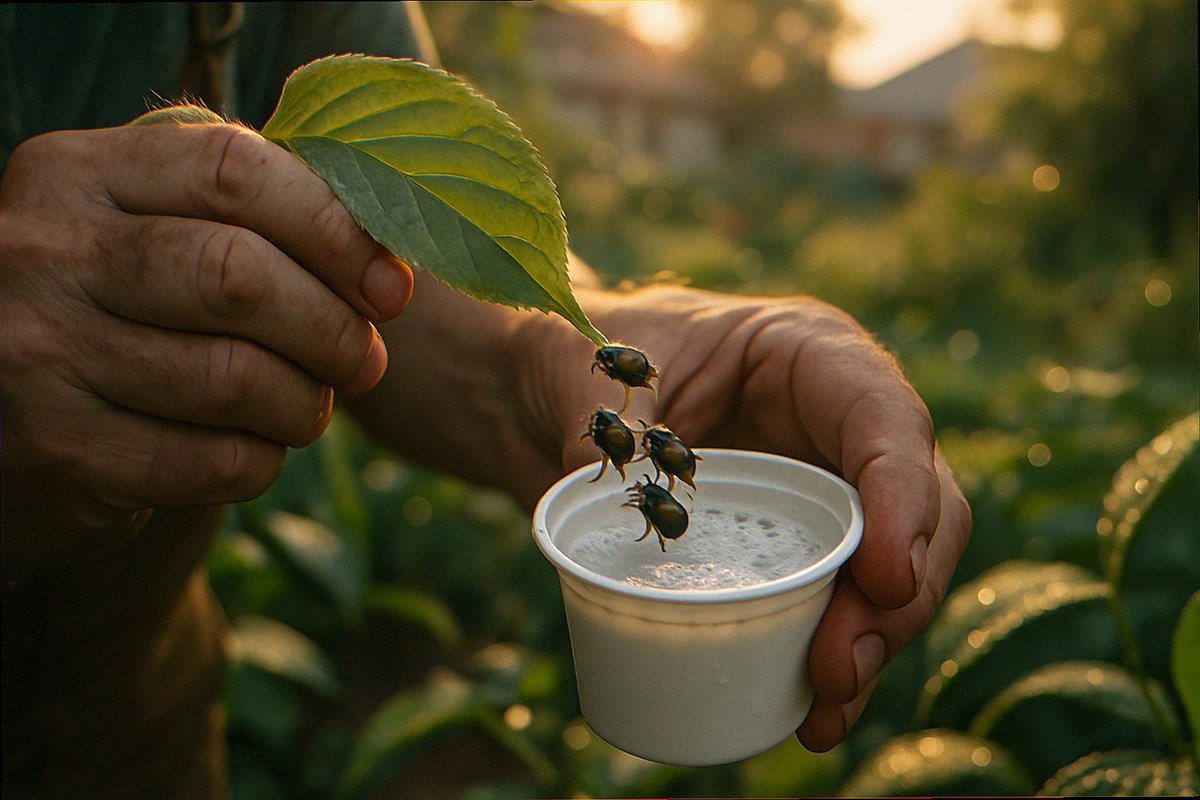
Japanese beetles are sluggish below 65°F. Before 7:30 in the morning, especially after a cool night, they will sit on the leaf they slept on and barely react when you tap the plant. This is the window where hand-picking becomes shockingly effective.
My routine, refined over three summers, takes about twelve minutes a morning during peak weeks. I take a wide-mouth quart yogurt container half-filled with water and a single drop of dish soap. I hold it under the cluster of beetles and tap or flick the leaf once. They drop straight in. The soap breaks the surface tension; they sink and drown in under a minute. I empty the container into the compost pile when I am done, where the dead beetles become nitrogen for next spring’s tomatoes. No traps, no chemicals, no residue on anything a bee will touch later.
What changes when you do this consistently is the pheromone cycle. Each beetle removed from the plant is one less broadcaster signaling reinforcements. Two weeks of dawn picking can drop visible adult populations by 60 to 80 percent on a single shrub. It does not eliminate them. Beetles fly in from neighboring yards. But it keeps any single plant from becoming the buffet sign that draws hundreds more. If you are dealing with milkweed pests at the same time, the same dawn-routine logic applies to aphids on milkweed without killing monarchs: small, repeated, mechanical actions outperform sprays in a pollinator-heavy bed.
Why Pheromone Bag Traps Pull More Beetles Into Your Yard
The yellow-and-green plastic bag traps you can buy for nine dollars at any garden center are the most counterproductive product in the Japanese beetle aisle. They use a floral lure combined with a synthetic aggregation pheromone, and they work. They catch hundreds of beetles. The catch is that they attract many more beetles than they trap, and the overflow lands on your roses, your raspberries, and your linden tree.
Research summarized by the USDA APHIS Japanese beetle program and by university entomology departments has repeatedly shown that homeowners using bag traps have higher beetle damage on their plants than homeowners who use none. The traps function as beetle magnets for a hundred-yard radius. If you must use a trap (for monitoring purposes, or for a community trap-out coordinated across a block), place it at least 200 feet downwind of any plants you care about, ideally over an unmanaged area like a roadside ditch. Never hang one on the same fence as your roses.
This is the single most useful thing to tell a neighbor who is “trying everything.” If three houses on a cul-de-sac each hang two bag traps near their porches, all six houses get worse damage than if no one had hung any. The pheromone plume is additive.
Native Plants Japanese Beetles Skip, And the Hostas They Demolish
The fastest way to lower the beetle load on a property is to stop offering it the buffet. Japanese beetles have strong host preferences, and the plants they love are disproportionately the non-native shrubs and ornamentals that suburban landscaping defaults to. Swapping the worst-hit plants for natives that beetles ignore is not pest control via spray, it is pest control via menu.
| Plant the beetles destroy | Native swap they largely ignore | Why the swap works |
|---|---|---|
| Hybrid roses | Virginia rose (Rosa virginiana), swamp rose | Tougher leaf cuticle, blooms outside peak beetle weeks |
| Linden / basswood (cultivars) | American basswood (Tilia americana). Straight species | Less attractive than European cultivars; mature canopy dilutes damage |
| Hostas (large-leaf cultivars) | Wild geranium, foamflower, woodland phlox | Smaller-leaf natives outside beetle host range |
| Purple-leaf plum, Japanese maple | Serviceberry, redbud, native dogwood | Bloom and fruit benefit birds; not preferred adult forage |
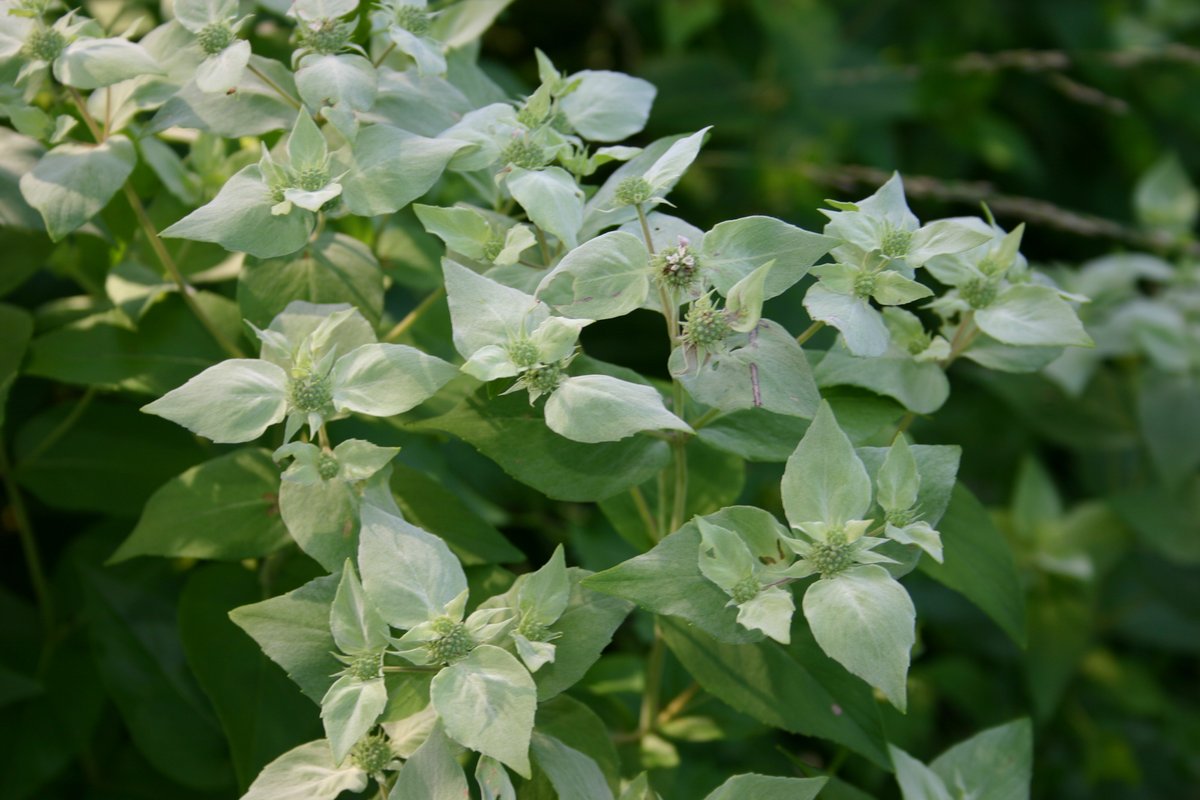
| Hardy hibiscus, hollyhocks | Mountain mint (Pycnanthemum), culver’s root | Magnet for native bees and predatory wasps; beetles pass over both |
| Grapevines, Japanese knotweed | Trumpet honeysuckle (Lonicera sempervirens), passionflower | Native vines support hummingbirds and fritillary butterflies, not beetle aggregation |
Mountain mint is the standout. Beetles ignore it. Native bees, hoverflies, and parasitoid wasps swarm it. Five mountain mint plugs spaced three feet apart will out-pull every “pollinator habitat” sign you can buy. If you are building a pollinator strip from scratch, the same logic applies to picking deer-resistant native pollinator plants: choose species that pull beneficials and bore the pests, not the other way around.
For verifying that a “native” plant at the box-store is genuinely native to your county and not a cultivar with a similar name, the county-level verification process is worth the five minutes before checkout.
Does milky spore actually work in a pollinator-friendly yard?
Milky spore (Paenibacillus popilliae) is a bacterium that infects Japanese beetle grubs in the soil and slowly builds up across multiple years. It is one of the few products genuinely beneficial to a wildlife-friendly yard. It does not affect adult beetles already flying, it does not harm pollinators, it does not affect earthworms, and it persists in soil for ten to fifteen years once established.
The catch is timing. Milky spore needs warm soil (above 65°F at three inches deep), moisture, and live grubs to multiply. You will not see results in the same season you apply it. Year one: barely measurable change. Year two: a noticeable drop in lawn-grub damage and adult emergence. Year three onward: a population suppression that compounds. If you have lived in the same house for five years and expect to stay, milky spore is the smartest twenty-dollar investment you will make for beetle control.
Apply it in late summer or early fall when soil is warm and grubs are actively feeding near the surface. Lawn-care companies will sell you neonicotinoid grub treatments as the “easy” alternative. Those products are also documented to kill bees through systemic uptake by flowering weeds in the lawn. Milky spore is slower and slower-acting, which is why it is the right answer in a pollinator yard and the wrong answer in a quarterly-bill HOA contract.
Row Cover, Kaolin Clay, and Neem: What Each One Actually Does to Bees
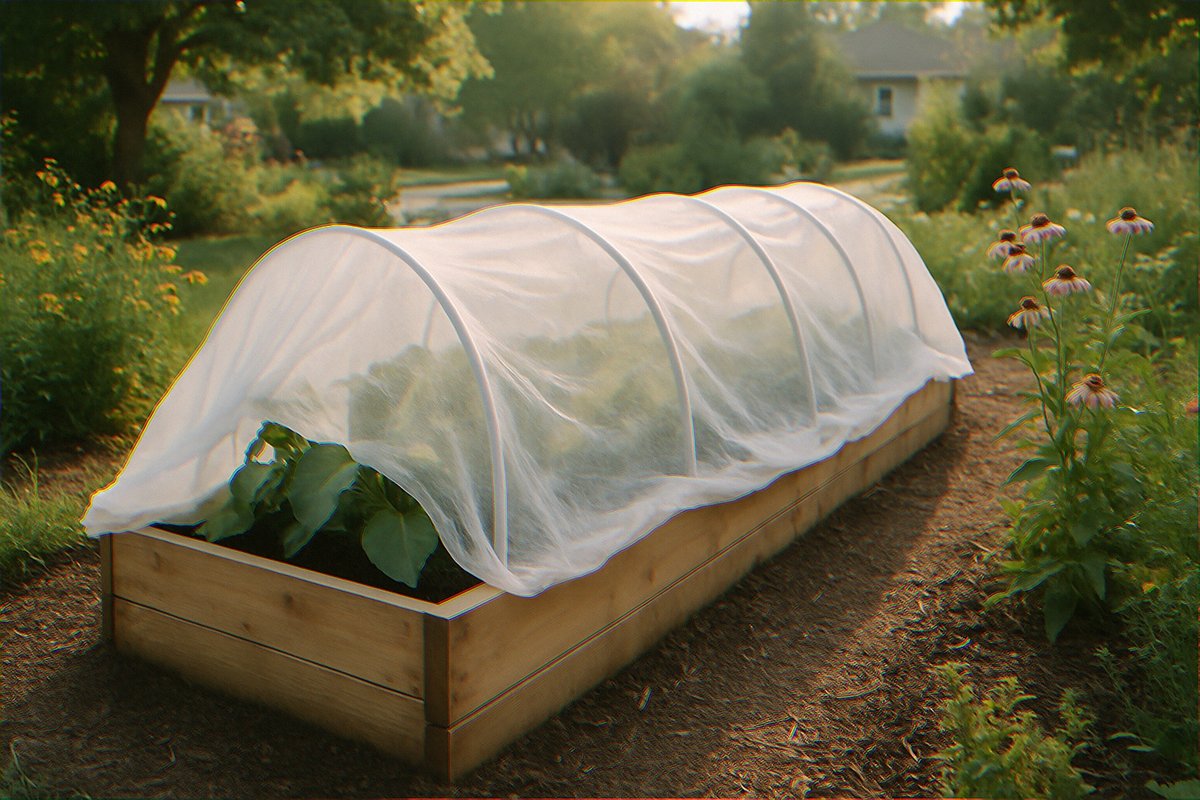
For high-value plants you cannot bear to lose during the six-week adult window. Heirloom roses, a single prized hibiscus, raspberry rows you actually harvest from. Three physical or low-impact options work without broad-spectrum collateral damage.
- Floating row cover (Reemay or Agribon-19): Drape over plants from late June through early August. Block the beetles physically. The catch. You also block pollinators, so this is for self-pollinating crops (raspberries, blueberries past bloom, brassicas) and dormant ornamentals, not for plants currently flowering.
- Kaolin clay (Surround WP): A fine white clay you spray as a slurry. It coats leaves with a powder that irritates beetle feet and deters feeding without poisoning anything. Reapply after rain. It washes off harmlessly and is approved for organic production. Visible white residue is the trade-off. Your roses will look chalky for the bloom.
- Neem oil (azadirachtin): A botanical that disrupts beetle molting and reduces feeding. The honest caveat: neem is not bee-safe in the way some retailers imply. Direct spray on a foraging bee is harmful, and residue on a flower for the first two to three hours after application can cause sublethal effects. Spray only at dusk after bees have left the flower, only on non-blooming foliage, and never broadcast across a flowering bed.
- Beneficial nematodes (Heterorhabditis bacteriophora): A soil drench you apply in late summer that kills grubs as they hatch. Works on similar timelines to milky spore for shorter-term suppression. Best used on lawn areas that are the primary grub nursery, not on garden beds.
- Hand-picking + soapy water (the dawn routine above): Free, immediate, no collateral damage. Should be the default. Everything else is a supplement for the specific cases hand-picking cannot cover.
The choice between these is not “which is best.” It is “which fits this plant, this week.” A flowering rose in peak July gets hand-picked. A raspberry hedge post-bloom gets row covered. A lawn-edge grub problem gets nematodes in August and milky spore in September.
When a Neighbor Insists You Spray, Try This Two-Sentence Reply
Sarah’s real obstacle is rarely the beetle. It is the conversation at the mailbox. The neighbor watching Japanese beetles eat into your roses while their lawn-care company hits the property line every two weeks does not understand why you are out there with a yogurt cup. The conversation tends to go: “Why don’t you just spray? My guy can do yours too, twenty bucks extra.”
The reply that has worked for me, said calmly, once, with no follow-up lecture: “Carbaryl kills bees on contact for sixteen days after spraying, I’m trying to keep the bumblebees that pollinate the tomatoes. The beetles are a six-week problem; the bees are a six-month one.”
That is it. No statistics, no link to a Xerces fact sheet, no condescension about neonicotinoids. The two-sentence framing lets the neighbor save face. They did not know carbaryl was that toxic to bees, and now they do. About one in four conversations like this ends with the neighbor asking what they should use instead. The other three end with a shrug and a “well, your yard.” Both outcomes are acceptable. The point is not converting the neighbor, it is closing the conversation without making an enemy at the fence.
For the deeper HOA scenario. Where a homeowner association sends a letter about “untidy” landscaping that includes your no-spray policy. There is a separate playbook to follow that is more procedural than conversational. Either way, the principle is the same: do not over-explain. State the cost, name the trade-off, stop talking.
What does a won-the-battle garden look like by late August?
The Japanese beetle adult flight is over by mid-August in most years. By the last week of the month, you should see only the occasional straggler. The signs that your no-spray approach worked are not the absence of damage. Some skeletonized leaves are inevitable in year one. But a yard that still has its other insects intact.
Walk the bed at 11 a.m. in late August. Mountain mint should be alive with native bees, hoverflies, and at least two species of parasitoid wasp. Goldenrod and aster, just starting to bloom, should pull a similar crowd. If you put up a trail camera over the lawn at night, you may catch a skunk or raccoon digging for grubs. That is free pest control on the next generation. Robins working the lawn in the morning are doing the same job in daylight. A garden where the predators are still functioning is a garden where year three has fewer beetles than year one without you doing anything additional.
This is the long-game payoff that the pesticide route blocks entirely. Sevin gives you a clean rose this July and a dependent yard next July. The dawn yogurt cup, the milky spore in September, and the mountain mint patch give you a system that runs itself by the third summer. For homeowners who can also support owls and hawks, the wildlife-safe netting choices for vegetable beds close the last gap. No plant protection should kill the predators eating the pests.
One pragmatist’s note. If you garden in containers on a patio or balcony where the lawn-cycle of grubs is not part of the equation, the calculus is different and simpler. Container gardening with native pollinator plants is essentially Japanese-beetle-resilient by default. No host lawn, fewer aggregation cues, and the plants you would pick anyway (mountain mint, blazing star, anise hyssop) are all on the beetle-skip list.
Where to Buy What You Need: Local, Big-Box, and Amazon
Honesty about budget matters here. Sarah’s paradox. Ecological commitment paired with the occasional big-box run. Is the rule, not the exception.
- Milky spore powder: Local independent garden centers are usually overpriced; Lowe’s and Home Depot sometimes carry it seasonally. Amazon is reliably the cheapest source for the St. Gabriel Organics brand. One ten-ounce container covers about 2,500 square feet of lawn.
- Kaolin clay (Surround WP): Almost never in big-box. Available from Arbico Organics, Peaceful Valley, or Amazon. Twelve-pound bag covers a small orchard for a season.
- Mountain mint, culver’s root, anise hyssop plugs: Local native plant nurseries first (search Xerces’ native plant finder for your state). If unavailable, Prairie Moon Nursery and Prairie Nursery ship plugs reliably by mail. Avoid the “wildflower mix” cans at big-box for the same reason discussed in the post on spotting invasive fillers in wildflower seed mixes. The keystone natives you actually want are usually missing.
- Floating row cover: Big-box has it in spring; quality is fine. Agribon-19 from a farm supply or Johnny’s Selected Seeds outlasts the box-store stuff by two or three seasons.
- Beneficial nematodes: Time-sensitive. Must be live on arrival. Order from Arbico Organics or BugLogical with overnight shipping. Do not buy from a shelf.
The recurring cost across all of this is under sixty dollars a year. Carbaryl plus the neighbor’s lawn service plus the eventual loss of pollinators to the property runs into the hundreds, and the indirect cost. Slower tomato yields, fewer hummingbirds, an emptier yard. Is harder to put a number on but easier to feel.
FAQ
Do bird feeders attract Japanese beetles?
No. Adult Japanese beetles feed on plant leaves and flowers, not seed. Bird feeders may indirectly help by attracting grackles, robins, and starlings that eat the grubs in your lawn. These birds are some of the most effective natural predators of the larval stage.
If I plant mountain mint, will it spread aggressively?
Pycnanthemum muticum (clustered mountain mint) spreads by rhizomes and forms colonies of three to six feet within two seasons. That is a feature, not a bug, for a pollinator strip. For tighter beds, choose Pycnanthemum tenuifolium (narrow-leaf mountain mint), which clumps more politely. Both are beetle-skip.
Will Japanese beetles eat my milkweed and ruin it for monarchs?
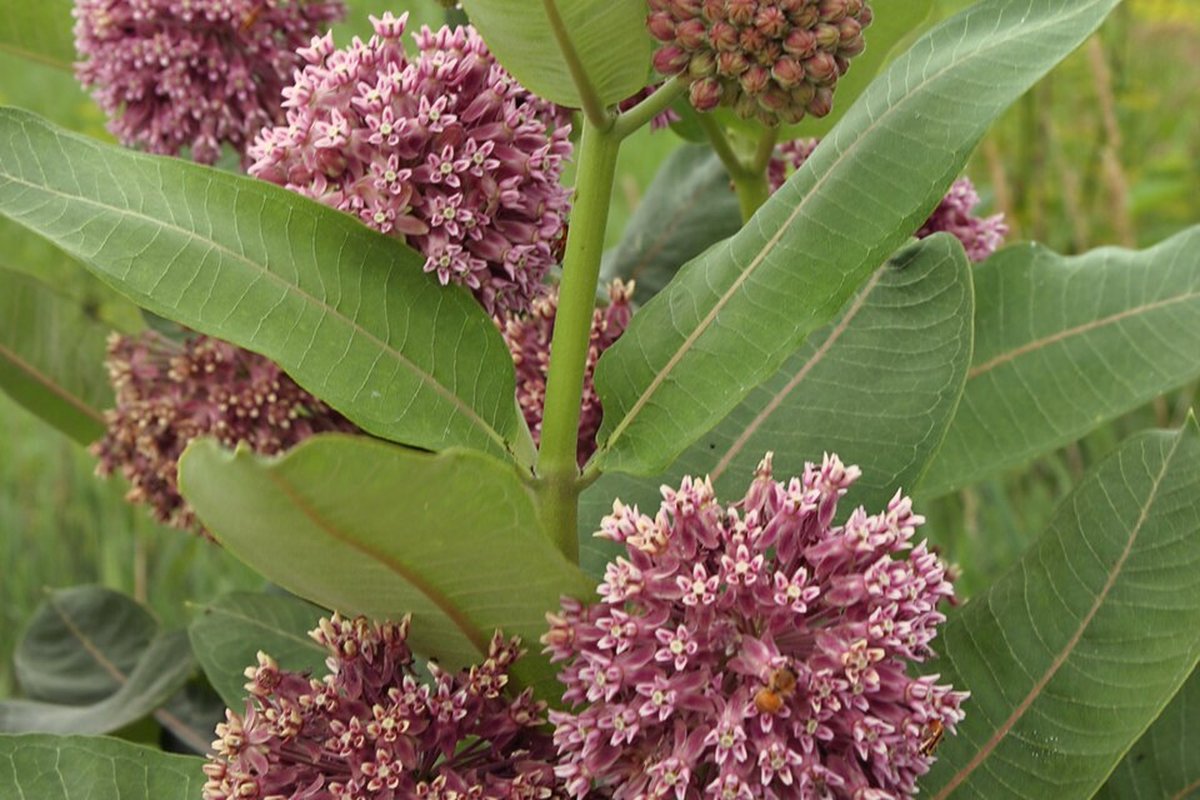
Adult Japanese beetles will feed lightly on milkweed leaves but rarely cause serious damage to the plant. Monarchs prefer egg-laying on fresh growth, which milkweed produces continuously through July and August. The bigger milkweed pest is oleander aphid, not Japanese beetle.
Can I use Japanese beetle traps if I put them in my back-back-corner, far from plants?
Two hundred feet downwind, over unmanaged ground, is the minimum distance to start considering it. For most suburban lots that is impossible. The simpler rule: do not buy bag traps. Even at distance, you are subsidizing the regional beetle population.
How long does milky spore take to work?
Measurable suppression in year two, strong suppression by year three, and decade-long persistence in the soil once established. It is a long-game tool, not an emergency response.
What about diatomaceous earth?
Diatomaceous earth does not work well against Japanese beetles. The adults’ hard wing covers protect them, and rain washes it off plants almost immediately. It also kills any soft-bodied beneficial insect (lacewing larvae, hoverflies) it contacts. Skip it for this pest.
Want More Wildlife Garden Tips?
Join 5,000+ nature lovers getting our weekly tips on creating wildlife-friendly gardens.
No spam, unsubscribe anytime. Privacy Policy
Emma Harrington
Emma Harrington is a wildlife habitat researcher and content editor with a passion for backyard conservation. She has spent over a decade translating ecological science into practical tips anyone can follow — from selecting native plants to building wildlife-friendly habitats. Her work focuses on helping homeowners transform ordinary yards into thriving ecosystems for bees, butterflies, hummingbirds, and other beneficial wildlife.