
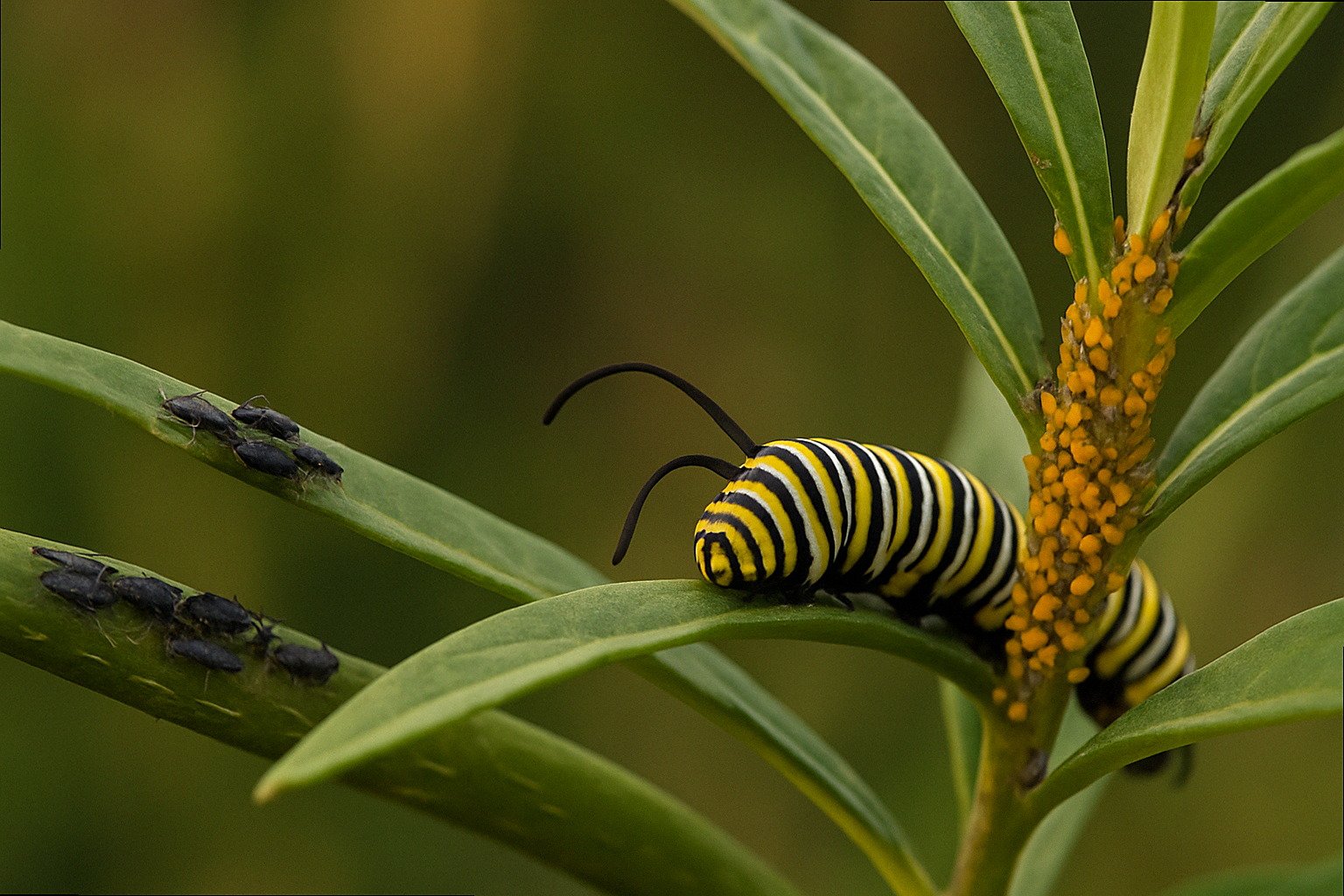
On a Friday morning earlier this month, I walked out with coffee and saw what looked like orange pollen powdering the south-facing side of every Asclepias incarnata stem along my back fence. It was not pollen. It was a colony of oleander aphids that had appeared overnight, three to four hundred on a single stem, and my first reflex was to grab the bottle of insecticidal soap from the garage. I am glad I did not. Two days earlier, I had found four monarch eggs on the underside of those same leaves, and almost every “safe” intervention I had read about would have killed them.
If you are reading this it is because the same thing probably happened in your yard this week. Mid-May is the window. The aphids show up first, fast and bright orange, and your milkweed looks like it is dying. Then the monarchs start laying. The two events overlap by maybe four days, and what you do during that overlap decides whether you raise a brood or accidentally sterilize the patch you spent three seasons building.
The good news, which took me two seasons to actually believe, is that oleander aphids do almost nothing to monarchs directly. They do not eat eggs. They do not attack caterpillars. They suck phloem sap out of the stem and they reproduce fast, but a healthy milkweed plant tolerates them. The damage almost always comes from us. The kill rate of well-meaning aphid sprays on monarch eggs and tiny first-instar larvae is brutal, and most of it is hidden because you cannot see what you killed. This guide is the four-method plan I now use on my own patch, in the order I escalate through them, with the box-store products I will not touch and the reason why.
FREE: Wildlife Garden Starter Guide
Get our 12-page PDF with the 25 best plants for pollinators, simple habitat tips, and a printable checklist — all 100% free.
No spam. Read our Privacy Policy.Three signs the orange you see is oleander aphid, not pollen
Before you do anything, confirm what you are looking at. Three colors of small things show up on milkweed in May, and only one of them is the problem.
Oleander aphid (Aphis nerii). Bright, almost neon orange-yellow body, black legs, black cornicles (the two little tailpipes on the rear). They cluster densely on new growth, the tips of stems, the undersides of young leaves, and on flower buds. They almost never appear singly. If you see three in a row, you will see three hundred within a week. They are non-native, parthenogenetic (every individual is a cloning female in summer), and they specialize on milkweed and oleander in North America.
Milkweed pollen. Bright yellow, dry, falls in a sprinkle when you tap the stem. Lives on the flower head, not the leaves or stem. If what you see is on the upper third of the plant only and concentrated around the flower clusters, that is pollen.
Milkweed beetle nymphs and large milkweed bugs. Orange too, but bigger, with crisp black banding. The large milkweed bug (Oncopeltus fasciatus) looks like a tiny shield with a black X on the back as it matures. These chew seed pods later in summer. Some people class them as pests; I do not. They are native, they are part of the milkweed community, and they have nothing to do with your spring aphid problem.
If you are still not sure, take a photo close enough to see legs and submit it to iNaturalist. A reader emailed me last summer with what she was sure were aphids and they were actually milkweed leaf miners, which require a completely different response. Five minutes of identification beats an hour of regret.
Method one: a strong jet of water at sunrise, four times a week
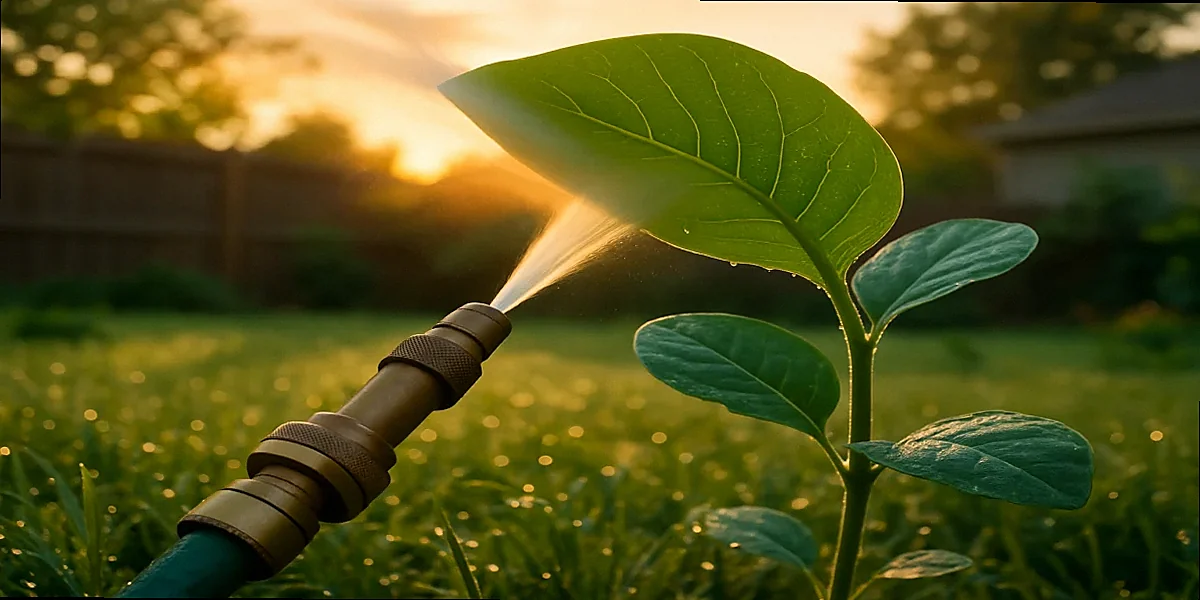
This is where I start every year, and most years it is the only method I need. The mechanics are simple. Aphids attach to the plant with delicate mouthparts. A high-pressure stream of water from a regular garden hose nozzle knocks them off. Once they are on the ground, soft-bodied and exposed, they get eaten by ground beetles within an hour or dry out in the sun. They almost never climb back. I have watched the same plant for an entire afternoon after a rinse; the aphids that ended up on the soil did not return.
The discipline that makes this work is the schedule, not the technique. Once a week is not enough. I do it Monday, Wednesday, Friday, and Sunday, between 6:30 and 7:30 in the morning, before bees are flying and before any monarch eggs that hatched overnight are exposed to direct sun. The total time is four minutes per stand of milkweed, which adds up to under twenty minutes a week for a backyard patch of fifteen to twenty stems.
A few setup details matter. Use a real nozzle, not a thumb over the end of the hose, because you need a focused jet and you also need to be able to angle it under leaves without flooding the soil. I use a brass adjustable from the hardware store, the same one you would buy for washing a car, for about twelve dollars. Aim from underneath upward, because the dense colonies live on the underside of young leaves and at the leaf-stem joint. Hit each cluster for two seconds, move on, come back through the patch a second time.
Before you spray, take ten seconds per plant to look for monarch eggs. They are pinhead-sized, ribbed, cream-white, and laid one per leaf almost always on the underside. If you find one, mark the leaf with a small piece of bright tape or a wooden plant marker stuck in the soil, and skip the water jet on that leaf. The eggs themselves are surprisingly tough to dislodge with water, but very early instar caterpillars are not, and they look exactly like one of the orange dots from a distance. If you want a deeper dive into reading early monarch lifecycle stages, my guide to plants that attract monarch butterflies walks through the egg-to-fifth-instar arc.
Method two: the rubbing alcohol cotton swab, one cluster at a time
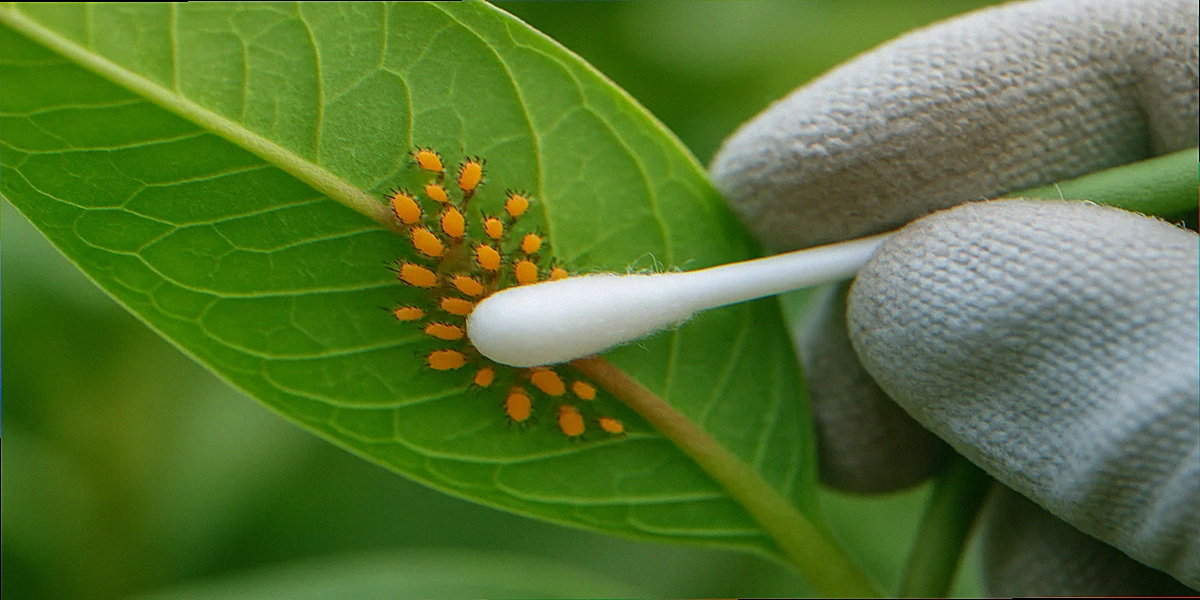
If the colony rebounds inside a single stem after three water passes, I move to method two. This is the slowest method but also the most surgical, and it is the only one I trust on a plant where I have already found eggs.
Tools: a bottle of 70 percent isopropyl alcohol from the drugstore, a bag of cotton swabs (Q-tips), and a pair of nitrile gloves. The milkweed latex is mildly irritating and will stain. Dip a swab in the alcohol, dab it directly onto the aphid cluster. The alcohol dissolves the waxy coating on their cuticle, they desiccate within minutes, and you can wipe them off with the same swab. One swab handles two to three clusters before it gets too gunked up.
Why not a spray bottle of diluted alcohol or soap, the way every internet recipe tells you? Two reasons. First, spray drift covers an area you cannot control, and a monarch egg is invisible to your naked eye from above. The egg sits on the underside of a leaf, where the spray reaches it anyway through capillary action along the leaf vein. A 70 percent alcohol spray dehydrates the egg the same way it dehydrates the aphid. Second, the small first-instar caterpillar (just hatched, maybe two millimeters long) looks like a translucent comma on the leaf surface and is functionally undetectable to anyone not actively searching for it with a hand lens. A spray will hit it. A swab targeted at a visible orange cluster will not.
The persona quote that finally made this stick for me came from a fellow Master Naturalist who I see at the spring plant sale every April. She put it bluntly: “If you can see the aphid, you can touch the aphid, and if you can touch it you do not need a spray bottle. Spray bottles are for people who do not want to look closely.” That comment changed how I work in my own yard. If you have not yet confirmed that the milkweed species you are tending is truly native to your county, my walkthrough on verifying a plant is native to your county is the place to start, because aphid pressure differs between native Asclepias and the tropical species sold at most box stores.
Method three: let the lady beetles you already have do the work
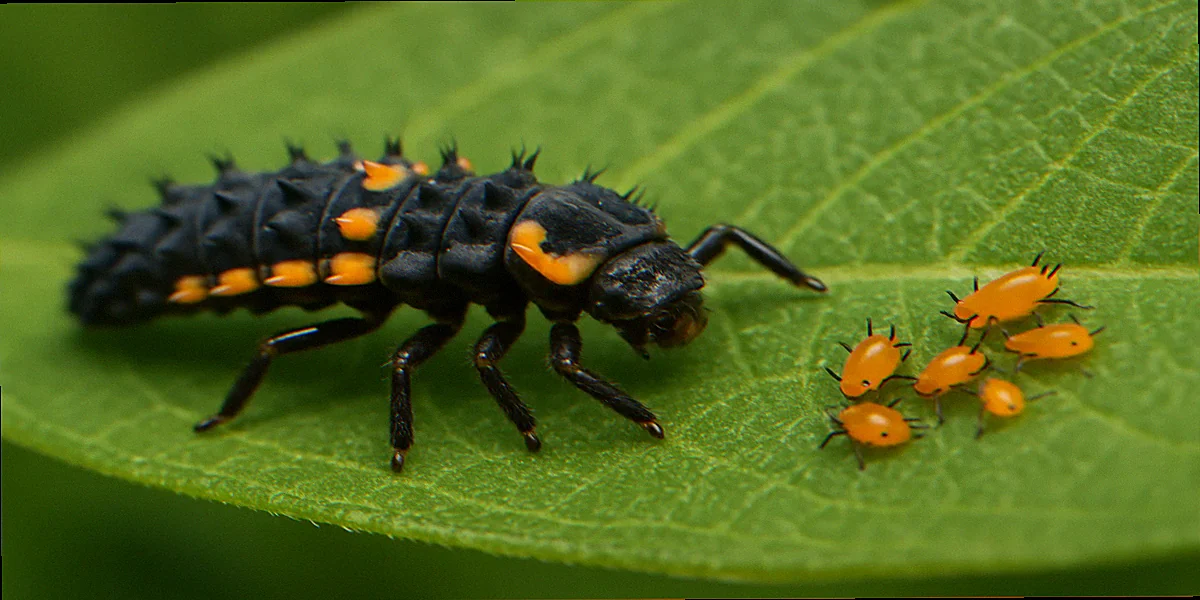
The third method is not really a method, it is a posture. It means doing nothing for a week and watching. Most yards that have milkweed long enough to grow an aphid colony also already have predators ready to eat them. They just need time to find the food and reproduce themselves.
The predators to look for, in roughly the order they show up:
- Adult lady beetles (multiple native species plus the introduced Asian lady beetle). Most people recognize these. They eat 30 to 50 aphids a day per adult.
- Lady beetle larvae. These look nothing like the adult. They look like tiny black alligators with orange spots, maybe a centimeter long. They eat far more aphids than the adults, sometimes 400 over their larval lifetime. If you have never identified one before, the first time you see one you will think it is a pest. Do not crush it.
- Lacewing larvae. Pale green or tan, with curved jaws sticking out front. Called “aphid lions” by entomologists for a reason. Often hide under the dense aphid clusters because the aphids carpet them like a blanket.
- Hover fly larvae (syrphid larvae). Small translucent slug-shaped larvae, almost invisible against a green leaf. Adults look like striped bees but cannot sting. They are second only to lady beetle larvae as aphid predators.
- Parasitoid wasps. The aphid mummies you see, the pale tan dried husks attached to the leaf, are aphids that a tiny wasp laid an egg inside. The wasp larva ate the aphid from the inside and crawled out. Every mummy you see represents one less aphid that produced a thousand more.
I do a predator count every Sunday morning from May through July. If I find three or more lady beetle larvae and any number of hover fly larvae or aphid mummies, I stop the water-jet schedule for that stand and let the predators close the gap. They almost always do, in about ten days. The aphid population crashes from “covered in orange” to “a few clusters at the very tips” without me doing another thing. The same predator community shows up reliably in container milkweed pollinator recipes, by the way, as long as the containers sit within a few feet of in-ground native plantings that overwinter the adults.
Method four: when to cut the stem down and let the plant reset
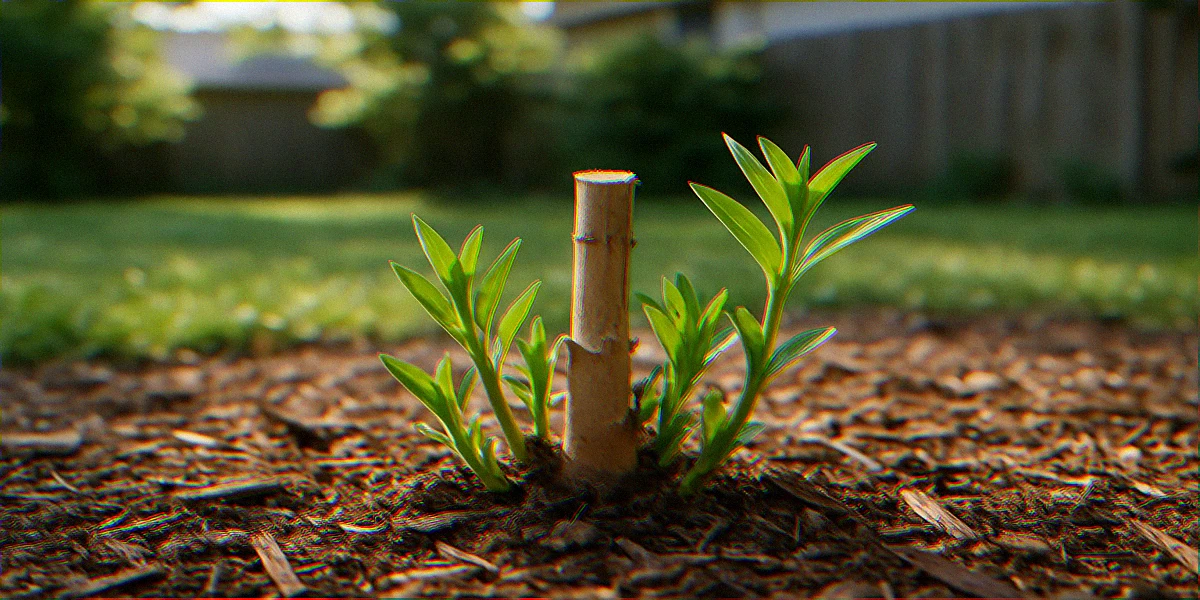
Sometimes a single stem gets so loaded that the leaves curl, the new growth deforms, and the plant looks like it is about to give up. In that case I prune. This sounds drastic and it is not. A healthy milkweed root system can push three or four replacement stems in two weeks during May or June.
The rule I use: if the top six inches of a stem are deformed and the bottom is still healthy, cut the stem back to about four inches above the soil with a clean pair of pruners. Drop the cut tip directly into a five-gallon bucket of soapy water (drugstore dish soap, one squirt per gallon) so the colony cannot crawl off. Leave it submerged for an hour, then dump it on the compost pile.
Before the cut, check the entire stem for monarch eggs and caterpillars exactly the way I described under method one. If you find any, relocate them to a nearby healthy stem first. Eggs you can move by snipping the leaf they are on and pinning it to a new leaf with a tiny safety pin or a clothespin; the caterpillar will move on its own once it hatches. First-instar caterpillars (two to three millimeters) move themselves; just lay the leaf they are on against a fresh leaf and they walk across.
I have had to use this method maybe twice per growing season across about twenty stems. Once on a young Asclepias tuberosa that got nailed by a colony before its second-year root system was big enough to outgrow it, and once on the back-fence incarnata in early June after a heat wave stressed the plant and the aphids exploded. Both stands came back fuller than before by mid-August. If you are growing milkweed in a low-spot rain garden, my native plants for rain garden 3-zone recipe covers which species hold up best to the heat-stress that often triggers the worst aphid bursts.
Insecticidal soap, neem, and BT: what each one does to monarch eggs
This is the section that exists because every garden center in May has an end-cap display of “safe” sprays that are anything but safe for monarchs. I want you to walk past that end-cap with full information.
Insecticidal soap. Marketed as the gentle option. It works on aphids by stripping the lipid layer from their cuticle so they dehydrate. The exact same mechanism dehydrates a monarch egg. Studies summarized by the Purdue Landscape Report and Ohio State Extension confirm field mortality on monarch eggs and tiny larvae from soap-spray drift; the soap does not need to land directly on the egg, surfactant runoff from the leaf surface is enough. If you used soap once and rinsed the plant immediately afterward you may have gotten away with it. If you sprayed and walked away, you killed eggs you never saw. Recommendation: do not use on plants you intend to host monarchs on, full stop.
Neem oil (azadirachtin). Marketed as organic. It is plant-derived and biodegrades in days, which is true. It also acts as an insect growth regulator, meaning it disrupts the molt cycle of any insect that ingests treated tissue. Monarch caterpillars eat milkweed tissue. A monarch caterpillar that ingests neem-treated tissue fails to molt to its next instar and dies. The neem residue persists in leaf tissue for about a week. Recommendation: never use on milkweed, even outside the monarch season, because the milkweed you spray in October has the same residue available for the early caterpillars of the following May.
Bacillus thuringiensis subspecies kurstaki (Bt-k). Marketed for caterpillar control on vegetables (cabbage worms, hornworms). The bacterium produces a protein that lethally damages the midgut of any caterpillar that eats it. That includes monarch caterpillars. Recommendation: Bt-k must never go on milkweed. Period. The drift from a tomato bed treated with Bt-k can land on milkweed downwind; keep milkweed at least 30 feet away from any vegetable bed where you use Bt.
Diatomaceous earth. A physical desiccant, not a chemical. It works on aphids but also abrades the soft cuticle of monarch caterpillars, especially first-and-second instars. Recommendation: not on milkweed during monarch season.
The only “spray” I keep in the garage for milkweed: plain water in a hose-end nozzle. The four-method plan above replaces every other product. The same caveat about misleading “safe” labels applies across the wildflower aisle in general; my walkthrough on wildflower seed mix labels and invasive fillers shows how the same marketing logic plays out on the seed-packet side.
Why the orange aphid is here in the first place
Oleander aphid is non-native, probably Mediterranean in origin, and was likely introduced to North America on imported oleander shrubs sometime before 1900. It is now permanently established across the continental United States. There is no plausible scenario in which it leaves. Every female is a parthenogenetic clone in summer, meaning every aphid you see can give birth, and a single female can produce eighty to ninety daughters in her two-week adult life. Two of them landing on your milkweed in late April produce the colony you see in mid-May.
The aphids do not damage milkweed at the population level the way some non-native sap-suckers damage host plants (compare them to the spotted lanternfly on grape, where the damage is real and cumulative). Milkweeds evolved with native aphids and have natural compensation. A plant that loses 10 to 15 percent of its phloem flow to oleander aphids regrows the difference in 48 hours. What stresses the plant is heat, drought, and root competition from turfgrass, not the aphid.
This is the inversion I had to accept. The aphid is permanent, my milkweed is permanent, and my job is to manage the overlap with monarch lifecycles. Not to eradicate. To manage. Eradication thinking is what sends people to the soap aisle.
What an “aphid is fine” milkweed patch looks like to a neighbor
I live in a neighborhood with an active and not particularly friendly HOA. When the back-fence milkweed went orange the first time, in 2023, a neighbor mentioned at the mailbox that my “yellow flowers had a disease” and asked whether I was going to “treat it.” I learned that day that ecological honesty is not by itself a good answer to a curb-appeal complaint, and that I needed a visible signal of intentional care.
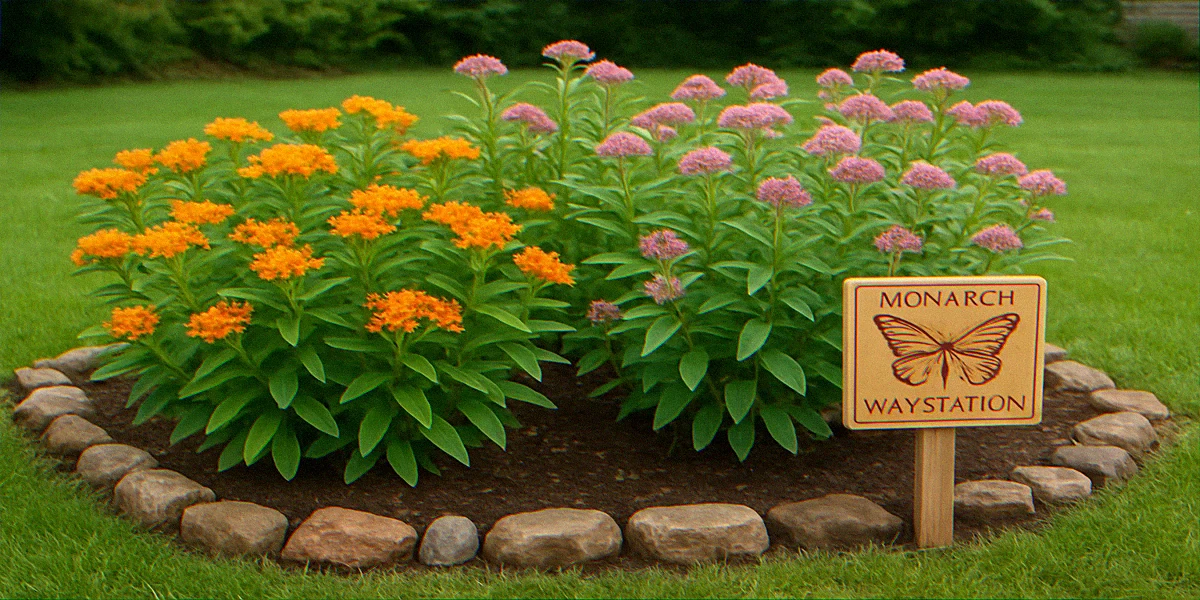
What I do now: the milkweed stand has a six-inch mowed border of fescue around it, edged with a row of small fieldstones from a creek bed. I put a small wood sign at the front of the bed that reads “monarch waystation, NWF certified,” with the certification number underneath. A 30-foot strip of newly mowed turf runs in front of the bed, between it and the sidewalk. The mowed strip is the legible part. It tells the neighbor that the rest of the yard is intentional, not abandoned.
The aphids are nearly invisible from the sidewalk. They show up bright orange only at close range, and the bed is set far enough back that no one walking by sees them. If they did, the sign would do the explaining for me. “Waystation” is a word the average suburban neighbor recognizes; it telegraphs that I know what I am doing and that this looks intentional. I have not gotten another complaint in two years.
For readers who want the certification, the National Wildlife Federation’s monarch waystation program runs around 30 to 40 dollars and the application is two pages. You list your milkweed species, your nectar plants, and your management practices. It is not a deep audit. The sign is the point. If you have already received a violation letter from the HOA, the full response playbook is in my walkthrough on the HOA letter response plan.
How aphids actually affect monarch numbers in your yard
The scientific picture is messy and worth understanding. A 2018 paper from the University of Florida (Mooney and others, published in Functional Ecology and summarized by UF/IFAS extension) found that oleander aphid colonies on milkweed reduce the rate at which female monarchs lay eggs on that plant. The mechanism is partly chemical (aphids modify the volatile compounds the plant emits) and partly physical (a leaf coated in aphids may simply look less appealing).
That sounds like an argument for removal. Read it more carefully. The reduction is on egg-laying, not on egg survival. Eggs already on the plant are not damaged by the aphid colony. New eggs may go to a different plant in the same yard, which means if you have planted milkweed in three or four locations the monarchs simply move. The fix is more milkweed in different microsites, not aphid removal.
The Monarch Joint Venture goes further: its official position is that manual removal and tolerance are the only management strategies it recommends; it explicitly advises against soap and neem on monarch host plants. The Xerces Society, which sets the conservation tone for native pollinator work in the United States, echoes the same posture in its guidance for backyard pollinator habitat.
Translation to a backyard-sized garden plan: plant more milkweed in three or more spots, accept that one spot will have aphids in May, and let the predators close the gap on the others. If you are still in the budget-and-sourcing phase of building a milkweed patch, my notes on a native plant garden on a budget cover where to get plugs and bare roots without burning the credit card.
Common questions readers send me
Do oleander aphids actually kill milkweed? Not under normal conditions in the eastern or central United States. A healthy Asclepias incarnata, tuberosa, or syriaca with at least 60 percent root volume from year two onward tolerates heavy aphid pressure. The plant compensates by routing phloem flow to undamaged stems. The only field reports I have seen of true plant death from oleander aphid are on container milkweed in nursery settings where the plant had no root reserve.
If I rinse aphids with water, do they get on monarch eggs and drown them? No, in practice. Monarch eggs glue down to the leaf with a surprisingly strong adhesive and tolerate a water jet at the pressures a garden hose produces. The risk is to first-instar caterpillars (less than three millimeters), which can dislodge. The mitigation is the morning ten-second leaf-flip inspection described under method one.
I read that banana peel shreds repel aphids on milkweed. Does that work? It does not repel them measurably. It is harmless, so if you want to try it you will not damage anything, but I have never seen a controlled comparison that holds up. The water-jet method out-performs banana peels in every backyard test I have run.
Should I cut tropical milkweed (Asclepias curassavica) all the way back in fall to control aphids? Cut it back regardless of aphids. Tropical milkweed harbors the protozoan parasite Ophryocystis elektroscirrha (OE), which is much more dangerous to monarchs than oleander aphids ever are. The University of Florida studies on this are unambiguous. If you live south of the freeze line and you grow tropical milkweed, cut it to four inches in late October and again in January, every year, no exceptions. Better yet, replace it with a native species for your county.
Will buying ladybugs from a garden center help? Almost never. Most commercially sold lady beetles are field-collected Hippodamia convergens from California, and 95 percent of them fly away within 48 hours of release. You are paying for a brief novelty. The lady beetles you already have in your yard, plus their larvae and the hover flies and the parasitoid wasps, will do far more work over the season. Skip the purchase and protect the predators you have by not spraying.
After three weeks: what to look for in late June
The first time you follow this plan, the patch you are watching will go through a predictable arc. Week one, aphids dominant, you start the water-jet schedule. Week two, predators show up in numbers, you keep the schedule but watch for lady beetle larvae and aphid mummies. Week three, the colony crashes by about 80 percent on its own, and you stop the schedule. Week four, in late June, the plant looks like nothing ever happened to it, the new tip growth is clean, and the monarch caterpillars that hatched during the overlap are now late-instar fourth or fifth and chewing through entire leaves on schedule for the early-summer brood.
That is the result you are aiming for. Not zero aphids, not aphid eradication, not a sterile patch of milkweed. A milkweed stand that hosts both the non-native aphid and the native predator community at the same time, where the predators win on a schedule, and where the monarch eggs survive long enough to become butterflies that fly south in September. That is the homegrown national park, working as designed, with one of you standing in the doorway with coffee on a Friday morning, deciding not to grab the spray bottle.
Want More Wildlife Garden Tips?
Join 5,000+ nature lovers getting our weekly tips on creating wildlife-friendly gardens.
No spam, unsubscribe anytime. Privacy Policy
Emma Harrington
Emma Harrington is a wildlife habitat researcher and content editor with a passion for backyard conservation. She has spent over a decade translating ecological science into practical tips anyone can follow — from selecting native plants to building wildlife-friendly habitats. Her work focuses on helping homeowners transform ordinary yards into thriving ecosystems for bees, butterflies, hummingbirds, and other beneficial wildlife.