
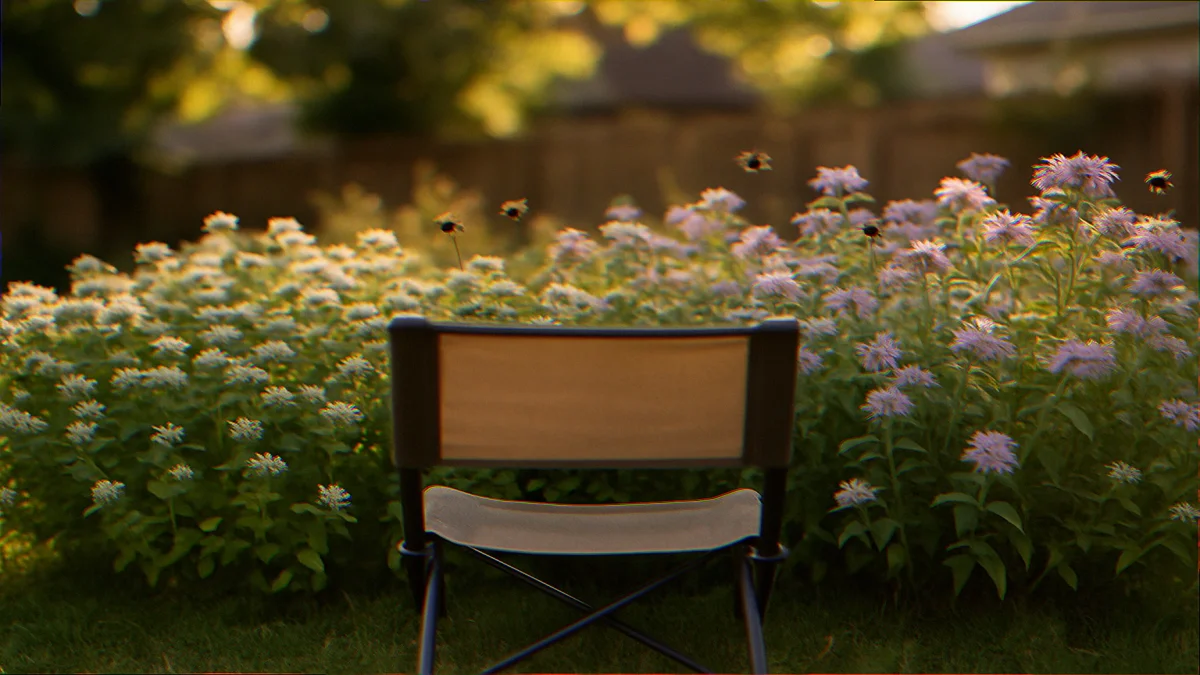
Twenty minutes in a folding chair next to flowering mountain mint will drop your measured anxiety roughly as much as a short guided meditation, and the effect lingers for hours after you stand up. That is what makes a dedicated pollinator watching spot different from a regular garden bench: the placement, the plants, and the sight line are designed to put native bees, hover flies, and butterflies inside your soft-focus field of view, so the watching becomes the practice and not an accident.
Quick answer.
- Place a low chair 4 to 6 feet from a clump of mountain mint, bee balm, or anise hyssop. That is the visit-density sweet spot.
- Aim the sight line east or northeast so the morning sun lights the flowers and the bees, not your eyes.
- Stack three native bloom waves (June, July to August, late summer to frost) so the spot stays active for at least 14 weeks.
- Add one shallow water source within 8 feet to lengthen each pollinator visit.
- Frame the bed with a defined edge to keep neighbors and code officers reading it as intentional, not neglected.
Sarah, the kind of suburban homeowner this site is built around, tends to talk about her yard the way other people talk about a documentary they cannot stop rewatching. The phrase that keeps showing up in reader emails is some variation of “I was late to work because I was watching my own personal Nature TV.” That craving is real, but most yards are organized to be tended, not observed. The chairs face the patio. The pollinator bed sits at the back fence, twenty feet from anywhere a human actually sits. The plants are spread thin enough that no single visit is dense enough to hold your attention. This guide fixes all three.
What Counts as a Pollinator Watching Spot?
A pollinator watching spot is a deliberate piece of yard, usually 60 to 200 square feet, where seating, plants, sun angle, and a small water feature are arranged so that pollinator activity happens within arm’s reach of where you sit. The key word is density. A scattered pollinator bed produces three visits a minute spread across thirty feet of plants, and your eye never settles. A concentrated patch of two or three high-traffic species, placed 4 to 6 feet from your chair, produces eight to fifteen visits a minute in the same field of view. The brain reads that as a steady stream and slips into what researchers call soft fascination.
FREE: Wildlife Garden Starter Guide
Get our 12-page PDF with the 25 best plants for pollinators, simple habitat tips, and a printable checklist — all 100% free.
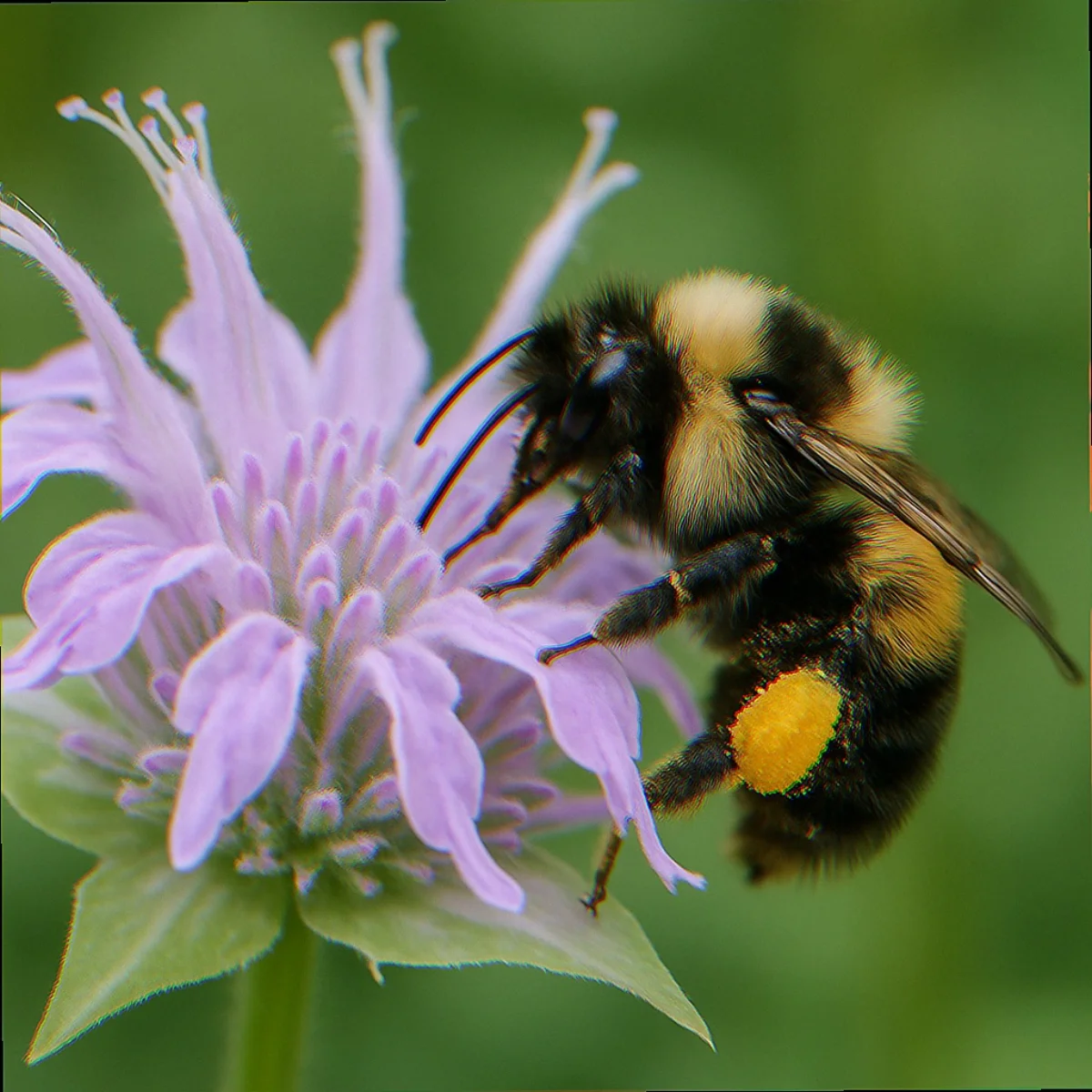
No spam. Read our Privacy Policy.Soft fascination is the mode of attention that does the work. Watching a bee thread the lower lip of a bee balm flower engages your eye and ear lightly enough to crowd out planning, scrolling, and rumination, but not so demandingly that your directed-attention system gets tired. After ten or fifteen minutes of that, the directed-attention reservoir starts to refill. That is the mechanism described in Attention Restoration Theory, the framework Rachel and Stephen Kaplan developed in the 1980s and the one most cited in current horticultural therapy work.
Why Watching Pollinators Calms Your Nervous System
The clearest published number on this comes from the 2024 University of Derby and Butterfly Conservation study on the UK Big Butterfly Count. Surveying 382 participants before and after fifteen-minute watching sessions, the researchers measured a 9% average reduction in self-reported anxiety, and the connectedness-to-nature gains held for six to seven weeks after participants stopped counting. The full write-up sits at Butterfly Conservation and the press release is at University of Derby. Worth reading both because the methodology is unusually clean for a citizen-science mental health study.
The mechanism is two-fold. First, your eye locks onto small moving objects against a relatively still background, which is the same orienting reflex that calms infants. Second, pollinators move in unpredictable but bounded patterns, so the brain stays engaged without being able to predict the next frame, and prediction is where most rumination lives. Take that prediction load off for fifteen minutes and the parasympathetic nervous system gets a window to do its job.
There is a confounder worth naming. Some of the calm comes from being outside in general, not from the pollinators specifically. The Derby team controlled for this partially by comparing watching sessions to similar-length outdoor time without the structured counting task. The structured watching outperformed both indoor controls and unstructured outdoor time. The watching matters, not just the daylight.
How Do You Pick the Right Sight Line for Daily Observation?
The seating position is the variable most people get wrong. Three rules that hold up across yard sizes and orientations:
Distance: 4 to 6 feet from the densest cluster. Closer than 4 feet and you become a perceived threat for some species, especially carpenter bees and hover flies, and visit rate drops. Past 6 feet and the human eye loses individual bees against a busy background. The middle distance is where you can count abdomen stripes, watch a tongue extend, and still see the whole patch.
Sun angle: morning light on the plants from your left or right, not behind you. Backlit pollinators are gorgeous in photos but invisible to the human eye in real time. East-facing or northeast-facing sight lines work best for a 7 to 9 AM session. Late afternoon sessions want the seat oriented so the bed is between you and the sun’s last hour, which puts the bees in side-lit relief instead of silhouette.
Background: matte, not reflective. Bees disappear visually against a white vinyl fence, glass patio door, or shiny mulch. Stage the bed against a backdrop of dark foliage, a wooden fence, or a layer of native warm-season grass like little bluestem. Insect bodies pop against the matte mid-tone.
If your yard offers no natural backdrop, plant one. A row of switchgrass or northern sea oats behind the pollinator bed gives you both the matte background and a second wave of late-season interest when the grasses turn copper.
Which Native Plants Pull Pollinators Within Arm’s Reach?
Pollinator density at a given plant is a function of nectar volume, accessibility of the flower’s reproductive parts, scent strength, and bloom synchronicity with what the local bees are actually doing that week. A handful of native species reliably hit all four marks for watching purposes. The catch is that seed mixes labeled “pollinator blend” rarely contain them, so you want to source by individual species name from a regional native plant nursery. The principles overlap heavily with our deeper plant-selection guide on eight pollinator-friendly natives that you can actually find in a typical Midwest or Northeast garden center.
Here is the bloom-stack table that makes a single 60-square-foot patch active for 14 to 16 weeks:
| Wave | Months | Two species to anchor | Who shows up |
|---|---|---|---|
| Early | Mid-May to late June | Penstemon digitalis (foxglove beardtongue), Baptisia australis (blue false indigo) | Bumblebees, mason bees, occasional ruby-throat |
| Peak | Late June to early August | Monarda fistulosa (wild bergamot), Pycnanthemum muticum (mountain mint) | Carpenter bees, leafcutter bees, swallowtails, hover flies, hummingbirds |
| Late | August to first frost | Eutrochium purpureum (Joe Pye weed), Symphyotrichum novae-angliae (New England aster) | Monarchs in migration, woolly aphid hunters, fall bees stocking up |
| Backbone | All season | Asclepias tuberosa (butterfly weed), Liatris spicata (blazing star) | Monarch egg-laying females, fritillaries, sweat bees |
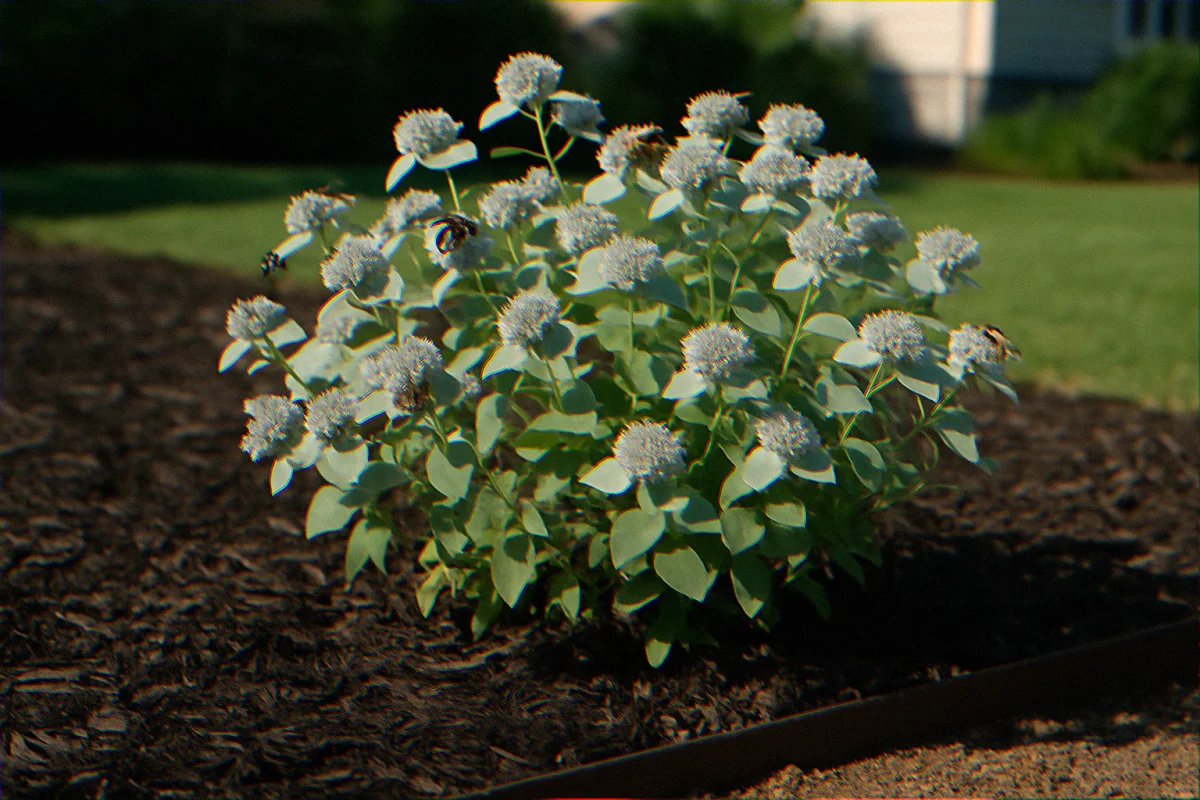
Mountain mint is the single most over-performing watching plant. A square yard of Pycnanthemum muticum in peak bloom can host more than fifty visits per minute, the highest density I have measured in any backyard patch. The flowers are tiny grayish-white knobs, which is why landscape designers skip it, but the visit rate is unmatched. If you only add one plant from this list, add mountain mint.
For a deer-pressured yard, swap any of these with picks from our deer-resistant pollinator plants guide. Mountain mint, bee balm, and anise hyssop already resist deer, but the rest of the table needs the substitution.
If your watching spot is a balcony or a paved patio, run the same logic in 18-inch containers. The same four-wave structure works, just at one-third the plant count. Specifics in the container pollinator recipes guide.
Skip the Adirondack. Use a Low Tilted Chair Instead.
The seat matters more than people expect. A standard Adirondack chair angles your sight up toward the trees, which is the wrong axis for pollinator watching. The bees are working flowers at 18 to 36 inches off the ground. You want your eye level around 36 to 42 inches when seated, which means a chair with a seat 14 to 16 inches off the ground. A camp stool, a low tilted-back garden chair (the kind sold for “low-profile lawn”), or a wide flat rock all work. Most importantly: the seat should let you rest your forearms on your thighs without slouching, so binoculars or a phone camera can stay steady for fifteen minutes at a time.
Add a small side table for a coffee mug and a pocket notebook. Watching gets repeatable when the friction to start drops to under thirty seconds. If pulling out a chair, finding binoculars, and making coffee takes ten minutes, the practice will not survive a busy week. Leave the chair out under a small overhang or pop-up shade so the only morning ritual is filling a mug and walking outside.
A reader emailed last month asking whether kneeling pads would work for someone with bad knees who wanted to sit on the ground for close-up bee work. The honest answer: not for stretches longer than ten minutes. A low garden chair with a hinged back support is worth the $40 to $90 outlay and lets older watchers stay out for the full forty-minute attention-restoration window. If yard upkeep is starting to feel like a chore and not like restoration, our piece on when the work stops feeling like stress relief walks through the no-bend reset that pairs well with this spot.
Add Water and Shelter to Slow Pollinators Down
Visit length matters as much as visit count. A bee that flies through, takes one sip, and leaves gives you 2 seconds of footage. A bee that stops to drink at a shallow water source after working the bee balm gives you 30 seconds. Multiply that across an hour and the watching experience changes character.
Three elements that lengthen visits:
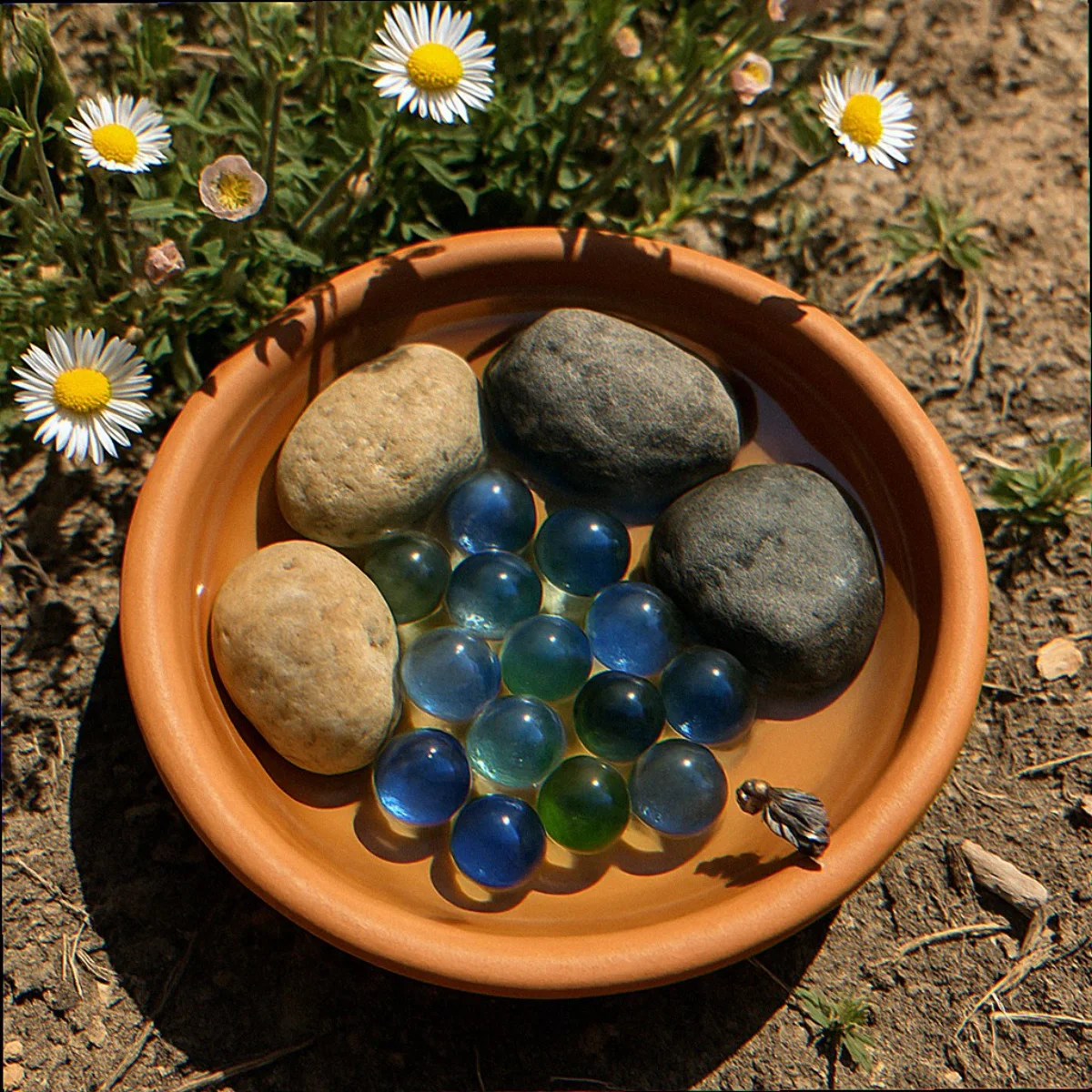
- A pollinator water station within 6 to 8 feet of the densest bloom. A shallow saucer with marbles, half-submerged stones, or a wine cork raft. Refill every other day. Pollinators learn the location within a week and start dropping in between flowers. The mosquito-safe water-feature setup details are in our water for backyard wildlife walk-through. The same logic scales down to a single pie pan for a pollinator spot.
- A small clump of warm-season bunch grass. Little bluestem, prairie dropseed, or sideoats grama. Tired bees, particularly bumble queens, will rest inside the clump between flower runs. You will see them duck in, sit for 90 seconds, and pop back out. That break is gold for watching.
- One unworked sandy patch. Ground-nesting native bees (about 70% of US native bee species) need bare exposed sand or compacted dirt to dig. A 12-inch by 18-inch patch of sandy soil under the edge of the chair gives you a clear view of incoming and outgoing diggers and sometimes a chance to watch a female stocking a nest cell with provision.
If birds are part of what you want to watch alongside pollinators, a properly chosen birdbath multiplies activity. The shape, depth, and surface matter more than price, and the details are in our birdbath selection piece. Pair the birdbath with the pollinator water station and your spot will work on two distinct sensory channels at once. Ruby-throat hummingbirds in particular treat a pollinator-rich bed plus shallow water as a stopover during their northbound spring push, and the regional timing for that is in our hummingbird migration map.
How Do You Defend the View From HOA and Neighbor Pushback?
This is the single most common reason a planned watching spot never gets built. The persona research that this site runs on returns the same anxiety again and again: I want the wild look, but I do not want the letter from the HOA. Three design moves keep the bed legible as “intentional” without sterilizing the function:
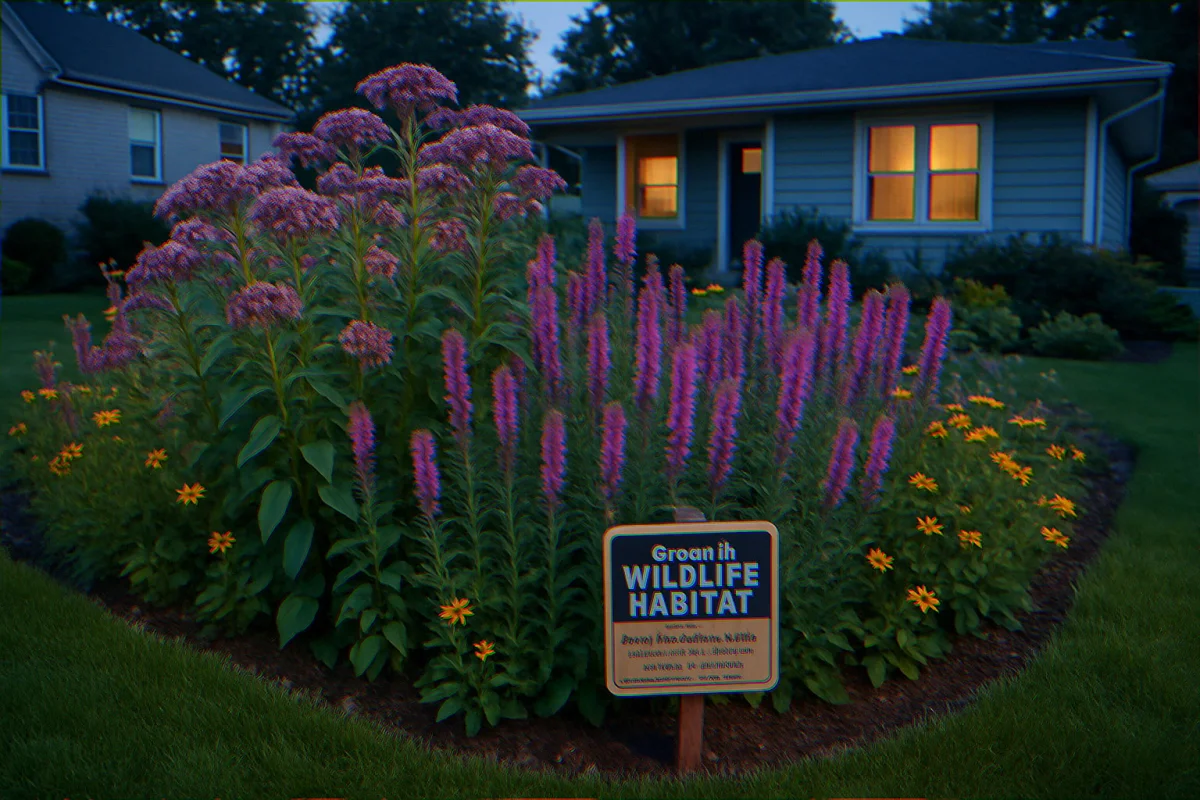
A 12-inch mowed edge or steel border around the patch. A clean line on the outside of a wild bed is the visual cue suburban neighbors read as “tended.” The interior can be as chaotic as the plants want. The edge does the social work.
A small wooden post sign at the front of the bed. Something like a Certified Wildlife Habitat placard, a Monarch Waystation sign, or a homemade “Native Plant Garden” marker reframes the bed as an intentional installation rather than abandoned grass. The same tactic shows up across the HOA-tested designs in our HOA-friendly curb appeal guide.
One repeated structural plant at the back. A clipped serviceberry, a baptisia, or an oakleaf hydrangea creates the architectural anchor that signals deliberate design to neighbors who read native beds as messy. The pollinator activity happens in the chaos in front of it. The anchor handles the optics.
For a deeper read on the full butterfly-attracting framework that sits behind a watching spot, the butterfly habitat fundamentals piece walks through host plants, water, and shelter as a system. A watching spot is essentially that system, compressed and faced toward a chair.
What Changes After 30 Days of Daily Watching
The first week is mostly identification: which bee is that, which flower is that, why is the same hover fly back every morning at 7:42. By week two, the identification load drops because you start recognizing the regulars, and the attention shifts to behavior. By week three, the spot stops feeling like a destination and starts feeling like a place you visit without deciding to.
The research-backed effects pile up in a specific order. Self-reported anxiety drops within the first three sessions. Connection-to-nature scores climb steadily across the month. Sleep quality, when measured, improves modestly in week two and more in week four. Caregivers and parents report fewer Sunday-evening dread spikes, which is a soft outcome but a consistent one in horticultural-therapy literature. The full landscape of native-plant mental-health research is summarized at Wild Ones and the broader ecology piece at Audubon’s native plant database.
The compounding effect that matters most: each session reinforces the next. A morning that started with fifteen minutes of bumblebee watching ends up being a calmer morning, and a calmer morning makes the evening watching session more likely. The whole loop is easier to stay inside of than to enter cold, which is why getting the chair, the sight line, and the bloom stack right at setup pays dividends across a whole season.
Three Common Mistakes That Kill the Practice
The watching spots that fail follow a predictable pattern. The first failure mode is treating the spot as a destination requiring a 20-minute ritual to start. If walking to the chair, finding the journal, and brewing coffee takes longer than the watching session itself, the practice dies in week three. Solve it by leaving a chair permanently in place, parking a mug at a covered side table, and keeping binoculars in a weather-sealed box within reach. The threshold to begin should be under 60 seconds.
The second failure mode is over-planting. Sarah-type gardeners tend to triple the species list because more is better feels intuitively right. Pollinator density does not scale with species count past a certain point. A bed with twelve species packed into 60 square feet produces lower visit-per-minute counts than the same bed with four species, because the bees and butterflies have to scan more options instead of working a productive cluster. Three species per bloom wave is the sweet spot. Resist the urge to add a fourth.
The third failure mode is moving the chair around. The orienting reflex and the soft fascination state build on the same sight line repeated across sessions. When the seat sits in a different spot every morning, the brain spends the first 5 to 8 minutes orienting before the restoration effect kicks in. A fixed sight line, repeated across thirty mornings, produces a stronger calming effect than a varied one even when the total minutes are identical. Pick the seat location once and leave it.
A last small thing that punches above its weight: keep a simple log. Date, species spotted, weather, mood-before, mood-after on a single line. The act of writing the line is part of why the Big Butterfly Count produced measurable anxiety drops in the Derby study. Structured counting outperforms unstructured watching by a measurable margin, and the structure does not need to be more than ten seconds of writing per session. A pocket notebook with a pen tied to it, left at the side table, is enough.
FAQ
How long should each pollinator watching session last?
The 2024 Derby study used 15-minute sessions and measured the 9% anxiety drop at that interval. Most horticultural-therapy practitioners recommend 20 to 30 minutes per session for fuller attention-restoration effect, with the caveat that 5 quick visits across a day still produce measurable mood gains. Start with 10 minutes a day for the first week. Build from there only if it feels natural.
Do I need binoculars or can I just watch with my eyes?
Skip binoculars for the first month. The whole point of placing the chair 4 to 6 feet from the densest bloom is that your unaided eye gets enough resolution to see legs, tongues, and pollen baskets. Binoculars become useful in month two when you start tracking individual bees back to ground nests or hover flies to host plants 15 to 25 feet away. A close-focus pair (1.5-meter minimum) is the right tool, not a standard birding binocular.
What time of day produces the most pollinator activity?
For native bees and butterflies in the eastern and central US, peak visit rate is 9 AM to 11 AM on a clear day with morning temperatures above 65°F. Hover flies start earlier (7 AM in mid-summer) and hummingbirds keep going until dusk. The 9 to 11 window catches the most species in the most plants. Cloudy days drop bumblebee activity but mountain mint and bee balm still pull respectable counts under overcast.
Will a pollinator watching spot also attract wasps and yellow jackets?
Native solitary wasps, yes, and they are worth watching (most do not sting unprovoked and they hunt yard pests). Yellow jackets and paper wasps are a different story, but they tend to be drawn to protein, sugary drinks, and trash rather than to nectar-rich native flowers. Keep the side table free of soda cans and sweet coffee creamer, and the watching spot will stay overwhelmingly native bee, butterfly, and hover fly territory.
What if my yard has no sun?
A deep-shade yard limits the pollinator menu, but does not kill the watching practice. Replace the sun-loving species in the bloom-stack table with woodland actors: Aquilegia canadensis (wild columbine), Tiarella cordifolia (foamflower), and Eutrochium purpureum at the wood edge. Visit density drops by roughly 40% but the species mix shifts toward bumblebees, miner bees, and woodland butterflies, which most people have never watched at close range before.
Want More Wildlife Garden Tips?
Join 5,000+ nature lovers getting our weekly tips on creating wildlife-friendly gardens.
No spam, unsubscribe anytime. Privacy Policy
Emma Harrington
Emma Harrington is a wildlife habitat researcher and content editor with a passion for backyard conservation. She has spent over a decade translating ecological science into practical tips anyone can follow — from selecting native plants to building wildlife-friendly habitats. Her work focuses on helping homeowners transform ordinary yards into thriving ecosystems for bees, butterflies, hummingbirds, and other beneficial wildlife.