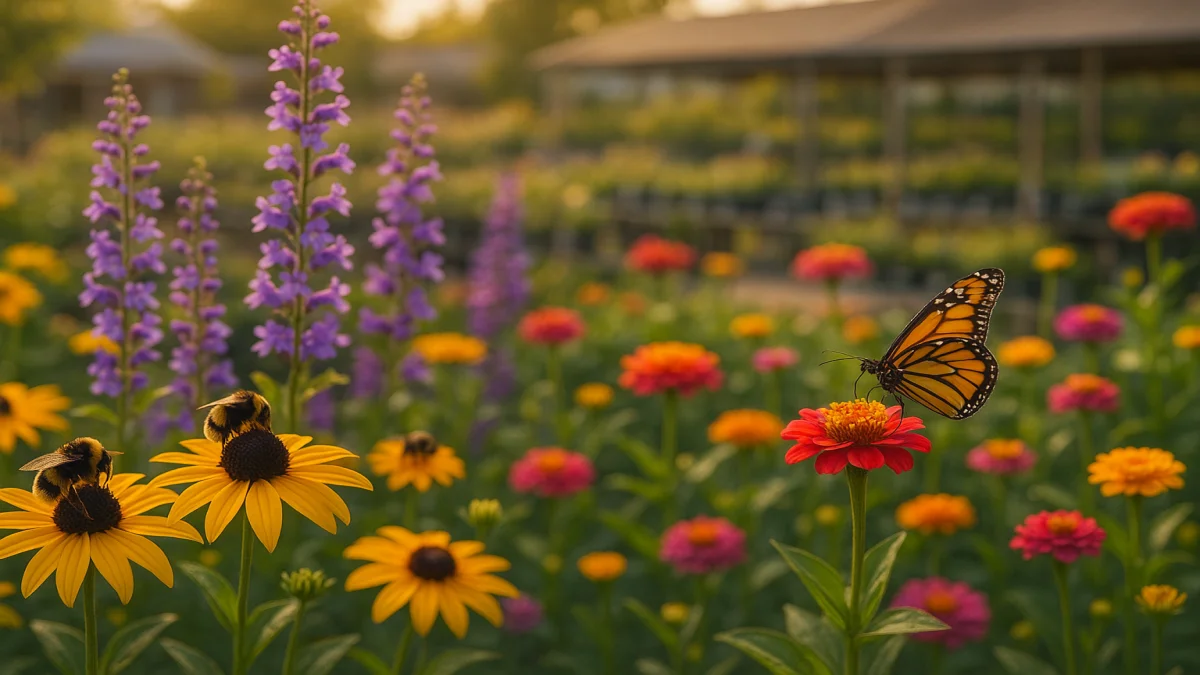
Last spring, a team of plant biologists at Northwestern University and the Chicago Botanic Garden wrapped up a seven-year research effort that finally answered a question gardeners have argued about for decades: do the pretty cultivars at your local garden center actually feed pollinators, or are they just ornamental dead ends? The results, published in April 2026 in the peer-reviewed journal Ecosphere, surprised even the researchers. Some cultivars performed nearly as well as their wild cousins. Others were pollinator deserts despite looking identical on the shelf.
This article breaks down exactly which cultivars earned their place in a pollinator garden and which ones you should skip. You will find specific variety names, pollinator visit data from controlled field trials, and a practical buying guide you can take to the nursery this weekend. Every recommendation comes from peer-reviewed research, not marketing copy from seed catalogs.
Whether you already grow native wildflowers and want to add some visual polish, or you are starting from scratch and feel overwhelmed by the “natives only” advice, this guide meets you where you are. Read on for the complete breakdown, including a month-by-month planting plan that blends the best of both worlds.
FREE: Wildlife Garden Starter Guide
Get our 12-page PDF with the 25 best plants for pollinators, simple habitat tips, and a printable checklist — all 100% free.
No spam. Read our Privacy Policy.The Cultivar Question: What a 7-Year Research Project Revealed
The debate between native wild-type plants and garden cultivars has been heated in pollinator conservation circles for years. On one side, purists argue that only unmodified native species provide the nectar and pollen insects evolved to use. On the other, practical gardeners point out that wild-type plants can be hard to find, expensive, and sometimes too aggressive or untidy for a suburban flower bed.
The Northwestern-Chicago Botanic Garden study tackled this question with unusual rigor. Lead author Abigail Dorian and her team planted four native wild-type forb species alongside 13 cultivated varieties in identical garden plots, as reported by Northwestern University. Trained ecologists observed each plant for 10-minute periods, three times per week, across two full growing seasons. They counted every insect visit to the flowers’ reproductive structures. Bumble bees, honeybees, butterflies, moths, beetles, and flies all went into the tally.
But the controlled garden trial was only half the picture. The researchers also ran a five-year community science project with trained volunteers across the eastern United States, collecting thousands of additional observations under real-world garden conditions. This combination of laboratory-level control and continent-scale field data makes the study one of the most comprehensive evaluations of cultivar performance ever published.
The Big Takeaway
Wild-type plants consistently attracted the highest number of pollinator visits. No cultivar outperformed its wild-type parent. However. And this is the critical finding. Several cultivars statistically matched their wild-type counterparts. That means a well-chosen cultivar can pull its weight in a pollinator garden while giving you the compact form, disease resistance, or bloom color you want.
The flip side? Some cultivars in the same species attracted significantly fewer pollinators. The difference was not between species; it was between varieties within the same species. Choosing the right cultivar of black-eyed Susan matters more than choosing between black-eyed Susan and beardtongue.
Key insight: The cultivar you pick within a species matters more than the species itself. Two varieties of the same flower can differ by 10-fold in pollinator visits.
4 Perennial Cultivars That Match Wild Plants for Pollinator Visits
These four perennial cultivars performed at or near wild-type levels in the Northwestern study. They are widely available at major garden centers and mail-order nurseries across the United States.
1. Black-Eyed Susan ‘Goldsturm’ (Rudbeckia fulgida)
This German-bred cultivar has been a garden staple since the 1930s, and for good reason. In the Northwestern trial, ‘Goldsturm’ attracted pollinator visits at rates statistically similar to wild-type Rudbeckia fulgida. Bumble bees, in particular, showed no preference between the cultivar and the wild plant.
‘Goldsturm’ grows 24 to 30 inches tall, forms tidy clumps that resist flopping, and blooms from midsummer through early fall. It thrives in USDA Zones 3 through 9, handles partial shade better than most pollinator plants, and tolerates clay soil. You can find it at virtually any garden center in the country for $8 to $12 per quart pot.
2. Foxglove Beardtongue ‘Husker Red’ (Penstemon digitalis)
‘Husker Red’ was the 1996 Perennial Plant of the Year, and the new research confirms it deserves the title from a pollinator perspective too. This cultivar matched wild-type Penstemon digitalis for total insect visits across both years of the study. Its tubular white flowers on dark burgundy stems attract long-tongued bees, native bumble bees, and hummingbirds.
Plant it in full sun to part shade in Zones 3 through 8. It grows 30 to 36 inches tall, blooms from late spring through early summer, and self-seeds modestly without becoming invasive. Expect to pay $9 to $14 per pot.
3. Aromatic Aster Cultivars (Symphyotrichum oblongifolium)
The Northwestern study tested aromatic aster cultivars alongside their wild-type parent, and several matched wild-type performance. Aromatic aster is one of the most important late-season nectar sources for migrating monarch butterflies and native bees stocking up before winter. It blooms from September through November, filling a critical gap when most other garden plants have finished.
Look for compact selections at your nursery. These cultivars form dense mounds 18 to 24 inches tall and wide, covered in small lavender-blue daisy flowers. They thrive in lean, well-drained soil in Zones 4 through 9 and are remarkably drought-tolerant once established.
4. Wild Bergamot Selections (Monarda fistulosa)
While the Northwestern study focused on Rudbeckia, Penstemon, and aster, parallel research from Michigan State University and the USDA confirms that wild bergamot cultivars maintain their appeal to pollinators. The tubular lavender flowers are shaped perfectly for long-tongued bumble bees, and the aromatic foliage resists deer browsing. A significant bonus if you garden in areas with heavy deer pressure.
Wild bergamot selections grow 36 to 48 inches tall in Zones 3 through 9. They prefer full sun and tolerate poor soil. Bloom time runs from July through August, bridging the gap between early-summer and fall-flowering plants. Many nurseries carry improved selections bred for mildew resistance, which helps in humid climates.
4 Annual Cultivars Every Pollinator Garden Needs
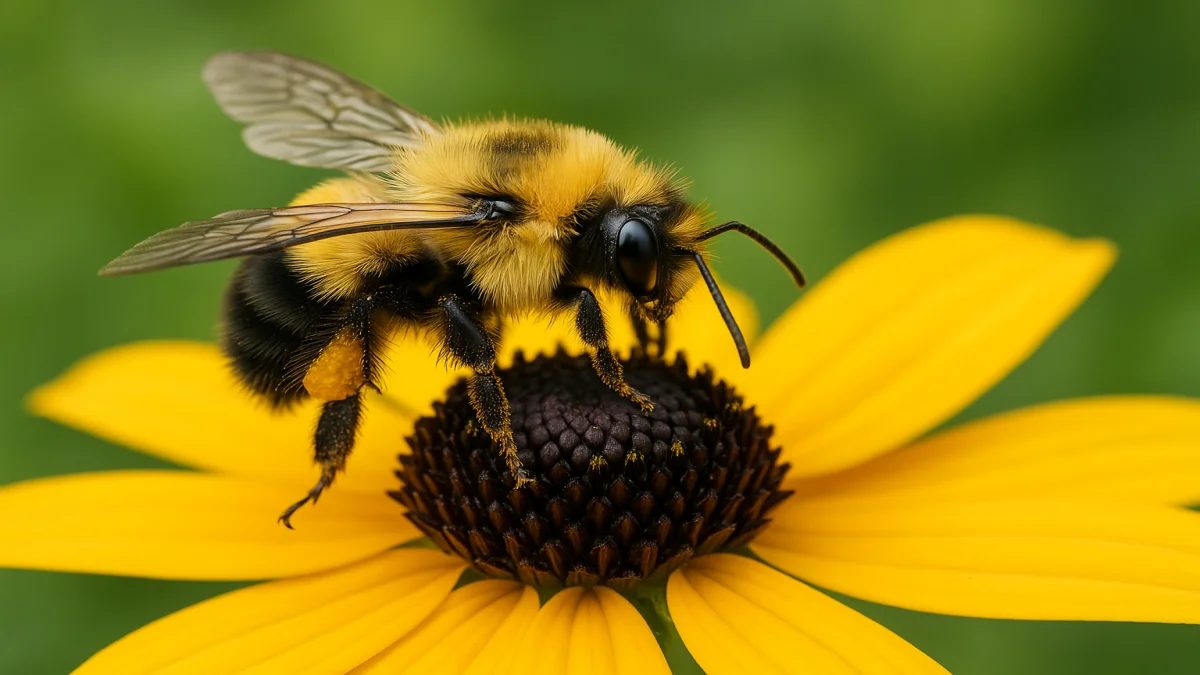
Perennials form the backbone of a pollinator garden, but annuals fill critical gaps. Research from Michigan State University evaluated pollinator visits to dozens of annual cultivars, and the differences between varieties were striking. Up to 10-fold within the same species.
1. Zinnia (Zinnia elegans, Single or Semi-Double Types)
Zinnias are pollinator magnets, but only if you choose the right form. Single-flowered and semi-double cultivars expose their pollen-bearing disk florets, giving bees and butterflies direct access to food. Fully doubled varieties bury these structures under layers of decorative petals, making them nearly useless to pollinators.
The MSU research used Zinnia ‘Zahara Sunburst’ as a pollinator benchmark because it consistently attracted high numbers of visits. Other strong performers include ‘State Fair Mix’ (tall, single), ‘Cut and Come Again’ (branching, semi-double), and the ‘Profusion’ series (compact, single). Plant zinnias after your last frost date in any zone. They bloom from midsummer until the first hard freeze and cost $3 to $5 per seed packet.
2. Marigold ‘Alumia Vanilla Cream’ (Tagetes patula)
Most gardeners plant marigolds for pest deterrence, but the right variety doubles as a pollinator resource. The MSU study identified ‘Alumia Vanilla Cream’ as a standout performer among French marigold cultivars. Its open, single-petaled flowers give bees easy access to nectar and pollen. Avoid the tightly doubled “pom-pom” types like ‘Inca’ or ‘Antigua,’ which scored poorly in pollinator visits.
French marigolds grow 8 to 12 inches tall and bloom continuously from late spring through fall. They handle heat well, resist deer and rabbits, and grow easily from seed or transplants. A flat of six typically costs $4 to $6.
3. Sweet Alyssum (Lobularia maritima)
Sweet alyssum is the unsung hero of pollinator gardens. Its tiny, honey-scented flowers produce nectar accessible to even the smallest beneficial insects, including parasitic wasps and hoverflies that eat aphids. It blooms within weeks of planting and continues until hard frost.
Use alyssum as a living mulch between taller plants. It grows just 4 to 6 inches tall and spreads 12 inches wide. Plant it along borders, in containers, or between stepping stones. Both the MSU research team and the USDA recommend alyssum as a reliable pollinator annual across all regions.
4. Bidens (Bidens ferulifolia)
Sometimes sold as “Apache Beggarticks” or “golden star,” bidens cultivars attract a wide range of pollinators with their open, daisy-like yellow flowers. The MSU study found significant variation among bidens cultivars, but the best performers rivaled zinnia for total insect visits. Look for trailing varieties in hanging baskets. They cascade beautifully while feeding bees below.
Bidens thrives in full sun, handles heat and some drought, and blooms from late spring through frost. It grows 12 to 18 inches tall (or trails 24+ inches from a basket). Widely available at garden centers for $5 to $8 per pot.
3 Popular Cultivars That Disappoint Pollinators and What to Plant Instead
Not every plant that looks good on the shelf delivers for pollinators. These three cultivars or cultivar types scored poorly in research trials, and swapping them out for better alternatives takes no extra effort or money.
1. Rudbeckia ‘American Gold Rush’
Bred for compact growth and disease resistance, ‘American Gold Rush’ was the 2023 Perennial Plant of the Year. But in the Northwestern study, it attracted significantly fewer pollinator visits than wild-type Rudbeckia fulgida or the older ‘Goldsturm’ cultivar. The narrower petals and modified flower structure appear to make it less attractive to foraging insects.
Plant instead: Rudbeckia fulgida ‘Goldsturm’. Similar look, proven pollinator performance.
2. Penstemon ‘Blackbeard’
This cultivar’s dramatic dark purple foliage makes it a striking garden accent, but the Northwestern data showed it attracted fewer pollinators than both wild-type Penstemon digitalis and ‘Husker Red.’ The deeply pigmented leaves and modified flower timing may reduce its appeal to foraging bees.
Plant instead: Penstemon digitalis ‘Husker Red’. Equally colorful foliage with better pollinator numbers.
3. Any “Doubled” Annual Flower
Doubled flowers. Roses, marigolds, zinnias, and dahlias bred with extra petals. Are consistently poor performers in pollinator studies. The extra petals come at the cost of pollen-bearing stamens and nectar-producing structures. A fully doubled zinnia can look like a colorful pom-pom to you, but to a bee, it looks like a locked door.
The MSU research measured up to 10-fold differences in pollinator visits between single and doubled cultivars of the same species. This is the single most impactful choice you can make at the garden center.
Plant instead: Single-flowered or semi-double versions of the same species. Look for visible yellow centers. That is where the pollen and nectar live.
How to Read Plant Tags at the Garden Center Like a Pollinator Expert
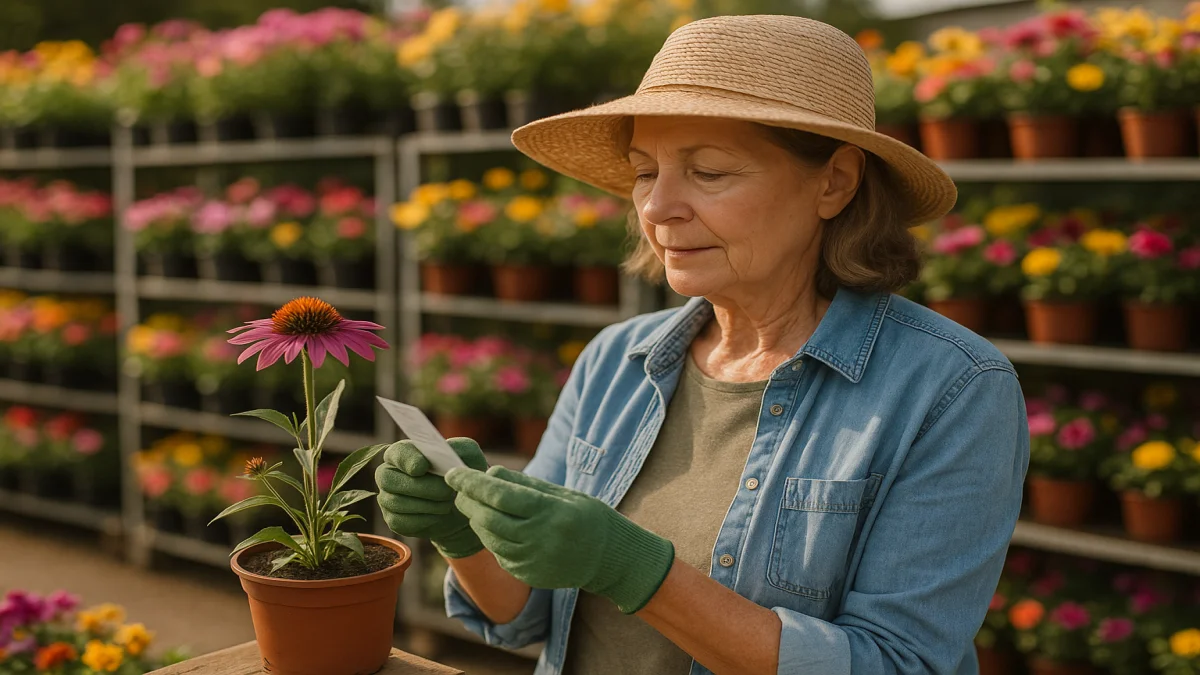
Garden center plant tags rarely mention pollinator value. Here is how to decode what you are looking at and make smart choices without memorizing cultivar names.
Check the Flower Form First
Before you read the tag, look at the flower. Can you see the yellow, brown, or dark center where pollen would be? If yes, pollinators can access it. If the flower is a tight ball of petals with no visible center, skip it for pollinator purposes.
- Single: One ring of petals around a visible center. Best for pollinators.
- Semi-double: Two or three rings of petals, center still partially visible. Acceptable.
- Double or fully double: Layers of petals, center hidden. Poor pollinator value.
- Pompom or globe: Round ball of petals. Almost zero pollinator value.
Read the Species Name, Not Just the Common Name
Garden tags list the Latin name in italics below the common name. The first two words (genus and species) tell you what the plant actually is. The word in single quotes after that is the cultivar name. For example, on a tag reading Rudbeckia fulgida ‘Goldsturm,’ you know it is a cultivated form of orange coneflower.
Why does this matter? Because “Black-Eyed Susan” is a common name applied to at least five different Rudbeckia species. The species name tells you which research data applies to the plant you are holding.
Look for “Native” or “Straight Species” Labels
Some nurseries now label wild-type native plants as “straight species” to distinguish them from cultivars. If you see this label, grab it. Straight species consistently outperform cultivars for pollinator visits. When you cannot find the straight species, choose a cultivar that keeps the flower form as close to the original as possible.
Avoid These Tag Buzzwords for Pollinator Gardens
| Tag Phrase | What It Usually Means | Pollinator Impact |
|---|---|---|
| “Double blooms” | Extra petals replacing stamens | Negative. Less pollen/nectar |
| “Compact habit” | Shorter plant, possibly smaller flowers | Neutral. Depends on flower form |
| “Extended bloom” | Longer flowering period | Positive. More feeding days |
| “Improved disease resistance” | Bred for tougher foliage | Neutral to positive |
| “Sterile” or “no reseeding” | Produces no viable seed | Negative. May produce less pollen |
Building a Mixed Native and Cultivar Pollinator Bed Month by Month
The most effective pollinator garden is not purely native or purely cultivar. It blends both strategically to deliver continuous bloom from early spring through late fall. Here is a month-by-month planting schedule for USDA Zones 5 through 8, which covers the majority of the continental United States.
March Through April: Early Season Foundation
Start with native spring ephemerals like Virginia bluebells (Mertensia virginica) and wild columbine (Aquilegia canadensis). Add crocus and grape hyacinth bulbs planted the previous fall. These non-native cultivars provide critical early nectar for queen bumble bees emerging from hibernation when almost nothing else is blooming.
May Through June: The Transition
Plant ‘Husker Red’ beardtongue alongside native wild bergamot starts. Tuck sweet alyssum transplants between them as a living groundcover. Set out zinnia seeds or transplants after your last frost date. This layer provides continuous bloom as spring flowers fade and summer plants ramp up.
July Through August: Peak Season
Your ‘Goldsturm’ black-eyed Susans and wild bergamot should be in full bloom. Zinnias hit their stride. Add a native prairie plant like purple coneflower (Echinacea purpurea) for additional height and variety. Marigolds and bidens fill the lower layer with constant color and nectar.
September Through November: The Critical Late Season
Aromatic aster cultivars and native goldenrod (Solidago spp.) take over as the primary nectar sources. These are essential for migrating monarch butterflies and native bees building fat reserves for winter. Remove spent annual flowers only after hard frost. Many beneficial insects overwinter in dead plant stems.
Common Pitfalls When Shopping for Pollinator Plants at Garden Centers
Even armed with the right cultivar names, gardeners make avoidable mistakes at the nursery. These are the seven most common errors based on extension service reports and master gardener feedback.
- Buying neonicotinoid-treated plants. Many garden center plants arrive pre-treated with systemic insecticides that persist in pollen and nectar for months. Ask whether the plants were grown without neonicotinoids, or buy from nurseries that certify “neonic-free” stock.
- Planting one of each species. Pollinators forage more efficiently when they can visit multiple flowers of the same type in a cluster. Plant at least three of each variety in a group, spaced according to the tag instructions.
- Forgetting about bloom overlap. A garden that blooms entirely in July and has nothing in April or October fails the pollinators that need food outside that window. Use the month-by-month plan above to ensure at least two species are blooming at any given time.
- Ignoring soil preparation. Cultivars and natives alike struggle in compacted urban soil. Amend your planting bed with 2 to 3 inches of compost worked into the top 8 inches before planting. Skip the synthetic fertilizer. Most pollinator plants prefer lean to moderately fertile soil.
- Spraying insecticides near pollinator beds. Even “organic” insecticides like pyrethrin kill bees on contact. If you must treat a nearby vegetable garden, spray at dusk when pollinators are inactive, and never allow drift onto flowering plants.
- Removing dead stems in fall. Roughly 30 percent of native bee species nest in hollow plant stems. Leaving dead perennial stems standing through winter provides crucial overwintering habitat. Cut them back to 12 to 15 inches in late spring when new growth appears.
- Skipping water sources. Pollinators need water as much as nectar. A shallow dish with pebbles and fresh water placed near your pollinator bed serves bees, butterflies, and beneficial wasps. Change the water every two to three days to prevent mosquito breeding.
Pro tip: Bring a photo of this article’s recommended cultivar list to the garden center. Nursery staff can often locate specific varieties from their supplier catalog even if they are not currently on the shelf.
Your Garden Center Trip Can Make a Real Difference
The science is clear: you do not have to choose between a beautiful garden and a pollinator-friendly one. The Northwestern-Chicago Botanic Garden study proved that several widely available cultivars feed bees and butterflies just as effectively as wild-type plants. The key is choosing the right varieties, ‘Goldsturm’ over ‘American Gold Rush,’ ‘Husker Red’ over ‘Blackbeard,’ single zinnias over doubled ones.
Start with two or three of the recommended perennial cultivars this spring, fill gaps with proven annuals like zinnia and alyssum, and resist the urge to tidy up dead stems before winter. Within one season, you will see the difference in your garden. More bumble bees, more butterflies, more hoverflies, and more of the quiet hum that means your yard is feeding the ecosystem around it.
Found this guide helpful? Share it with a friend who gardens. The more pollinator-friendly yards in your neighborhood, the bigger the impact for every species that depends on them. Also read our complete guide to bee-friendly flowers for even more planting ideas.
Common Questions About Garden Cultivars and Pollinators
Are cultivar plants as good as native wild plants for pollinators?
Not always, but some come very close. The 2026 Northwestern-Chicago Botanic Garden study found that cultivars like Rudbeckia ‘Goldsturm’ and Penstemon ‘Husker Red’ attracted pollinator visits at rates statistically similar to their wild-type parents. However, no cultivar outperformed a wild-type plant, and some cultivars attracted significantly fewer visits. The safest approach is to plant wild-type natives as your foundation and fill in with proven pollinator friendly cultivars where you want specific colors, heights, or disease resistance.
How can I tell if a flower at the garden center will attract pollinators?
Look at the flower center. If you can see the yellow or brown disk where pollen is produced, pollinators can reach it. Avoid “double” or “pompom” flower forms where layers of petals hide the reproductive structures. Single-flowered and semi-double varieties are almost always better for bees and butterflies than fully doubled types, regardless of species.
Do pollinator friendly plants need special soil or care?
Most pollinator friendly plants actually prefer less care than typical garden flowers. Native perennials and their cultivars generally thrive in average to lean soil without synthetic fertilizer. Amend your bed with compost before planting, water during establishment, and then let the plants do their thing. Over-fertilizing produces lush foliage at the expense of flowers, which reduces the food available for pollinators.
When is the best time to plant a pollinator garden?
For perennial cultivars like ‘Goldsturm’ and ‘Husker Red,’ plant in early spring (March through April) or early fall (September through October) when soil moisture is reliable and temperatures are moderate. For annuals like zinnia, marigold, and alyssum, wait until after your region’s last frost date, typically mid-April through mid-May in Zones 5 through 8. Fall-planted perennials often establish stronger root systems and bloom more vigorously in their first full season.
Will pollinator plants attract wasps or stinging insects to my yard?
Pollinator gardens primarily attract gentle species like bumble bees, solitary native bees, butterflies, and hoverflies. These insects are focused on foraging, not defending a nest, and they rarely sting. Yellowjackets and paper wasps may visit occasionally, but they are attracted to meat and sugar, not flower nectar. A well-designed pollinator garden does not increase your risk of being stung. In fact, by supporting beneficial insects, it can reduce pest populations that cause more problems in the long run. For more details, read our guide on attracting bees safely.
Want More Wildlife Garden Tips?
Join 5,000+ nature lovers getting our weekly tips on creating wildlife-friendly gardens.
No spam, unsubscribe anytime. Privacy Policy
Emma Harrington
Emma Harrington is a wildlife habitat researcher and content editor with a passion for backyard conservation. She has spent over a decade translating ecological science into practical tips anyone can follow — from selecting native plants to building wildlife-friendly habitats. Her work focuses on helping homeowners transform ordinary yards into thriving ecosystems for bees, butterflies, hummingbirds, and other beneficial wildlife.