
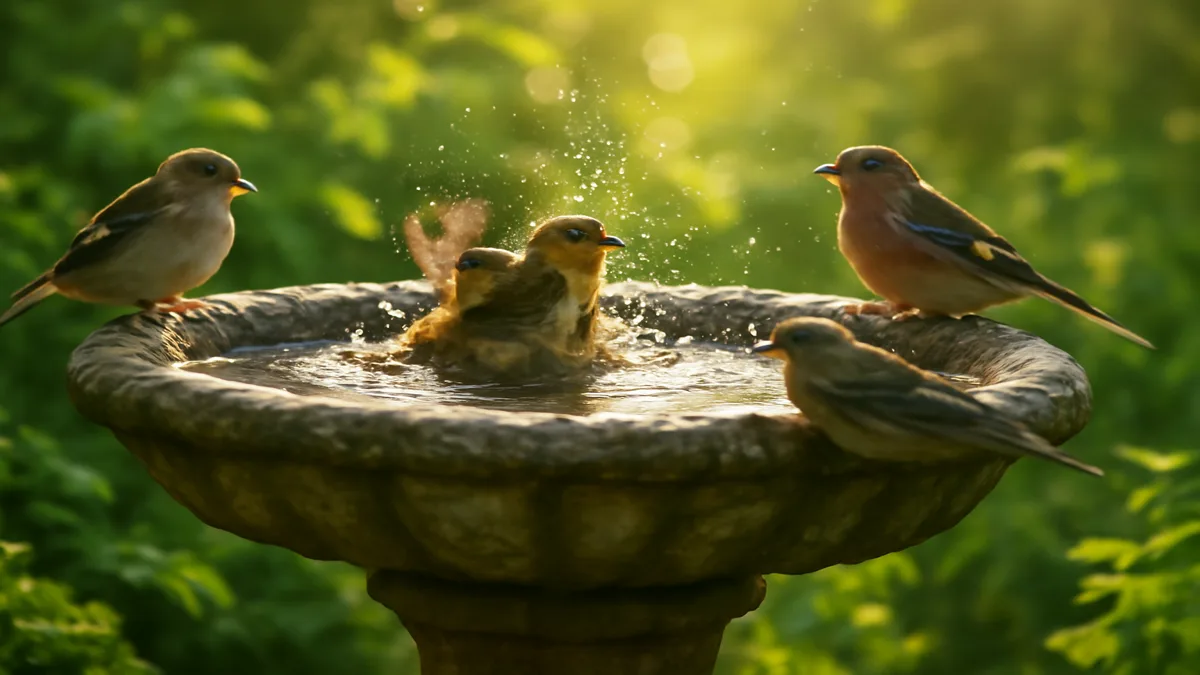
There is a quiet moment that happens in every good backyard, usually in the first warm week of spring, when a bird lands on the rim of a birdbath, tilts its head, and decides whether to stay. That small decision is almost entirely in your hands. Choosing a birdbath sounds like one of those simple weekend projects. Pick something pretty, fill it with water, wait for the birds. But anyone who has actually done it knows the truth. Most birdbaths sit empty for weeks, sometimes years. The owners blame the neighborhood cats, the hawks, the drought, the time of year. The real culprit is almost always the bath itself.
After forty, most of us have earned the right to enjoy the garden at a slower pace. We’re not chasing lawn perfection anymore. We want to sit on the porch with coffee and watch something alive happen. Birds do that in a way nothing else does. They show up on their schedule, not ours, and when they do, the whole yard feels different. A well-chosen birdbath is the single most reliable way to bring them in close. It outperforms feeders in summer, it works in every season, and it attracts species that never touch a seed tray: warblers, tanagers, orioles, thrushes, vireos. Water is universal. Seed is not.
This guide walks through what actually matters when you pick a birdbath. Depth, texture, material, movement, placement, maintenance. And why the most expensive option is rarely the best. By the end, you’ll know why your current birdbath is probably being ignored, and exactly what to replace it with.
FREE: Wildlife Garden Starter Guide
Get our 12-page PDF with the 25 best plants for pollinators, simple habitat tips, and a printable checklist — all 100% free.
No spam. Read our Privacy Policy.Why Most Birdbaths Fail
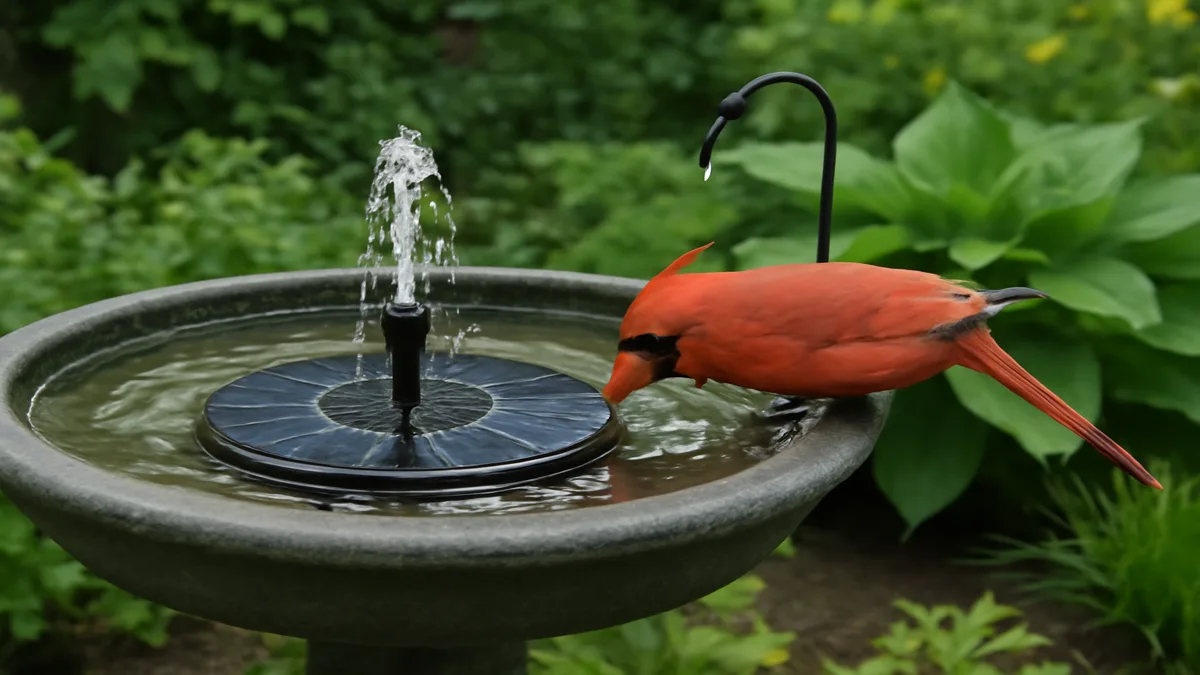
Walk through any garden center and look at the birdbaths on display. Most of them are beautiful. Glazed ceramic in cobalt blue. Polished concrete with a smooth, mirror-finish basin. Tall pedestals with shallow, flat pans. Nearly all of them are terrible for birds.
The failures cluster around three design mistakes. First, the water is too deep. A small songbird. A goldfinch, a chickadee, a warbler. Weighs less than an ounce and stands about two inches tall. A basin that holds four inches of water is basically a swimming pool to them, and birds do not swim. They bathe by standing in shallow water and flicking droplets onto their feathers with quick wing motions. If they cannot stand, they will not bathe. Many won’t even land.
Second, the surface is slick. Glazed ceramic and polished stone look elegant, but wet glaze has roughly the same friction as an ice rink. Birds slip, splash, panic, and leave. Even if a bird does manage to stand, it feels unstable the entire time, which is the opposite of what you want. Bathing is a vulnerable activity, and birds will abandon any bath that feels unsafe.
Third, the placement is wrong. A birdbath in the middle of an open lawn, miles from cover, feels like a trap to a songbird. A bath tucked directly under dense shrubs feels like a cat ambush. A bath positioned six feet from the seed feeder concentrates droppings in the water and spreads disease. Most people place their birdbath based on where it looks good from the kitchen window, which is almost never where a bird wants it.
Fix these three problems and you fix ninety percent of the complaints about birdbaths. The rest comes down to water movement, which we’ll get to shortly.
The Perfect Birdbath: Specifications That Actually Work
Forget aesthetics for one minute and think like a bird. The basin you want has four specific qualities, and they are non-negotiable.
Depth. Two inches maximum at the deepest point, with a gradual slope up to about half an inch at the edges. That slope is the part most birdbaths get wrong. A bath with vertical walls and a flat two-inch floor is still too deep for small birds. They need to wade from a dry edge into progressively deeper water, the way a bird would approach a puddle or a creek. If your current bath is too deep, you don’t have to replace it; drop in a flat stone or two to create shallower zones. This one adjustment can turn a dead bath into a busy one overnight.
Texture. The inside of the basin must be rough enough to grip wet feet. Unsealed concrete is ideal. Natural stone works. Textured resin with a sandy feel works. Glazed ceramic does not work unless the glaze is matte and visibly textured. And even then, most glazes are too smooth. If you already own a slick bath, you can rough it up with light sandpaper work on the interior, or coat the basin with a thin layer of outdoor grout or concrete patch. Some people simply line the bottom with pea gravel, which solves texture and depth at the same time.
Diameter. Eighteen to twenty-four inches across the bowl is the sweet spot. Smaller baths work for tiny birds but discourage the larger species. Robins, jays, doves, cardinals. Which means you miss out on the showiest visitors. Much larger than two feet and you’re fighting evaporation and cleaning logistics without gaining any more traffic.
Shape. A bowl, not a flat pan. The gentle concave shape gives birds the wading slope they need and concentrates water at a drinkable depth in the center. Flat, pan-style baths look architectural but dry out quickly and force birds to stand right at the waterline.
If you want to see this same depth-zone idea applied at a larger scale, our guide on designing a native rain garden with three water-depth zones uses the same principles. Gradual slopes, rough edges, varied depths. A birdbath is basically a miniature version of the same idea.
Material Comparison: What to Buy and What to Avoid
The material you choose affects weight, durability, temperature, texture, and price. Here’s how the common options actually perform in the real world.
| Material | Price Range | Texture | Durability | Best For |
|---|---|---|---|---|
| Concrete | $40, $80 | Excellent (naturally rough) | Very high (decades) | Most yards. The workhorse choice |
| Natural stone | $100, $400+ | Excellent | Lifetime | Premium gardens, permanent installs |
| Glazed ceramic | $30, $120 | Poor (too slick) | Low (cracks in freeze) | Decorative only. Not recommended |
| Unglazed terracotta | $20, $50 | Good | Low (freeze-cracks) | Mild climates, seasonal use |
| Metal (copper, steel) | $40, $150 | Variable | High | Shaded spots only. Heats up fast |
| Plastic/resin | $15, $50 | Variable (check) | Medium | Renters, trial setups, kids’ projects |
Concrete is the answer for most people. A forty-dollar concrete birdbath from a garden center, properly placed and kept clean, will outperform a three-hundred-dollar designer ceramic bath every time. It’s heavy enough to stay put in storm winds. The surface is naturally rough. It ages gracefully, developing a patina that birds actually prefer because it reads as natural.
Stone is great if you have the budget and you want something permanent. A carved granite or limestone basin is the kind of object that becomes part of the garden’s identity over decades.
Avoid metal baths in full sun. Copper and steel heat up fast, and water temperatures above ninety degrees Fahrenheit discourage bathing and can actually harm birds. If you love the look of metal, site it in afternoon shade.
Plastic is fine as a starter bath or a second bath. It’s light enough to blow over in wind, so either weight it with stones in the base or stake it down.
Moving Water: The Single Biggest Upgrade
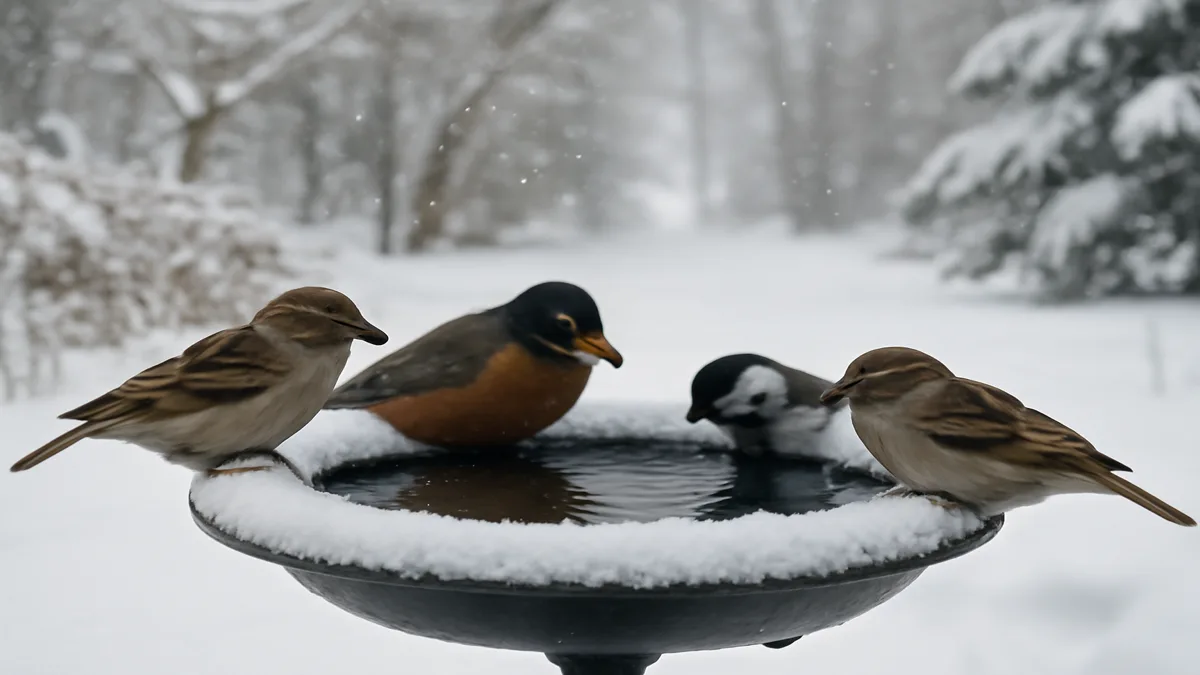
Still water attracts birds. Moving water attracts ten times more. If you do nothing else after reading this article, add motion to your bath.
Birds find water the same way we do. They hear it. A silent bath is invisible from twenty feet away. A bath with a slow drip or a gentle bubble is audible from across the yard and acts as a homing beacon, especially during spring migration when unfamiliar birds are passing through and looking for somewhere to stop. Moving water also stays fresher (less algae, fewer mosquito larvae) and looks alive in a way still water never does.
You have four good options for adding motion, ranging from cheapest and simplest to most elaborate.
- Drippers ($15, $25). A small tube that hangs above the bath and releases a slow drip. Roughly one drop per second. Connects to an outdoor spigot or a gravity-fed reservoir. Almost no moving parts, nothing to break. Birds respond to drippers faster than any other accessory.
- Misters ($20, $30). A fine spray nozzle that produces a mist, usually aimed at nearby leaves rather than the bath itself. Hummingbirds, warblers, and orioles love misters. They’ll fly through the spray and bathe in the wet foliage. Best in hot, dry climates.
- Fountain pumps ($30, $50). A small submersible pump that recirculates water in a bubble or low spout. Plugs into an outdoor outlet. Choose the lowest GPH (gallons per hour) rating that still produces visible movement. Too powerful and you splash all the water out.
- Solar bird bath fountains ($25, $40). A floating solar panel with a small integrated pump. No wiring, no plumbing, works anywhere the sun hits. Stops when clouds cover the panel, which some people love (natural rhythm) and some find annoying. Newer models include a small battery that keeps the pump running for twenty to sixty minutes after the sun goes behind a cloud.
For a typical suburban yard, a solar fountain is the easiest entry point. No installation, no wiring, and the ten-minute addition of motion will usually triple your bird traffic within a week.
Pedestal, Ground, or Hanging: Choosing the Right Style
Birdbaths come in three basic configurations, and each one appeals to different species. If you have the space, put out more than one style.
Pedestal baths. The classic on-a-stand design. Are the most common and the most versatile. They sit at a height that feels safe to most perching songbirds: robins, cardinals, jays, finches, chickadees, titmice, nuthatches. Height also keeps the water slightly cleaner because debris doesn’t blow in as easily. The downside is stability. A top-heavy pedestal can topple in wind or when a large bird like a crow lands on the rim. Choose a model with a wide, heavy base or stake it into the ground.
Ground baths are simply a shallow basin placed at or near grade. These attract a completely different clientele. The ground-feeding birds that rarely use pedestal baths. Mourning doves, towhees, juncos, sparrows, thrushes, and wrens all prefer water at ground level because it matches the puddles and stream edges they drink from naturally. A ground bath is also the only style that reliably attracts quail, if you have them. The trade-off is predator exposure: a ground bath needs nearby cover (shrubs three to six feet away) so birds can escape if a cat shows up.
Hanging baths. Small bowls suspended from a tree branch or shepherd’s hook. Are the favorite of hummingbirds, warblers, and other small arboreal species. Hummingbirds especially like to bathe in shallow moving water at head height in the tree canopy. Hanging baths also have one huge practical advantage: they’re cat-proof. If your yard has a significant cat problem, a hanging bath may be the only style that gets regular use.
Pair a ground bath with a pedestal bath and you’ll double the number of species that visit your yard. Add a hanging bath with a mister and you’ve covered every major group.
Placement: The Detail Everyone Gets Wrong
Where you put the birdbath matters as much as which bath you buy. Birds evaluate a bath the way they evaluate any new feature in a landscape. Is it safe, is it accessible, is it worth the risk? Your job is to answer yes to all three.
Four placement rules, in order of importance:
- Open enough to see predators. Birds want to spot an approaching cat or hawk before it gets close. Leave at least six to eight feet of open ground around the bath in every direction. A bath pressed up against a fence or hidden behind tall plantings feels like an ambush.
- Close enough to escape cover. At the same time, there must be dense shrubs or a low tree within ten to fifteen feet. Somewhere a bird can fly to in one second if a threat appears. Wet feathers make flight heavy and slow, so the escape route needs to be short.
- At least ten feet from feeders. Seed debris and droppings accumulate around feeders, and if they fall into the bath, the water becomes a disease vector. Salmonella, trichomoniasis, and avian pox all spread through contaminated water. Keep the bath on the opposite side of the yard from feeders when possible.
- Morning sun, afternoon shade. Birds bathe most actively in the first few hours of daylight, so morning sun warms the water and makes the bath visible. Afternoon shade slows evaporation and keeps the water from reaching harmful temperatures. A bath under a deciduous tree’s east edge is almost always the best spot. Sun until about 1 p.m., then shade.
One more detail: avoid placing the bath directly underneath trees where birds perch. It sounds counterintuitive. Aren’t the perched birds the ones who’ll use it?. But droppings from above will foul the water daily and multiply your cleaning workload. Ten feet out from the trunk, under the outer canopy, is ideal. For more on building a welcoming backyard habitat overall, our primer on creating a wildlife corridor in your yard covers the broader picture of cover, food, and nesting sites.
The Winter Birdbath: The Most Overlooked Upgrade
Most people assume bird-watching is a three-season hobby and stop filling the bath when temperatures drop. This is exactly backward. Winter is when a reliable water source matters most, because natural water sources freeze and dehydration becomes the primary cause of bird mortality in cold weather. More than starvation, more than cold itself.
A heated birdbath or a bath deicer solves this entirely. Heated baths ($40, $60) have a built-in thermostat that keeps the water just above freezing. Usually in the 35 to 40 degree range. Using about 50 to 150 watts. They don’t heat the water to bathing temperature; they only prevent ice. Drop-in deicers ($25, $45) do the same thing in an existing concrete or stone bath, plugging into an outdoor outlet. Both types are UL-listed for outdoor use and are built to run unattended for months.
The payoff is dramatic. A heated bath in January will pull in chickadees, titmice, cardinals, woodpeckers, juncos, and often species you’ve never seen in your yard before, because the word spreads quickly through the local bird network when reliable open water is available. In urban and suburban areas where natural water is scarce, a heated bath can become a neighborhood lifeline for overwintering birds.
One warning: do not add glycerin, antifreeze, or any other additive to the water to prevent freezing. All of them are toxic to birds. Electricity is the only safe answer. If you can’t run an outdoor extension cord, a solar-heated bath (less effective but better than nothing) or a manual daily refill with warm water will still help.
Cleaning and Maintenance
A dirty birdbath is worse than no birdbath. Algae, droppings, and decomposing feathers all create a biofilm that can spread disease, and birds can smell a fouled bath from a surprising distance. They’ll avoid it and you’ll think the bath “stopped working.”
The routine is simple. Once a week, dump the water, scrub the basin with a stiff brush, and refill. Every two to four weeks, do a deep clean: a ten percent bleach solution (one part household bleach to nine parts water), left to sit for a few minutes, then scrubbed and rinsed thoroughly until no bleach smell remains. Let the bath dry completely in the sun before refilling. Bleach is safe for birds once fully rinsed, and it is by far the most effective algae and pathogen killer.
In hot weather, you may need to refresh the water every two or three days even without a full scrub. A quick dump-and-refill takes thirty seconds and prevents mosquito eggs (which hatch in about four days) from ever reaching the larval stage.
Skip chlorinated tap water when possible. Municipal tap water has chlorine levels that, while fine for human consumption, are slightly harsh on birds and can irritate their respiratory systems during bathing. Either let the tap water sit uncovered for twenty-four hours (chlorine dissipates on its own) or collect rainwater in a clean barrel. Well water is fine as-is.
What Not to Do: Common Birdbath Mistakes
To close out the buying-and-setup section, here are the mistakes that show up again and again in backyards. Avoid all of them and your bath will be busy within weeks.
- Buying a glazed ceramic bath without testing the texture. Run your fingers across the dry basin. If it feels like a dinner plate, birds will slip. Add pea gravel or skip the purchase.
- Choosing based on pedestal height alone. A beautiful four-foot pedestal with a tiny, flat, slippery bowl is still a bad birdbath. The basin is what matters.
- Placing the bath directly under a tree. Droppings fall in daily. Move it out to the canopy edge.
- Filling with chlorinated water straight from the hose. Let it off-gas for 24 hours or use rainwater.
- Letting the water go green. Algae is a hard visual signal to birds that the bath is abandoned. Clean weekly.
- Forgetting winter entirely. A heated bath in January will teach you who’s actually overwintering in your neighborhood.
- Putting it next to the feeder. Disease transmission. Always ten feet minimum between bath and feeder.
- Giving up after two weeks of no birds. New baths often take a full month to be discovered. Motion (a dripper or solar fountain) can cut that to three days.
A birdbath is one of those garden investments that rewards patience and punishes perfectionism. The forty-dollar concrete bath with a solar fountain, placed in the right spot and cleaned every Saturday, will bring more life into your yard than almost any other purchase you can make. If you’re also thinking about nesting habitat. Which is the natural next project once the water is figured out. Our guide on getting your backyard certified as a wildlife habitat walks through the food, water, cover, and nesting checklist the NWF actually requires.
For deeper research on specific species and their water preferences, the U.S. Fish and Wildlife Service migratory bird program publishes species, habitat, and conservation notes, and the National Audubon Society publishes regional guides to local bird populations that will tell you exactly which species you should expect to see.
What I get asked the most
How deep should a birdbath be?
Two inches at the deepest point, with a gradual slope up to half an inch at the edges. Most commercial birdbaths are too deep as-is. Add flat stones or a layer of pea gravel to create shallower zones. Small songbirds cannot and will not bathe in water deeper than two inches.
How often should I clean my birdbath?
Quick clean and refill weekly; deep clean with a 10% bleach solution every two to four weeks, or immediately if the water turns green or you see droppings in the bath. In hot weather, refresh the water every two to three days to prevent mosquito breeding.
Do birds prefer a certain color of birdbath?
Not really. Birds respond to sound, movement, and texture far more than color. That said, natural earth tones (gray, tan, brown, weathered concrete) blend into the landscape and may feel less alarming than bright colors to skittish species. Avoid reflective, shiny surfaces that can spook birds.
Can I use a birdbath in winter without a heater?
Yes, but you’ll need to refill it daily with warm (not hot) water once temperatures drop below freezing. A heated birdbath or a drop-in deicer is far less work and much more valuable to the birds, which face a real dehydration crisis in winter. Never add any chemical to prevent freezing. All of them are toxic.
Why aren’t any birds using my new birdbath?
Most likely one of three reasons: the water is too deep, the surface is too slick, or there’s no moving water to attract attention. Add stones to reduce depth, a solar fountain to add sound, and check placement. Open enough to spot predators, but with cover within fifteen feet. Most baths get discovered within three to four weeks once these fixes are made.
Want More Wildlife Garden Tips?
Join 5,000+ nature lovers getting our weekly tips on creating wildlife-friendly gardens.
No spam, unsubscribe anytime. Privacy Policy
Emma Harrington
Emma Harrington is a wildlife habitat researcher and content editor with a passion for backyard conservation. She has spent over a decade translating ecological science into practical tips anyone can follow — from selecting native plants to building wildlife-friendly habitats. Her work focuses on helping homeowners transform ordinary yards into thriving ecosystems for bees, butterflies, hummingbirds, and other beneficial wildlife.