
Aster yellows is a phytoplasma disease spread by leafhoppers, and the green tufts replacing your coneflower petals are the visible symptom of a systemic infection that cannot be cured by trimming. Pull and bag infected plants the moment you spot the deformity, because the pathogen lives in the entire plant, not just the flower, and the longer it stays the more leafhoppers carry it to your milkweed, asters, and rudbeckia next door.
Quick answer: The green leafy tufts on your Echinacea purpurea are aster yellows, a phytoplasma infection carried by aster leafhoppers (Macrosteles quadrilineatus). Dig the plant out roots and all within 48 hours of confirmation, double-bag it for trash (do not compost), and replace with a resistant alternative like mountain mint or wild bergamot. Spraying does nothing. The disease is already inside.
I spent $42 on three named coneflower cultivars at a local native nursery two springs ago. Last July one of them threw out flowers that looked like tiny green broccoli florets instead of the magenta daisies on the tag. I cut the weird flowers off, the next ones came back the same way, and within six weeks half the bed was deformed. That is the exact pattern a reader emailed me about this month. And it is the way aster yellows always starts in a residential native bed.
The Green Tufts Are Not a Mutation, They Are Aster Yellows
If your purple coneflower is producing what looks like a tight bundle of leaves where the petals should be, sometimes with a few stunted purple ray florets hanging off the side, you are looking at the textbook symptom of aster yellows. The Iowa State University Extension calls this disfigurement phyllody. Flower parts that have reverted to leaf tissue because the plant’s hormonal signals have been hijacked by a phytoplasma.
FREE: Wildlife Garden Starter Guide
Get our 12-page PDF with the 25 best plants for pollinators, simple habitat tips, and a printable checklist — all 100% free.
No spam. Read our Privacy Policy.A phytoplasma is a wall-less bacterium that lives only inside plant phloem and insect salivary glands. It cannot be cultured in a lab the way most plant pathogens can, which is why home gardeners often hear conflicting advice. There is no spray. There is no soil drench. There is no resistant cultivar of Echinacea purpurea on the market in 2026. Once a coneflower shows phyllody, that plant is a reservoir, and every leafhopper that lands on it picks up the infection and carries it to the next susceptible plant in your yard.
The disease affects more than 300 species across 40 plant families. In a native garden, the high-risk neighbors of your sick coneflower include New England aster, black-eyed Susan, common milkweed, goldenrod, purple prairie clover, and even your edible carrot or lettuce row if you keep a vegetable patch nearby.
What Does Aster Yellows Actually Look Like on Echinacea?
Phyllody is the loudest symptom, but it is not the first one. By the time you see the green broccoli flowers, the plant has been infected for two to four weeks. Here is the progression most gardeners notice, from earliest to latest:
- Yellowed or pale-green new leaves at the tips of stems while older leaves stay normal green. This stage is easy to mistake for nitrogen deficiency or hot-weather stress.
- Shortened internodes on the flowering stem. Buds appear closer together than usual, giving the upper plant a stubby, witch’s-broom look.
- Asymmetric, deformed petals. Usually pale, twisted, or only present on one side of the flower disk.
- Full phyllody. The disk becomes a green leafy rosette, sometimes with secondary flower buds growing out of it like tiny shoots.
- Stunted, distorted seed heads. Even if a few normal flowers form, the resulting cone is small, lopsided, and produces few or zero viable seeds.
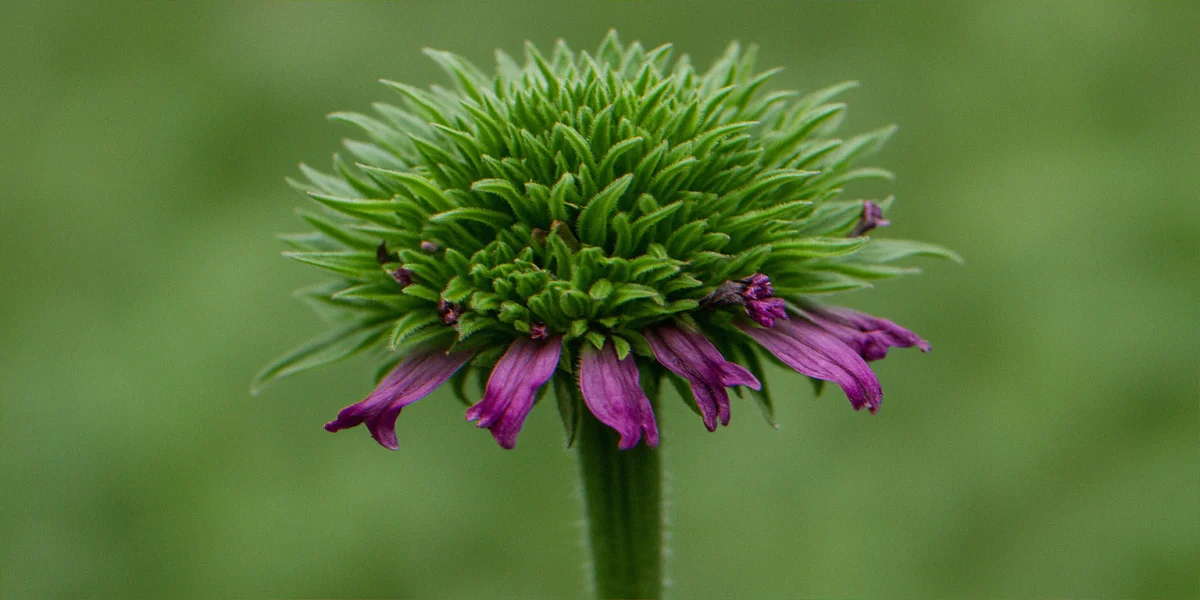
The University of Minnesota Extension documents that confirmed phyllody is so distinctive on coneflowers that a lab test is rarely necessary. If you have ruled out two-spotted spider mites. Which cause yellow stippling and webbing but not green flower deformation. And the plant is producing leafy structures in the flower head, the diagnosis is aster yellows.
Why Cutting Off the Sick Flowers Does Not Stop the Spread
The first instinct, and the one I followed myself, is to deadhead the deformed blooms aggressively and hope the plant resets. It does not work. The phytoplasma lives in the phloem tissue throughout the entire plant. Roots, crown, stems, leaves, and any new shoots will all be infected from the moment the leafhopper fed on the plant.
Trimming actually makes things worse for the rest of your garden. A freshly cut, infected stem is a flag for leafhoppers, which are drawn to the new tender regrowth. They feed, pick up the phytoplasma, and fly off to your other natives. A single infected coneflower can seed an outbreak that reaches every aster-family plant within a 200-foot radius over a single summer.
The same logic rules out chemical treatments. Insecticide sprays kill some leafhoppers but also kill the predatory wasps, hover flies, and lacewings that keep leafhopper populations down. And they do nothing to the pathogen already inside the sick plant. Foliar fungicides are pointless because aster yellows is not a fungus. There is one and only one path that actually works: remove the infected plants, root and all, before more leafhoppers visit them.
How Do I Confirm It Is Aster Yellows Before Pulling a $40 Plant?
Before you sacrifice an expensive plant, run this three-minute checklist. If you can answer yes to at least three of the five items, the diagnosis is solid.
| Symptom | Aster Yellows | Spider Mites | Heat Stress |
|---|---|---|---|
| Green leafy tufts replacing petals | Yes. Diagnostic | No | No |
| Yellow stippling on leaves | Sometimes, mild | Yes. Heavy | Mild |
| Fine webbing on undersides | No | Yes. Diagnostic | No |
| Recovers after deep watering | No | No | Yes within 72 hours |
| Stunted, asymmetric flower buds | Yes. Diagnostic | No | Smaller buds, still symmetric |
Two extra confirmation moves: snip the deformed flower in half lengthwise with sharp scissors. An aster yellows flower has tiny green leaf-like blades growing from inside the receptacle, where a healthy coneflower would show only the bristly disk florets. And check whether nearby asters or rudbeckia show the same green-deformity pattern. Phytoplasmas usually hit more than one host in a bed before the gardener notices.

Pull, Bag, and Trash, Then Sanitize Your Pruners
Once the diagnosis is confirmed, work fast. The window between symptom appearance and secondary infections being seeded into your other plants is measured in days, not weeks. Here is the sequence that actually contains an outbreak in a home garden.
Pick a cool morning, ideally before 9 a.m., when leafhoppers are sluggish. Wear gloves and long sleeves. The disease cannot infect humans, but you do not want to spread phytoplasma-laden sap onto healthy plants on your clothes. Dig out the entire plant, including the crown and as many roots as you can reach. Do not snap the stem off at the soil line and leave the root in place. Roots survive winter and can resprout with the infection intact.
Drop the entire plant straight into a contractor-grade black trash bag. Do not lay it on the lawn, do not carry it across the yard uncovered, do not toss it into the wheelbarrow with other debris. Aster leafhoppers are still feeding on the dying plant for hours after it is pulled. Double-bag the plant, tie it tightly, and put it in the household trash. Never the compost, never municipal yard waste, never a brush pile. The phytoplasma overwinters in plant tissue and can persist for years if the material survives.
Sterilize your shovel and pruners with a 10% bleach solution or 70% isopropyl alcohol before touching another plant in the bed. Most home gardeners skip this step and re-introduce the pathogen with their next deadheading round. After removing the infected plant, refresh the mulch in that spot. A five-inch layer of screened hardwood mulch deters leafhoppers from settling on bare soil while you decide what to plant next.
Which Leafhoppers Carry Aster Yellows in a Native Garden?
The primary vector across most of the continental United States is the aster leafhopper, Macrosteles quadrilineatus, a 3-millimeter green-and-black insect that overwinters in southern states and migrates north on spring storm fronts each year. Iowa State Extension monitoring data shows aster leafhopper populations peak in the upper Midwest between mid-June and mid-July, which is why most home gardeners first notice phyllody right around the Fourth of July.
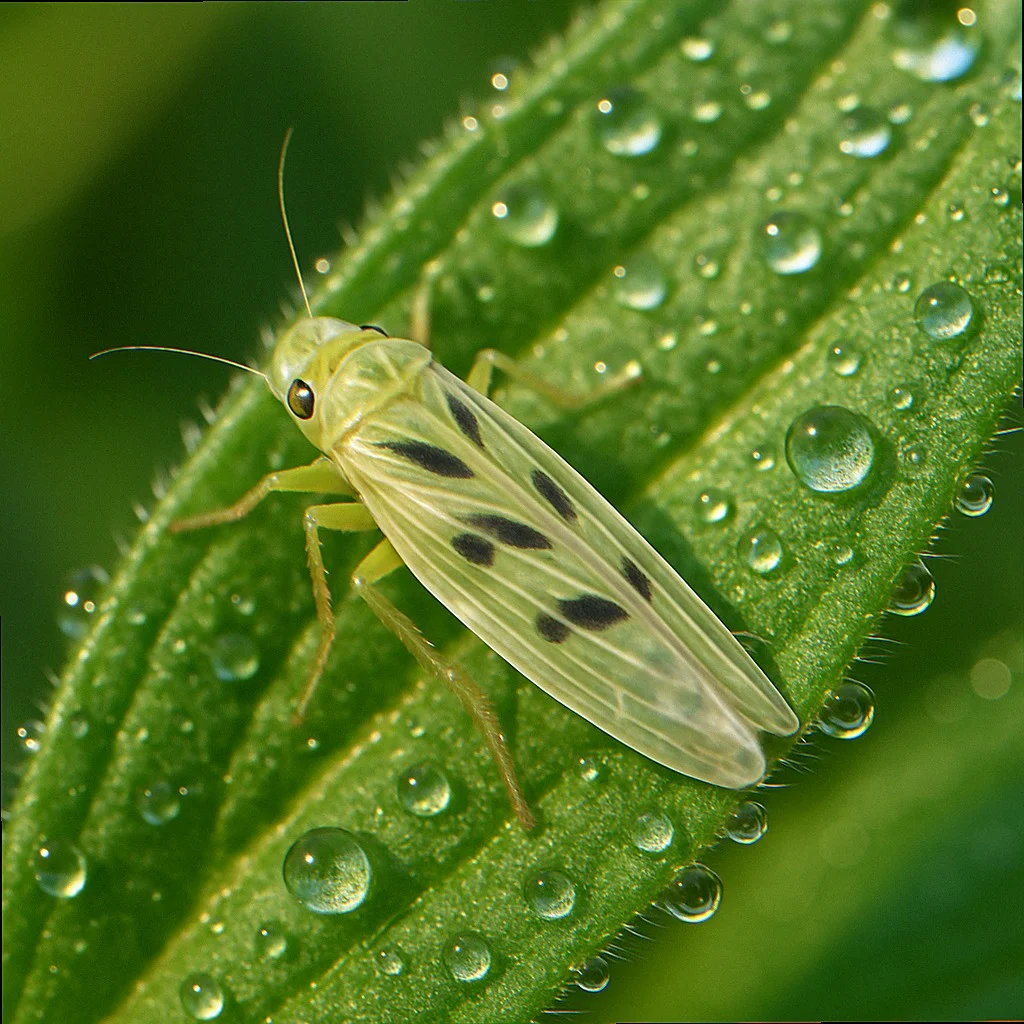
Leafhoppers acquire the phytoplasma by feeding on an infected plant for at least an hour. The pathogen then incubates in the insect for 10 to 21 days before the leafhopper can transmit it. After that incubation, every plant the insect feeds on for the rest of its life is at risk. A single leafhopper can infect dozens of plants in a single afternoon.
You cannot spray your way out of this. Broad-spectrum insecticides reduce leafhopper numbers briefly but eliminate the predatory insects that suppress leafhopper outbreaks the rest of the season. Assassin bugs, damsel bugs, hover fly larvae, and parasitoid wasps. The Xerces Society recommends a habitat approach: dense, layered plantings of low-aphid-pressure natives like mountain mint (Pycnanthemum muticum), wild bergamot, and rattlesnake master that host the predators leafhoppers cannot evade.
Floating row cover applied early in the season works for vegetable beds but is impractical for an ornamental coneflower bed. The single most effective home-garden intervention is the one already named: remove every infected plant the day you confirm phyllody, and replace susceptible cultivars with resistant species over the next two growing seasons.
Replacing $40 Coneflowers Hurts, Here Is the Budget Path
Losing a named cultivar you bought last spring at $14 a pot is the real injury here, and I understand the temptation to gamble on the sick plant pulling through. I have done that, and lost six neighboring plants along with the original. Skip the gamble. The real money is in the replacement plan, and there is a budget path that ends with a denser, more colorful bed than what you had before.
Three rules keep replacement cost down. First, do not buy quart pots of named cultivars from a big-box nursery in late June. Coneflowers established from quart-pot purchases in midsummer have a high failure rate, and you will pay full retail. Local native plant nurseries and Wild Ones plant rescues often have fall plug sales in September where you can pick up resistant species like Pycnanthemum muticum at $3 to $5 per plug.
Second, diversify away from the Asteraceae family in the affected section. Aster yellows hits coneflowers, asters, rudbeckia, and chrysanthemum hardest. Replacing a sick coneflower with another coneflower in the same hole means a new round of infection within 12 months. Instead, mix in mountain mint, wild bergamot (Monarda fistulosa), purple prairie clover, and Culver’s root. All of which support the same pollinators but are far less susceptible to phytoplasma.
Third, sow from seed in the same bed for next year. A packet of straight-species Echinacea purpurea seed from a regional grower runs about $4 and will produce 40 to 60 plugs that you can plant out the following spring. Straight species have shown more genetic resilience to phyllody than the breeder-developed cultivars sold at chain nurseries.
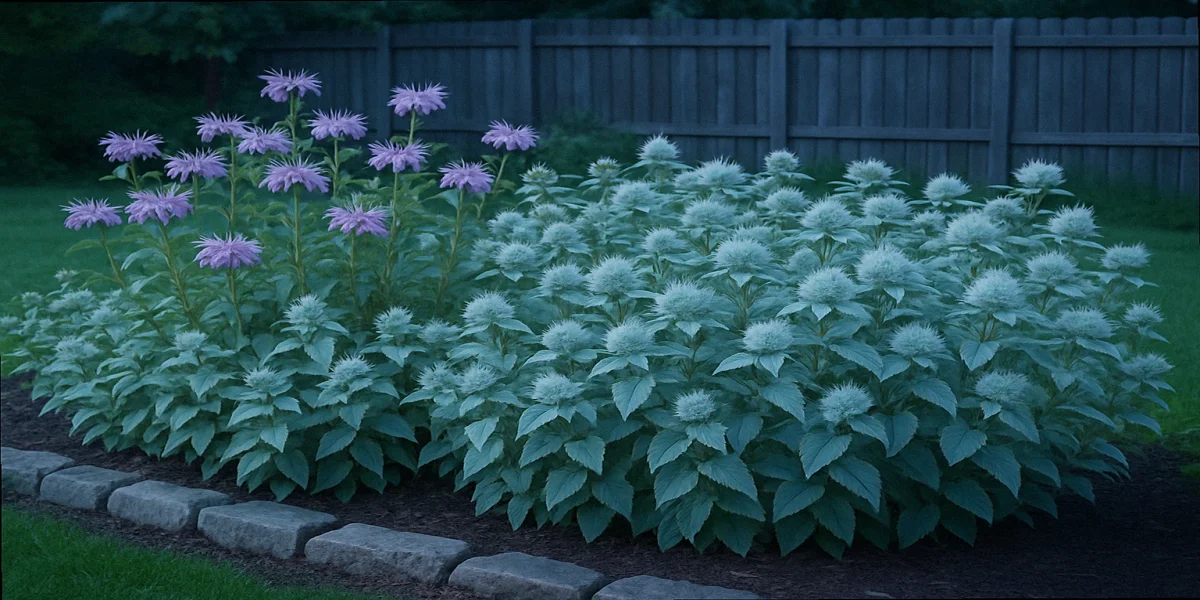
What Your Coneflower Bed Looks Like One Year After Cleanup
The honest result is that you will lose this season’s bloom show in the affected section. There is no version of this where the bed looks the same in August. The trade-off is that next year, the bed comes back without the infection cycle. Aster yellows has no seed-borne pathway in coneflowers. The phytoplasma does not pass through seeds. So a clean replant on the same soil with new plants is not at risk from residual soil contamination.
Most gardeners who do the full pull-bag-replace sequence report no recurrence the following season. The leafhoppers come back. They do every year. But with no reservoir plants in the yard, their first feeding flights end on plants like mountain mint that do not host the pathogen. By year three, the bed reads as a more diverse, more pollinator-dense planting than the original three-cultivar coneflower clump ever was.
If you keep one coneflower clump for sentimental value or because the cultivar is rare, isolate it. Plant it at least 30 feet from any aster, milkweed, or rudbeckia, and check it weekly for phyllody between June 20 and August 15. Catching a single sick plant in the first week of symptoms keeps a $40 loss from turning into a $200 loss.
Regional Timing: When Aster Yellows Peaks in Your Zone
Aster leafhoppers do not overwinter as adults north of about USDA Zone 7. Every summer the breeding population in the upper Midwest, Northeast, and southern Canada is rebuilt by migrants riding low-pressure storm systems out of the Gulf states. That migration pattern is why the same disease shows up at predictable windows across the country, and knowing your local window helps you stage the weekly checks that catch the first sick plant early.
Across the southeastern United States and the Mid-Atlantic, the first wave of aster leafhopper arrivals tends to hit between late April and mid-May. Phyllody on coneflower follows about three to five weeks later, which puts the first wave of symptoms in early June. In the Upper Midwest and New England, leafhoppers arrive in mid- to late May, and gardeners typically see their first deformed coneflowers in the last week of June or the first week of July. Pacific Northwest gardens see a smaller, later peak in mid-July because the prevailing wind patterns deliver fewer leafhopper migrants.
The practical move: between two weeks before your local peak and four weeks after, walk the bed every Saturday morning with a cup of coffee. Look at every coneflower bud from the moment they color up. Five minutes a week through the symptom window catches a single sick plant in time to keep one infection from becoming a yard-wide outbreak. I block 6:30 to 6:45 a.m. on the calendar for it. The early hour also catches leafhoppers when they are still slow enough to spot on the underside of leaves.
Phenology indicators are more reliable than calendar dates. The first phyllody in my neighborhood always shows up within ten days of the wild bee balm reaching full bloom. The same indicator works in most of the eastern half of the country. If your bee balm is blooming heavily, you are inside the active aster yellows window and the weekly checks need to be happening.
What About Resistant Echinacea Cultivars Sold at Big-Box Stores?
Several breeders market coneflower cultivars with marketing language that implies disease resistance. Phrases like “vigorous”, “tough”, “improved performance”, or “bred for landscape reliability”. As of the 2026 growing season, there is no commercially available Echinacea purpurea cultivar with documented resistance to aster yellows phytoplasma. The disease moves through phloem tissue identically regardless of cultivar, and breeding programs have not targeted phytoplasma resistance as a selection trait.
What you do see in big-box-store coneflower trials is a tradeoff. Heavily bred ornamental cultivars with unusual flower forms. Tightly doubled cones, neon colors, dwarf habits. Show higher phyllody rates than straight species, probably because the same hormonal instability that allows the unusual flower form also makes the plant easier for the phytoplasma to manipulate. A local Master Gardener who runs trial plots told me she pulled four out of six “Cone-fections” series plants in a single season, and the two straight-species plants in the same row stayed clean.
If you shop at a big-box nursery and the only options are heavily bred cultivars, two pragmatic adjustments help. Buy one plant of the cultivar you want, not three or five, so a single phyllody hit does not wipe out the section. Pair the cultivar with two plugs of straight species from a local native nursery so the bed has genetic diversity. And put the cultivar at the edge of the bed where you walk past it daily. The closer it is to your foot traffic, the earlier you spot the first deformity and the faster the cleanup can happen.
FAQ
Can aster yellows spread to my vegetable garden?
Yes. Carrots, lettuce, celery, and parsley are all susceptible, and aster leafhoppers move freely between ornamental and edible beds. If you grow vegetables within 50 feet of a phyllody-infected coneflower, check carrot foliage for purple-red discoloration and lettuce for stunted, twisted growth. Pull and trash infected vegetables the same way you handle the coneflowers.
Will composting kill the phytoplasma?
Only an industrial hot-compost operation that holds 140°F or higher for at least 72 hours reliably destroys phytoplasmas. Home compost piles rarely reach those temperatures evenly, and the pathogen can survive in cooler pockets. Send infected material to the trash, not the home compost, and not the municipal yard waste stream unless your local hauler confirms hot processing.
Are double-bloom coneflower cultivars more susceptible?
Field observation suggests yes. Heavily bred double-bloom cultivars like “Cone-fections” and “Double Scoop” series show phyllody more often than straight-species Echinacea purpurea. The hypothesis is that aggressive selection for unusual flower forms reduces the plant’s hormonal stability, which is exactly what the phytoplasma exploits. Straight species and minimally selected varieties have held up best in my own beds.
Does aster yellows survive winter in the soil?
The phytoplasma does not survive in bare soil after the host plant dies. It only persists in living plant tissue or in leafhopper salivary glands. That means a clean pull-and-replace in summer fully eliminates the reservoir from the soil. The only winter survival pathway is in perennial root tissue you leave behind. Which is why the full root removal matters more than the topgrowth.
Should I tell my neighbors if I find aster yellows in my yard?
Yes, especially if any of them grow coneflowers, asters, or milkweed within about 100 feet of your bed. Leafhoppers move across property lines without trouble, and a coordinated removal between two adjacent yards stops the local outbreak faster than a one-yard effort. The conversation is awkward but the alternative is watching their bed get hit two weeks after yours.
Related reading on protecting native beds from disease and pest pressure: powdery mildew on bee balm, aphids on milkweed, and how to save newly planted natives during a heat wave.
Want More Wildlife Garden Tips?
Join 5,000+ nature lovers getting our weekly tips on creating wildlife-friendly gardens.
No spam, unsubscribe anytime. Privacy Policy
Emma Harrington
Emma Harrington is a wildlife habitat researcher and content editor with a passion for backyard conservation. She has spent over a decade translating ecological science into practical tips anyone can follow — from selecting native plants to building wildlife-friendly habitats. Her work focuses on helping homeowners transform ordinary yards into thriving ecosystems for bees, butterflies, hummingbirds, and other beneficial wildlife.