
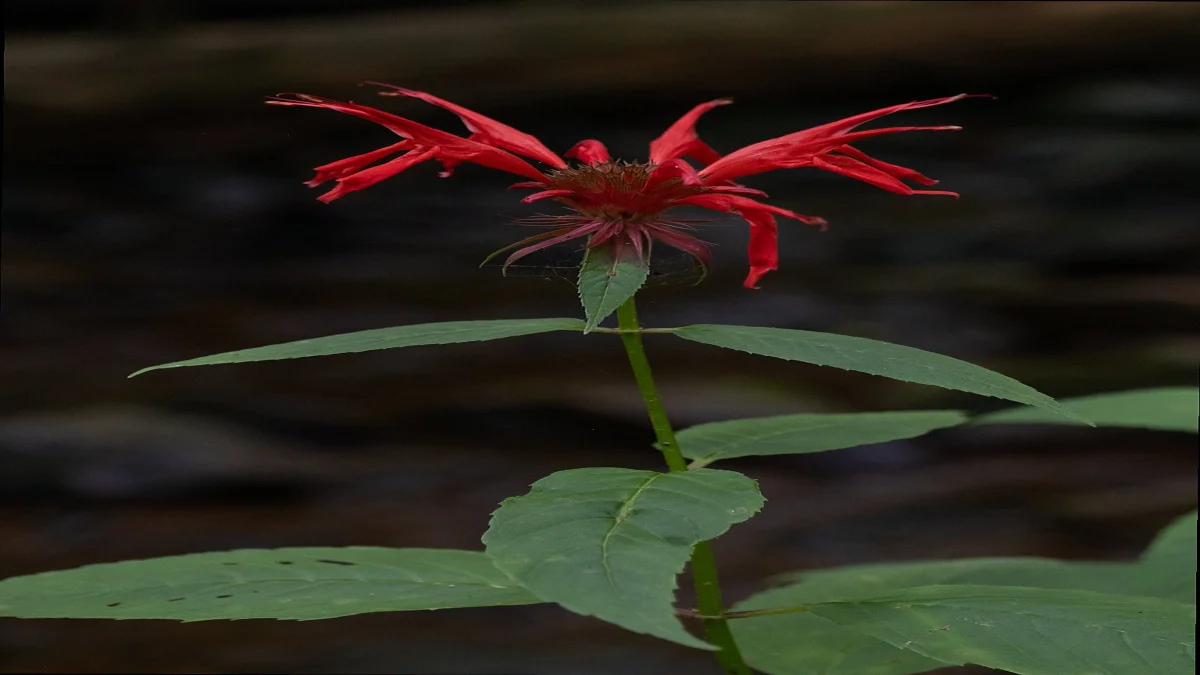
Quick answer: Powdery mildew turns bee balm leaves chalky white starting in mid to late June when humid nights follow dry, warm days. To stop it without harming pollinators, plant resistant Monarda cultivars like ‘Marshall’s Delight’ or ‘Claire Grace’, space clumps 24 to 36 inches apart for airflow, water at the base before noon, and reach for milk spray or potassium bicarbonate only on early evening, not when bees are working the flowers.
If your bee balm looked like a pollinator magnet in early June and now wears a dusty white coat by the Fourth of July, you have powdery mildew. It is the single most common reason a Monarda planting that you bought for the bees ends up looking like a regret. The fungus rarely kills the plant outright, but it shortens the bloom window, weakens the clump for next year, and pulls down the look of an entire native border just when neighbors are out walking the dog.
I have watched this happen in my own back corner. A row of ‘Cambridge Scarlet’ that I picked up on impulse at a big-box garden center in mid-May was loaded with buds by the second week of June and looked, frankly, like the catalog photo. Three humid nights, one stretch of dry days, and the bottom third of every stem went silver. The bumblebees still came; the curb appeal did not. After two seasons of trial and error, I rebuilt the patch around resistant cultivars, smarter spacing, and a short list of sprays that do not knock down pollinators. That is what this guide walks through, in the order you actually need it.
What does powdery mildew on bee balm actually look like?
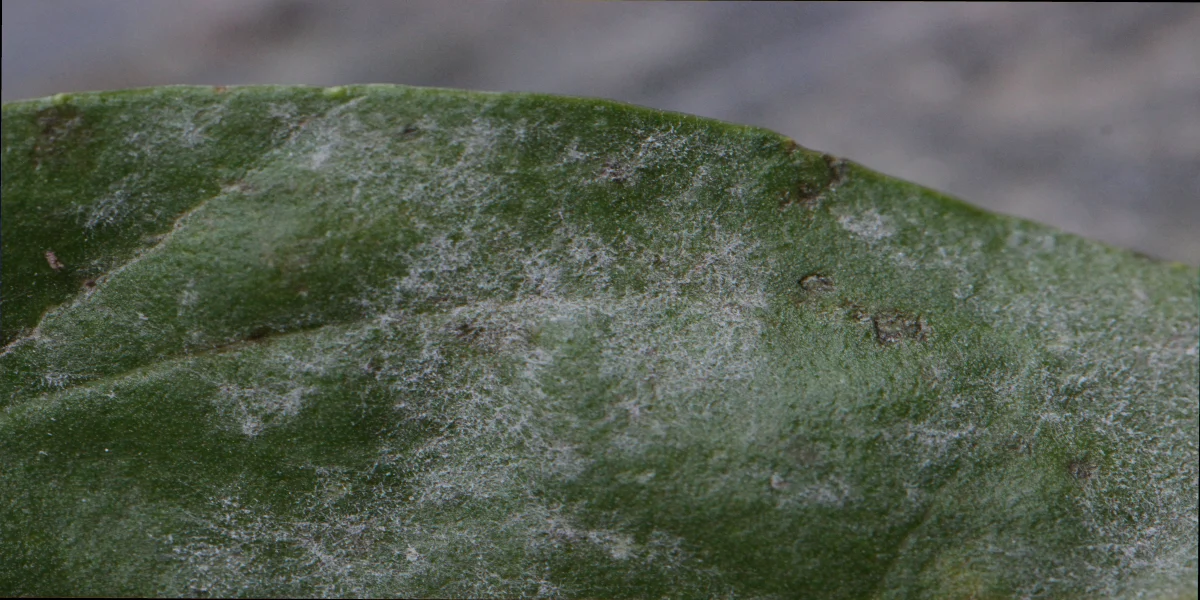
The first sign is a faint, dusty haze on the upper surface of the lower leaves, usually around the time the flower buds are forming. Within a week the haze thickens into a chalky white coating that looks like someone shook flour over the stem. Leaves underneath start to yellow, curl at the edge, and drop. By peak bloom the bottom 12 to 18 inches of the plant can be bare while the flower tops keep going.
FREE: Wildlife Garden Starter Guide
Get our 12-page PDF with the 25 best plants for pollinators, simple habitat tips, and a printable checklist — all 100% free.
No spam. Read our Privacy Policy.This is the fungus Erysiphe (older keys call it Erysiphe cichoracearum; current molecular work places most Monarda strains in Golovinomyces), and it sits on the outside of the leaf rather than burrowing in like a rust. The good news in that detail is that contact treatments can actually reach it. The bad news is that by the time you see the coating, the spores have already been spreading for a week or more in the cool film of moisture that condenses on the leaves overnight.
What it is not: it is not a deficiency, it is not sunburn, and it is not the silver-blue waxy bloom that wild bergamot leaves sometimes carry in dry conditions. If you can rub the white off with your thumb and your skin comes away dusty, it is mildew.
Why your Monarda gets hit every July
Powdery mildew on Monarda follows a very specific weather signature: warm humid nights in the 60-to-75-degree range, followed by drier days. In most of the eastern half of the United States that pattern locks in some time between the third week of June and the second week of July, which is exactly when bee balm is putting on flower buds. That is not a coincidence. The plant is moving energy upward into bloom, the lower leaves are crowded and shaded, and the fungus walks right into the gap.
Three garden-side conditions tip the scales. The first is crowding. Bee balm spreads by rhizomes; a clump you set out at 12 inches across two years ago is now 36 inches across with stems three to four inches apart. Air does not move through that. The second is overhead watering at the wrong time. A sprinkler at 6 p.m. leaves the foliage wet through the entire window the fungus needs. The third is variety. Some Monardas are wide open to the fungus; others shrug it off. If you bought whatever was blooming at the nursery in mid-May, odds are good you bought one of the susceptible ones.
There is also an honest fourth factor that nobody at the garden center will tell you: drought stress. A Monarda that goes through a 10-day dry stretch in late June with no deep watering becomes more, not less, vulnerable. The folk wisdom that “mildew likes water, so let it dry out” is wrong for this fungus. It likes humidity, which is a different thing. Soil that swings between bone-dry and soaked is the worst possible setup.
Three Monarda cultivars that shrug it off
If you do nothing else this season, swap your susceptible plants for cultivars bred or selected for mildew resistance. This is the single highest-leverage move. The University of Wisconsin Extension and several other extension trials have been screening Monarda for decades; a small group of names keeps landing in the “resistant” column, and they are widely available in the trade.
| Cultivar | Flower color | Mature size | Mildew resistance |
|---|---|---|---|
| ‘Marshall’s Delight’ | Bright pink | 30 to 40 in | Excellent. A benchmark in trials |
| ‘Jacob Cline’ | Deep red | 36 to 48 in | Very good in most regions |
| ‘Raspberry Wine’ | Wine red | 32 to 40 in | Good, with strong stems |
| ‘Claire Grace’ (M. fistulosa) | Lavender | 36 to 48 in | Excellent. Straight-species type |
| ‘Petite Delight’ | Pink | 15 to 18 in | Very good, container-friendly |
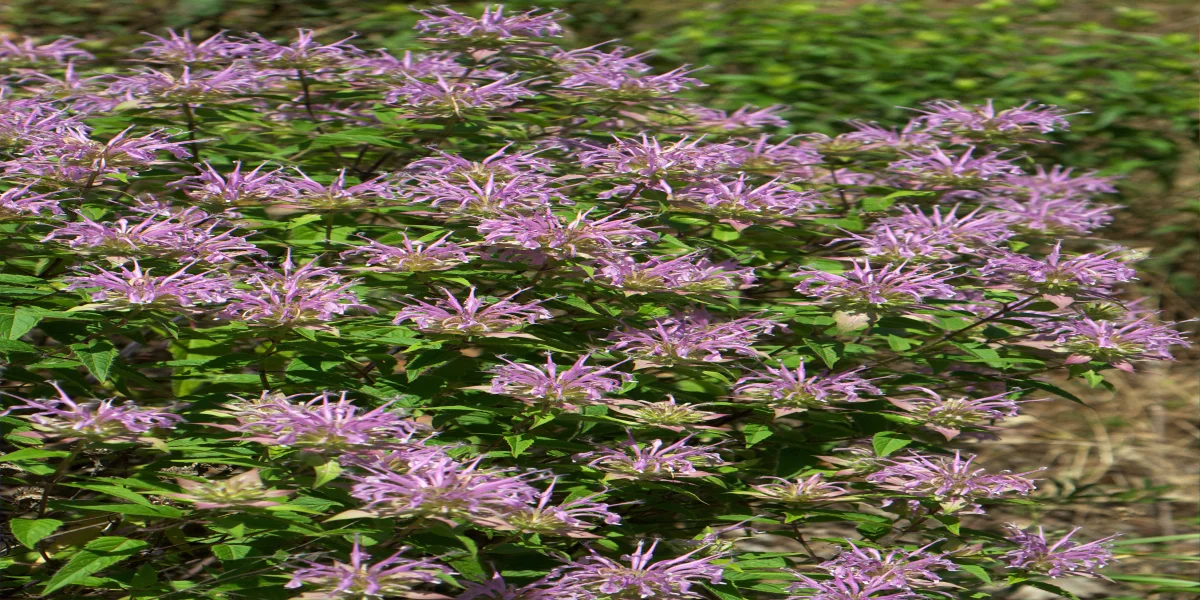
Notice that ‘Claire Grace’ is a selection of wild bergamot, Monarda fistulosa, rather than the scarlet M. didyma most people picture. Wild bergamot is naturally more drought-tolerant and less mildew-prone than its showier cousin, and it is closer to the keystone species pollinators in much of the central and eastern US already recognize. If your goal is a true homegrown national park rather than a catalog beauty shot, lean fistulosa first and reserve the red M. didyma selections for one accent clump. For more on how spacing affects long-term health of any native cultivar, our guide on how far apart to plant natives in a new bed covers the spacing math in detail.
Where to find them: real native plant nurseries (Wild Ones chapter sales, regional natives growers) carry ‘Claire Grace’ and increasingly ‘Marshall’s Delight’. Big-box stores carry ‘Jacob Cline’ and ‘Petite Delight’ most reliably, and that is a fine starting point if your local options are thin. If you take the big-box route, our piece on buying real native plants at Lowe’s and Home Depot without getting burned walks through the label checks that matter.
Spacing, sun, and the airflow fix most gardeners miss
Cultivar is the lever; spacing is the multiplier. A resistant Monarda planted in a stagnant pocket will still mildew. A susceptible one given proper airflow can sometimes squeak through a humid year without much damage. The numbers I have settled on after several seasons of fiddling:
- Plant 24 to 36 inches between clump centers for taller cultivars, and 18 to 24 inches for the dwarf types like ‘Petite Delight’. That measurement is to the next Monarda, not to a stone or a path.
- Divide every three years, in early spring before new growth tops 4 inches. Take the outer two-thirds and replant; compost the woody, hollow center. This is the single most-skipped maintenance step that drives mildew on otherwise healthy beds.
- Thin the stems in late May. Walk through and cut roughly one stem in three at ground level, leaving the strongest. The clump loses no flower count worth measuring, and the remaining stems dry an hour or two faster after a dew.
- Water at the base, before noon, with a hose or drip line. If you must use a sprinkler, run it at sunrise so leaves are dry by 10 a.m.
- Mulch two inches deep, kept three inches away from the crown. Mulch buffers soil moisture so the plant is not whipsawing between dry and wet, which is the drought-stress angle I mentioned earlier.
One more thing on placement: Monarda wants full sun, but the eastern half of the planting can take a few hours of afternoon shade if your site demands it. What it cannot take is dense shade and still air. If you have a corner that gets less than five hours of direct sun and sits behind a fence, plant something else there. Our list of native plants for dry shade has better options for that microsite.
How do you treat powdery mildew without killing bees?
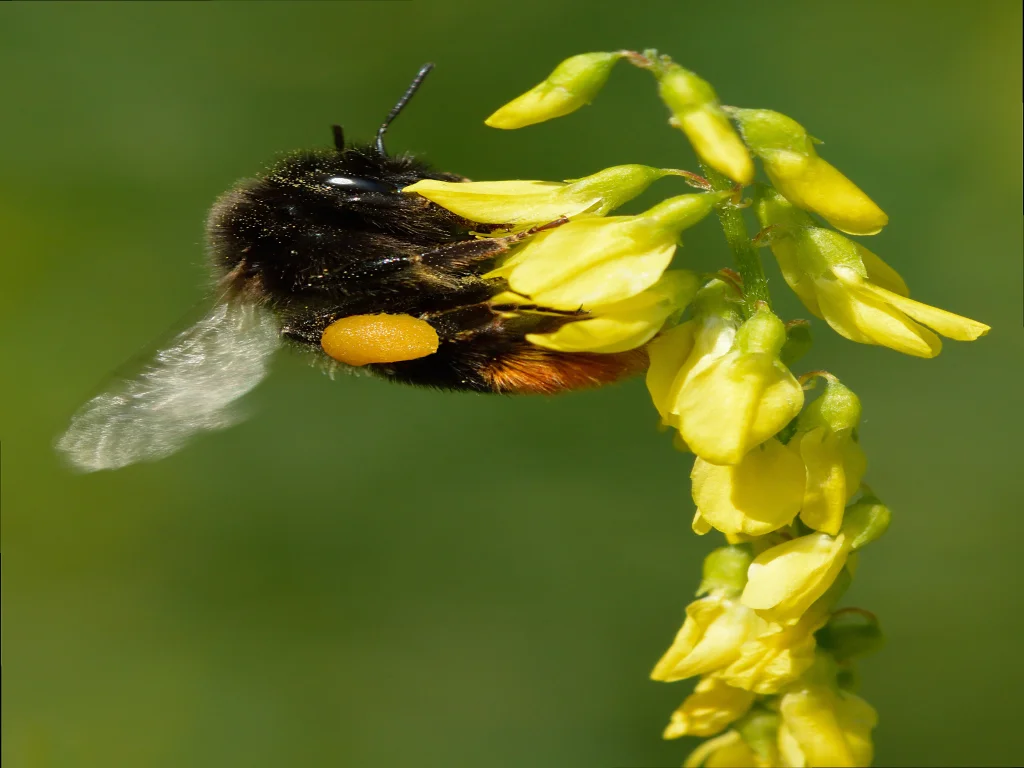
The first rule of pollinator-safe spraying is timing. Bees, especially the bumblebees and small native solitaries that work Monarda, are on the flowers from roughly an hour after sunrise to an hour before sunset. Any spray, even an organic one, goes on when the flowers are closed or the bees are not flying. That means after dusk or before the first golden light. The Xerces Society’s guidance on reducing pesticide harm to pollinators is worth a read once a year as a reset; it covers the categories of products and the timing rules in plain language.
For powdery mildew specifically, here is the short list of things I will actually put on a Monarda that is feeding pollinators:
- Potassium bicarbonate (sold as GreenCure, MilStop) at 1 tablespoon per gallon of water plus a drop of mild soap as a surfactant. Spray after dusk when leaves can dry overnight. Repeat every 7 to 10 days while conditions favor the fungus. This is the cleanest commercial option for pollinator gardens.
- Milk spray at a 1-to-9 ratio of milk to water (any percent will do; whole milk works fine). Spray on a sunny morning before bees are on the flowers. The UV reaction is what does the work. And rinse the flower heads gently if you see residue. Effective preventively, modest as a curative.
- Sulfur dusts and Bordeaux mixtures: skip these on plants in active pollinator use. They work on mildew but are irritating to bee respiration and stick to flower parts. Save them for non-flowering ornamentals if you must.
What I do not recommend at all on a flowering Monarda: broad-spectrum copper, neem oil during bloom (it can disrupt larval bees that contact treated pollen), or any of the “rose and flower” combo fungicide-insecticide aerosols sold at the big chains. The same pattern of substitution we use against milkweed pests. See our piece on aphids on milkweed without killing monarchs. Applies almost word-for-word here. Pick the narrowest-spectrum product that solves the problem, spray when the customer is not in the store, and stop the second you can.
What about milk, baking soda, and other kitchen sprays?
The kitchen sprays work; they just work less than people think, and they have to go on before the fungus is visible, not after. The mechanism for milk is a UV-driven reaction that makes the leaf surface inhospitable to the spores. For baking soda (sodium bicarbonate), the mechanism is a brief pH shift. Both raise the bar enough to slow an outbreak when the weather is borderline. Neither rescues a plant that is already 60 percent silver.
Two practical cautions. Baking soda accumulates sodium in soil over a season of weekly sprays; that is fine for a vegetable garden you reset every winter, but in a long-lived native bed I would rather use potassium bicarbonate, which adds a useful nutrient instead of a salt the plants do not want. And milk needs sun to work. If you spray at dusk like the commercial products want, you have just put diluted milk on your foliage to ferment overnight. Match the spray to the timing rule it actually needs.
One last kitchen-spray myth worth puncturing: garlic and chili steeps do nothing for powdery mildew. They have a real but narrow effect on some chewing insects. The leaf coating you are fighting is not an insect.
When neighbors complain about your white-leaved bee balm
This is the part of the article most gardening sites skip, and it is the part the persona research keeps coming back to. A bed of bee balm with mildewed lower leaves looks neglected to a neighbor who reads “lawn equals care.” Even if the flower heads on top are immaculate and the bumblebees are working them, the visible chalk on the foliage reads as “this person let their yard go.” Last summer a neighbor a few doors down asked me, gently, whether my front bed was “all right.” That is the polite version. The HOA-letter version, which I am told happens, is not as gentle.
Three things help, in order of how much they buy you:
First, the cultivar swap. A bed of ‘Marshall’s Delight’ and ‘Claire Grace’ simply does not get the chalk in the first place on most years; nothing is more reassuring to a curious neighbor than a clean-looking plant. Second, an intentional border. A 12-inch stone or steel edge around the bed signals to anyone walking past that the planting was designed, not abandoned. This is the curb-appeal defense that lets the rest of the bed do its ecological work. Third, a small sign. A simple “Pollinator Habitat, Wild Ones member garden” stake costs ten dollars and turns “what is wrong with their yard” into “oh, that is on purpose.”
If a letter does land in your mailbox, do not panic and do not rip out the bed. Our step-by-step response plan for HOA letters about native gardens covers what to do in the first 72 hours and how to frame the conversation so it does not escalate. Most HOAs have softer rules in writing than the enforcement letter implies; the leverage is almost always in citing back their own language.
What changes in your garden after one clean season
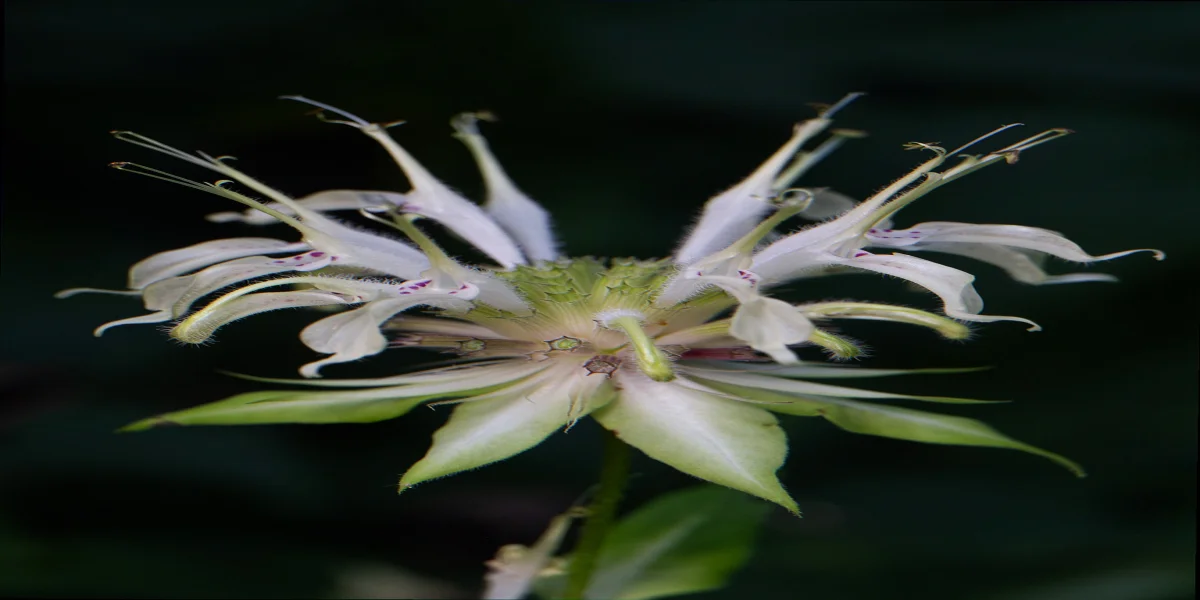
A Monarda patch run on this protocol. Resistant cultivars, 30-inch spacing, a late-May thin, base-watering before noon, and a single potassium bicarbonate pass at the first sign of haze. Looks like a different plant by August. The lower leaves stay green into September. The clump pushes a second, smaller flush of bloom around Labor Day in many zones. And the seed heads, if you leave them standing through fall, feed goldfinches and shelter overwintering insects through the cold months. That last piece matters: cutting Monarda to the ground in October is the older advice, and it does reduce overwintering spores, but it also strips habitat. The middle path I have settled on is to cut to 8 to 12 inches in early November and let those hollow stems serve as small-cavity nesting sites for the same native bees that worked the flowers all summer.
The bigger payoff is harder to photograph. A patch that does not embarrass you in front of your neighbors is a patch you do not feel pressure to rip out. A patch you do not rip out is a patch that anchors the rest of your conversion. I have seen more native plantings fail because the owner got self-conscious about the look than because of any pest or disease. Solve the look, and the ecology takes care of itself.
For the broader pattern of pollinator-safe pest decisions across the rest of your garden, our roundup on stopping Japanese beetles without hurting native pollinators uses the same logic. Narrow-spectrum, timed, restrained. Applied to a different pest. And if you are working bee balm into a smaller footprint than a full bed, the container pollinator recipes we put together include a ‘Petite Delight’ combination that resists mildew better than most container plantings.
FAQ
Will powdery mildew kill my bee balm?
Almost never in the first year, rarely in the second. The fungus shortens the bloom window and weakens the clump over time, so a third or fourth year of unchecked mildew on a susceptible cultivar can thin the patch to the point that more aggressive plants crowd it out. The practical risk is loss of vigor and curb appeal, not death.
Can I just cut off the affected leaves?
Yes, and you should, but throw them in the trash rather than the compost pile. Pinch the worst lower leaves at the petiole, bag them, and walk them out. Doing this once at the first sign of haze and again two weeks later, combined with a potassium bicarbonate spray, will often hold a moderately susceptible cultivar through the season.
Is wild bergamot really more resistant than red bee balm?
On average yes, in part because Monarda fistulosa is adapted to drier, sunnier prairie sites than the moist meadow margins where M. didyma evolved. Individual plants vary, and a humid year can still tag fistulosa, but the gap is meaningful enough that I default to fistulosa or its selections like ‘Claire Grace’ as the backbone of any pollinator bed and add a single clump of ‘Jacob Cline’ for the red accent.
When should I divide a mildewed clump?
Early the following spring, as soon as you can get a fork in the ground and before new growth tops 4 inches. Lift the whole clump, slice the outer two-thirds into hand-sized divisions, and replant on the wider spacing described above. Discard the woody center. Dividing in fall is possible but more stressful in regions with cold, wet winters.
Does Monarda still help pollinators if the leaves are mildewed?
Yes, as long as the flowers themselves are open and clean. Bees do not visit the lower leaves; they visit the flower heads, which are usually held above the worst of the foliar mildew. A mildewed patch is still better for the local bumblebee population than no patch at all. Treat the mildew because you want the patch to last several years, not because pollinator value vanishes in year one.
Want More Wildlife Garden Tips?
Join 5,000+ nature lovers getting our weekly tips on creating wildlife-friendly gardens.
No spam, unsubscribe anytime. Privacy Policy
Emma Harrington
Emma Harrington is a wildlife habitat researcher and content editor with a passion for backyard conservation. She has spent over a decade translating ecological science into practical tips anyone can follow — from selecting native plants to building wildlife-friendly habitats. Her work focuses on helping homeowners transform ordinary yards into thriving ecosystems for bees, butterflies, hummingbirds, and other beneficial wildlife.