

Last May I was drinking coffee on my back porch when I heard what sounded like a small power drill running somewhere behind me. I turned around and watched a fat, shiny black bee hover-fight another fat, shiny black bee over the same cedar joist of my pergola. Within three minutes I counted six of them. By the next weekend, there was a neat pile of fresh sawdust on the deck boards directly below a perfectly round hole in the cedar.
Eastern carpenter bee. Xylocopa virginica. A native pollinator with a real, documented role in our local ecosystem, and also a small flying contractor that was actively excavating my pergola.

FREE: Wildlife Garden Starter Guide
Get our 12-page PDF with the 25 best plants for pollinators, simple habitat tips, and a printable checklist — all 100% free.
No spam. Read our Privacy Policy.The HOA-fearing part of me wanted to grab a can of pyrethrin spray. The pollinator-loving part of me remembered that this same species buzz-pollinates the eggplants in my raised bed. Both reactions were honest, and both were a little bit wrong. What I needed was a plan that protected my cedar without turning my yard into a carpenter bee cemetery. After two seasons of trial, error, and one very expensive piece of replaced fascia board, here is the pragmatic deterrent system I use now.
Why Killing Carpenter Bees Is the Wrong First Move
Before any plan, the framing matters. Eastern carpenter bees are native to the eastern and central United States, with roughly seven Xylocopa species spread across North America. They are not honey bees, not bumblebees, and not invasive. They have lived in this landscape, drilling tunnels in dead wood, longer than any cedar deck has existed.
Three reasons to skip the spray:
- They are real pollinators. Female carpenter bees collect pollen from over 100 plant species in eastern North America. They are one of the few bees capable of buzz pollination, vibrating flowers at 200 to 400 Hz to shake loose pollen that honey bees cannot reach. Tomatoes, eggplants, peppers, blueberries, and cranberries all benefit.
- Killing the adults does not protect the wood. The damage is already done by the time you see sawdust. Spraying the adults leaves the tunnels intact, and next spring a new generation will reuse the same gallery. The wood is the attractant, not the bees.
- It is rarely necessary. Female carpenter bees can sting, but they almost never do. Males look intimidating, hover aggressively, and dive-bomb your face, but they have no stinger at all. In two seasons of close inspection in my yard, I have never been stung.
The Xerces Society lists native carpenter bees as a pollinator group worth conserving, and recommends deterrence over extermination. That guidance lines up with what I have seen work in my own yard. If you want their detailed habitat conservation notes for native bees, the Xerces resource library is the most reliable starting point: xerces.org/pollinator-conservation/native-bees.
How to Tell If You Actually Have Carpenter Bees
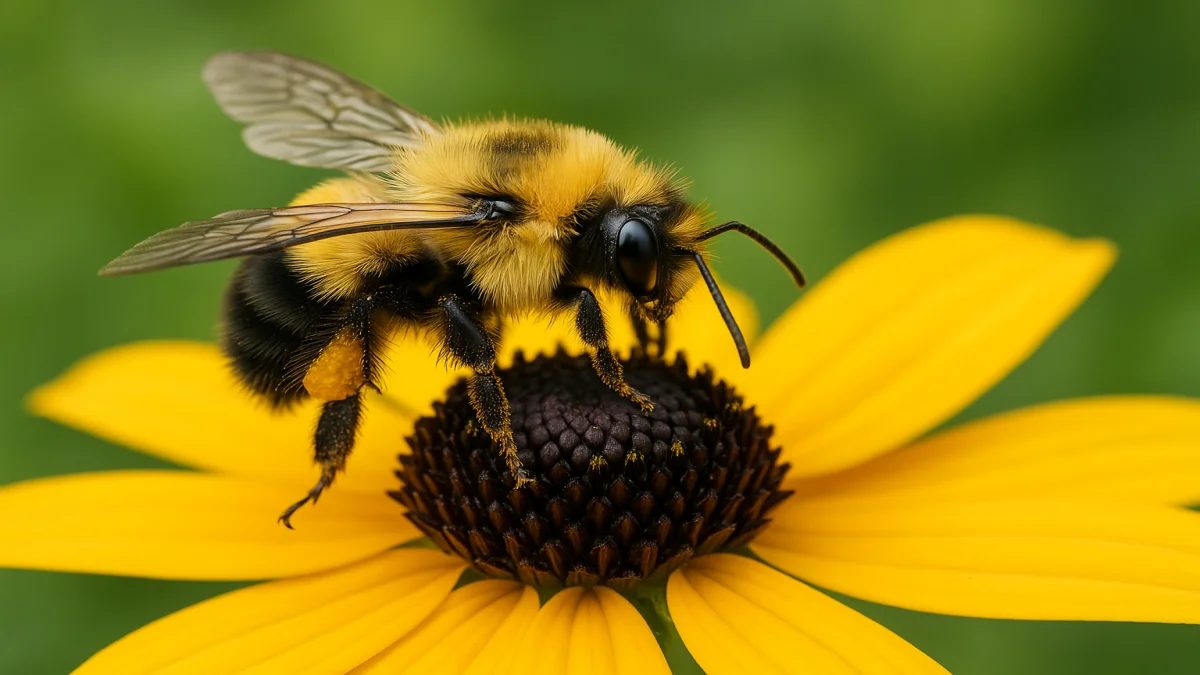
Half the panicked Facebook posts I see about carpenter bees are about bumblebees. Here is the field-ID checklist I use:
- Shiny, hairless black abdomen. Bumblebees are fuzzy from head to tail. Carpenter bee abdomens look polished, almost wet.
- Size. Eastern carpenter bees run 19 to 23 mm long. Bumblebees range smaller, usually 13 to 19 mm.
- Round half-inch holes in wood. The entrance hole is famously precise, about 13 mm across, drilled straight in and then turning 90 degrees with the wood grain.
- Sawdust below the hole. Fresh, light-colored, fluffy frass. If the pile is gray and crumbly, suspect old damage or other wood-boring insects.
- Hovering males. If a bee is staring at you and refusing to leave, it is probably a male carpenter bee guarding a nesting site. He is bluffing.
- Season. Active April through October in the eastern US, with peak nesting in May and June. By July most galleries are sealed and the adults are quieter.
If you are uncertain, post a clear photo to iNaturalist and ask. The community usually responds within an hour, and the species-level ID matters because not every fat black bee is a structural threat.
My 4-Step Deterrent Plan That Does Not Kill Bees
This is the system that has reduced new tunnels in my pergola from 11 in one spring to 1 the following year. None of it requires pesticide.
Step 1: Map the Wood They Are Choosing
Walk the perimeter of your house once in late April with a clipboard. Note every piece of unpainted softwood within 10 feet of grade: cedar fascia, pine deck rails, redwood pergolas, exposed pine trim under eaves. Carpenter bees overwhelmingly prefer untreated softwoods with a smooth grain. They will almost never bore into painted surfaces, hardwoods like oak, or pressure-treated lumber.
In my survey, every active gallery was in cedar that had silvered out and lost its original stain. The pressure-treated 2×4 framing two feet away was untouched.
Step 2: Plug Existing Holes After Brood Emergence
This is the step most homeowners get wrong. If you plug a hole in May with a developing brood inside, you trap the larvae. The mother is gone (she dies after laying), but the next generation suffocates. That is both cruel and pointless, because the wood is now permanently weakened by the tunnel.
The right timing in zones 6 and 7 is mid-September through early October, after the new adults have emerged and dispersed but before they return for overwintering. I use a three-part plug:
- Pack the tunnel with steel wool, pushed in 1 to 2 inches deep.
- Cover with exterior wood filler or two-part epoxy.
- Sand flush after curing and prime with an oil-based primer.
The steel wool is the part most guides skip. Without it, returning bees can chew through wood filler in 30 minutes. With it, they give up and find softer wood elsewhere, which is exactly the redirection you want.
Step 3: Paint or Seal Exposed Softwood
Multiple university extension trials have shown that painted softwood receives roughly 80 percent fewer new tunnels than identical unpainted wood. The bees seem to use a combination of color, surface texture, and volatile chemistry to choose nesting sites, and a sealed paint film disrupts all three.
What has worked in my yard:
- Oil-based primer plus two coats exterior latex. Best long-term result. My re-stained cedar fascia has had zero new tunnels in 18 months.
- Solid-color exterior stain. Almost as good as paint, and looks more natural on cedar siding.
- Semi-transparent stain. Mixed results. Better than bare wood but the bees will still test it.
- Polyurethane spar urethane. Works on small trim pieces. Not realistic for a whole deck.
If your HOA forbids paint colors on natural wood, a clear penetrating wood sealer like Penofin or TWP gives partial protection. It will not stop a determined bee, but it cuts incidence noticeably.
Step 4: Offer a Designated Bee Block Far From the House
This is the carrot to balance the stick. Carpenter bees are not malicious. They are looking for cured, knot-free softwood with no chemical coating. If you provide a better option 75 to 100 feet from the house, you can pull most of the activity off your structure.
My bee block is a 4 foot section of untreated cedar 4×4, mounted vertically on a steel T-post at the back fence line. I drilled 8 starter holes at 13 mm diameter, angled slightly upward, spaced 4 inches apart. The bees took to it within two weeks. The pergola pressure dropped noticeably the same season.
This is not a perfect solution. The block needs replacement every 2 to 3 years as the tunnels accumulate, and you have to be willing to look at a deliberately weathered piece of wood at your property edge. Sarah-style pragmatism here is the right read: this is the dual track of curb-appeal-front, wildlife-friendly-back that most native gardeners end up living with anyway.
What About Those Plastic Carpenter Bee Traps?
You have seen them at every hardware store and big-box garden center: a wooden block with angled entry holes leading down into a clear plastic bottle. Bees enter, get disoriented by the light coming from below, and drown or starve in the bottle.
They work. They also kill the bees. If your goal is coexistence, these are the wrong tool. If your goal is pure extermination of a structural threat, they are more effective than spray and less harmful to other species, because they are species-selective by hole diameter.
I tested two traps in my yard during year one. They caught approximately 14 carpenter bees and 2 mason bees over a single season. The mason bee bycatch was the deal-breaker for me. I removed both traps and switched to the redirect-and-seal strategy described above. If you do choose to use a trap, mount it directly adjacent to the active gallery, not 30 feet away. They only work on bees already homing to that exact location.
Sealants, Paints, and Materials That Actually Hold Up
I have wasted money on three different “carpenter bee proof” coatings that did not pan out. Here is what survived two New England summers in my yard:
| Treatment | Cost per gallon | Bee deterrence | Years of protection |
|---|---|---|---|
| Oil primer + 2 coats latex | $55 to $85 | Excellent | 6 to 10 |
| Solid color exterior stain | $45 to $65 | Very good | 4 to 6 |
| Semi-transparent stain | $35 to $55 | Moderate | 2 to 4 |
| Clear penetrating sealer | $40 to $70 | Mild | 1 to 2 |
| Pressure-treated lumber (replacement) | n/a | Excellent | 15+ |
Note that pressure-treated wood is not pesticide-free. The current ACQ and copper azole treatments are less toxic than the older CCA chemicals, but I personally do not use pressure-treated lumber within reach of my raised vegetable beds. For high-decorative areas where you want native cedar visible, the oil-primer-plus-latex route gives the longest service life.
Building a Bee Block: My Step-by-Step
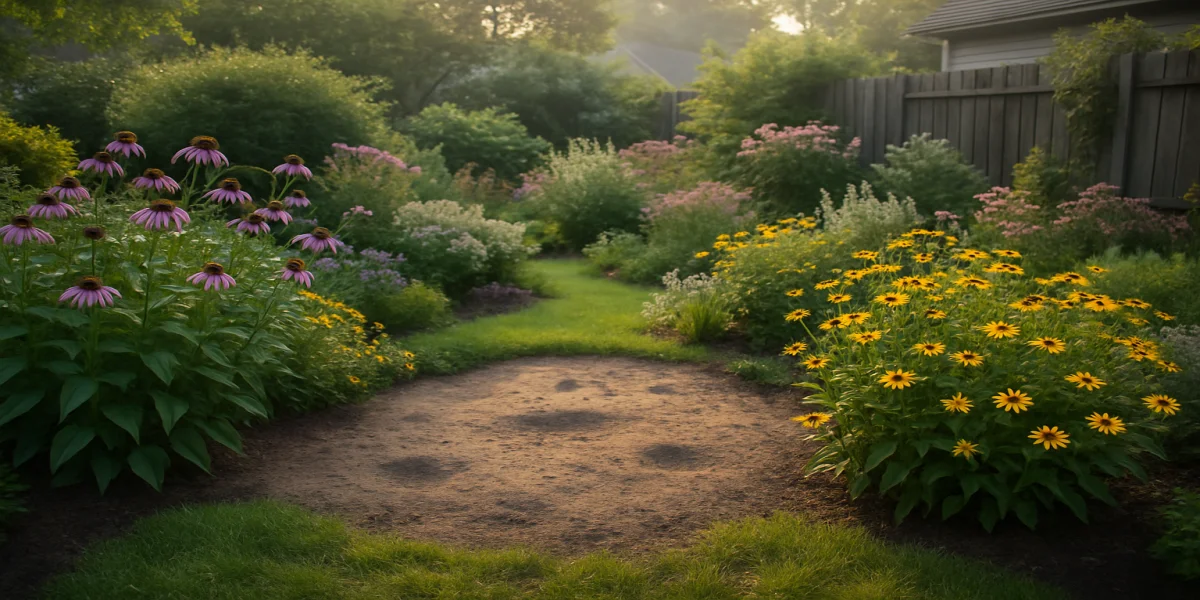
If you want to commit to the redirect strategy, here is the exact build I used:
- Buy one 4 foot section of untreated rough cedar 4×4. Big-box stores carry these in the deck-post aisle for about $18 to $24. Local sawmills sometimes have them cheaper.
- Mark 8 to 10 hole locations on one face, spaced 4 inches vertically and offset slightly side to side.
- Drill each hole at 13 mm (1/2 inch) diameter, angled 10 to 15 degrees upward, to a depth of 6 inches.
- Sand the entrance lightly. Do not paint or seal. The whole point is that this is the most attractive softwood option in your yard.
- Mount on a galvanized 6 foot T-post driven 18 inches into the ground, at least 75 feet from any structure.
- Plant a clump of native blueberries (Vaccinium corymbosum) within 15 feet. The bees will pollinate them. You will eat the berries.
This setup costs roughly $35 total. Mine is in its second season and has 6 of the 8 holes occupied as of last week.
If you are deeper into the cleanable solitary bee housing world, my earlier piece on mason bee houses you can actually clean covers a parallel design philosophy. Carpenter bees do not need replaceable tubes like mason bees do, but the underlying principle of intentional native bee habitat away from human living areas is the same.
Repairing the Damage You Already Have
If you found this article because you just discovered a row of holes in your fascia board, the deterrent plan is for next year. The structural repair is for now.
For cosmetic damage in non-load-bearing wood, two-part epoxy filler is the homeowner-friendly fix. Bondo wood filler kit, about $14 at any hardware store, holds up well outdoors when sealed under paint. Pack the tunnel with steel wool first, then layer in the epoxy, sand smooth after 24 hours of cure.
For load-bearing wood with multiple connected galleries, replace the board. I learned this expensive lesson on the fascia board above my garage door, where 4 years of unaddressed tunnels had created an internal hollow that flexed when I leaned on a ladder against it. Total replacement cost: $340 for materials plus most of one weekend. Worth catching this early.
A few signs your damage is past the patch stage:
- The wood sounds hollow when tapped with a hammer.
- You can see daylight through what should be solid trim.
- Multiple entrance holes within a 12 inch span suggest interconnected galleries.
- Woodpecker damage. Pileated and red-bellied woodpeckers raid carpenter bee galleries for the larvae, and they will tear apart whatever wood the bees were nesting in. If you see fresh woodpecker excavation, the larvae were there.
Plants That Pull Carpenter Bees Toward the Yard and Away From the House
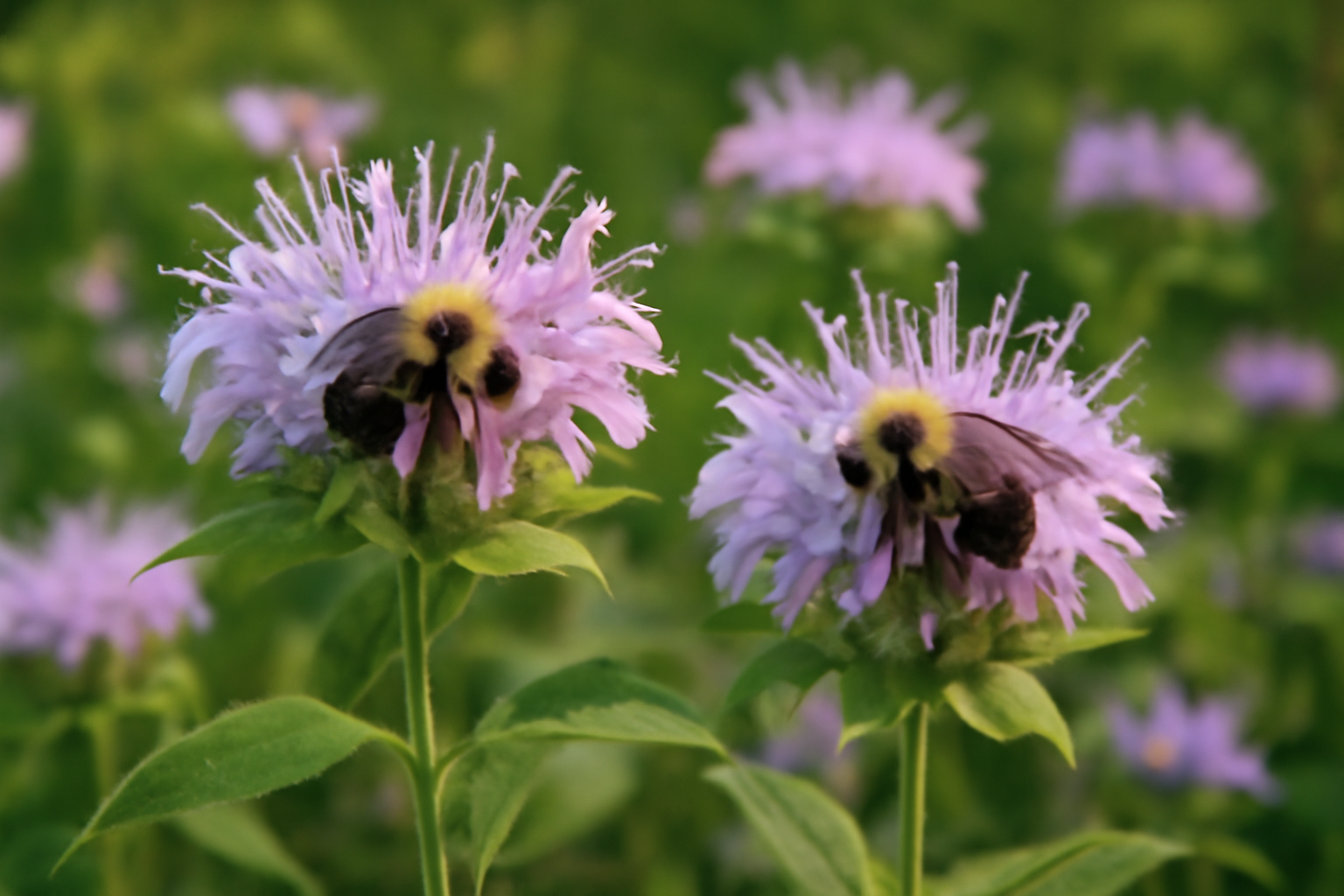
Carpenter bees forage on a long list of native flowering plants. If you concentrate their preferred forage at the back of the yard, they spend less time near the eaves. From my own observation logs:
- Wild bergamot (Monarda fistulosa): Heavy carpenter bee traffic from late June through August.
- Eastern redbud (Cercis canadensis): Early spring favorite. Bees nectar-rob the flowers by slitting the corolla base.
- Beardtongue (Penstemon digitalis): Mid-spring through early summer. The tubular flowers fit carpenter bee bodies almost perfectly.
- Native blueberry (Vaccinium corymbosum): Buzz pollination superstar. Carpenter bees increase fruit set by 30 to 50 percent compared to wind pollination alone.
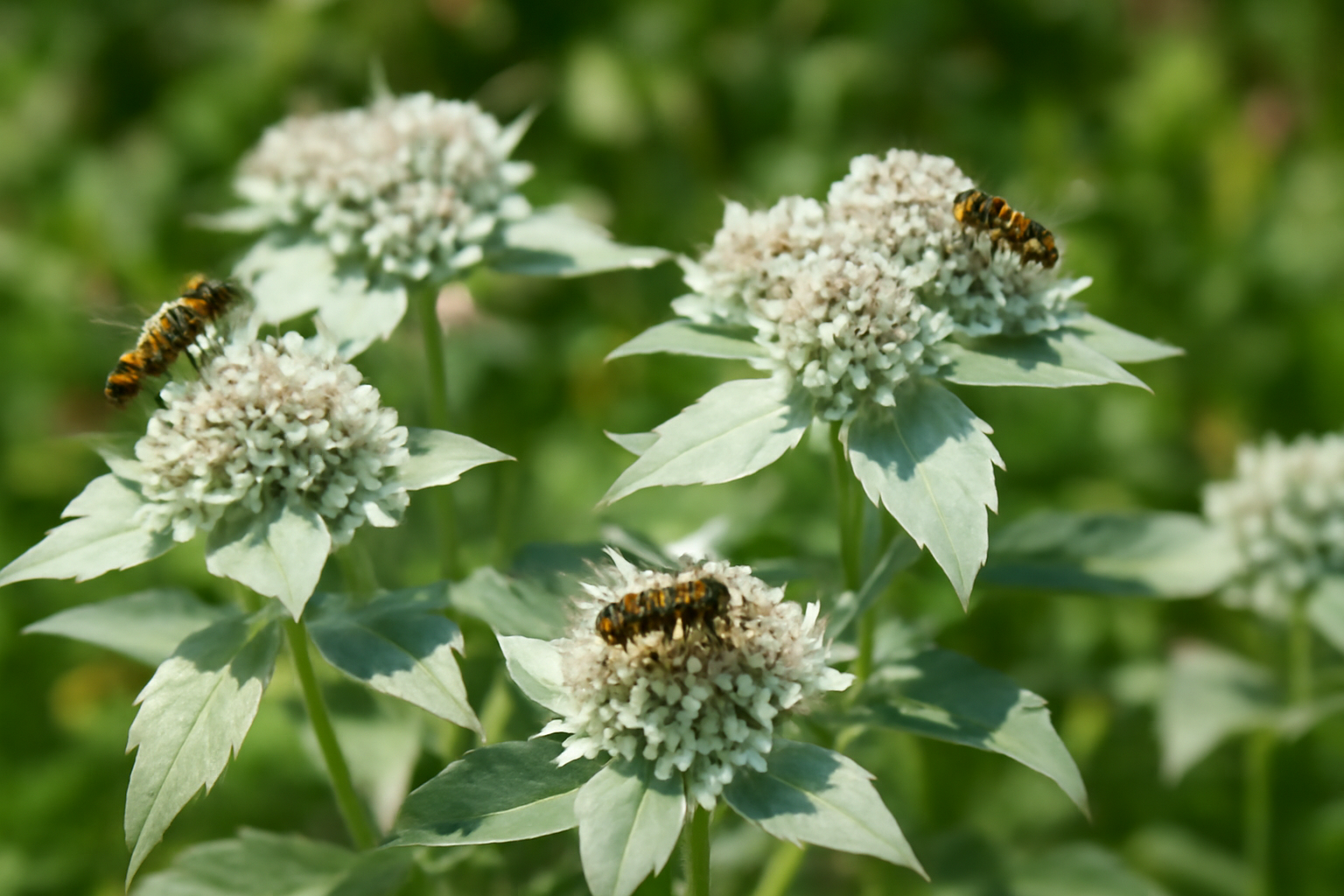
- Mountain mint (Pycnanthemum muticum): Long bloom window. Attracts a wide range of native bees including carpenter bees.
I planted my back-fence pollinator strip with mountain mint, beardtongue, and a single redbud sapling. Between that strip and the bee block 30 feet away, I created a clear gradient of “good carpenter bee zone” that pulls most of the activity off the pergola.
For region-specific plant selection, my deer-resistant native pollinator plant guide lists which of these plants also handle suburban deer pressure, which is the second-biggest objection most homeowners raise.
HOA, Neighbor, and Curb Appeal Concerns
This is where the persona paradox shows up hardest. You want to do right by the pollinators, but your neighbor with the perfect lawn is already eyeing your front yard wildflower strip and looking for ammunition. A visible bee block on the back fence line could be the next complaint.
Three tactics that have worked for me:
- Document the redirect. A bee block is not a “bee infestation.” Take photos showing the block is intentional, located far from any structure, and reducing damage to your shared property line fence. Have the documentation ready before the complaint.
- Cite the science. Many states now recognize native pollinators in state-level habitat statutes. The Penn State Extension page on carpenter bees explicitly recommends non-lethal management. Print it: extension.psu.edu/carpenter-bees.
- Aesthetically dress the block. Mount it inside a small wooden lean-to or under a piece of decorative trim. From 15 feet it looks like a mailbox post or a garden marker.
If your HOA pushes back hard, the cleanable mason bee approach in my earlier mason bee guide is a more visually polished option that still captures most of the spring solitary bee activity. It does not redirect carpenter bees specifically, but it shifts the overall conversation toward “this person has a thoughtful pollinator plan” rather than “this person is letting bees destroy their house.”
Working With Ground-Nesting Bees at the Same Time
Most yards with active carpenter bees also have ground-nesting bees. If you are managing one, it is worth understanding the other, because the same chemical sprays that would have killed your carpenter bees also wipe out the small mining bees that nest in your lawn edges. My ground-nesting bee identification guide walks through how to recognize the small entry mounds in mulch and how to mow without crushing them.
Questions from the comments
Are carpenter bees aggressive toward people?
Not really. Male carpenter bees hover and dive-bomb but cannot sting. Females can sting, but they only do so if physically grabbed or trapped against skin. In two seasons of close observation in my yard I have never been stung, and university extension data tracks under 1 reported sting per 100 active galleries.
Will carpenter bees come back to the same wood next year?
Yes. New adults emerge in late summer, overwinter inside the old gallery, and start new tunnels in the same area the following spring. Unless you plug existing holes and seal the surrounding wood, expect the population to grow each year.
Can almond oil or citrus spray deter carpenter bees?
Short-term yes, long-term no. Almond oil and citrus oil sprays disrupt the bees for 3 to 7 days after application, but rain washes the residue off and the bees return. They are a useful supplement when you need a few days of breathing room while you complete paint or repair work, not a standalone solution.
Do carpenter bees actually pollinate gardens?
Yes, especially through buzz pollination. They are major pollinators of tomatoes, eggplants, peppers, blueberries, and cranberries. In greenhouse trials, buzz-pollinated tomato crops show 30 to 50 percent higher fruit set than wind-pollinated controls. They also nectar-rob some tubular flowers by slitting the corolla base, which is less helpful for the plant.
What is the best paint color to deter carpenter bees?
Color matters less than coverage. Bees seem to prefer unpainted wood regardless of natural color, and a uniform paint film of any color appears to disrupt their site selection. Practical advice: pick a paint color that matches your trim and apply two coats over an oil-based primer. Coverage and seal quality matter more than hue.
The Bottom Line on Carpenter Bee Coexistence
Carpenter bees are one of those native species where the right answer is almost never the first instinct. The first instinct is the spray can. The right answer is identification, redirection, sealing, and patient deterrence over two seasons.
You can protect your cedar, hit the right tone with your HOA, and keep the buzz pollinators visiting your blueberries, all at the same time. It takes a weekend of sealing, $35 for a redirect block, and the willingness to plug holes on the calendar rather than at first panic.
My pergola went from 11 new tunnels in spring 2024 to 1 in spring 2025. The bee block at the back fence is now home to 6 actively used galleries. The blueberry harvest tripled. None of that required killing a single carpenter bee. This is exactly the kind of pragmatic native garden management that holds up against scrutiny from both the ecology purists and the suburban neighbor with binoculars.
Start with the late-September plugging. Plan the painting for next April. Build the bee block this weekend if you can. By next May the hovering ballet will be happening 75 feet from your back door instead of directly above your morning coffee.
Want More Wildlife Garden Tips?
Join 5,000+ nature lovers getting our weekly tips on creating wildlife-friendly gardens.
No spam, unsubscribe anytime. Privacy Policy
Emma Harrington
Emma Harrington is a wildlife habitat researcher and content editor with a passion for backyard conservation. She has spent over a decade translating ecological science into practical tips anyone can follow — from selecting native plants to building wildlife-friendly habitats. Her work focuses on helping homeowners transform ordinary yards into thriving ecosystems for bees, butterflies, hummingbirds, and other beneficial wildlife.