
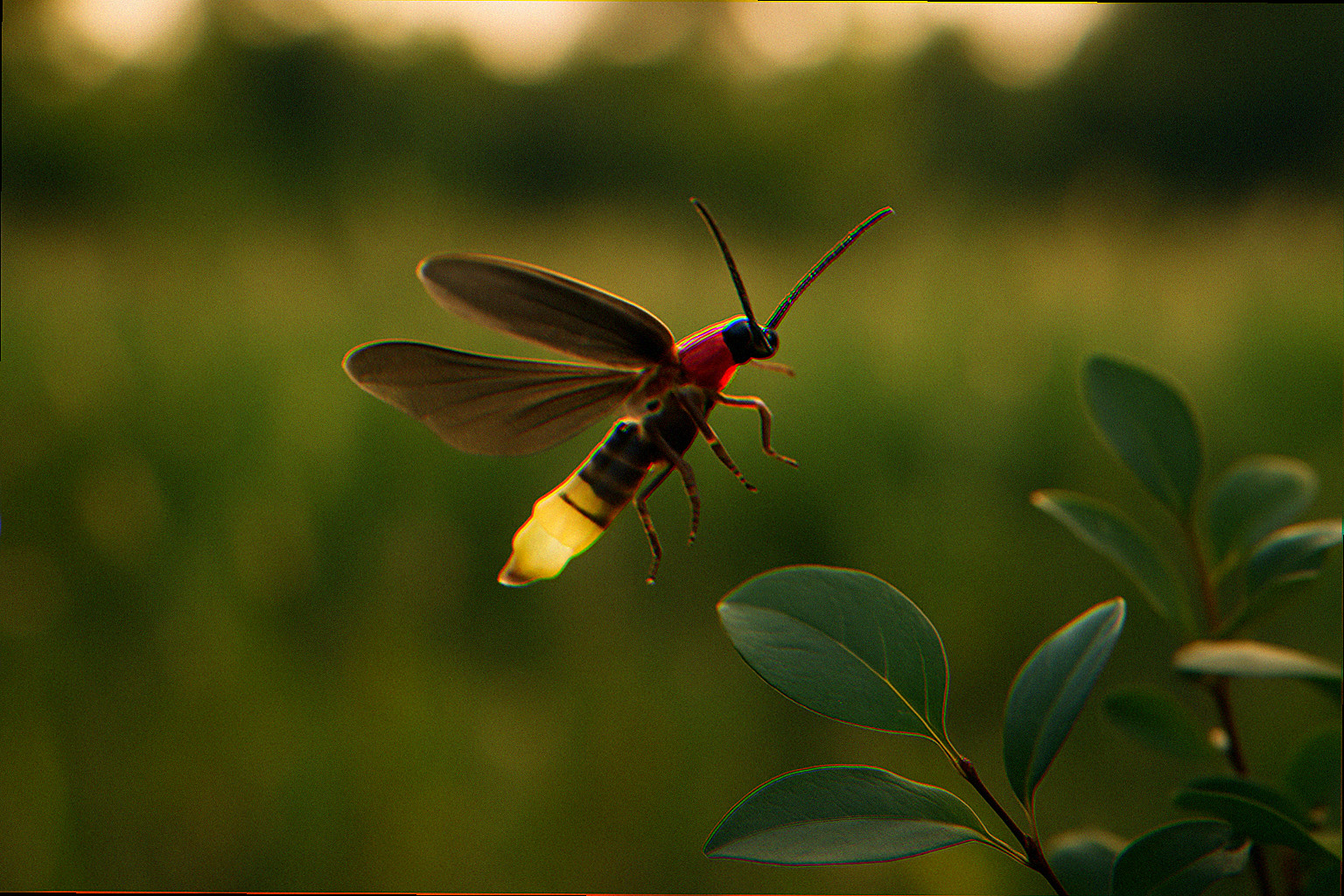
The first warm June night I noticed my front yard was darker than my childhood backyard in 1992, I sat on the porch step counting fireflies. I got to four. Four blinks in twenty minutes across half an acre. My neighbor across the street keeps a putting-green lawn under three security floodlights and gets zero. The vacant lot two doors down, where nobody mows and the leaves pile up, had forty-plus blinks at once. That gap is what this guide is about, and the good news is closing it is mostly free. Learning how to attract fireflies to your yard comes down to three boring habits and a short plant list, and you can start any week of the growing season.
Fireflies are not actually flies. They are soft-bodied beetles in the family Lampyridae, and the United States and Canada hold roughly 170 species. Around 14 of those have been formally assessed as threatened, and the Xerces Society estimates that as many as one in three North American firefly species may be at risk once data-deficient species are accounted for. The drivers are habitat loss, light pollution, pesticide drift, and the relentless tidying of suburban yards. The fix at our scale is the inverse of all of that.
FREE: Wildlife Garden Starter Guide
Get our 12-page PDF with the 25 best plants for pollinators, simple habitat tips, and a printable checklist — all 100% free.
No spam. Read our Privacy Policy.Why fireflies are quietly disappearing from suburban yards
If you grew up chasing fireflies in a jar and your kids have never seen one outside a state park, you are not imagining things. The decline is real, it is regional, and the suburban yard is one of the worst-managed habitats in the modern landscape. To fix it you need to understand the life cycle first, because almost every well-meaning gardening choice that hurts fireflies happens during the part of the year nobody is thinking about them.
Fireflies spend up to 95 percent of their lives underground
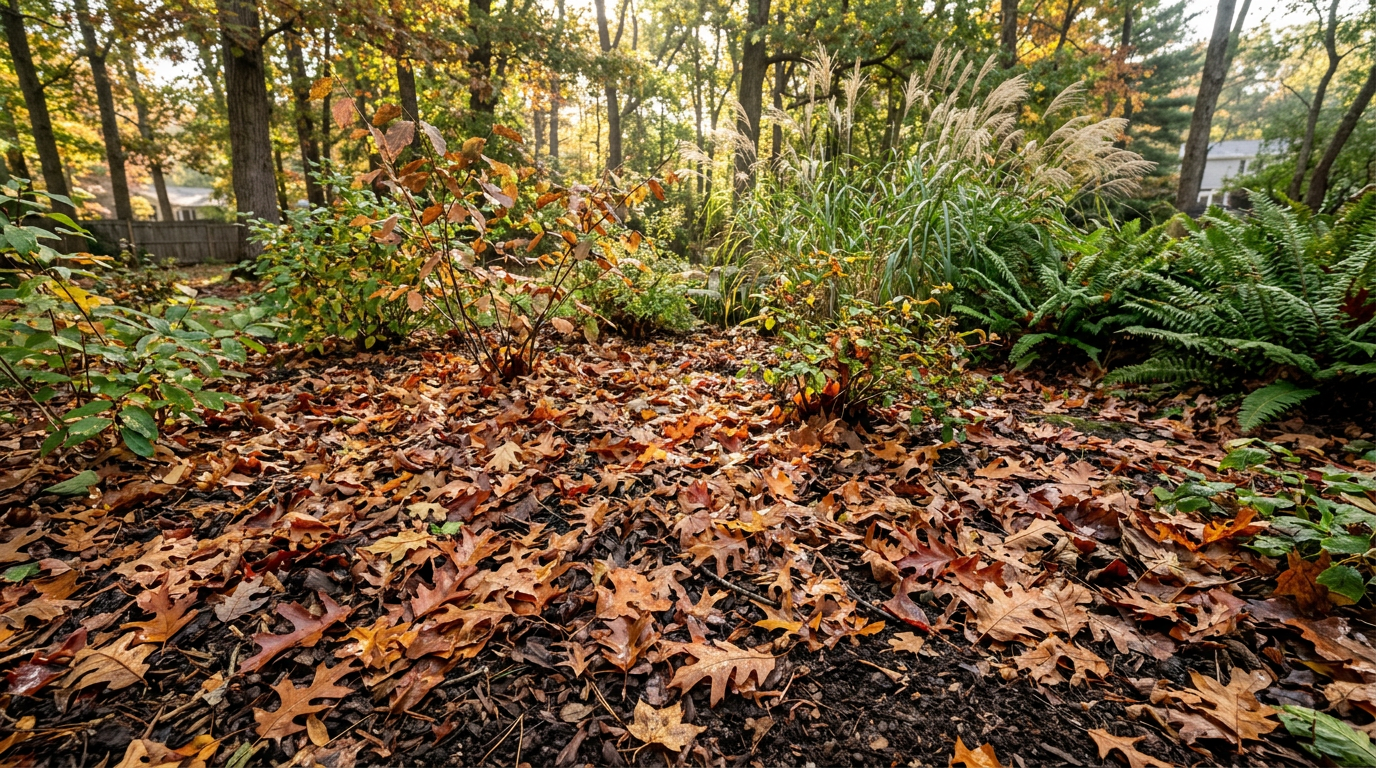
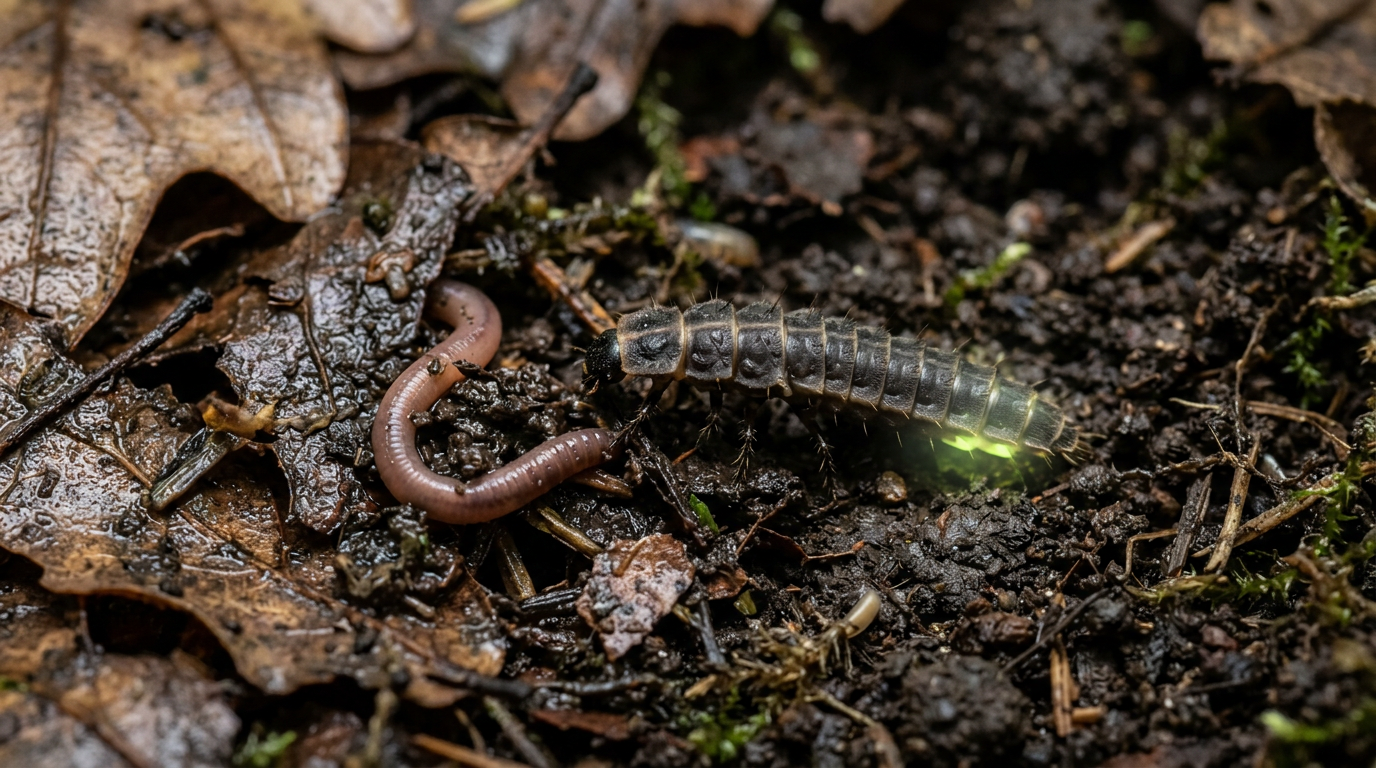
The blinking adult you see for two weeks in June is the last act of an insect that has spent one to two years as a larva, hunting slugs, snails, and earthworms through the top inch of moist soil and decaying leaves. Larvae glow too, which is why they earned the nickname glowworm, but they live below ground level and need three things to survive: damp soil, prey, and shelter from disturbance. Roto-tilling a bed in October destroys a winter cohort. Bagging leaves in November removes the insulating layer they overwinter under. A single application of bifenthrin to control grubs erases them.
A close-cropped lawn is the worst possible firefly habitat
Researchers studying firefly distribution have found that the species cannot complete their life cycle in turfgrass shorter than about three inches, mowed weekly, and treated with the standard four-step fertilizer-and-herbicide program. The grass is too short to hide larvae, the soil is too compacted for prey, and the chemicals kill both directly. Replacing even a small section of lawn with a deeper-rooted native bed changes the math fast.
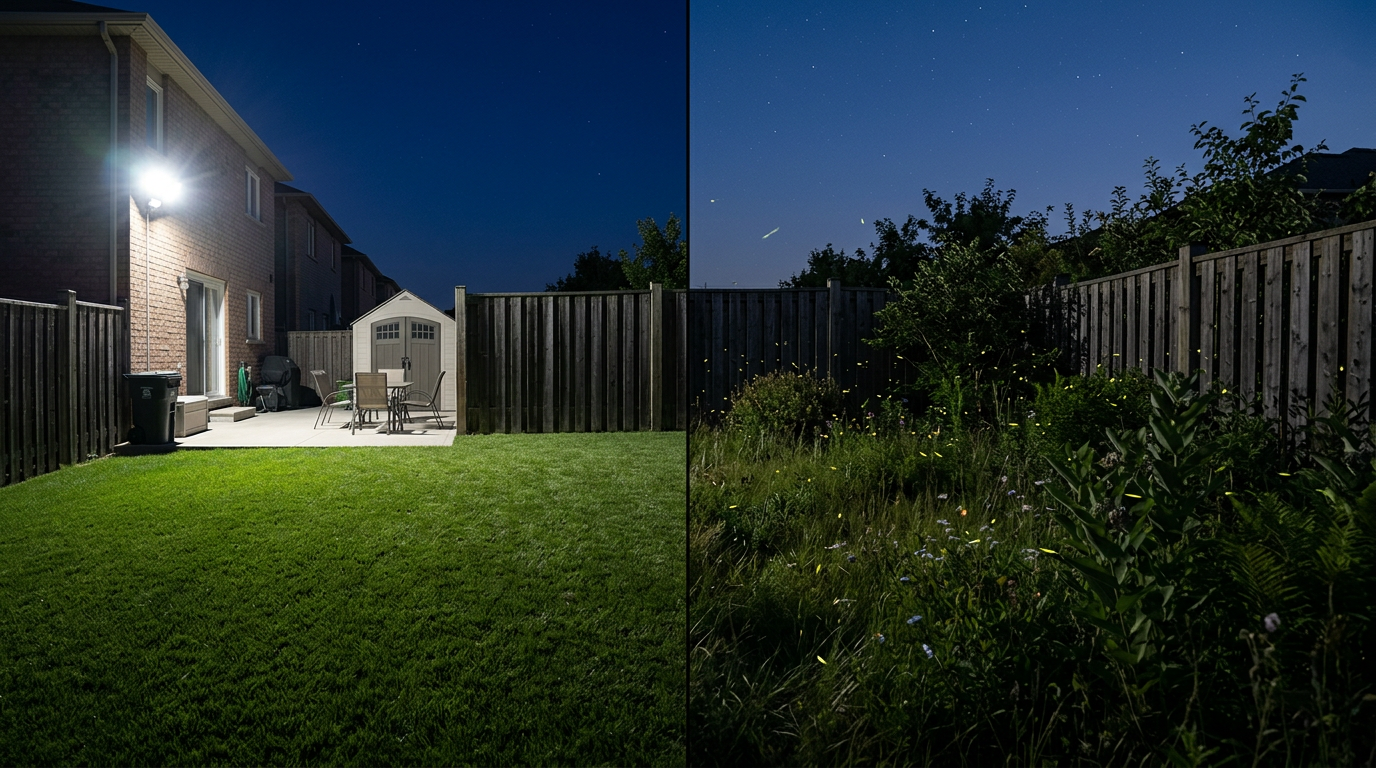
Outdoor lights are the part most homeowners miss
Even a yard with perfect plants and a healthy leaf layer can fail if there is a 2,800-lumen LED security floodlight pointing at it. Fireflies use bioluminescent flash patterns to find mates. White and blue-white light from porch lamps, dusk-to-dawn pole lights, and decorative string bulbs disrupts those patterns within a 30 to 50 foot radius. The lights do not have to be eliminated, only redirected, shielded, or switched to amber.
The six practical moves that bring lightning bugs back
I will not pretend any of this is glamorous. The actual moves are closer to “stop doing stuff” than “build a complicated project,” which is good news for anyone whose back already complains about half the chores on the list. Here is the short version, ranked by impact per hour of work.
1. Stop mowing one section, on purpose
Pick a back corner, a strip along a fence, or the awkward wedge behind the shed, and let it grow to 8 to 12 inches. Mow it once in late February or early March instead of every week. That single change creates moisture-trapping cover, shelter for prey species, and a daytime hiding spot for adults. If you have an HOA, this is the section to fight for. If you do not, you can let the strip get even taller. My own “no-mow band” runs about 4 feet wide along the cedar fence and produced visible firefly activity by the second summer.
2. Leave the leaves in at least one bed
Hardwood leaves break down into a soft duff layer that holds moisture and shelters everything from springtails to firefly larvae. The National Wildlife Federation’s firefly-friendly habitat guide recommends leaving fallen leaves under shrubs and along property edges and skipping the spring “cleanup” that strips them out. If your front yard absolutely cannot look like a forest floor, do the cleanup only there and leave the side and back beds alone. Rain garden zones are particularly good for leaf retention because the slight depression holds them in place even in wind.
3. Plant the moisture lovers, not the cottage-garden picks
Fireflies want damp. Pick plants whose root zones stay cool and slightly humid for most of the summer. The reliable native firefly-friendly list, validated against region-specific data from the Lady Bird Johnson Wildflower Center and Xerces, includes:
- Switchgrass (Panicum virgatum) for tall shaded cover, zones 3 to 9
- Cardinal flower (Lobelia cardinalis) for moist edges, zones 3 to 9
- Common buttonbush (Cephalanthus occidentalis) for wet-tolerant shrub structure, zones 5 to 9
- Joe-Pye weed (Eutrochium purpureum) for height and pollinator overlap, zones 4 to 8
- Royal fern (Osmunda regalis) for ground-level humidity, zones 3 to 9
- Indiangrass (Sorghastrum nutans) for prairie-style cover, zones 4 to 9
- Common milkweed (Asclepias syriaca) for nectar overlap, zones 3 to 9
- Boneset (Eupatorium perfoliatum) for late-summer humidity, zones 3 to 8
- Wild bergamot (Monarda fistulosa) for sun-edge transitions, zones 3 to 9
- Goldenrod (Solidago canadensis) for fall nectar and overwintering stems, zones 3 to 9
- Soft rush (Juncus effusus) for the pond edge if you have one, zones 4 to 9
- White wood aster (Eurybia divaricata) for shaded duff layers, zones 3 to 8
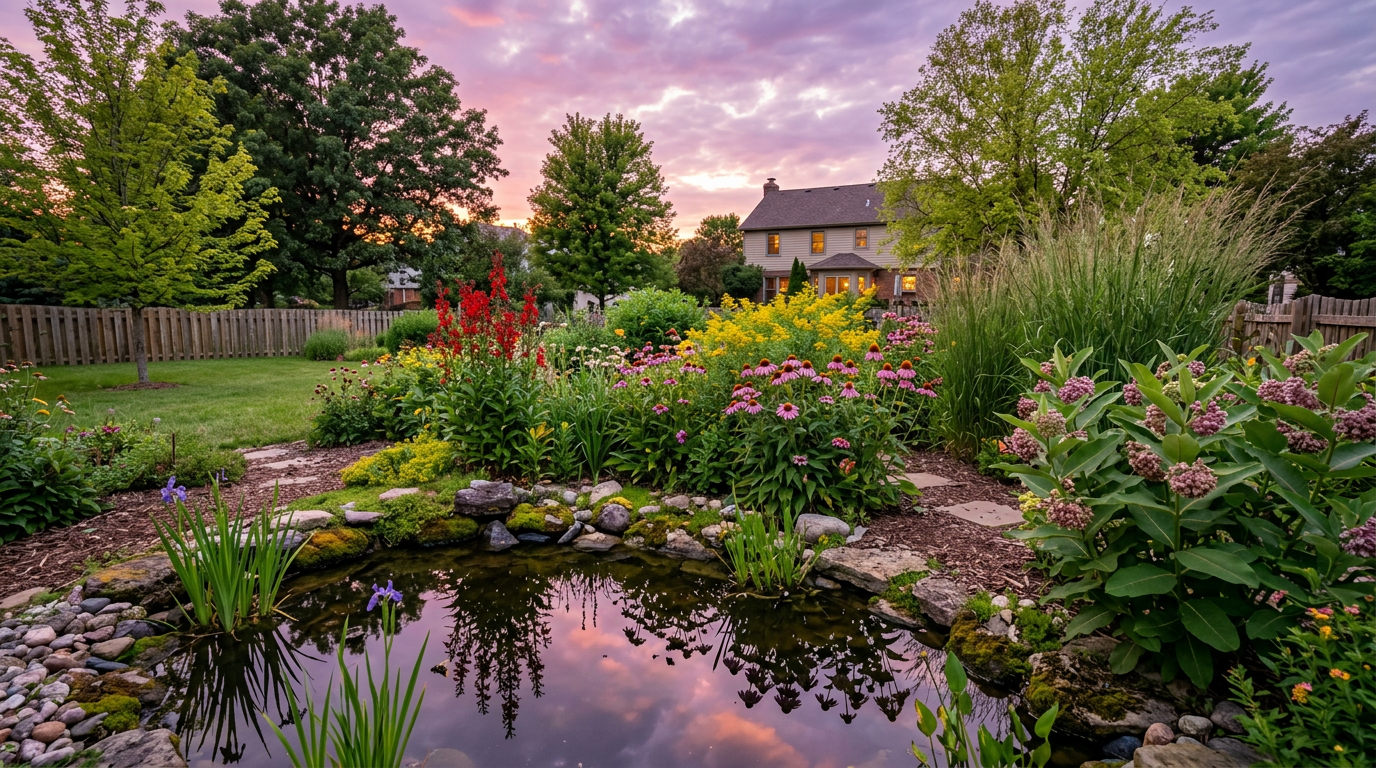
4. Add a small water feature, even a buried bucket
Fireflies do not need a pond. A 14-inch plant saucer sunk to ground level, filled with gravel and water, and refilled twice a week is enough to raise local humidity in a 6-foot radius. If you can do better, a half-buried stock tank with native sedges around the rim works for years. Just keep it from going stagnant, which we cover in our piece on how to add water for backyard wildlife without creating a mosquito factory. The trick is movement or a mosquito dunk every 30 days.
5. Turn off, shield, or amber-shift every outdoor light
You do not need to live in the dark. Three small fixes cover most of it: switch porch bulbs to 2,200K amber LED (about $9 each at any big-box store), add a shielded downcast cap to dusk-to-dawn fixtures, and put any decorative string lights on a timer that kills them by 10 p.m. The Firefly Atlas tracks light pollution as one of the top three threats to North American species, and homeowner-level changes show up in citizen science counts within one season.
6. Stop using neonicotinoid and pyrethroid yard treatments
This is the non-negotiable. Bifenthrin, permethrin, imidacloprid, and the broad-label “lawn and yard insect killers” sold for grub control will eliminate firefly larvae faster than any other variable on this list. If you have a perimeter pest service spraying your foundation monthly, that drift extends 8 to 15 feet into the yard. Either cancel the service, switch to targeted IPM (which we cover for one common pest in our pesticide-free yellow jacket guide), or restrict treatment to a 3-foot indoor perimeter only.
The pragmatist’s plant-shopping playbook
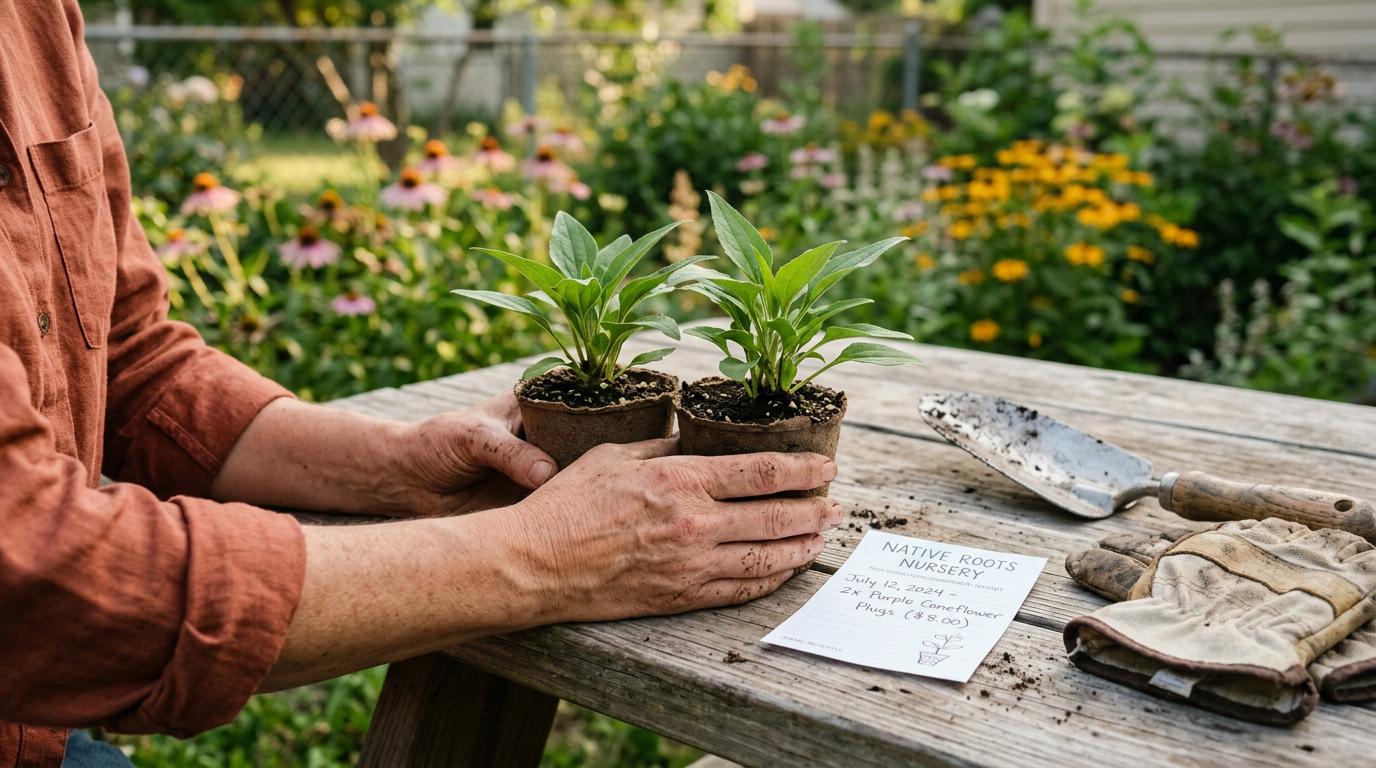
The biggest mistake first-time native gardeners make is paying retail for everything at once. A 1-gallon cardinal flower at a chain nursery runs $14 to $19. The same plant as a plug from a regional native nursery is $3 to $4. The same species grown from seed costs about $0.30 once you account for stratification time. None of these are wrong, but the budget falls apart fast if you do not mix sources.
What to buy local, what to buy big-box, what to buy online
The honest split, as someone who has burned money in every direction:
- Local native plant nursery or annual native plant sale. Buy plugs of cardinal flower, blue lobelia, Joe-Pye weed, buttonbush, and anything wetland-edge. These are tricky in pots, and the local growers know which strains thrive in your county. Expect $3 to $5 per plug, with a 5-pack minimum at most sales.
- Big-box garden center (Lowe’s, Home Depot, Walmart spring bare-root). Buy switchgrass, common milkweed, native goldenrods when clearly labeled, and any straight species that ships easily. Skip anything marketed as “wildflower mix” or “pollinator blend,” because those are the same products that show up in 1-star Amazon reviews when nothing comes back the following year. Verify the plant is actually native to your county before you buy.
- Online specialist (Prairie Moon, Ernst, Izel Native Plants). Buy seed for bulk lawn-conversion projects, stratification-required species, and any plug order over $50 where shipping is finally cheaper than driving. Expect 7 to 14 days to delivery and a 2 to 3 week settle period before planting.
How many plants you actually need for fireflies
You do not have to convert the whole yard. A 100-square-foot bed planted with three switchgrass, three cardinal flower, two Joe-Pye weed, one buttonbush, and a dozen plugs of mixed asters and milkweed will support firefly activity within two growing seasons. Total plant cost, mixing local plugs with big-box bare-root: about $85 to $120. Total time, including the slow lawn-kill: 12 to 18 months. We document the patient lawn replacement method in our cardboard-smother timeline, which works even when you cannot till.
The HOA-safe version of a firefly yard
If you have neighbors who use the words “manicured” and “kept up,” you do not need to declare ecological war. Three design moves let a firefly-friendly yard pass the curb-appeal test:
- Define the edges. A 4-inch steel or stone border along every planting bed reads as “intentional” to a code officer or HOA volunteer. The plants inside can be 5 feet tall, but the line has to be sharp.
- Mow a frame. Keep a 24-inch mowed strip around every native bed and along the sidewalk. The contrast between the cut frame and the wilder interior is what suburban eyes register as “garden” rather than “neglect.”
- Use a small interpretive sign. Programs like the National Wildlife Federation’s Certified Wildlife Habitat and Audubon’s Bird-Friendly Communities offer yard signs that signal intent. They cost $25 to $40 and head off most complaints before they start.
Firefly biology, briefly, so you can troubleshoot
Most “I did everything and still no fireflies” complaints come from a small set of fixable mismatches. Knowing the basic biology helps you diagnose the gap.
Species pick their own emergence window
The big yellow-flashing show most Americans remember is usually Photinus pyralis, the common eastern firefly. It emerges roughly when soil temperatures hold above 70 degrees Fahrenheit, which works out to late May in Zone 7, mid-June in Zone 6, and late June in Zone 5. Other species (Photuris, Pyractomena, and many regional Photinus) emerge across an 8-week window. If you are looking at the wrong week, you will think the population is gone when it has not arrived yet.
Flash patterns are species-specific
If you see fireflies in your yard but they do not blink the way you remember, that is normal. Photinus pyralis males do a single 0.5-second J-shaped flash every 5 to 6 seconds while flying. Photinus marginellus flashes twice quickly. Females typically respond from grass or low shrubs, not from the air. You can log what you see on the Firefly Atlas citizen-science project or upload sightings to iNaturalist’s Lampyridae taxon page, both of which contribute to the population data the conservation community actually uses. Many state extension services (look for your local USDA Cooperative Extension office) also keep regional firefly checklists you can match against your yard sightings.
Dry weeks crash adult emergence even if the yard is right
A spring drought followed by a dry June will collapse local firefly counts even in well-managed habitat, because the larvae and the slug-snail prey base both dry up. A soaker hose on a 20-minute drip every other dry evening, run from May through July, is the difference between a strong year and a no-show year in my yard.
A two-weekend starter plan, if you want to begin now
If today is mid-May and you want fireflies this summer, you cannot rebuild a habitat fast enough for adults already emerging. But you can start the foundation, see partial results this year, and full results next year.
Weekend 1: Lawn, lights, and leaves
- Mark out a no-mow strip (4 feet wide, along a fence or back edge). Mow it short one last time, then leave it alone.
- Walk every outdoor light at dusk. Replace each white bulb with a 2,200K amber LED. Put string lights on an 8 p.m. to 10 p.m. timer.
- Rake the leaves out of one large bed (your choice) and pile them 3 inches deep against the back of the fence line. Stop bagging anything that falls from now on.
- Cancel or pause any perimeter pest spray service. Tell them you are testing IPM and will call back in 3 months.
Weekend 2: Plants and water
- Place a 14-inch plant saucer or shallow bowl at the back of the new bed, sunk halfway into the soil, filled with gravel and water.
- Plant 3 switchgrass clumps along the back of the bed, 3 cardinal flowers along the moist edge, and one buttonbush in the wettest spot.
- Add a 1-pound bag of common milkweed seed scattered across the no-mow strip. Walk on it. Water once. Walk away.
- Hand-write the date on an index card and slip it into a baggie nailed to the fence. You will want the start date next June when you count flashes.
Quick regional reference for the four most common firefly groups
If you want to know which species are most likely to show up in your yard, the four most reported groups across the eastern and central United States are easy to learn. Each has a different preferred habitat layer, which helps you tune the planting plan if you happen to know which species was in your neighborhood as a kid.
Common eastern firefly (Photinus pyralis)
The yellow-flashing J-stroke firefly that most adults remember from childhood. Active from late May into early August across zones 5 to 9. Prefers open lawn-meadow edges and floodplain soils. Adult males flash from 3 to 8 feet off the ground. This species responds fastest to no-mow strips and water saucers.
Big dipper firefly (Photinus pyralis subgroup)
Often grouped with the common eastern, this is the deeper-yellow flasher that traces a clear dip in flight. Activity peaks 45 minutes after sunset and tapers within 90 minutes. If your evenings end early, this is the species you are most likely to catch on a 30-minute porch sit.
Photuris (femme fatale) fireflies
Larger fireflies with longer, irregular flashes. Photuris females are predatory on smaller Photinus males, which is unusual among beetles. They prefer wooded edges and need leaf litter more than open lawn. If your yard backs onto a woodland, prioritize the leaf-pile and root-channel parts of the plan.
Pyractomena (winter fireflies)
The species most people never see, because adults emerge in March and April in many zones and do not always glow. They overwinter as pupae under bark. If you have a brush pile or rotting log section, you may already host them. Leave the pile, do not “clean it up,” and check the bark in early spring with a flashlight after dusk.
Quick answers to the usual questions
How long does it take to attract fireflies after changing your yard?
Most homeowners see modest activity in year one if any adults are already in the local landscape. Strong, repeatable counts take 2 to 3 years because the larvae need that long to mature into the visible adults. The slowest variable is rebuilding the prey base (slugs, snails, soft-bodied worms), which depends on soil moisture and leaf duff returning.
Do bug zappers kill fireflies?
Yes. Bug zappers attract and kill night-flying insects indiscriminately, including fireflies, moths, and beneficial beetles. The mosquito-control value of zappers is also minimal, since they kill far more non-target insects than mosquitoes. Remove them and switch to a fan on the patio (mosquitoes are weak flyers and avoid moving air).
Will fireflies live in clay soil?
Yes, as long as the top inch stays moist for most of the season. Clay actually holds moisture better than sand, which can be an advantage. The fix for compacted clay is mulch and root channels, not amendments. Plant deep-rooted natives like switchgrass and let the roots open the soil for you over 2 to 3 years.
Are dogs and cats a problem for fireflies?
Fireflies contain lucibufagins, mild defensive chemicals that can make dogs and especially cats sick if eaten in quantity. Most pets avoid them after the first taste. The bigger risk to fireflies in a pet yard is the perimeter chemical spray homeowners often use for fleas and ticks, which kills larvae directly. Switch to a topical flea preventive on the pet and skip yard-wide treatments.
What is the best month to start a firefly yard?
Late March through early May in most US zones, because that is when bare-root native plants and plugs ship, soil is workable, and you can still establish a no-mow strip before peak growing season. Mid-summer planting works but requires daily watering. Fall is acceptable for seed sowing (which needs winter cold to germinate), but for transplants, spring is the safer window.
The honest summary
Attracting fireflies is not a project you finish. It is a maintenance pattern you switch into and hold. Mow less, leave more leaves, plant moisture lovers, kill the floodlights, skip the chemicals, and add a small water feature. The plants will work whether you bought them at a regional native nursery for $3 a plug or at the Lowe’s spring bare-root bin for $1.99. The leaves will work whether you raked them yourself or asked the kid next door to dump his bags in your back corner. The lights are a $30 fix. The pesticide change is free.
Two years from now, when you sit on the same porch step where I started, you will count fireflies in fewer seconds than it took me to count to four. That is the whole goal, and it is closer than the garden-center marketing makes it look.
Want More Wildlife Garden Tips?
Join 5,000+ nature lovers getting our weekly tips on creating wildlife-friendly gardens.
No spam, unsubscribe anytime. Privacy Policy
Emma Harrington
Emma Harrington is a wildlife habitat researcher and content editor with a passion for backyard conservation. She has spent over a decade translating ecological science into practical tips anyone can follow — from selecting native plants to building wildlife-friendly habitats. Her work focuses on helping homeowners transform ordinary yards into thriving ecosystems for bees, butterflies, hummingbirds, and other beneficial wildlife.