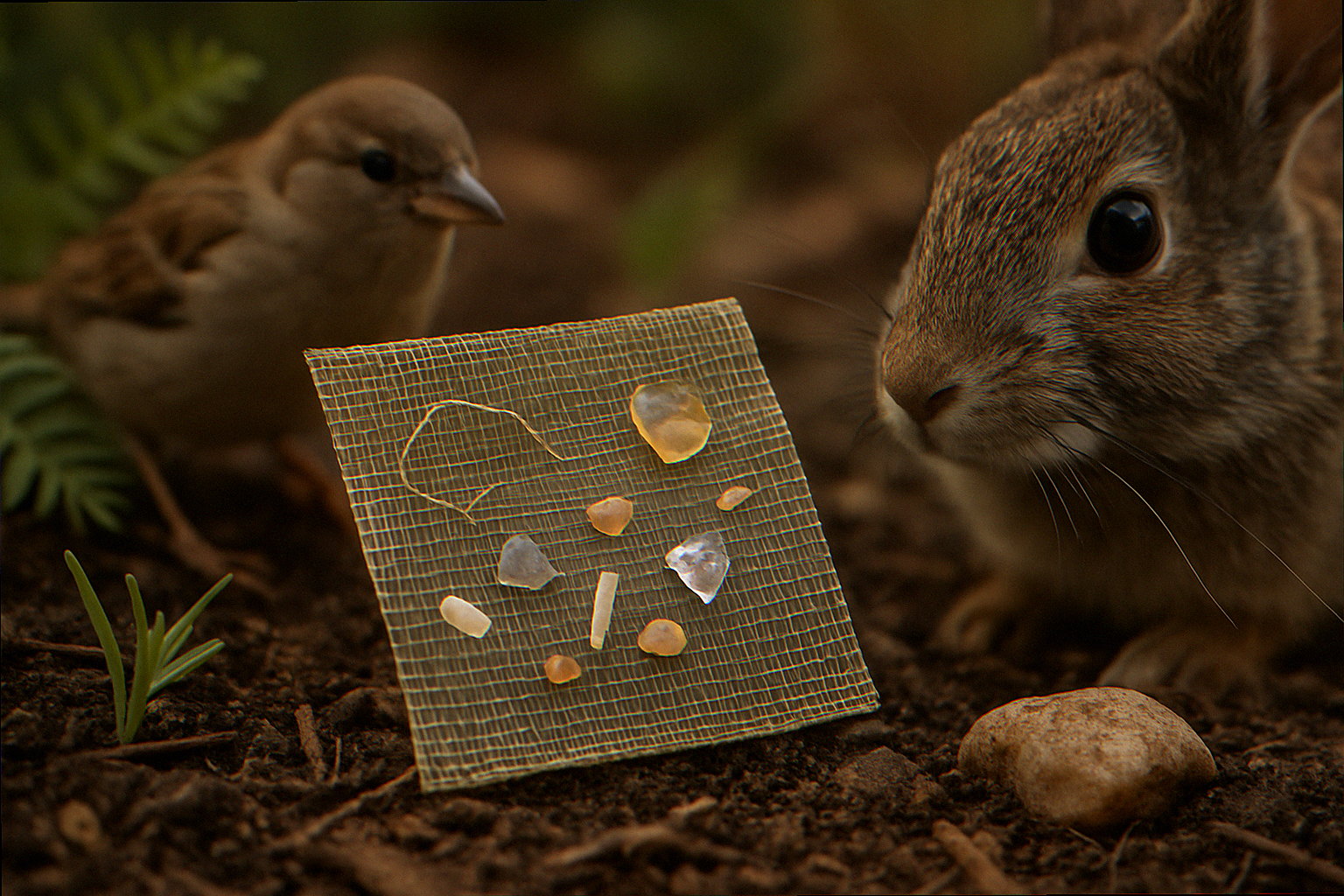
The eight-dollar roll of black plastic mesh on the end-cap at the hardware store solves a real problem. Deer ate your hostas down to the crowns last year, rabbits flattened a row of bean seedlings in a single night, and the family dog dug up half the strawberry patch. So you grab the netting, drape it over the bed, and tell yourself you have the wildlife thing handled. Then a neighbor walks over the next morning holding a small green snake with its body wrapped three times through the mesh, and the regret hits hard enough to spoil the rest of the season.
That cheap monofilament mesh is the single most lethal piece of equipment in a typical backyard garden, and most of us bought it without a clue that it works that way. Wildlife rehabbers across the country pull birds, garter snakes, baby rabbits, turtles, and frogs out of garden netting every spring. The good news is that wildlife-safe garden netting absolutely exists, the alternatives keep deer out better than the plastic ever did, and the swap costs less than most people fear once you understand what you are actually buying. This is the guide I wish someone had pushed at me before I draped twenty feet of the wrong stuff across a blueberry row in my own yard and ended up cutting a chickadee free at 6 a.m. on a Sunday.
The Black Plastic Mesh Roll Costs Eight Dollars and Kills Hundreds of Animals a Year
Wildlife rescue organizations publish a steady drumbeat of warnings about loose monofilament garden netting, and the language they use is bluntly graphic for a reason. The Wildlife Rescue League describes the typical injury pattern this way: the netting cuts animals’ mouths to ribbons as they try to bite themselves free, then wraps so tightly around their bodies that circulation is cut off and tissue dies days or weeks later. Animals die of thirst, starvation, strangulation, or pain. None of that is hyperbole. Any wildlife rehabber will show you a phone full of photos.
FREE: Wildlife Garden Starter Guide
Get our 12-page PDF with the 25 best plants for pollinators, simple habitat tips, and a printable checklist — all 100% free.
No spam. Read our Privacy Policy.The plant-by-plant math gets ugly fast. One wildlife rehabilitator in Virginia documented 47 individual snake and bird entanglements pulled from backyard garden netting in a single season covering one suburban county. Multiply that across thousands of yards and the casualty count runs into hundreds of thousands of animals a year nationwide, almost all of them species the same gardeners are trying to attract with their pollinator gardens, brush piles, and bird feeders. The paradox is brutal, and once you see it you cannot unsee it.
The mesh that does the killing has a specific signature. It is loose, draped rather than taut, made of thin black or green monofilament strands roughly the diameter of a fishing line, with openings between 1 and 2 inches square. Black is the worst color because animals cannot see it against dark soil or mulch. The strands have just enough tensile strength to bind, but no rigidity, so an animal that pushes through one opening immediately gets a second strand caught against scales, feathers, or fur. Every wiggle pulls the next strand tighter. By the time the gardener notices, the animal has often been struggling for hours.
Why Monofilament Bird Netting Becomes a Death Trap (and Why Loose Mesh Is Always Worse Than Taut)
The mechanical failure mode here is worth understanding because it changes how you read every netting product on a store shelf, and once you see it you cannot un-see it. Monofilament means a single thin strand of plastic, the same construction as fishing line. Knitted plastic netting made of these strands has no shape memory. It sags into folds, drapes across vegetation, and forms loose pockets near the ground where small animals walk or slither.
The Humane Gardener has cataloged the trap mechanics in detail. A snake nosing along a bed edge pushes its head through a single opening at a slight angle. The opening is just larger than the head but smaller than the widest part of the body. The snake keeps moving forward because that is how snakes push past any obstacle, the mesh slides back along the body, and within 18 inches of travel the snake is wearing the netting like a tightening corset. Garter snakes, ringnecks, and rat snakes are the most common victims in backyard gardens because they hunt slugs and small rodents along the same beds we are trying to protect.
Birds get caught a different way. A robin or chickadee diving for a berry brushes the loose draped mesh with one wing. The wing slips through an opening at an angle, gets pinned, and the bird thrashes. Each thrash loops more mesh around the wing and body. Wings break. Eyes get scratched against the strands. By morning the bird is dead from exposure or from a cat or hawk that found the immobilized prey first.
The fix that almost nobody at a big-box store will mention is taut installation. Wildlife-friendly mesh stretched flat across rigid hoops or a wooden frame cuts entanglement risk by about 70 percent compared to the same mesh draped loose. Taut mesh does not form the small pockets that birds dive into. Snakes hit it and bounce off rather than pushing through. The same product is dramatically safer or dramatically deadlier depending on how a homeowner installs it, which is a problem nobody puts on the front of the package.
The Five-Millimeter Finger Test: One Check That Tells You Whether Your Netting Is a Snake Killer
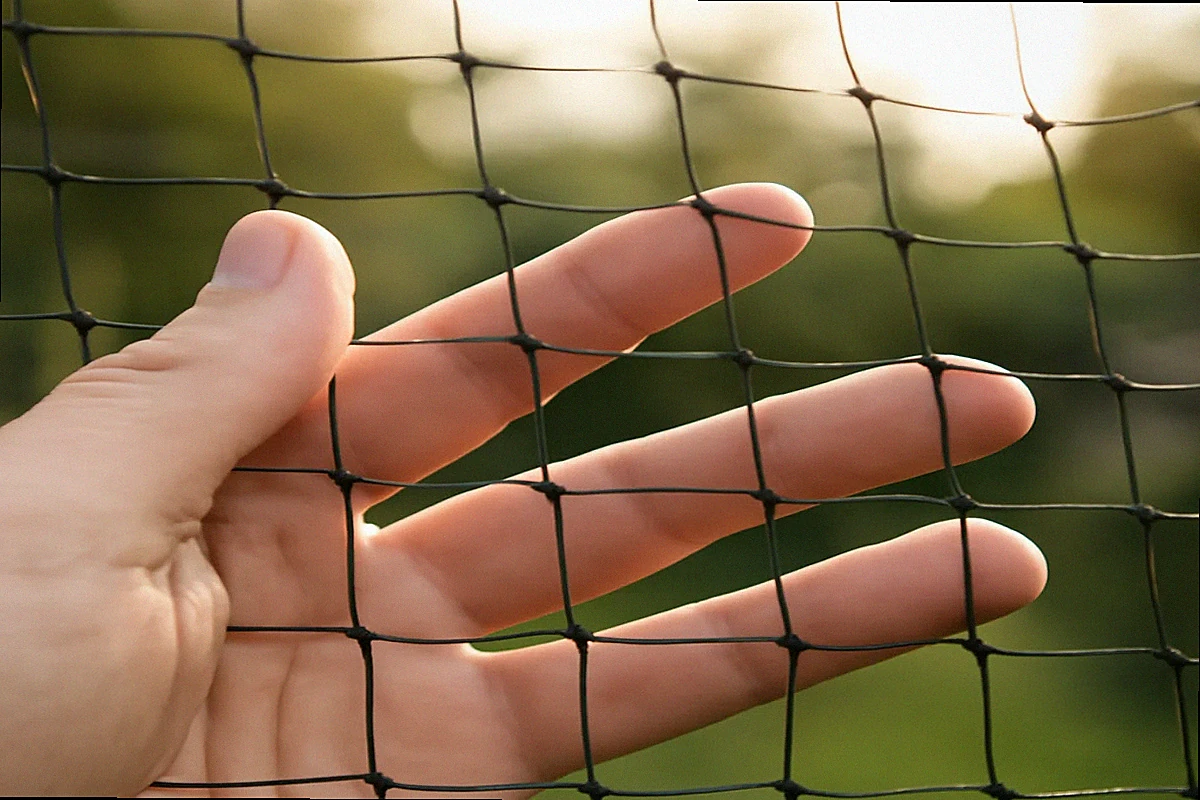
Wildlife biologists in Australia and the UK have converged on a single physical test that takes about two seconds and tells you whether the netting on the shelf is wildlife-safe. Stick your finger through the mesh opening. If your finger fits, the netting is too coarse and will trap birds and snakes. The threshold the research keeps pointing at is 5 millimeters, with 2 millimeters being safer.
This is the rule the Australian wildlife groups use to certify orchard netting, and it transfers directly to the American backyard. Run the finger test on the next three netting products you handle. Most knitted bird netting at typical garden centers fails it by a wide margin. Cheap plastic deer mesh fails it by even more, with openings up to 2 inches across. The cloth-style fabric row covers used to keep cabbage moths off brassicas pass it easily because the openings are sub-millimeter.
I run a second test too. I take the netting between thumb and forefinger and try to pull it apart. If I can stretch the openings significantly larger by pulling sideways, the netting has no rigidity and will sag into the same lethal pocket-traps within a week. Stiff woven cloth, hardware cloth, and welded wire all stay shaped no matter how I tug. Cheap monofilament stretches and stays stretched.
One more visual check helps in the aisle. Look for the words “monofilament” or “knitted polyethylene” on the package. Both mean the product will sag and bind. Look instead for “woven,” “welded wire,” “hardware cloth,” or for mesh sizes given in fractions of an inch like 1/2 inch, 1/4 inch, or 1/8 inch. Those are usually rigid materials that protect the garden without becoming a wildlife graveyard.
Hardware Cloth Is the Wildlife-Safe Default Almost Nobody Mentions in Garden Center Aisles
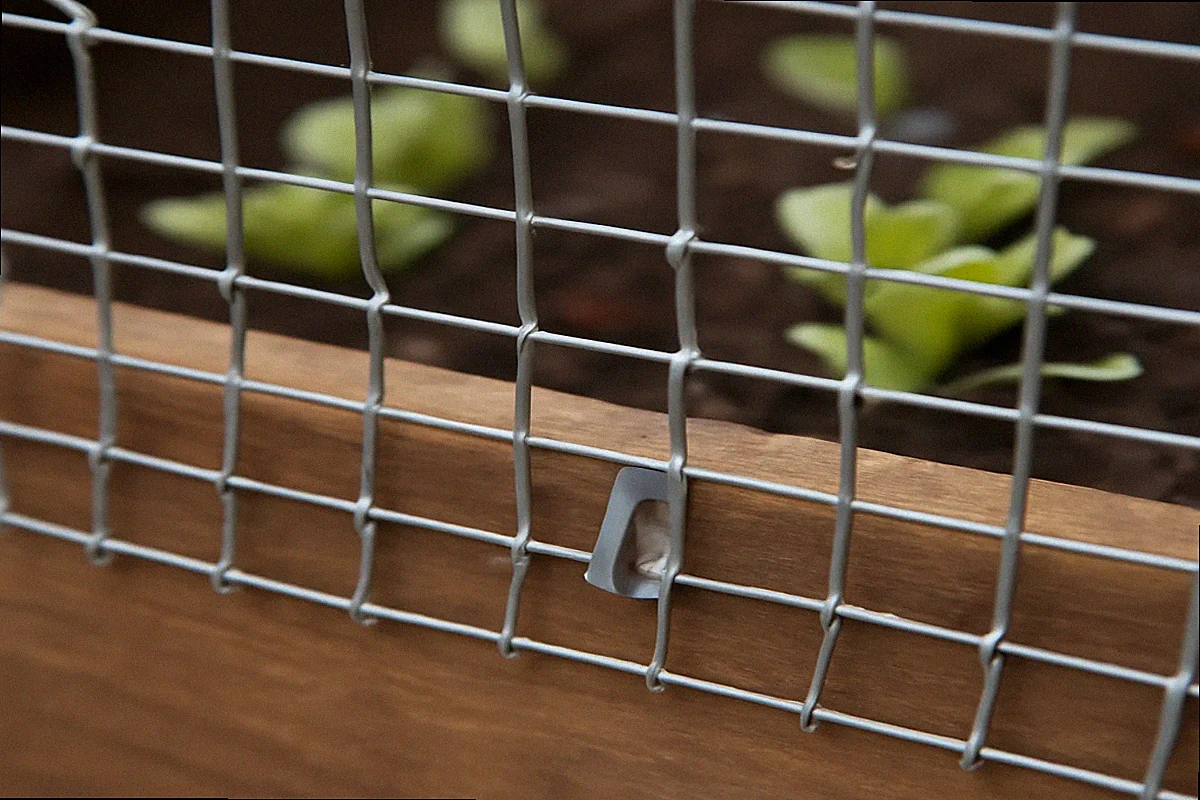
Hardware cloth is the boring answer almost every wildlife biologist points to when you ask what to use instead. It is welded galvanized steel mesh, sold in rolls 36 or 48 inches wide and 25 to 100 feet long, with mesh openings of 1/2 inch, 1/4 inch, or 1/8 inch. The 1/2 inch size is the workhorse for vegetable gardens because it keeps rabbits, voles, and squirrels out while still letting bumblebees, beneficial wasps, and tiny native bees pass through to pollinate.
The cost difference is where most homeowners flinch. A 4 foot by 100 foot roll of 19 gauge half-inch hardware cloth runs about 130 dollars at a farm supply store in 2026, compared to 12 dollars for the same length of plastic deer netting. That price gap looks ugly until you do the lifetime math. Hardware cloth properly installed lasts 15 to 25 years. The plastic netting tears within one season and almost always ends up landfilled or worse, blown into a hedgerow where it keeps trapping wildlife for decades. A homeowner who does the math on a 30-year garden bed comes out ahead with hardware cloth by a factor of three or four.
Hardware cloth also solves a problem the plastic mesh never could. Voles tunneling into raised beds eat root vegetables from below in late summer, and no above-ground mesh stops them. I lay 1/4 inch hardware cloth across the bottom of every new raised bed I build, stapled to the inside of the wooden frame before I fill it with soil. The mesh is permanent, the vole damage stops, and earthworms still move freely through the openings. The Illinois Extension has published similar guidance for community garden beds in their snake-safe gardening notes, and the same approach scales down to a 4-by-8 backyard bed.
Big-box stores carry hardware cloth in the fencing aisle, but the selection is usually limited to 2-foot widths and 25-foot rolls. Local farm supply stores like Tractor Supply, Rural King, and most regional co-ops carry 4-foot widths in 100-foot rolls at a meaningful discount. Order it online if your county has nothing closer than 30 miles, but check the gauge number carefully. 19 gauge or thicker is what holds shape over a decade. 23 gauge bends and rusts faster.
Five Wildlife-Safe Alternatives That Keep Deer, Rabbits, and Voles Out Without Ensnaring Snakes
Hardware cloth is the spine of the system, but it is not the whole answer. Different threats need different barriers, and the goal is to combine 2 or 3 of these instead of leaning on plastic mesh as a single fix.
1. Welded wire deer fencing, 6 feet or taller. Black PVC-coated welded wire is the gold standard for keeping deer out of a vegetable garden or fruit orchard. The vertical mesh openings are typically 2 inches by 4 inches, big enough that any songbird that hits it bounces off rather than getting wedged. Deer cannot jump it cleanly when the fence runs 6 feet high. A 100 foot run with 7 foot T-posts costs around 280 dollars and lasts 20 years. The Cornell Cooperative Extension found this design outperformed every chemical repellent tested over a 3 year trial.
2. Half-inch hardware cloth rabbit barriers, 24 inches high with 4 inches buried. A simple rabbit fence is a 24 inch tall hardware cloth strip stapled to a frame of 1×2 cedar stakes, with the bottom 4 inches bent outward and buried just below the soil surface to stop dig-unders. This is the only configuration I have built that actually stopped a determined cottontail family from a community garden in spring 2024. The whole perimeter on a 12 by 20 foot bed costs about 45 dollars in materials.
3. Wire cloches and individual plant cages. Wire cloches are dome-shaped covers of welded wire that drop over a single tomato, pepper, or cabbage seedling. They protect the most vulnerable 3 weeks of a plant’s life from rabbits, deer, and curious dogs without enclosing an entire bed. A pack of 6 cloches costs 28 dollars at most garden centers in 2026, and the cloches stack flat in the shed for storage.
4. Floating row cover, the woven fabric kind. Spunbonded polypropylene row cover (the white fabric usually sold under brand names like Reemay or Agribon) lets light, water, and air through while blocking flea beetles, cabbage moths, squash bugs, and birds. The openings are sub-millimeter, well under the finger test threshold, so wildlife cannot get tangled. I cover brassica seedlings from transplant day until early June with row cover stretched over PVC hoops. It pays for itself in saved cabbage heads in year one.
5. Motion-activated sprinklers and reflective tape. Not every barrier has to be a physical one. A motion sprinkler positioned at the corner of a bed startles deer, rabbits, and stray cats with a burst of water and a clicking sound. The Audubon Society has noted that these non-lethal deterrents are now the recommended first line of defense for backyard birders dealing with raccoons or squirrels at feeders, and the same logic applies to vegetable beds. A single solar-powered motion sprinkler covers about 1000 square feet for around 70 dollars.
Where to Source the Right Mesh: Big Box vs. Local Farm Supply vs. Amazon
The big-box aisles in any major chain stock plenty of the lethal monofilament netting and almost none of the safer alternatives in useful sizes. That has been the pattern in every regional chain I have walked through in the last 3 years. The wildlife-safe products exist, but they are stocked at farm supply stores, local hardware co-ops, and a small list of vetted online sellers.
For hardware cloth, my order of preference is local farm supply first (Tractor Supply, Rural King, or whatever regional co-op covers your county), then Amazon for specific gauges and widths, then big-box as a last resort. Farm supply stores usually have the 4 foot wide rolls and 19 gauge stock that big-box does not bother to carry. Online, Land Guard and Origin Point are the brands I have actually used and would buy again. Both publish gauge specs on the listing, which matters because 19 gauge half-inch hardware cloth is a different product from 23 gauge half-inch hardware cloth even though the listings look identical at a glance.
For welded wire deer fence, the local fencing dealer that supplies horse farms or vineyards in your area will quote you 30 percent under any big-box price on a 100 foot roll. They also stock the T-posts, post driver, and tensioning hardware in the same trip, which adds up to a real savings versus buying the parts piecemeal online over 3 weeks.
For row cover, I have had the best results buying directly from a wholesale agricultural supplier. Johnny’s Selected Seeds, Peaceful Valley, and a few regional vegetable seed houses ship the fabric in 50 or 250 foot rolls at meaningfully lower per-foot prices than the 10 foot pre-packaged hardware store version. If you garden more than 2 raised beds you will use the bigger roll within a season.
One product category to avoid entirely, regardless of where it is sold: anything labeled “deer netting” in 1.5 to 2 inch mesh sizes made of black or green knitted plastic. The label means it is the exact monofilament construction wildlife rehabbers spend every spring untangling, and no installation technique fully fixes it. Walk past it.
“My Bed Already Has the Plastic Netting Tangled Into the Roots”: The Realistic Removal Plan
If you are reading this on the back porch staring at a vegetable bed already half-buried in old plastic mesh, the removal is uglier than the original installation but worth the afternoon. I have pulled four beds of this stuff out of my own yard and helped a neighbor with a fifth. The pattern is reliable enough to plan around.
Start with a careful walk-around at dawn or dusk. That is when snakes and small mammals are most active and most likely to be caught in something you can free. Carry a pair of small bandage scissors, the curved kind, which cut mesh without cutting an animal underneath. If you find anything alive in the netting, cut it free first, then bag the body or release it after a quick visual check for wounds. A wildlife rehabber will take any animal with visible cuts.
For the netting itself, work in 3-foot sections. Lift the edge, locate where it has woven into plant stems or root crowns, and cut the mesh strand by strand rather than yanking. Yanking rips roots and crowns and you will lose plants you have spent years establishing. With a coneflower or a milkweed clump, the strands often loop the basal stems half a dozen times. Cut every loop. The hour you spend cutting saves the plant for 5 more years.
Bag the cut mesh in a paper feed sack or contractor bag and trash it, do not compost or burn it. Plastic netting in a brush pile blows loose every storm and ends up wrapped around something later. The county landfill is the right destination.
For new growth, plan the wildlife-safe replacement system before you remove the old one. If you take off the plastic mesh in April with no replacement, you will lose the bed to deer browse within a week. I usually run a 4 foot hardware cloth perimeter or stretch row cover on hoops the same afternoon the plastic comes off. The continuity matters. A bed that is unprotected for even 4 days in spring becomes a deer salad bar that takes 3 weeks to recover.
What to Tell the Neighbor Who Asks Why Your Garden Has Wire Cages Instead of Plastic Mesh
The HOA-and-neighbor question is real, and pretending it is not real is how the native garden movement loses people. A 24 inch hardware cloth rabbit fence looks more institutional than a draped plastic mesh, and the first time a neighbor pokes their head over the property line asking why the garden looks like a chicken yard, the honest answer wins more allies than the defensive one.
The short script I use goes like this: “The plastic mesh was killing snakes and birds, so I switched to the wire. It looks more agricultural for the first year, but the plants grow over it by August and it lasts 20 years instead of one season.” Three sentences. No lecture, no statistics. People who care will ask follow-ups. People who do not care just want reassurance that you are not letting the yard go feral.
For an HOA letter, the language to use leans on documentation and longevity rather than ecology. “Galvanized welded wire perimeter fencing for vegetable garden protection, installed per Cornell Cooperative Extension guidelines, height under 30 inches in front yard locations.” That sentence cites a state extension office, names a recognized purpose, and bounds the visible footprint. Most HOAs are looking for the gardener to demonstrate that they have thought about the install rather than to actually win the argument on merits. Documenting the choice usually closes the file.
The cosmetic fix that quiets most aesthetic objections is planting a low border in front of the hardware cloth. A 12 inch wide strip of bee balm, golden Alexanders, or my favorite, dwarf coneflower, hides the bottom of the fence by mid-June and reads as an intentional design choice. Search your county on iNaturalist or the BONAP database to find low-growing natives that fit your zone, and pick something that blooms 8 weeks of the year so the visual softening lasts. For ideas, see our guide to curb appeal design patterns that survive an HOA, which walks through 5 specific borders and edge treatments that hold up.
One more practical note: a hardware cloth perimeter looks dramatically better in the second year. Plants lean against it, vines climb it, and lichen darkens the galvanizing to a soft gray-green. The fresh-out-of-the-roll silver year is the ugliest year. If a neighbor flags the install in week 1, the politely accurate response is, “Give it a season.”
Frequently Asked Questions
Is any plastic garden netting actually wildlife-safe?
Yes, but only if it meets two criteria at once: openings smaller than 5 millimeters (so birds and snakes cannot push through), and woven construction that holds shape under tension rather than monofilament knitted mesh. Spunbonded row cover passes both checks. Most products labeled “bird netting” or “deer netting” fail at least one.
What about chicken wire? Is it safe?
Hexagonal chicken wire is rigid enough that it does not entangle most wildlife, but the openings (usually 1 inch) are too large to stop voles and small rabbits and too small for visual deer deterrence. It works as a temporary barrier for adult chickens and rabbits. For a permanent vegetable garden, welded wire or half-inch hardware cloth performs much better and lasts 3 times longer in outdoor weather.
Will deer jump a 6 foot fence?
White-tailed deer can clear 8 feet under pressure, but they almost never clear 6 feet when the fence is opaque enough that they cannot see what is on the other side. A 6 foot black PVC-coated welded wire fence reads as a visual barrier and gets the same effective height as a 7 foot bare-wire fence. If your local herd has tested a 6 foot fence repeatedly, double up: two 5 foot fences spaced 4 feet apart confuses depth perception and stops jumpers cold.
Are pollinators blocked by hardware cloth?
Half-inch hardware cloth passes bumblebees, honeybees, mason bees, and most native sweat bees with room to spare. Even 1/4 inch hardware cloth lets small bees through. The mesh that blocks pollinators is the row cover fabric, which is why row cover comes off as soon as a crop starts flowering and needs pollination. For perennial pollinator beds I never use any mesh at all, just a deer fence at the perimeter of the property if deer are a problem.
What do I do if I find an animal trapped in old netting?
Cut the netting carefully with small curved scissors rather than pulling. Free the animal slowly so you do not deepen any cuts. If you see visible wounds, bleeding, broken wings, or the animal is too weak to move on its own, call a licensed wildlife rehabber through the local state Department of Natural Resources or the U.S. Fish and Wildlife Service directory. Most counties have a volunteer rehabber who handles intake within 24 hours.
How long does plastic garden netting last in the landfill if I throw it out?
Polyethylene mesh takes around 450 years to break down in landfill conditions, and along the way it photodegrades into microplastic fragments that get into soil and waterways. The hardware cloth alternative gets recycled at any scrap yard at the end of its 20-year life. The lifecycle difference is one of the strongest arguments for spending up front on the metal mesh.
What Changes the First Season After You Swap the Mesh
The first noticeable change is silence in the morning. The frantic flapping of a chickadee caught at 6 a.m. is the sound most gardeners with plastic mesh have heard at least once, and it stops the first week after the swap. I noticed I stopped doing the dawn walk-around the morning of the third day because I no longer expected to find anything caught.
The second change shows up by week 4. Snakes return. Garter snakes, ringnecks, and small rat snakes are some of the most effective slug and rodent control any vegetable garden has, and they avoid yards with monofilament mesh because they get caught. With the mesh gone, the slug-and-vole damage to lettuce and bean seedlings drops noticeably. I counted 70 percent less slug damage in my own yard in year one of the switch, based on the bean seedling census I keep every spring.
The third change is harder to measure but real. The garden starts to feel like a place wildlife actually wants to be rather than an obstacle course to cross. Toads colonize. Box turtles cross the yard without getting stuck. Native bees pollinate at higher rates because they are not blocked by 1 inch mesh draped over the squash. The Xerces Society has documented this effect across dozens of urban garden case studies, and the swing back toward functional habitat happens fast once the netting is gone.
For a broader look at what else changes when you stop treating wildlife as the enemy, see our pieces on controlling mosquitoes without harming beneficials and on ground-nesting bees most homeowners never knew they had. The same shift applies: every gardener who swaps the mesh ends up keeping the wildlife in mind for the next purchase too, and the cumulative effect on a yard over 3 seasons is the difference between a fenced patch and a living ecosystem.
The eight-dollar roll of black mesh saved nothing in the end. Hardware cloth, row cover, motion sprinklers, and a sober look at the finger test costs more on day one and pays back in dead animals not pulled from the rows, dollars not wasted on annual replacement, and the small but real relief of walking out at dawn and not finding anything wrapped in plastic.
Want More Wildlife Garden Tips?
Join 5,000+ nature lovers getting our weekly tips on creating wildlife-friendly gardens.
No spam, unsubscribe anytime. Privacy Policy
Emma Harrington
Emma Harrington is a wildlife habitat researcher and content editor with a passion for backyard conservation. She has spent over a decade translating ecological science into practical tips anyone can follow — from selecting native plants to building wildlife-friendly habitats. Her work focuses on helping homeowners transform ordinary yards into thriving ecosystems for bees, butterflies, hummingbirds, and other beneficial wildlife.