
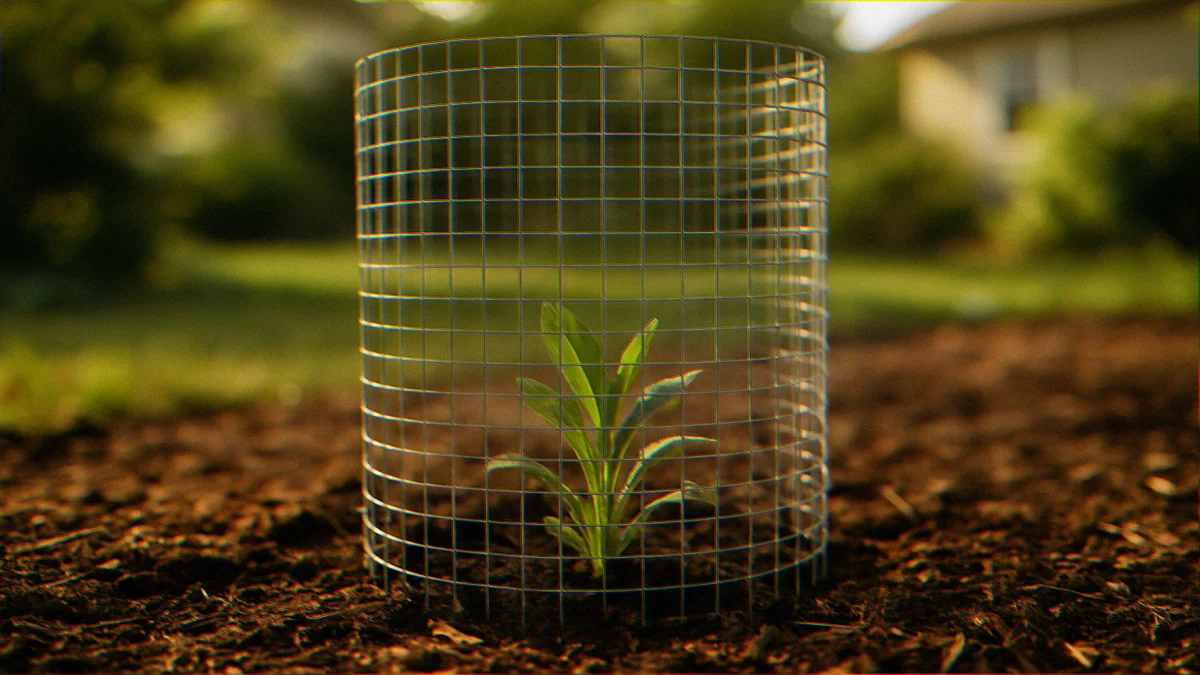
Cottontails strip native plant plugs in a single overnight visit because the new growth is tender, the root systems are shallow, and the rabbits already know your yard. The fastest reliable defense is a 24-inch hardware-cloth cylinder around each plug for the first six weeks, paired with a perimeter scent rotation. Cages come off once the plant lignifies and outgrows browse height.
Quick answer. Wrap a 14-inch-diameter, 24-inch-tall cylinder of half-inch hardware cloth around every plug at planting. Stake it with two bamboo poles. Leave it on for six weeks or until the stems woody up. Spray a garlic-clove repellent on a weekly schedule and rotate to a predator-urine spray every fourth week so rabbits do not habituate.
A reader emailed last month to ask why her $4.50 Asclepias tuberosa plugs vanished overnight three days after planting. She had been told butterfly weed was “rabbit-resistant.” It is. Once it has produced its bitter latex defense compound and tough cuticle. A two-month-old greenhouse plug has neither. Cottontails will browse butterfly weed seedlings, milkweed seedlings, and almost any tender first-year native because the plant has not yet built the chemistry that adults rely on for defense. This is the most expensive lesson in native gardening, and it is preventable with hardware cloth and a calendar.
What does rabbit damage on native plugs actually look like?
Rabbit damage has a specific signature that distinguishes it from deer browse, slug feeding, and rodent clip. The cut is clean and angled at roughly 45 degrees, made by sharp incisors that meet edge-to-edge. Stems are severed an inch or two above the soil. Whole leaves disappear; you do not find chewed-edge holes the way you would with slug feeding. Pellets the size of small peas appear in scattered groups near the damage, usually within four feet of cover.
FREE: Wildlife Garden Starter Guide
Get our 12-page PDF with the 25 best plants for pollinators, simple habitat tips, and a printable checklist — all 100% free.
No spam. Read our Privacy Policy.Deer leave a torn, ragged cut because they lack upper incisors and rip rather than slice. Voles cut at ground level and pull stems down into burrow openings. Slug feeding leaves silver mucus trails and irregular leaf holes. If you see clean angled cuts at one to four inches above soil plus pellet scatter, you are looking at cottontail work.
Time of damage also matters. Rabbits feed heavily at dawn and dusk and again briefly through the night. A plug that looked fine at 9 p.m. and is gone by 6 a.m. was almost certainly hit by a cottontail. This pattern lets you confirm the culprit before you over-invest in fencing.
Why are first-year native plant plugs a rabbit magnet?
Greenhouse-grown plugs have three vulnerabilities that wild-grown seedlings lack. They have been protected from herbivory their whole life, so they have produced little of the bitter terpenes, alkaloids, and silica that make adult native plants unpalatable. Their tissue is high in water and nitrogen because the grower fertilized them to produce rapid spring growth. Their root system extends only as deep as the plug itself, usually two to three inches, so a clipped stem cannot regrow from a deeper reserve the way an established perennial can.
The plant industry sells you a plug optimized for shipping survival and a saleable green flush. Cottontails are evolutionarily tuned to find exactly that signal: fresh, nitrogenous, defenseless tissue. A new bed planted out in May is a buffet. By contrast, the same species two years later. With a deeper root, lignified stem, and accumulated defensive chemistry. Gets ignored.
The peer-reviewed work on white-tailed deer browse on native plants documents the same first-year vulnerability gap in USDA Forest Service research on browse damage, and the pattern transfers to cottontail browse with smaller body mass and shorter reach. Treat the first growing season as the danger window.
The 14-inch hardware-cloth cylinder, step by step
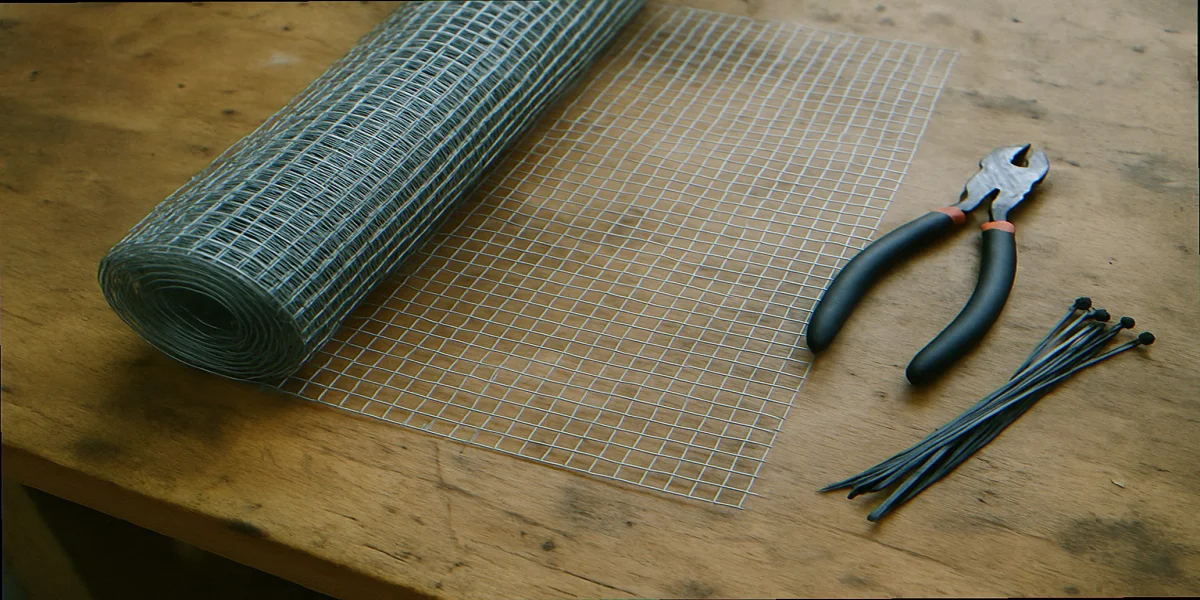
Half-inch hardware cloth is the only mesh size that works reliably. Quarter-inch is overkill, expensive, and traps debris. One-inch chicken wire lets cottontail kits squeeze through; I have watched it happen. A 25-foot roll of 24-inch tall half-inch hardware cloth costs about $42 at the big-box stores and protects roughly 21 plugs. That works out to two dollars per cage, which is less than the cost of replacing a single plug.
Cut a 44-inch length of hardware cloth. This forms a cylinder roughly 14 inches in diameter. Wide enough that the plant does not contact the wire as it leafs out, narrow enough to drive between plugs in a tight bed. Bend the cut ends together to overlap by one mesh row and tie with three small zip ties or short loops of bailing wire. The cylinder should hold its shape when you set it down.
At planting, slip the cylinder over the plug before you water in. Push the bottom edge into the soil about one inch. Drive two thin bamboo stakes vertically along the inside of the cylinder, one on the north side and one on the south, and secure each to the wire with a single twist of jute. The stakes prevent the cage from being knocked off-axis by wind or a curious dog. A rabbit cannot lift this assembly.
You can buy pre-made plant cages, but the wire gauge is usually too light to hold up to one season of weather, and the diameters tend to be either too small (plant grows into the wire) or too large (you lose bed planting density). Cutting your own gives you control and lets you scale to whatever plug count your spring order requires.
Which native plants need cages and which do not?
Not every plug needs the same protection. Some species ship with enough defensive chemistry that rabbits ignore them even as seedlings. Others are dessert.
| Species | First-year cage? | Reason |
|---|---|---|
| Asclepias tuberosa (butterfly weed) | Yes | Latex defense not yet developed in plug |
| Asclepias incarnata (swamp milkweed) | Yes | Same; tender first-year stems |
| Echinacea purpurea (purple coneflower) | Yes | Top growth highly palatable until second year |
| Monarda fistulosa (wild bergamot) | No | Aromatic oils present at plug stage |
| Pycnanthemum muticum (mountain mint) | No | Strong menthol scent deters browse |
| Solidago speciosa (showy goldenrod) | Yes | Tender shoot growth attractive in May |
| Allium cernuum (nodding onion) | No | Onion volatiles deter rabbits |
| Liatris spicata (blazing star) | Yes | Corms attract digging; foliage browsed |
| Baptisia australis (blue false indigo) | Yes, first six weeks only | Alkaloid develops fast; cage briefly |
| Pycnanthemum virginianum | No | Same menthol family as P. muticum |
Budget accordingly. If you ordered a hundred plugs from a native nursery this spring and seventy of them are on the “cage” list, you need seventy cages. The remaining thirty save you a hundred and forty dollars in wire. Build the cages over a weekend with a friend and a wire cutter; it goes faster than you would guess.
For the species that do not need cages, I still mark each plug with a bamboo skewer for the first two weeks. Cottontails are individuals, and a particular yard rabbit may decide to browse something that the textbooks say it should not. The skewer lets you find the plug for a check-in and, if needed, throw a cage on retroactively.
The weekly repellent rotation that actually works
Cages stop most damage. A scent rotation handles the edge cases. The plugs you skipped caging, the cottontail that learns to reach over a cylinder, the bed where you ran out of wire. The principle is that rabbits habituate fast to a single repellent. The fix is rotation.
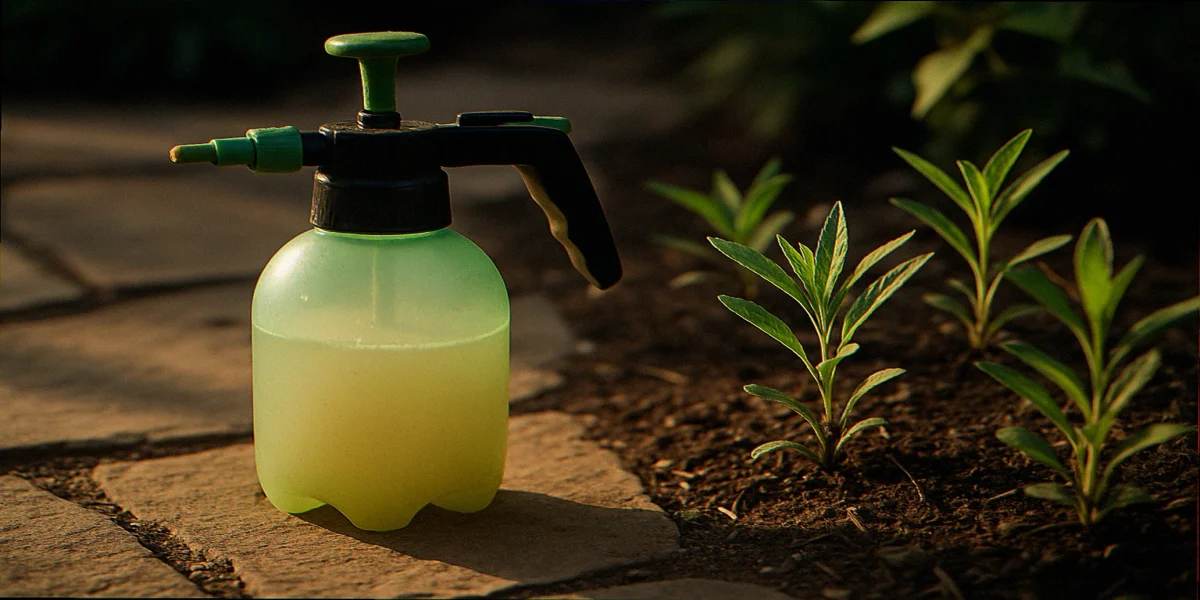
Week 1, garlic-clove spray. Crush a head of garlic into a quart of water, let it steep for 24 hours, strain through a coffee filter, and apply with a pump sprayer along the bed edges and on the foliage of vulnerable plugs. Reapply after any rainfall over a tenth of an inch.
Week 2, the same garlic spray. Habituation curves in cottontails show effectiveness drops sharply somewhere between week three and four of identical exposure.
Week 3, switch to a predator-urine-based commercial repellent. Coyote urine concentrate is what the deer-and-rabbit category at the big-box hardware stores actually sells. It works because cottontails imprint on predator scent as a danger signal. Apply along the perimeter, not on plant foliage; the smell is unpleasant up close.
Week 4, switch again. Capsaicin-based “hot pepper” sprays work for one week before the cottontail decides the burn is tolerable for a particular high-value plant. Use them for exactly one rotation cycle, then return to garlic.
Track which week you are on. A wall calendar in the garage with a check mark per Friday is more reliable than memory. If you miss a week, the cottontails notice within 48 hours.
When can I take the cages off?
Six weeks after planting is the conservative removal date for most species in the table above. By then, the plug has produced second-flush leaves with full defensive chemistry, the stems have started to lignify at the base, and the root system has extended below the danger zone. A plug planted on May 15 comes uncaged on June 26.
Run the squeeze test before you pull the wire. Pinch a stem at its base between thumbnail and forefinger. If it feels woody and you cannot crush it easily, the plant has lignified. If it still feels fleshy like a young weed, leave the cage on for another seven days and re-test.
Three exceptions extend the cage window. Plugs planted into bone-dry soil that limped through May should stay caged until they show vigorous second growth. Plugs in beds adjacent to dense cottontail cover (brush piles, deck skirting, woodpiles) face heavier pressure and warrant an extra two to three weeks. Plugs of any species in the Asclepias genus benefit from a full eight weeks because the latex defense takes longer to develop than aromatic oils do.
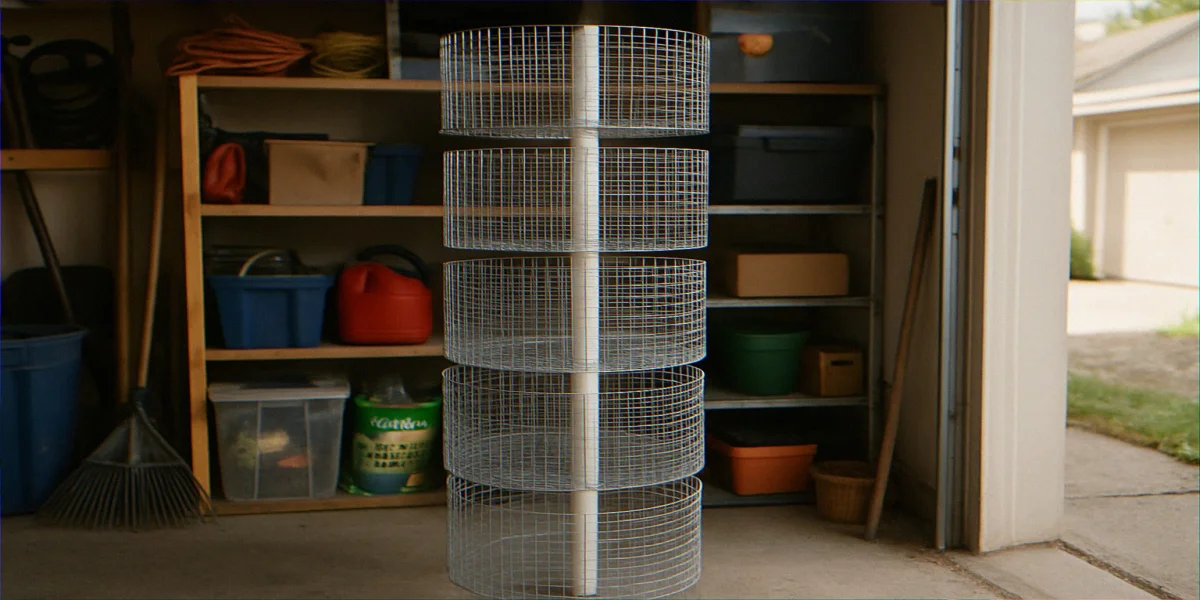
Save the cages. Stack them in the garage on a length of PVC pipe to keep the cylinders open. You will replant beds every spring, and a stockpile of last year’s cages turns plug protection from a forty-minute build into a five-minute deploy.
What about HOAs and the “junk yard” complaint?
This is the question that stops more native gardeners than the rabbits do. A bed full of bare wire cylinders in May reads as “construction zone” to a neighbor whose mental model of landscaping is mulch beds with three hostas. The HOA letter that follows is real and exhausting.
Three small choices defuse the look. First, use galvanized steel hardware cloth rather than the bright shiny aluminum kind. Galvanized goes matte gray within a week of weather and reads as garden infrastructure rather than as wire. Second, drop a one-inch layer of pine straw mulch right up against the base of each cage. The mulch ring connects the cages visually so the bed reads as intentional landscaping rather than scattered fencing. Third, post a small wooden sign at the bed edge that says “Pollinator Habitat, Establishing 2026” or whatever year applies. Signage shifts the neighbor’s read from “what is wrong with their yard” to “they are doing something on purpose.” If your HOA has bylaws restricting landscaping, document the bed as a pollinator garden in writing before the cages go up. See the workflow in HOA Sent a Letter About Your Native Garden? Do This for the documentation language that holds up at board meetings.
By July the established plugs will have outgrown the cages and the cylinders come out. The neighbor sees flowering pollinator plants and forgets the May construction-zone phase. The bet of one ugly month for five beautiful months is the same bet every native gardener makes and wins.
The same curb-appeal logic applies to the second-year design choices in Curb Appeal for Native Gardens: 5 HOA-Friendly Designs. Borders, signage, and pathway choices that make ecological function look like deliberate landscaping rather than neglect.
The five mistakes that wreck the cage system
- Buying cages that are too short. An 18-inch cylinder is not tall enough; a cottontail standing on hind legs reaches twelve inches comfortably and can pull stems through the open top. Twenty-four inches is the minimum. Thirty inches is better for species like blazing star that bolt fast.
- Skipping the soil-pin. A cage that sits on the surface gets nosed up by a determined rabbit in about three nights. Pushing the bottom edge one inch into the soil and adding two bamboo stakes is the difference between effective protection and theater.
- Letting the plant grow into the wire. Stems pressed against hardware cloth get rubbed raw and become entry points for fungal infection. Take cages off when the plant fills the cylinder, not three weeks later. If the plant explodes faster than you expected, transplant the cage to a slower-growing plug.
- Storing cages flat for the winter. Hardware cloth permanently deforms if you stack it flat with weight on top. Vertical storage on a pipe or hung from a hook keeps the cylinders round and ready for next spring.
- Ignoring the perimeter. Cages defend the plug. The rest of the bed. The mulch path, the bed edge, the strip of seedlings you started from direct sow. Still needs the scent rotation. A defended plug surrounded by unprotected seedlings is half a system.
What changes after one season of cage discipline
The yards I see succeed at native plant establishment all share one thing: the gardener treats the first six weeks after planting as a separate phase with separate rules. Cages, rotation, calendar, squeeze test, removal date. After that first season, the second-year plants need almost no protection. By year three, the bed runs on its own.
The economics work out fast. A typical spring native plug order runs $180 to $400. Losing 30% of plugs to cottontail browse. Which is what happens to uncaged beds in suburban yards with rabbit pressure. Costs $54 to $120 before you account for replacement labor. The hardware cloth and bamboo for the season costs about $50 and protects everything. The cages last five to seven seasons before the galvanizing fails. You are spending ten dollars a year to save a hundred.
The hidden return is psychological. Watching a plug get clipped overnight when you spent a Saturday planting it is the moment that breaks most new native gardeners. Walking out at dawn to see every plug still intact behind its cage is the moment that keeps them planting next year. Pair this protection workflow with the slug-prevention tactics in Stop Slug Damage on Native Seedlings, and the early-season casualty rate drops far enough that the bed starts to feel inevitable instead of fragile.
The wider context. That first-year browse is the single biggest reason backyard native plant beds fail. Is documented in Xerces Society guidance on establishing native plant gardens. The fix is not “find rabbit-resistant species.” The fix is treating every plug as vulnerable for six weeks and then letting the established plant defend itself.
For the broader long-term rabbit-management toolkit beyond plug protection, see 7 Humane Ways to Keep Rabbits Out of Your Garden. For an analogous approach with the larger browser, the deer-resistant ranked list in 15 Deer-Resistant Native Pollinator Plants covers species choice rather than physical protection. And if you have spotted what looks like a rabbit nest in the lawn rather than browse damage on plants, read Cottontail Nest in Your Lawn: Skip the Mow for 3 Weeks first. The nest is a different situation requiring a different response.
FAQ
How tall does the cage need to be for cottontails?
Twenty-four inches is the working minimum. Eastern cottontails reach about twelve inches when fully extended on hind legs, and the extra height prevents them from clipping stems pulled through the open top. Thirty-inch cages are better for fast-growing species like Liatris spicata that may exceed twenty-four inches in their first season.
Can I use chicken wire instead of half-inch hardware cloth?
No. One-inch chicken wire allows cottontail kits to squeeze through openings. Half-inch hardware cloth blocks adults and kits. The price difference is about fifteen dollars per twenty-five-foot roll, and the protection is dramatically better.
Will rabbit repellent sprays hurt pollinators?
Garlic-clove and capsaicin sprays applied to foliage in the early morning dry within an hour and do not affect bee or butterfly visits later in the day. Predator-urine sprays should be applied only at the bed perimeter, never on plant tissue, because the scent can deter pollinators in addition to rabbits. Avoid any product labeled as a broad-spectrum pesticide.
Do I need cages on a fenced yard?
Probably yes, for two reasons. Most suburban fences have a one-to-two-inch gap at ground level that cottontails slip through, and many cottontails establish residence inside fenced yards before the fence goes up. Run the squeeze test on a few uncaged plugs in week three; if you see no clipped stems, you can save cages on the rest.
What if the cage falls over?
Re-stake immediately. A cage knocked sideways for even one night exposes the plug. The two-bamboo-stake system prevents most knockdowns, but high winds, dogs, and the occasional neighborhood child can still tip a cage. Walk the bed daily for the first two weeks.
Want More Wildlife Garden Tips?
Join 5,000+ nature lovers getting our weekly tips on creating wildlife-friendly gardens.
No spam, unsubscribe anytime. Privacy Policy
Emma Harrington
Emma Harrington is a wildlife habitat researcher and content editor with a passion for backyard conservation. She has spent over a decade translating ecological science into practical tips anyone can follow — from selecting native plants to building wildlife-friendly habitats. Her work focuses on helping homeowners transform ordinary yards into thriving ecosystems for bees, butterflies, hummingbirds, and other beneficial wildlife.