
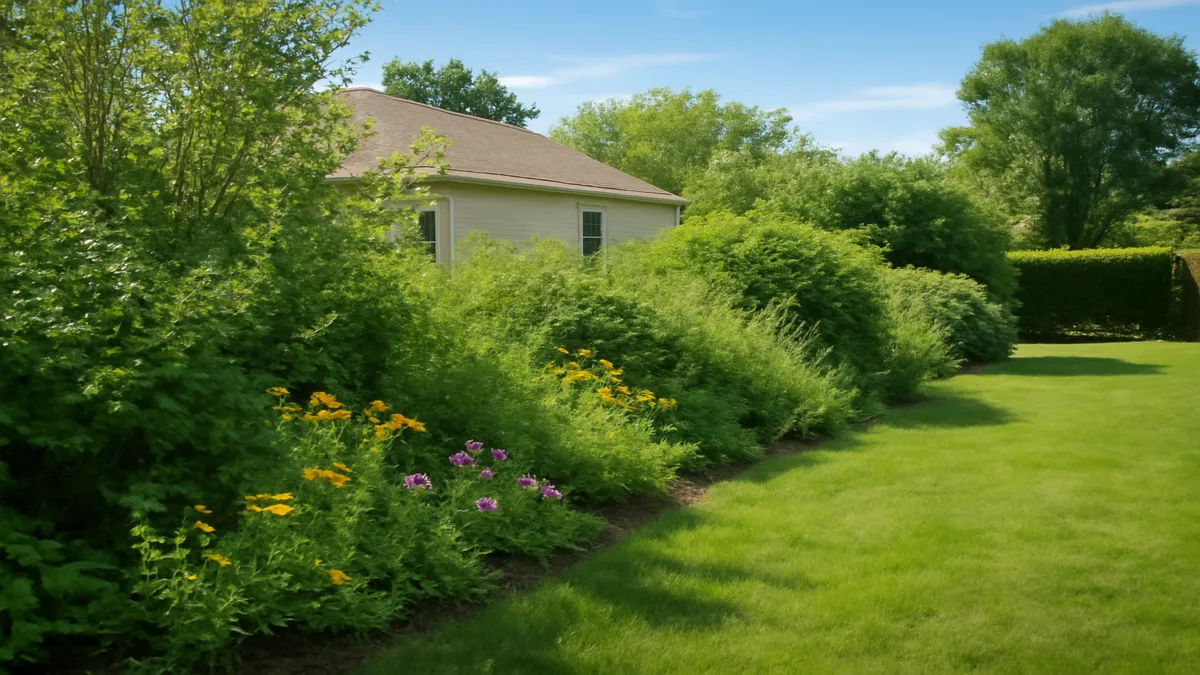
If you have ever watched a fox slip between two backyards at dusk, or listened to the high chatter of migrating warblers passing through a single tall oak in an otherwise treeless subdivision, you have witnessed a wildlife corridor in action, even if a tiny one. Corridors are the connective tissue of healthy ecosystems, the narrow green veins that allow animals to travel, feed, find mates, and escape danger across landscapes that humans have otherwise sliced into isolated fragments. For anyone over 40 who remembers when suburbs still felt like they bordered on wild country, the disappearance of those connections has been one of the quieter environmental losses of the last half century.
The good news is that wildlife corridors are one of the few conservation strategies that scale down as beautifully as they scale up. National parks connected by protected mountain passes are corridors, but so is a row of native shrubs between your fence and your neighbor’s. Biologists now understand that the cumulative effect of thousands of small, linked yards can match or even exceed the conservation value of single large protected areas, especially for birds, pollinators, amphibians, and small mammals. Your quarter-acre lot is not too small to matter. In fact, it might be exactly what the species passing through your neighborhood are waiting for.
This guide covers what a wildlife corridor actually is, why suburban fragmentation has become the single biggest threat to biodiversity in North America, and practical plans for building corridors at three different yard sizes. It also covers how to coordinate with neighbors, how to certify your habitat, and how to plan for the full calendar of wildlife needs, from spring nesting through winter shelter.
FREE: Wildlife Garden Starter Guide
Get our 12-page PDF with the 25 best plants for pollinators, simple habitat tips, and a printable checklist — all 100% free.
No spam. Read our Privacy Policy.What Is a Wildlife Corridor?
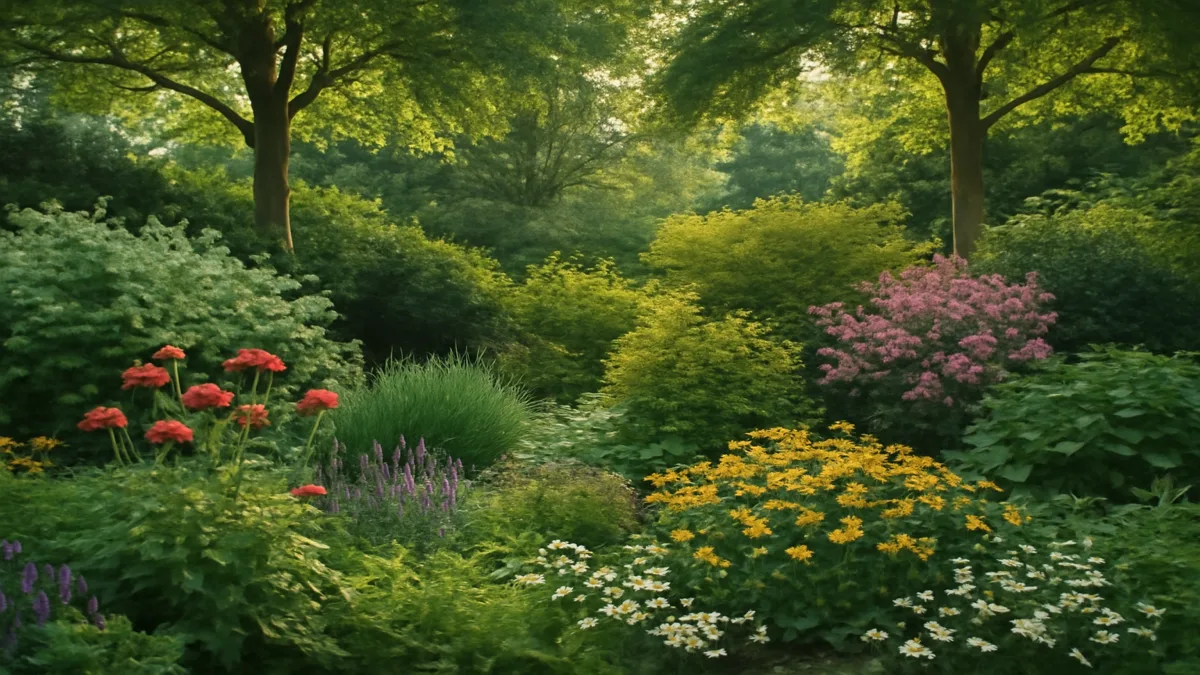
A wildlife corridor is a stretch of connected habitat that allows animals to move safely between larger habitat areas. That movement might be a chipmunk traveling fifty feet from one woodpile to another, a migrating warbler using a line of backyard trees as stepping stones across a subdivision, or a deer herd shifting seasonally between a forest preserve and a riparian buffer. What makes a corridor different from just “some plants” is continuity. Animals using the corridor must be able to travel its full length without crossing a dangerous gap of open lawn, pavement, or hostile territory.
The scientific understanding of corridors emerged in the 1980s as biologists started documenting what was happening in fragmented landscapes. Species populations isolated in small habitat patches were going locally extinct at alarming rates, even when the patches themselves seemed intact. The missing ingredient turned out to be gene flow and recolonization, both of which require the ability to move between patches. Without corridors, a patch is essentially an island, and islands lose species over time.
At the scale of a neighborhood, corridors look nothing like the wide green swaths of a national wildlife refuge. They are hedgerows, weedy ditches, lines of mature trees, streamside vegetation, and adjacent flower beds whose owners never realized they were participating in a landscape-scale conservation project. A corridor can be as narrow as the fence line between two properties, as long as the vegetation is dense enough and continuous enough to provide cover.
Why Suburban Fragmentation Is the #1 Biodiversity Threat
“The problem isn’t that we’ve paved over habitat. The problem is that we’ve paved between habitats. A hundred small woodlots separated by lawn and asphalt support drastically less wildlife than a hundred small woodlots connected by hedgerows, even though the total forested acreage is identical.”
Habitat fragmentation has surpassed habitat loss as the primary driver of wildlife decline in developed regions. The math is counterintuitive at first. A region might still have 30% tree cover after suburban buildout, which sounds healthy, but if that tree cover exists as a thousand disconnected yards with mowed grass between them, it functions ecologically like almost nothing. The interior species that need continuous canopy simply cannot use it.
Edge effects compound the damage. Small habitat fragments are almost all edge, which means they are hotter, drier, windier, and more exposed to invasive species and predators than interior habitat. A one-acre woodlot surrounded by lawn has essentially zero true forest interior. A one-acre woodlot connected to a neighbor’s hedgerow and then to a riparian corridor behaves ecologically like part of a much larger system.
This is why individual yard choices matter out of proportion to their size. Converting a tenth of an acre of lawn to native plantings, by itself, is nice but modest. Converting that same tenth of an acre in a way that connects to adjacent natural features can unlock habitat value across dozens of neighboring properties simultaneously.
The Five Elements of a Functional Corridor
Effective wildlife corridors share five structural elements regardless of scale. A backyard corridor has all of the same pieces as a continental-scale corridor, just compressed. Missing any one of these elements degrades the corridor’s usefulness considerably.
- Connected vegetation with no bare gaps greater than 20 feet. Most small wildlife will not cross wide open lawn because of predation risk. Gaps of 20 feet or less can be bridged by most birds, small mammals, and reptiles, but wider gaps break the corridor for many species.
- Native plants providing food and cover. Non-native ornamentals support roughly 10% of the insect biomass that natives support, and insects are the base of the terrestrial food web. A corridor of Bradford pears and Japanese barberry is far less functional than the same corridor planted in oaks, viburnums, and native grasses.
- Vertical layering including canopy, understory, and ground cover. Different species use different heights. Warblers forage in canopy, thrushes and cardinals use understory, and many mammals and amphibians need ground-level cover. Single-layer plantings serve far fewer species.
- Shelter continuous along the corridor’s length. Brush piles, dense shrubs, rock piles, hollow logs, and tall grass all provide the escape cover that prey species need to feel safe moving through. Corridors that are visually open from end to end are underused.
- Water sources spaced no more than 500 feet apart. A small pond, a birdbath, a shallow depression that holds rain, or a dripping hose over a saucer all qualify. Water is often the limiting factor in suburban corridors.
If you are planning to include a water feature, our guide to building a wildlife pond covers design, depth, and species-specific considerations in detail.
Corridor Design by Yard Size
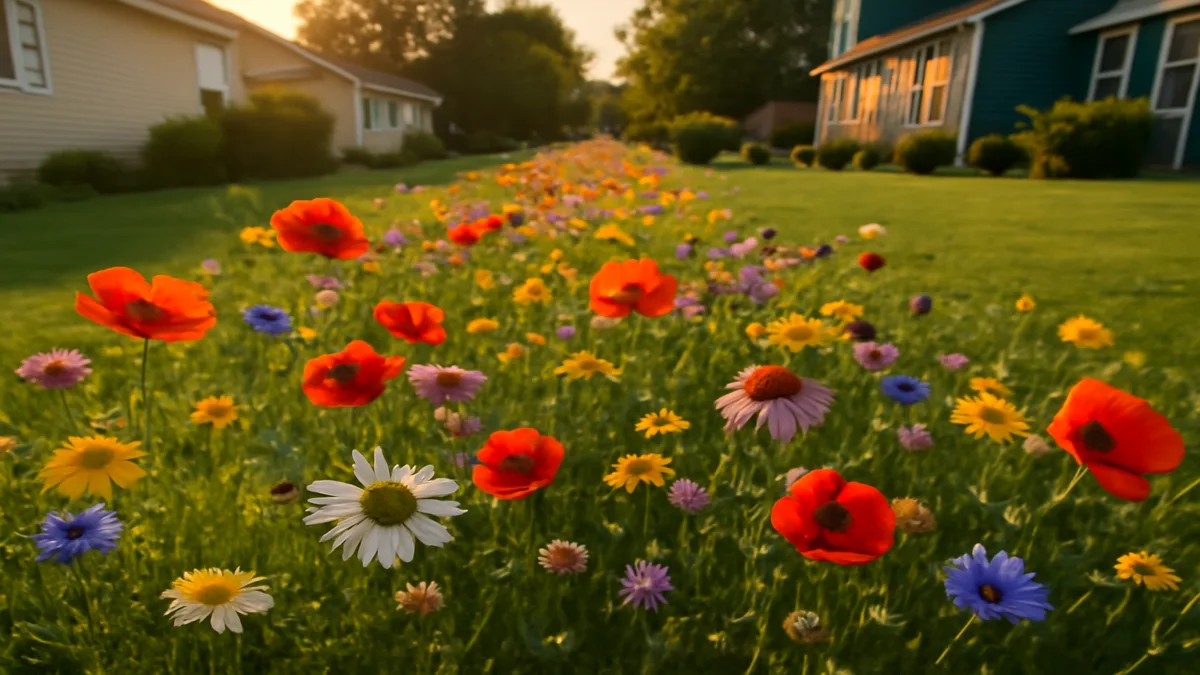
The scale of what you can accomplish depends heavily on available space, but every lot size has a workable corridor strategy. The critical question is not how much land you have, but how your land connects to whatever is next door.
Corridor Elements by Yard Size
| Yard Size | Primary Strategy | Key Plants | Water Feature | Target Species |
|---|---|---|---|---|
| Under 0.25 acre | Dense native shrub border, hedgerow | Viburnum, serviceberry, winterberry | Birdbath or dripper | Songbirds, pollinators |
| 0.25 to 0.5 acre | Hedgerow plus wildflower strip | Oak, dogwood, native grasses | Small pond (4×6 ft) | Add small mammals, frogs |
| 0.5 to 1 acre | Layered woodland edge plus meadow | Mixed canopy plus milkweed, goldenrod | Pond with shallow edge | Add nesting birds, butterflies |
| 1+ acre | Woodland corridor, meadow, pond system | Full canopy plus understory complex | Multiple water sources | Full food web including raptors |
Small Yards (Under 0.25 Acre)
A small yard corridor should focus on creating one unbroken line of vegetation along the full length of your property, ideally along the side fence lines that connect to neighboring yards. A mixed hedgerow of native shrubs 4 to 8 feet tall, planted in a band at least 4 feet wide, will support nesting songbirds, provide cover for small mammals, and offer enough continuity that birds will move along it rather than skipping over. Viburnums, elderberries, serviceberries, winterberry hollies, and native hazelnuts are all excellent choices.
Even on a small lot, adding a few larger shrubs or a small tree such as serviceberry or redbud creates vertical layering that dramatically increases the species diversity using the space. A birdbath or a small recirculating fountain, placed within three feet of shrub cover so birds can dart to safety, satisfies the water requirement.
Medium Yards (0.25 to 0.5 Acre)
A medium-sized yard can expand on the hedgerow concept by adding an interior feature such as a wildflower strip or a small native tree cluster. A 10-by-30-foot wildflower strip can support hundreds of pollinator species, and if it connects to the perimeter hedgerow, it effectively doubles the usable corridor width. Our companion guide on creating a pollinator garden covers plant selection and establishment in detail.
This scale also allows for a small pond, ideally 6 to 8 feet across with at least one shallow sloping edge so that amphibians, insects, and birds can use it safely. Even a preformed liner tucked into a corner of the yard, surrounded by native sedges and ferns, can become a genuine amphibian breeding site within two seasons.
Large Yards (1+ Acres)
Larger yards can support true woodland corridor design with layered canopy, understory shrubs, and ground cover across substantial stretches. A 1-acre lot can accommodate a wooded corridor along one side, a sunny meadow in the middle, and a water feature at the edge. This configuration replicates the ecotone, or transitional edge, that is the single most productive habitat type in most ecosystems. Planting a diverse array of native pollinator plants across these zones layers the bloom season and maximizes food availability for specialized insects.
At this scale, the habitat becomes rich enough to support breeding populations of species that would only pass through smaller properties, including several neotropical migrants, resident owls, and fox families.
Community Corridors: The Homegrown National Park
The single most powerful concept in home wildlife gardening over the last decade has been the Homegrown National Park idea, championed by entomologist Doug Tallamy. The premise is simple. If enough private landowners convert half their lawn to native habitat and coordinate along property lines, the combined acreage across the United States would exceed all existing national parks combined. The ecological impact would be transformative.
Coordinating with neighbors multiplies the value of your individual corridor enormously. A single backyard hedgerow is useful, but the same hedgerow extended across three adjoining lots becomes a functional ecological feature that supports breeding populations instead of just transient ones. Start by talking with immediate neighbors about shared fence-line plantings. Offer to help with plant selection or labor. Many neighbors who would never start their own habitat project are happy to participate when the plan is already sketched out.
Organizations like the National Wildlife Federation and the Wildlife Habitat Council offer resources specifically aimed at community-scale corridor projects, including signage, planning templates, and certification programs for neighborhoods and larger developments. NWF’s Certified Wildlife Habitat program has registered over 275,000 yards, schools, and public spaces across North America.
Plants That Make Corridors Work
Plant selection is where good intentions meet ecological outcomes. The corridor must be built from species that support insects, fruit, seeds, and nesting, which in practice means native plants matched to your region and soil. Here are the categories and reliable choices for most of the eastern and central United States. Consult a local native plant nursery for species adapted to your specific area.
- Canopy trees: Oaks (host more insect species than any other tree genus), maples, hickories, black cherry, American elm
- Understory trees: Serviceberry, redbud, flowering dogwood, American hornbeam, pawpaw
- Shrubs: Viburnums, elderberry, winterberry holly, spicebush, native hazelnut, arrowwood
- Perennials and wildflowers: Milkweeds, goldenrods, asters, coneflowers, bee balm, native phlox
- Native grasses: Little bluestem, switchgrass, Indian grass, prairie dropseed
- Ground covers: Wild ginger, wild strawberry, golden ragwort, native sedges
- Vines: Virginia creeper, native honeysuckle, passionflower, American wisteria
Oaks deserve special mention. A single mature oak supports over 500 caterpillar species, which in turn feed nearly every songbird species that breeds in its range. If you have room for one tree and want maximum conservation impact, plant a regionally appropriate oak.
Species Your Corridor Will Support
The wildlife that uses a well-designed corridor varies by region, but most suburban corridors support similar groups. Pollinators are typically the first to arrive, often within the same growing season, including native bees, butterflies, moths, and syrphid flies. Migratory birds use corridors as stopover habitat during spring and fall migration, which is why yards with mature trees often see remarkable warbler diversity in May.
Resident songbirds, including cardinals, chickadees, wrens, and woodpeckers, colonize corridors for nesting once the habitat reaches sufficient density, usually by year three or four. Small mammals such as chipmunks, rabbits, shrews, and occasional flying squirrels follow. Amphibians, particularly frogs and toads, establish breeding populations where water and cover coexist. Eventually, well-connected corridors attract occasional visits from larger species including foxes, owls, and migrating songbirds that would previously have bypassed the area entirely.
Year-Round Planning
The most common oversight in corridor design is focusing on summer and ignoring the rest of the calendar. Wildlife uses corridors differently in each season, and a functional corridor provides for all four. Spring needs include nesting materials, emerging insects for protein, and clean water for returning migrants. Summer needs include abundant insects and caterpillars to feed nestlings, plus continuous cover from predators.
Fall needs shift toward fruit, seeds, and fat-rich food for migrants preparing to travel. Winterberry, dogwoods, and crabapples become critical. Winter needs are shelter, thermal cover, and persistent seed heads. Resist the urge to cut back dead perennial stems in fall. They hold seeds, shelter overwintering insects in their pith, and provide structure for birds to cling to in snow. Leave them until April and cut them in small bundles to allow any remaining insects to emerge gradually.
What I get asked the most
How long does it take for a new corridor to attract wildlife?
Pollinators often arrive within weeks of the first blooms opening. Birds typically start using new habitat within the first year, especially for winter food and cover. Breeding bird colonization takes two to four years as vegetation matures enough to provide secure nesting sites. Full ecological function, including small mammal populations and occasional larger visitors, generally develops over five to ten years.
Do I need to remove all my lawn to create a corridor?
No. The goal is continuous cover along the corridor itself, typically along fence lines and property edges. Keeping some lawn for recreation is perfectly compatible with an effective corridor, as long as the corridor strip is continuous and wide enough to function. Many successful projects convert 30 to 50% of lawn area while keeping the rest.
What if my neighbors use pesticides or herbicides?
This is a real challenge but not a deal-breaker. Dense native plantings along the shared fence line create a buffer that reduces spray drift and provides alternative habitat. Over time, many neighbors become interested in reducing their own chemical use once they see the wildlife using your side of the fence. Conversations framed around health, not environmentalism, often land best.
How do I certify my yard as a wildlife habitat?
The National Wildlife Federation’s Certified Wildlife Habitat program requires food, water, cover, places to raise young, and sustainable practices. Homegrown National Park lets you pin your converted acreage on a public map to track collective progress. Both programs are inexpensive, include signage, and help normalize native habitat in suburban neighborhoods where tidy lawns are still the default aesthetic.
Will a wildlife corridor attract unwanted animals like rats or snakes?
Native corridor habitat primarily attracts native species that are almost universally beneficial. Rats are commensal with human trash and pet food and are not attracted to natural habitat per se. Snakes in most regions are harmless and control rodent populations. If you are in an area with venomous species, maintaining clear pathways through the corridor and avoiding heavy brush piles directly adjacent to the house eliminates almost all concerns.
Want More Wildlife Garden Tips?
Join 5,000+ nature lovers getting our weekly tips on creating wildlife-friendly gardens.
No spam, unsubscribe anytime. Privacy Policy
Emma Harrington
Emma Harrington is a wildlife habitat researcher and content editor with a passion for backyard conservation. She has spent over a decade translating ecological science into practical tips anyone can follow — from selecting native plants to building wildlife-friendly habitats. Her work focuses on helping homeowners transform ordinary yards into thriving ecosystems for bees, butterflies, hummingbirds, and other beneficial wildlife.