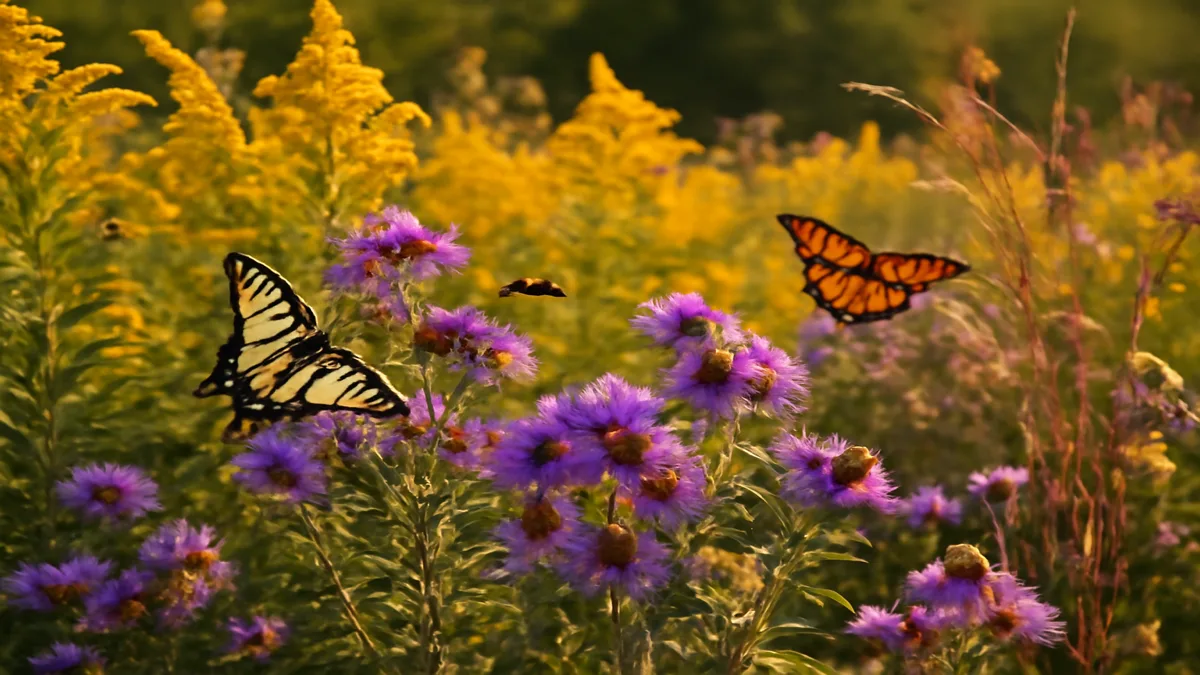
Choosing the right native pollinator plants for your specific region is the single most important decision you’ll make when designing a wildlife-friendly garden, and honestly, it’s the difference between a yard that hums with life and one that just sits there looking pretty for the neighbors. After spending years watching gardeners pour money into trendy nursery picks that flop by mid-July, I’ve come to believe that going regional is the smartest, most rewarding shift you can make in your outdoor space. Native plants evolved alongside your local bees, butterflies, and hummingbirds, which means they bloom when the pollinators need them, offer the right nectar chemistry, and survive your particular brand of weather without endless coddling.
Here’s what most gardening guides won’t tell you: a milkweed that thrives in Iowa might struggle in Arizona, and a salvia beloved by Texas hummingbirds may rot in a soggy New England spring. Pollinators have co-evolved with specific plants over thousands of years, forming partnerships so precise that some specialist bees only collect pollen from one plant family. When you swap out generic big-box-store annuals for genuinely regional natives, you’re not just gardening. You’re rebuilding broken food webs in your own backyard.
This complete guide breaks down the best native pollinator plants for every major US region, organized by season so you can keep something blooming from the first warm day in March through the last gasp of October. Whether you’re in coastal Maine, the Florida panhandle, the Iowa prairie, the Texas hill country, or a foggy California canyon, you’ll find species here that belong in your soil. Grab a coffee, take notes, and let’s match your zip code to the plants that will turn your yard into a pollinator destination.
FREE: Wildlife Garden Starter Guide
Get our 12-page PDF with the 25 best plants for pollinators, simple habitat tips, and a printable checklist — all 100% free.
No spam. Read our Privacy Policy.Why Regional Native Plants Matter More Than You Think
Before we dive into the regional lists, it helps to understand why “native” isn’t just a buzzword sprinkled across plant tags. Native plants are species that existed in your region before European settlement, meaning local insects, birds, and soil microbes recognize them as food and habitat. When entomologist Doug Tallamy studied caterpillar populations, he found that yards dominated by native plants supported up to eight times more caterpillars. And caterpillars are the protein bricks that build baby songbirds.
Region matters because the United States contains an extraordinary range of climates, soil types, and rainfall patterns. A “native plant” label slapped on a generic tag means very little if the species hails from 1,500 miles away. The most useful tool I’ve found is the Audubon Native Plant Finder, which lets you enter your zip code and get a curated list of true regional natives. Pair that with the Pollinator Partnership ecoregional planting guides, and you have a research foundation that beats any catalog.
“A garden full of regional natives is a kind of quiet act of restoration. You’re not just planting flowers. You’re rehiring a workforce of bees, butterflies, and birds that your neighborhood lost decades ago.”
Northeast Region: From Maine to Virginia
The Northeast. Think Connecticut, Delaware, DC, Maine, Maryland, Massachusetts, New Hampshire, New Jersey, New York, Pennsylvania, Rhode Island, Vermont, and Virginia. Has cold winters, humid summers, and a stunning diversity of native woodland and meadow plants. Many of these species also serve as host plants for monarch butterflies, swallowtails, and a host of specialist bees that rely on a single plant family.
For a four-season Northeast pollinator garden, build your plant list around these regional stars:
- Red Columbine (Aquilegia canadensis), Spring bloomer with nodding red-and-yellow flowers that hummingbirds and long-tongued bees adore. Tolerates partial shade and rocky soil.
- Wild Geranium (Geranium maculatum), A spring woodland classic for bees and butterflies. Forms gentle drifts under deciduous trees.
- Butterfly Weed (Asclepias tuberosa), Summer orange clusters that feed hummingbirds and bees, plus serve as a monarch host plant. Drought-tolerant once established.
- Wild Bergamot or Bee Balm (Monarda fistulosa), Lavender-pink summer blooms beloved by bees, butterflies, and hummingbirds. Spreads gently to fill gaps.
- Cardinal Flower (Lobelia cardinalis), Brilliant red summer-into-fall spikes that hummingbirds cannot resist. Loves moist soil and stream edges.
- New England Aster (Symphyotrichum novae-angliae), Critical fall fuel for migrating monarchs and specialist bees. Purple flowers light up October beds.
- White Turtlehead (Chelone glabra), Late-fall blooms shaped like tiny turtle heads, supporting bumble bees and Baltimore checkerspot butterflies.
If you can plant just three from this list, choose Butterfly Weed, Wild Bergamot, and New England Aster. Together they cover spring through fall and support an enormous range of pollinators. For more planting strategy, check out our guide on the best flowers for butterflies.
Southeast Region: Hot, Humid, and Bursting with Natives
The Southeast, Alabama, Arkansas, Florida, Georgia, Kentucky, Louisiana, Mississippi, North Carolina, South Carolina, and Tennessee. Gets long, sticky summers and mild winters that let pollinators stay active for nine or ten months a year. The native plant palette here is wildly diverse, ranging from coastal plain species to Appalachian foothill specialists.
Heat-tolerant, humidity-loving natives are non-negotiable in this region. Here are seven workhorse species to anchor your beds:
- Lanceleaf Tickseed (Coreopsis lanceolata), Cheerful yellow spring blooms that draw bees and small butterflies. Reseeds politely.
- Eastern Bluestar (Amsonia tabernaemontana), Soft sky-blue spring flower clusters with stunning gold fall foliage. Bees and butterflies love it.
- Indian Pink (Spigelia marilandica), Late spring red-and-yellow tubular blooms that hummingbirds line up for. Tolerates shade.
- Black-Eyed Susan (Rudbeckia hirta), Summer’s classic golden daisy, supporting butterflies and several specialist bees.
- Dense Blazing Star (Liatris spicata), Tall purple summer spikes that monarchs and swallowtails feed on for hours.
- Joe-Pye Weed (Eutrochium fistulosum), Towering pink-mauve summer blooms beloved by tiger swallowtails and bumble bees.
- Swamp Sunflower (Helianthus angustifolius), Late fall yellow burst that feeds native bees and butterflies when nothing else is left.
One pro tip for Southeast gardeners: Joe-Pye Weed gets enormous (six to eight feet) so plant it at the back of the bed where its size adds drama instead of chaos. Pair it with shorter Black-Eyed Susans in front for a layered, professional look.
Midwest Region: Prairie Powerhouses
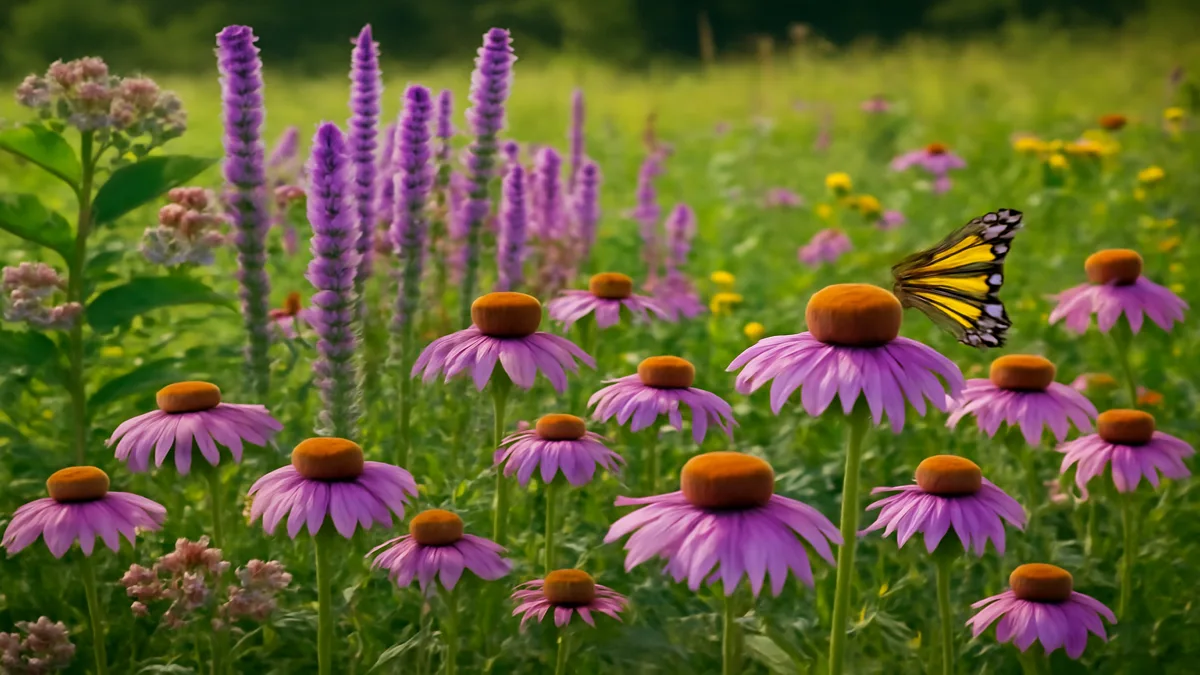
The Midwest, Illinois, Indiana, Iowa, Michigan, Minnesota, Missouri, Ohio, and Wisconsin. Sits on top of what was once tallgrass prairie, the most pollinator-rich ecosystem in North America. The deep, fertile soils and continental climate produce some of the toughest, longest-lived perennials in the country.
Midwest gardens benefit enormously from a “matrix” planting style. Large drifts of a few species rather than one-of-everything. These seven natives form the backbone of a low-maintenance, high-impact pollinator landscape:
- Golden Alexanders (Zizia aurea), Spring’s flat yellow umbels feed early bees and serve as a host plant for black swallowtail caterpillars.
- Blue Wild Indigo (Baptisia australis), Tall spring spikes of indigo blue flowers that bumble bees pry open. Lives for decades.
- Rough Blazing Star (Liatris aspera), Summer purple wands that draw skippers, monarchs, and a parade of native bees.
- Common Milkweed (Asclepias syriaca), The single most important monarch host plant, plus its pink summer flowers feed dozens of bee species.
- Purple Coneflower (Echinacea purpurea), Long-blooming summer-into-fall workhorse for bees, butterflies, and seed-eating birds like goldfinches.
- Smooth Blue Aster (Symphyotrichum laeve), Lavender-blue fall flowers that support specialist bees and tail-end migrating butterflies.
- Stiff Goldenrod (Oligoneuron rigidum), A keystone late-season species feeding bumble bee queens preparing for winter.
Midwest readers, please don’t fear goldenrod. It does NOT cause hay fever (that’s ragweed, an entirely different plant). Goldenrods are among the most important fall food sources on the continent, and your sneezing neighbor is misidentifying the culprit. For a deeper dive into design, our pollinator garden guide walks through layout strategy.
Southwest Region: Arid, Tough, and Surprisingly Floriferous
The Southwest, Arizona, New Mexico, Oklahoma, and Texas. Covers everything from Sonoran desert to Hill Country limestone to short-grass prairie. These gardens demand drought tolerance, heat tolerance, and an honest acceptance that you can’t grow Northeastern woodland plants here, no matter how cute they looked at the garden center.
The good news is that Southwest natives put on a flower show that rivals any region, especially when monsoon rains hit. Build your beds around these seven proven performers:
- Antelopehorn Milkweed (Asclepias asperula), Spring host plant for both monarchs and queen butterflies. Unusual greenish-purple blooms.
- Indian Blanket (Gaillardia pulchella), Spring and summer red-and-yellow daisies that bees and butterflies cover from sunup to sundown.
- Lemon Beebalm (Monarda citriodora), Spring-summer pinkish-purple blooms attracting hummingbirds, hawk moths, and bumble bees in droves.
- Purple Poppymallow (Callirhoe involucrata), Summer’s magenta cup flowers feed bees and host gray hairstreak butterfly caterpillars.
- Cowpen Daisy (Verbesina encelioides), A keystone summer species for diverse bees and butterflies. Self-seeds generously.
- Autumn Sage (Salvia greggii), Summer through fall blooms in red, pink, or coral that hummingbirds defend like jewels.
- Common Sunflower (Helianthus annuus), The native annual sunflower feeding specialist bees, butterflies, and seed-loving birds in fall.
Autumn Sage in particular deserves a spot in every Southwestern yard. It blooms for nearly seven months, asks for almost no water, and keeps hummingbirds visiting your windows. Want more hummingbird-friendly options? See our roundup of the best flowers for hummingbirds.
West Coast Region: Mediterranean Magic
The West Coast, California, Oregon, Washington, and Nevada. Has a Mediterranean climate along the coast (wet winters, dry summers) and harsher inland conditions. Pollinator gardening here means embracing summer-dormant natives and timing irrigation carefully so you don’t kill drought-adapted species with kindness.
These five West Coast natives form the foundation of a low-water, high-pollinator garden:
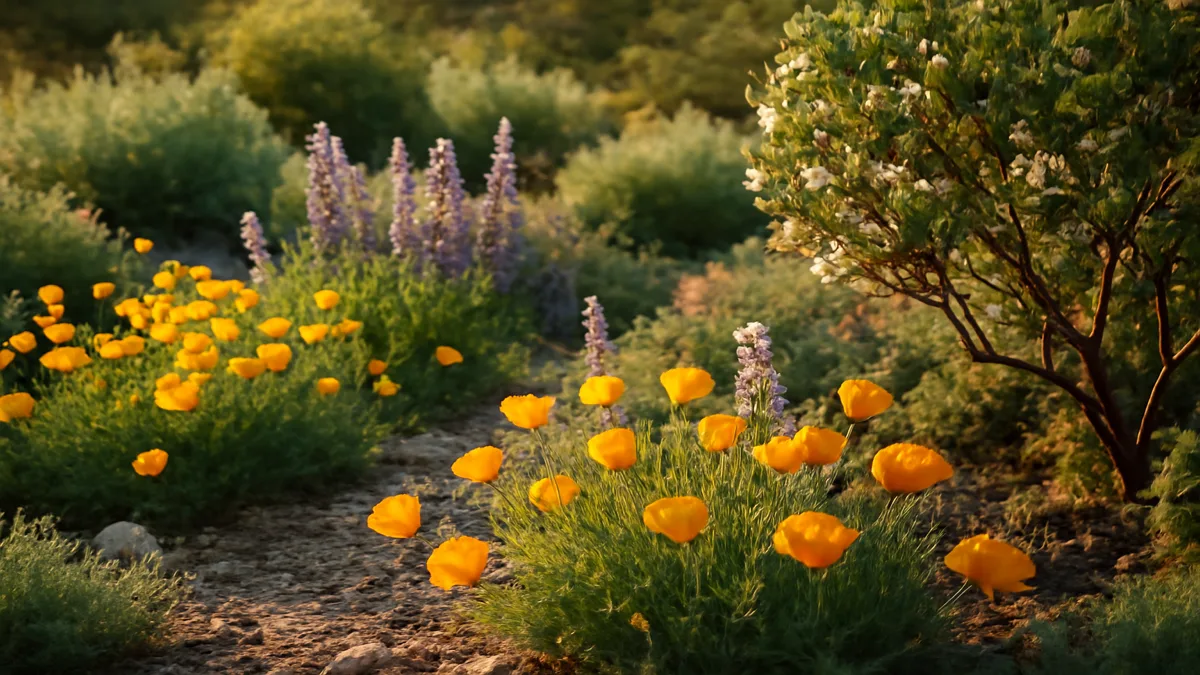
- California Poppy (Eschscholzia californica), The state flower, with brilliant orange spring blooms beloved by native bees. Self-seeds happily.
- Lupine (various Lupinus spp.), Spring blue, purple, or yellow spikes that host the endangered Karner blue butterfly and feed bumble bees.
- California Fuchsia (Epilobium canum), Summer-fall scarlet tubular flowers that hummingbirds fight over. Famously drought-tolerant.
- Manzanita (Arctostaphylos spp.), Winter-spring pink urn-shaped flowers feeding native bees and Anna’s hummingbirds when little else blooms.
- Coyote Mint (Monardella villosa), Summer pink-lavender blooms that attract butterflies and native bees, with a fragrance you’ll want to brush against.
Manzanita is the unsung hero of West Coast pollinator gardens. Because it blooms in winter, it provides a critical food source for hummingbirds and early-emerging bees during a season when most landscapes are dead. Plant it as a structural shrub and watch what happens between January and March.
Mountain States and Northern Plains: A Quick Note
If you garden in Colorado, Wyoming, Montana, the Dakotas, or Idaho, you fall into a transitional zone that borrows heavily from Midwest prairie species (Liatris, Echinacea, Rudbeckia) and Southwest drought-tolerant natives (Gaillardia, Salvia). Add region-specific stars like Rocky Mountain Bee Plant (Cleome serrulata), Showy Milkweed (Asclepias speciosa), and Blanketflower for a tough, beautiful pollinator garden built for short summers and bitter winters.
Regional Comparison: At-a-Glance Guide
Here’s a side-by-side look at the regions, their signature challenges, and their top three pollinator plants for quick reference:
| Region | Climate Challenge | Top 3 Native Pollinator Plants | Best Pollinator Group Served |
|---|---|---|---|
| Northeast | Cold winters, humid summers | Butterfly Weed, Wild Bergamot, New England Aster | Monarchs, bumble bees, hummingbirds |
| Southeast | Heat and humidity, fungal pressure | Black-Eyed Susan, Joe-Pye Weed, Swamp Sunflower | Swallowtails, native bees, late migrants |
| Midwest | Continental extremes, clay soil | Common Milkweed, Purple Coneflower, Stiff Goldenrod | Monarchs, specialist bees, songbirds |
| Southwest | Drought, intense heat | Autumn Sage, Indian Blanket, Antelopehorn Milkweed | Hummingbirds, hawk moths, queens |
| West Coast | Dry summers, wet winters | California Poppy, California Fuchsia, Manzanita | Native bees, Anna’s hummingbirds |
| Mountain/N. Plains | Short season, harsh winters | Showy Milkweed, Blanketflower, Liatris | Bumble bees, monarchs, skippers |
How to Source True Regional Natives (Without Getting Fooled)
One frustrating reality of pollinator gardening is that big-box stores often sell plants labeled “native” that are actually nativars. Cultivated varieties bred for color or compactness, sometimes at the expense of nectar quality. Worse, some “native” stock comes pre-treated with neonicotinoid pesticides that poison the very pollinators you’re trying to attract.
To avoid these pitfalls, follow a few simple rules. Buy from regional native plant nurseries (your state’s native plant society maintains lists). Ask explicitly whether plants are neonicotinoid-free. Choose straight species over fancy cultivars when possible. A plain old Echinacea purpurea will out-feed a double-petaled designer version every time. And consider growing from seed; many natives germinate easily after cold stratification, and a seed packet costs less than one nursery plant.
Choosing Your Regional Planting Mix
Building a pollinator-friendly yard with regional natives isn’t about chasing perfection. It’s about making one good plant choice at a time, in your soil, for your local pollinators. Start with three species from your region’s list, get them established, and then add three more next season. Within two or three years, you’ll have a garden that buzzes from March through October, hosts butterfly caterpillars you can watch grow, and provides actual habitat instead of just decoration.
The pollinators of North America are in genuine trouble. Habitat loss, pesticides, and climate disruption have hammered bee, butterfly, and hummingbird populations over the past two decades. But every yard planted with regional natives is a small refuge that adds up. If your neighborhood has fifty households and ten of them plant even a few square feet of native pollinator plants, you’ve created a corridor that monarchs and bumble bees can actually use.
If this guide helped you figure out what to plant, please share it with a gardening friend, your neighborhood Facebook group, or your local garden club. The more people who plant regional natives, the better the chances for the pollinators we all depend on. Pin it, post it, send it. Every share helps the cause.
Troubleshooting Common Problems
Even well-planned wildlife gardens run into predictable snags. The five issues below account for the majority of frustrated emails gardeners send to extension offices each year, along with the fixes that actually work. Try the simplest solution first and give any change at least two weeks before deciding it failed.
-
Problem 1: Birds ignore a newly installed feeder.
Solution: Most feeders take 2 to 6 weeks to be discovered. Move it within 10 feet of a shrub or small tree so birds have an escape perch, refill with fresh black oil sunflower seed (old seed goes rancid and smells wrong), and sprinkle a small handful on the ground below to signal a food source. Avoid hanging near reflective windows, which birds read as open sky. -
Problem 2: Squirrels empty the feeder within hours.
Solution: Install a weight-activated baffle or switch to a caged tube feeder sized for small songbirds only. Mount the feeder on a smooth metal pole at least 5 feet tall, 10 feet from any jumping platform, with a 15-inch stovepipe baffle below. Safflower seed and nyjer are naturally less attractive to squirrels than sunflower. -
Problem 3: Pollinator plants look healthy but attract no bees or butterflies.
Solution: Check whether the plants were pre-treated with neonicotinoid pesticides at the nursery; many big-box plants are, and the toxicity persists in pollen for months. Replace with plants labeled neonic-free or sourced from native nurseries. Also confirm you have at least three plants of the same species clustered together, since pollinators scan for color blocks, not single specimens. -
Problem 4: Birdbath water turns green or murky within days.
Solution: Scrub weekly with a stiff brush and a 1:9 vinegar solution, then rinse thoroughly. Keep water no deeper than 2 inches and place the bath in partial shade to slow algae growth. A small solar bubbler or dripper keeps water moving and cuts algae and mosquito larvae dramatically without electricity. -
Problem 5: Nest box stays empty season after season.
Solution: Confirm the entrance hole diameter matches your target species (1 1/8 inch for chickadees, 1 1/2 inch for bluebirds, 1 1/4 inch for house wrens). Mount 5 to 6 feet high on a pole with a predator baffle, facing east or southeast away from prevailing wind, with a clear flight path to the opening. Clean it out every fall after October 15.
If a fix does not resolve the issue after a full season, contact your state Cooperative Extension office or a local Audubon chapter. Both offer free identification and diagnostic help, and they track regional trends that national websites miss.
Frequently Asked Questions
How many native pollinator plants do I need to make a real difference?
You don’t need acres. Research shows that even a 10-by-10-foot patch of native plants can support meaningful pollinator activity, especially if it includes species that bloom in spring, summer, and fall. Aim for at least three different native species blooming in each season, planted in clusters of three to five plants of the same kind. Pollinators find clusters more easily than scattered single plants.
Are nativars (cultivated native varieties) just as good as straight species?
Usually no, especially for pollinators. Many nativars are bred for double petals, unusual colors, or compact growth, which can reduce or eliminate nectar and pollen availability. Double-flowered coneflowers, for example, often have no accessible nectar. When in doubt, choose straight species (the wild form). If you want a nativar, check whether university trials show it still feeds pollinators effectively.
Can I mix natives from different regions in the same garden?
You can, but it’s not ideal. Plants from far-away regions may struggle in your climate, and the pollinators they evolved with don’t live in your area, so much of the ecological benefit is lost. Stick to your own region’s natives for at least 70 percent of your pollinator garden, and treat plants from other regions as occasional accents rather than the foundation.
When is the best time to plant native perennials?
For most of the country, fall is the ideal planting window. Cool temperatures and seasonal rain help roots establish before summer stress arrives. Spring planting also works well, especially in the upper Midwest and Northeast where winter is too harsh for fall transplants. Avoid planting during the peak heat of summer unless you can commit to consistent watering for the first six weeks.
Do native pollinator plants really need less water than non-natives?
Generally yes, once established (usually after one full growing season). Native plants evolved with your region’s rainfall patterns, so their root systems and leaf structures are designed for local conditions. Drought-adapted natives like Butterfly Weed, California Poppy, and Autumn Sage may need almost no supplemental water in a typical year, while moisture-loving natives like Cardinal Flower or Joe-Pye Weed will still need regular watering during dry spells.
Want More Wildlife Garden Tips?
Join 5,000+ nature lovers getting our weekly tips on creating wildlife-friendly gardens.
No spam, unsubscribe anytime. Privacy Policy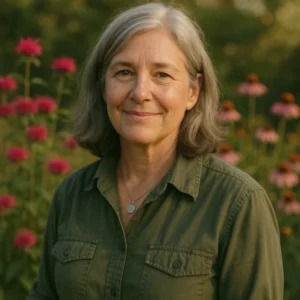
Emma Harrington
Emma Harrington is a wildlife habitat researcher and content editor with a passion for backyard conservation. She has spent over a decade translating ecological science into practical tips anyone can follow — from selecting native plants to building wildlife-friendly habitats. Her work focuses on helping homeowners transform ordinary yards into thriving ecosystems for bees, butterflies, hummingbirds, and other beneficial wildlife.