
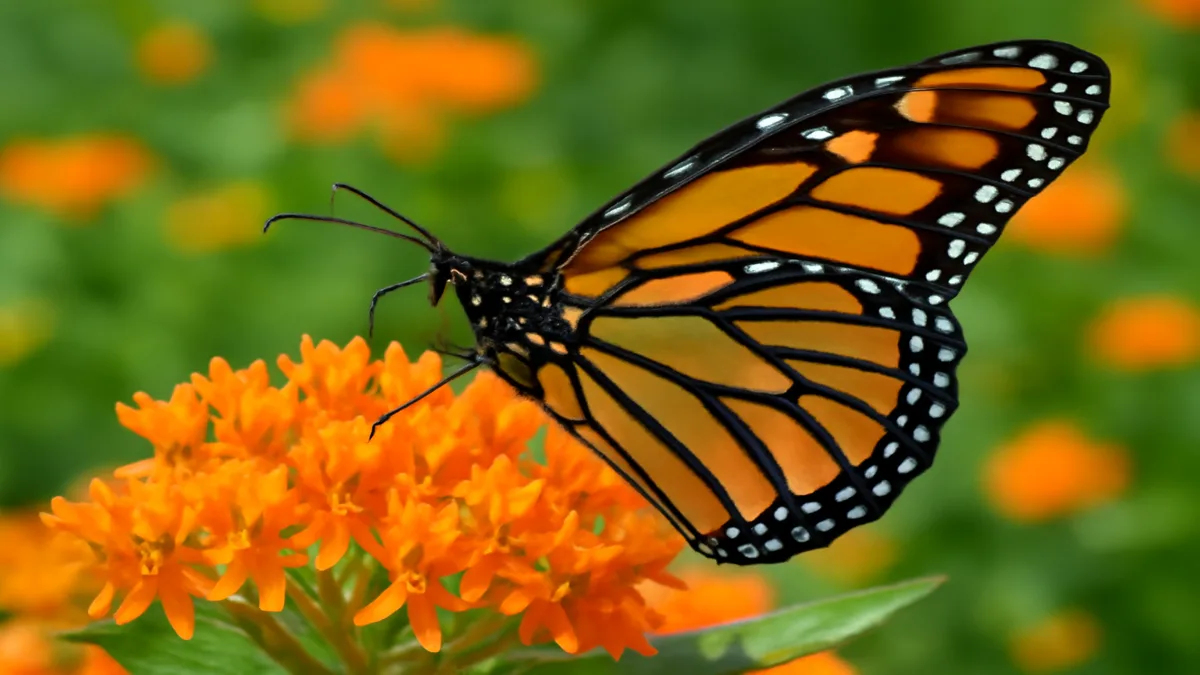
If you remember monarch butterflies as a common summer sight in your grandmother’s garden, the quiet vanishing of these orange wanderers has probably not escaped your notice. The statistics are sobering: eastern monarch populations have crashed by more than 90% since the 1990s, and the western population has fared even worse, dropping by over 99% from its historic numbers. Yet there is still time to act, and your backyard, porch planter, or suburban flower bed can genuinely make a measurable difference in reversing this decline.
Unlike most garden wildlife projects, helping monarchs is not a matter of hoping something shows up. Monarchs migrate along specific flyways, they require specific host plants for reproduction, and they respond almost immediately when those resources appear. Gardeners who plant the right species often report their first monarch visitors within the first season, and breeding activity by the second. For anyone over 40 who grew up watching monarchs drift through summer afternoons, this is one of the most rewarding conservation projects you can undertake from a lawn chair.
This guide walks through the two categories of plants monarchs need, the regional species that work best, the timing of planting and blooming, and the common mistakes that well-meaning gardeners make, including one plant being sold widely at big box stores that is actively harming monarch migration. By the end you will have a practical plan to turn any sunny patch into a certified monarch waystation.
FREE: Wildlife Garden Starter Guide
Get our 12-page PDF with the 25 best plants for pollinators, simple habitat tips, and a printable checklist — all 100% free.
No spam. Read our Privacy Policy.Why Monarchs Need Two Different Kinds of Plants
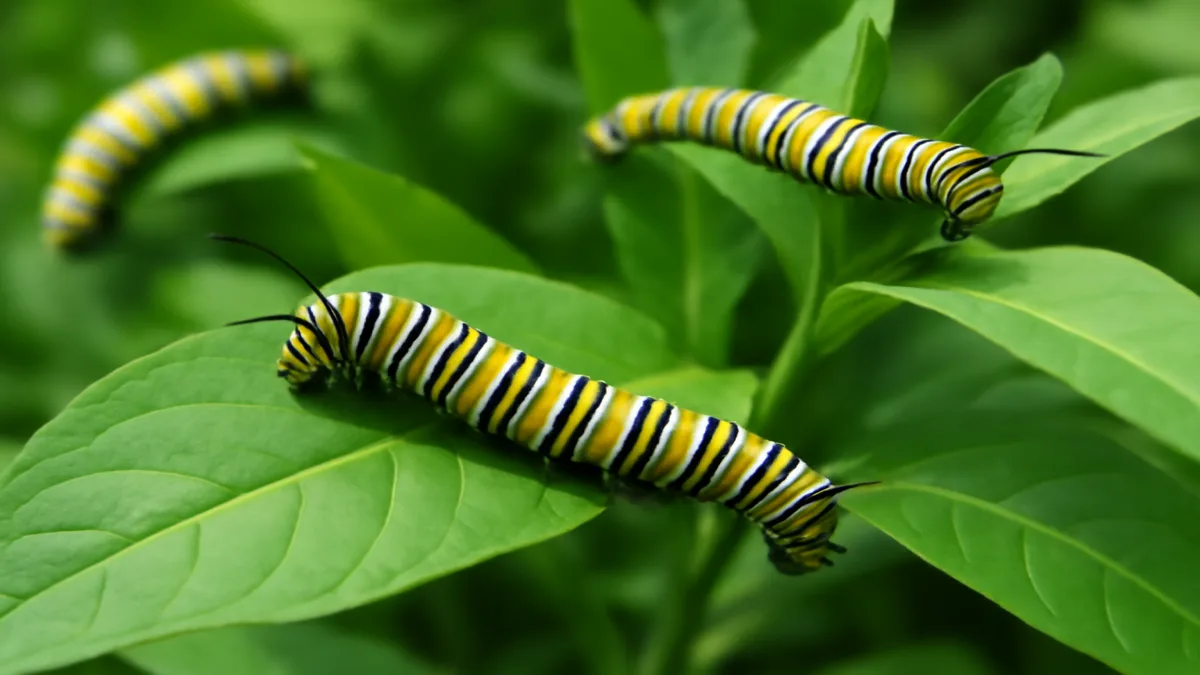
The single most important concept in monarch gardening is that adult butterflies and caterpillars eat completely different things. Adult monarchs are generalist nectar feeders who will sip from hundreds of flower species, but monarch caterpillars are specialists. They can only digest one genus of plant on earth: Asclepias, commonly called milkweed. Female monarchs will only lay eggs on milkweed because any other plant would starve their young.
This means a truly functional monarch garden needs both host plants and nectar plants. A yard planted only with zinnias and lantana will feed passing adults but produce zero next-generation monarchs. A yard with only milkweed will raise caterpillars but leave the emerging adults struggling to fuel the next leg of their journey. The magic happens when both coexist within a few square feet of each other, creating a complete life cycle station right outside your kitchen window.
The monarch migration itself is one of the most astonishing journeys in the natural world. Eastern monarchs travel up to 2,500 miles from Canada and the northern United States down to the oyamel fir forests of central Mexico. Western monarchs winter in coastal California groves. No single butterfly makes the round trip. Instead, four to five generations are born, breed, and die along the way, with one “super generation” making the long autumn push south. Every generation, from the first spring caterpillar to the overwintering adult, depends on the plants in yards like yours.
Host Plants: The Milkweed Family
Milkweed is the entire foundation of monarch reproduction. The plant contains cardenolides, a class of toxic steroids that monarch caterpillars absorb and retain through adulthood, making them unpalatable to most predators. Different milkweed species contain different concentrations of these compounds, and each region has native species that evolved alongside local monarch populations. Matching your milkweed to your region is one of the most important decisions you will make.
For a complete overview of attracting all butterfly species, see our guide on how to attract butterflies to your garden, which covers habitat basics beyond monarchs specifically.
Regional Milkweed Guide
| Species | Scientific Name | Best Region | Bloom Color | Soil Needs |
|---|---|---|---|---|
| Common Milkweed | Asclepias syriaca | Midwest, Northeast | Pink-mauve | Average, well-drained |
| Butterfly Weed | Asclepias tuberosa | Most of US | Bright orange | Dry, sandy, drought-tolerant |
| Swamp Milkweed | Asclepias incarnata | East, Midwest | Pink clusters | Wet, boggy, clay |
| Showy Milkweed | Asclepias speciosa | West, Plains | Pink-purple | Dry to moderate |
| Whorled Milkweed | Asclepias verticillata | Central, East | White, late bloom | Dry, thin soils |
| Tropical Milkweed | Asclepias curassavica | AVOID north of Florida | Red-orange | Warm, frost-free |
Common Milkweed is the archetypal monarch plant and the species most people picture when they hear the word milkweed. It spreads aggressively by rhizomes, which makes it ideal for dedicated pollinator beds but problematic in tidy borders. Butterfly Weed is a better choice for smaller gardens because it forms tidy clumps rather than running. Its brilliant orange blooms also make it one of the more ornamental native perennials available.
Swamp Milkweed is criminally underused. Despite the name it will thrive in regular garden soil and tolerates ordinary watering just fine. Its fragrant pink blooms appear in July and August, which coincides perfectly with peak monarch breeding. If you have even a slightly damp corner, this is often the most productive milkweed species by sheer egg count.
Showy Milkweed is the default choice west of the Rocky Mountains and contains some of the highest cardenolide concentrations of any species, giving caterpillars that feed on it exceptional predator protection. Whorled Milkweed is a fine-textured, late-blooming species that extends egg-laying opportunities into the shoulder seasons.
The Tropical Milkweed Problem
“Tropical milkweed is the worst gardening mistake monarch lovers are unknowingly making. It does not freeze back in warm climates, which means it accumulates OE spores season after season and signals monarchs to break their migratory diapause. We are watching well-intentioned gardeners create year-round disease reservoirs.”
Tropical Milkweed (Asclepias curassavica) deserves a section of its own because it is sold in nearly every nursery in North America, it is attractive, and it is actively harmful outside of its true tropical range. The issues are twofold. First, because it does not die back in winter anywhere warmer than USDA zone 9, it harbors a protozoan parasite called Ophryocystis elektroscirrha, or OE, which builds up on the leaves and can reach lethal concentrations. Second, its year-round presence sends a biological signal to monarchs that it is safe to stop migrating and start breeding, which disrupts the entire migration cycle and leaves broken-winged, disease-weakened populations stranded in regions that will freeze them out.
If you already have tropical milkweed and cannot bring yourself to remove it, cut it to the ground every fall in October at the latest to mimic the natural die-back of native species. Better yet, replace it entirely with a regionally appropriate native. Your monarchs will thank you with healthier offspring and a properly timed migration.
Nectar Plants: Fueling the 2,500-Mile Journey
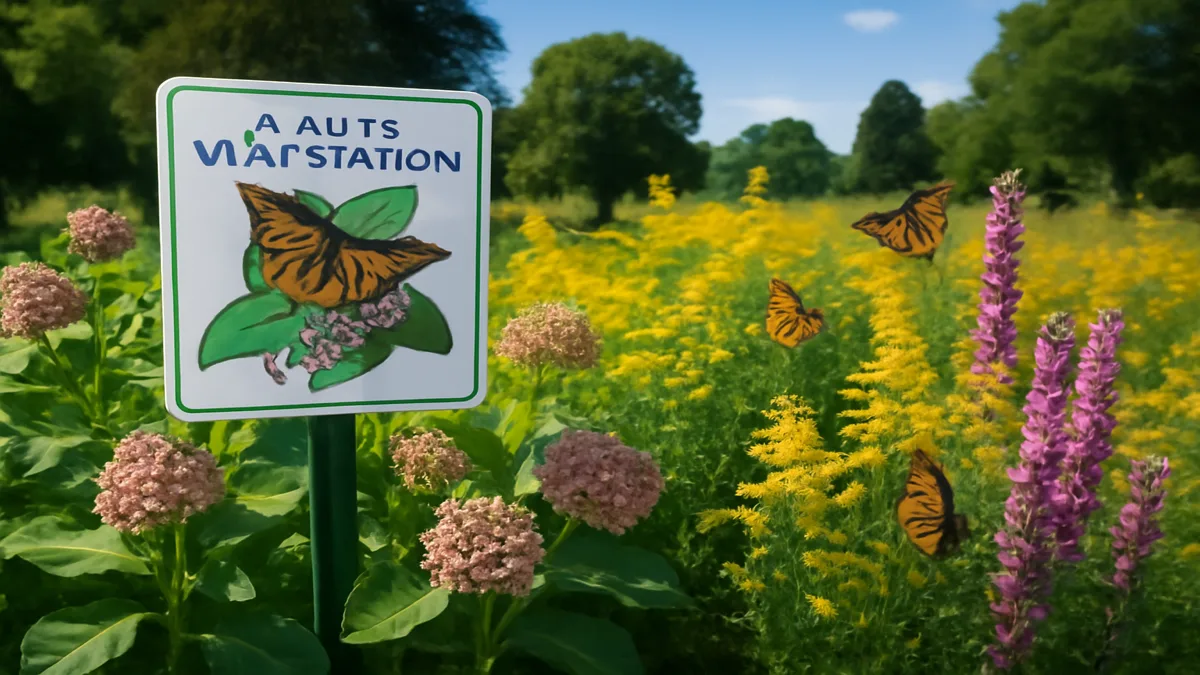
Adult monarchs need enormous amounts of nectar to power migration. A single butterfly might consume its body weight in nectar every day, and the fall generation must store enough fat reserves to not only reach Mexico but also survive the entire winter there without eating. The plants that bloom during fall migration are arguably more critical than the ones that bloom during summer breeding, because they fuel the generation that carries the species forward.
For a broader look at butterfly-friendly flowers beyond migration support, our companion article on flowers for butterflies covers general nectar garden design.
Essential Nectar Plants by Season
- Goldenrod (Solidago species), The single most important fall fuel plant across the eastern flyway. Despite its unfair reputation for causing hay fever (ragweed is the real culprit), goldenrod produces abundant late-season nectar exactly when southbound monarchs need it most.
- Blazing Star (Liatris ligulistylis), Known among monarch enthusiasts as the “ultimate monarch magnet,” a single plant in full bloom can attract dozens of monarchs simultaneously.
- New England Aster (Symphyotrichum novae-angliae), Late fall powerhouse with rich purple blooms and high nectar sugar content.
- Zinnias, The only annual on this list, but indispensable for continuous color and nectar from midsummer until the first hard frost.
- Joe-Pye Weed (Eutrochium), Tall mauve flower heads that attract breeding-generation monarchs in late July and August.
- Purple Coneflower (Echinacea purpurea), Long bloom period from June through September with flat-topped landing pads perfect for nectaring.
- Ironweed (Vernonia), Deep purple blooms in August and September provide bridging nectar between summer and fall plants.
- Seaside Goldenrod (Solidago sempervirens), Critical for the Atlantic coastal migration corridor, salt-tolerant and productive into October.
Plants by Migration Path and Region
Where you live on the monarch flyway shapes which plants will have the biggest impact. The eastern monarch migration has three major phases, each with different plant priorities.
In the northern breeding range (Upper Midwest, Great Lakes, Northeast, southern Canada) from May through September, the priorities are common milkweed and butterfly weed as hosts, paired with summer nectar species like Joe-Pye weed, bee balm, purple coneflower, and early goldenrod. This is where three to four generations are born before the fall migrants emerge.
Along the fall migration corridor from Texas up through the central plains, the critical resource is nectar, not host plants. Late-blooming goldenrod, asters, zinnias, lantana, and Mexican sunflower are what turn an ordinary yard into a lifesaving fuel stop. Monarchs crossing this corridor in October are running on fumes, and gardens offering a quarter-acre of late-blooming nectar can hold dozens of resting butterflies overnight.
The overwintering habitat in the oyamel fir forests of central Mexico is largely beyond what home gardeners can influence directly, but donations to conservation groups like Monarch Watch and the World Wildlife Fund fund reforestation projects that protect these irreplaceable cathedral-like fir stands where millions of monarchs cluster each winter.
Incorporating native species into your broader habitat design also supports native bees, which are equally threatened. Our guide to native pollinator plants expands on the species overlap between monarch gardens and native bee habitat.
Creating a Certified Monarch Waystation
The organization Monarch Watch, based at the University of Kansas, runs a certification program for yards and public spaces that meet specific habitat standards. Certification is not required to help monarchs, but the criteria provide a useful checklist for knowing when your garden has reached a genuinely functional level. According to Monarch Watch, over 45,000 waystations have been certified across North America.
The core requirements for a Monarch Waystation are:
- A minimum of 10 milkweed plants, ideally from at least two different species for bloom staggering and food variety.
- At least 4 nectar plant species, with blooms covering spring, summer, and fall to support all migration phases.
- A sunny location with at least 6 hours of direct sun per day, since both milkweed and most nectar plants are sun-lovers.
- No pesticide use on the waystation plants, including systemic neonicotinoids that persist in tissue for months.
- A total area of at least 100 square feet, though it can be spread across multiple beds and containers.
- Proper plant density to provide cover and reduce predation on eggs and caterpillars.
- Official certification with Monarch Watch (currently $18), which includes a weatherproof sign for your garden.
Certification is less about the paperwork and more about joining a continent-wide network of people who are actively rebuilding the monarch habitat that has been lost. Research from the Xerces Society suggests that reconnecting fragmented breeding habitat through networks of small waystations is one of the most promising paths to population recovery.
Timing: When to Plant and What to Expect
Milkweed establishment takes patience. Most species are deep-rooted perennials that need a full season to settle in before blooming prolifically. Fall planting, between October and November in most of the country, gives seeds and root cuttings the winter stratification they need to emerge vigorously in spring. Spring planting, from March through April depending on latitude, also works but often produces weaker first-year growth.
Monarchs generally arrive in a given region 4 to 6 weeks after local milkweed begins blooming. If your milkweed flowers in early June, expect to see the first monarchs laying eggs in mid to late June. Eggs hatch into tiny caterpillars 3 to 5 days after being laid. Caterpillars feed for 10 to 14 days, passing through five growth stages called instars, before wandering away from the milkweed to form their chrysalis. The chrysalis stage lasts another 10 to 14 days, after which the adult emerges, dries its wings, and flies off to begin the cycle again.
By the calendar, a typical northern yard might see the first adults in late May, first eggs in early June, first new adults in early July, and peak activity from late July through early September, with the final southbound generation passing through in mid to late September.
Common Mistakes That Harm Monarchs
Well-intentioned gardening can unintentionally hurt monarchs. The most frequent errors include planting tropical milkweed (covered above), relying on butterfly bush (Buddleja) as a monarch plant. Butterfly bush provides nectar but is not a host plant for monarch caterpillars and in many regions is invasive, crowding out native nectar species that support broader pollinator communities.
Pesticide use is another serious issue. Even garden stores labeled “bee-friendly” often contain systemic insecticides that translocate into nectar and pollen. If you grow milkweed or nectar plants, buy from nurseries that explicitly certify their stock is free of neonicotinoids. Many big box store perennials have been treated, and the residues can kill caterpillars that feed on the leaves for months after purchase.
The urge to “clean up” the garden in late fall removes overwintering chrysalises and the leaf litter that sheltering insects rely on. Leave stems standing until late April, and rake leaves into garden beds rather than bagging them. Finally, resist the instinct to remove “ugly” caterpillars or webbing. Monarch caterpillars in their final instar are large, striped, and sometimes mistaken for pests. Learn to recognize them, and let them eat.
Frequently Asked Questions
How many milkweed plants do I need to actually help monarchs?
Monarch Watch recommends a minimum of 10 milkweed plants for certification, but biologically any number helps. A single milkweed plant in an otherwise barren neighborhood can produce dozens of adult monarchs over a summer. If space is limited, three to five plants of two different species is a realistic starting goal.
Will planting milkweed attract aphids and other pests?
Yes, milkweed typically hosts yellow oleander aphids, which are harmless to the plant and the caterpillars. Do not spray them. Blast them off with a strong water stream if populations get heavy, or leave them alone, as ladybugs and lacewings will usually control them within a few weeks.
Is it too late in the season to plant milkweed?
That depends on your region. In most of the country, fall planting from October through November is actually ideal for seed because cold stratification improves germination. Potted plants can go in anytime from spring through early fall, as long as they have six weeks before the first hard freeze to establish roots.
Do I need to hand-raise caterpillars indoors?
Most monarch researchers now recommend against indoor rearing except for educational purposes with small numbers. Wild-raised caterpillars produce stronger, better-oriented migrants. A good outdoor habitat with dense plantings provides natural protection from many predators without the health risks of indoor rearing.
What should I do if I find a monarch chrysalis in my garden?
Leave it alone. The chrysalis will hang for 10 to 14 days before the adult emerges. Do not touch, move, or disturb it. If it is in an awkward location like a lawn mower path, you can carefully attach the silk pad to a sheltered spot using a dab of hot glue, but otherwise nature handles the rest perfectly well.
Related reading
Want More Wildlife Garden Tips?
Join 5,000+ nature lovers getting our weekly tips on creating wildlife-friendly gardens.
No spam, unsubscribe anytime. Privacy Policy
Emma Harrington
Emma Harrington is a wildlife habitat researcher and content editor with a passion for backyard conservation. She has spent over a decade translating ecological science into practical tips anyone can follow — from selecting native plants to building wildlife-friendly habitats. Her work focuses on helping homeowners transform ordinary yards into thriving ecosystems for bees, butterflies, hummingbirds, and other beneficial wildlife.