
If you want to keep rabbits out of garden beds for good, you already know that cute little cottontail munching your lettuce isn’t nearly as charming as it looks on a greeting card. One pair of rabbits can produce up to 35 offspring in a single season, and a hungry doe will mow down a row of seedlings overnight. By the time you spot the damage, your tomato starts look like they’ve been through a paper shredder.
The good news is that you don’t need traps, poisons, or a pellet rifle to win this battle. After decades of trial and error in backyard plots across North America, gardeners and university extension agents have settled on a handful of humane strategies that actually work. The trick is layering them, because rabbits are persistent little creatures, and any single tactic eventually fails on its own.
In this guide, you’ll learn the seven proven methods that gardeners over 40 swear by, including the exact fence specifications that stop both cottontails and jackrabbits, the commercial repellents worth the $10 a gallon, and the herbs and perennials that send bunnies hopping the other direction. We’ll also cover what not to do, because some of the most popular advice on the internet is genuinely counterproductive.
FREE: Wildlife Garden Starter Guide
Get our 12-page PDF with the 25 best plants for pollinators, simple habitat tips, and a printable checklist — all 100% free.
No spam. Read our Privacy Policy.Why Rabbits Love Your Garden in the First Place
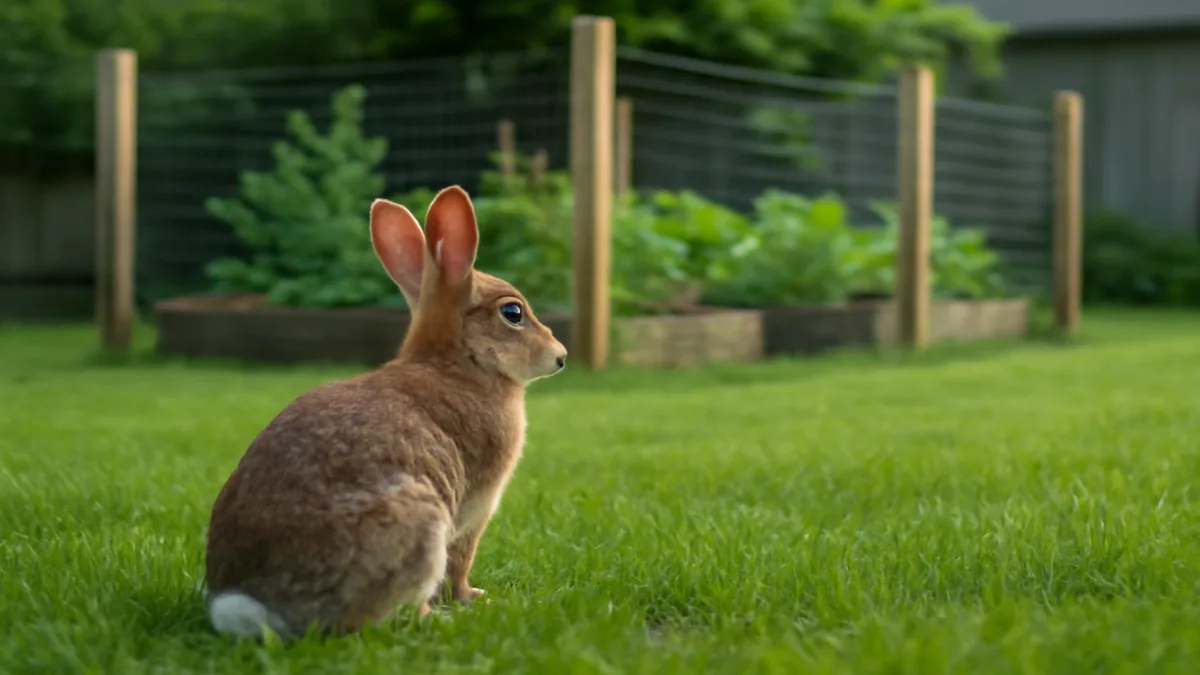
Before you spend a dime on fencing or repellent, it helps to understand what’s drawing rabbits to your yard. Cottontails and jackrabbits are prey animals, which means they’re hardwired to seek three things: tender greens, dense cover to hide in, and an escape route from predators. Your raised vegetable beds, mulched perennial borders, and overgrown corner behind the shed check every box.
Spring is peak damage season. Mother rabbits are nursing, juveniles are venturing out for the first time, and your garden is full of the soft new growth they prefer. Lettuce, beans, peas, carrot tops, broccoli, parsley, and basil are all rabbit candy. They’ll also nibble strawberries, gnaw the bark off young fruit trees in winter, and decimate flower beds full of tulips and pansies.
The other thing to know is that rabbits are creatures of habit. Once they establish a feeding route through your yard, they’ll return to it night after night. That’s why early intervention matters so much, and why a layered defense beats any single silver bullet.
“The most effective rabbit management combines exclusion, habitat modification, and repellents. No single method provides complete protection, but together they can reduce damage by 90 percent or more.”, University of Nebraska-Lincoln Extension
Method 1: Build a Rabbit-Proof Fence (The Gold Standard)
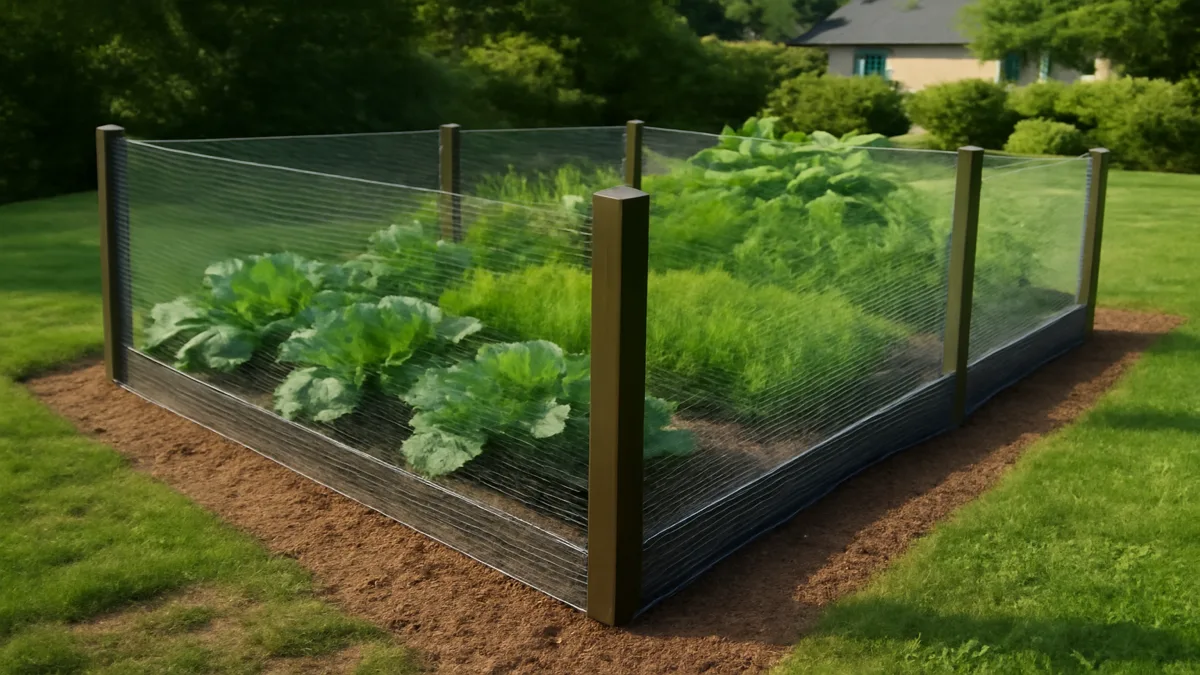
If you only do one thing on this list, make it a proper fence. Done right, a physical barrier is the only method that gives you near-total peace of mind. Done wrong, it’s a waste of a Saturday afternoon and about $150 in materials.
Here’s what the research from USDA APHIS and university extension services consistently recommends:
- Height: At least 30 to 36 inches above ground. A 24-inch fence will stop a casual cottontail, but jackrabbits can clear that without breaking stride.
- Mesh size: One inch or smaller. Better yet, use half-inch or quarter-inch galvanized hardware cloth, 19 or 20 gauge. Standard chicken wire has gaps wide enough for baby bunnies to squeeze right through.
- Underground barrier: Either bury the bottom 6 to 12 inches into the soil, or bend the bottom outward into an L-shaped apron pinned flat with landscape staples. Rabbits dig, and a fence sitting flush with the dirt is a doormat with extra steps.
- Posts: Drive metal T-posts every 6 to 8 feet for stability. Wood posts work too but require more digging.
For raised beds, you can build a hinged hardware cloth lid that flips up for harvesting. For larger plots, ring the perimeter and install a simple gate. Yes, it’s an investment of a weekend, but a properly built rabbit fence will last 10 to 15 years.
Fence Specifications at a Glance
| Component | Recommended Spec | What to Avoid |
|---|---|---|
| Height above ground | 30 to 36 inches | Anything under 24 inches |
| Mesh opening | 1 inch or smaller (1/2″ ideal) | Standard chicken wire gaps |
| Wire gauge | 19 to 20 gauge galvanized | Light-duty plastic netting |
| Buried depth | 6 to 12 inches OR L-apron | Fence flush with soil |
| Post spacing | Every 6 to 8 feet | Floppy unsupported runs |
| Expected lifespan | 10 to 15 years | Rust-prone uncoated wire |
Method 2: Use Commercial Repellents Strategically
Repellents are your second line of defense, especially for areas where fencing isn’t practical. The market is flooded with options, but the ones gardeners and extension agents consistently recommend cost about $8 to $11 per diluted gallon and fall into two categories: scent-based and taste-based.
The most effective products on the shelf right now are:
- Plantskydd, Blood-based formula that triggers a fear response in rabbits. Widely considered the most effective on the market and rain-resistant for up to 3 to 4 months.
- Bobbex-R Animal Repellent, Combination scent and taste deterrent with a strong track record in university trials.
- Liquid Fence Deer & Rabbit, A garden-center staple that works well when reapplied on schedule.
- Deer Off, Triple-action with putrescent egg, garlic, and capsaicin.
- Bonide Rabbit Repellent, Reliable taste-based option for ornamentals.
- Rabbit MACE, Triple-action formulation marketed specifically for cottontails.
One critical rule: never apply taste-based repellents directly to edible vegetables you intend to harvest. The active ingredients are unappetizing for a reason. Use them on ornamentals, on the perimeter of vegetable beds, and on the fencing itself rather than on the lettuce you plan to eat next week.
Reapply after heavy rain and rotate between two different products every few weeks. Rabbits get used to a single scent surprisingly fast, and rotation keeps them off-balance.
Method 3: Plant What Rabbits Hate
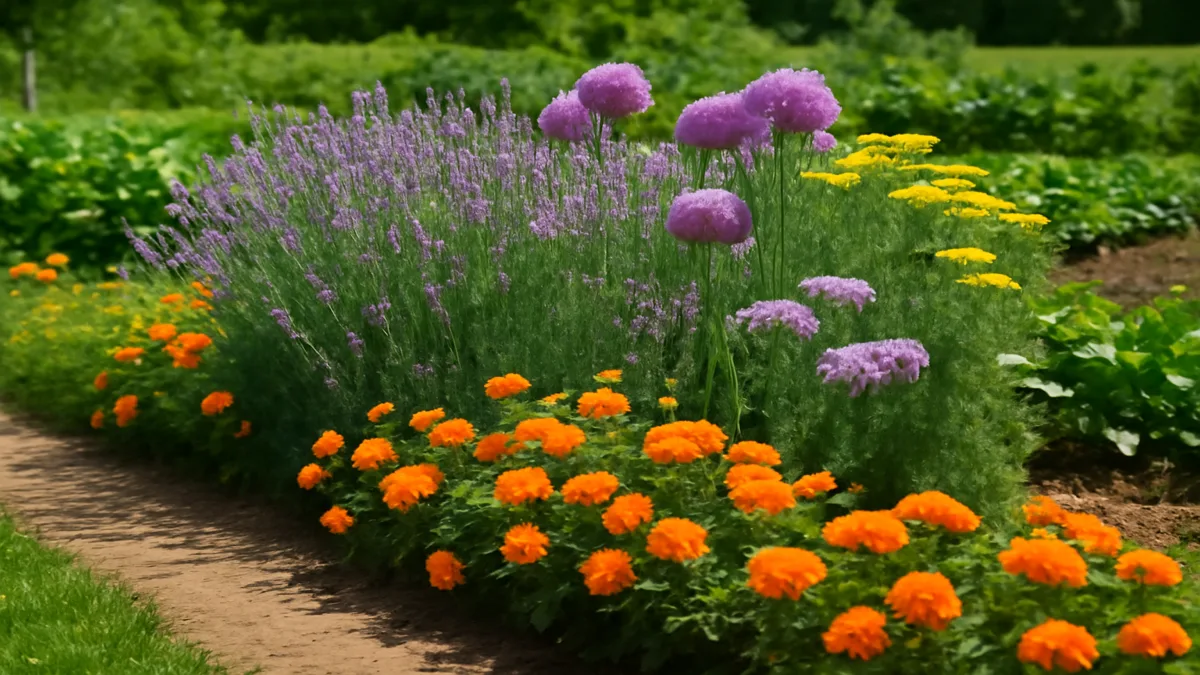
Strategic planting is the most underused tactic in the rabbit-defense playbook, and it’s free if you’re already buying plants for the season. Rabbits have sensitive noses and avoid plants with strong fragrances, fuzzy or prickly leaves, or bitter compounds.
Plant these as a living border around your vegetable beds and tucked between your prized perennials:
- Herbs: Lavender, marigolds, onions, garlic, rosemary, sage, mint, catnip, oregano, and chives. Bonus: most of these end up in your kitchen.
- Perennials: Yarrow, Russian sage, bee balm, hellebores, astilbe, bleeding heart, lungwort, daffodils, alliums, foxglove, monkshood, and black-eyed Susans.
- Shrubs: Boxwood, juniper, spirea, holly, butterfly bush, lilac, and barberry.
A note of caution: foxglove and monkshood are highly toxic to people and pets, so site them carefully if you have grandchildren or curious dogs. The good news is that several of the rabbit-resistant choices, particularly bee balm, yarrow, and butterfly bush, double as outstanding pollinator plants. If you’re already thinking about a pollinator garden, you can build rabbit defense and habitat support into the same beds.
Method 4: Eliminate Hiding Spots
Rabbits will not settle into a yard where they feel exposed. Habitat modification is one of the cheapest, most effective, and most overlooked tactics available to you. The goal is to make your property feel uncomfortable and dangerous from a rabbit’s perspective.
Walk your yard and look for these classic rabbit hideouts:
- Brush piles, downed limbs, and stacked firewood near garden beds
- Tall, unmown grass along fence lines and behind sheds
- Dense, low ground covers like English ivy that create tunnels
- Gaps under decks, porches, and outbuildings
- Overgrown perennial beds with a thick layer of last year’s debris
Clear these out, mow tight to the ground around the garden, and screen off crawl spaces with hardware cloth. You’re not trying to sterilize your yard, but you do want to eliminate the easy hiding cover within 30 to 50 feet of your most prized plants. Rabbits forced to cross open ground are rabbits that will look for an easier neighborhood.
Method 5: Deploy Motion-Activated Deterrents
Modern motion-activated devices have come a long way from the flimsy plastic gadgets of 20 years ago. Two categories actually deliver results:
Motion-activated sprinklers like the Havahart Spray-Away or the Orbit Garden Protector run about $70 to $100 each. They detect movement, blast a sharp burst of water, and startle the rabbit into the next county. Bonus: they also work on deer, cats, raccoons, and that neighbor’s dog who keeps using your hostas as a bathroom. If you’ve struggled with multiple critters, the same approach pairs well with strategies to keep cats out of yard spaces, since the trigger mechanism doesn’t discriminate.
Ultrasonic and flashing-light units like the Garden Protector 2 also run $70 to $100. They emit high-frequency sound and a strobe that’s invisible to humans but unsettling to wildlife. Reviews are more mixed than for sprinklers, but in combination with other methods they add a useful layer.
Move motion devices every couple of weeks. Rabbits are smart enough to map a static threat and route around it, but they struggle to adapt when the danger keeps changing locations.
Method 6: Protect Trees and Shrubs in Winter
Summer damage gets all the attention, but winter is when rabbits do their most expensive harm. With snow on the ground and food scarce, they’ll gnaw the bark off young fruit trees, ornamental shrubs, and saplings. A complete ring of girdling will kill the plant outright.
Wrap trunks of vulnerable trees with hardware cloth cylinders 18 to 24 inches tall, set out a few inches from the trunk and pinned into the soil. Make sure the cylinder rises above the expected snow line in your area, since rabbits will simply stand on snowpack to reach higher bark. White plastic spiral wraps from the garden center are the easy alternative, though they’re less durable than hardware cloth.
This same method protects against vole damage at the soil line. If you’ve also been battling tree-climbing rodents, the principles for how to keep squirrels out of garden areas overlap with rabbit-proofing in useful ways, particularly around trunk wrapping and trellis protection.
Method 7: Combine and Rotate Your Tactics
Here’s the meta-strategy that ties everything together: rabbits adapt, so your defense has to be a moving target. A fence alone, a repellent alone, or a motion sprinkler alone will eventually be defeated. But a fence plus rotated repellents plus strategic planting plus a motion sprinkler is a problem rabbits cannot solve.
Build a simple rotation calendar. Apply repellent A in spring, switch to repellent B mid-summer, and back to A in fall. Move the motion sprinkler every two weeks. Add a few new rabbit-resistant perennials each year so the fragrant border keeps expanding. Walk the fence line every spring and patch any erosion or gaps.
According to University of Minnesota Extension, gardeners who layer three or more methods report 90 percent fewer rabbit complaints than those who rely on a single tactic. That’s the difference between losing one or two seedlings a season and losing an entire row of beans overnight.
What NOT to Do (Even If the Internet Says So)
Some of the most popular rabbit advice online is either useless or actively counterproductive. Skip these:
- Don’t trap and relocate. It’s illegal in many states, mortality after release is extremely high, and you trigger the “vacuum effect” where new rabbits move into the territory you just emptied.
- Don’t rely on fake predators or scarecrows. Rabbits figure out within days that the plastic owl never moves and the coyote silhouette never charges.
- Don’t install a fence sitting on bare soil with no buried barrier. Rabbits dig, and you’ve just built them a backrest.
- Don’t use large-mesh wire. Baby bunnies fit through gaps that look impossibly small to you.
- Don’t leave brush piles, tall weeds, or unscreened crawl spaces near your garden. You’re rolling out the welcome mat.
- Don’t use mothballs, human hair, or bars of Irish Spring soap. These folk remedies fail every time they’re put to a controlled test.
Building a Complete Rabbit Defense Plan
Keeping rabbits out of your garden isn’t about finding one magic product. It’s about building a layered, humane defense that makes your yard the least appealing option on the block. Start with the fence, add strategic plantings, rotate two repellents through the season, modify the habitat, and back it all up with a motion-activated sprinkler.
You don’t have to do everything at once. Pick the two methods that fit your budget and weekend this month, then add another next month. Within a single growing season, you’ll go from waking up to chewed seedlings to actually harvesting the lettuce you planted.
Found this guide helpful? Share it with a fellow gardener who’s losing the battle to bunnies. A quick share on Facebook or Pinterest helps more gardeners protect their hard work, and it helps us keep producing free, research-backed advice like this. Your garden, and your sanity, will thank you.
Keeping Rabbits Away All Year Long: A Month-by-Month Approach
Wildlife gardens and backyard habitats reward consistent attention more than occasional bursts of effort. A month-by-month rhythm keeps plants healthy, feeders clean, and visiting creatures safe through every temperature swing. The calendar below outlines the core tasks by season, with realistic expectations for what you will observe outside your window.
| Season | Months | Priority Tasks | What to Expect |
|---|---|---|---|
| Spring setup | March to May | Deep-clean feeders with a 1:9 bleach solution, prune dead stems after the last frost, mulch fresh beds, install nest boxes before April 1 | Peak migration activity, first broods of songbirds, emerging pollinators on early bloomers like crocus and serviceberry |
| Summer monitoring | June to August | Refresh birdbaths every 2 to 3 days, watch for wasp nests in boxes, deadhead spent blooms, water deeply once weekly rather than shallowly daily | Fledglings learning to forage, hummingbird territorial displays, butterfly peak in July, possible heat stress on shallow-rooted plants |
| Fall preparation | September to November | Leave seed heads standing, rake leaves into bed corners instead of bagging, clean out nest boxes after October 15, plant native bulbs and shrubs | Heavy feeder traffic from migrants, chipmunks caching food, last monarchs moving south, frost damage on tender perennials |
| Winter survival | December to February | Keep water unfrozen with a heated dish, offer high-fat suet and black oil sunflower, break ice in birdbaths at dawn, avoid pruning dormant stems that shelter insects | Mixed-species flocks at feeders, woodpeckers working dead wood, occasional raptor visits, overwintering cocoons on leaf litter |
One habit that pays off all year: keep a simple notebook or phone note listing first sightings, first blooms, and first frost. After two or three seasons you will have a personalized calendar more accurate than any regional guide, because it reflects your exact microclimate and the species that actually use your yard.
Frequently Asked Questions
What smell do rabbits hate the most?
Rabbits strongly dislike the smell of garlic, onions, lavender, and predator-scent products like Plantskydd, which is blood-based. Strong herbs such as rosemary, sage, and mint also reliably deter them. The most effective approach is to combine fragrant border plantings with a rotated commercial repellent, since rabbits eventually become desensitized to any single scent used alone.
How tall does a rabbit fence really need to be?
For cottontail rabbits, a fence 30 inches tall with mesh openings of one inch or smaller will reliably stop them, provided the bottom is buried 6 to 12 inches deep or fitted with an outward-facing L-apron. If you have jackrabbits in your area, bump the height to 36 inches minimum, since jackrabbits can easily jump a 24-inch barrier.
Are coffee grounds effective at repelling rabbits?
Coffee grounds have a mild deterrent effect at best and are not a reliable standalone solution. Some gardeners report short-term success, but rabbits quickly habituate to the smell once they realize it presents no actual threat. Save your grounds for the compost pile and invest the effort in a proper fence and a tested commercial repellent like Plantskydd or Bobbex-R instead.
Will a dog or cat keep rabbits out of my garden?
An active outdoor dog can absolutely deter rabbits, particularly breeds with strong prey drive. Cats are less reliable, since most domestic cats prefer easier prey than a healthy adult rabbit. However, the scent and presence of pets does discourage rabbits from settling in. Pair pet patrols with fencing and repellents for the best results, and never rely on the pet alone.
When are rabbits most active in the garden?
Rabbits are crepuscular, meaning they feed most heavily at dawn and dusk, with additional activity through the night. You’ll rarely catch them mid-afternoon unless populations are high. Damage tends to spike in early spring when nursing mothers need extra calories and again in late summer when juveniles disperse from the nest. Plan your inspections and repellent reapplications around these peak windows.
Want More Wildlife Garden Tips?
Join 5,000+ nature lovers getting our weekly tips on creating wildlife-friendly gardens.
No spam, unsubscribe anytime. Privacy Policy
Emma Harrington
Emma Harrington is a wildlife habitat researcher and content editor with a passion for backyard conservation. She has spent over a decade translating ecological science into practical tips anyone can follow — from selecting native plants to building wildlife-friendly habitats. Her work focuses on helping homeowners transform ordinary yards into thriving ecosystems for bees, butterflies, hummingbirds, and other beneficial wildlife.