
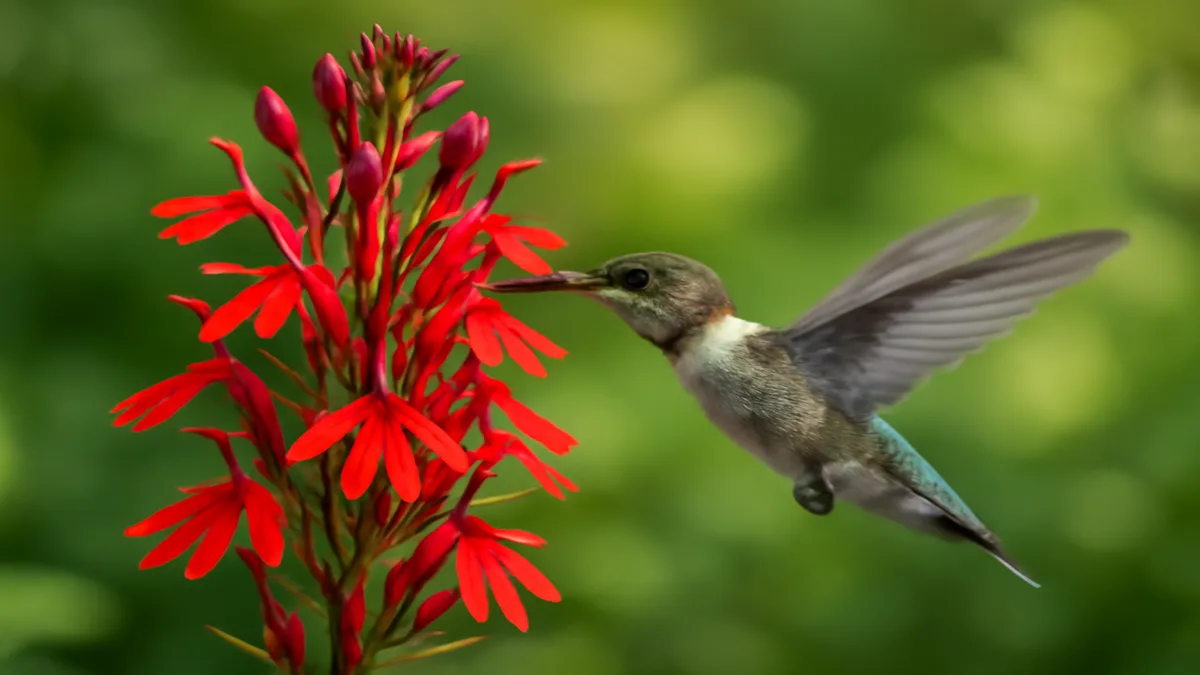
You planted colorful flowers, hung a feeder, and waited. But no hummingbirds showed up. If that sounds familiar, you’re not alone. The #1 mistake gardeners make is choosing the wrong flowers. Hummingbirds don’t visit just any bloom. They need tubular, nectar-rich flowers in specific colors, and they rely on a continuous supply from spring through fall.
Here’s the good news: once you plant the right flowers, hummingbirds will find your garden fast. Some species can spot red and orange blooms from over a quarter mile away. And unlike feeders that need constant cleaning and refilling, flowers provide natural nectar packed with micro-nutrients that sugar water simply can’t match.
This guide covers the 12 best flowers proven to attract hummingbirds, including native plants, bloom seasons, USDA zones, and practical planting tips that actually work. Whether you’re starting from scratch or upgrading an existing garden, you’ll know exactly what to plant and where.
FREE: Wildlife Garden Starter Guide
Get our 12-page PDF with the 25 best plants for pollinators, simple habitat tips, and a printable checklist — all 100% free.
No spam. Read our Privacy Policy.Why the Right Flowers Matter More Than Feeders
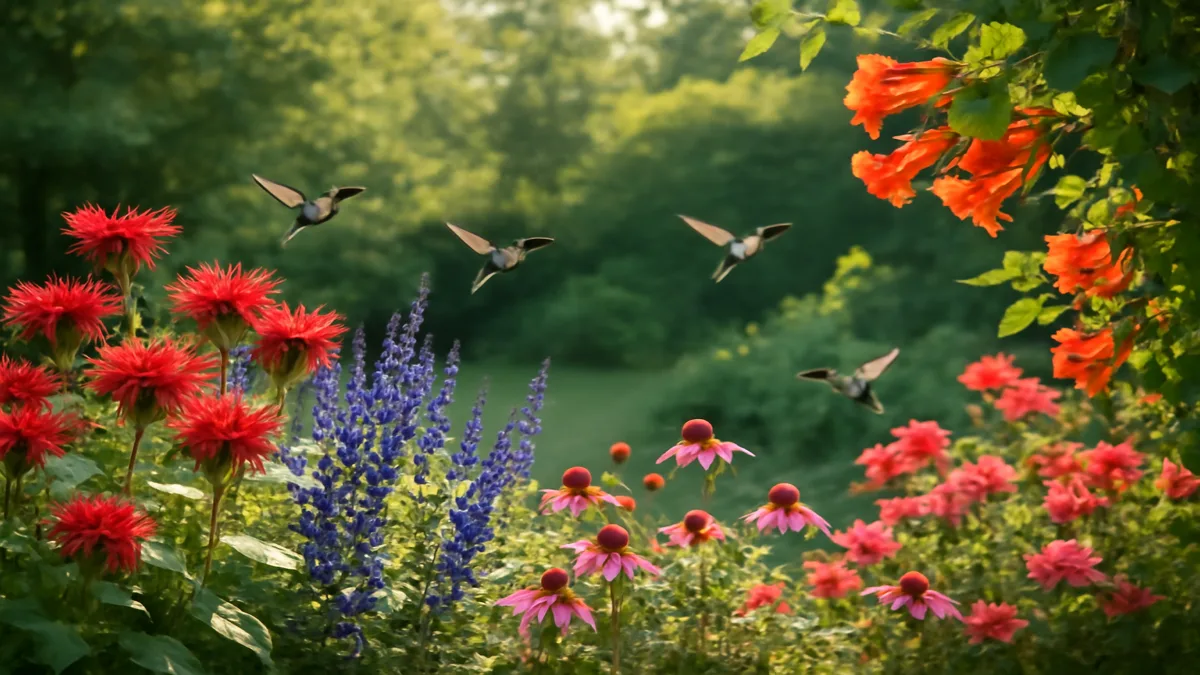
Feeders are a nice supplement, but they shouldn’t be your main strategy. Natural flower nectar contains minerals, micro-nutrients, and amino acids that sugar water lacks entirely. Hummingbirds also rely on the tiny insects that gather around flowers. Gnats, aphids, and spiders. For the protein they need to fuel their 1,200-beat-per-minute heart rate.
Research from the National Audubon Society shows that hummingbirds visiting native flower gardens have significantly better body condition scores than those relying primarily on artificial feeders. The reason is simple: flowers offer a complete nutritional package that feeders cannot replicate.
Pro Tip: Hummingbirds are highly territorial. Instead of one big garden, create 2-3 smaller flower clusters spread across your yard. This lets multiple birds feed without fighting, which means more hummingbirds stay longer.
The 12 Best Flowers for Hummingbirds
1. Cardinal Flower (Lobelia cardinalis)
Bloom Season: Midsummer to fall | Color: Brilliant red | Zones: 3-9
This native perennial is almost entirely dependent on hummingbirds for pollination. Other insects can’t reach the nectar deep inside its tubular flowers, making it a dedicated hummingbird magnet. Plant it in moist, partially shaded areas near streams or rain gardens. Cardinal flower thrives where other sun-loving plants struggle.
2. Coral Honeysuckle (Lonicera sempervirens)
Bloom Season: Spring through summer | Color: Red/coral outside, yellow inside | Zones: 4-10
Unlike its invasive cousin Japanese honeysuckle, coral honeysuckle is a well-behaved native vine that climbs up to 15 feet. Its slender trumpet-shaped flowers fit hummingbird bills perfectly. Train it on a trellis near your patio for close-up hummingbird viewing.
3. Eastern Red Columbine (Aquilegia canadensis)
Bloom Season: Spring | Color: Red and yellow | Zones: 3-8
This woodland wildflower blooms exactly when hummingbirds return from spring migration. Timing that isn’t coincidental. Its nodding, bell-like flowers with long nectar spurs have co-evolved with Ruby-throated Hummingbirds over thousands of years. Plant it in dappled shade under deciduous trees.
4. Trumpet Vine (Campsis radicans)
Bloom Season: Throughout summer | Color: Vibrant orange-red | Zones: 4-10
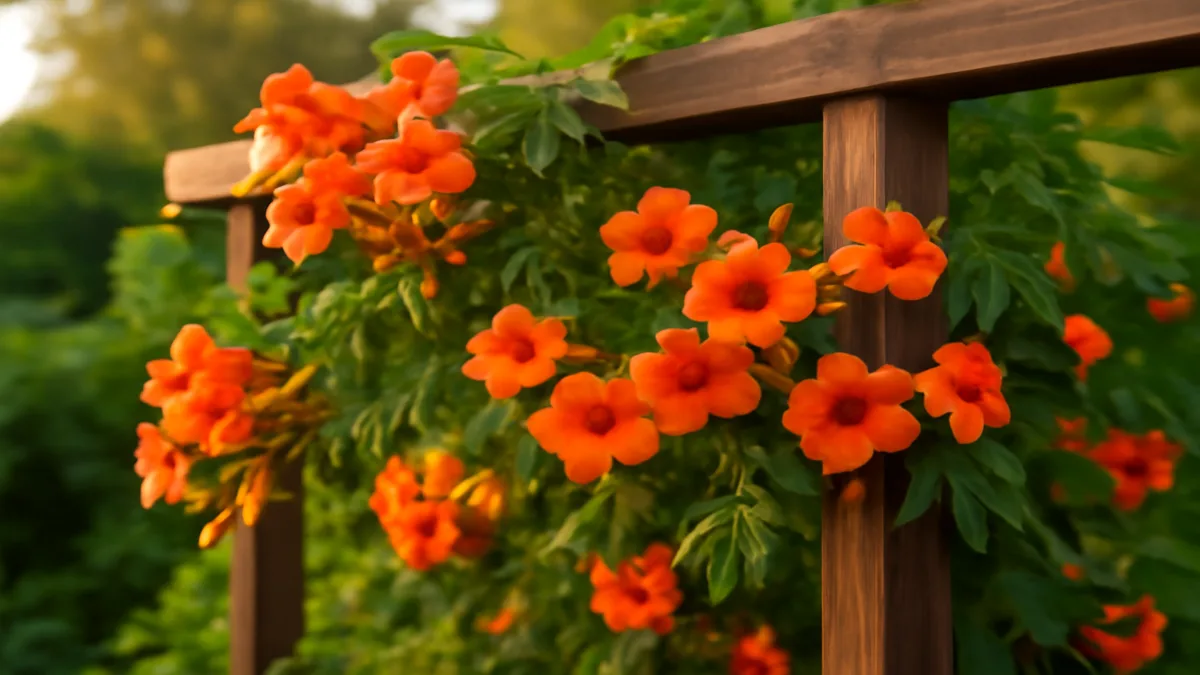
Trumpet vine is the heavy hitter of hummingbird gardens. It can reach 35 feet and produces massive clusters of tubular flowers all summer long. Warning: this vine is aggressive. Plant it on a sturdy structure away from your house foundation, and prune regularly to keep it under control.
5. Bee Balm (Monarda didyma)
Bloom Season: Summer | Color: Reds, pinks, lavender | Zones: 3-9
Bee balm’s pom-pom-shaped flower clusters provide an exceptionally rich and steady nectar supply. Choose red varieties like ‘Jacob Cline’ or ‘Cambridge Scarlet’ for maximum hummingbird attraction. This native perennial spreads by runners, so give it room or contain it with a garden border.
6. Autumn Sage (Salvia greggii)
Bloom Season: Summer and fall | Color: Red, pink, purple, orange, white | Zones: 6-9
When other flowers fade in late summer heat, autumn sage keeps blooming. This drought-tolerant native shrub provides critical late-season nectar for migrating hummingbirds preparing for their 500-mile non-stop flight across the Gulf of Mexico. It’s virtually maintenance-free once established.
7. Firebush (Hamelia patens)
Bloom Season: Nearly year-round (warm climates) | Color: Orange-red | Zones: 9-11
For gardeners in Florida, Texas, and the Gulf Coast, firebush is a non-stop hummingbird factory. Growing 6-12 feet tall, it produces constant clusters of tubular flowers that support hummingbirds’ extremely high metabolic rate. In zones 8 and below, grow it as an annual or overwinter it indoors.
8. Indian Pink (Spigelia marilandica)
Bloom Season: Late spring to early summer | Color: Red with yellow throats | Zones: 4-9
Indian pink is the secret weapon of shade gardeners. While most hummingbird flowers need full sun, this native perennial thrives in woodland settings. Its dramatic upward-facing tubular flowers catch hummingbird attention in shady areas where other nectar plants fail. Plant it under oak trees or along forest edges.
9. Firecracker Plant (Cuphea ignea)
Bloom Season: All summer | Color: Red tipped with white | Zones: 8-11 (annual elsewhere)
These narrow tubular flowers look like tiny lit cigars. And hummingbirds can’t resist them. At only 12-24 inches tall, firecracker plant is perfect for container gardens, window boxes, and garden borders. In cold climates, treat it as an annual and it will bloom non-stop until frost.
10. Red-Hot Poker (Kniphofia hybrids)
Bloom Season: Summer | Color: Red, orange, cream | Zones: 5-9
The dramatic torch-shaped flower spikes of red-hot poker are impossible for hummingbirds to miss. Each spike contains dozens of densely packed tubular blooms. Plant them in groups of 3-5 at the back of borders where their striking vertical form creates a visual beacon that hummingbirds spot from a distance.
11. Crocosmia (Crocosmia spp.)
Bloom Season: Summer | Color: Brilliant orange-red | Zones: 5-9
Crocosmia produces long, graceful sprays of bright flowers on arching stems up to 4 feet tall. The variety ‘Lucifer’ is the most popular choice for hummingbird gardens thanks to its intense red color and prolific blooming. Plant the corms in spring, 3 inches deep and 6 inches apart.
12. Cape Fuchsia (Phygelius capensis)
Bloom Season: Summer through fall | Color: Fuchsia-red | Zones: 6-10
Cape fuchsia bridges the gap between summer and fall with 12-18 inch clusters of red tubular flowers. This means hummingbirds have a reliable nectar source well into their autumn migration season. Plant it in a sheltered spot with afternoon shade in hot climates.
Complete Bloom Calendar: Never Run Out of Nectar
| Season | Flowers in Bloom | Why It Matters |
|---|---|---|
| Early Spring (Mar-Apr) | Eastern Red Columbine, Coral Honeysuckle | Fuels returning migrants after 500+ mile flights |
| Late Spring (May-Jun) | Indian Pink, Bee Balm begins | Nesting season. Females need extra energy |
| Summer (Jun-Aug) | Trumpet Vine, Bee Balm, Cardinal Flower, Crocosmia, Red-Hot Poker, Firecracker Plant | Peak activity. Fledglings learning to feed |
| Late Summer (Aug-Sep) | Autumn Sage, Cardinal Flower, Cape Fuchsia | Pre-migration fueling. Birds double their body weight |
| Fall (Sep-Oct) | Autumn Sage, Cape Fuchsia, Firebush | Last energy stop before Gulf crossing |
By planting flowers from each row, you create a continuous nectar supply that keeps hummingbirds in your yard from March through October. This “staggered bloom” approach is far more effective than planting only summer-blooming species.
5 Mistakes That Keep Hummingbirds Away (And How to Fix Them)
Mistake 1: Using Pesticides and Systemic Herbicides
Pesticides kill the tiny insects that hummingbirds need for protein. Gnats, aphids, and spiders make up 80% of a nestling’s diet. Systemic herbicides are even worse because they persist inside the flower, contaminating the nectar itself. Fix: Switch to hand-pulling weeds and encouraging natural predators like ladybugs and lacewings.
Mistake 2: Planting Double-Flowered Cultivars
Those fancy double-bloom roses and dahlias may look stunning to you, but they produce little to no nectar. The extra petals literally block hummingbirds from reaching what little nectar exists. Fix: Choose single-flowered native varieties. They look wilder but produce dramatically more nectar.
Mistake 3: Scattering Single Flowers Across the Yard
One bee balm here, one salvia there. Hummingbirds fly right past. They spot food by seeing large patches of color from the air. Fix: Plant in clumps of at least 3-5 of the same species. Mass plantings create a visual magnet that’s visible from over 250 feet away.
Mistake 4: Being Too Tidy in the Garden
Removing all dead branches and mulching heavily seems like good gardening, but it hurts hummingbirds. They need bare twigs as perching spots to rest and survey territory. Heavy mulch and weed cloth prevent ground-nesting insects from emerging. Cutting off a critical protein source. Fix: Leave some dead branches standing and keep mulch to 2-3 inches maximum.
Mistake 5: Relying Only on Feeders
Sugar water provides quick calories but zero protein, minerals, or micro-nutrients. Hummingbirds that rely solely on feeders show poorer body condition and lower breeding success. Fix: Use feeders as supplements to a flower garden, not replacements. Hang a basket of overripe fruit near your flowers to attract fruit flies. An easy protein source for hummingbirds.
How to Design Your Hummingbird Garden for Maximum Results
The layout of your garden matters as much as what you plant. Follow this proven three-layer approach:
- Back layer (canopy): Tall trees and vines for nesting, perching, and wind protection. Trumpet vine on a sturdy trellis or arbor works perfectly here.
- Middle layer (understory): Dense shrubs like autumn sage and firebush for cover from predators and windbreaks.
- Front layer (ground): Shorter nectar-producing perennials like cardinal flower, bee balm, firecracker plant, and columbine within arm’s reach of a comfortable viewing spot.
Water feature: Install a shallow birdbath with a bubbler or mister at least 4 feet above ground. Hummingbirds love bathing in fine mist and droplets on leaves. But ground-level water attracts outdoor cats, which are their #1 predator.
Planting Tips
- When to plant: Fall is the best time. It gives roots a full season to establish before the first hummingbirds arrive in spring.
- Soil: Most native hummingbird flowers prefer well-drained loam. Work 2 inches of compost into the top 6 inches of compacted soil before planting.
- Watering: Deep soak once or twice weekly for the first season. Once established, native plants typically need no additional watering beyond natural rainfall.
- Spacing: Follow each plant’s specific spacing requirements, but always plant in groups of 3+ of the same species for visual impact.
- Sun: Most flowers on this list need 6+ hours of direct sun. Exception: Indian pink and columbine thrive in partial shade.
Quick-Reference: Which Flowers to Pick for Your Zone
| USDA Zones | Top Picks | Why These Work |
|---|---|---|
| 3-5 (Cold climates) | Cardinal Flower, Columbine, Bee Balm, Coral Honeysuckle | Hardy natives that survive harsh winters |
| 6-8 (Temperate) | All 12 flowers on this list | Most options. Plant the full bloom calendar |
| 9-11 (Warm/tropical) | Firebush, Autumn Sage, Firecracker Plant, Cape Fuchsia | Heat-tolerant with extended bloom seasons |
Conclusion: Your Hummingbird Garden Starts With One Trip to the Nursery
You don’t need to plant all 12 flowers at once. Start with 3-4 species that cover different bloom seasons for your USDA zone, plant them in clumps, skip the pesticides, and add a water feature. Within weeks, you’ll see your first hummingbird visitors. Within a season, they’ll return every year because hummingbirds have excellent spatial memory. They remember exactly where reliable food sources are.
The most effective approach is the staggered bloom calendar: early spring flowers for returning migrants, summer flowers for nesting season, and fall flowers for pre-migration fueling. One trip to your local native plant nursery is all it takes to get started.
Found this useful? Share it with a friend who’s been struggling to attract hummingbirds!
Want to turn your entire yard into a pollinator paradise? Start with our complete pollinator garden guide and explore the native pollinator plants for every US region. For year-round butterfly visitors, check our guide to the best flowers for butterflies.
Caring for Your Hummingbird Garden Through the Seasons
Wildlife gardens and backyard habitats reward consistent attention more than occasional bursts of effort. A month-by-month rhythm keeps plants healthy, feeders clean, and visiting creatures safe through every temperature swing. The calendar below outlines the core tasks by season, with realistic expectations for what you will observe outside your window.
| Season | Months | Priority Tasks | What to Expect |
|---|---|---|---|
| Spring setup | March to May | Deep-clean feeders with a 1:9 bleach solution, prune dead stems after the last frost, mulch fresh beds, install nest boxes before April 1 | Peak migration activity, first broods of songbirds, emerging pollinators on early bloomers like crocus and serviceberry |
| Summer monitoring | June to August | Refresh birdbaths every 2 to 3 days, watch for wasp nests in boxes, deadhead spent blooms, water deeply once weekly rather than shallowly daily | Fledglings learning to forage, hummingbird territorial displays, butterfly peak in July, possible heat stress on shallow-rooted plants |
| Fall preparation | September to November | Leave seed heads standing, rake leaves into bed corners instead of bagging, clean out nest boxes after October 15, plant native bulbs and shrubs | Heavy feeder traffic from migrants, chipmunks caching food, last monarchs moving south, frost damage on tender perennials |
| Winter survival | December to February | Keep water unfrozen with a heated dish, offer high-fat suet and black oil sunflower, break ice in birdbaths at dawn, avoid pruning dormant stems that shelter insects | Mixed-species flocks at feeders, woodpeckers working dead wood, occasional raptor visits, overwintering cocoons on leaf litter |
One habit that pays off all year: keep a simple notebook or phone note listing first sightings, first blooms, and first frost. After two or three seasons you will have a personalized calendar more accurate than any regional guide, because it reflects your exact microclimate and the species that actually use your yard.
For more science on hummingbird conservation and migration, see resources from the National Audubon Society and Cornell Lab of Ornithology.
For more science on hummingbird conservation and migration, see resources from the National Audubon Society and Cornell Lab of Ornithology.
Frequently Asked Questions
What color flowers attract hummingbirds the most?
Red and orange tubular flowers attract hummingbirds most effectively because they can see red wavelengths that many insects cannot. This means less competition for nectar at red flowers. However, hummingbirds will visit any tubular, nectar-rich flower regardless of color once they discover it in your garden.
Do I need to plant native flowers or will any flowers work?
Native flowers are significantly more effective because they produce 2-5 times more nectar than hybrid cultivars. They’ve co-evolved with local hummingbird species over thousands of years. Double-flowered hybrids and many exotic species produce little to no nectar and can actually waste hummingbirds’ energy when they visit empty blooms.
When should I plant flowers to attract hummingbirds?
Plant in fall for best results. This gives root systems an entire season to establish before hummingbirds arrive in spring. Fall-planted perennials are stronger, bloom more heavily, and produce more nectar in their first flowering season compared to spring-planted ones.
Can I attract hummingbirds in a small yard or with containers?
Absolutely. Firecracker plant, autumn sage, and cape fuchsia all thrive in containers. Place pots of tubular flowers near windows or on patios for close-up viewing. Even a single large planter with 3-4 red salvia plants can attract hummingbirds within days of the first blooms opening.
How long does it take for hummingbirds to find my new garden?
Hummingbirds can spot red and orange flower clusters from over 250 feet away. Most gardeners report seeing their first visitors within 1-3 weeks of flowers opening. Once hummingbirds find your garden, they develop strong site fidelity and will return year after year. They’ve been documented returning to the exact same garden for 9+ consecutive years.
How to Keep Your Hummingbird Garden Thriving Year After Year
A hummingbird garden isn’t a “plant it and forget it” project. Though it comes close with native plants. Here’s a seasonal maintenance calendar that takes about 30 minutes per month and keeps your garden producing maximum nectar year after year.
Spring Maintenance (March-April)
Cut back last year’s dead growth to about 4-6 inches above ground level. This is critical timing. Do it before new shoots emerge but after the last hard frost. Divide any overcrowded perennials like bee balm or cardinal flower. If clumps have dead centers, split them into 3-4 sections and replant with fresh compost. This is also the time to add any new species to fill gaps in your bloom calendar.
Summer Maintenance (June-August)
Deadhead spent flowers regularly on bee balm, salvia, and columbine to encourage continuous reblooming. Leave trumpet vine and coral honeysuckle alone. They don’t need deadheading and pruning during bloom season can reduce flower production by up to 40%. Water deeply during extended droughts (7+ days without rain), focusing on recently planted additions. Established native plants typically survive summer heat without supplemental irrigation.
Fall Maintenance (September-November)
Don’t cut anything back yet. Leave seed heads and stems standing through winter. They provide shelter for overwintering beneficial insects, and the hollow stems serve as nesting sites for native bees that will pollinate your garden next spring. The only fall task is planting new additions. Fall-planted perennials establish 60% stronger root systems compared to spring planting according to university extension studies.
Winter Maintenance (December-February)
Apply a light 2-inch layer of leaf mulch around the base of your perennials. Avoid thick bark mulch which can smother emerging shoots. Clean and repair any trellises supporting trumpet vine or coral honeysuckle. This is also the perfect time to research new varieties and order plants for spring delivery from native plant nurseries.
Budget Breakdown: What a Hummingbird Garden Actually Costs
One of the biggest advantages of a hummingbird flower garden over artificial feeders is the long-term cost savings. Here’s a realistic budget comparison:
| Item | Flower Garden (Year 1) | Feeder Setup (Year 1) |
|---|---|---|
| Initial purchase | $60-120 (12-24 native perennial plants at $5-8 each) | $25-50 (2-3 quality feeders) |
| Soil amendment | $15-25 (compost) | $0 |
| Annual maintenance | $0-15 (occasional division/replacement) | $40-80 (sugar, cleaning supplies, replacement parts) |
| Time per week | 15 minutes (once established) | 30-45 minutes (cleaning every 3-5 days in summer) |
| 5-year total cost | $75-195 | $225-450 |
| Nutritional value | Complete (nectar + insects + minerals) | Incomplete (sugar water only) |
Native perennial flowers come back stronger every year, spreading naturally to fill gaps. After the initial investment, your garden essentially runs on autopilot while providing superior nutrition that feeders simply cannot match.
What Else Visits Your Hummingbird Garden (Bonus Wildlife)
Plant these flowers and you won’t just attract hummingbirds. Your garden becomes a habitat for an entire ecosystem of beneficial wildlife:
- Monarch butterflies, Bee balm and cardinal flower are nectar sources for migrating monarchs passing through in September
- Native bees, Over 4,000 species of native bees in North America depend on the same tubular flowers hummingbirds visit
- Sphinx moths, These large night-flying moths (often mistaken for hummingbirds) pollinate tubular flowers after dark
- Goldfinches and warblers, They feed on the seeds left behind when you resist the urge to deadhead in fall
- Beneficial predator insects, Ladybugs, lacewings, and predatory wasps that naturally control aphids and garden pests
A well-designed hummingbird garden is really a complete wildlife habitat garden. By choosing native plants and avoiding pesticides, you’re supporting the entire food web. From soil microbes to songbirds. While getting the specific reward of daily hummingbird visits at your window.
Regional Planting Recommendations by State
Not every flower on this list grows equally well in every state. Here are specific recommendations based on the four major US climate regions:
Northeast and Midwest (Zones 3-6)
Your best performers are cardinal flower, Eastern red columbine, bee balm, and coral honeysuckle. These natives handle cold winters and shorter growing seasons. Plant columbine in early spring for immediate results. It often blooms in its first year. Bee balm ‘Jacob Cline’ variety is particularly disease-resistant in humid Midwest summers. Avoid firebush and firecracker plant unless you’re willing to replant them annually.
Southeast (Zones 7-9)
You have the widest selection. Firebush is your star performer. It blooms nearly year-round in Florida, Georgia, and coastal Carolina. Combine it with Indian pink for shade areas and autumn sage for dry, sunny spots. Coral honeysuckle is semi-evergreen here, meaning it provides nectar even in mild winters when migrating Rufous Hummingbirds may pass through.
Southwest and West Coast (Zones 8-10)
Drought tolerance is critical. Autumn sage, red-hot poker, and crocosmia handle dry conditions once established. California gardeners should look for California fuchsia (Epilobium canum) as a local alternative to cape fuchsia. It’s native and adapted to summer drought. Hummingbird sage (Salvia spathacea) is another excellent California native that thrives in partial shade.
Mountain West (Zones 4-7)
Elevation and intense UV exposure require tough plants. Rocky Mountain columbine (Aquilegia caerulea), scarlet gilia, and penstemons are native high-altitude hummingbird magnets that tolerate alkaline soils and temperature swings of 40°F in a single day. Plant on south-facing slopes for maximum bloom production.
Your local native plant nursery or county extension office can recommend specific cultivars proven in your exact microclimate. Mention you’re creating a hummingbird habitat. Many nurseries now stock dedicated “hummingbird garden” plant collections.
Want More Wildlife Garden Tips?
Join 5,000+ nature lovers getting our weekly tips on creating wildlife-friendly gardens.
No spam, unsubscribe anytime. Privacy Policy
Emma Harrington
Emma Harrington is a wildlife habitat researcher and content editor with a passion for backyard conservation. She has spent over a decade translating ecological science into practical tips anyone can follow — from selecting native plants to building wildlife-friendly habitats. Her work focuses on helping homeowners transform ordinary yards into thriving ecosystems for bees, butterflies, hummingbirds, and other beneficial wildlife.