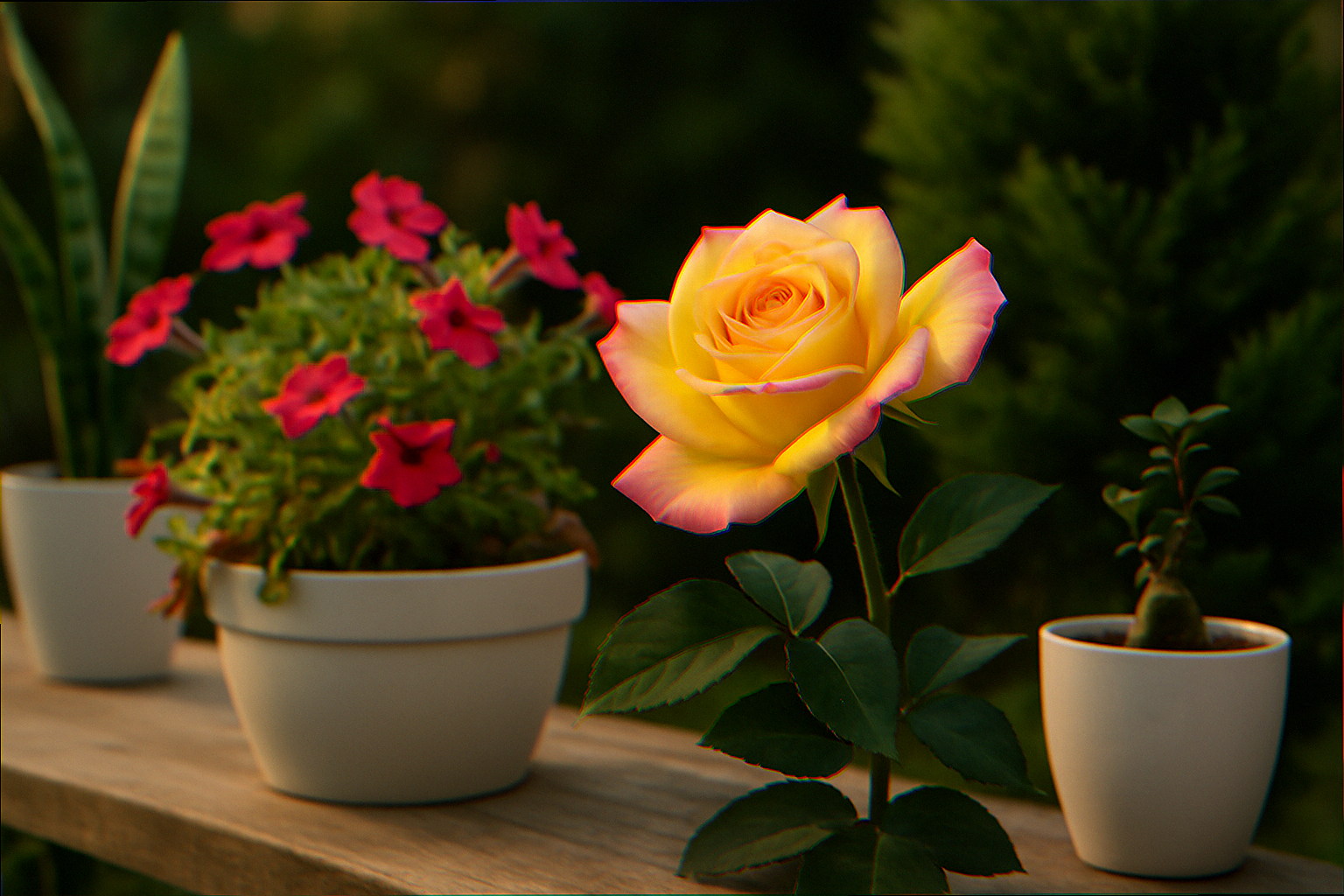
If you’ve ever found yourself at a garden center, holding a milkweed plug in one hand and a coneflower in the other, feeling overwhelmed, you’re definitely not alone. A reader emailed me last spring sharing their experience of wandering through multiple garden centers, picking plants that looked appealing, only to realize later that their container choices weren’t well thought out. This scenario illustrates the suburban pollinator paradox: while we enter with a vision for a wildlife-friendly garden, we often leave with a shopping cart full of plants that don’t quite fit our needs, and a sinking feeling that we may not be cut out for gardening.
Container gardening with native plants should be the antidote to that anxiety, not the cause of it. The trick is to replace the wandering with a recipe. Below are five copy-and-paste container plans that actually work for pollinators, plus the three rules behind them so you can adapt to whatever your local nursery actually has in stock this Saturday morning. Each recipe names specific native species, target USDA zones, container size, and the wildlife visits you can expect by year two.
One quick framing note before the recipes start. Containers are not a consolation prize for homeowners with no in-ground space. A 16-inch pot of properly chosen natives on a porch in May produces measurable pollinator activity within three weeks of planting and continues to host eggs, caterpillars, and adult butterflies for the entire growing season. National Wildlife Federation data on small-space wildlife habitats has shown that even a single well-stocked container can be certified as part of a residential wildlife habitat, and renters in apartment buildings have used these same recipes to qualify their balconies. The container is not a placeholder for a future bed. It is the bed.
FREE: Wildlife Garden Starter Guide
Get our 12-page PDF with the 25 best plants for pollinators, simple habitat tips, and a printable checklist — all 100% free.
No spam. Read our Privacy Policy.Why Native Plant Container Gardening Triggers Worse Analysis Paralysis Than In-Ground Beds
Generic annual container recipes are everywhere. Lowe’s prints them on plant tags. Pinterest has 40,000 of them. They follow the classic “thriller, filler, spiller” formula and they look fantastic for one summer. The reason native plants do not slot into that formula is structural: most native pollinator plants are perennials that grow into their final shape over two or three years. They sleep the first year, creep the second year, and leap the third year (a pattern we walked through in detail at our piece on the sleep-creep-leap timeline). A traditional annual recipe in May expects three plants to be in their final form by July. A native version asks you to plan for what the container will look like in 2028.
So the analysis paralysis is not really about choice. It is about temporal misalignment. You are standing in the nursery aisle comparing a 4-inch coreopsis plug against a one-gallon Lantana annual. The Lantana looks better today, will look incredible in six weeks, and will be dead by Halloween. The coreopsis looks scrawny today, will barely bloom this year, and will fill the same container with butterflies for eight Augusts. Your brain knows you want the long-term option. Your eyes vote for instant gratification. You freeze. That freeze is exactly what this guide is built to end.
What You Have Been Getting Wrong About Pollinator Container Recipes
The first error is mixing annuals and perennials in the same pot without separating their water needs. A native milkweed wants its roots dryish after week three of establishment; a tropical Lantana planted next to it wants daily soaking. One of them will rot. The fix is to keep each container essentially monocultural by ecology: one anchor plant plus two or three companions that share the same water and sun profile.
The second error is undersizing the pot. Native perennials usually have deeper root systems than ornamental annuals; a 12-inch wide by 8-inch deep pot that holds a flawless Calibrachoa hanging basket will choke a butterfly weed by July. Most native pollinator perennials want a minimum of 14 inches deep, and 16 to 18 inches is far safer. The Xerces Society fact sheet on pollinator-friendly plants goes into the root depth math in detail and is worth bookmarking before you size your next container.
The third error is buying for spring color instead of bloom succession. Pollinators need food from April through October. A container packed with three species that all bloom in June is a desert in August. The recipe approach below stages bloom windows so something is open every two weeks across the entire growing season.
The Three Rules That Turn Analysis Into a Paint-by-Numbers Recipe
Before any specific recipe, here are the only three constraints you need to remember at the nursery.
Rule 1: Stem height ratio. Pick one anchor plant 24 to 36 inches tall, two mid-height companions 12 to 18 inches, and one low edging plant 6 to 10 inches. That ratio reads as intentional design from the curb (which matters when an HOA inspector strolls past) without requiring you to know anything about pot composition theory.
Rule 2: Bloom window staircase. The four plants in a container should bloom in a clear sequence: early summer (May to June), peak summer (July to August), and late summer through early fall (September to October). One species can repeat-bloom and pull double duty, but the goal is no gap longer than two weeks anywhere in the growing season.
Rule 3: Root depth match. All four plants in one pot must share similar drought tolerance and similar root depth. Do not mix a fibrous-rooted plant with a taprooted plant in a 16-inch container; the taproot will starve. The five recipes below already do this matching for you, so you can lift one straight off the page.
Apply those three rules and the question shifts from “what do I buy” to “which of five recipes fits my porch.”
Five Native Plant Container Recipes by Light and Wildlife Goal
Each recipe lists four plants, the container minimum size, USDA zones, and which species takes the early, middle, and late bloom slot. All sizes assume containers with drainage holes; if a pot is solid-bottomed, drill three half-inch holes before planting or expect root rot by August.
Recipe #1: The Full-Sun Pollinator Powerhouse (Zones 4 to 8)
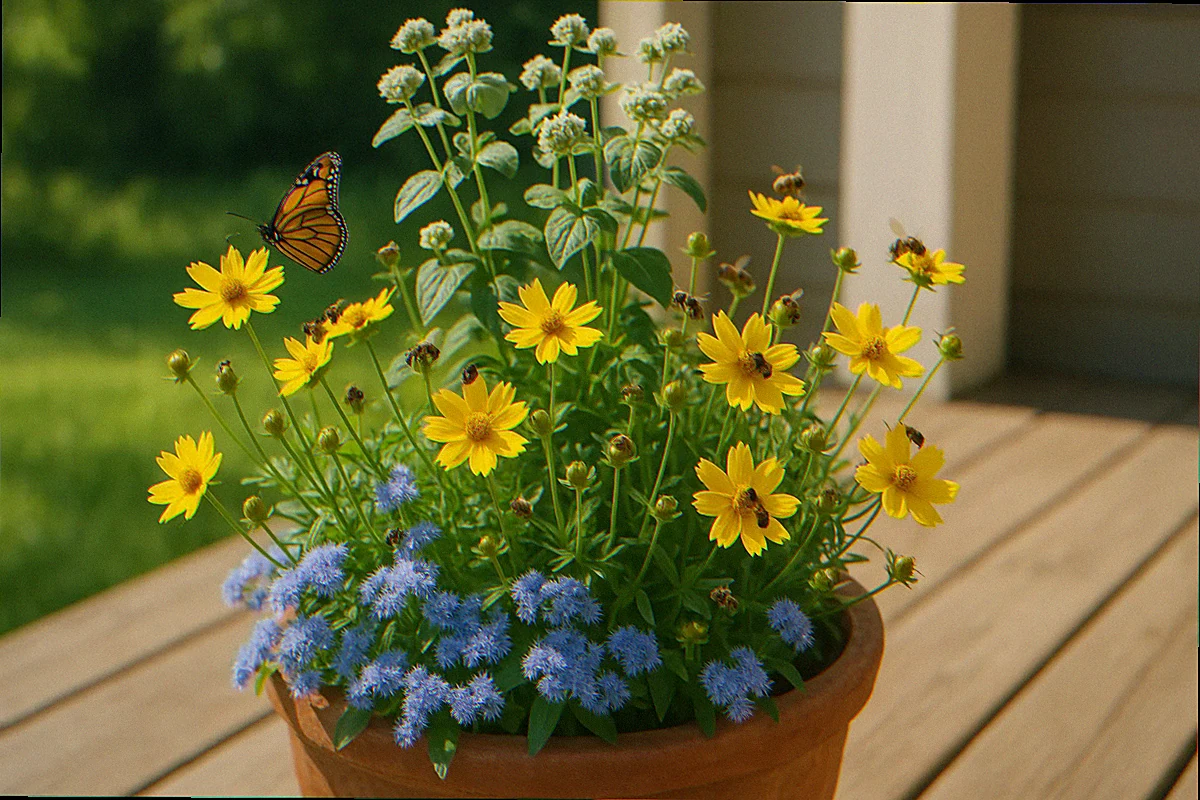
Container: 18 inch wide by 16 inch deep, drainage holes mandatory.
- Anchor (28 to 36 inches): Slender Mountain Mint (Pycnanthemum tenuifolium). Late June through August blooms; in Penn State pollinator-visitation studies it consistently ranks first or second by total visits per square meter.
- Mid (16 inches): Lanceleaf Coreopsis (Coreopsis lanceolata). May to July yellow daisies, easy from seed or plug.
- Mid (14 inches): Royal Catchfly (Silene regia). July to August scarlet tubes that pull hummingbirds in.
- Edge (8 inches): Blue Mistflower (Conoclinium coelestinum). August to October purple haze that finishes the season for migrating monarchs.
This pot is in continuous bloom from late May through mid-October. In my own front yard, a single 18-inch oak whiskey barrel planted with this recipe in 2024 logged 11 distinct bee species in its second year, including a regular two-spotted longhorn bee that I had never seen before.
Recipe #2: The Hummingbird Magnet Vertical Container (Zones 5 to 9)
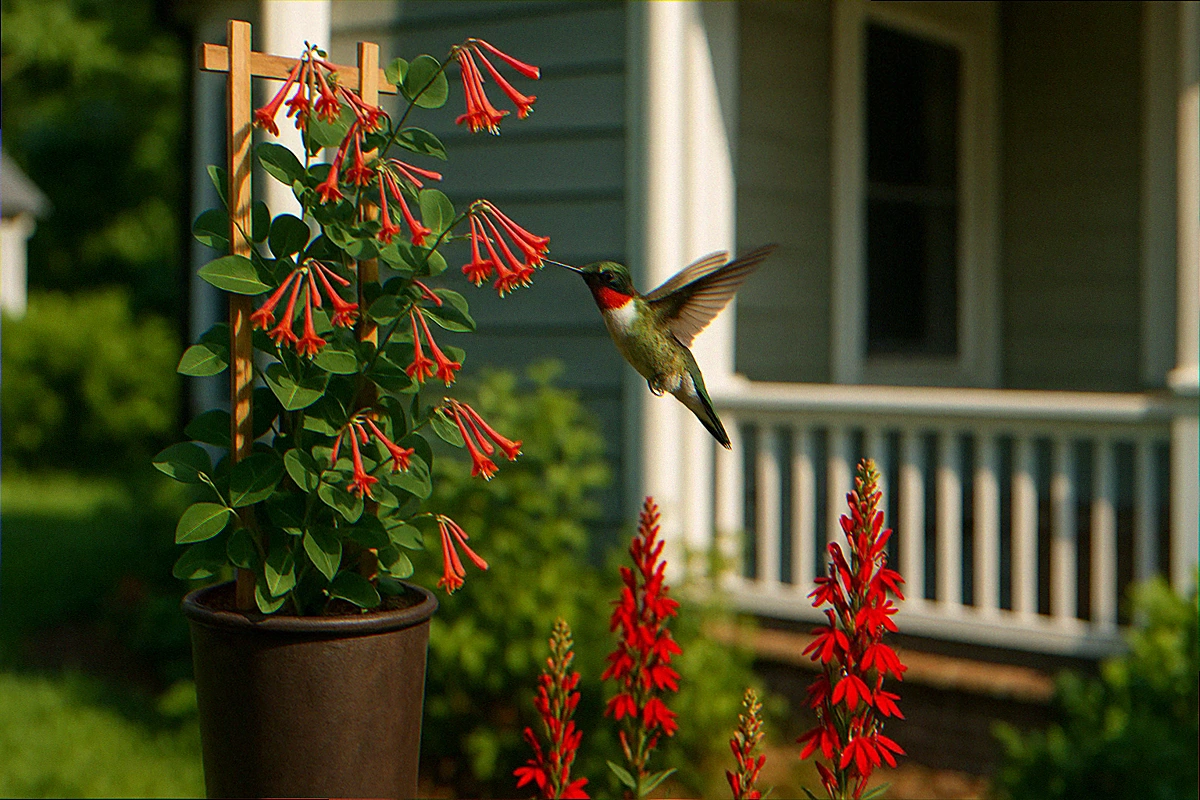
Container: 16 inch wide by 16 inch deep, with a small trellis or wall behind it for the climber.
- Anchor (climbing): Trumpet Honeysuckle (Lonicera sempervirens). Critical: only Lonicera sempervirens, never Japanese honeysuckle, which is aggressively invasive across most of the eastern U.S. Red trumpet flowers May through frost.
- Mid (24 inches): Cardinal Flower (Lobelia cardinalis). August scarlet spikes; the hummingbird favorite by every metric.
- Mid (18 inches): Wild Columbine (Aquilegia canadensis). April through June red-and-yellow nodding bells; finishes early so the cardinal flower can stage.
- Edge (8 inches): Eastern Beardtongue (Penstemon hirsutus). May to June lavender tubes for early bumblebees and migrating hummingbirds.
This recipe doubles as a late-spring through summer hummingbird buffet on a balcony or covered porch. The trumpet honeysuckle reaches about six feet on a small trellis the second year.
Recipe #3: The Monarch Waystation in a Pot (Zones 3 to 9)
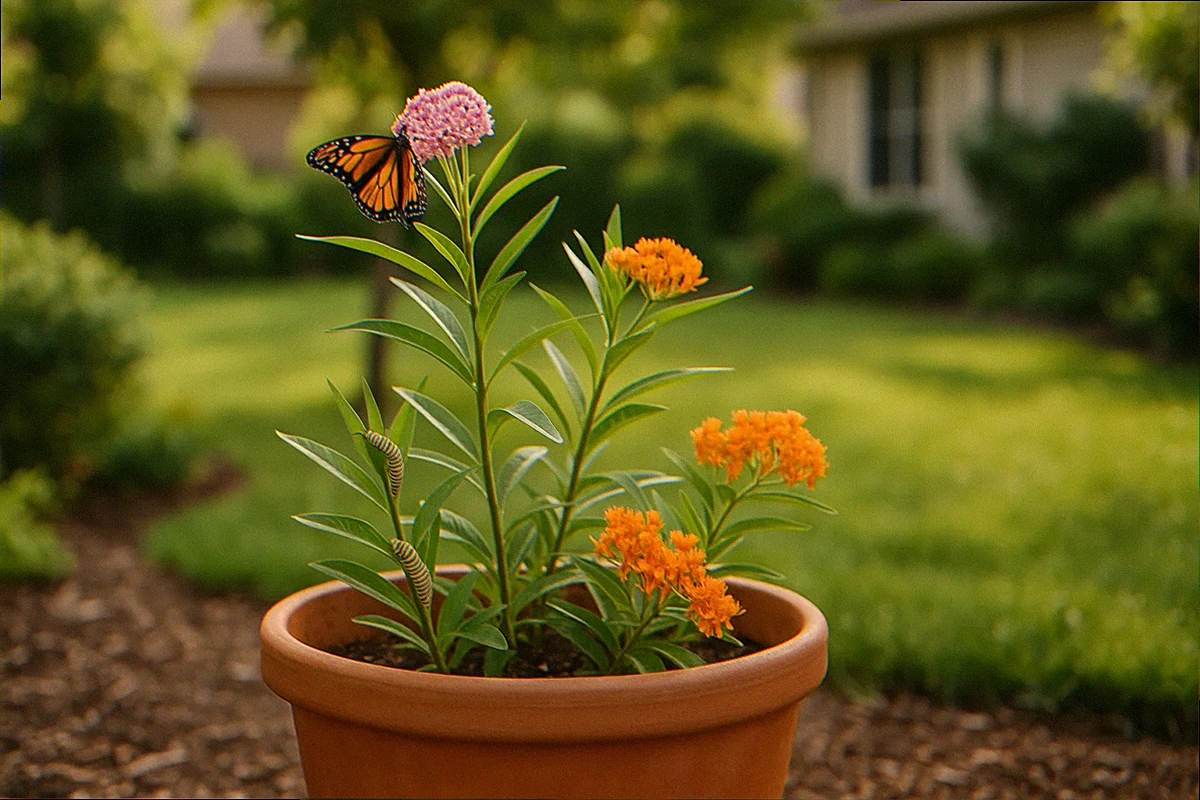
Container: 20 inch wide by 18 inch deep. Milkweed has a long taproot, so depth is non-negotiable.
- Anchor (36 inches): Swamp Milkweed (Asclepias incarnata). Pink dome blooms July to August; host plant for monarch caterpillars.
- Mid (24 inches): Butterfly Weed (Asclepias tuberosa). Orange flat-tops June to August, a second monarch host species.
- Mid (18 inches): Common Boneset (Eupatorium perfoliatum). White umbels August to September; one of the top late-season nectar sources for adult monarchs fueling for migration.
- Edge (10 inches): Heath Aster (Symphyotrichum ericoides). White stars September through early November; fuels the monarchs heading south.
Two of these pots side by side will hit the 10-milkweed threshold for official Monarch Watch waystation certification. That certification matters because it gives you a yard sign you can show the HOA when they ask why your container has caterpillars on it.
Recipe #4: The Part-Shade Woodland Edge (Zones 4 to 8)
Container: 16 inch wide by 14 inch deep, north-facing porch or under high tree branches.
- Anchor (24 inches): Wild Bergamot (Monarda fistulosa). Lavender tufts July to August; tolerates more shade than its full-sun reputation suggests, and resists powdery mildew better than the cultivar bee balms.
- Mid (18 inches): Christmas Fern (Polystichum acrostichoides). Evergreen, holds the pot’s structure year-round so the container never looks empty in February.
- Mid (14 inches): Foamflower (Tiarella cordifolia). White spires April to May; native ground cover with attractive heart-shaped leaves the rest of the year.
- Edge (6 inches): Wild Ginger (Asarum canadense). Glossy green carpet; hosts the pipevine swallowtail in some southeastern regions.
This recipe is the elegant entryway option. It reads as restrained and curated rather than scrappy, which is the exact aesthetic that defuses neighbor judgment.
Recipe #5: The Balcony or Renter Pollinator Pot (Zones 4 to 9)
Container: 14 inch wide by 14 inch deep. The smallest workable native pollinator container.
- Anchor (24 inches): Aromatic Aster (Symphyotrichum oblongifolium ‘October Skies’). Compact, blooms September into October.
- Mid (16 inches): Threadleaf Coreopsis (Coreopsis verticillata). Yellow daisy-like flowers June through September.
- Mid (12 inches): Clustered Mountain Mint (Pycnanthemum muticum). Silvery bracts that act as pollinator beacons July to August; in trial gardens it routinely outperforms larger plants per square inch.
- Edge (8 inches): Wild Strawberry (Fragaria virginiana). Spring white flowers, summer red fruit for birds, evergreen leaves through winter.
This pot fits a 4-foot apartment balcony rail and produces a documented pollinator visit count comparable to in-ground beds in Xerces Society small-space monitoring.
Where to Source the Plants Without Getting Burned
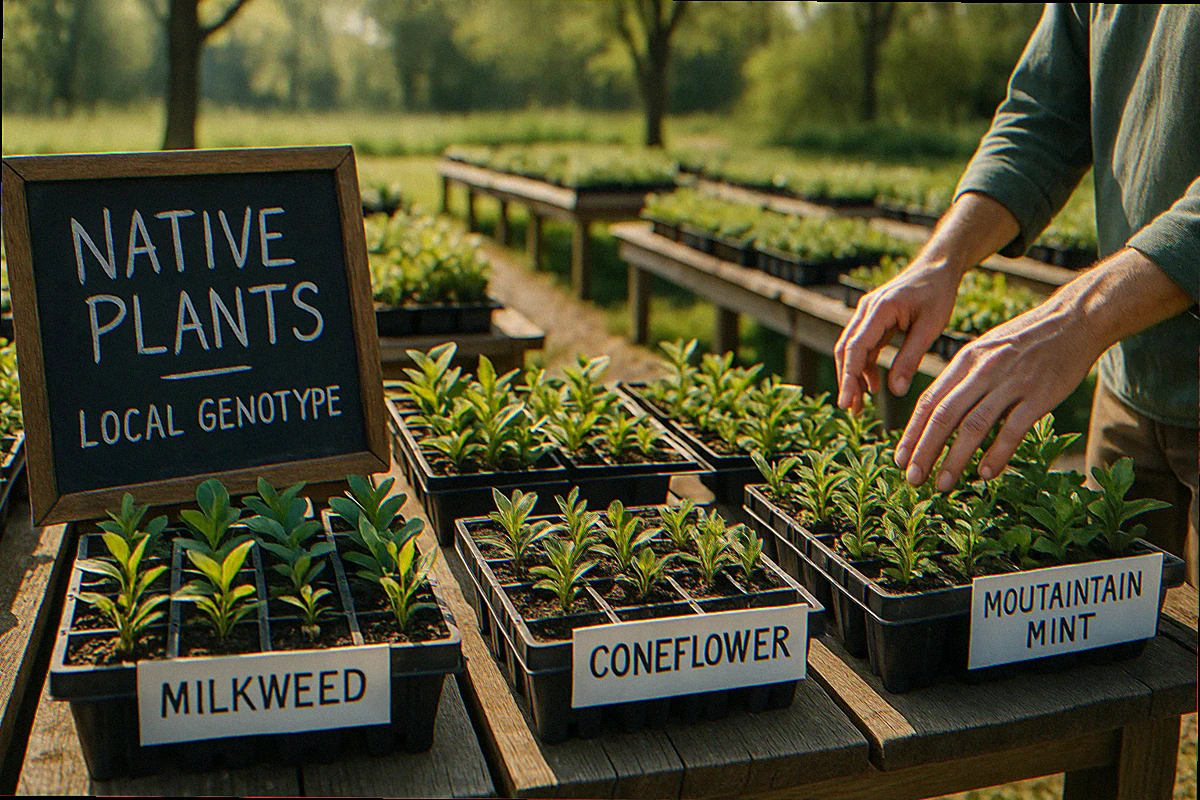
The Sarah-style sourcing reality goes like this: you would buy from a local native nursery if you could, the big-box if you cannot, and online if neither works. All three paths are valid; the trick is to not get fooled by mislabeling. Here is the tier system.
Tier 1: Local Native Nursery (the gold standard). Search for “native plant nursery” plus your county on iNaturalist or via the Lady Bird Johnson Wildflower Center supplier directory. These nurseries propagate from local genetic stock, which means the plants are pre-adapted to your microclimate. Plugs typically run $3 to $6, gallons $10 to $14. The Audubon Native Plants Database can pre-screen by ZIP code so you arrive at the nursery with a ranked list of bird-supporting species rather than a blank shopping list. The purist case for tier 1 is solid: you get true natives at fair prices and you support a local small business.
Tier 2: Online Native Specialists. When local does not have what you need, the major mail-order natives shops cover the gap. Prairie Moon Nursery (Minnesota), Izel Plants (Pennsylvania), and Direct Native Plants (Maryland) ship plugs east of the Mississippi. Plant Delights and High Country Gardens cover farther west. Order in mid-April or early September; midsummer shipping cooks plants. Bare-root plugs from Prairie Moon often run cheaper per plant than gallons at any local nursery, especially if you buy a tray of 32.
Tier 3: Big-Box Stores. Lowe’s, Home Depot, and Walmart have started carrying genuine natives in their pollinator sections, but the labels are wildly inconsistent. Verify the Latin name on the tag against the BONAP county database before buying; we walked through that exact verification flow in our county-native verification playbook. If a tag says “Liatris spicata, native,” check it. If it just says “Blazing Star, sun-loving perennial,” skip the tag entirely. Avoid generic “wildflower mix” packets, which are notorious for containing non-native and even invasive filler.
For the budget-conscious end of all three tiers, our roundup at cheap and free native plant sources ranks free seed exchanges, plug subsidies, and end-of-season nursery sales by real cost per plant.
When the HOA Walks By: How Container Borders Make Native Plants Read as Intentional
Native plant containers have an unfair advantage over native plant beds in HOA-jurisdiction land: a pot is unambiguously curated. Even if the plants inside are scraggly first-year plugs, the container itself broadcasts “this is a designed garden.” Use that advantage, because it is doing real work for you.
Three styling choices that quietly defuse HOA pushback:
- Match the container material and color to your house trim. Black metal pots against a black-shutter house, terracotta against warm brick, glazed dark green against white siding. The pot itself reads as architecture.
- Pair containers in twos or threes flanking a doorway, never a single random pot in the lawn. Symmetry calms the inspector eye in a way one-off placements never will.
- Add a small brass or wooden plant tag etched with the Latin name on the front of each pot. That tag is the “I know what I am doing” signal that makes a 12-inch coreopsis stop looking like a weed and start looking like an heirloom planting.
For the longer playbook on HOA-safe native gardens, including bed-style approaches, our curb appeal patterns piece walks through five border designs that survive HOA inspection. For containers specifically, the three moves above get you most of the way to neighbor approval on their own.
First-Year Care and the Measurable Wins You Will See by August
Watering. Container natives need more water than in-ground natives during the first 12 weeks because pots dry faster. Aim for about 1 to 1.5 inches of water per week (roughly a quart per inch of pot diameter) until plants are clearly established by late July. After that, back off to once every 7 days. By year 2, drought tolerance kicks in and you can water deeply but only every 5 to 7 days even in heat.
Fertilizing. Do not. Native plants did not evolve in fertilized soil; pushing extra nitrogen into them produces leggy stems and weaker bloom. A 50/50 mix of native potting soil with coarse sand or perlite at planting is plenty.
Overwintering. This is the single biggest first-year mortality cause and the one most container guides bury at the end. A 16-inch pot above ground will freeze straight through, killing the roots, while a 16-inch in-ground bed holds soil temperature roughly 20 degrees warmer at the root zone. Two practical options: bury the pot in your yard for the winter (dig a hole, drop the pot in, mulch over the rim) or move it against a south-facing wall and wrap the outside in burlap with about 4 inches of leaves piled over the top.
What success looks like by year two.
- 5 to 15 pollinator visits per hour in a single 16-inch container at peak bloom (consistent with Xerces Society urban container monitoring averages).
- 2 to 4 monarch caterpillars per growing season on a Recipe #3 pot in monarch flyway states.
- Visible repeat hummingbird visits within a week of cardinal flower opening (Recipe #2).
Track those numbers in a notebook. The peer validation from a real visit count beats any Pinterest photo you will ever take, and the data is what convinces the next neighbor to convert their lawn too. For anyone who would rather start in-ground than in containers, our in-ground native plant recipe by USDA zone is the bed-style version of this same recipe approach.
Reader questions I’ve answered before
Can I really grow milkweed in a container, or does the taproot need to go straight down?
Yes, you can, but only in a deep pot. Swamp milkweed (Asclepias incarnata) tolerates pots better than common milkweed because its root system is more fibrous; a 20-inch deep container is the working minimum, 24 inches is safer. Common milkweed (A. syriaca) is too aggressive and too taprooted for almost any pot, so swap it for swamp milkweed when you go containerized.
What is the smallest pot that actually supports a pollinator-friendly recipe?
A 14-inch wide by 14-inch deep container is the practical floor. Anything smaller dries out too fast in summer and freezes too hard in winter. Recipe #5 is built specifically for that 14-inch limit and is the right starting point if you live in an apartment or rent.
How do I keep the pot from cooking the roots in July?
Three mitigations stack: use a light-colored container (terracotta or glazed light), elevate the pot off concrete or asphalt onto a wooden stand to break radiant heat, and mulch the soil surface with about 2 inches of shredded bark or pine fines. Together those drop root-zone temperature by 10 to 15 degrees on a 95-degree afternoon.
Will native plants in pots reseed and become a maintenance problem like natives in beds?
Much less so. Container conditions naturally limit aggressive spreading because there is no surrounding soil for runners or seedlings to colonize. The mountain mints in Recipes #1 and #5 will produce some seedlings in adjacent pots if those pots have bare soil, but they cannot run via rhizome the way they can in a bed. This is one of the underrated upsides of going containerized.
Do I need separate pots for caterpillars and adult butterflies?
No. The whole design philosophy of these recipes is that one container can host eggs, caterpillars, chrysalises, and feed the resulting adults. Recipe #3 is the strongest example because milkweed serves both as monarch host and as adult nectar source, and the heath aster carries the late-season nectar load when caterpillars start to pupate.
Want More Wildlife Garden Tips?
Join 5,000+ nature lovers getting our weekly tips on creating wildlife-friendly gardens.
No spam, unsubscribe anytime. Privacy Policy
Emma Harrington
Emma Harrington is a wildlife habitat researcher and content editor with a passion for backyard conservation. She has spent over a decade translating ecological science into practical tips anyone can follow — from selecting native plants to building wildlife-friendly habitats. Her work focuses on helping homeowners transform ordinary yards into thriving ecosystems for bees, butterflies, hummingbirds, and other beneficial wildlife.