
If you’re trying to keep cats out of your yard, you already know the frustration. You step outside to check on your tomatoes and find holes dug through your flower beds, droppings buried in your mulch, and seedlings trampled flat. Maybe the neighborhood tabby has decided your freshly tilled garden is the world’s finest litter box. Or perhaps a colony of ferals has turned your backyard into their nightly hangout. Either way, you’re tired of the mess. And you want it to stop.
Here’s the good news: you don’t have to choose between your garden and being kind to animals. Every method in this guide is completely humane. No traps that hurt. No toxic chemicals. No cruelty of any kind. These are proven strategies that work with a cat’s natural instincts. Their dislike of certain smells, textures, sounds, and surprises. To simply convince them your yard isn’t worth visiting. Many cat owners use these same techniques to protect their own gardens, so you can feel confident you’re doing the right thing.
In this article, you’ll learn nine specific, field-tested ways to deter cats from your property. We’ll cover everything from $0 DIY scent barriers to motion-activated sprinklers with a 90%+ success rate. You’ll get exact product names, realistic cost breakdowns, and honest assessments of what works brilliantly and what’s only so-so. By the end, you’ll have a clear action plan. And a yard that’s finally yours again.
FREE: Wildlife Garden Starter Guide
Get our 12-page PDF with the 25 best plants for pollinators, simple habitat tips, and a printable checklist — all 100% free.
No spam. Read our Privacy Policy.Why Cats Love Your Yard (And Why That Matters)
Before you start cat-proofing, it helps to understand what’s attracting them in the first place. Cats aren’t visiting your yard to annoy you. They’re following instincts that have served them for thousands of years.
Loose, soft soil is irresistible to cats because it mimics their ideal bathroom conditions. Freshly turned garden beds, sandy patches, and fine mulch all send a clear invitation. Tall grass and dense shrubs offer hunting cover. If your yard has mice, voles, or birds, cats will come looking. And if a cat has already marked your yard with urine or feces, other cats will investigate out of territorial curiosity.
This matters because the most effective deterrent strategies target these specific attractions. Block the soft digging spots, remove the hiding cover, and overwhelm their scent markers, and you’ve eliminated the reasons cats showed up in the first place. A layered approach. Combining two or three methods from this guide. Almost always outperforms any single solution.
1. Motion-Activated Sprinklers: The Most Effective Single Solution
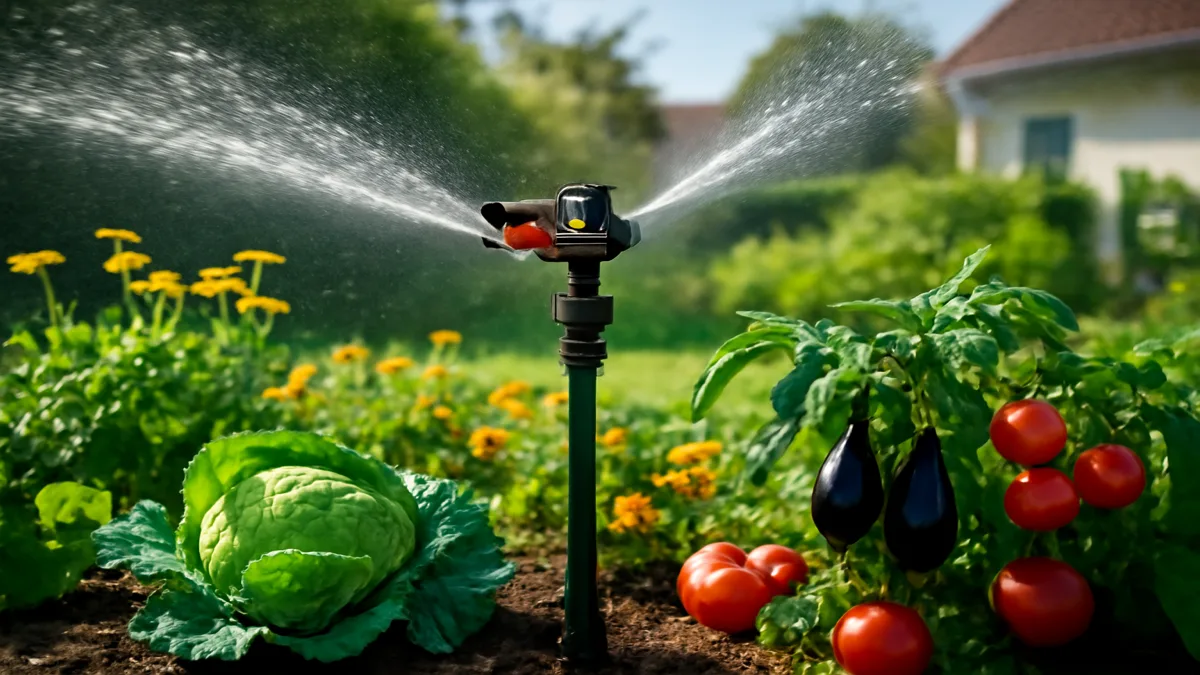
If you could only choose one method from this entire list, this would be it. Motion-activated sprinklers are the gold standard of humane cat deterrence, with a 90%+ success rate reported by gardeners and wildlife management professionals alike.
The concept is simple: an infrared sensor detects movement, and a burst of water fires in that direction. Cats despise unexpected water. After one or two encounters, most cats learn to avoid your yard entirely. The beauty of this approach is that it works day and night, requires no effort once installed, and actually waters your garden in the process.
The Orbit Yard Enforcer (around $55) is the most popular model for good reason. It covers up to 1,600 square feet with a 120-degree detection arc, runs on 4 AA batteries that last about 7,500 activation cycles, and connects to any standard garden hose. For larger yards, you can daisy-chain two or three units to cover the full perimeter.
A few practical tips to get the most from your sprinkler:
- Position it facing the direction cats typically enter. Look for gaps in fences or well-worn paths through your landscaping
- Adjust the sensitivity dial so it triggers on cat-sized animals but not on every passing bird or blowing leaf
- Move the sprinkler every few weeks to prevent cats from memorizing a safe path around it
- In freezing climates, disconnect and drain the unit before winter. Switch to scent or texture deterrents during cold months
- Set the “day only” mode if you don’t want it activating on raccoons and possums at 3 AM
The initial $55 investment pays for itself quickly when you consider how much time and frustration it saves. If you’ve been replanting destroyed seedlings or scrubbing cat urine off your patio furniture, you’ll wonder why you didn’t buy one sooner.
2. Scent Deterrents: DIY Solutions That Cost Almost Nothing
Cats have roughly 200 million scent receptors in their noses. About 14 times more than humans. That powerful sense of smell is your secret weapon. Certain odors that seem mild or even pleasant to us are deeply offensive to cats, and you can use this to create an invisible boundary around your garden.
Citrus Peels and Coffee Grounds
The cheapest approach is to scatter citrus peels (orange, lemon, grapefruit) and used coffee grounds around the base of plants and along garden borders. Cats strongly dislike the sharp acidity of citrus oils. Coffee grounds add a bitter, earthy smell that compounds the effect. Plus they’re mildly acidic, which benefits acid-loving plants like blueberries, azaleas, and rhododendrons.
The catch? These natural deterrents break down quickly. You’ll need to refresh them every 3-5 days, and more often after rain. Save your citrus rinds and coffee filters throughout the week and do a garden scatter every Saturday morning. It takes two minutes and costs literally nothing.
Essential Oil Sprays
For a longer-lasting scent barrier, mix 10-15 drops of lavender, eucalyptus, or citronella essential oil with two cups of water and a teaspoon of dish soap in a spray bottle. Mist it onto garden borders, fence posts, and any surfaces where cats like to walk or sit. The soap helps the oil cling to surfaces, extending its effectiveness to about a week between applications.
Important safety note: Never spray essential oils directly onto plants you intend to eat, and avoid spraying areas where cats might groom themselves immediately after contact. These concentrations are meant to deter from a distance through scent, not through direct skin contact. If you have your own cats, keep them away from treated areas for at least an hour after application. The ASPCA’s toxic plant database is a valuable resource for checking which substances are safe around pets.
Vinegar Boundaries
White vinegar sprayed along fence lines and hardscaped borders creates a scent wall that most cats won’t cross. It’s cheap, effective, and won’t harm any plants it doesn’t directly touch. Though you should keep it off foliage since the acidity can burn leaves. Reapply after every rainfall.
3. Plants That Repel Cats Naturally
Why keep reapplying scent deterrents when you can grow them permanently? Several plants produce odors that cats find deeply unpleasant, and many of them are beautiful, useful additions to your garden. This is one of the most elegant long-term solutions because it works passively, looks great, and often benefits your garden in other ways.
Here are the most effective cat-repelling plants:
- Coleus canina (the “Scaredy Cat Plant”), This is the heavyweight champion. It produces a skunky odor that cats, dogs, and rabbits all avoid. Humans can only smell it up close, so it won’t bother you from a normal distance. Plant it every 3 feet along garden borders for a living fence.
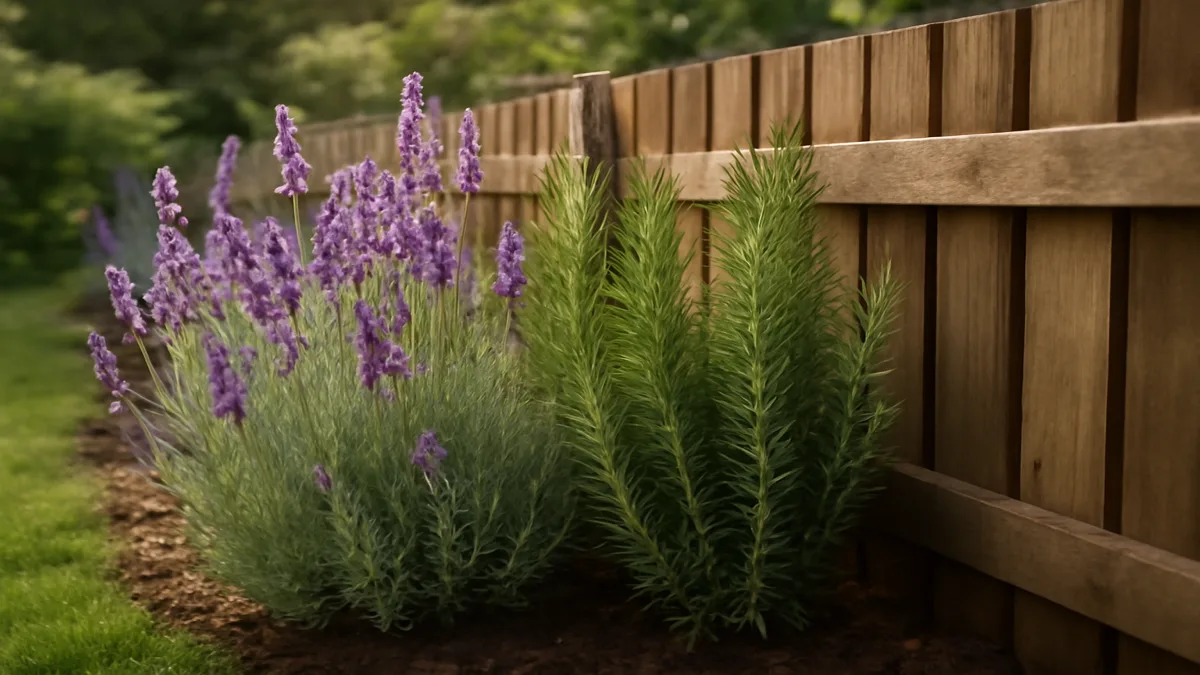
- Lavender, Beautiful, fragrant to humans, repulsive to cats. It also attracts pollinators, making it a perfect companion for a pollinator-friendly garden. Plant it along walkways and borders where cats enter.
- Rosemary, Another herb that cats dislike but humans love. It’s drought-tolerant, evergreen in mild climates, and useful in the kitchen. Win-win-win.
- Rue (Ruta graveolens), One of the strongest cat deterrents in the plant kingdom. The bluish-green foliage has a bitter, musky smell that cats hate. Caution: rue can cause skin irritation in some people, so wear gloves when handling it.
- Pennyroyal, A member of the mint family with a strong scent that repels cats and insects alike. It spreads aggressively, so plant it in containers or bordered beds to keep it in check.
- Citronella geraniums, Not true citronella, but they produce a lemony scent that cats dislike. They also help deter mosquitoes. Place them in pots around seating areas for double duty.
For best results, plant these along the perimeter of the areas you want to protect, not just in random spots. Think of them as a scent fence. If you’re also working to attract beneficial wildlife, check out our guide on flowers that attract hummingbirds. Many of these cat-repelling plants pair beautifully with hummingbird favorites.
4. Physical Barriers and Texture Deterrents
Cats are incredibly tactile creatures. They choose where to walk, sit, and dig based largely on how surfaces feel under their paws. This gives you a powerful, low-tech deterrent strategy: make the ground uncomfortable.
Chicken Wire on the Soil Surface
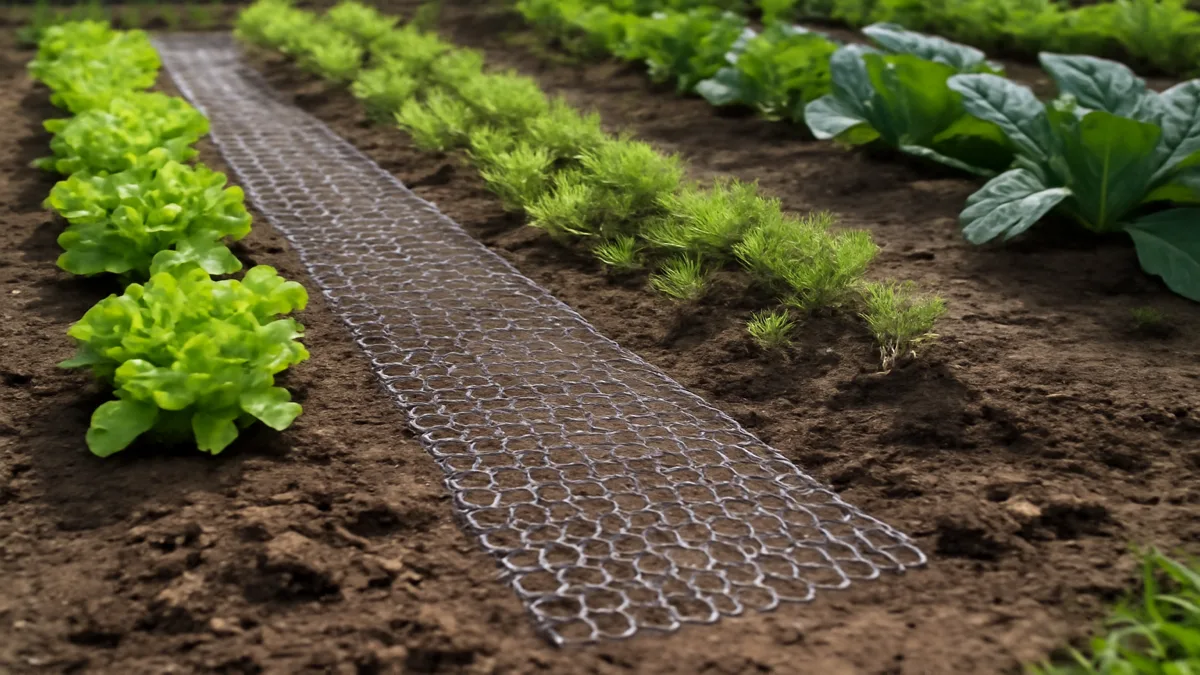
This is one of the oldest tricks in the gardening playbook, and it works beautifully. Lay sheets of chicken wire flat on the soil surface between your plants. Cats hate the feeling of wire mesh under their paws and absolutely cannot dig through it. Your plants grow up through the gaps just fine, and within a few weeks, foliage covers the wire completely so it’s invisible.
For new plantings, lay the wire first and cut small openings where you want to place seeds or transplants. A 50-foot roll of 1-inch mesh chicken wire costs about $25 at any hardware store and covers a surprising amount of garden space.
Prickle Strips and Spike Mats
Commercial cat scare mats (also called prickle strips) are flexible plastic sheets covered in blunt spikes. They don’t injure cats. The points are too dull to break skin. But the sensation is unpleasant enough that cats immediately step off and don’t return. Lay them along fence tops, around the base of bird feeders, or across any flat surface where cats like to lounge. A pack of 10 strips typically runs $15-20.
Rough Mulch Choices
Your mulch selection matters more than you might think. Cats strongly prefer soft, fine-textured mulches that mimic loose soil. Switch to materials that feel hostile underfoot:
- Pinecone mulch, Spiky, irregular, and impossible for cats to dig through. It also breaks down slowly, so you replace it less often.
- Sharp gravel or crushed stone, The angular edges are uncomfortable on soft paw pads. Use it along pathways and borders where cats typically enter.
- Cocoa shell mulch, The rough texture deters cats, and the chocolate scent is pleasant for humans. Note: cocoa shell mulch is toxic to dogs, so skip this if dogs visit your yard.
- Holly leaves or thorny prunings, Scatter dried holly, rose, or hawthorn clippings around beds. Free if you already grow these plants.
The great thing about texture deterrents is that they’re passive and permanent. Once installed, there’s nothing to reapply, refill, or reactivate. They work around the clock in any weather.
5. Cat-Proof Fencing Solutions
If cats are jumping or climbing over your existing fence, specialized fencing modifications can shut down that entry point completely. This is the most expensive option on our list, but it’s also the most permanent.
Roller Bars
The cleverest design is the roller bar system. These are smooth, spinning cylinders mounted along the top of your existing fence. When a cat tries to grip the top to pull itself over, the roller spins and the cat slides right back down. They simply cannot get a grip. Systems like the Oscillot cat fence system cost approximately $100-200 for 100 feet of fence line, which is reasonable considering it’s a one-time installation that lasts for years.
Angled Netting
An alternative approach is to attach mesh netting at an inward-facing 45-degree angle along the top of your fence. When cats reach the top and encounter the angled barrier leaning toward them, they can’t figure out how to get past it. This is the same concept used by wildlife sanctuaries and zoos. Heavy-duty deer netting works well and costs about $20-30 for a 100-foot roll, though you’ll also need brackets or PVC pipe to create the angled frame.
Before investing in fencing, spend a week observing how cats are actually entering your yard. You might discover they’re squeezing through a single gap in the fence boards rather than climbing over the top. A $5 repair rather than a $200 project.
6. Ultrasonic Deterrent Devices: Honest Expectations
You’ll see ultrasonic cat deterrents heavily marketed online, and they deserve an honest evaluation. These devices emit high-frequency sound waves (typically 18-25 kHz) triggered by motion sensors. The sound is inaudible to most adult humans but irritating to cats.
Here’s the reality: ultrasonic deterrents are about 50-70% effective, which makes them the least reliable primary method on this list. They work well for some cats and are completely ignored by others. Older cats with diminished hearing may not respond at all. And cats can habituate to the sound over time, meaning a device that worked in month one may stop working by month three.
| Deterrent Method | Estimated Cost | Effectiveness | Maintenance | Best For |
|---|---|---|---|---|
| Motion-activated sprinklers | $40-70 | 90%+ | Low (battery changes) | Open yards, gardens |
| DIY scent deterrents | $0-5 | 60-75% | High (reapply weekly) | Small gardens, borders |
| Commercial repellent sprays | $15-25 | 70-80% | Medium (every 4-6 weeks) | Targeted problem areas |
| Cat-repelling plants | $15-50 (one-time) | 65-80% | None (self-sustaining) | Long-term perimeter defense |
| Physical barriers (chicken wire, mulch) | $10-30 | 85-95% | Very low | Garden beds, digging areas |
| Cat-proof fencing | $100-300 | 90-95% | None once installed | Full yard perimeter |
| Ultrasonic devices | $20-40 | 50-70% | Low (battery/solar) | Supplement to other methods |
| Decoy/alternative areas | $10-30 | 70-85% | Low | Redirecting, not eliminating |
That said, at $20-40, ultrasonic devices are cheap enough to use as a supplement alongside more reliable methods. Think of them as one layer in a multi-layer defense, not a standalone solution. Solar-powered models like the Diaotec Solar Animal Repeller eliminate battery costs and work indefinitely. Just don’t expect miracles from sound alone.
7. Commercial Repellent Sprays That Actually Work
When you need stronger scent deterrence than DIY citrus peels can provide, commercial repellent sprays bridge the gap nicely. These are concentrated formulas designed to withstand rain and last much longer than homemade alternatives.
Two products stand out for consistent results:
Nature’s Mace Cat Repellent ($15-20 for a 40 oz concentrate) uses a blend of essential oils and putrescent egg solids that cats find revolting. One application lasts approximately 4-6 weeks, even through moderate rain. It’s safe for use around edible plants when applied according to the label directions.
Bonide Go Away! Cat Repellent (about $15-25 depending on size) comes in both granular and spray forms. The granular version is excellent for scattering around garden perimeters, while the spray works better on vertical surfaces like fence posts and the sides of raised beds.
For the best results with any commercial repellent:
- Apply on a dry day so it has time to bond to surfaces before rain
- Reapply immediately after heavy storms, even if you’re still within the 4-6 week window
- Rotate between products every few months to prevent cats from adapting to a single scent
- Focus application on entry points and problem areas rather than spraying your entire yard. It’s more cost-effective and equally successful
At roughly $15-25 per treatment that lasts over a month, commercial sprays are one of the best value propositions on this list. They’re particularly useful for protecting specific high-value areas like vegetable beds or newly planted flowers.
8. The Decoy Strategy: Give Cats a Better Option
This method might seem counterintuitive, but it’s surprisingly effective and beautifully simple. Instead of trying to keep cats out of your entire yard, you designate one small corner as the “cat zone”. And make it so irresistible that cats choose it over your garden every single time.
Here’s how to set it up:
- Choose a far corner of your yard, as far from your garden beds as possible. A 4×4 foot area is plenty.
- Install a small sandbox filled with fine, loose sand. This becomes the designated bathroom, and cats will strongly prefer it over your garden soil because sand is their ideal digging substrate.
- Plant cat-attracting plants in and around this zone: catnip, catmint (Nepeta), cat grass (wheat grass or oat grass), and valerian. These plants are essentially magnets. Cats will gravitate toward them and spend their time rolling, sniffing, and lounging in this area.
- Add a flat rock or wooden platform for sunbathing. Cats love warm, elevated surfaces for napping.
- Scoop the sandbox regularly (every few days) to keep it sanitary and attractive. An unscooped sandbox eventually gets rejected just like a dirty litter box.
Meanwhile, protect your actual garden with any of the deterrent methods from this guide. The combination of “pushed away from here” and “pulled toward there” is far more effective than deterrence alone. You’re not fighting the cat’s nature. You’re redirecting it. Cats get a comfortable space, and you get an intact garden. Everyone wins.
9. Working With Your Community: The Long-Term Fix
If your yard is visited primarily by feral or stray cats, individual deterrents treat the symptom but not the cause. The most impactful long-term solution is community involvement, specifically through Trap-Neuter-Return (TNR) programs.
TNR works like this: feral cats are humanely trapped, spayed or neutered by a veterinarian, vaccinated, ear-tipped for identification, and returned to their territory. They can no longer reproduce, which means the colony gradually shrinks through natural attrition. According to the Humane Society of the United States, TNR is the only proven method for humanely reducing feral cat populations over time.
Here’s how to get started:
- Talk to your neighbors. Chances are they’re dealing with the same problem. A coordinated effort is far more effective than individual action.
- Contact your local animal shelter or humane society. Many offer free or low-cost TNR services, including loaner traps and subsidized veterinary care.
- Check for local TNR organizations. Groups like Alley Cat Allies maintain a directory of TNR programs across the country.
- Document the cats you’re seeing. Note how many, what they look like, and when they visit. This information helps TNR coordinators plan effectively.
TNR won’t produce overnight results. It’s a solution measured in months and years. But combined with the deterrent methods above, it’s the only approach that actually reduces the number of cats visiting your neighborhood over time rather than just redirecting them to someone else’s yard.
What You Should Never Do
In the interest of being thorough, let’s address some “solutions” you might encounter online that are dangerous, cruel, or illegal. These methods should never be used:
- Mothballs, They contain naphthalene or paradichlorobenzene, both of which are toxic to cats, dogs, children, and wildlife. Using mothballs outdoors is actually a violation of their EPA-registered label, making it technically illegal.
- Antifreeze, Ethylene glycol is lethal to cats even in tiny amounts, and intentionally poisoning an animal is a felony in all 50 states. There is no excuse for this.
- Cayenne pepper applied directly to cats, While cayenne scattered on soil is a debatable deterrent, deliberately applying it to a cat’s fur or face causes severe pain and potential eye damage. This crosses the line from deterrence to cruelty.
- Leg-hold traps or glue traps, These cause extreme suffering and can injure or kill cats, birds, and other wildlife indiscriminately.
- Shooting with BB guns or pellet guns, Illegal in most municipalities, and causing unnecessary suffering to animals can result in criminal charges.
Every method in this guide works precisely because it’s humane. You don’t need to hurt animals to protect your garden. Cruelty isn’t just wrong. It’s also unnecessary when so many effective alternatives exist.
Putting It All Together: Your Action Plan
With nine methods to choose from, the best approach is a layered strategy tailored to your specific situation and budget. Here’s a practical starting framework:
If you’re on a tight budget ($0-10): Start with DIY scent deterrents (citrus peels and coffee grounds), lay chicken wire over garden beds, and switch to rough mulch like pinecone or sharp gravel. These three steps alone will dramatically reduce cat visits.
If you want the best balance of cost and effectiveness ($50-80): Buy a motion-activated sprinkler like the Orbit Yard Enforcer for your main garden area, supplement with a commercial repellent spray for borders and entry points, and plant lavender and rosemary along your garden perimeter. This combination covers sight, sound, scent, and surprise. Cats don’t stand a chance.
If you want a permanent, comprehensive solution ($150-300): Install roller bars or angled netting on your fence, set up a motion-activated sprinkler, create a decoy zone with catnip and a sandbox, and plant a full perimeter of cat-repelling plants. This is the “set it and forget it” approach that eliminates the problem long-term.
Whichever path you choose, give each new method at least two full weeks before judging its effectiveness. Cats are habitual creatures, and breaking an established routine takes time. If after two weeks you’re still seeing regular visits, add another layer from this guide rather than abandoning what you’ve already set up.
Quick answers to the usual questions
Will motion-activated sprinklers work on all cats?
Motion-activated sprinklers have the highest success rate of any single deterrent. Over 90% of cats will avoid a yard after one or two encounters with the spray. However, a very small percentage of cats are unusually bold or water-tolerant. For these rare holdouts, pair the sprinkler with scent deterrents or physical barriers for near-total coverage.
Are ultrasonic cat deterrents worth buying?
Ultrasonic devices work for some cats but not others, with an overall effectiveness rate of 50-70%. They’re affordable at $20-40, so they’re worth trying as a supplementary tool alongside more reliable methods. Just don’t rely on them as your sole deterrent. Cats can habituate to the sound within a few months, reducing effectiveness over time.
How do I stop cats from using my garden as a litter box?
The fastest fix is laying chicken wire flat on the soil surface between plants. Cats cannot dig through wire mesh, and they’ll immediately look elsewhere. Combine this with rough mulch like pinecone or sharp gravel for exposed areas. For a longer-term approach, create a designated sandbox in a far corner so cats have a preferred alternative.
Is it safe to use essential oils as cat deterrents around pets?
Diluted essential oil sprays applied to garden borders and fences are generally safe as area deterrents. However, concentrated essential oils can be toxic to cats if ingested or absorbed through skin. Never apply oils directly to any animal, and keep your own pets away from freshly treated areas for at least an hour. Always check the ASPCA’s toxicity database if you’re uncertain about a specific oil.
Do coffee grounds really keep cats away from gardens?
Coffee grounds are a moderately effective deterrent. Most cats dislike the strong bitter scent. They work best when combined with citrus peels and applied fresh. The main drawback is that they break down quickly and need reapplication every 3-5 days, especially after rain. As a free byproduct of your morning coffee, though, they’re absolutely worth using as part of a broader deterrent strategy.
Found this helpful? Share it with a neighbor who’s dealing with the same problem!
Want More Wildlife Garden Tips?
Join 5,000+ nature lovers getting our weekly tips on creating wildlife-friendly gardens.
No spam, unsubscribe anytime. Privacy Policy
Emma Harrington
Emma Harrington is a wildlife habitat researcher and content editor with a passion for backyard conservation. She has spent over a decade translating ecological science into practical tips anyone can follow — from selecting native plants to building wildlife-friendly habitats. Her work focuses on helping homeowners transform ordinary yards into thriving ecosystems for bees, butterflies, hummingbirds, and other beneficial wildlife.