
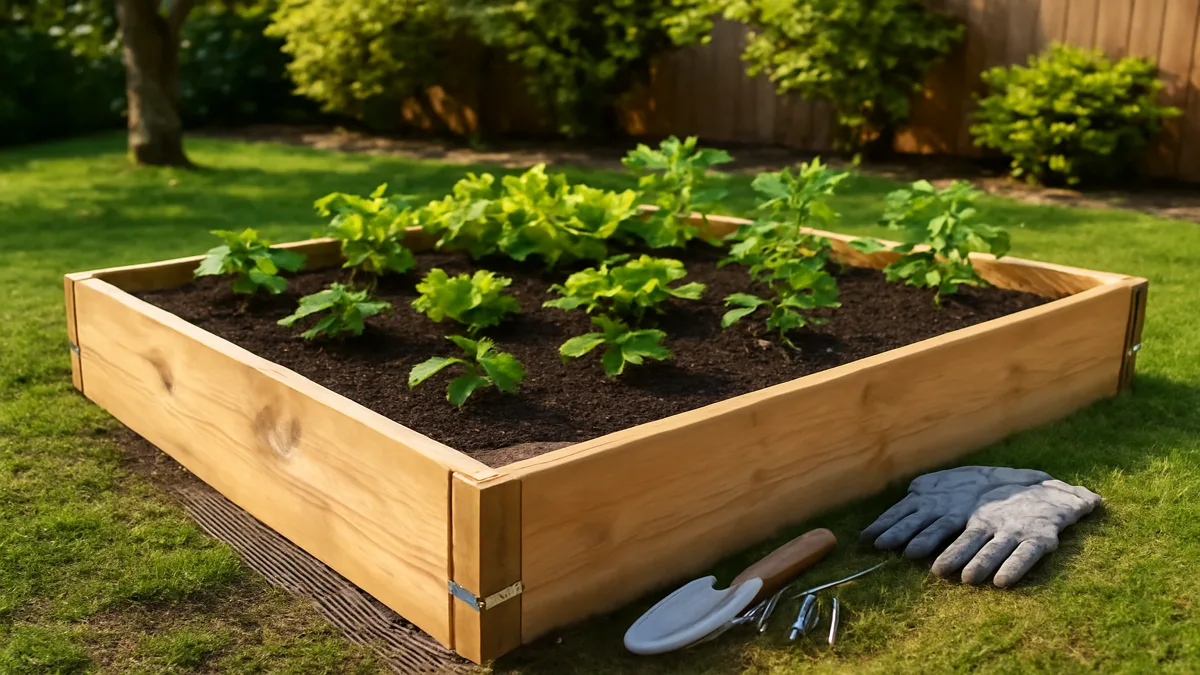
If you want to keep squirrels out of garden beds without hurting them, losing your mind, or spending a fortune on gadgets that don’t work, you’ve come to the right place. I’ve been there. One summer I watched a fat gray squirrel take a single bite out of every tomato on my plants, then drop them on the ground like a critic at a tasting. Twenty-seven tomatoes. Ruined. I nearly cried.
After that disaster, I went down a rabbit hole (squirrel hole?) of research, talking to extension agents, trying everything from cayenne pepper to motion sprinklers, and rebuilding my raised beds from scratch. Some methods were brilliant. Others were an embarrassing waste of money. A few are downright dangerous to wildlife and I’ll warn you about those too.
This guide walks you through nine humane, proven methods, ranked roughly by how well they actually work in the real world. We’ll cover physical barriers (the gold standard), smart deterrents, companion planting, and the common mistakes that make the problem worse. By the end, you’ll know exactly what to buy, what to build, and what to skip. Let’s get your garden back.
FREE: Wildlife Garden Starter Guide
Get our 12-page PDF with the 25 best plants for pollinators, simple habitat tips, and a printable checklist — all 100% free.
No spam. Read our Privacy Policy.Why Squirrels Target Your Garden in the First Place
Before you can outsmart a squirrel, you have to understand one. These little acrobats aren’t in your beds because they hate you personally (although it feels that way when you find a half-eaten zucchini flung across the lawn). They’re after three things: food, water, and a safe place to cache acorns for winter.
Here’s the kicker most gardeners don’t realize. When a squirrel bites into your ripe tomato and throws it aside, it usually isn’t eating the fruit at all. It’s drinking. Squirrels get much of their hydration from juicy produce, especially during hot, dry stretches in July and August. That’s why they’ll shred a tomato, take two bites of a pepper, and leave strawberries with little fang marks all over them.
Your raised beds also offer soft, workable soil that’s perfect for burying nuts and seeds. If you’ve ever planted tulip bulbs in October and watched every single one get dug up by November, congratulations. Your garden has become the neighborhood squirrel’s pantry. The solution isn’t to wage war. It’s to make your garden the least convenient snack bar on the block.
Method 1: Hardware Cloth Is Your Secret Weapon
If you only do one thing from this entire article, do this. Galvanized hardware cloth in either 1/2-inch or 1/4-inch mesh is the single most effective, most permanent, most squirrel-proof material you can buy. A roll runs about $18 to $40 at any hardware store, and it will outlast three generations of squirrels.
Hardware cloth works because squirrels cannot chew through it, cannot squeeze through it, and cannot dig under it if you install it properly. Unlike plastic bird netting (which we’ll get to later, and which you should not use), it won’t tangle wildlife or degrade in sunlight.
Here’s how I use it in my own garden:
- Line the bottom of every raised bed with hardware cloth before you fill with soil. This stops tunneling squirrels, voles, and gophers in one move.
- Build a simple wooden or PVC frame that sits over the top of the bed. Staple or zip-tie hardware cloth to the frame.
- Install hinges on one side so the whole top lifts up like a lid. You’ll thank yourself every time you weed or harvest.
- Bury bulb cages made from folded hardware cloth around tulips, crocuses, and any other tasty bulbs when you plant them in fall.
- Wrap tree trunks with a 2-foot-wide band of hardware cloth if squirrels are stripping bark or raiding fruit trees.
The University of Minnesota Extension recommends this approach as the most reliable exclusion method for home gardeners. I’ll link their guide below. It’s boring. It works. That’s the whole point.
Method 2: Motion-Activated Sprinklers (The Surprise Factor)
If hardware cloth is the fortress, motion-activated sprinklers are the moat. These devices use a small infrared sensor to detect movement and fire off a short, sharp burst of water. Harmless, but absolutely shocking to a squirrel that was just minding its thieving little business.
The Orbit Yard Enforcer is the one most gardeners swear by, running about $55. I bought one three summers ago and it’s still going. It connects to your hose with a standard fitting, runs on four AA batteries for months, and has day and night modes so it isn’t spraying every moth that flutters past at 3 a.m.
“After two weeks with a motion sprinkler, the squirrels stopped even walking through my yard. They’d get to the property line, look at the bed, and go next door. I felt a little bad. Then I ate a whole tomato and got over it.”
The trick is to move the sprinkler every few days. Squirrels are smart and will eventually map the dead zones if you leave it in one spot for a month. Rotate it between your most vulnerable beds and you’ll train the whole neighborhood population to avoid your yard entirely. This is, hands down, the most effective non-lethal active deterrent I’ve ever used.
Method 3: The “Wobbly” Fence Trick
This one sounds like a joke but I promise it works. A rigid fence is nothing to a squirrel. They’ll scale a 6-foot chain link in under three seconds. But a fence with a loose, floppy top that collapses under their weight? That’s a horror movie they don’t want to star in.
Run your squirrel-exclusion fence (chicken wire or hardware cloth works) up to about 30 inches, then leave the top 12 inches loose and unattached at the top. When a squirrel tries to climb over, the top section bends and dumps them back on the outside. They don’t get hurt, they just get confused and annoyed, and they find somewhere easier to raid.
This is especially useful around dedicated vegetable plots where a full hardware cloth cage would be impractical. Just make sure your gate is designed the same way or you’ve built a beautiful invitation with one wide-open door.
Method 4: Smart Companion Planting
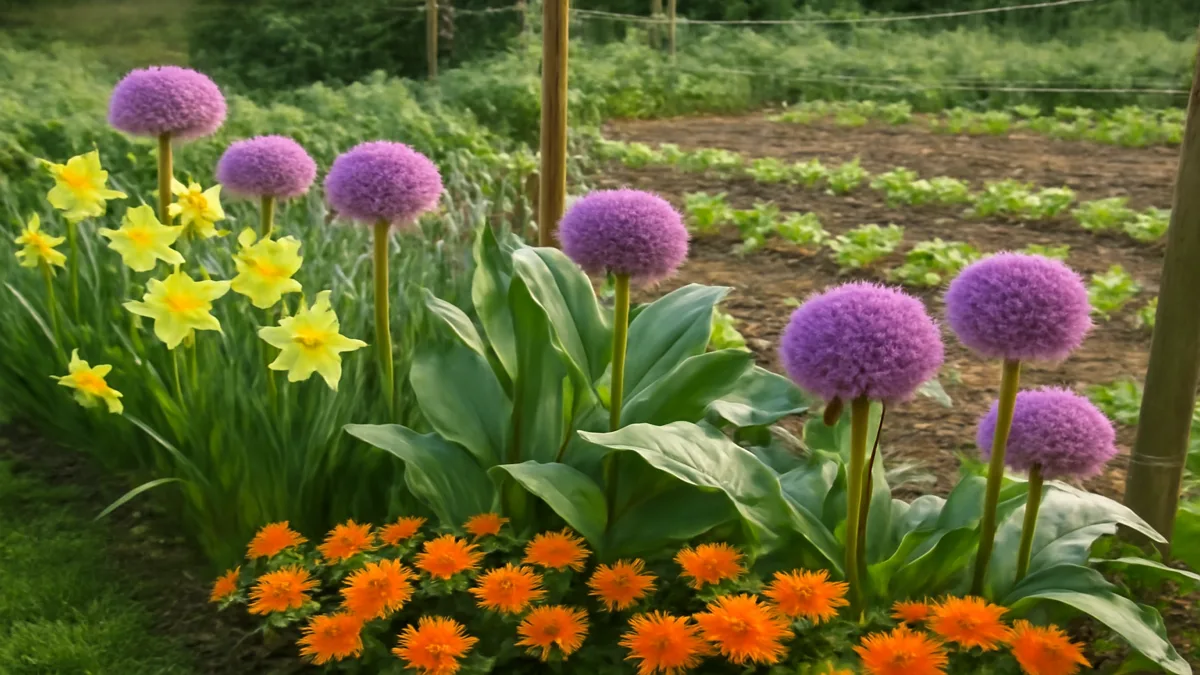
Squirrels have strong preferences about what they’ll tolerate near their snacks. Certain plants smell awful to them, taste terrible, or are outright toxic, and tucking these into and around your beds creates a natural perimeter that costs almost nothing.
Here are the companion plants that work best in my experience:
- Alliums. Garlic, onions, chives, and leeks. Squirrels hate the sulfur compounds.
- Daffodils. Toxic to squirrels, so they learn to leave them alone. Plant in rings around tulip beds.
- Fritillaries. The bulbs have a skunk-like smell squirrels despise.
- Mint. Plant in containers only unless you want a mint lawn.
- Marigolds. Cheerful, cheap, and they deter a surprising number of pests.
- Nasturtiums. Edible for you, offensive to them.
- Lavender and rosemary. Strong oils confuse their sense of smell.
A warning about tulips: to squirrels, tulip bulbs are basically candy. If you must plant them, cage every single bulb in hardware cloth or just accept that you’re running a squirrel buffet. I’ve switched almost entirely to daffodils and haven’t regretted it once. Speaking of blooms that attract the right visitors, if you want to see more pollinators and fewer pests, check out our guides on building a pollinator garden and choosing flowers for hummingbirds.
Method 5: Repellents That Actually Work
Commercial repellents are a mixed bag. Some are genuinely effective when applied correctly. Others are overpriced snake oil. Here’s an honest comparison of what’s on the shelf:
| Product | Active Ingredient | Price Range | Reapply How Often | Effectiveness |
|---|---|---|---|---|
| Tomcat Repellents | Essential oils | ~$36 | Every 30 days | Good |
| Plantskydd | Dried blood | $25-50 | After heavy rain | Excellent |
| Bobbex-R | Putrescent egg, garlic | $30-45 | Every 2 weeks | Very good |
| Critter Ridder | Black pepper, capsaicin | $15-25 | Every 2-3 weeks | Moderate |
| Shake-Away | Predator urine | $20-30 | Every 2 weeks | Moderate |
Plantskydd is my personal favorite because it uses real dried blood, which triggers a deep predator-avoidance response in squirrels. It smells faintly like a butcher shop for the first hour after application, then fades to nothing humans can detect, but squirrels still catch it and nope right out. The key with any repellent, though, is consistency. Miss a reapplication after a rainstorm and your squirrels will be back in the beds before the puddles dry.
Method 6: DIY Tricks From Grandma’s Playbook
Some of the cheapest deterrents are also surprisingly effective, especially when layered with the methods above. These are the tricks my grandmother used before anyone sold squirrel repellent in a bottle:
- Cayenne pepper sprinkled on soil and around plant bases. Harmless to birds (they don’t have capsaicin receptors) but unpleasant to mammals.
- Peppermint oil on cotton balls, tucked into little jars with holes poked in the lid, placed around the garden perimeter.
- Irish Spring soap chunks in mesh bags hung from stakes. Yes, really. The scent lasts weeks.
- Dog or human hair (ask your barber for clippings) worked into mulch. Squirrels read it as “predator nearby.”
- Gravel or crushed oyster shell mulch around beds. Uncomfortable on squirrel paws and doubles as slug deterrent.
- A shallow water dish placed far from your crops. Often, squirrels are just thirsty. Give them an easy drink elsewhere and they’ll skip the tomatoes.
That last one is controversial but it changed my garden. I put a cheap terra cotta saucer of clean water on the opposite side of my yard from the vegetable beds and refilled it every morning. The tomato damage dropped by about 80 percent in a single week. Squirrels aren’t always after your food. Sometimes they just need a drink.
Method 7: Protect Bulbs Like They’re Gold
Tulip and crocus season is squirrel Christmas. If you plant bulbs in fall without protection, by spring you’ll have dug-up holes, chewed bulbs scattered across the lawn, and exactly zero blooms.
The fix is simple. When you dig your planting hole, line the bottom and sides with a folded sleeve of hardware cloth, drop the bulb in, cover with soil, and top the hole with another layer of hardware cloth just under the surface. The shoots grow through the mesh in spring, but squirrels can’t dig down to the bulb.
For large beds, pre-build bulb cages from 1/4-inch hardware cloth. Basically little open-topped boxes. And bury the whole cage. You can reuse them year after year. If that sounds like too much work, plant daffodils instead. They’re toxic to squirrels, so the bulbs are left completely alone. My front yard is 90 percent daffodils now and it’s a yellow ocean every March.
Method 8: Remove the Easy Food Sources
Sometimes the squirrel problem in your garden isn’t really about your garden. It’s about the easy food two yards over. Take a walk around your property and look for the buffets you might be accidentally running:
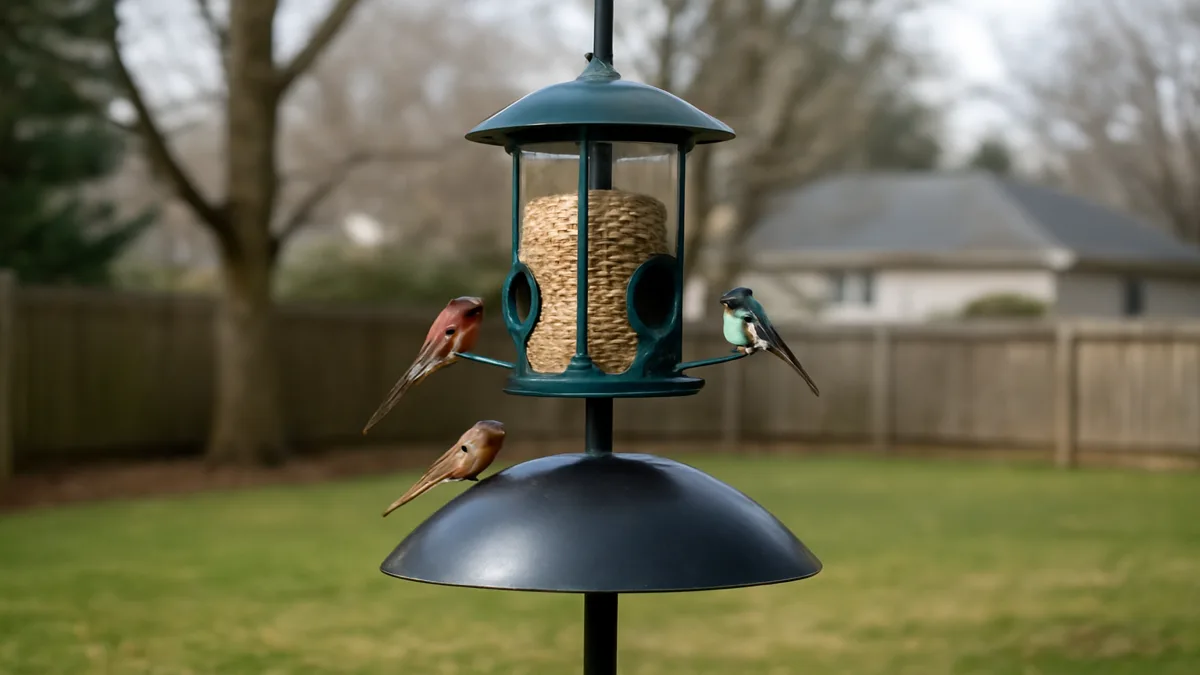
- Bird feeders that spill seed on the ground (switch to squirrel-proof feeders or use safflower seed, which squirrels dislike)
- Fallen fruit under apple, pear, or nut trees. Rake daily in season
- Unsecured compost bins with food scraps exposed
- Pet food left on porches or patios overnight
- Trash cans without tight-fitting lids
I once spent a whole summer fighting squirrels in my vegetable beds only to realize my neighbor was dumping stale bread on his lawn every morning for the birds. The squirrels weren’t in my garden because my garden was so good. They were there because they lived next door full-time. A polite conversation and a bag of proper birdseed fixed what three months of repellent hadn’t.
Method 9: Make Your Yard Less Squirrel-Friendly Overall
The final method is the long game. Squirrels need cover, travel routes, and nesting spots. Remove those and the whole neighborhood population shifts elsewhere. This doesn’t mean clear-cutting your yard. Just being strategic.
Trim tree branches that hang within 10 feet of your house, garage, or garden fencing. Squirrels use these as highways. Clear out old brush piles where they nest. Seal any gaps in sheds, attics, or outbuildings where squirrels might den. If you have cats in the yard (and they’re safe outdoor cats), they’ll naturally discourage squirrel traffic, though if you’re dealing with feline visitors instead, our guide on how to keep cats out of your yard has some helpful tricks.
The University of California Agriculture and Natural Resources division has excellent free guidance on integrated squirrel management for gardeners. It’s worth a read if you want the full science behind what works.
What NOT to Do: Common Mistakes That Backfire
Before we wrap up, please don’t do any of these things. Each one either doesn’t work, hurts wildlife, or is outright illegal in many places:
- Ultrasonic repellers. The FTC has confirmed these do not work. Don’t waste $40.
- Lightweight bird netting. Kills songbirds, snakes, and even the occasional owl. Use hardware cloth instead. Always.
- Mothballs outdoors. Illegal in most states, genuinely toxic to pets, kids, and groundwater. Never.
- Peanut butter bait. Causes metabolic bone disease in squirrels. Inhumane.
- Live trap and relocate. In most states this is illegal without a permit, and relocated squirrels usually die within a week. They don’t know the territory, food sources, or predators.
Humane, exclusion-based methods are not just kinder. They’re more effective long-term, because they solve the problem instead of creating a revolving door of new squirrels moving into the vacated territory.
Your Squirrel-Free Garden Starts Today
Squirrels are clever, determined, and frankly kind of charming when they’re not destroying your produce. But you don’t have to share your garden with them. Start with hardware cloth on your most vulnerable beds, add a motion sprinkler for active defense, layer in companion plants and a rotating repellent, and you’ll have a garden that quietly becomes “not worth the trouble” to the local squirrel population.
Most importantly, take the long view. One weekend of building hardware cloth bed covers will save you hundreds of hours of frustration over the next decade. Your future self, harvesting a full basket of unbitten tomatoes, will thank you.
If this guide helped you, please share it with a gardening friend who’s fighting the same battle. Every gardener I’ve sent this to has come back a month later saying it changed their season. Pass it on, and let’s all keep more tomatoes where they belong. In our kitchens.
For more science-backed squirrel deterrent strategies, consult resources from the University of Minnesota Extension and UC ANR Integrated Pest Management program.
A Squirrel-Proofing Schedule Built for Every Season
Wildlife gardens and backyard habitats reward consistent attention more than occasional bursts of effort. A month-by-month rhythm keeps plants healthy, feeders clean, and visiting creatures safe through every temperature swing. The calendar below outlines the core tasks by season, with realistic expectations for what you will observe outside your window.
| Season | Months | Priority Tasks | What to Expect |
|---|---|---|---|
| Spring setup | March to May | Deep-clean feeders with a 1:9 bleach solution, prune dead stems after the last frost, mulch fresh beds, install nest boxes before April 1 | Peak migration activity, first broods of songbirds, emerging pollinators on early bloomers like crocus and serviceberry |
| Summer monitoring | June to August | Refresh birdbaths every 2 to 3 days, watch for wasp nests in boxes, deadhead spent blooms, water deeply once weekly rather than shallowly daily | Fledglings learning to forage, hummingbird territorial displays, butterfly peak in July, possible heat stress on shallow-rooted plants |
| Fall preparation | September to November | Leave seed heads standing, rake leaves into bed corners instead of bagging, clean out nest boxes after October 15, plant native bulbs and shrubs | Heavy feeder traffic from migrants, chipmunks caching food, last monarchs moving south, frost damage on tender perennials |
| Winter survival | December to February | Keep water unfrozen with a heated dish, offer high-fat suet and black oil sunflower, break ice in birdbaths at dawn, avoid pruning dormant stems that shelter insects | Mixed-species flocks at feeders, woodpeckers working dead wood, occasional raptor visits, overwintering cocoons on leaf litter |
One habit that pays off all year: keep a simple notebook or phone note listing first sightings, first blooms, and first frost. After two or three seasons you will have a personalized calendar more accurate than any regional guide, because it reflects your exact microclimate and the species that actually use your yard.
What I get asked the most
What smell do squirrels hate the most?
Squirrels are most repelled by strong sulfur and capsaicin smells. The clear winners are garlic, onions, peppermint oil, cayenne pepper, and predator urine products like Shake-Away. Plantskydd, which uses dried blood, triggers an even deeper avoidance response. Rotate scents every couple of weeks so squirrels don’t habituate to any single smell.
Do coffee grounds keep squirrels out of the garden?
Coffee grounds have a mild deterrent effect because of the bitter smell and acidic reaction, but they’re not reliable on their own. I’ve seen squirrels walk right over fresh grounds to reach tomatoes. Use them as a small layer in your deterrent strategy combined with hardware cloth, cayenne, or repellent spray. Don’t count on grounds alone to protect valuable crops.
Are ultrasonic squirrel repellers worth buying?
No, and I say that with real conviction. The Federal Trade Commission has specifically warned consumers that ultrasonic pest repellers do not work against mammals like squirrels, mice, or raccoons. Save your money and invest in hardware cloth or a motion-activated sprinkler instead. Both are proven and will pay for themselves in saved produce within one season.
Will a fake owl or rubber snake scare squirrels away?
Briefly, yes. For about 48 hours. Squirrels are smart enough to figure out a plastic predator that never moves, and they adapt quickly. If you want to use decoys, move them every two or three days to a completely different spot and combine with real deterrents. On their own, decoys are decorative at best and do very little to protect your plants long-term.
How do I keep squirrels out of potted plants on my patio?
Pots are tricky because squirrels love the soft soil for caching nuts. Cover the soil surface with large river stones, pinecones, or a cut-to-fit piece of hardware cloth with holes for your plant stems. Sprinkle cayenne pepper every week or so. For smaller pots, a simple wire mesh lid works wonders and lifts off easily for watering.
Want More Wildlife Garden Tips?
Join 5,000+ nature lovers getting our weekly tips on creating wildlife-friendly gardens.
No spam, unsubscribe anytime. Privacy Policy
Emma Harrington
Emma Harrington is a wildlife habitat researcher and content editor with a passion for backyard conservation. She has spent over a decade translating ecological science into practical tips anyone can follow — from selecting native plants to building wildlife-friendly habitats. Her work focuses on helping homeowners transform ordinary yards into thriving ecosystems for bees, butterflies, hummingbirds, and other beneficial wildlife.