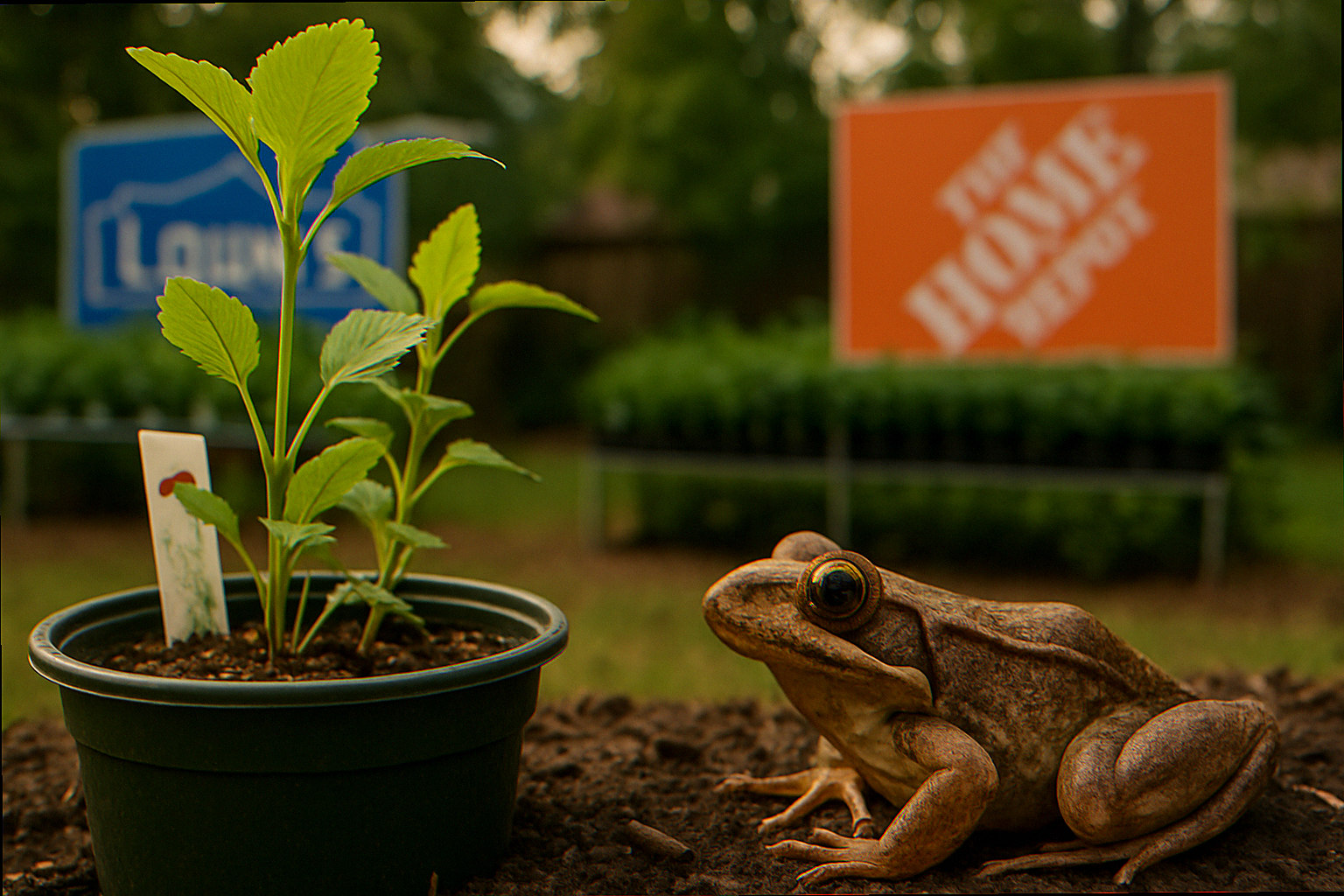
Three Aprils ago I walked out of a Lowe’s parking lot with six “native” perennials that turned out to be exactly zero native plants. One was a Japanese cultivar. Two were sterile nativars that produce almost no nectar. The other three had county-level data that put them four states away from my zone. I had spent ninety dollars and felt great about it for about forty-eight hours.
If you garden for wildlife and you also shop at big-box stores because the prices and convenience are real, you already know this trap. The signage is vague, the labels are sloppy, and “native” gets pasted on tags that have nothing to do with regional ecology. This guide walks through the six-step verification process I now run on every plant before it leaves the cart, so you can keep using Lowe’s and Home Depot for the budget wins without bringing home another expensive mistake.
Why Big Box Inventory Is a Minefield for Native Gardeners
Big-box garden centers do not buy plants the way you do. They buy from a small list of regional growers who supply hundreds of stores at once, and those growers stock what sells nationally rather than what evolved in your county. A single shipment that lands in Atlanta on Monday also lands in Minneapolis on Wednesday, even though those two ecoregions share almost no overlapping native plant communities. That is structural, not malicious, and it explains why almost half of what is labeled “pollinator-friendly” at most chains is technically pollinator-friendly somewhere on the planet but not in your watershed.
FREE: Wildlife Garden Starter Guide
Get our 12-page PDF with the 25 best plants for pollinators, simple habitat tips, and a printable checklist — all 100% free.
No spam. Read our Privacy Policy.The second issue is signage. Stores use plastic stake-tags that come pre-printed from the grower, and those tags are written for the broadest possible buyer. You will see “great for bees and butterflies” on a Knock Out rose. You will see “thrives in full sun” on a plant that wants four hours of dappled light in the South. And you will see the word “native” used in three contradictory ways on the same aisle: native to North America, native to your USDA hardiness zone, and native to a state two time zones away. None of those tell you whether the plant evolved with your local insect community.
The third issue is the rise of nativars. A nativar is a cultivated variety of a native species, selected for traits like compact size or unusual flower color. Some perform almost as well as their wild parent. Many do not. Research from Mt. Cuba Center and others has shown that double-flowered or color-shifted nativars often produce significantly less pollen and nectar than the straight species, and some sterile selections produce none at all. The tag will still call them native because the species name is technically native. That is the gap this guide closes.
The 6-Step Verification Process I Use in Every Store Aisle
This is the checklist I run on my phone, in the aisle, before any plant goes in the cart. It takes about 90 seconds per plant once you have done it 10 times, and the process shaved 4 hours off my spring shopping trips last season. I keep it as a note on my home screen so I am not fumbling through screenshots.
1. Find the scientific name. Flip the tag over and look for two italicized words, usually in small print near the bottom. If there is no scientific name on the tag, that is your first red flag. Skip the plant or scan the QR code if the store has one. Common names like “purple coneflower” can refer to several different species, only one of which is widely native east of the Rockies.
2. Check it against BONAP at the county level. Open the Biota of North America Program county distribution map and search the scientific name. Look at your specific county, not your state. A plant native to a county four hundred miles south can fail in your soil, photoperiod, or chill hours. BONAP shows you both the county records and whether it is genuinely native, introduced, or absent.
3. Cross-check with the USDA PLANTS Database. If BONAP shows a gap or you want a second source, search the same scientific name on the USDA PLANTS Database. It pulls from herbarium records and gives you a quick “Native Status” line per state. When BONAP and USDA agree, you are on solid ground. When they disagree, default to BONAP because it has more recent county-level data.
4. Confirm it is the straight species, not a nativar. If the tag shows the scientific name followed by a quoted name in single quotes (for example, Echinacea purpurea ‘Pow Wow Wild Berry’), that is a cultivated variety. For pollinator value, prefer the straight species whenever it is available. If the straight species is not on the shelf, look up the specific cultivar on the Mt. Cuba Center trial reports before buying. Some perform fine. Many do not.
5. Photograph the leaf and stem before buying. Tags get switched. I have seen mislabeled plants more than once where the actual plant in the pot did not match the species name printed on the tag. Take a clear photo of leaf shape, leaf arrangement on the stem, and any flower buds. Run it through the iNaturalist app or Seek on the spot. If the visual ID disagrees with the tag, walk away.
6. Look for the grower sticker. Reputable growers print their farm name on the back of the tag or on the pot itself. Search the grower’s name on your phone. If they are a regional native specialist, your odds are far better than if the grower is a national wholesale operation that bulk-ships ornamentals. This single signal will catch most of the bad inventory at chain stores.
Nativars vs. Straight Species: The Cultivar Trap
The cultivar trap is the single most common mistake I see at big-box stores, and it is also the one that drives the most disappointed messages I get from readers. Someone plants what the tag calls a native milkweed and waits all summer for monarch caterpillars that never arrive. Then they find out the variety they bought is a sterile selection that produces no viable seed and very little nectar. The plant is technically the right species. The selection is wrong.
Here is the simple rule I follow. If pollinators or larval host value matter to you, and they do since that is the whole point of a wildlife garden, buy the straight species first. Reach for nativars only when the straight species is unavailable, when you need a specific size constraint for a tight bed, or when the cultivar has been tested in independent trials and performs well. Mt. Cuba Center’s published trials for Echinacea, Phlox, Monarda, Helenium, and several others are free online and rank cultivars by both ornamental performance and ecological function.
Watch out for three specific cultivar red flags on big-box tags. Double-flowered selections, where the bloom looks like a small carnation instead of an open daisy form, almost always have reduced or inaccessible nectar. Color-shifted selections in unnatural shades (bright orange coneflowers, electric yellow phlox) usually came at the cost of pollen quality. And dwarf or compact selections sometimes lose the canopy structure that hosts caterpillars and beneficial insects. None of this is on the tag. You have to know the pattern.
How to Read a Garden Center Plant Tag in 30 Seconds
Tags are designed to sell, not to inform, but they do contain useful information if you know where to look. Here is the order I read them in once I have already confirmed the scientific name.
First, hardiness zone range. If the tag says zones 7-9 and you garden in zone 5, the plant will die over winter regardless of how native it is somewhere else. Match the zone to your USDA hardiness map before anything else.
Second, sun and water requirements. Big-box tags often oversimplify, so treat “full sun” as four-plus hours in the South and six-plus in the North. Treat “partial shade” as morning sun with afternoon cover. If the tag says “average water,” assume that means weekly during establishment in dry climates and almost never once established for true natives.
Third, mature size. Tags routinely understate adult size, especially for shrubs and clumping perennials. I add about twenty percent to whatever the tag says for height and spread. That margin keeps me from crowding plants in year three.
Fourth, container size and price per cubic inch. Three of the worst values at big-box stores are oversized one-gallon pots full of loose mix, four-inch pots of fast-growing species that are nearly root-bound, and bare-root packages that have sat in a heated store for weeks. The best values are small plug trays of straight-species perennials, when you can find them, and unopened bare-root packages that arrived within the past seven days.
The Five Worst Misleading Labels at Lowe’s, Home Depot, and Walmart
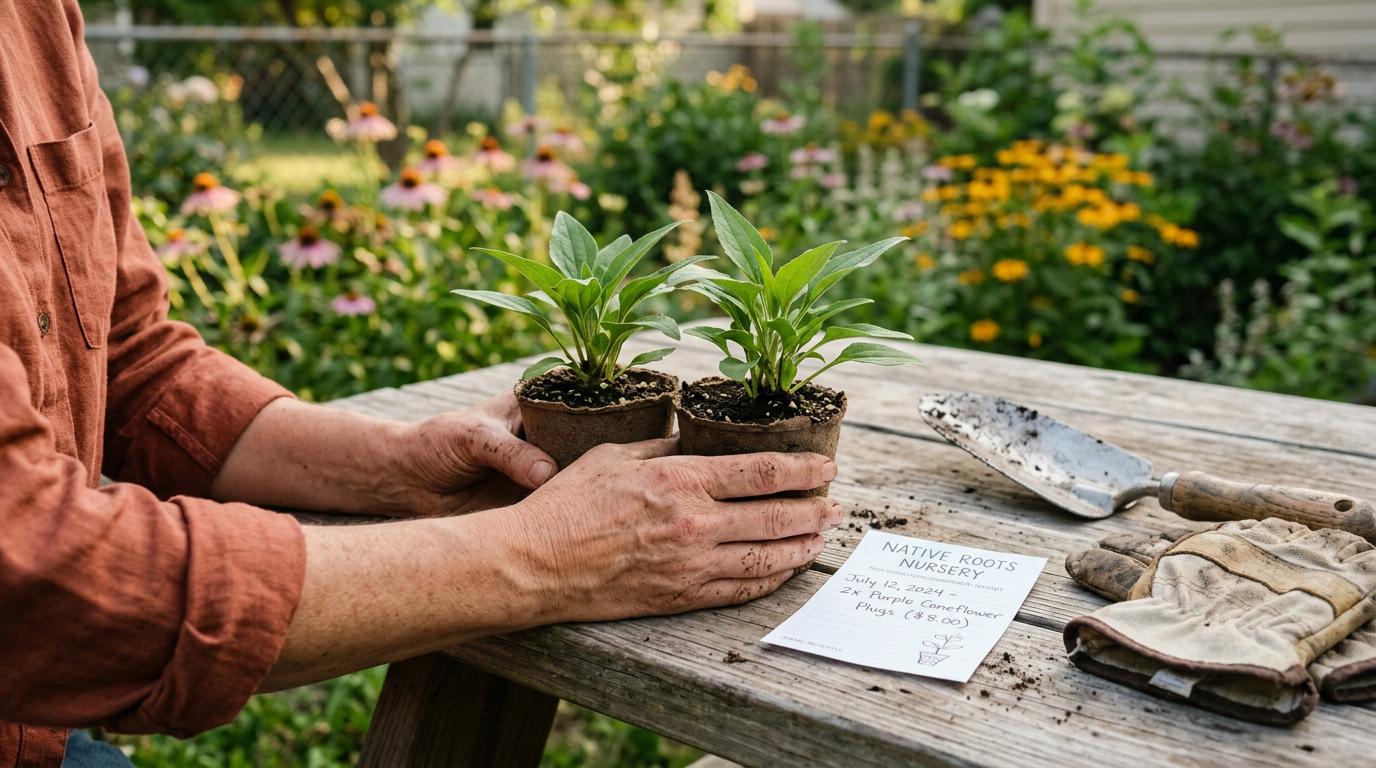
After tracking my purchases and disappointments for two seasons, I keep a private blocklist of labels that almost always mean trouble. Watch for these phrases on chain-store tags.
“Native to North America.” Functionally meaningless for backyard wildlife. North America is roughly twenty-four million square kilometers and supports more than seventeen thousand native plant species across dozens of distinct ecoregions. A plant native to coastal California has nothing to do with a Massachusetts pollinator garden. Treat this label as a starting point, not an answer.
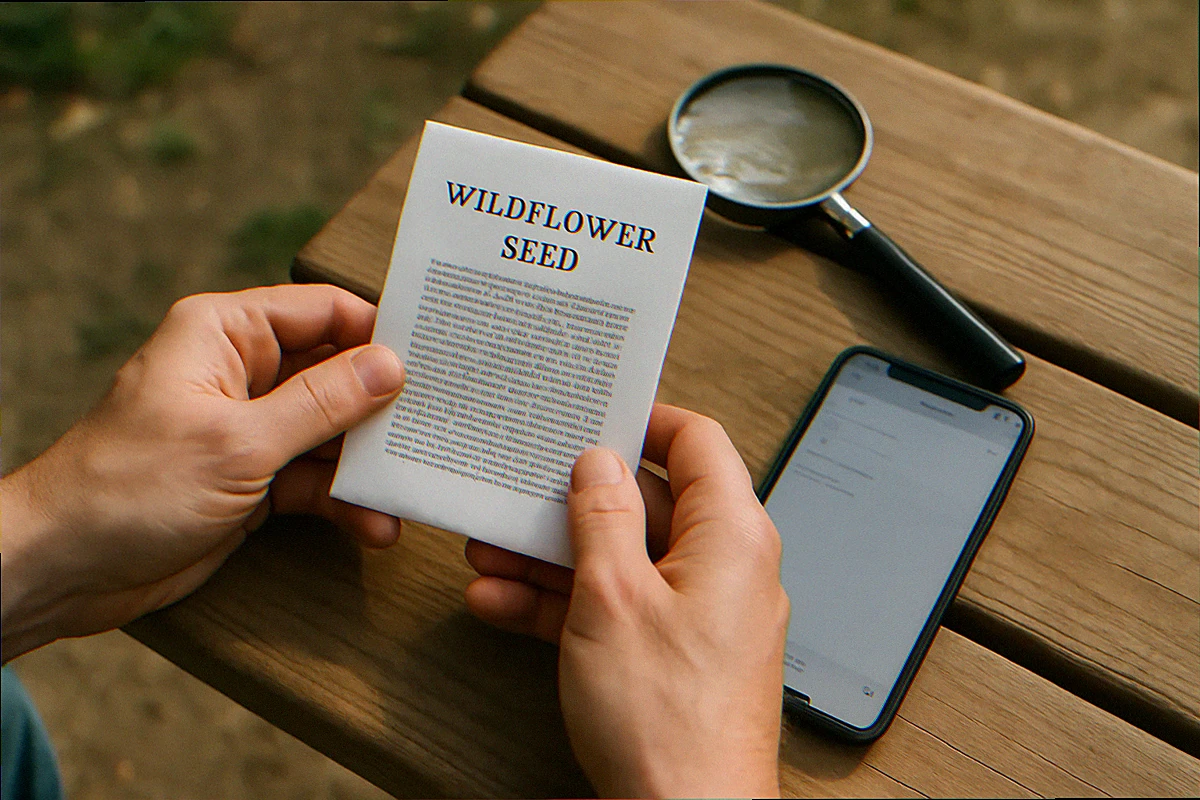
“Pollinator-friendly mix.” Used most often on seed packets but also on potted plant collections. Mixes typically contain a few generally attractive species along with filler that may or may not be native to your region. Some mixes still contain known invasives like dame’s rocket, oxeye daisy, or non-native lupine. We covered the specific labels to watch on seed mixes in our companion piece on wildflower seed mix labels and how to spot invasive fillers.
“Drought tolerant” with no species name. A drought-tolerant tag without a scientific name is a near-guarantee of a non-native xeric ornamental. Real drought-tolerant natives almost always have well-documented species names because regional gardeners ask for them by name.
“Deer resistant.” Not necessarily a problem on its own, but on a big-box tag this phrase often correlates with strongly aromatic non-natives like Russian sage or non-native lavenders. Deer-resistant natives exist in every region. They just rarely get this label because chain stores stock the imported ornamentals more often.
“Spreads vigorously.” On a native plant tag this is good. On a non-native or unidentified tag it is your fastest path to an invasion. Always pair this label with a BONAP check before buying.
When Big Box Actually Wins: Three Reliable Categories
I do not want to leave you with the impression that you should boycott big-box garden centers. The pragmatic truth is that they win on three specific categories that local native nurseries usually cannot beat on price, and using them strategically keeps your project moving when funds are tight.
The first category is hardware and soil amendments. Compost, pine bark fines, coarse sand for stratification, and basic hand tools cost less at Lowe’s and Home Depot than at any specialty nursery. Buy these in bulk and save the price gap for your plant budget at the native specialist.
The second category is bare-root woody plants in spring. Both Lowe’s and Home Depot run bare-root truckload sales in February and March that include red maples, river birches, serviceberries, redbuds, and several oak species. These are usually grown by regional liners that supply nurseries up and down the chain, and many are straight species. The window is short. Get there the week the truck arrives, and the inventory is fresh and the prices are excellent. We laid out a broader sourcing approach in our guide to building a native plant garden on a budget, and bare-root buys are a major lever in that strategy.
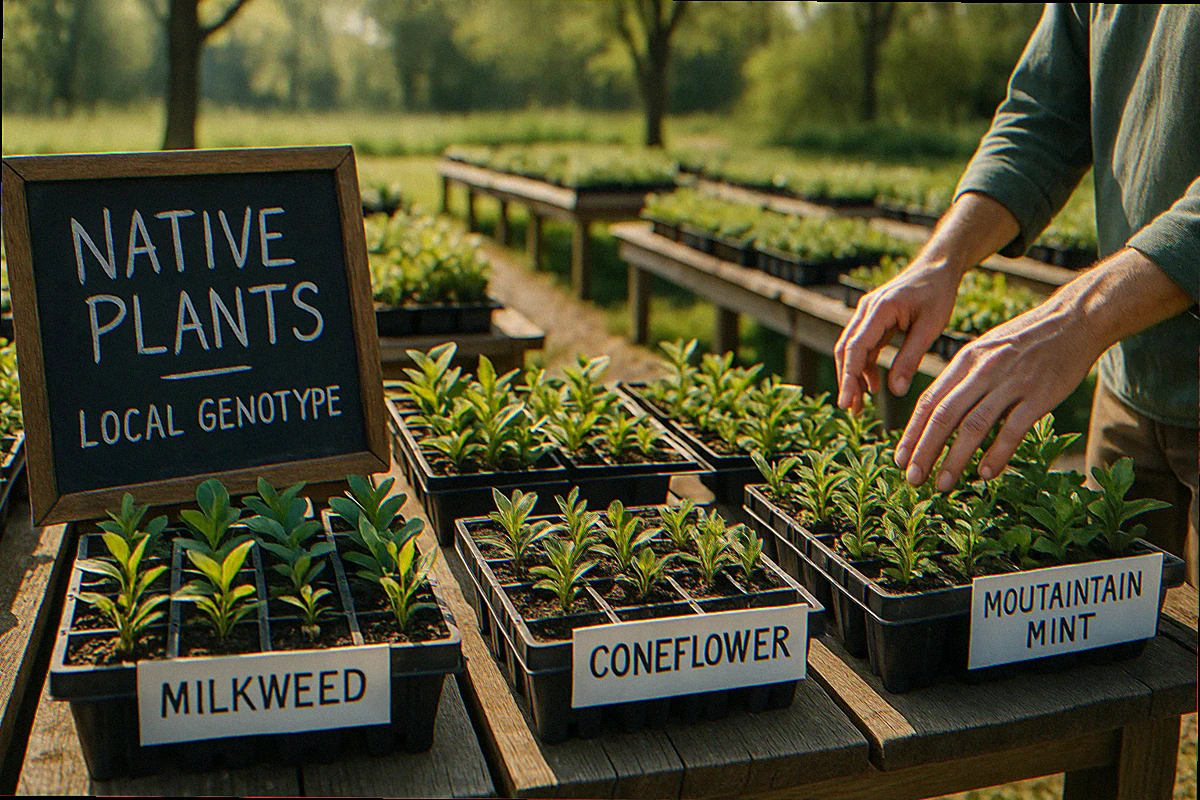
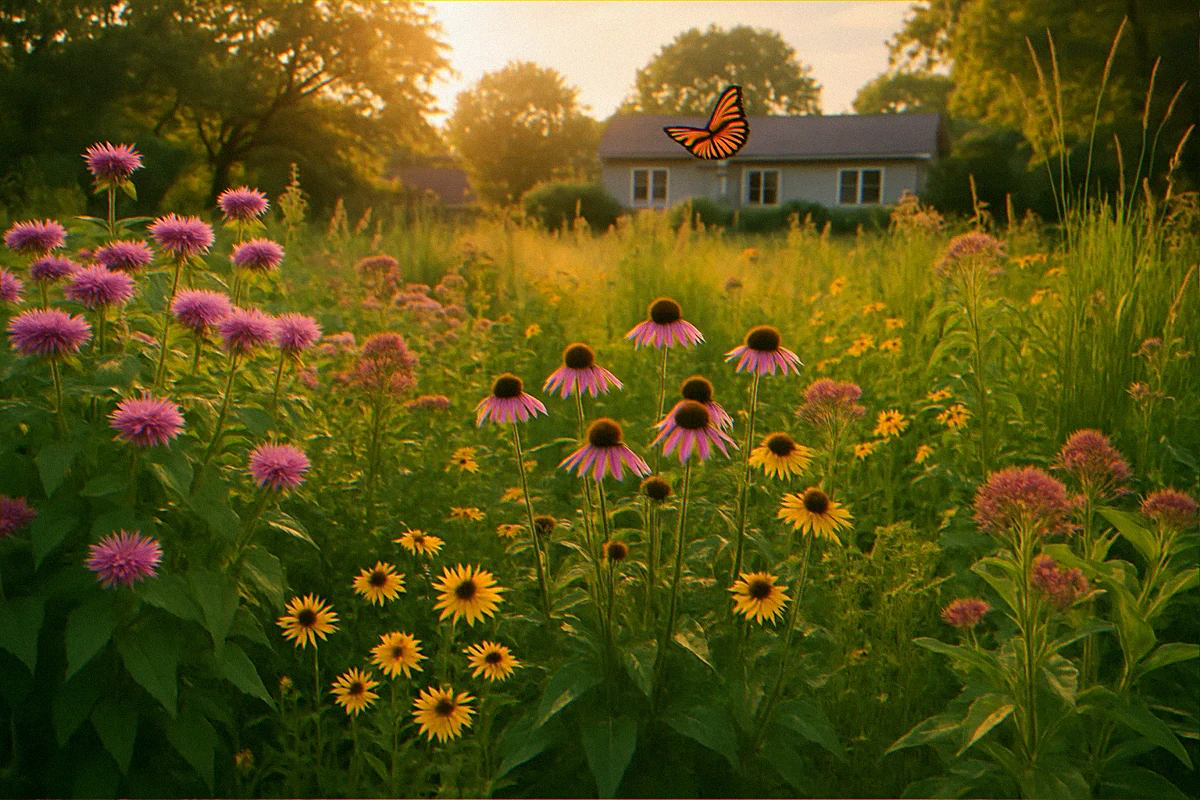
The third category is specific straight-species perennials that the chain stocks because they are bulletproof. Black-eyed Susan (Rudbeckia hirta), purple coneflower (Echinacea purpurea) straight species, common milkweed (Asclepias syriaca) where state law allows, and bee balm (Monarda fistulosa) all show up regularly at chain stores in their straight-species form. When the price is fifty percent cheaper than the native nursery and the verification process confirms the species, buy them.
Building a Cheat Sheet for Your USDA Zone Before You Shop
The single best time investment for a native plant shopper is one rainy afternoon spent building a short cheat sheet for your USDA hardiness zone and county. The list does not need to be exhaustive. Twenty to thirty species you genuinely want, written down with scientific names, beats walking into a store and trying to remember which Latin binomial goes with which common name.
Start with the Audubon Native Plants Database, which lets you enter a zip code and filter for plants that support the largest number of native bird species. Cross-reference any species the database suggests against BONAP at your county level. Then narrow further by checking the Xerces Society pollinator plant lists for your region, which prioritize species that support specialist bees and butterfly larval hosts.
Once you have your list, organize it by category. Spring bloomers. Summer bloomers. Fall bloomers. Grasses and sedges. Shrubs and small trees. The category matters more than people think, because chain stores cycle through different stock at different times of year, and you want to know which sections to even bother walking into during a given visit. A note that just says “if I see Pycnanthemum muticum in a quart pot for under twelve dollars, buy it” is a lot more useful than vague good intentions about adding pollinator plants this season.
I also write down the maximum price I am willing to pay per container size. That single discipline has saved me hundreds of dollars and prevented several impulse buys that I would have regretted. Tying this cheat sheet to a specific USDA zone matters, and our walkthrough on building a foolproof native plant garden recipe for your USDA zone has the templates I use to map species to zones.
What to Do If You Already Brought Home a Nativar
So you got home, you ran the checks the slow way at the kitchen counter, and now you have a flat of plants that turned out to be a cultivar you would not have chosen. Do not throw them away. The triage decision depends on what the nativar actually does.
If the cultivar is a color or size variant of a true native species, plant it. It may not match the straight species for pollinator value, but it still has more ecological function than a non-native ornamental. Mt. Cuba’s trial data, drawn from 4 years of replicated field plots, suggests most single-form, normally colored nativars retain at least 60% of the pollinator visits of the straight species. That is not perfect. It is still meaningful.
If the cultivar is a double-flowered or sterile selection, decide based on placement. In a front-yard bed where curb appeal matters and the neighborhood is judging your “messy” pollinator garden, a tidy nativar can earn you community goodwill while you build the wilder backyard. In a dedicated wildlife area, replace it the next season with the straight species and gift the cultivar to a neighbor who is not gardening for ecology.
If the plant turned out to be a non-native ornamental masquerading as native, that is a different problem. Check whether it is on your state’s invasive list. If it is, return it to the store with the receipt and ask for a refund. Most chain stores will accept the return even past their normal window when you explain the issue, because they are increasingly aware of the reputational risk. If it is not invasive, plant it somewhere you can monitor it and remove the flower heads to prevent any seed dispersal until you can replace it with a true native.
The framework I use is the same one I would use for any imperfect garden decision. Sarah does not need a perfect yard. She needs a yard that gets better every season. A wrong nativar that becomes a learning moment is worth more than a paralyzed cart full of indecision in the aisle. We covered the deeper county-level verification logic in how to verify a plant is truly native to your county, which pairs well with this guide for everything you do after the receipt is in your pocket.
The Backyard Reality: My Working Big Box Routine
Here is my actual current routine, refined over four seasons. I shop at Lowe’s or Home Depot exactly 2 times per spring across about 6 weeks: once the week the bare-root trucks arrive in late February or early March for woody plants, and once in late April for any straight-species perennials I missed at the native nursery preorder. Both trips are list-driven. I do not browse. I do not buy plants on impulse from chain stores, because impulse buys are exactly when the verification process gets skipped.
For everything else, I order from a regional native nursery preorder list in January and pick up at their plant sale in May. The per-plant cost is higher, but the plants are stronger, the species are guaranteed, and the staff actually knows what each one wants. The big-box trips fill the gaps. They do not anchor the project.
If you cannot find a regional native nursery within reasonable driving distance, look for a native plant society chapter in your state. They almost always run a spring plant sale, and the members are gold-standard sources for both straight species and ecotype-appropriate selections. The Xerces Society directory and your state’s native plant society site will help you find one.
Reader questions I’ve answered before
Q: Are any nativars worth buying at Lowe’s or Home Depot for pollinators?
A: Yes, some are. Mt. Cuba Center trial reports show that several normally colored, single-flowered nativars of Echinacea, Phlox, and Monarda perform within 10% to 20% of their straight species for pollinator visits. Avoid double-flowered selections and anything color-shifted into unnatural shades. When in doubt, default to the straight species.
Q: How do I tell if a plant tag’s “native” claim is accurate?
A: Use the scientific name on the tag to search BONAP at your county level and the USDA PLANTS Database. If both list the species as native to your specific county or at least your state and ecoregion, the claim is accurate. If the tag has no scientific name, treat the native claim as unverifiable and skip the plant.
Q: Why do big-box stores carry so many non-natives if customers want natives?
A: Their supply chains are built around a small number of national wholesale growers who stock plants that sell across many climate zones. Carrying truly regional natives requires regional sourcing relationships that chain logistics teams have only started to invest in over the past few years. The trend is slowly improving, but the easiest path to real natives is still a local native plant nursery.
Q: Can I trust the QR codes on plant tags?
A: Sometimes. Some growers link to a detailed plant page with photos, region of origin, and care information. Others link to a generic marketing page or a dead URL. If the QR code goes to a page with the scientific name, ecoregion, and growing requirements clearly listed, it is a useful supplement to BONAP. If it is marketing fluff, ignore it.
Q: What is the single biggest mistake first-time native plant shoppers make at chain stores?
A: Trusting the common name on the tag without checking the scientific name. “Black-eyed Susan” can refer to several different species, only some of which are native to a given region. “Coneflower” can mean any of several genera. The thirty seconds it takes to flip the tag and look for the italicized binomial is the highest-leverage habit you can build as a shopper.
Final Takeaway
The big-box stores are not going anywhere and neither is your budget. The path through is verification, not avoidance. Run the six-step check on every plant before it leaves the cart, build a county-level cheat sheet before you walk in, and use chain stores strategically for the categories where they actually compete on quality. Pair that discipline with one or two trips per year to a real native nursery, and you can keep building a homegrown national park on a real-world budget without the recurring sting of a ninety-dollar mistake.
Want More Wildlife Garden Tips?
Join 5,000+ nature lovers getting our weekly tips on creating wildlife-friendly gardens.
No spam, unsubscribe anytime. Privacy Policy
Emma Harrington
Emma Harrington is a wildlife habitat researcher and content editor with a passion for backyard conservation. She has spent over a decade translating ecological science into practical tips anyone can follow — from selecting native plants to building wildlife-friendly habitats. Her work focuses on helping homeowners transform ordinary yards into thriving ecosystems for bees, butterflies, hummingbirds, and other beneficial wildlife.