
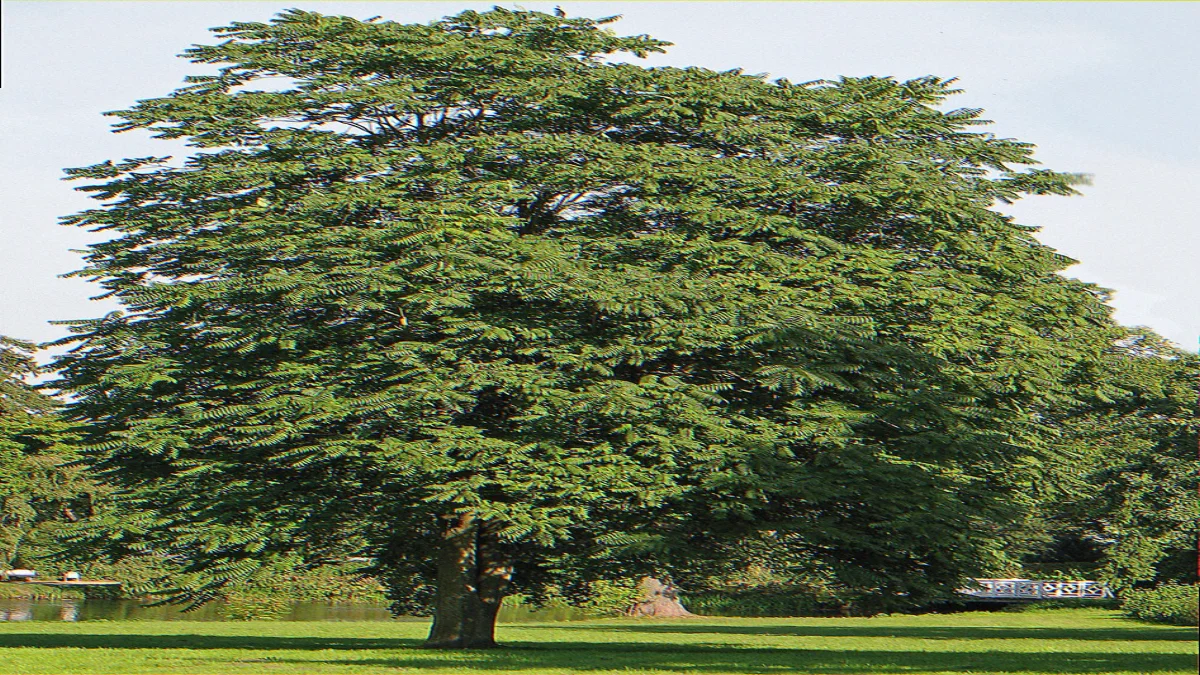
Pull tree of heaven seedlings by hand in June before they set a taproot. Young Ailanthus altissima sprouts are easy to lift in moist soil during their first growing season, but once a taproot forms, usually within 90 days of germination, only repeated cutting or targeted herbicide works. Removing seedlings early starves the spotted lanternfly of its preferred host and stops a hidden invasive from taking over your yard.
Last week I walked the back fence line of my own yard and counted eleven tree of heaven seedlings hidden among the milkweed and goldenrod. Half a dozen looked like baby sumac. The other half had popped up between the cracks of my flagstone path. None of them were there in April. That is the speed problem with Ailanthus altissima, and it is the problem that turns a quiet pollinator garden into a future spotted lanternfly breeding ground if you ignore it.
Sarah, the audience I write for, knows the feeling. You spend a Saturday digging out English ivy or pulling Japanese stiltgrass, and the second you turn your back, another invader has muscled in. Tree of heaven is the worst of the bunch because it is the preferred host plant of the spotted lanternfly, the planthopper that has been eating its way through Pennsylvania, New Jersey, Virginia, Maryland, Ohio, and a growing list of states since 2014. Kill the host, and you cripple the pest.
FREE: Wildlife Garden Starter Guide
Get our 12-page PDF with the 25 best plants for pollinators, simple habitat tips, and a printable checklist — all 100% free.
No spam. Read our Privacy Policy.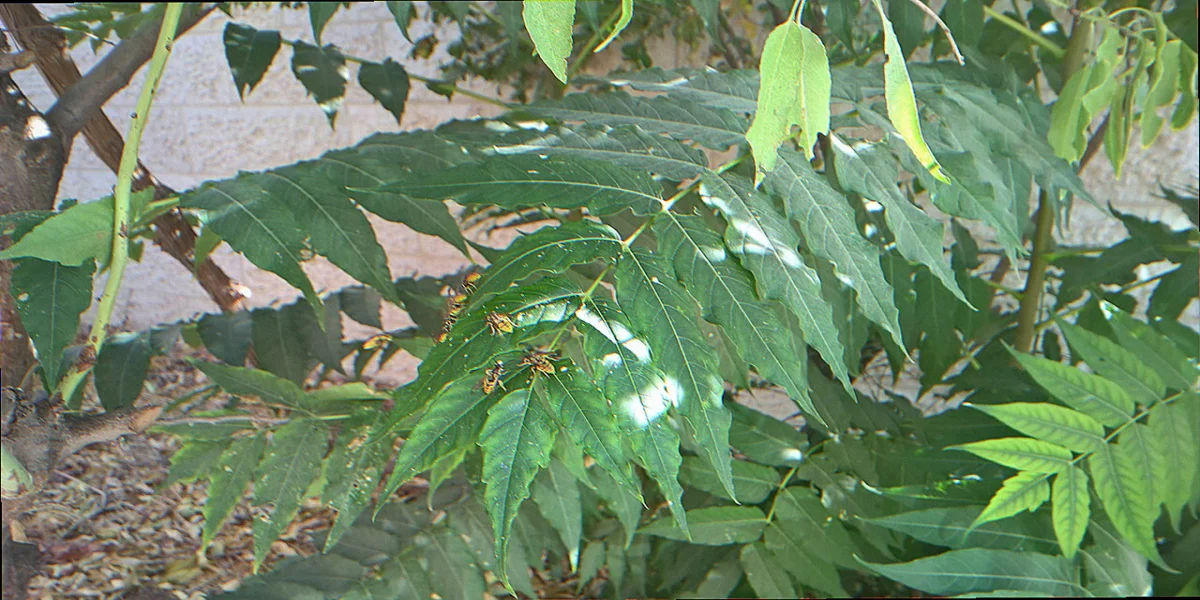
How do I identify a tree of heaven seedling in June?
The fastest field test is the smell. Crush a leaflet between your thumb and forefinger and lift it to your nose. A genuine tree of heaven smells like burnt peanut butter or a wet dog. Staghorn sumac, the native lookalike that gets pulled by mistake every spring, has no scent at all.
Visually, look for these traits on a seedling that is 6 to 24 inches tall:
- Compound leaves. One leaf is actually a long stalk with 10 to 40 leaflets attached in opposite or near-opposite pairs.
- Leaflet shape. Each leaflet is lance-shaped with smooth edges. Sumac leaflets have toothed edges along the entire margin.
- Glandular teeth. At the base of each leaflet, on the underside, you will see one or two raised bumps that look like tiny nipples. Sumac does not have these.
- Stem. Smooth, light brown to reddish, with prominent V-shaped or heart-shaped leaf scars where last year’s leaves dropped.
- Crushed scent. Burnt peanut butter, ailanthus oil, or what Penn State extension agents call “cat-pee-meets-rancid-popcorn.”
If you are not sure, snap a photo and run it through iNaturalist. The community of botanists on that platform will confirm or correct an identification within hours, and the seek tool inside the app will flag Ailanthus altissima as an invasive on first scan. Cross-check against your county’s Bonap distribution map to confirm the species is documented in your area. It almost certainly is, since tree of heaven has been logged in 44 US states.
Why does this matter for spotted lanternfly?
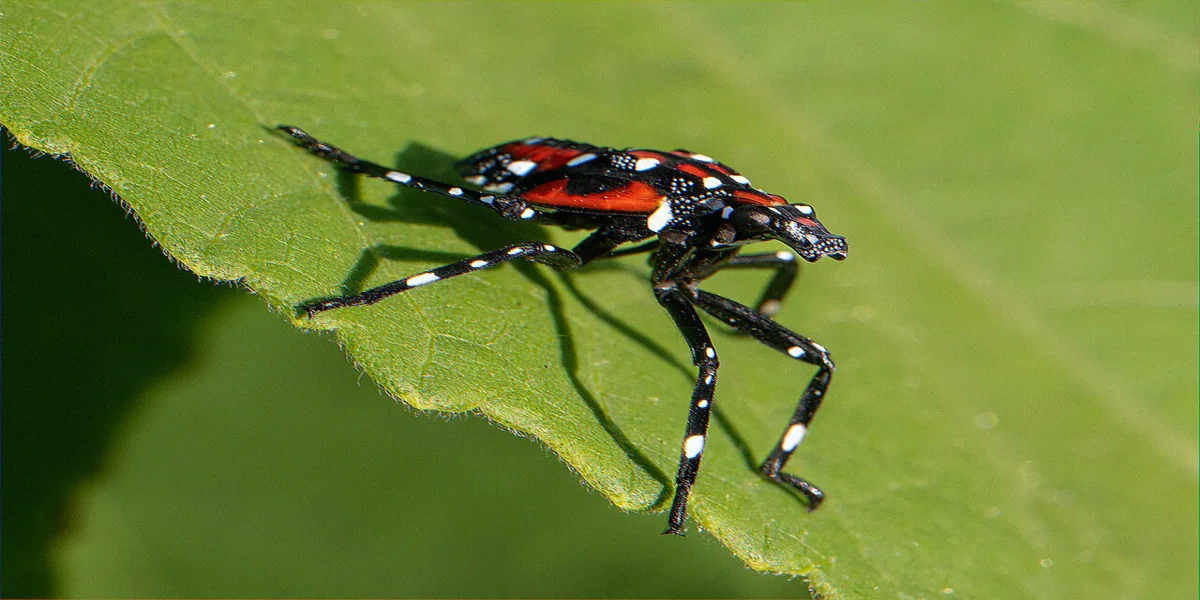
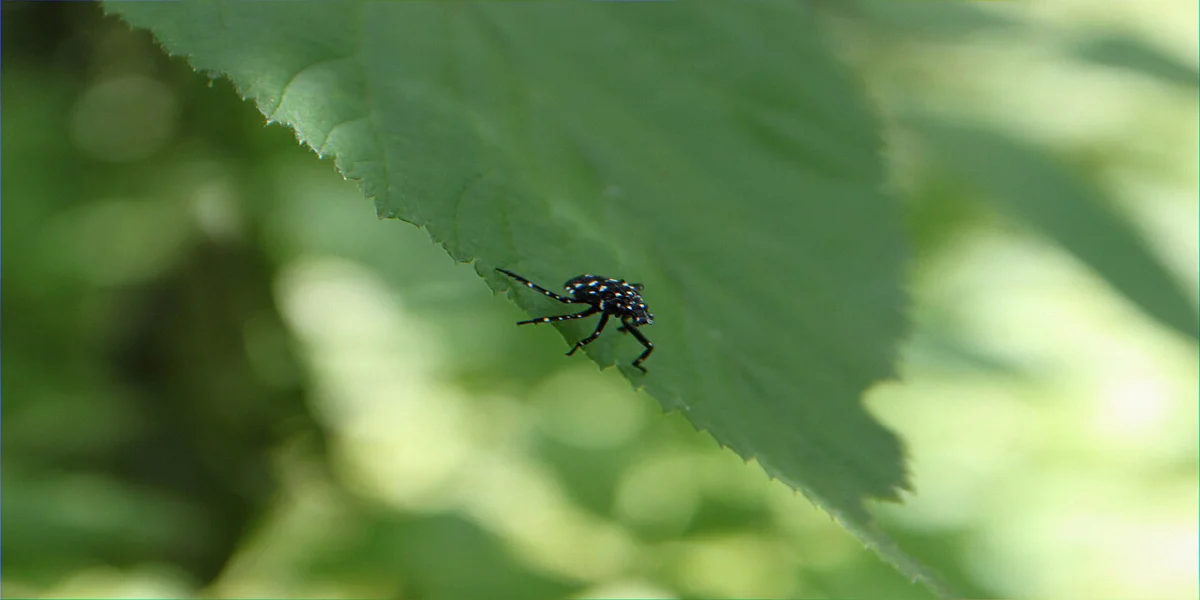
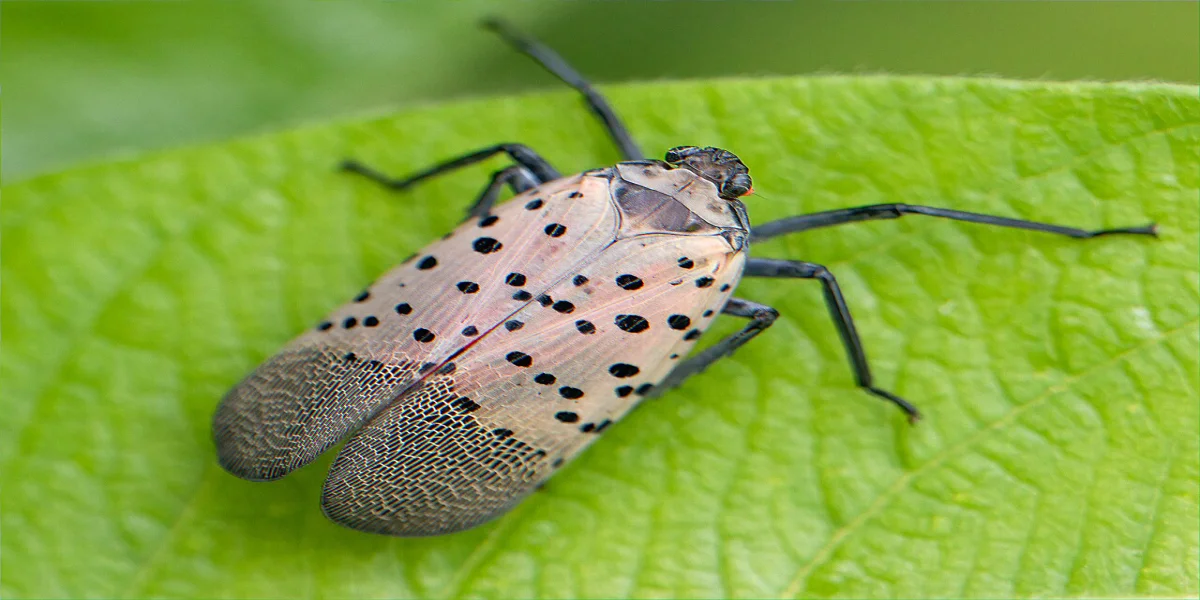
Spotted lanternfly (Lycorma delicatula) needs tree of heaven to complete its life cycle in a backyard setting. Females will lay egg masses on other surfaces like patio furniture, firewood piles, and the wheel wells of cars, but the adult population concentrates on Ailanthus because the tree produces compounds the planthopper sequesters as a chemical defense against predators. Studies out of Penn State Extension have shown that adult lanternflies will travel hundreds of meters across a neighborhood to find a host tree of heaven once they reach the fourth-instar stage in midsummer.
The 2023 Penn State research on insecticide impact also confirmed what backyard observers already suspected. When tree of heaven density drops in an area, the local lanternfly population crashes within two seasons. Your single-yard removal will not eliminate the regional infestation, but it will keep your milkweed, oaks, maples, walnuts, willows, grapes, and tulip poplars from becoming the next preferred feeding site once tree of heaven gets scarce.
This is the wholesome anarchy version of pest control. You are not spraying. You are not poisoning. You are simply pulling the buffet table out from under the invader.
What is the best time of day and soil moisture for hand pulling?
Soil moisture beats every other variable. The roots of a first-year tree of heaven seedling go down hard and straight, and the tap is already eight inches deep on a plant that is only ten inches tall above ground. If the soil is dry, you will snap the root, and a fragment as small as an inch can resprout an entirely new tree by August.
The two best windows are:
- The morning after a soaking rain, before the sun bakes the topsoil.
- The hour after you hand-water a bed deeply with a wand on slow flow for ten minutes.
Wear nitrile or rubber-coated gloves. Ailanthus sap can cause contact dermatitis in some people, and it gives off a persistent odor that lingers on bare hands for hours. A long-handled weeder like the Fiskars Uproot or a Cobrahead works for plants up to about pencil-thickness. Anything bigger, you need to cut and reapply persistently or move to herbicide. More on that below.
Step-by-step removal that actually gets the root
Here is the sequence I use in my own yard, refined after burning two seasons on the cardboard-and-mulch shortcut that did not work:
- Water the area deeply 24 hours before you plan to pull. Skip this only if a heavy rain just happened.
- Confirm identification. Crush a leaflet, look for glandular teeth, snap a backup photo for iNaturalist if you are not certain.
- Loosen the soil with a hand cultivator or trowel. Push the tool into the soil 3 to 4 inches away from the stem at four points around the seedling, then rock gently.
- Grip low. Grasp the stem as close to the soil line as you can. Higher grips will snap the stem and leave the root behind.
- Pull straight up, slow and steady. The taproot should release in one piece. If you feel a sudden lightness halfway out, stop. That means the root broke.
- Inspect the root. A clean pull will give you a single white-yellow taproot with a tapered tip. A broken pull gives a stub with a ragged end. Dig the rest out with the trowel.
- Bag it. Put pulled seedlings in a sealed paper yard-waste bag or a tarp in the sun for three days before composting. Tree of heaven roots can resprout from the compost pile.
- Mark the location. Plant a small flag, or take a phone photo with the location pinned, and check back at 3 weeks. New shoots from missed root fragments will be obvious by then.
Three weeks later, walk every flagged spot. If you see fresh red-tipped sprouts, those are root resprouts. Pull again immediately. By the third visit, the underground root reserves are exhausted, and the spot stays clean.
Hand pull, cut, or chemical? A decision table
Not every tree of heaven is hand-pullable. Use the size of the stem at ground level to pick the right method. The numbers below come from cross-referencing the UConn IPM factsheet with field reports from state extension trials:
| Stem thickness at soil line | Plant age | Recommended method | Time to clear |
|---|---|---|---|
| Pencil or thinner (≤ 7 mm) | 1–6 months | Hand pull in moist soil | 1 visit |
| Crayon thickness (8–12 mm) | 3–12 months | Hand pull with weeder tool, then monitor 3 weeks | 1–2 visits |
| Thumb thickness (13–20 mm) | 1–2 years | Repeated cut-and-watch (every 6 weeks for one season) | 4–6 visits |
| Wrist thickness (3–6 cm) | 2–4 years | Cut-and-treat with triclopyr on fresh cut, or hack-and-squirt | 1 treatment + 1 follow-up |
| Mature tree (> 6 cm) | 5+ years | Basal bark or hack-and-squirt with triclopyr ester, fall application | 1 fall treatment, recheck spring |
The reason cutting alone fails on anything thumb-thick or bigger is that Ailanthus responds to top damage by sending up dozens of root suckers, sometimes 50 to 100 from a network that can extend 50 feet from the original stem. Each sucker is a new clone with the same root system. You will exhaust yourself before you exhaust the tree. This is exactly the dynamic that makes buckthorn removal a multi-year project, and the same logic applies here.
What about herbicide-free removal for larger seedlings?
If you genuinely cannot use herbicide because of pets, well water concerns, or organic certification on a small farm, the alternative is the smother-and-cut cycle. It works, but it takes patience.
The method:
- Cut the stem to ground level in early July, the peak of growing-season exhaustion for the plant.
- Cover the stump with a triple layer of cardboard, then 6 inches of arborist wood chips.
- Walk the area weekly through August and September. Any sucker that breaks the surface gets snipped or hand-pulled.
- Repeat the snip-and-watch cycle for one full growing season, then the following spring.
By the end of season two, the root reserves are depleted, and the suckers stop appearing. This is a real commitment of time, so count on 30 minutes per week from June through September the first year, dropping to 10 minutes a week in year two. Before you bring in fresh chips or composted mulch, inspect the load for hitchhiking egg masses. Spotted lanternfly egg masses look like smeared gray putty on logs and bark and are routinely shipped on landscaping materials.
What if the tree is on the property line or in my neighbor’s yard?
This is where the wholesome-anarchy approach gets diplomatic. You cannot legally cut or treat a tree on a neighbor’s property without permission, even if the canopy hangs over your fence. You also cannot stop them from refusing.
What you can do:
- Treat your side aggressively. Pull every seedling and sucker that comes up on your property. Ailanthus suckers can travel 50 feet underground from a parent tree, so expect to find them.
- Document with photos. Take dated photos of the mother tree and any lanternfly activity. If your state has a reporting program (Pennsylvania, Virginia, New York, Connecticut, and others run them), submit the location.
- Share the research kindly. Print a one-page extension fact sheet from your state university and drop it in the mailbox without a confrontational note. People will throw away an angry letter. They will read a one-pager.
- Talk to your municipality if it is on public land. Roadside trees, utility right-of-ways, and abandoned lots often host the worst mother trees. Most public-works departments have an invasive-species line, even if it is not advertised.
If you already get pushback from neighbors about your native garden being “messy,” handling tree of heaven removal becomes part of your curb appeal defense plan. A clearly-managed yard with no invasive seedlings makes the case that what looks chaotic to a neighbor is actually disciplined ecological work.
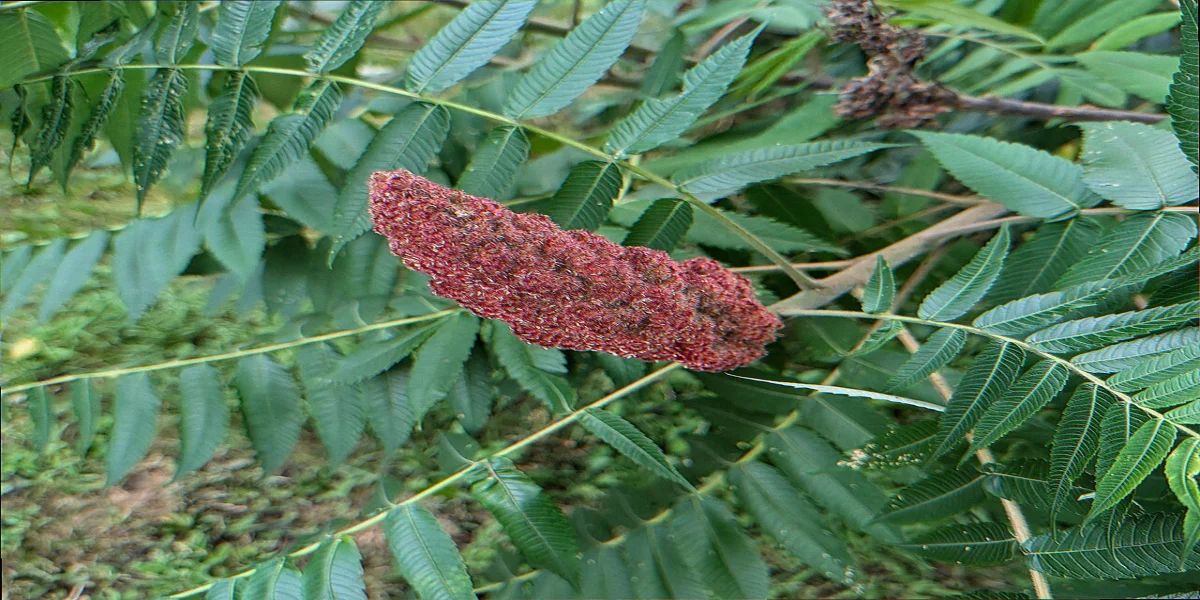
How do I tell tree of heaven from staghorn sumac, walnut, and ash?
This is the identification question I get most often, because the three native lookalikes are common in the same edge-of-woodland zones where Ailanthus loves to colonize. The fastest way to learn the difference is to practice identifying seedlings before you pull anything. Native plant seedlings deserve the benefit of the doubt.
Key contrasts:
- Staghorn sumac (Rhus typhina). Leaflets have toothed margins all the way around. Stem is fuzzy with reddish-brown hair. Crushed leaves are odorless. Often forms thickets but is native and supports cedar waxwings, robins, and many native bees.
- Black walnut (Juglans nigra). Leaflets are toothed and narrower. Crushed leaves smell pleasantly spicy, like crushed walnut shells. Stems are smooth with a chambered pith you can see if you split a twig.
- White ash (Fraxinus americana). Leaflets are opposite on the stalk (tree of heaven is alternate or sub-opposite), and the leaflets have toothed margins. Often dying from emerald ash borer in many regions.
- Tree of heaven (Ailanthus altissima). Smooth leaflet margins with only the basal glandular teeth, stinky when crushed, smooth bark on young stems, alternate leaflet arrangement.
If a sapling is showing dieback from a tunneling pest, it is almost certainly an ash, not a tree of heaven. Ailanthus is unfortunately too resilient to be killed by native insects.
What do I do with the pulled material?
Disposal trips people up. Tree of heaven roots and stems can resprout for weeks after they look dead, and tossing a fresh seedling into your open compost bin can seed the bin itself. The seeds, when present, stay viable for up to three years in soil and a year or more in compost piles that do not reach killing temperatures.
The safe disposal sequence:
- Solar bag for three to seven days. Drop pulled seedlings into a contractor-grade black plastic bag, tie it shut, and leave it in full sun on a paved surface. Internal temperatures climb past 140°F and kill the roots reliably.
- Municipal yard-waste pickup. If your town’s program processes yard waste at industrial composting temperatures (above 130°F sustained), you can bag and curb it after the solar treatment.
- Burning where legal. Dried, solar-killed material burns hot and clean. Check your local burn ordinance first. Many jurisdictions require permits in dry months.
- Avoid the home compost bin entirely. Even mature backyard piles rarely sustain killing temperatures across all material, and a single missed root fragment in your finished compost will reseed beds when you spread it.
Never chip tree of heaven on-site with a residential chipper unless you are processing the chips into a solarized tarp pile. Chips spread casually onto a bed will resprout. The same caution applies to any mulch you bring in, since vendors do sometimes mix Ailanthus and other invasives into bulk-delivered chips, which is one more reason to do the mulch inspection step before a load gets dumped on your driveway.
Building a long-term invasive-watch routine
Pulling tree of heaven once is satisfying. Pulling it every June for the rest of your life is the actual job. The good news is that once you have cleared mother trees from your immediate property, the only seedling pressure is wind-blown seed from neighboring properties, and that pressure drops dramatically year over year.
What I do, and what I recommend to anyone setting up a backyard wildlife habitat:
- Walk the property edge every two weeks from May through October. Carry a glove and a small bag.
- Keep an invasive log. A simple note in your phone with the date, location, and species pulled tracks pressure over time. Year three you will see the count dropping.
- Pair the watch with other invasive removals. I do a sweep that catches tree of heaven, Japanese stiltgrass, English ivy, and jumping worm castings in one loop. The whole walk takes 25 minutes and replaces the time I used to spend mowing the strip behind my shed.
- Photograph mother trees in neighboring properties so you can prioritize next season’s watch zones.
This is the part the “kill them all with herbicide” guides skip over. The invasion did not happen in one season, and the removal will not either. Make peace with the routine and your yard will visibly improve in 18 months.
What changes after the seedlings are gone?
The measurable outcome in my own yard, after three seasons of consistent removal: zero tree of heaven trees taller than four feet, zero spotted lanternfly egg masses on any of my trees or hardscape, and a dramatic uptick in the species of pollinators visiting the milkweed and mountain mint along the back fence.
That last part matters. Tree of heaven flowers attract some native bees, but its dominance in a hedgerow displaces the plant community that supports specialist pollinators. When the Ailanthus goes, the native goldenrod, asters, dogwood, and sassafras seedlings I had been quietly nurturing finally had room to push up. My yard’s species count, as logged on iNaturalist over the same period, went from 78 documented insects in 2023 to 134 in 2025. That is the kind of measurable gain that turns the daily work of a homegrown national park into something visible, and harder for a skeptical neighbor to dismiss.
FAQ
When is it too late to hand pull a tree of heaven seedling?
Once a seedling develops a significant taproot, usually within 90 days of germination, hand pulling stops being reliable. By the end of the first growing season, most seedlings have crossed that threshold. If you missed the window, switch to repeated cutting every 6 weeks for one full season, or to a fall cut-and-treat with triclopyr on stems thumb-thick or larger.
Can I just mow tree of heaven seedlings to control them?
Mowing keeps them low but does not kill them. Each mow stimulates the root system to send up more suckers, and over years you can end up with a dense thicket of knee-high Ailanthus clones in a mowed strip. Hand pull the seedlings inside the bed and accept the mowed strip will need a one-time aggressive intervention to clear the suckers.
Do I have to report tree of heaven to my state?
Most states do not require reporting of Ailanthus itself, but the spotted lanternfly that breeds on it usually is reportable. Pennsylvania, New Jersey, New York, Virginia, Maryland, Ohio, Connecticut, Indiana, and others maintain spotted lanternfly hotlines. Reporting a sighting of either the planthopper or a confirmed host tree of heaven is voluntary in most jurisdictions but useful to state biologists tracking the spread.
Is tree of heaven the same as Chinese sumac?
Yes. Ailanthus altissima is sometimes sold under the common names Chinese sumac, paradise tree, stinking sumac, or even simply “ailanthus” at less-careful nurseries. If a plant is being sold under any of these names, it is the invasive species. True sumacs in the Rhus genus are native to North America and are not for sale under the “Chinese” or “stinking” labels.
Will pulling tree of heaven hurt my native plants growing nearby?
If you pull carefully in moist soil and disturb a minimum of the surrounding root zone, no. The bigger concern is leaving fragments of Ailanthus root in the soil, which will resprout and outcompete young natives. Use a trowel to lift the entire root, and check the spot at three weeks for any pencil-tip-sized red sprouts that signal a missed fragment.
Can I use boiling water or vinegar instead of herbicide?
For seedlings under pencil-thickness, boiling water poured directly on the base will kill above-ground growth and shock the root, but the plant often resprouts within four weeks. Horticultural vinegar (20%+ acetic acid) works on small seedlings if you saturate the soil within an inch of the stem, but it acidifies the soil temporarily and can damage neighboring plants. For seedlings you can hand pull, just pull. The non-chemical alternatives are best reserved for stubborn root fragments after a hand pull.
Want More Wildlife Garden Tips?
Join 5,000+ nature lovers getting our weekly tips on creating wildlife-friendly gardens.
No spam, unsubscribe anytime. Privacy Policy
Emma Harrington
Emma Harrington is a wildlife habitat researcher and content editor with a passion for backyard conservation. She has spent over a decade translating ecological science into practical tips anyone can follow — from selecting native plants to building wildlife-friendly habitats. Her work focuses on helping homeowners transform ordinary yards into thriving ecosystems for bees, butterflies, hummingbirds, and other beneficial wildlife.