
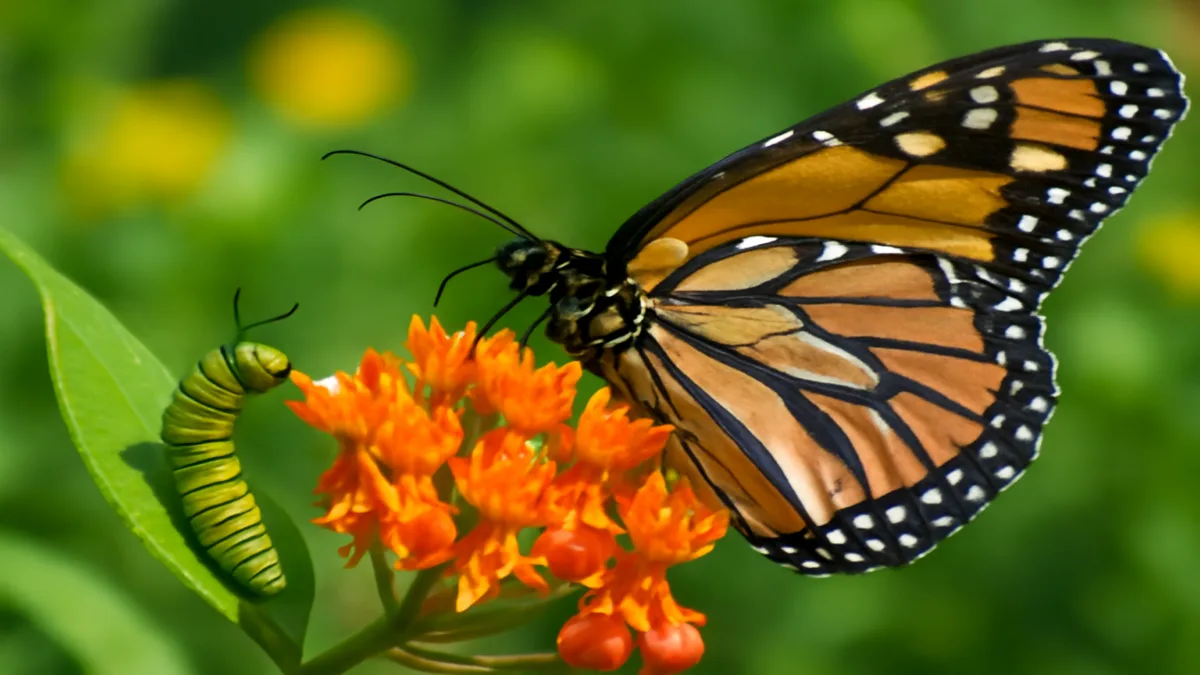
Choosing the right flowers for butterflies is the single biggest decision you’ll make when designing a garden that actually attracts them. Not just one or two stragglers in July, but a steady, fluttering crowd from spring through the first hard frost. Most gardening articles you’ll read on this topic get it about half right. They list the prettiest nectar flowers, slap a photo of a Monarch on a Zinnia at the top, and call it a day. The problem? Adult butterflies need nectar, sure, but caterpillars need something completely different. And without caterpillars, you don’t get butterflies. Period.
I’ve been gardening for pollinators for over fifteen years, and I’ll tell you the moment my yard transformed from “occasional visitor” to “butterfly highway” was the moment I stopped thinking like a florist and started thinking like an entomologist. Butterflies have a two-stage life, and a real butterfly garden feeds both stages. That means pairing your beautiful coneflowers and asters with the unglamorous but essential host plants. The milkweeds, the parsleys, the willows. That caterpillars must eat to survive. Skip the host plants and you’ve built a butterfly diner with no kitchen.
In this guide, I’m going to walk you through the ten best plant categories I’d recommend to any gardener serious about butterflies, organized the way a real ecologist would organize them: host plants first, nectar plants second, and a few critical practical touches at the end that most blogs never mention. Whether you’ve got a quarter-acre suburban lot or just a sunny patio, you can build a habitat that genuinely supports the butterfly life cycle. Let’s get into it.
FREE: Wildlife Garden Starter Guide
Get our 12-page PDF with the 25 best plants for pollinators, simple habitat tips, and a printable checklist — all 100% free.
No spam. Read our Privacy Policy.Why Host Plants Matter More Than Pretty Nectar Flowers
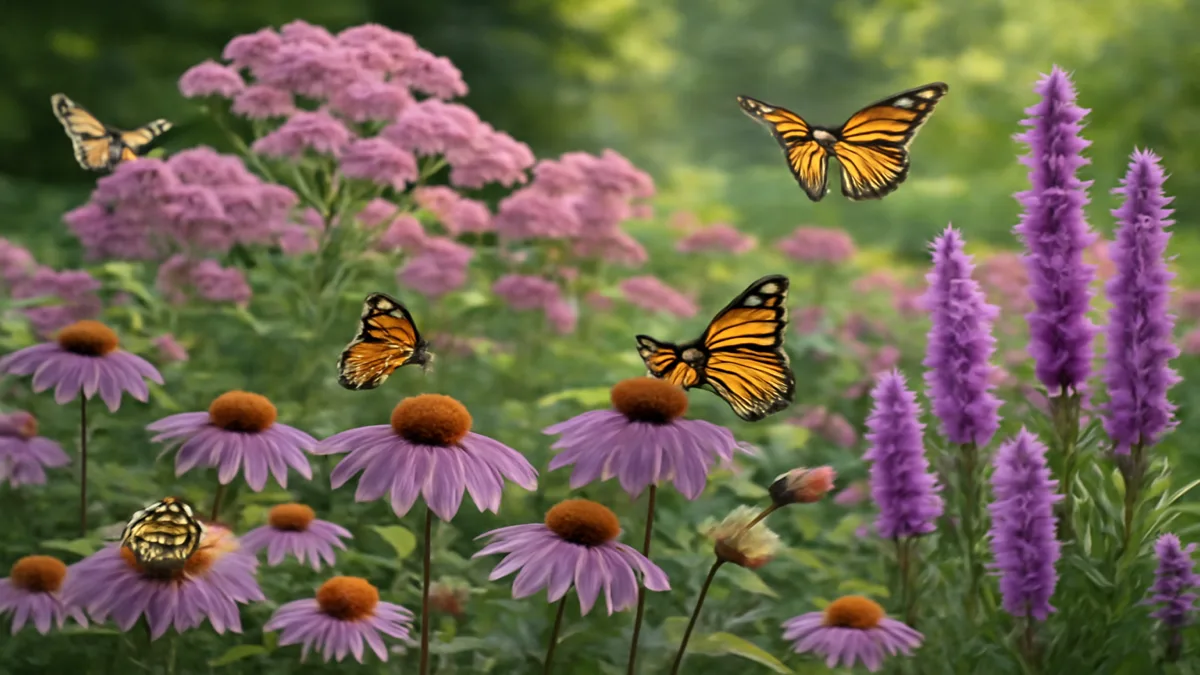
Here’s the truth nobody tells you at the garden center: a butterfly garden without host plants is just a fast food stop. Adult butterflies sip nectar from dozens of flower species, but their caterpillars are extraordinarily picky eaters. Monarch caterpillars eat milkweed and only milkweed. Eastern Black Swallowtail caterpillars eat plants in the carrot family. Parsley, dill, fennel. And almost nothing else. If those host plants aren’t in your yard, no female butterfly will lay eggs there, and your “butterfly garden” becomes a pretty rest stop on the way to someone else’s habitat.
Once I added milkweed and parsley to my own beds, I went from spotting maybe three or four Monarchs a season to watching a half-dozen chrysalises hang from my fence rails every August. The visual reward of nectar plants is immediate, but the ecological reward of host plants is what keeps butterfly populations alive year after year. The Xerces Society has been hammering this point for decades, and the data backs them up: native host plants are the single biggest predictor of butterfly diversity in residential gardens, with yards containing 70% or more native plant biomass supporting roughly 4 times the caterpillar abundance of conventional landscapes.
“You can plant every nectar flower in the catalog and still have an empty garden. Plant one patch of native milkweed and within a season, you’ll have Monarchs laying eggs. Host plants are not optional. They are the foundation of every functional butterfly habitat.”
So as we go through the list below, pay attention to which plants serve which purpose. The best butterfly gardens have a roughly even split: about half host plants, half nectar plants, with several species blooming at different times so something is always in flower from April through October. If you’re new to identifying which species belong in your specific area, our walkthrough on how to verify a plant is truly native to your county is worth a quick read before you spend a dollar at the nursery.
1. Native Milkweeds, The Monarch’s Lifeline
If you plant nothing else from this article, plant milkweed. Native milkweed (genus Asclepias) is the only host plant Monarch caterpillars can eat, and the catastrophic decline of Eastern Monarch populations over the last 20 years (down roughly 80% since the 1990s) tracks almost perfectly with the loss of milkweed across American farmland. Adding even a small patch to your yard makes a measurable difference, and milkweeds happen to be excellent nectar plants for adult butterflies too. Bees, skippers, and swallowtails all visit them constantly.
Choose the species that’s native to your region. You can cross-check county-level range maps on BONAP’s North American Plant Atlas before buying. Here are the four I recommend most often:
- Common Milkweed (Asclepias syriaca), The classic prairie milkweed, perfect for Midwest and Northeast gardens. Spreads by rhizomes, so give it room or plant it where you don’t mind it expanding.
- Butterfly Weed (A. tuberosa), Brilliant orange clusters in midsummer. Compact, well-behaved, drought tolerant, and stunning in mixed perennial borders.
- Showy Milkweed (A. speciosa), The Western counterpart to Common Milkweed. Higher cardenolide content gives caterpillars stronger chemical defense against predators.
- Swamp Milkweed (A. incarnata), Pink flowers, tolerates wet feet beautifully. The right choice for low spots, rain gardens, or pond edges. If you’re designing a rain garden from scratch, our 3-zone rain garden recipe shows exactly where Swamp Milkweed fits.
One critical warning: avoid Asclepias curassavica (Tropical Milkweed). It’s sold widely at big-box garden centers because it’s pretty and easy to grow, but it disrupts Monarch migration timing and spreads a debilitating protozoan parasite called OE that weakens entire populations. Stick with natives.
2. Parsley, Dill, and Fennel, Swallowtail Nurseries Hiding in Your Herb Bed
Eastern Black Swallowtails are among the most spectacular butterflies in North America, and you can host them with ingredients from your kitchen garden. Female Black Swallowtails lay tiny pale yellow eggs on plants in the carrot family. Parsley, dill, fennel, and even garden carrots themselves. The caterpillars that hatch are striking: bright green with black bands and yellow dots, almost candy-colored.
The trick is planting enough. A single parsley plant will get devoured in 2 days flat, and you’ll either lose your herb supply or sacrifice the caterpillars. My rule of thumb: plant 3 times what you’d plant for cooking, then leave one-third entirely for the swallowtails. Fennel especially is a magnet. A single tall bronze fennel plant in my front bed reliably hosts 5 to 10 swallowtail caterpillars every summer.
Dill is annual and reseeds enthusiastically, so let some go to flower and seed each year. The yellow umbel flowers are also visited by tiny native wasps that prey on garden pests. A bonus benefit.
3. Passion Vine, A Subtropical Showstopper for Gulf Fritillaries
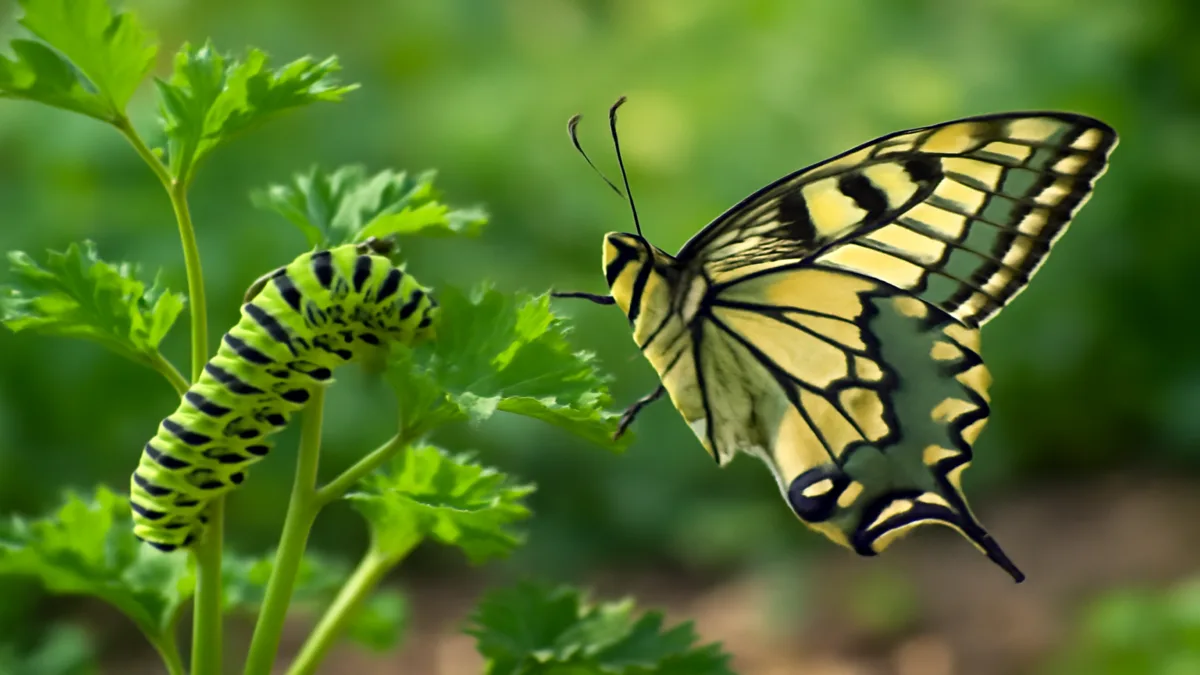
If you garden in Zone 7 or warmer, passion vine (Passiflora) is the host plant for Gulf Fritillary butterflies, and it’s a jaw-dropping ornamental in its own right. The flowers look engineered by an alien. Purple, white, and chartreuse with intricate filament crowns. Gulf Fritillaries lay their eggs almost exclusively on passion vines, and the bright orange adults will find your plants within 2 to 3 weeks of planting.
Be warned: the caterpillars will strip the vine. That’s the deal. Plant a vigorous variety like Passiflora incarnata (native to the Southeast) on a sturdy trellis, and accept that it will look chewed up by August. It bounces back. In milder climates it acts as a perennial; in colder zones treat it as an annual or overwinter it indoors.
4. Pussy Willow, The Spring Powerhouse Nobody Plants
Pussy willow (Salix discolor) is one of the most underappreciated butterfly plants in North America. It’s a host for at least 3 gorgeous species, Mourning Cloak, Viceroy, and Red-Spotted Purple. And its early-spring catkins provide critical nectar for queen bumblebees and the first butterflies emerging from hibernation in March and April, when almost nothing else is in bloom.
Mourning Cloaks are particularly special: they overwinter as adults, tucked into bark crevices and woodpiles, and they’re often the first butterfly you’ll see in late winter, sometimes even on warm February days with snow still on the ground. A pussy willow shrub at the edge of your property is a four-season investment in butterfly habitat that pays dividends well beyond the showier summer plantings.
5. White Turtlehead, Saving the Baltimore Checkerspot
White turtlehead (Chelone glabra) is the sole host plant for the Baltimore Checkerspot, a stunning black-and-orange butterfly that’s becoming increasingly rare across its native range. If you have a damp spot in your yard, a wet meadow edge, or a rain garden, planting turtlehead is a direct conservation action. The white snapdragon-like flowers bloom in late summer and are also visited by bumblebees that have evolved specifically to muscle their way into the closed blooms.
This isn’t a plant for everyone. It needs consistent moisture and won’t tolerate drought. But if your conditions match, it’s a meaningful addition. Pair it with Joe Pye Weed and Swamp Milkweed for a knockout wet-meadow trio.
6. Purple Coneflower, The All-Purpose Nectar Workhorse
Now we move into the pure nectar plants, and Purple Coneflower (Echinacea purpurea) is the one I’d recommend to absolutely everyone. The flat composite flowerhead is a perfect landing platform for big butterflies like Tiger Swallowtails, Monarchs, and Great Spangled Fritillaries, who prefer to settle and sip rather than hover. The plant blooms for 6 to 8 weeks in midsummer, tolerates drought, attracts goldfinches in fall when the seedheads ripen, and looks gorgeous from June through October.
Stick with the straight species or close cultivars. Many of the fancy double-flowered Echinacea hybrids have so much petal mass that they’re functionally inaccessible to pollinators. If you want maximum butterfly value, plain purple is best. Coneflowers also pair beautifully with the plants in our guide to pollinator friendly plants from your garden center, where I cover full-season planning in more depth.
7. Blazing Star, The Ultimate Monarch Magnet
If milkweed is the Monarch’s nursery, Blazing Star (Liatris ligulistylis) is its cocktail bar. This particular Liatris species has been documented in scientific studies as one of the most attractive nectar sources for migrating Monarchs in late summer, regularly drawing dozens of butterflies to a single plant during peak migration in late August and early September.
The tall purple spikes bloom from the top down. A quirk that keeps fresh nectar available over a 3 to 4 week window. I’ve watched 20 Monarchs feed on a single clump of Liatris in my Iowa backyard before lifting off together to continue south. Citizen-science observations on iNaturalist’s Liatris ligulistylis records consistently show this species as a priority refueling stop along migration corridors.
8. Goldenrod, The Most Maligned Hero of Fall
Goldenrod (Solidago) gets blamed every autumn for hay fever it doesn’t cause. That’s actually ragweed, blooming at the same time. Meanwhile, goldenrod is one of the single most important fall nectar sources for migrating Monarchs and dozens of other late-season butterflies, bees, and beneficial insects. Without it, the journey from the Upper Midwest to Mexico becomes exponentially harder.
There are dozens of native goldenrod species, and most are beautifully behaved garden plants. Try Showy Goldenrod (S. speciosa) or Stiff Goldenrod (S. rigida) if you’re worried about spreading. The clouds of yellow blooms in September are spectacular, and the wildlife value is unmatched. Stop yanking it from your beds.
9. New England Aster, The Final Meal Before Winter
New England Aster (Symphyotrichum novae-angliae) blooms when almost everything else is shutting down. Late September, all of October, sometimes into early November. The deep purple flowers with bright yellow centers feed butterflies preparing for hibernation or finishing migration, and they’re often the last meal a Monarch gets before it crosses the Gulf of Mexico.
The plants get tall. 4 to 6 feet. And benefit from being cut back by half in early summer (the “Chelsea chop”) to keep them bushy and prevent flopping. Pair them with goldenrod and you’ve got the most important late-season nectar combination in the eastern United States.
10. Joe Pye Weed, The Cluster That Stops Traffic
Joe Pye Weed (Eutrochium maculatum) is the back-of-the-border giant that pulls butterflies in from across the neighborhood. The dusty pink flower clusters can be the size of dinner plates, and they routinely host 5 or 6 species at once, Tiger Swallowtails, Monarchs, fritillaries, painted ladies, and skippers all jockeying for position on a single bloom.
It needs space. Figure 5 to 7 feet tall and 3 feet wide at maturity. And consistent moisture, but if you’ve got the room it’s the most dramatic single plant you can add to a butterfly garden. Place it where you can watch it from a window. You won’t regret it.
Quick Reference Table: Host vs. Nectar at a Glance
| Plant | Type | Butterfly Species Supported | Bloom Season | Best Region |
|---|---|---|---|---|
| Common Milkweed | Host + Nectar | Monarch | Summer | Midwest, Northeast |
| Butterfly Weed | Host + Nectar | Monarch, Queen | Mid-Late Summer | Most of US |
| Parsley/Dill/Fennel | Host | Black Swallowtail | N/A | All zones |
| Passion Vine | Host | Gulf Fritillary | Summer-Fall | Zone 7+ |
| Pussy Willow | Host + Nectar | Mourning Cloak, Viceroy | Early Spring | Northeast, Midwest |
| White Turtlehead | Host | Baltimore Checkerspot | Late Summer | Northeast wetlands |
| Purple Coneflower | Nectar | Many large butterflies | Summer-Fall | Most of US |
| Blazing Star | Nectar | Monarch (migration) | Late Summer | Prairie regions |
| Goldenrod | Nectar | Monarch, many fall species | Fall | All of US |
| New England Aster | Nectar | Late-season migrants | Late Fall | Northeast, Midwest |
| Joe Pye Weed | Nectar | Swallowtails, Monarchs, fritillaries | Late Summer | Eastern US |
Beyond Plants: The Habitat Touches That Multiply Your Butterfly Count
Plants get butterflies into your yard. Habitat features keep them there. After two decades of trial and error, here are the four practical additions that made the biggest difference for me. And they’re all cheap or free.
- Basking rocks. Butterflies are cold-blooded and need to warm their flight muscles to about 85°F before they can fly. Place a few flat, light-colored rocks in sunny spots throughout your garden. You’ll see butterflies sunning on them within days, especially in cool spring and fall mornings.
- Build a puddling station. Male butterflies gather minerals from damp ground in a behavior called puddling. Sink a shallow dish into the soil, fill it with damp sand, and add a tiny pinch of sea salt or wood ash. Keep it moist. Swallowtails especially will cluster on it. If you want a step-by-step build, our DIY butterfly puddling station guide walks through the dish, sand, and salt ratios I’ve tested over 3 seasons.
- Leave the leaves. Many butterfly and moth species overwinter as eggs, caterpillars, or chrysalises tucked into leaf litter. The reflexive fall cleanup that bags up every leaf is a habitat-killer. Let leaves stay on garden beds at least until late spring. Your butterfly population will thank you.
- Eliminate pesticides completely. This is non-negotiable. Even “organic” or “natural” insecticides like Bt and neem will kill caterpillars indiscriminately. If you want butterflies, you have to accept some chewed leaves and trust the ecosystem to balance itself. It will. For mosquito control that doesn’t wipe out your butterflies, see our piece on controlling mosquitoes without harming bees, birds, or bats.
If you’re also interested in feathered visitors alongside your butterflies, our guide to flowers for hummingbirds covers tubular blooms that complement everything in this list, and our broader piece on plants for hummingbirds walks through full-yard habitat design that overlaps significantly with butterfly gardening.
Putting It All Together: A Sample Year-Round Plan
You don’t need every plant on this list to build a great butterfly garden. Pick 5 to 7 species that match your region and conditions, with at least 2 host plants and a mix of bloom times so something is always flowering from April to October. Plant in clusters rather than ones and twos. Butterflies find dense plantings far more easily than scattered single specimens. A cluster of 5 coneflowers will outperform 15 coneflowers spread around your yard.
Source plants from native plant nurseries when you can. Big-box garden centers often sell plants treated with neonicotinoid pesticides that persist in the tissue for months and kill any caterpillar that eats a leaf. Ask before you buy, and if the answer is unclear, walk away. Many states have native plant societies that hold seasonal sales. These are your best source for healthy, pesticide-free, regionally appropriate stock.
Build a Garden That Feeds the Full Life Cycle
The difference between a yard that occasionally hosts butterflies and one that becomes a thriving habitat comes down to one shift in thinking: stop planting just for adult butterflies and start planting for caterpillars too. Add native milkweeds, herbs from the carrot family, and a few key woody hosts like pussy willow, then layer in the nectar superstars. Coneflowers, Liatris, goldenrod, asters, Joe Pye Weed. For season-long fuel. Add a few rocks and a puddling station, leave your fall leaves alone, and put down the pesticide sprayer for good. Within 2 seasons, you’ll see a transformation that will genuinely surprise you.
Butterfly populations across North America are in serious decline, and home gardeners now collectively manage more habitat than the entire National Park system. What we plant in our yards matters more than ever. If you found this guide useful, please share it. Every garden that adds a patch of milkweed or a clump of Liatris is a step toward reversing the loss. Pass it to a neighbor, post it on your gardening group, or send it to a friend who’s just starting out. Real change happens one yard at a time.
Frequently Asked Questions
What is the single best flower to plant if I only have room for one?
If you can only plant one species, plant native milkweed appropriate to your region, Common Milkweed in the Midwest and Northeast, Showy Milkweed in the West, or Swamp Milkweed if you have damp soil. Milkweed is the only host plant for Monarch caterpillars, and it also produces excellent nectar for adult butterflies, bees, and other pollinators all summer long.
How long does it take for butterflies to find a new garden?
Butterflies are remarkably good at finding new habitat. In my experience, you’ll see your first nectar visitors within days of your plants blooming, and egg-laying females typically locate host plants within the first season. By year two, with a properly designed garden, you’ll have established populations of caterpillars and chrysalises returning each year with measurable consistency.
Are butterfly bushes (Buddleia) good for butterflies?
Butterfly bush is a decent nectar source but not a host plant for any North American butterfly, and it’s invasive in many regions, escaping gardens to crowd out native species that caterpillars actually need. I’d recommend skipping it entirely and planting native alternatives like Joe Pye Weed, Liatris, or New England Aster, which support both adults and caterpillars without ecological downsides.
Should I bring caterpillars inside to protect them from predators?
Generally no. Wild caterpillars do best in the wild, where natural population dynamics keep ecosystems balanced. Captive rearing can spread disease and produces weaker adults less able to migrate. The best protection is planting enough host plants that some caterpillars survive even with normal predation, and avoiding pesticides that would harm the beneficial insects keeping things in balance.
Will milkweed take over my garden if I plant it?
It depends on the species. Common Milkweed spreads aggressively by underground rhizomes and is best for naturalized areas or large beds where spread is welcome. Butterfly Weed and Swamp Milkweed are clump-forming and very well-behaved in ornamental gardens. If you want maximum Monarch impact in a small space, choose Butterfly Weed. It stays put and looks fantastic in a perennial border.
Want More Wildlife Garden Tips?
Join 5,000+ nature lovers getting our weekly tips on creating wildlife-friendly gardens.
No spam, unsubscribe anytime. Privacy Policy
Emma Harrington
Emma Harrington is a wildlife habitat researcher and content editor with a passion for backyard conservation. She has spent over a decade translating ecological science into practical tips anyone can follow — from selecting native plants to building wildlife-friendly habitats. Her work focuses on helping homeowners transform ordinary yards into thriving ecosystems for bees, butterflies, hummingbirds, and other beneficial wildlife.