
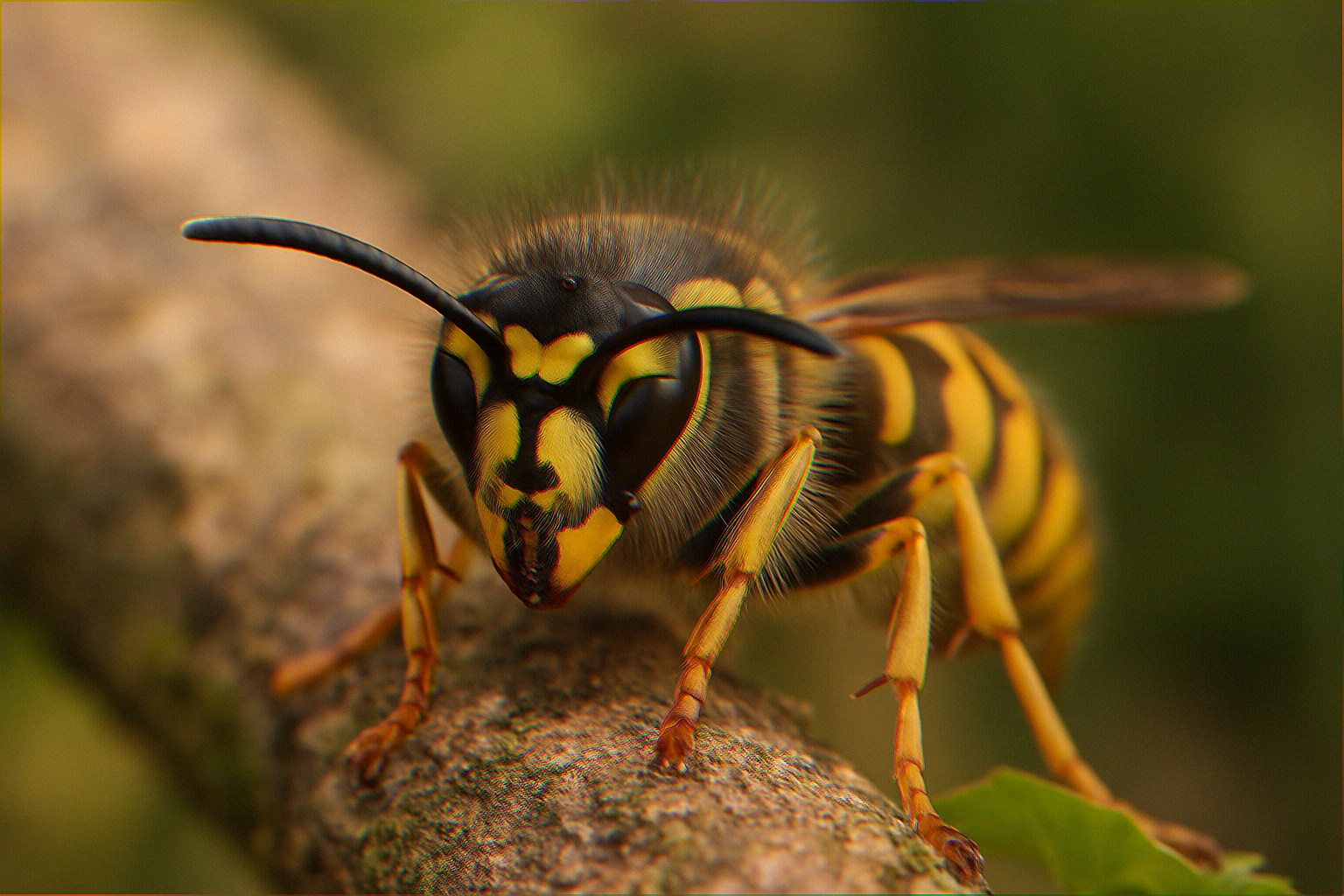
The first time I witnessed a yellow jacket attacking a sweat bee in my pollinator bed, I understood my old neighbor’s reliance on pesticides every summer. It became clear that creating a “homegrown national park” comes with unexpected challenges, like attracting predators. A fellow Master Naturalist echoed this dilemma in a conversation: while avoiding chemical pesticides is commendable, the nagging question is how to manage yellow jackets without harming the bees you’ve worked so hard to attract.
The honest answer is that almost everything you have read about yellow jacket control is written for August, and by August it is mostly too late. The window where a 30-cent piece of mason jar and three tablespoons of sugar can erase an entire colony is right now, in the first warm weeks of spring. This guide walks through how to stop yellow jackets without pesticides, why the spring queen-trap window is dramatically more effective than late-summer nest removal, what to do when you find an established nest anyway, and how to keep your honeybees, mason bees, and bumblebees out of the trap entirely. I have been running this protocol on a quarter-acre lot for four seasons; the only year a colony got established is the year I forgot to put traps out before April 15.
Why Spring Is the Only Window That Actually Works
A yellow jacket colony in late August has somewhere between 1,500 and 5,000 workers, a fortified underground nest, and a queen who has not left the chamber since May. Spraying that nest is loud, dangerous, and toxic to every soil arthropod within a 6-foot radius. It is also the textbook scenario every “yellow jacket removal” Google result is written for. The problem is solved at the wrong end of the calendar.
FREE: Wildlife Garden Starter Guide
Get our 12-page PDF with the 25 best plants for pollinators, simple habitat tips, and a printable checklist — all 100% free.
No spam. Read our Privacy Policy.Reverse the timeline. In April and early May across most of the continental US, every single yellow jacket flying through your yard is a foundress queen, a single overwintering individual who survived in a leaf pile or under bark and is now scouting for a nest cavity. She has no workers, no nest, and no backup. If she finds a hole, she lays the first generation of eggs herself, hunts insects to feed those larvae solo, and only after that first brood emerges does she retire to the egg-laying chamber. Stop her in the scouting phase and the entire colony evaporates. Research summarized by the Washington State University Extension entomology program has shown that a single April queen, removed from the landscape, prevents an average of 2,300 workers from existing by August.
That math is the whole reason this works. You are not killing 5,000 wasps in August. You are removing a single individual in April whose absence cancels the August colony before it boots up. One trap on a fence post can do more for your pollinator garden than ten gallons of permethrin. The catch (no pun) is that the window is short. By Memorial Day in the upper Midwest, by Mother’s Day in the mid-Atlantic, by April 15 in the Southeast, the queens have already chosen cavities and started laying. After that point, queen traps still catch some stragglers, but the colonies are committed.
Why Most Wasp Sprays Are a Pollinator Disaster
Pyrethroid sprays (the active ingredient in nearly every can of “wasp and hornet killer” sold at the big box store) do not distinguish between a yellow jacket queen and a mason bee. They drift on the wind, they linger on flower surfaces for 5 to 21 days, and they kill bumblebee colonies via residue contact. The Xerces Society’s pesticide program has documented dramatic mason bee population collapses in suburban yards where neighbors sprayed for “wasps” without identifying the actual species first.
It is worse than that. Of the dozen or so common stinging insects most homeowners lump together as “yellow jackets,” roughly half are not yellow jackets at all. Paper wasps, mud daubers, bald-faced hornets, and even the harmless eastern cicada killer wasp all get hit with the same can of spray. Most of those species are net-positive for a pollinator garden. Paper wasps in particular eat enormous numbers of caterpillar pests, and a small Polistes nest tucked under your porch eave is doing more for your kale than a row cover ever could.
The pesticide industry depends on people not learning this distinction. Once you can identify a true Vespula yellow jacket (squared-off head, fast-flying, ground-nesting, attracted to sugary or meat baits) versus a paper wasp (long dangling legs, slow-flying, papery open-comb nest in plain sight), you can leave 80% of your yard’s wasp population in peace and target only the species that is genuinely a problem. The free iNaturalist app will identify a captured individual to species in 30 seconds. If you cannot tell whether the wasp circling your patio table is a Vespula or a Polistes, the snap-and-identify workflow is the right starting point.
The 30-Cent Spring Queen Trap (Step by Step)
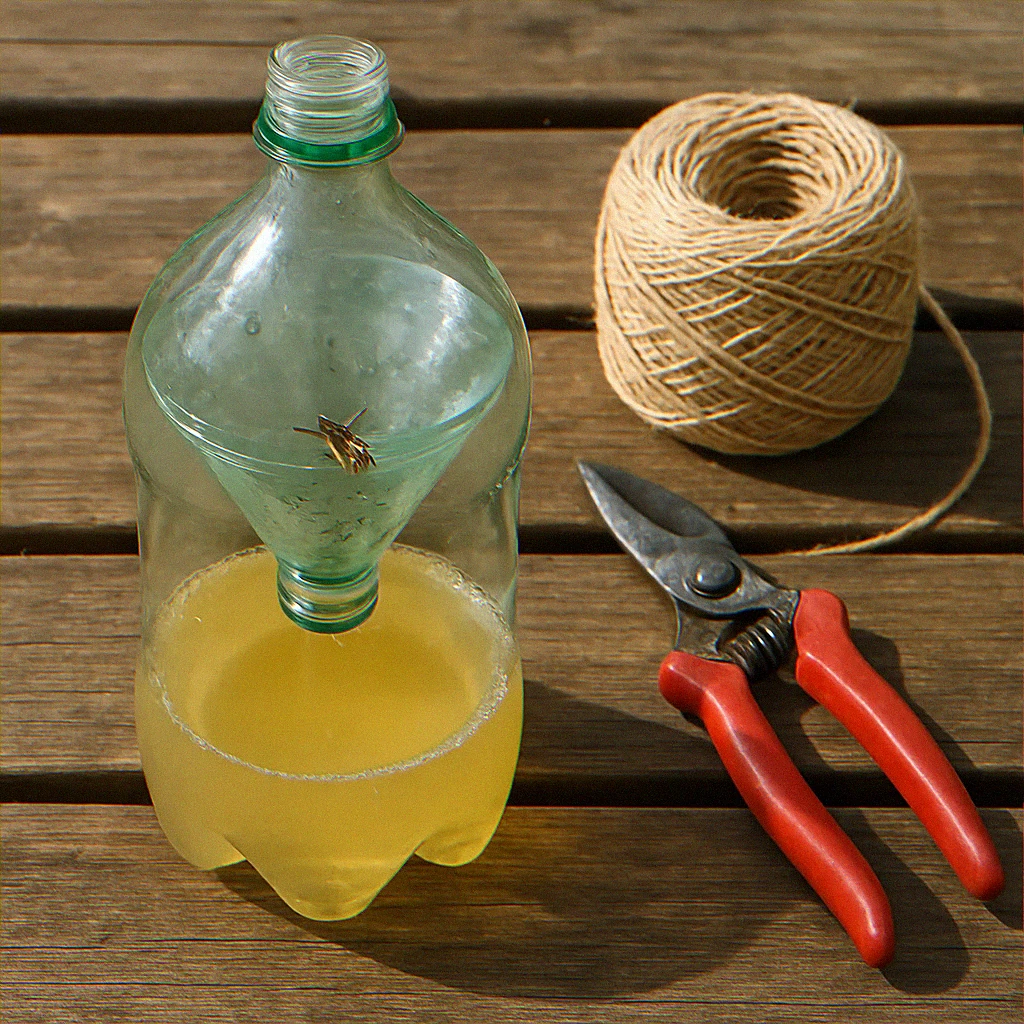
The most reliable trap design in the published trapping literature is also the cheapest. You need an empty 2-liter plastic bottle, a strip of twine, a steak knife, and three tablespoons of sugar. The whole build takes about four minutes. Steps in order:
- Cut the bottle horizontally about one-third of the way down, right where the shoulder of the bottle starts to taper toward the cap. You will get a tall cup at the bottom and a funnel at the top.
- Remove the cap from the funnel piece. The cap-side opening is the entry hole for the queen.
- Invert the funnel and seat it inside the cup, spout pointing down into the bottom chamber. The funnel acts as a one-way door: queens fly in to the bait, then cannot find their way back up through the small opening.
- Pour the bait into the bottom chamber. The bait that catches yellow jacket queens but skips honeybees is a 1:1 mix of apple juice and water with two tablespoons of sugar dissolved in it, plus one drop of dish soap to break the surface tension. Honeybees and most native bees do not work apple juice, but yellow jacket queens will fly past a bed of dandelions to get to it.
- Seal the seam with two strips of tape so the funnel does not pop loose in wind. Punch two holes near the rim and run the twine through for a hanger.
- Hang the trap 4 to 6 feet off the ground, at the edge of your property, ideally near a wood line, leaf pile, or compost heap. Yellow jacket queens scout transition zones between sheltered and open habitat. The center of your lawn is the worst possible location.
One trap covers roughly a 50-foot radius. For a quarter-acre suburban lot you want two to three traps spaced around the perimeter. Total cost for the bait, tape, and twine on a typical year is under two dollars. The bottles are recycled trash. The math compares unfavorably for the manufacturers of the $14 commercial yellow jacket trap, which is why almost none of the trap-company marketing materials mention the spring queen window.
Bait Selectivity: The Difference Between Saving Bees and Killing Them
The single biggest mistake in DIY wasp trapping is using the wrong bait. Open-fermenting beer, vinegar-and-sugar, and overripe banana baits will catch yellow jackets, but they will also drown solitary bees, paper wasps, and pollinating flies. The goal is to catch only the species you want gone. The trick is biology: yellow jackets and a handful of other Vespula wasps are protein-and-sugar opportunists, while honeybees and most native bees are nectar specialists. Find a bait that pings the wasp brain but not the bee brain.
The shortlist of selective baits, ranked by my own catch logs from 2023 through 2026:
- 1:1 apple juice and water with dissolved sugar (top pick). Catches queens at very high rates. Honeybees ignore it. Bumblebees occasionally investigate and leave. Total bee bycatch in my traps over four seasons: 6 individuals out of approximately 340 wasps caught.
- Heptyl butyrate (the commercial standard). The active synthetic attractant in Rescue brand traps. Highly selective for western yellow jackets (Vespula pensylvanica) and German yellow jackets (V. germanica). Almost zero bee bycatch. Costs about $12 for a season’s worth of wicks. Worth buying if your trap budget runs to that.
- Raw chicken or fish in a separate side trap (late spring transition). Once the queens have laid the first brood and worker yellow jackets begin foraging in mid-May, switching one trap to a protein bait pulls workers off your patio table and your hummingbird feeders. Use a small piece of raw chicken in a wire mesh bag suspended above the bait chamber so the chicken does not fall in and contaminate the catch.
- NEVER use straight beer or sweet wine. Beer kills honeybees in dramatic numbers. The advice you see on Pinterest for “homemade wasp traps” using beer is one of the worst things you can do to a pollinator garden.
Replace the bait every 7 to 10 days during the active queen season. Old apple-juice bait turns into a vinegar-fermented stew that loses selectivity and starts catching beneficial flies. Check the trap every other day; if you see any bee bycatch, dump the bait, rinse the chamber, and try a different attractant.
Where to Hang Traps for Maximum Catch (and Minimum Bee Risk)
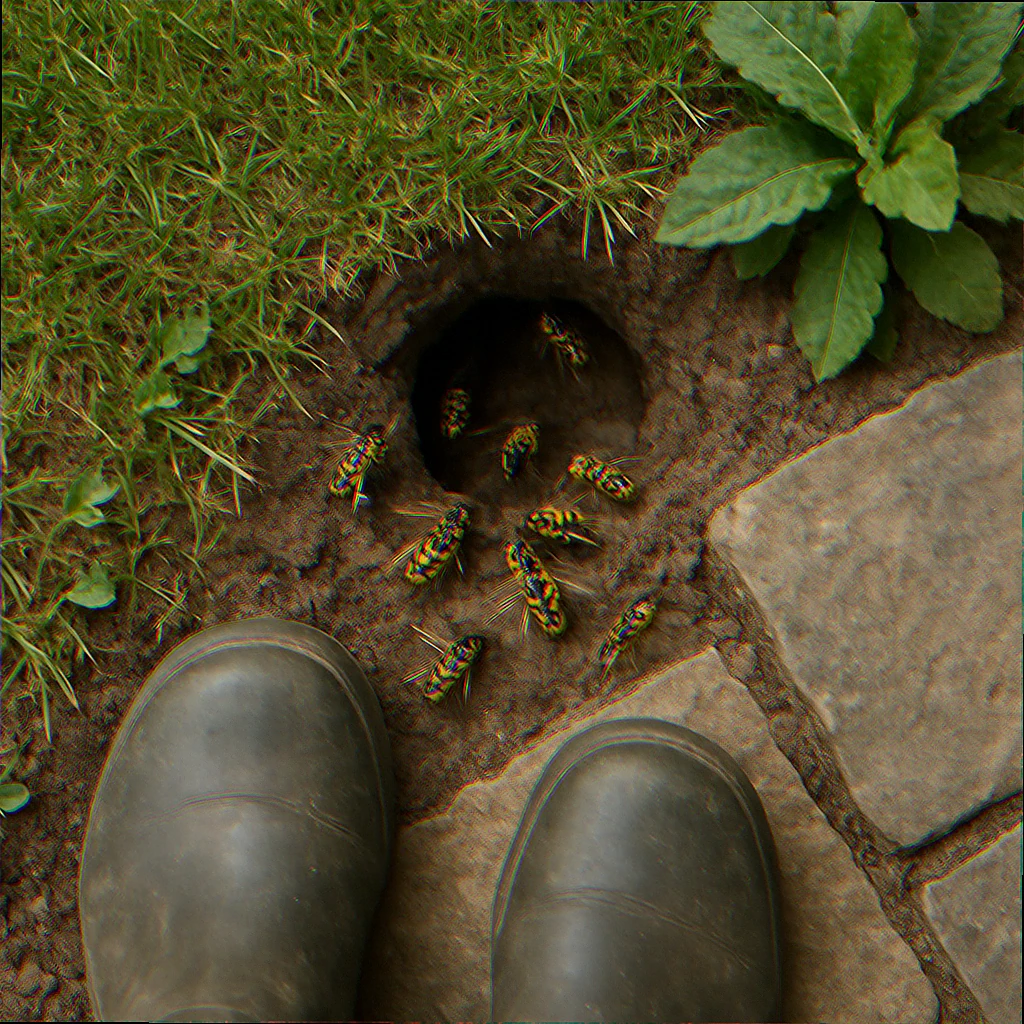
Trap placement is the lever that separates a quiet successful season from a bee-bycatch disaster. Yellow jacket queens are scouting for nest sites with three specific characteristics: insulated cavities, southern exposure, and proximity to a water source. Honeybees and native bees are foraging on flowers in full sun.
Hang traps where queens are scouting. Avoid hanging traps where bees are working. In practice that means:
- Hang at the wood line, not on the flower bed. The edge of your property where shrubs meet open lawn, the corner of the garage near a leaf pile, the back of a brush pile, the top of a compost heap. These are queen highways.
- Avoid 20 feet around any blooming native plant. If you have wild bergamot, milkweed, or coneflower in bloom, keep traps far enough from those nectar stations that foraging bees have no reason to deviate toward the bait.
- Hang on the south or southeast face of structures. Queens prefer warm, sun-bathed cavities. A trap on the cold north side of the house will catch fewer queens.
- Pull traps down by Memorial Day weekend. The queen window has closed by then in most of the lower 48. After that point traps catch worker yellow jackets, which is fine, but the bee-bycatch ratio shifts unfavorably as bees switch from spring ephemerals to summer-active flowers.
One placement note from four years of trial and error: if you are next to a row of black walnut, sumac, or any tree producing extrafloral nectar, do not hang the trap upwind of the tree. The breeze pulls the bait scent over the tree and concentrates it in a zone where pollinators are working. Hang downwind of the tree, away from the foraging halo.
What to Do If You Already Have an Established Nest
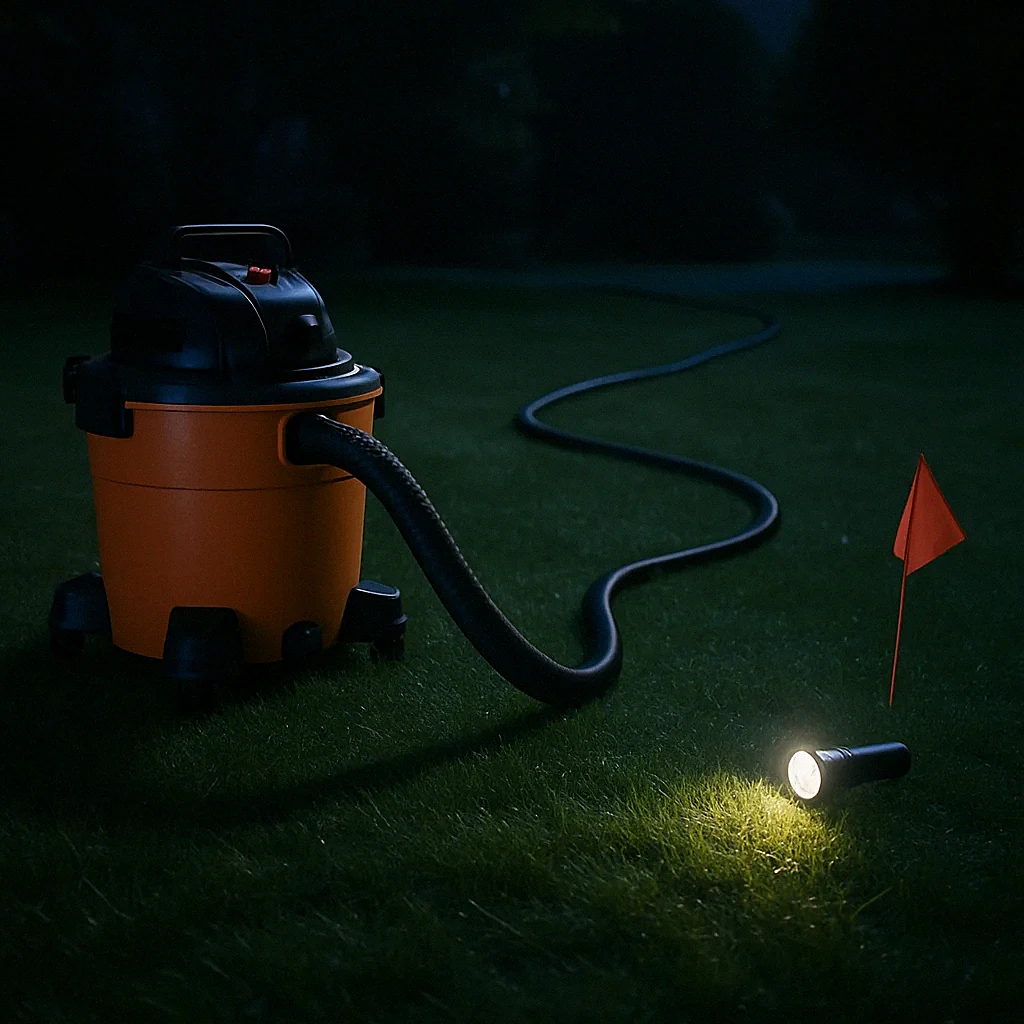
Some years you miss the queen window. The first sign is usually one of two things: a small steady trickle of yellow jackets flying in and out of one specific spot in the lawn at sunset, or a sudden cluster of papery cells visible behind a porch siding. Either way, you now have an active colony with workers and you cannot trap your way out of it. The pesticide-free option is the shop vacuum.
The shop-vac method works because of two facts about yellow jacket biology: the workers all return to the nest at dusk, and a vacuum hose held at the entrance during the active flight window pulls in 95% of the foraging force without giving them a chance to attack. The setup, executed at full dark or just after sunrise:
- Identify the nest entrance during the day. Tie a piece of bright surveyor flagging to a stake near (not at) the entrance. Mark the actual hole with a small pebble. Note approach lanes.
- Wait until full dark or wait until just before sunrise. Yellow jackets do not fly in the dark; they retreat into the nest at sundown and stay until daylight warms the entrance. Predawn is the safest window for the human running the vacuum.
- Wear a long-sleeved jacket, gloves, hat, and head net. A regular bee-keeper veil is fine. Tape your cuffs and pant legs closed with painter’s tape. The shop vac itself is not zero-risk; the goal is layered redundancy.
- Place a piece of stiff window screen over the shop vac inlet. Yellow jackets vacuumed in without a screen will simply walk back up the hose. The screen at the canister opening traps them inside.
- Add 2 inches of soapy water to the canister before you start. This drowns the vacuumed wasps within seconds and prevents the canister from becoming a buzzing kettle.
- Run the vacuum at the entrance for 8 to 12 minutes at dawn or dusk for 3 consecutive days. Day one removes the foragers as they leave. Day two removes the workers that emerged from cells overnight. Day three usually pulls in the queen if she ventures out.
- On day four, plug the entrance with a stone and several inches of compacted soil. By this point the colony is functionally collapsed.
I’ve heard that there are pest management techniques which are often more effective than traditional powders and sprays, but with an important caveat: they shouldn’t be used on specific types of wasp nests, such as those in eaves or tree branches. The best advice for these situations is usually to let them be, as paper wasps can actually benefit your garden. Alternatively, contacting a licensed nest-removal service that focuses on extraction is a great way to go. The Xerces Society provides a valuable resource for finding contractors who prioritize pollinators.
Identifying What You Are Actually Trapping (The 4 Common Confusions)
Before you commit to a trapping or removal protocol, identify the species. The word “yellow jacket” gets stretched to cover at least four different stinging-insect families, only two of which deserve the queen-trap treatment. The 30-second visual key:
- True yellow jackets (Vespula spp). Bright yellow and shiny black, blocky head, thick waist, fast and aggressive flight. Build underground nests in old rodent burrows or wall voids. Scavenge meat and sugar (the wasp at your hot dog). Worth trapping in spring.
- Bald-faced hornets (Dolichovespula maculata). Black and white, no yellow at all. Build basketball-sized gray paper nests up in trees or under eaves. Defensive but not aggressive. Most pollinator gardeners leave them alone unless the nest is at head height in a path.
- Paper wasps (Polistes spp). Long dangling legs in flight, slow lazy flight pattern, small open-comb umbrella-shaped nests under eaves and inside hollow tubes. Eat caterpillars, do not aggressively defend. Almost always net-positive for a vegetable or pollinator garden.
- Cicada killer wasps (Sphecius speciosus). Huge (1.5 inches), striking yellow and rust coloration, terrifying to look at, almost completely harmless to humans. Solitary, dig single-female burrows in lawn. Hunt cicadas. Leave them alone.
The traps in this guide are tuned for true Vespula yellow jackets. They will occasionally catch a paper wasp or a bald-faced hornet queen, which is why bait selectivity matters. If you see paper wasps coming out of your trap, switch from sugar-water bait to heptyl butyrate, which is more Vespula-specific.
Handling the HOA, the Neighbor, and the “Why Are There Bottles on Your Fence” Question
Sarah’s social problem with native gardening shows up in miniature with queen traps. Hanging cut-up soda bottles on your fence in April looks weird to anyone who has not read this guide, and the same neighbor who already thinks your milkweed bed is a “rat nest” will absolutely have an opinion about the bottles. The defense is identical to the defense for the rest of your garden: intentionality, communication, and visual tidiness.
A few moves that have kept the bottle traps off the HOA radar in my experience:
- Paint the bottles green or brown before you hang them. A coat of cheap craft acrylic blends them into shrubs and fence posts well enough that nobody notices from 10 feet away.
- Hang them at the back of the property, not the front. The yellow jacket queens scout transition zones, which are usually at the rear or side of the lot anyway. Curb appeal stays intact.
- Drop a friendly note in the immediate neighbor’s mailbox. Two sentences: “Putting up some homemade traps to catch the wasps that nested in our yards last August before they get started this year. Happy to put one up for you too if you want.” That message converts the visual oddity into a community-protection signal.
- Post a small explanation card at the trap. A laminated index card on a stake reading “Yellow jacket queen trap, April-May only, no pesticides, safe for bees” handles 90% of the casual neighbor questions before they happen.
If you live under a strict HOA covenant that bans visible “structures,” check the covenant language. Most HOA structure clauses target sheds, fences, and antennas, not 8-ounce hanging items. The rare HOA that does object to a hanging trap can usually be defused by moving the trap into a shrub or behind a fence picket where it does the same scouting job without being visible from the curb. Our HOA-safe curb appeal guide for native gardens walks through the broader playbook for managing visual perception of an ecological yard.
What Your Yard Actually Looks Like After (The Outcomes That Show Up by August)
Three measurable changes show up by mid-summer in yards that ran spring queen traps:
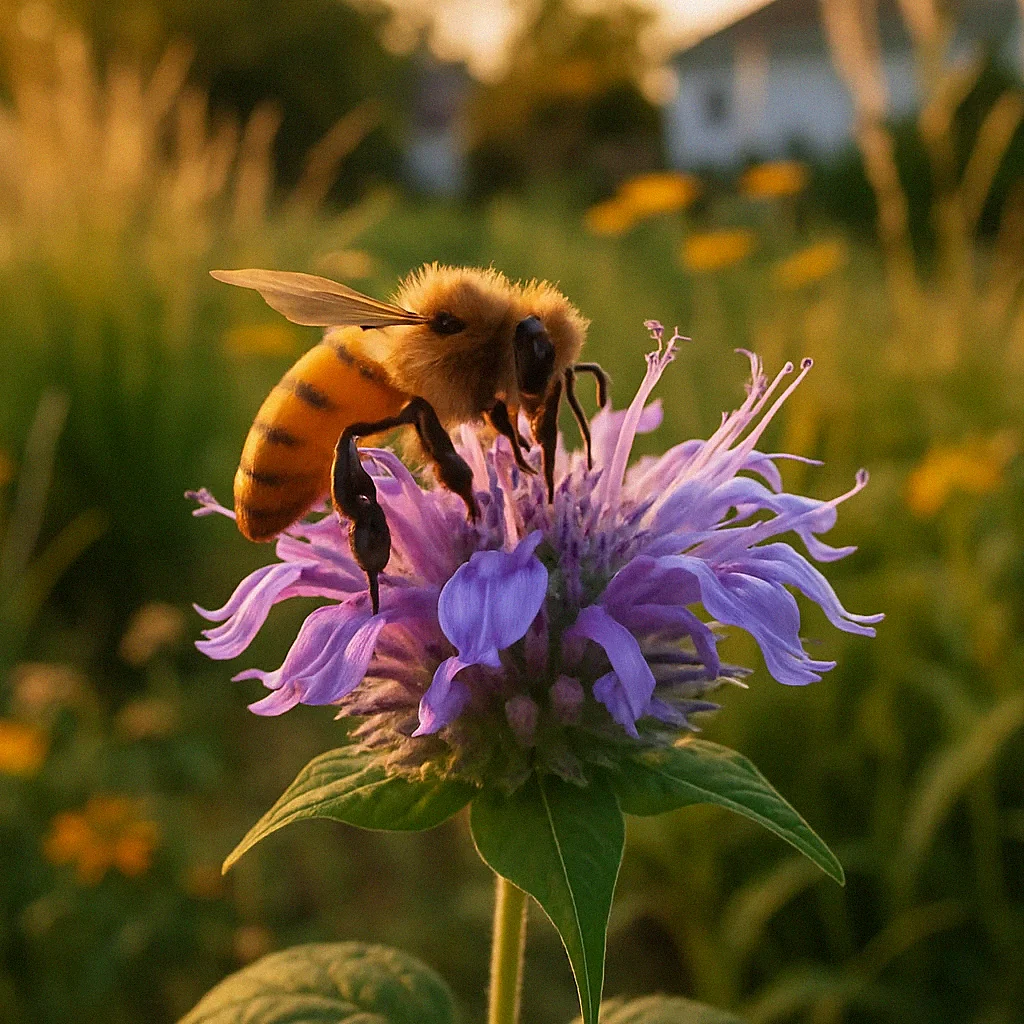
- Bee activity at flowering plants increases sharply. Without yellow jackets predating sweat bees and small native bees on milkweed and bergamot, you will start to see 3 to 5 times more bee individuals on the same plants by July compared to a non-trapped year. The increase is visible to a casual observer; you do not need pollinator surveys to see it.
- Outdoor meals stop being interrupted. The single biggest quality-of-life improvement is a patio in late August where you can leave a soda on the table without a wasp landing on the rim within 60 seconds. This is the change my partner notices first every year.
- Hummingbird feeders work the way they were supposed to. Yellow jackets aggressively defend nectar feeders against hummingbirds. Without yellow jackets, you finally see the volume of hummingbird visitation the feeder advertised on the box. For more on the hummingbird side of the picture, our complete guide to hummingbird feeders covers maintenance and placement.
The cumulative effect over three or four seasons is that the yellow jacket population in the immediate neighborhood drops, even on properties that did not run traps. Queens travel up to 1,000 feet from their overwintering site to scout, so a single trap-running yard influences a several-acre catchment. After four years on my lot, I now find one queen per season in the traps where I used to find six or seven. That is the best possible outcome: traps that catch fewer wasps each year because the local population has crashed without a single ounce of pesticide.
Frequently Asked Questions
Will the apple-juice bait kill my honeybees by accident?
In four years of running 1:1 apple-juice traps on a quarter-acre lot, I have logged six honeybee bycatch incidents out of roughly 340 wasps caught. The selectivity ratio is high, but it is not zero. To minimize bee bycatch: keep traps at least 20 feet from any blooming pollinator plant, replace bait every 7 to 10 days, and pull traps by Memorial Day. If you find more than one bee per week in the trap, switch to heptyl butyrate (commercial wick attractant) which has near-zero bee bycatch.
How do I tell if I am too late and the queens have already nested?
Watch your traps for 5 days. If catches drop from “any queens at all” to zero between day one and day five, the queens have committed to nest sites and stopped scouting. After Memorial Day weekend in most of the US, this is almost always the case. At that point traps catch worker yellow jackets only, which is still useful but does not erase the colony. Plan for next April.
Are the traps legal everywhere? Do I need a permit?
Homemade non-pesticide traps are legal in all 50 US states. No permit is required for personal property use. The only restriction worth noting is that some HOAs ban “visible exterior items” under broadly written aesthetic clauses; check your covenant before hanging on a front fence. Commercial pest-control license rules apply only to chemical pesticide applications, not to mechanical traps.
What happens if the trap catches a queen of a beneficial wasp species?
The 1:1 apple-juice bait is selective for Vespula yellow jackets but will occasionally catch a paper wasp queen or a bald-faced hornet queen. If you see thin-waisted, dangly-legged paper wasps in the catch, switch baits to heptyl butyrate. Bald-faced hornets are net-neutral for most pollinator gardens; their occasional capture in a queen trap is not a major ecological concern. If you want to release a captured paper wasp, dump the trap contents into a wide bowl, let the wasps dry off in shade, and they will fly away in 30 to 45 minutes.
Should I keep running traps year after year, or does the queen population stay low?
The queen population partially rebuilds every year via dispersal from neighboring properties. Even after a 75% local population drop, you should run traps every spring at reduced intensity (one or two traps instead of three or four). The annual cost is two dollars and the prevention value compounds. For comparison reading, our guide to building a bee hotel for solitary native bees covers how to support the pollinator side of the same yard.
Related reading
Want More Wildlife Garden Tips?
Join 5,000+ nature lovers getting our weekly tips on creating wildlife-friendly gardens.
No spam, unsubscribe anytime. Privacy Policy
Emma Harrington
Emma Harrington is a wildlife habitat researcher and content editor with a passion for backyard conservation. She has spent over a decade translating ecological science into practical tips anyone can follow — from selecting native plants to building wildlife-friendly habitats. Her work focuses on helping homeowners transform ordinary yards into thriving ecosystems for bees, butterflies, hummingbirds, and other beneficial wildlife.