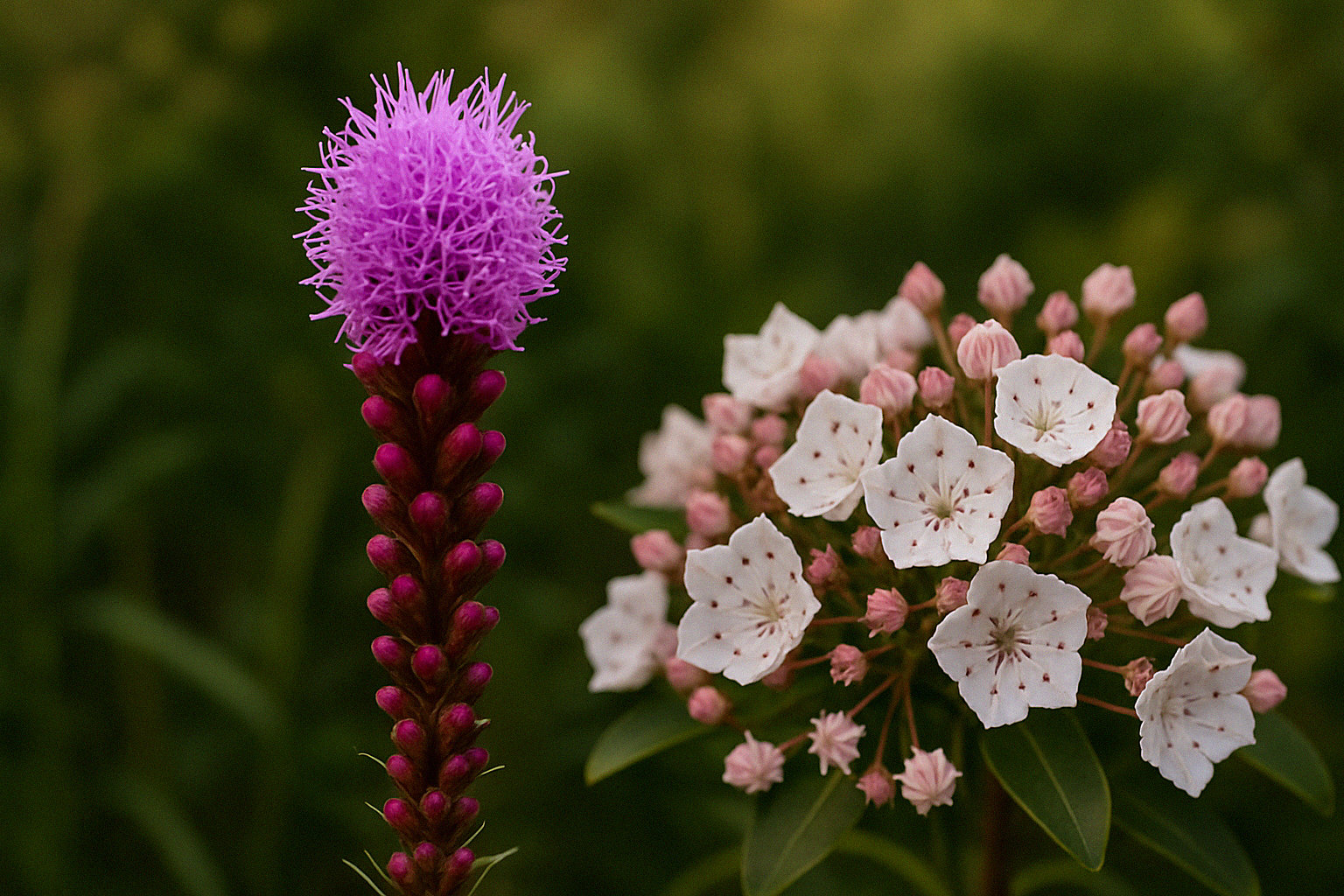
You spent forty bucks on a flat of butterfly weed plugs in April. By mid-May, three of them looked like someone had run a string trimmer over the tops. That is the deer signature, and it is the single most demoralizing moment in the whole pollinator-yard project, because it suggests that wildlife and a wildlife garden are at war with each other. They are not. The actual problem is plant choice.
Most native pollinator plants are deer candy. Hostas, hydrangea blooms, daylilies, asters in their first year, anything tender and unscented. But there is a real, repeatable list of natives that deer skip almost every season once you put them in. The trick is that “deer-resistant” is not a fixed trait. It is a function of three things stacked together: aromatic oils in the leaves, tough or hairy textures, and bitter or milky sap. Plants that hit two of those three rarely get touched even by hungry yearlings.
This is the working list of fifteen native species that pollinators absolutely love and deer almost always avoid, organized so you can build a bed that earns the homegrown national park label without becoming a deer buffet. The species below are documented in the University of Maryland Extension deer-resistant natives list and the Xerces Society guide to native plants for pollinators, and the bumblebee-visit data behind the mountain mint recommendation comes from the Penn State Extension three-year pollinator-attractiveness study.
FREE: Wildlife Garden Starter Guide
Get our 12-page PDF with the 25 best plants for pollinators, simple habitat tips, and a printable checklist — all 100% free.
No spam. Read our Privacy Policy.Why deer skip these and devour your hostas
Deer are browsers, not grazers. They take a bite, evaluate, and move on if the leaf has any of the three deterrents stacked together. The aromatic oils in mint-family plants (Lamiaceae) confuse their sense of smell, which is how they locate forage in the first place. Tough or fibrous leaves, like the sword-shaped foliage of rattlesnake master or the leathery leaves of bayberry, just are not worth the chewing effort. And milky sap in the milkweed and dogbane families contains cardenolides that taste terrible to a mammal palate (which is exactly why monarch caterpillars evolved to eat it: their predators learned to leave them alone).
That trio is your filter. Every plant on the list below hits at least two of those three. None of these are 100% deer-proof. A starving deer in a hard winter will eat a tulip bulb out of frozen ground. But under normal browsing pressure, on a residential lot with a population density of a few deer per square mile, these plants stay intact while the surrounding landscape gets hammered.
One small caveat before the list. Deer pressure is local. A property backing up to a state forest in central Pennsylvania has different math than a corner lot in inner-ring suburbs of Indianapolis. Talk to a neighbor who already has natives in the ground, or check the Lady Bird Johnson Wildflower Center deer-resistant species collection for your state, before going all-in on any single species. And if you are still figuring out which species are actually native to your county, the post on how to verify a plant is truly native to your county walks through BONAP and the iNaturalist county filter.
The 15 deer-resistant native pollinator plants, ranked by reliability
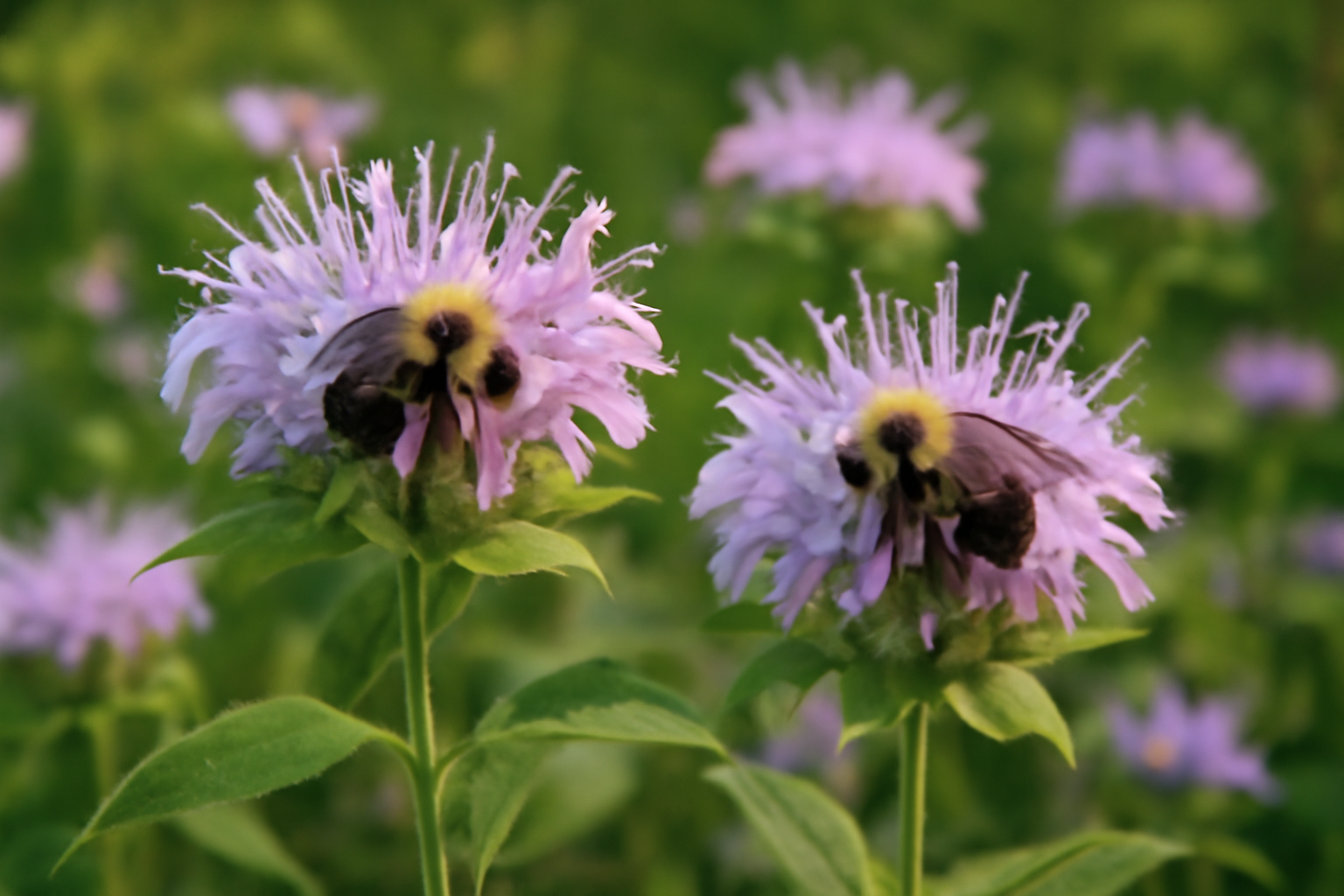
1. Wild Bergamot (Monarda fistulosa)
Wild bergamot is the workhorse. Lavender flower clusters from late June through August, three to four feet tall in average soil, full sun to part shade. The minty foliage smells like Earl Grey when you brush it (the bergamot in the tea is a different plant, but the oil is similar), and that smell is exactly why deer skip it. Bumblebees are the dominant visitor, but clearwing moths and ruby-throated hummingbirds work the flowers too. It tolerates clay, drought, and a hard cutback in spring.
Pragmatic note: regular bee balm (Monarda didyma) is the red-flowered hybrid you see at big-box stores. It is also deer-resistant but much fussier about powdery mildew. If you only have access to the Walmart bare-root rack, bee balm hybrids will still work; just space them four feet apart for airflow.
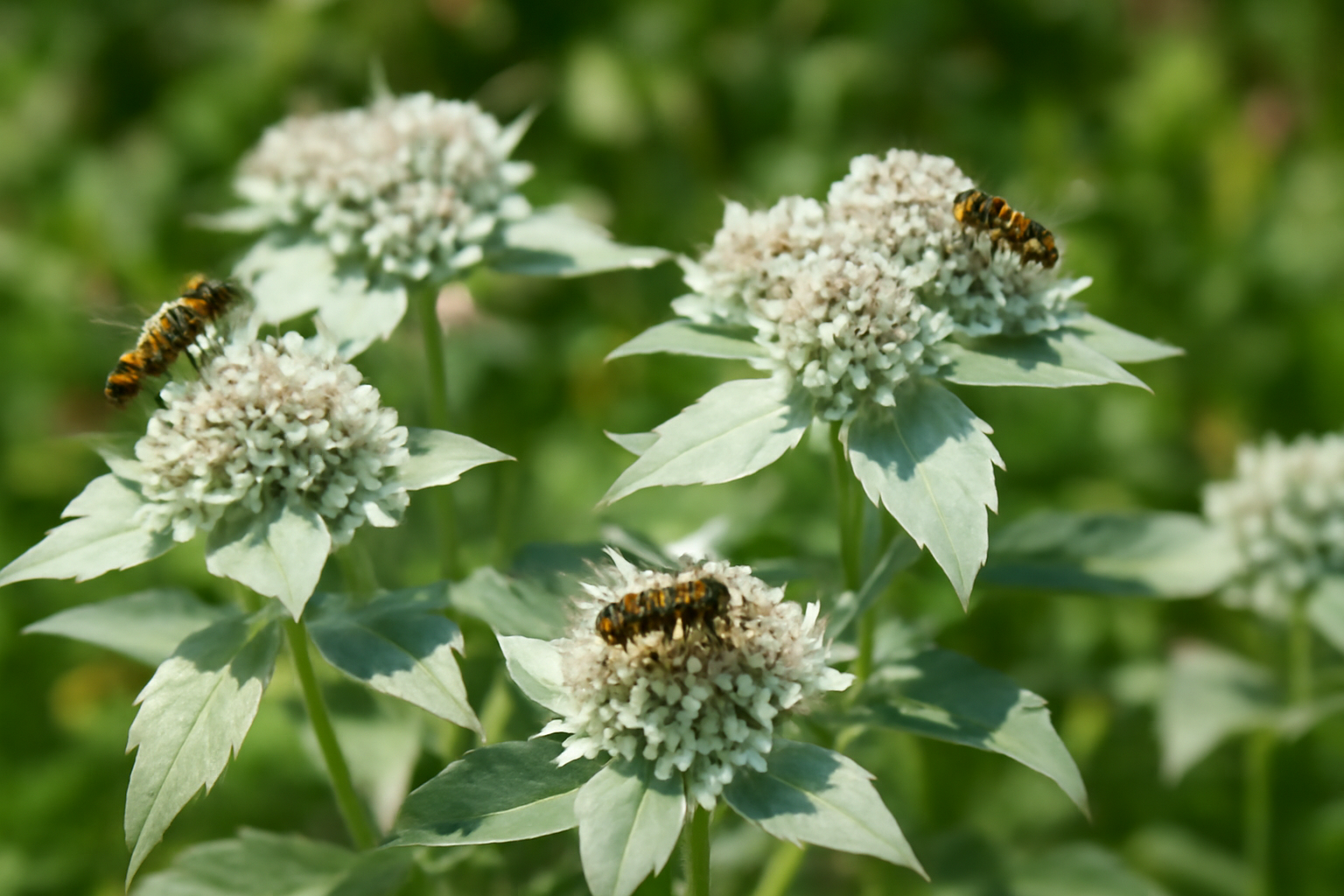
2. Short-toothed Mountain Mint (Pycnanthemum muticum)
If I had to pick one plant from this entire list, it would be this one. Penn State Extension ran a three-year study of 86 native perennials and short-toothed mountain mint had more pollinator visits and the most diverse pollinator community of any species tested. Honeybees, bumblebees, paper wasps, syrphid hoverflies, and tachinid flies all hit it constantly. The silver-bracted flower clusters look like a deliberate floral arrangement, the foliage is intensely aromatic, and deer do not touch it.
It spreads by rhizome, which is the only mark against it. Plant it in a defined bed with a hard edge or in a spot where you actively want it to fill in. Three feet tall, full sun, average to dry soil. Bloom window: July through September.
3. Rattlesnake Master (Eryngium yuccifolium)
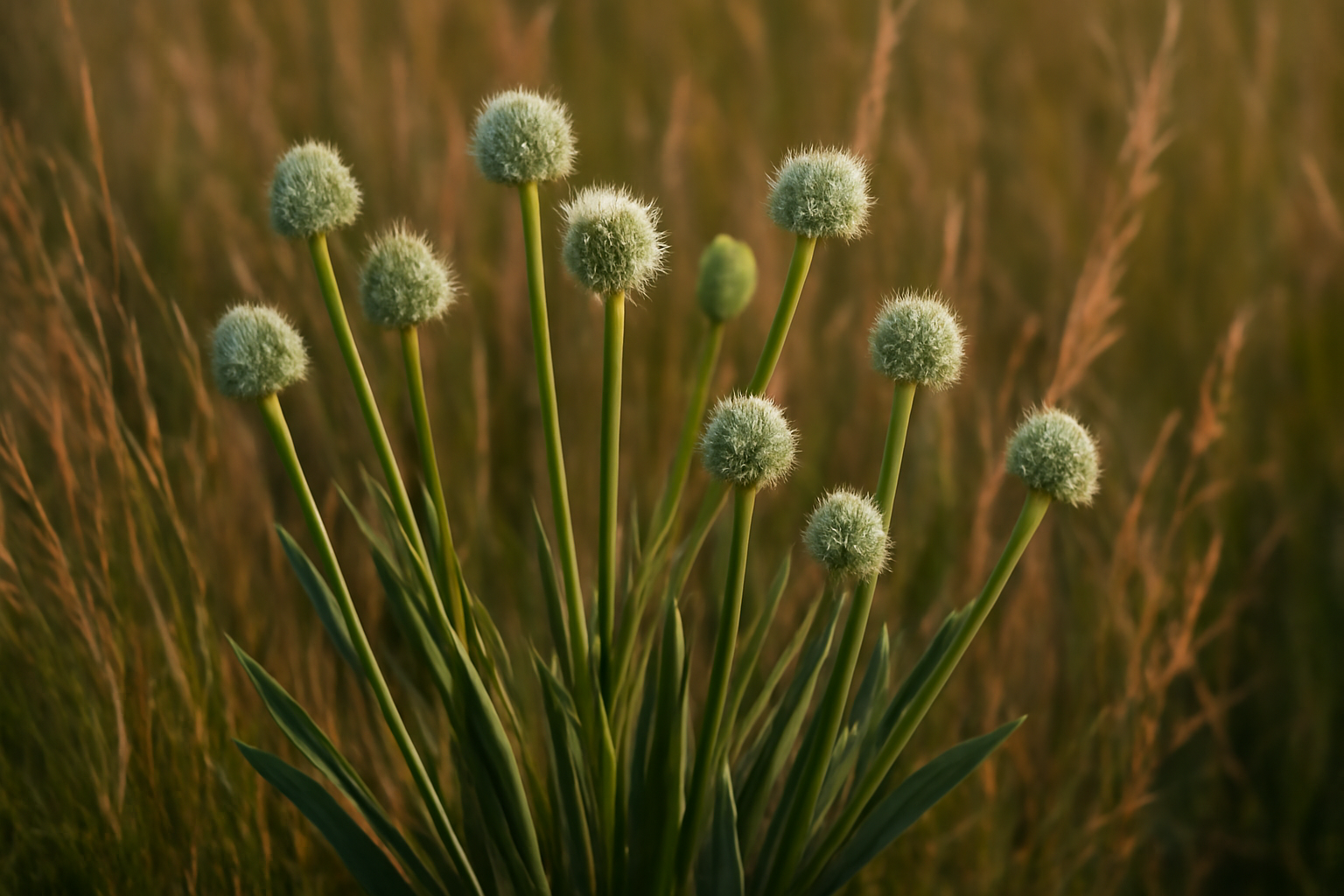
Rattlesnake master looks like a cactus had a child with a birthday party. Spiky greenish-white globe flower heads on three- to four-foot stems, sword-shaped basal leaves, dramatic structural presence in a planting. Deer want absolutely nothing to do with the leathery, spine-edged foliage. Pollinator value is real and unusual: short-tongued bees, beneficial wasps, soldier beetles, and the rare monarch all visit. Native to tallgrass prairies, so it wants well-drained soil and full sun. Drought-tolerant once established. Bloom window: July through August.
4. Butterfly Weed (Asclepias tuberosa)
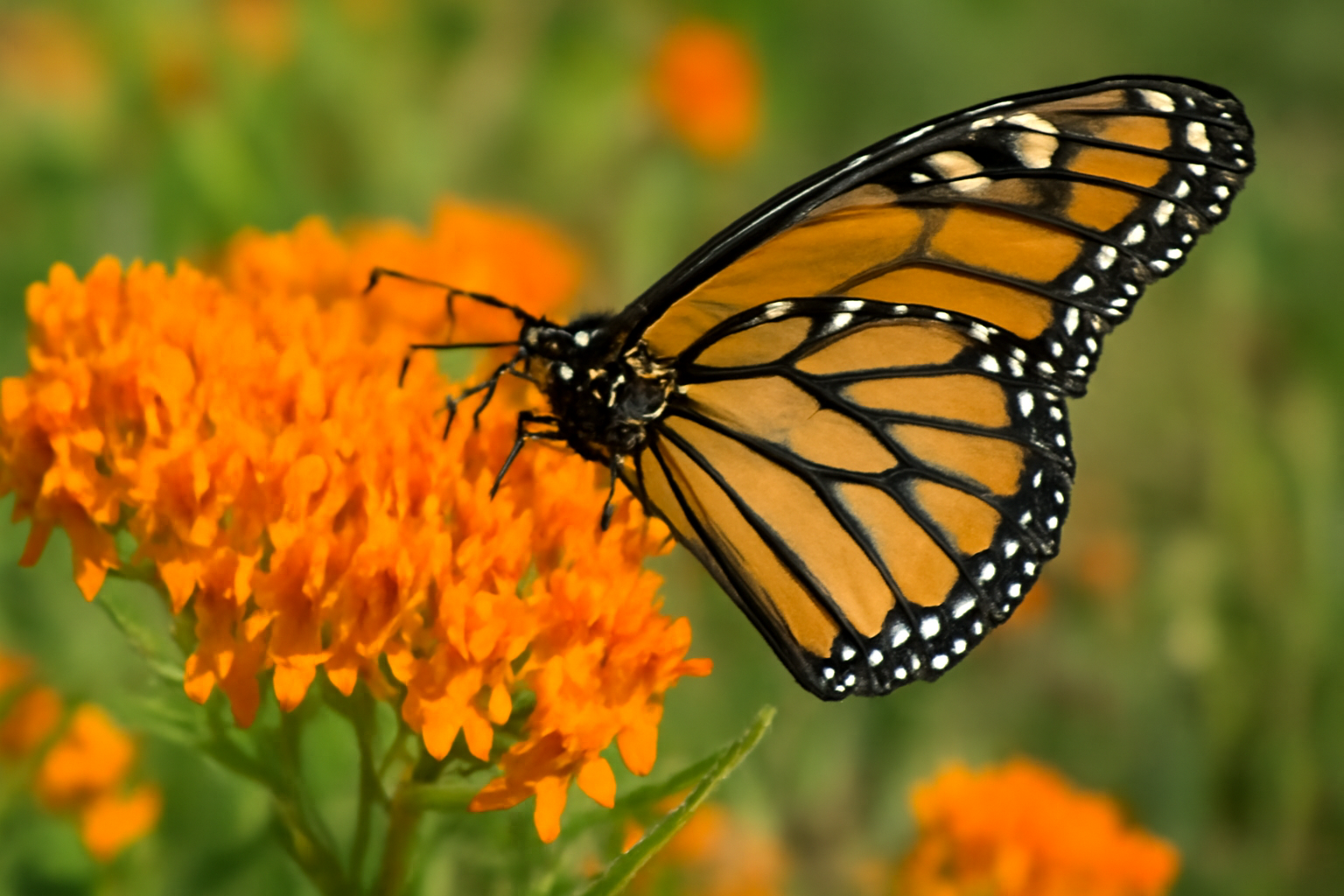
Bright orange umbel flowers from June through August on a 24-inch plant. The milky sap is the deer deterrent. Monarchs lay eggs on the leaves, but the real adult-pollinator action is the nectar-rich flowers, which pull in fritillaries, swallowtails, and a steady stream of native bees. Hates wet feet. Plant it in the driest, sunniest spot you have and do not amend the soil with compost (it actually performs worse in rich soil).
5. Common Milkweed (Asclepias syriaca)
If you have the room and you can manage a spreader, common milkweed is the better milkweed for monarch host duty. Pink-purple ball clusters in June and July, three to five feet tall, suckers aggressively from underground rhizomes. The sap and the alkaloids inside it are why deer skip it. This is a plant for a hellstrip, a meadow corner, or the back of a deep border, not for the manicured front yard.
6. Swamp Milkweed (Asclepias incarnata)
For a wet spot, this is the milkweed. Three- to four-foot stems with pink flower clusters, well-behaved clumping habit (no aggressive spreading), thrives in rain garden zones and along low spots. Deer-resistant for the same milky-sap reason. Pollinator visits include monarchs, fritillaries, and the long-horned bees that specialize on Asclepias.
7. Anise Hyssop (Agastache foeniculum)
Tall purple-blue flower spikes from July through September, licorice-scented foliage, three to four feet tall. The smell is almost too much when you cut it back, which is exactly why deer ignore it. Bumblebees and hummingbird-clearwing moths are the dominant visitors. Native to the upper Midwest and eastern Great Plains; if you are in the Mid-Atlantic, the very similar Agastache nepetoides (yellow giant hyssop) is the regional analog. Drought-tolerant, full sun, well-drained soil.
8. Boneset (Eupatorium perfoliatum)
Flat-topped white flower clusters in late summer, three to four feet tall, native across most of the eastern US. The leaves are oddly fused around the stem, which is where the perfoliatum species name comes from, and deer actively avoid the bitter foliage. Pollinator-rich beyond reason: tachinid flies, bee flies, soldier beetles, predatory wasps, and the late-season skippers all converge on the flat blooms. Tolerates wet to medium soil.
9. Joe-Pye Weed (Eutrochium purpureum and E. maculatum)
The tall pink-purple plumes you see in late August. Five to seven feet tall, deer-resistant because of the slightly bitter sap, dramatic in the back of a border. Eastern tiger swallowtails, monarchs on their fall migration, and great spangled fritillaries all stack up on the flower heads. Spotted Joe-Pye (E. maculatum) takes wetter feet; sweet Joe-Pye (E. purpureum) handles drier shade.
10. Tall Bellflower (Campanulastrum americanum)
An underused biennial-to-short-lived-perennial native to eastern woodlands. Star-shaped blue-violet flowers up the stem, four to six feet tall in part shade, deer ignore it almost entirely. Specialist bee species (the bellflower mining bee, Andrena chamissonis) depend on it for pollen. Self-sows reliably once you establish a colony, which means a $4 four-pack in year one becomes a self-sustaining population by year three.
11. New Jersey Tea (Ceanothus americanus)
A native shrub that nobody plants and everybody should. Three feet tall, three feet wide, white flower clusters in June. Deer skip it because of the slightly tannic foliage. Pollinator value: small native bees, beneficial wasps, hummingbirds, and the spring azure butterfly which uses it as a larval host plant. Drought-tolerant once established (the deep taproot is why), tolerates the worst soils, performs in part shade. The Civil War nickname comes from colonists drying the leaves to brew during the British tea boycotts, which is a marketing angle that just writes itself.
12. False Indigo (Baptisia australis and B. alba)
A long-lived, slow-establishing native that looks like a small shrub once it is mature. Blue or white pea-flower spikes in early summer, blue-green foliage that holds up all season, two to four feet tall. The alkaloid content of the leaves is what keeps deer off. Bumblebees and the rare native silver-spotted skipper are the primary pollinators. Patience is required: it sits and sulks for two years, then goes leap in year three. The post on sleep, creep, leap and why your native plants look tiny covers the timeline in detail.
13. Threadleaf Coreopsis (Coreopsis verticillata)
Two-foot mound of fine-textured foliage covered in yellow daisy flowers from June through August. Deer-resistant ranking varies; in heavy-pressure yards it does get nibbled, but in average suburban deer pressure it stands. Native to dry, rocky open woods in the Mid-Atlantic. The fine-textured threadleaf foliage is itself the deterrent. Long bloom window, drought-tolerant, attracts a wide range of small native bees and skipper butterflies. Pair it with little bluestem grass for a Plant Combination That Just Works.
14. Goldenrod (Solidago rugosa ‘Fireworks’ or S. caesia)
Goldenrod is the most slandered plant in the entire native pollinator world. It does not cause hay fever (that is ragweed, a completely separate plant blooming at the same time), and it is a top-tier pollinator resource for late-season specialist bees and migrating monarchs. Most goldenrods are deer-resistant; the bitter sap is the reason. Pick the well-behaved species: Solidago rugosa ‘Fireworks’ for sun, S. caesia (blue-stem goldenrod) for part shade. Both clump rather than spread aggressively. Avoid S. canadensis in a tidy garden. It runs.
15. Northern Sea Oats (Chasmanthium latifolium)
The one ornamental grass on this list, and a strong one. Three to four feet tall, flat oat-like seed heads that go from green to bronze in fall, takes part shade to full sun, native to moist eastern woodlands. Deer skip it because the foliage is tough and bladelike. It is a host plant for skipper butterflies and the seeds feed sparrows and juncos through winter. It self-sows, which is either a feature or a bug depending on how tidy you want the bed.
Building the bed: a 12-plant design that holds up to browsers
The plants above are the vocabulary. Here is the sentence. This is a 12-plant design for a sunny 8-by-12 bed, sequenced for spring-through-fall bloom, deer-resistant from May through October, and looks intentional enough to pass the curb appeal test. Total cost at native nursery plug rates ($3 to $5 per plug) runs $36 to $60. At a big-box garden center in three-inch pots, expect $80 to $120.
- Back row (rear of bed): 3 Joe-Pye weed (Eutrochium purpureum), spaced 3 feet apart
- Middle row: 3 wild bergamot (Monarda fistulosa), 2 anise hyssop (Agastache foeniculum), 1 rattlesnake master (Eryngium yuccifolium)
- Front row: 3 butterfly weed (Asclepias tuberosa), 2 threadleaf coreopsis
Bloom sequence: butterfly weed and coreopsis kick off in mid-June, wild bergamot and anise hyssop carry July, rattlesnake master peaks in late July to early August, Joe-Pye weed closes the season in late August through September. Total active-pollinator window: 14 weeks. The whole thing reads as deliberate because the heights step from front to back, and there is nothing in there that deer prefer over the lawn next door.
For a wetter spot or a designated rain garden zone, swap in swamp milkweed and boneset for the butterfly weed and rattlesnake master, then add Northern sea oats as the structural element. The post on native plants for a rain garden using the 3-zone recipe walks through the wet-zone variant in full.
The first-year deer protection plan (because plugs are vulnerable)
Here is the part that nobody warns you about. Even on the deer-resistant list, the first six weeks after planting are dangerous. A two-inch plug of butterfly weed has not yet developed the milky-sap concentration of an established plant, and a yearling deer with no other forage will absolutely take a test bite. So protect the plugs through their first year, then let the chemistry take over.
The minimum effective protection is a single circle of two-foot welded wire fencing around each plug, secured with a bamboo stake. Three bucks of materials per plant. Pull the cages in October once the foliage has died back. By year two, the plant has the volume and the chemistry to defend itself. For a backyard with high deer pressure (you see them in the yard most weeks), the post on how to keep deer away from your garden using methods that actually work covers the broader exclusion options including egg-based sprays, motion sprinklers, and the eight-foot fence question.
One personal note from my own yard. I planted six wild bergamot plugs in spring of 2023 unprotected, on a cul-de-sac lot in a neighborhood with moderate deer pressure (we see them maybe once a week). Three got browsed back to the crown in the first month. The other three made it. By year two, all six had bounced back, and now in year four nothing touches them. The chemistry is real, but the establishment window is real too.
Pragmatic sourcing: where to actually buy these plants
The native plant world has a purist streak that can become its own obstacle. Yes, locally-sourced ecotype plugs from a small native nursery are the gold standard, and yes, you should support them when you can. But the perfect should not become the enemy of the planted-in-the-ground. Here are the three sourcing tiers that work in real life:
Tier one. Local native nursery plugs. $3 to $5 per plug, ecotypically appropriate, often grown from local seed. The best option if there is a nursery within driving distance. Look for member nurseries of regional native plant societies. The post on native plants on a budget with five cheap-or-free sources ranked by real cost has a longer breakdown.
Tier two. Mail-order native specialty. Prairie Moon Nursery, Roundstone Native Seed, Ernst Conservation Seeds for the Midwest and Mid-Atlantic. Izel Native Plants, Toadshade Wildflower Farm for the Northeast. Larner Seeds, Theodore Payne Foundation for the West. Bare roots and seeds ship cheaper than potted plants. Plant in fall for spring emergence.
Tier three. Big-box stores carrying straight species. Lowe’s and Home Depot in 2025 and 2026 have started stocking some straight-species natives in the perennial section, especially butterfly weed, wild bergamot, and threadleaf coreopsis. The plants are often labeled as cultivars (like Monarda ‘Jacob Cline’), which is fine for pollinator value but read the tag carefully. Avoid anything labeled “wildflower mix” without species names listed; this is the category that Audubon has flagged for non-native and even invasive contamination. The same warning applies to American Meadows and other generic seed mix retailers without strict regional sourcing.
If you are stretching a budget, a $12 flat of butterfly weed plugs from Prairie Moon plus a $20 hostas-replacement at Lowe’s that turns out to be a real Monarda fistulosa cultivar is a fine starter bed. Start where you are, plant what you can find, and upgrade the genetics over time.
The HOA and curb appeal angle
None of this matters if the result looks like a weedy mess to the front-yard neighbor and triggers a code complaint. Deer-resistant natives have a built-in advantage here: most of them are tall, structural plants with strong vertical lines (Joe-Pye, rattlesnake master, anise hyssop), which read as “intentional” rather than “neglected.” But the bed has to have a clean edge, a defined mulch border, and ideally a small sign indicating what it is.
The post on five HOA-safe curb appeal design patterns for native gardens covers the framing in detail, but the short version: a 12-inch hardwood mulch border around the planting, a single curved line at the front edge, and a National Wildlife Federation Certified Wildlife Habitat sign at $30 will do more for neighbor relations than another four perfect plants in the middle. The signal that this is on purpose is what protects you, not the species list.
What the data actually says about pollinator value
Pollinator-attractiveness research is not all equal. The strongest dataset is the Penn State Extension three-year study (2012-2014, replicated in subsequent years) that ranked 86 native perennials by visit count and visitor diversity. Top-ranked species from that study that also appear on this deer-resistant list:
- Mountain mint (Pycnanthemum muticum): #1 in pollinator visits and diversity
- Anise hyssop (Agastache foeniculum): top 5 for total visits
- Wild bergamot (Monarda fistulosa): top 10 for diversity
- Boneset (Eupatorium perfoliatum): top 10 for late-season specialist visits
- Joe-Pye weed (Eutrochium purpureum): top 10 for butterfly visits
The Xerces Society regional pollinator-plant guides cross-validate this list and add habitat-quality dimensions like host plant value for specialist bees. If you want to run your own selection process, both data sources are free PDFs and worth the read.
Common mistakes to avoid
Five things that will undermine even a perfect plant list:
1. Overplanting in year one. The instinct is to fill the bed. The right move is to plant 60% density and let the plants reach their mature spread by year three. Your future self will not have to dig out crowded plants.
2. Mulching too deep. Two inches of hardwood mulch is the maximum. Three or four inches creates a moisture barrier that actively harms native plants adapted to mineral soil.
3. Cutting back in fall. Leave the seed heads and dead stems standing through winter. Cavity-nesting bees overwinter in stem pith, goldfinches eat coreopsis seed all winter, and the structural interest is real. Cut back in late March, not October.
4. Buying “Wildflower Mix” packets. Generic wildflower mixes from American Meadows, big-box stores, or Amazon are a gamble. The species list often includes non-natives like cornflower, bachelor’s buttons, and even invasives. Buy single-species packets or pre-vetted regional mixes from specialty native seed houses.
5. Watering too long after establishment. Year one: deep watering once a week. Year two: water only in extreme drought. Year three onward: do not water at all unless the foliage is wilting at sunrise. Native plants on these species lists are dry-soil-adapted and overwatering invites root rot.
Reader questions I’ve answered before
Are deer-resistant native plants 100% deer-proof?
No. There is no such thing as a 100% deer-proof plant. A starving deer in a hard winter will eat tulip bulbs out of frozen ground. The species on this list are reliably skipped under normal browsing pressure (a few deer per square mile of suburban density) once established, but young plugs can still get nibbled in the first six weeks after planting. Cage individual plugs with two-foot welded wire fencing for the first growing season, then remove the cages.
Can I just plant aromatic herbs like lavender or rosemary instead?
Lavender and rosemary are deer-resistant, but they are not native to North America and they support a much narrower set of pollinators than native species. The point of this list is to get both deer resistance and high pollinator value. The native mint-family plants (mountain mint, wild bergamot, anise hyssop) deliver the same aromatic deer deterrent plus a 10x increase in visits from native bees and specialist pollinators. If you need a quick visual cue plant for a difficult deer area, native lyre-leaf sage (Salvia lyrata) is a good substitute for ornamental sage.
What about rabbits? Do these plants resist rabbit damage too?
Mostly yes, with some exceptions. The mint-family plants and the milkweeds are skipped by rabbits for the same chemistry reasons that work on deer. Joe-Pye weed and rattlesnake master are too tall and tough to attract rabbit damage. The vulnerable plants on this list are the smaller, tender ones: tall bellflower seedlings and threadleaf coreopsis can get nibbled. The post on humane ways to keep rabbits out of your garden covers the broader rabbit-management options.
How long until the bed actually fills in and looks like a real garden?
Year one looks bare. Year two looks promising. Year three looks like the photos. This is the sleep-creep-leap timeline that every native gardener learns the hard way. The plants are not failing in year one; they are building root systems that will support the dramatic above-ground growth in year three. Plan the bed for what it will look like in year three, not what it looks like in May of year one. If you need to fill the visual gap, plant cool-season annuals like calendula or zinnia between the natives in years one and two; both are bee-friendly and will not compete with the perennials’ establishment.
Will this bed look “weedy” to my neighbors and trigger an HOA complaint?
It depends entirely on the framing. The plant species themselves are not the issue; the design context is. A clean 12-inch mulch border, a defined edge, a Certified Wildlife Habitat sign, and intentional plant placement (tallest in the back, layered down to the front) reads as “designed garden.” A blob of natives planted randomly in the middle of a lawn reads as “neglected lawn.” The five HOA-safe curb appeal design patterns post linked above has the framing playbook in detail. Most code complaints are triggered by visual messiness, not by species choice, and tall structural natives like Joe-Pye and rattlesnake master are actually advantages here because they read as deliberate vertical elements.
The takeaway
The fight between deer and a wildlife yard is a false fight. The plants exist that do both jobs at once: aromatic mint-family species, milky-sap milkweeds, and structurally tough natives like rattlesnake master that deliver Penn State-validated pollinator visits and survive the local browsing pressure. Build the bed using the 12-plant design above, cage the plugs through year one, and accept the sleep-creep-leap timeline. By year three, you have a self-defending pollinator bed that earns the homegrown national park label and looks intentional from the street. The deer will browse the neighbor’s hostas. The bumblebees will work your bergamot. That is the goal, and it is achievable on a $40 budget.
Want More Wildlife Garden Tips?
Join 5,000+ nature lovers getting our weekly tips on creating wildlife-friendly gardens.
No spam, unsubscribe anytime. Privacy Policy
Emma Harrington
Emma Harrington is a wildlife habitat researcher and content editor with a passion for backyard conservation. She has spent over a decade translating ecological science into practical tips anyone can follow — from selecting native plants to building wildlife-friendly habitats. Her work focuses on helping homeowners transform ordinary yards into thriving ecosystems for bees, butterflies, hummingbirds, and other beneficial wildlife.