
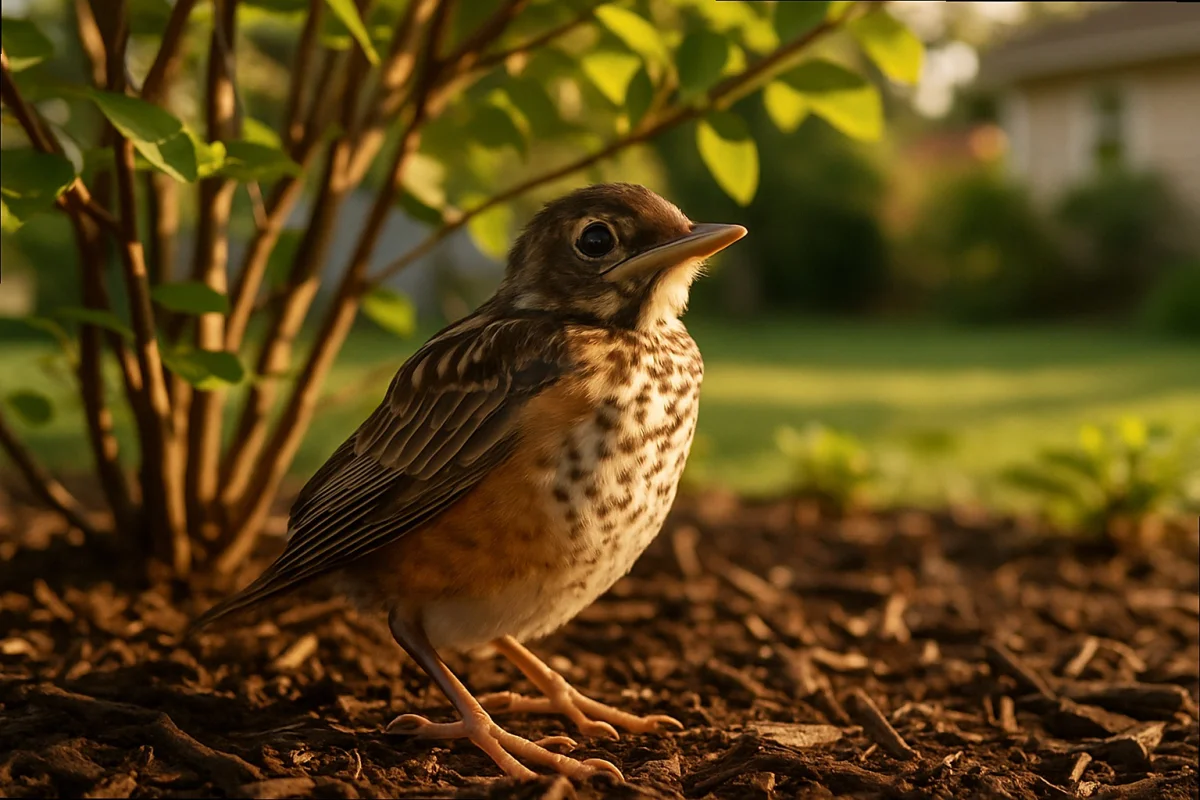
Quick answer: A fledgling on the ground in late May is almost always fine. It just left the nest, can’t fly well yet, and its parents are watching from a nearby branch. Leave it alone, keep dogs and outdoor cats away for a few days, and check back in 24 hours. Only intervene if you see blood, a broken wing, ants, or a dead parent.
You walk out to refill the bee balm border, and there it is. A softball-sized lump of feathers blinking at you from the mulch under the serviceberry. Stubby tail. Wing feathers half open. Hopping when you step closer, but not flying. Your first instinct is to scoop it up and put it back somewhere safe. Do not do that. In late May, in almost every U.S. backyard with native cover, this is exactly what is supposed to happen.
The reader I get the most panicked emails from every spring is the one who already moved the bird. They meant well. They put it back in a nest that didn’t belong to it, or carried it inside, or tried to feed it bread. The parents were sitting two oaks away the entire time, and they kept feeding it on the ground until the moving happened. That is the part nobody tells you. A fledgling on the ground in May is not lost. It is on schedule.
FREE: Wildlife Garden Starter Guide
Get our 12-page PDF with the 25 best plants for pollinators, simple habitat tips, and a printable checklist — all 100% free.
No spam. Read our Privacy Policy.What does a fledgling actually look like, and why is it on the ground?
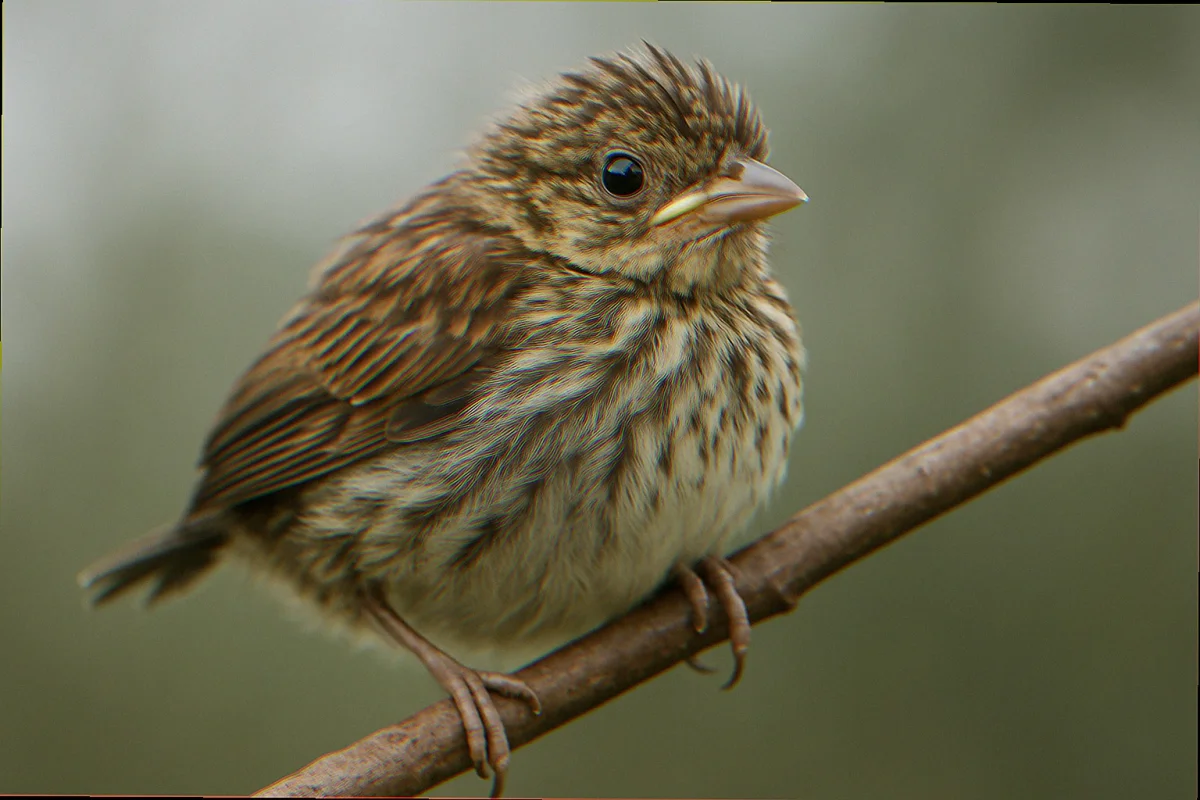
A fledgling is a young bird that has left the nest but still has some growing up to do. For most backyard songbirds. Robins, cardinals, sparrows, wrens, chickadees. That window is roughly day 10 to day 21 after hatching. The bird is fully feathered or close to it, but the tail is short and stubby, the wing feathers may still have a bit of waxy sheath, and the flight muscles are not strong enough for sustained flight. Cornell Lab’s All About Birds describes them as alert, hopping, capable of gripping a perch tightly with their toes. That last part matters. A naked, pink, eyes-closed nestling that fell from above is a different situation. A feathered, alert, foot-gripping fledgling on the ground is not.
Here is the rough timing to recognize: northern cardinals leave the nest at 7 to 9 days old and spend another week on the ground; house sparrows fledge around day 14 to 17; barn swallows hang on in the nest closer to day 20; American robins fledge around day 13 to 14 and are then ground-and-low-shrub birds for about two more weeks. The Cornell Lab NestWatch program tracks this for hundreds of species. Almost all backyard songbirds in the lower 48 are inside one of these windows during the last week of May and the first three weeks of June. That is why your yard suddenly feels full of awkward, hopping, half-grown birds.
So when you see one in the mulch, ask three questions. Is it feathered? Are its eyes open and bright? Can it grip a twig if you offer one? If yes to all three, it is a fledgling, and it is on the ground on purpose. If no. If it is naked, pink, eyes shut, the size of a thumb. It is a nestling that fell, and that is the only scenario where you put it back in the nest if you can reach it. The two situations look completely different and need completely different responses.
Why this is happening in your yard right now
Late May into mid-June is the synchronized fledge window for most non-cavity songbirds across temperate North America. Insect biomass. The only food parent birds will feed nestlings. Peaks during this stretch. Native trees and shrubs that hosted caterpillars in early May are now dropping those caterpillars onto the ground or feeding them to begging fledglings on low branches. The whole cycle is timed to this two-week window, which is why so many yards report waves of awkward juveniles at once. It is not bad luck. It is the calendar.
The math is unforgiving for the parents. A pair of black-capped chickadees needs roughly 6,000 to 9,000 caterpillars to raise a single brood from hatch to fledge, a figure from Doug Tallamy’s research that Audubon has popularized in its native-plants coverage. Once the brood is on the ground, the parents do not slow down. They keep ferrying food, but the begging mouths are now spread across the yard instead of concentrated in one nest. That is why one fledgling can sit motionless for thirty minutes between meals. The parents are not gone. They are running a four-stop circuit.
If your yard has native cover. Serviceberry, viburnum, oaks, sumac, native grasses left a little long under shrubs. Fledglings have a chance. If your yard is short turf to the property line with a fenceline of arborvitae, the same fledglings are exposed and the parents are stressed. This is the part where your yard’s wildlife corridor earns its keep, or doesn’t. A messy native border under a tree is not just nicer to look at than turf. It is the staging ground where these fledglings spend the next ten to fourteen days hopping, learning to fly low, and getting fed.
When should I leave a fledgling alone?
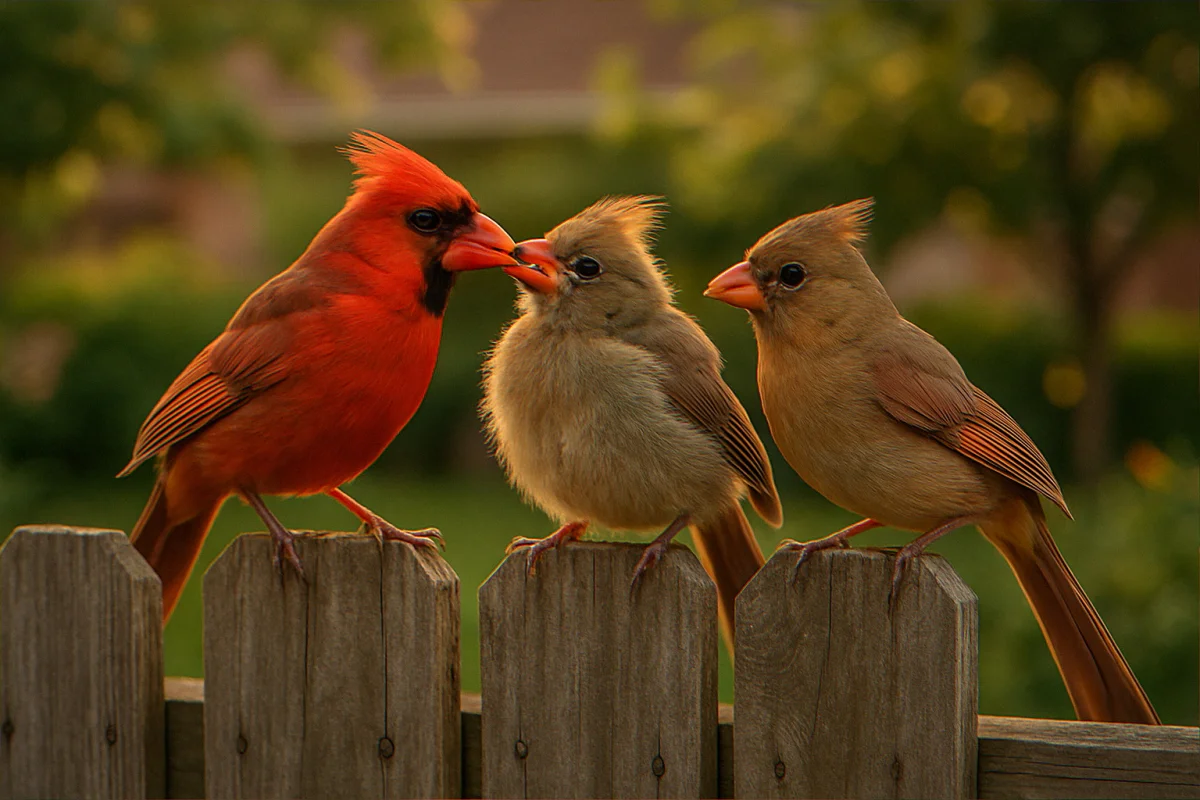
Almost always. The default for any feathered, alert, hopping bird on the ground in late May is: walk away. Mass Audubon puts it bluntly. Many people who think they are rescuing a baby bird are actually kidnapping it. Parent birds do not feed in the open while a human is standing three feet away. They wait. If you keep watching from the window, you will usually see a parent drop in within ten to forty minutes with a caterpillar. That is your confirmation.
The fledgling does not need to be in a nest. It does not need to be off the ground. It does not need warmth from your hands. A two-week-old robin can thermoregulate fine in 60-degree May weather. What it needs is for the cat next door to stay inside, your dog to be leashed in the yard, and the parents to be able to do their job without you in the frame.
Here is a quick reference for the four common scenarios:
| What you see | What it means | What to do |
|---|---|---|
| Feathered, alert, hopping, gripping perch | Healthy fledgling on schedule | Leave it. Keep pets away. Check in 24 hours. |
| Naked or pink, eyes closed, no flight feathers | Nestling that fell out | Place back in nest if you can find it. If not, call a licensed rehabilitator. |
| Feathered but lying flat, eyes closing, not responding | Hypothermic, sick, or injured | Place in a ventilated box in a quiet warm spot. Call rehabilitator. |
| Visible blood, drooping wing, ants on body, dead parent nearby | Real emergency | Call a licensed wildlife rehabilitator immediately. Do not feed water. |
One pattern worth knowing: a fledgling that suddenly goes still and flattens against the mulch when you walk close is not dying. It is doing the right thing. Freeze response is built into them. Step back six feet and the bird usually relaxes within a minute.
When does a fledgling actually need real help?
The intervention checklist is short on purpose. The U.S. Fish and Wildlife Service lists four signs that mean a wild young animal genuinely needs help: a visible broken limb, active bleeding, shivering, or a dead parent confirmed nearby. To that I would add: ants crawling on the bird, a clearly drooped or twisted wing held away from the body, and the bird being unresponsive when you put a hand within a foot of it.
If any of those apply, the move is not to feed it, water it, or warm it with your hands. Find an unwaxed cardboard box slightly bigger than the bird. Poke air holes. Line it with a soft cotton t-shirt. Not a towel with loops, because tiny claws get caught. Place the bird inside. Close the lid. Put it somewhere dark, quiet, and warm (a closet, a garage with no exhaust, a pantry). Then call a licensed wildlife rehabilitator. Every U.S. state has them; the Animal Help Now app and website map the closest one to your address. Do not try to feed the bird. Songbirds need species-specific protein and the wrong food often kills them faster than starvation in the short window before a rehabber sees them.
The reason for the do nothing while you wait instruction is the same reason rehabbers ask you to call before you transport. Stress kills wild birds quickly. Two hours in a quiet dark box, no handling, no water offered, is almost always the right move while you find the right professional. Bread, milk, ground beef, and warm water in a syringe are the four most common well-intentioned mistakes that show up dead at clinic intake.
How to give a fledgling cover without overstepping
You can help without rescuing. The single highest-impact thing you can do is move the bird about six to eight feet sideways into denser cover. Not up, not back into a nest, just sideways into the nearest low shrub or native grass clump where a hawk cannot see it from above and a cat cannot stalk it from below. Parents track their fledglings by sound, not GPS. A bird that begs from inside a switchgrass clump still gets fed. A bird in the middle of an open lawn often does not, because the parents do not want to fly into that exposure.
The science here is straightforward. The myth that birds will reject young that smell like humans is a myth. Most songbirds have a weak sense of smell, and parents will not abandon a fledgling because you touched it. You can pick the bird up briefly with bare hands, walk six feet, set it under a viburnum, and walk away. The parents will not care.
Other low-touch help that genuinely matters during fledging weeks:
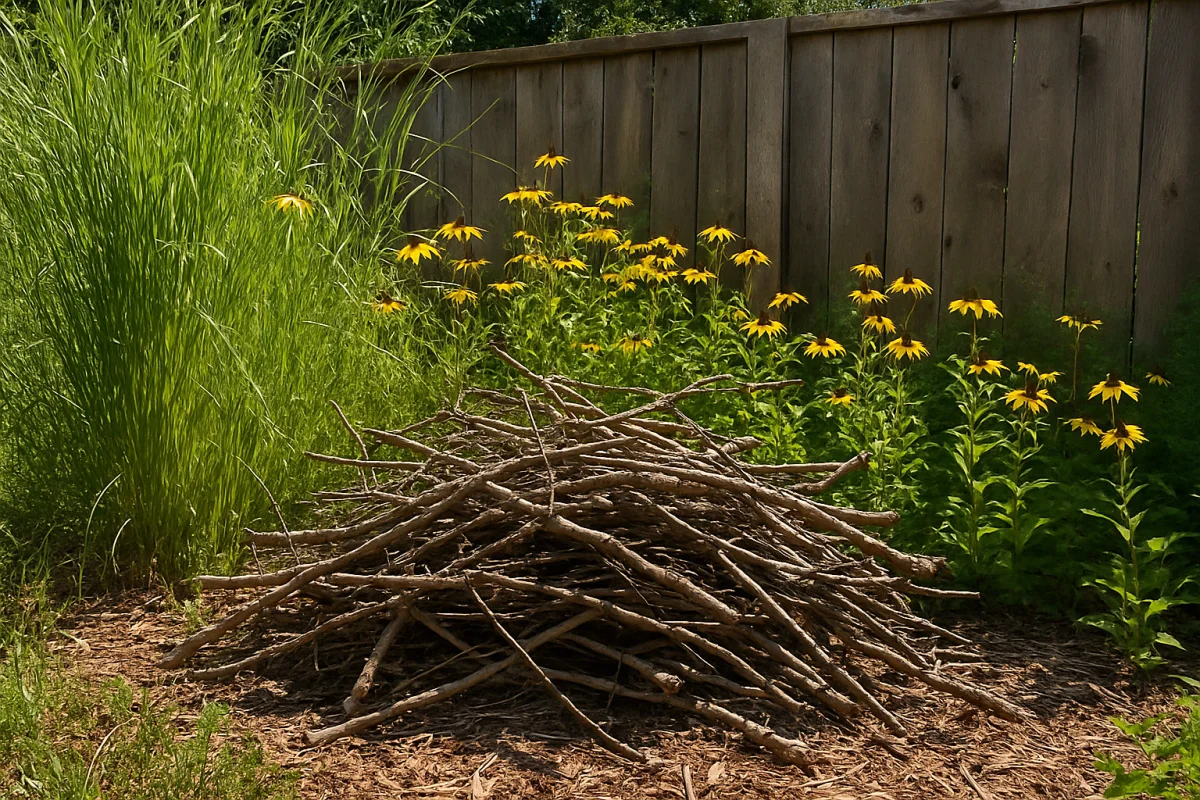
- Leave a low brush pile. A small loose stack of pruned branches against the back fence gives fledglings somewhere to hop into when a hawk shadow passes. A purpose-built brush pile in the corner of the yard pays for itself in survival rates.
- Keep a shallow water source close to cover. A pie pan, two inches deep, with a stone in the middle, set within five feet of a shrub, is what fledglings can actually use. A shallow basin birdbath placed near cover does the same job year-round, but a temporary pie-pan version in late May is enough.
- Skip mowing within 30 feet of any active nesting shrub for the next two weeks. Mower noise pushes parents off feeding circuits. The grass can wait. The fledglings cannot.
- Stop window strikes during the chaos period. Half-grown birds flying for the first time misjudge glass constantly. Vertical paracord strips spaced four inches apart on the outside of the glass are the cheapest fix that actually works.
- Watch from inside. If you stand on the patio with a coffee for an hour, the parents will not come back. From a window with the curtains parted, they will.
Some readers ask whether to feed the parents during this stretch. Black-oil sunflower or mealworms to make things easier. Mealworms are useful for some species (bluebirds, robins, wrens) and worth offering in a shallow dish near cover. Bird seed is mostly wasted on parents who are feeding nestlings and fledglings exclusively on insects. The seed feeders matter more in winter. Right now, the caterpillars on your native oak are doing more work than anything you can buy at the store.
What if there are outdoor cats in the neighborhood?
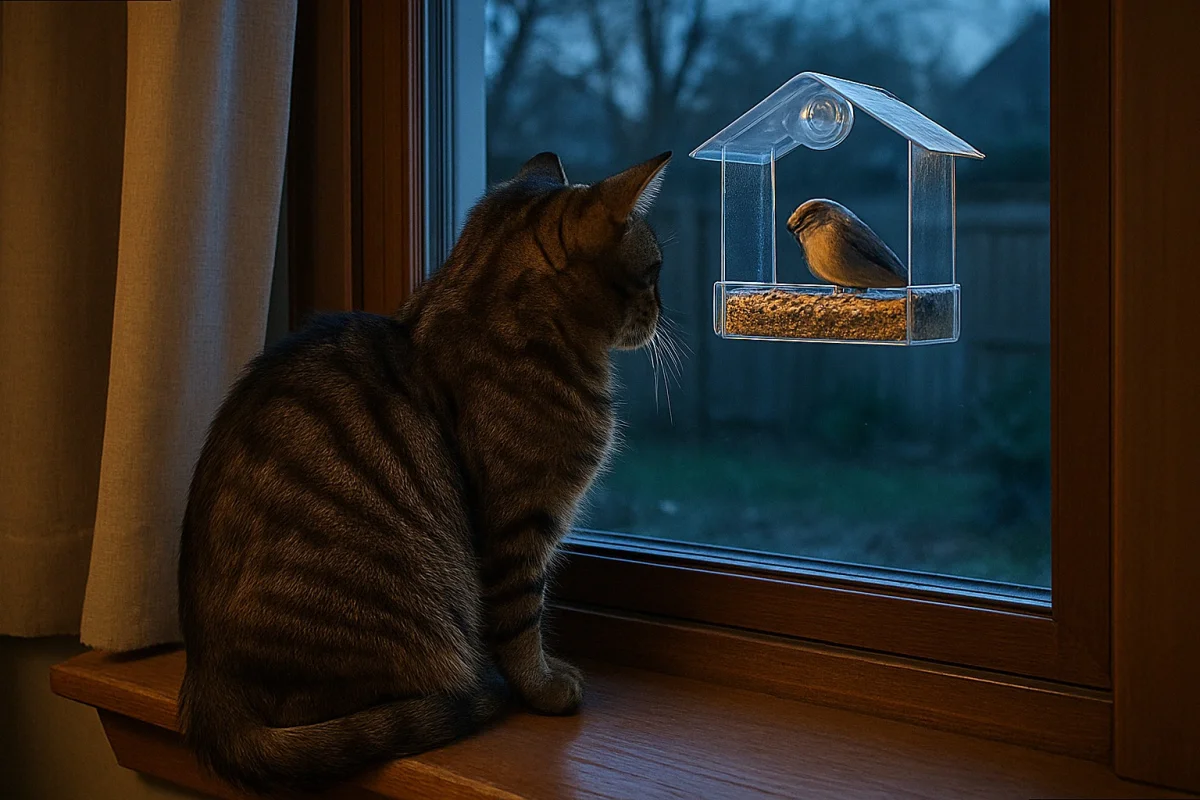
This is the part of the conversation that gets uncomfortable, and it is the single biggest reason fledglings in suburban yards do not survive. Free-roaming domestic cats kill an estimated 2.4 billion birds annually in the U.S. according to the Smithsonian and U.S. Fish and Wildlife joint study that has been the standard citation since 2013. Most of those kills happen during fledging weeks, when birds are clumsy on the ground and parents are distracted. A single outdoor cat patrolling one suburban block can take dozens of fledglings in a season.
You cannot ask the neighbor to keep their cat indoors and expect a clean answer. So work the problem from your side of the fence. A motion-activated sprinkler is the cheapest deterrent that actually works. The cat learns within a week. Plant a thorny native like blackberry or rugosa rose along the corner the cat uses to enter. Keep your own dog on a leash during fledge weeks, even in your own yard. And if your cat goes outdoors, this is the two weeks of the year to keep it inside; a catio is a good year-round answer if you want one. The full playbook on keeping outdoor cats out of your yard humanely goes deeper, but the motion sprinkler is the one that earns its $35 the fastest.
The hard truth that no rehabber will say out loud at intake: cat-caught fledglings have a poor prognosis even when there is no visible wound. Cat saliva contains Pasteurella bacteria that causes lethal sepsis in songbirds within 48 hours. If a cat has touched the bird, it needs antibiotics from a rehabber within hours, full stop. There is no waiting it out. This is why the if a cat has caught it line gets its own bullet in every rehab handout.
Measurable signs the parents came back
The most reassuring fifteen minutes in late May gardening is the period after you back away and watch through a window. Here is what to look for, in order of how soon it usually shows up.
Within five to fifteen minutes, you should hear a sharp single-note contact call from a nearby tree. A robin’s “tut tut,” a cardinal’s metallic “chip,” a wren’s scolding chatter. That is the parent telling the fledgling to hold tight and telling other adults this territory is taken. Within twenty to forty minutes, you should see the parent drop down with food. The drop is fast and low. They do not loiter. Within an hour, the fledgling itself usually relocates. Five to ten feet at a hop, often into deeper cover than where you found it. By the next morning, it is rarely in the same exact spot.
If twenty-four hours pass and the fledgling has not moved, is not begging, is in the same spot in the open, and you have not seen any parental activity, that is the point to call a rehabilitator. Until then, the silence is not abandonment. It is them being birds. A reader emailed last spring to ask whether her motionless fledgling under the redbud was alive. I asked her to look for the breast feathers rising and falling. They were. She watched for an hour. The mother dropped in with a green caterpillar at minute fifty-two. The next morning the bird was gone. Not dead, just up in the redbud and learning to fly properly.
If you want a longer record of what actually happens in your own yard during these weeks, this is the season to set a trail camera low on a stake aimed at the staging shrub. The footage of parents dropping in with caterpillars at twenty-minute intervals is the closest thing to proof that the system works. It also makes the case for the messy native border far better than any words on a yard sign do.
What changes in the yard once fledging weeks are over
By mid-to-late June, the noise drops. The synchronized fledge wave passes through and the juveniles either survived their first week on the ground or did not. The ones that made it move into a second phase: short test flights, longer perches, parents still feeding but less constantly. Cardinals, robins, and house wrens often immediately start a second brood and the cycle restarts in early July with smaller numbers. Bluebirds may go for three broods in some regions before the season closes. The first fledge wave is the dramatic one. The later ones are quieter because by July the yard is full of juveniles practicing and there is no novelty to it.
What this means for the yard: keep the messy parts messy through at least early July. The temptation in early June, after spring chaos calms down, is to tidy up. Don’t. The fledglings from this wave are still using ground cover. The hens preparing for brood two are still using the same shrubs. Wait until late July to do any aggressive pruning, and even then leave one corner alone for the year. A yard that supports brood one and brood two of the same pair through June is producing real numbers. Sometimes six to ten new adult songbirds per pair, per season, on a single suburban lot. Multiplied across a neighborhood with a few native-leaning yards, it is how local bird populations actually recover.
That is the part nobody puts on a yard sign. You do not need a wildlife refuge to make a difference. You need a single-family lot, some native cover, and the discipline not to mow for two weeks in late May.
FAQ
How long does a fledgling stay on the ground before it can fly properly?
Typically 5 to 14 days, depending on species. Cardinals and robins spend about a week to ten days low to the ground after leaving the nest before they fly competently. Sparrows and chickadees move up into shrubs faster. The full juvenile stage. Still being fed by parents but flying reasonably. Lasts another two to four weeks beyond that.
Can I put a fledgling back in the nest if I can find it?
For an actual fledgling (feathered, alert, gripping), no. It left the nest on purpose and will leave again within an hour. For a true naked nestling that fell, yes, place it back in the nest gently if you can reach it. The parents will reject it because you touched it idea is a myth; songbirds have a weak sense of smell.
Should I offer water or food while I wait for a rehabilitator?
No. Do not offer water (aspiration kills small birds quickly), and do not offer food. Songbirds need species-specific protein delivered correctly, and well-intentioned bread, milk, or syringed water is one of the leading causes of intake mortality. A quiet dark box for a few hours is what the rehabber will want.
How do I find a wildlife rehabilitator near me?
The Animal Help Now app and website (ahnow.org) is the fastest national directory and lists licensed rehabbers by ZIP code. Most state wildlife agencies also publish a rehabber list. Calling first is always faster than driving to a clinic that does not take songbirds.
Is it true that cat-caught fledglings always die?
Not always, but the prognosis is poor without veterinary care. Cat saliva contains bacteria that cause sepsis in small birds within 24 to 48 hours even when there is no visible wound. A cat-caught fledgling needs a rehabilitator and antibiotics on the same day. Not a wait and see.
Want More Wildlife Garden Tips?
Join 5,000+ nature lovers getting our weekly tips on creating wildlife-friendly gardens.
No spam, unsubscribe anytime. Privacy Policy
Emma Harrington
Emma Harrington is a wildlife habitat researcher and content editor with a passion for backyard conservation. She has spent over a decade translating ecological science into practical tips anyone can follow — from selecting native plants to building wildlife-friendly habitats. Her work focuses on helping homeowners transform ordinary yards into thriving ecosystems for bees, butterflies, hummingbirds, and other beneficial wildlife.