
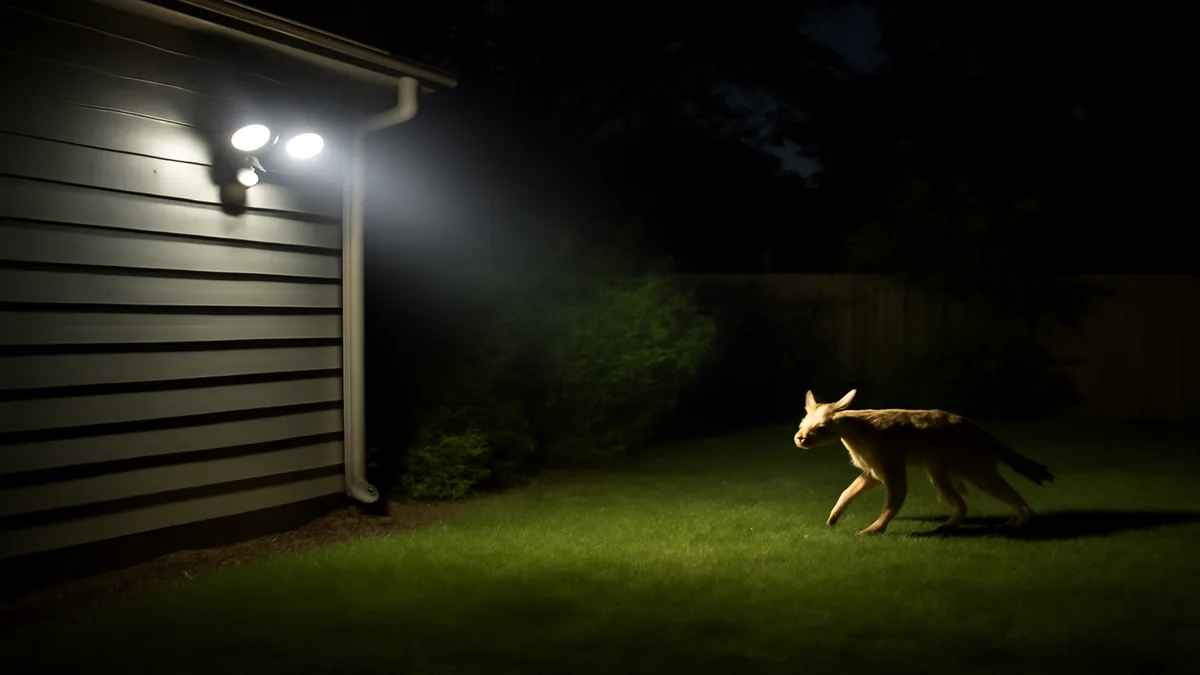
That unmistakable sulfurous odor drifting through your bedroom window at 2 a.m. tells you everything you need to know: a skunk has claimed your yard as its personal buffet and bedroom. Maybe you have already spotted the telltale signs, like shallow cone-shaped holes dotting the lawn where grubs once lived, overturned trash cans, or worse, a lingering musky smell near the deck that suggests a new tenant has moved in underneath.
Here is the good news before we go any further. You do not have to live with this problem, and you absolutely do not have to hurt the skunk to solve it. Striped skunks are remarkably predictable creatures, and once you understand what brought them to your property in the first place, evicting them becomes a matter of methodical, humane steps that anyone can follow on a weekend.
This guide walks you through exactly how to keep skunks out of your yard using methods that work, methods that are legal, and methods that will not land you in a cloud of regret (literally). We will cover the real reasons skunks show up, the cheap fixes that solve 80 percent of cases, the harder structural work for persistent visitors, and the critical mistakes that turn a minor nuisance into a full-blown spray incident.
FREE: Wildlife Garden Starter Guide
Get our 12-page PDF with the 25 best plants for pollinators, simple habitat tips, and a printable checklist — all 100% free.
No spam. Read our Privacy Policy.Why Skunks Are Suddenly Hanging Around Your Property

Skunks do not wander into yards at random. They are highly motivated foragers with excellent noses and terrible eyesight, which means they follow scent trails to reliable food and shelter. If a skunk is visiting your yard repeatedly, something on your property is advertising itself as an easy meal or a safe place to raise kits. Identifying that something is step one.
The four big attractants, ranked roughly by how often they cause trouble, are lawn grubs, accessible pet food, fallen fruit, and undisturbed den sites. Most homeowners have at least two of these without realizing it. A well-watered lawn in late summer is essentially a grub farm, and skunks can smell those juicy beetle larvae from surprising distances. Add a bowl of cat kibble on the back porch, a few windfall apples rotting under a tree, and a dark cavity under the shed, and you have built a skunk resort.
Understanding this ecology is liberating because it means you have real leverage. Remove the attractions, and the skunk has no reason to stay. Block the shelter, and it has no reason to return. This is the same logic that works with other backyard visitors, which is why many of the principles in our guide on how to keep raccoons out of your yard apply here too.
Eliminate the Grubs (The Number One Reason Skunks Dig)
If your lawn looks like someone went at it with a drunken ice cream scoop, grubs are almost certainly the culprit. Skunks dig shallow, conical holes about two to four inches wide, usually at night, and they will hit the same lawn night after night until the grubs are gone. Killing the chemicals out of a lawn is neither necessary nor wise, especially if you share your yard with pets, pollinators, or grandchildren. Biological controls do the job quietly and safely.
Beneficial nematodes are microscopic roundworms that hunt and kill grub larvae in the soil. They are sold live, usually refrigerated, in packs that treat 2,000 to 10,000 square feet for roughly 20 to 30 dollars. You mix them with water and spray them onto damp soil in the evening, when UV light will not cook them. A single application in late summer, when grubs are young and near the surface, can knock populations down by 70 to 90 percent.
Milky spore disease is a naturally occurring bacterium (Paenibacillus popilliae) that specifically targets Japanese beetle grubs. It is slower to establish than nematodes, but once it colonizes your soil, it can suppress grubs for 10 to 15 years. Think of nematodes as the emergency response and milky spore as the long-term insurance policy. Used together, they make your lawn a nutritional desert for skunks without harming earthworms, bees, or your dog.
Remove the Food Sources Skunks Cannot Resist
Grubs are the hidden attractant, but easy human-provided food is often the dealbreaker. Skunks are opportunistic omnivores, and they will choose a bowl of dog food over digging for beetles every single time. Addressing these sources is free, fast, and dramatically reduces visits within a week or two.
- Pet food comes inside at dusk. No exceptions. If your outdoor cats need feeding, do it in the morning and remove any leftovers before dark. Raccoons, possums, and skunks all key in on evening kibble.
- Trash cans get locked or weighted. A bungee cord across the lid, a cinder block on top, or a wildlife-resistant can with a latching lid will keep skunks from sampling the garbage.
- Fallen fruit gets picked up daily. Apples, pears, figs, and berries on the ground are candy to skunks. Rake them up every morning during harvest season.
- Bird feeders get cleaned underneath. Spilled seed attracts mice, which attract skunks that will happily eat both. Sweep the area or use a seed catcher tray.
- Compost gets closed. Open compost piles with kitchen scraps are an all-you-can-eat buffet. Switch to a sealed tumbler if you have repeat visitors.
- Grills get scraped. Grease traps and crumbs under the grate call to noses half a mile away. A quick brush after cooking prevents middle-of-the-night visits.
Combined with grub control, this checklist alone resolves most skunk problems in homes where the animal has not yet set up a den. If the issue persists after two to three weeks of consistent food removal, you are likely dealing with a shelter problem, which brings us to the next step.
Block the Den Sites Under Decks, Sheds, and Porches

Skunks love dark, tight, dry cavities with a single easy exit. The space under a low deck, a tool shed with a gap at the foundation, a crawl space vent with a missing screen, a wood pile against the house. These are prime real estate. A female skunk will den there from late winter through early summer to raise her kits, and that is when a minor annoyance becomes a long-term problem.
The right material for sealing these gaps is quarter-inch galvanized hardware cloth, not chicken wire. Chicken wire has openings large enough for paws to grip and pull, and determined skunks will work through it in a single night. Hardware cloth has a tight weave that blocks entry and resists chewing.
Before you seal anything, you must confirm the den is empty. Sealing a skunk inside is cruel and results in a dead animal rotting under your deck (and yes, you will smell that for months). The simplest check is the flour test: sprinkle a one-foot patch of flour across the suspected entry and inspect it the next morning. If there are no tracks going out but no new tracks coming in, you have ambiguity. If tracks show only outgoing after sunset, you have an active den that needs to clear out completely before closure.
Never seal a den in spring or early summer without verifying that kits are not inside. Baby skunks are born in May and do not leave the den with mom until around eight weeks old. A mother skunk sealed out will frantically try to return, and kits sealed in will starve. When in doubt, wait until August or call a licensed wildlife professional.
Once you are certain the den is empty, dig a small trench about six inches deep along the perimeter, install the hardware cloth so it extends at least 12 inches underground and bends outward in an L-shape, and secure it to the structure with screws and washers. The L-footer prevents skunks from digging under. This is the same technique that works for keeping out rabbits, groundhogs, and the occasional raccoon.
Use Light, Water, and Scent to Make the Yard Unwelcoming
Skunks are strictly nocturnal and built for darkness. Their eyes are adapted to low light, their movements are slow and deliberate, and they rely on familiar routes. Disrupt the darkness, the quiet, and the scent landscape, and you make your yard profoundly uncomfortable for them.
Motion-activated lights are probably the single most effective deterrent for a homeowner on a budget. A bright LED floodlight that snaps on when something crosses the beam will send most skunks scurrying for a different route. Solar-powered units start around 25 dollars and install with two screws. Place them to cover the most likely travel corridors. Along fence lines, near the trash area, and around the deck perimeter.
Motion-activated sprinklers add a second layer of deterrence that works even on bold individuals who have grown used to light. Brands like Orbit Yard Enforcer and Havahart Spray Away detect motion up to 40 feet away and deliver a brief, startling spray. They also water your garden, which is a nice bonus. Skunks, like most mammals, hate being suddenly wet.
Strong scents round out the sensory assault. Skunks dislike citrus and ammonia, and they recognize predator scents as danger signals. Useful options include:
- Fresh citrus peels scattered around entry points, refreshed every few days
- Rags soaked in household ammonia placed in sealed containers with holes punched in the lid (keeps kids and pets safe from direct contact)
- Commercial predator urine products (coyote or fox) sold at garden centers, applied every two to three weeks
- Cayenne pepper sprinkled lightly on grass where grubs are active. The skunk gets a burning sensation on its sensitive nose when it digs
No single deterrent works on every skunk, and they all lose effectiveness if used alone for too long. Rotate between two or three methods every couple of weeks to prevent habituation.
Quick Reference: Deterrent Methods Compared
The table below summarizes the main humane deterrents, their rough cost, how fast they work, and how long they tend to remain effective before the skunk adapts.
| Method | Approximate Cost | Speed | Duration Before Habituation |
|---|---|---|---|
| Beneficial nematodes | $20-30 per application | 2-4 weeks | Full season (re-apply yearly) |
| Milky spore disease | $40-60 initial treatment | 1-3 years to establish | 10-15 years |
| Hardware cloth exclusion | $30-100 per den site | Immediate | Permanent if installed right |
| Motion-activated light | $25-80 per unit | Same night | 2-4 weeks, then rotate |
| Motion-activated sprinkler | $60-100 per unit | Same night | 4-8 weeks |
| Citrus peels / ammonia rags | $0-10 | 1-3 nights | 1-2 weeks, refresh |
| Predator urine | $15-25 per bottle | 2-5 nights | 2-3 weeks per application |
| Cayenne pepper on lawn | $5-10 | 1-2 nights | Until next rain |
Most readers find that combining grub control with one exclusion step and one sensory deterrent handles 90 percent of cases. If you are still seeing signs after a solid month of consistent effort, it is time to call in help.
When to Call a Professional Wildlife Operator
There are situations where DIY stops being appropriate and a licensed wildlife control operator becomes the right call. The clearest case is a confirmed den with babies. In most U.S. states, skunks receive legal protection during kit season (roughly March through July), and attempting to remove them yourself can run afoul of state wildlife law. Professionals have the training, permits, and one-way door equipment to evict a family humanely without separating mother from kits.
Other situations that warrant a pro include:
- A skunk acting strangely during daylight hours. Wandering in circles, showing no fear of people, or drooling excessively can all be signs of rabies or distemper and should never be approached.
- A denning site you cannot safely access, such as inside a chimney, under a poured concrete slab, or in a crawl space with structural hazards.
- Repeated pet sprayings despite your best deterrent efforts, suggesting the animal has become territorial and needs to be relocated by someone licensed to do so.
- Damage assessment and repair after a long-term denning has compromised insulation, wiring, or HVAC components.
- A skunk trapped in a window well, garage, or pool. These require careful, slow extraction to avoid spray, and it is worth paying someone to handle it.
Expect to pay between 200 and 500 dollars for a standard eviction and exclusion, more if structural repairs are involved. Always ask for a written quote, verify the operator is licensed in your state, and confirm they use exclusion rather than lethal methods unless there is a specific public health reason otherwise.
What Not to Do (Even If You Are Furious)
A few tempting solutions are either illegal, inhumane, or guaranteed to backfire, and knowing these ahead of time will save you money, regret, and at least one memorable laundry day.
Do not trap and relocate. In the majority of states, translocating wildlife is illegal without a specific permit, and for good reason. Relocated skunks rarely survive. They do not know where food, water, or safe dens are in the new area, and studies suggest mortality rates above 75 percent within the first few weeks. If the trapped skunk was a nursing mother, her kits back at your house will starve over the next several days. Trapping is not a humane solution in any scenario where amateurs are involved.
Do not chase, spray with a hose, or threaten an adult skunk. Skunks give clear warnings before they spray. Stamping their front feet, hissing, raising the tail, and doing a little handstand shuffle. If you see any of this, back away slowly without turning your back and without making loud noises. Cornering a skunk or making quick movements is a near guarantee of a direct hit, and that spray can reach 10 feet with disturbing accuracy.
Do not use mothballs. This old folk remedy shows up in a lot of online advice, and it is both illegal (naphthalene is not labeled for outdoor wildlife control under EPA regulations) and genuinely dangerous. Mothballs are toxic to pets, children, birds, and pollinators, and they volatilize into the air you breathe. They also do not work particularly well on determined skunks. The same goes for naphthalene flakes and similar chemical repellents not specifically labeled for the purpose.
Do not leave poison of any kind. Rodenticides, slug baits, and homemade concoctions can kill skunks, but they also kill pets, raptors, foxes, and any animal that scavenges the poisoned body. It is cruel, it is illegal in most contexts, and it creates secondary wildlife deaths for weeks afterward.
If You, Your Pet, or Your Yard Gets Sprayed
Sometimes, despite your best efforts, someone gets hit. The old tomato juice trick is a myth. It just masks the smell briefly and leaves you smelling like a skunky Bloody Mary. Chemistry has given us something much better, developed by chemist Paul Krebaum in 1993 and endorsed by veterinarians nationwide.
The recipe for skunk spray neutralizer:
- 1 quart of 3% hydrogen peroxide (fresh bottle, not expired)
- 1/4 cup of baking soda
- 1 to 2 teaspoons of liquid dish soap (Dawn works well)
Mix in an open container (never seal it. The reaction releases oxygen and can burst a closed bottle) and apply immediately to the sprayed area, whether that is your dog, your clothes, or your deck. Work it in thoroughly, leave it for five minutes, then rinse with warm water. For pets, keep it away from the eyes and do not leave it on the coat longer than recommended, as peroxide can lighten dark fur. Repeat once if the smell lingers.
For sprayed fabrics, the same solution works but you may need to soak the item for 30 minutes. Leather is trickier and usually requires professional cleaning. For spray on house siding or decking, a mix of dish soap and peroxide scrubbed on with a stiff brush and rinsed off will handle most of it. Persistent odor on concrete may require a commercial enzyme cleaner.
Building a Yard That Stays Skunk-Free Long Term
Short-term tactics handle the current problem, but long-term resistance comes from yard design choices that make your property less attractive to wildlife in general. Think of it as working with the ecosystem rather than constantly reacting to it.
Keep grass mowed to 3 or 3.5 inches, which reduces the moist thatch where grubs thrive. Aerate and dethatch annually to encourage healthier turf that resists beetle infestations naturally. Install permanent hardware cloth skirting around any outbuildings, decks, and porches during your next maintenance cycle. Replace wooden fence posts with metal sleeves if skunks keep digging underneath. If you have space, consider planting a pollinator garden at the edges of your property. The diverse plant life attracts beneficial insects that outcompete pest beetles, and the denser root systems are less hospitable to grubs than traditional turf.
You might also notice that the same yard that attracts skunks often attracts squirrels raiding the bird feeders, raccoons tipping the trash, and other uninvited guests. The same integrated approach works across all of them. Our piece on how to keep squirrels out of the garden covers the overlapping strategies in more detail.
For authoritative guidance on coexisting with skunks and understanding their role in controlling pest insects, the Humane Society of the United States maintains excellent species-specific resources. For regional regulations, damage management, and public health information, the USDA APHIS Wildlife Services program is the federal clearinghouse and can connect you to state-level contacts when needed.
What I get asked the most
How long does it take to get rid of skunks humanely?
Most homeowners see significant improvement within 7 to 14 days once food sources are removed and deterrents are in place. Full resolution typically takes 3 to 6 weeks, especially if grubs need to be addressed or a den needs to be excluded. Persistent cases involving established dens with kits can take a full season to resolve properly, so patience and consistency matter more than aggressive tactics.
Are skunks dangerous to humans or pets?
Healthy skunks are generally shy and non-aggressive, preferring to flee or spray rather than bite. The real risks are rabies transmission (skunks are a primary rabies vector in North America) and parasites that can affect pets. Any skunk acting boldly during daylight, appearing disoriented, or unafraid of humans should be reported to animal control immediately and never approached under any circumstances.
Do ultrasonic repellers actually work on skunks?
Independent research shows mixed and generally disappointing results for ultrasonic devices against skunks and most mammals. Animals habituate within days, and the sound does not carry well through typical yard obstacles like fences and shrubs. Save your money and invest instead in motion-activated lights, sprinklers, and proper exclusion work, which have far better documented effectiveness in real-world conditions.
Will a dog or cat keep skunks out of my yard?
Unfortunately, no. Skunks are well aware that their spray is effective against dogs, and many dogs will learn (eventually) to avoid them. Cats typically ignore skunks entirely, and skunks reciprocate. If anything, outdoor pet food and water bowls make skunk visits more likely, not less. Your best defense is habitat modification and exclusion, not animal presence in the yard.
Is it safe to garden where a skunk has been active?
Generally yes, with reasonable precautions. Wear gloves when handling soil, wash vegetables thoroughly before eating, and avoid direct contact with droppings, which can carry roundworm eggs. The digging damage from skunks is purely cosmetic and temporary, and their presence actually indicates a healthy grub population you will want to address anyway. Regular cleanup and basic garden hygiene keep any health risks minimal.
Want More Wildlife Garden Tips?
Join 5,000+ nature lovers getting our weekly tips on creating wildlife-friendly gardens.
No spam, unsubscribe anytime. Privacy Policy
Emma Harrington
Emma Harrington is a wildlife habitat researcher and content editor with a passion for backyard conservation. She has spent over a decade translating ecological science into practical tips anyone can follow — from selecting native plants to building wildlife-friendly habitats. Her work focuses on helping homeowners transform ordinary yards into thriving ecosystems for bees, butterflies, hummingbirds, and other beneficial wildlife.