
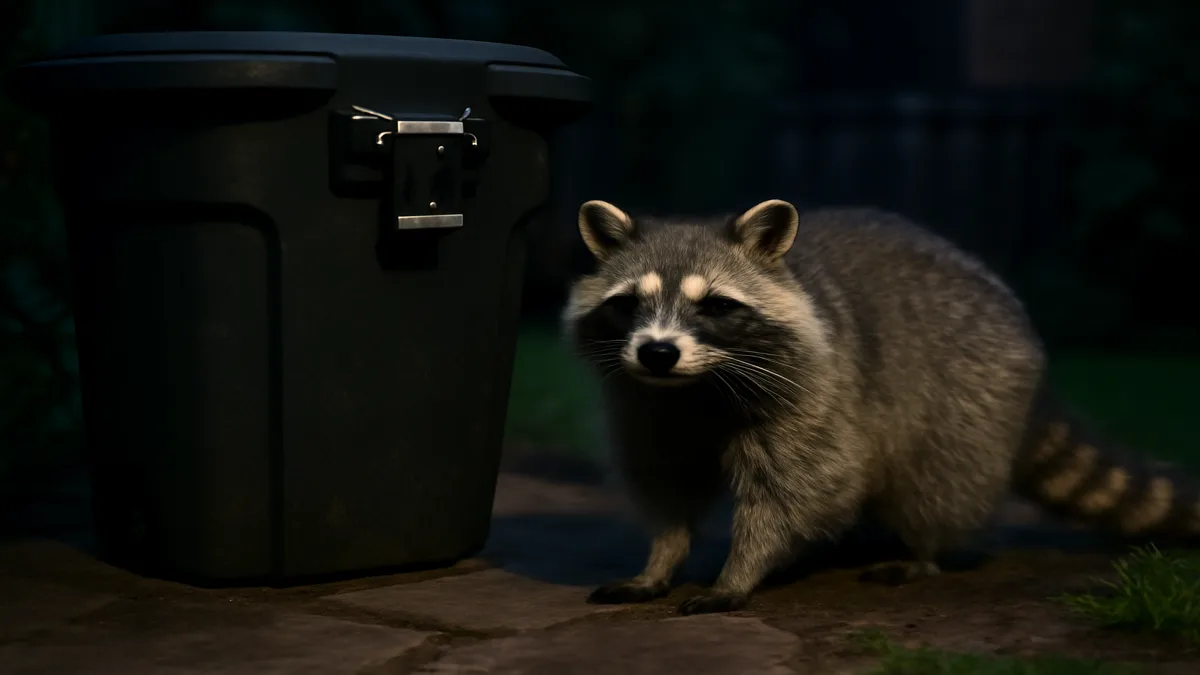
If you want to keep raccoons out of your yard, you are probably tired of waking up to tipped trash cans, scattered garbage across the driveway, and those unmistakable little handprints in the mud by your back door. You are not alone. Raccoons have adapted so well to suburban life that wildlife biologists now estimate urban populations are actually denser than their wild cousins living in forests, sometimes reaching 100 individuals per square mile in dense suburbs compared with fewer than 20 per square mile in rural woodlots — a pattern documented in urban wildlife reporting by the Audubon Society. And once they find a reliable food source in your yard, they treat it like a 24-hour diner.
The tricky part is that raccoons are not your average backyard nuisance. They have hands that work almost as well as ours, they can climb almost anything, and they learn fast. Much faster than most homeowners realize. A single scare tactic that works great for a week will often stop working entirely by week three, because the raccoon has figured out that the sprinkler, the light, or the scary sound is not actually going to hurt it. That is why one-off solutions almost always fail.
The good news is that once you understand how these animals think, you can build a layered defense that actually sticks. In this guide, I will walk you through eight proven methods that wildlife specialists and experienced homeowners rely on, including the fixes that cost almost nothing and the ones worth spending real money on. I will also tell you which popular “solutions” to skip entirely, because some of them are illegal, dangerous, or just plain cruel.
FREE: Wildlife Garden Starter Guide
Get our 12-page PDF with the 25 best plants for pollinators, simple habitat tips, and a printable checklist — all 100% free.
No spam. Read our Privacy Policy.Why Raccoons Are So Hard to Get Rid Of
Before you buy a single gadget, it helps to understand what you are actually dealing with. Raccoons have paws that are almost as sensitive and dexterous as human hands. Researchers sometimes describe their sense of touch as a kind of tactile “vision” because they can identify objects, open latches, and manipulate mechanisms in complete darkness. That cute scene in your head of a raccoon washing its food? It is really using water to enhance the nerve signals in its paws.
They are also fantastic climbers. Unlike cats, raccoons have claws that do not retract, giving them constant grip on bark, fences, gutters, and siding. A healthy adult can scale a vertical wood fence in about two seconds. They are nocturnal, which is why you rarely see them during the day, and they are smart enough to remember food sources for months. They also habituate quickly, which is the scientific way of saying they stop being scared of anything that does not actually hurt them. If you suspect raccoons but have only seen damage in the morning, a trail camera positioned 6 to 8 feet from the suspected approach will confirm the species within two or three nights, which keeps you from spending money on the wrong fixes.
The single biggest mistake homeowners make is relying on just one deterrent. Raccoons will test every defense you put up, and if it does not physically stop them or consistently startle them, they will be back within two weeks.
This is why the methods below are designed to work together. Think of it like home security. One lock is easy to pick. A lock, a motion light, a camera, and a dog barking through the window is a whole different problem. Same idea with raccoons.
Method 1: Lock Down Your Trash Cans (The Number One Priority)
If you do nothing else from this list, do this. Trash is the single biggest reason raccoons visit residential yards. A standard plastic garbage bin with a flip-top lid is essentially an open buffet for an animal with hands. You need what wildlife professionals call “bear-tight” containers, which are heavy-duty cans with steel-reinforced rims, double-walled lids, and U-bolt hinges that a raccoon cannot pry open.
These cans run anywhere from $80 to $150, which sounds like a lot until you compare it to the cost of cleaning up scattered garbage every Wednesday morning for the rest of your life. If a new bin is not in the budget right now, there are two cheaper tricks that work surprisingly well:
- The bungee cord trick: Run a heavy-duty bungee cord from one handle of the lid, over the top, and down to the opposite handle. Most raccoons give up within a minute or two.
- The ratchet strap method: Even better than a bungee. Wrap a ratchet strap around the entire can, through both handles and over the lid. It is functionally impossible for a raccoon to defeat.
- Ammonia-soaked rags: Drop a rag soaked in household ammonia inside the can each week. The smell mimics predator urine and makes the bin much less inviting.
- Can placement: Keep bins inside a garage or shed until the morning of pickup if possible. Out of sight really is out of mind for most raccoons.
Method 2: Motion-Activated Sprinklers
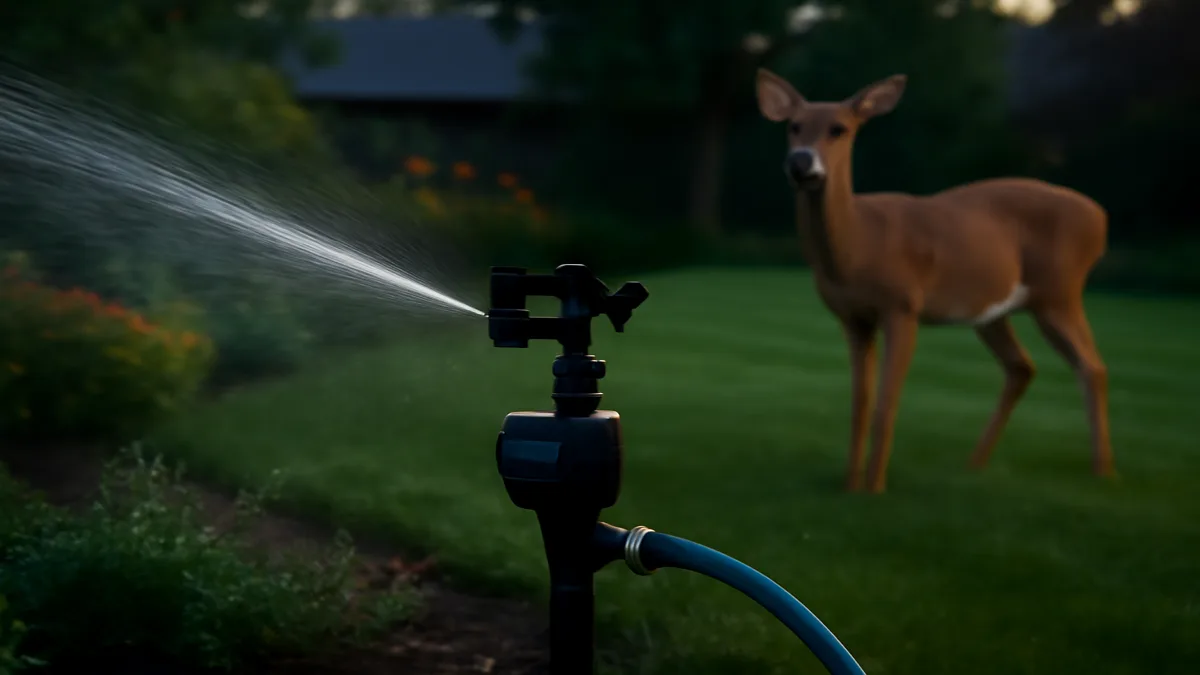
This is probably my favorite tool in the whole lineup because it works on raccoons, deer, neighborhood cats, and stray dogs all at once. A motion-activated sprinkler like the Orbit Yard Enforcer (around $55) connects to your garden hose and fires a sharp burst of water whenever it detects movement. The combination of sudden motion, sound, and water is genuinely startling, and most raccoons will not come back for weeks.
The catch is habituation. If you leave the exact same sprinkler in the exact same spot for months, a bold raccoon will eventually figure out its range and start sneaking around it. The fix is simple: move it every two to three weeks, and if you have a big yard, consider rotating between two different models so the pattern changes. This is the same strategy that works when you try to keep squirrels out of your garden beds, since both animals habituate to static deterrents in similar ways.
Method 3: Fence Off Vulnerable Areas
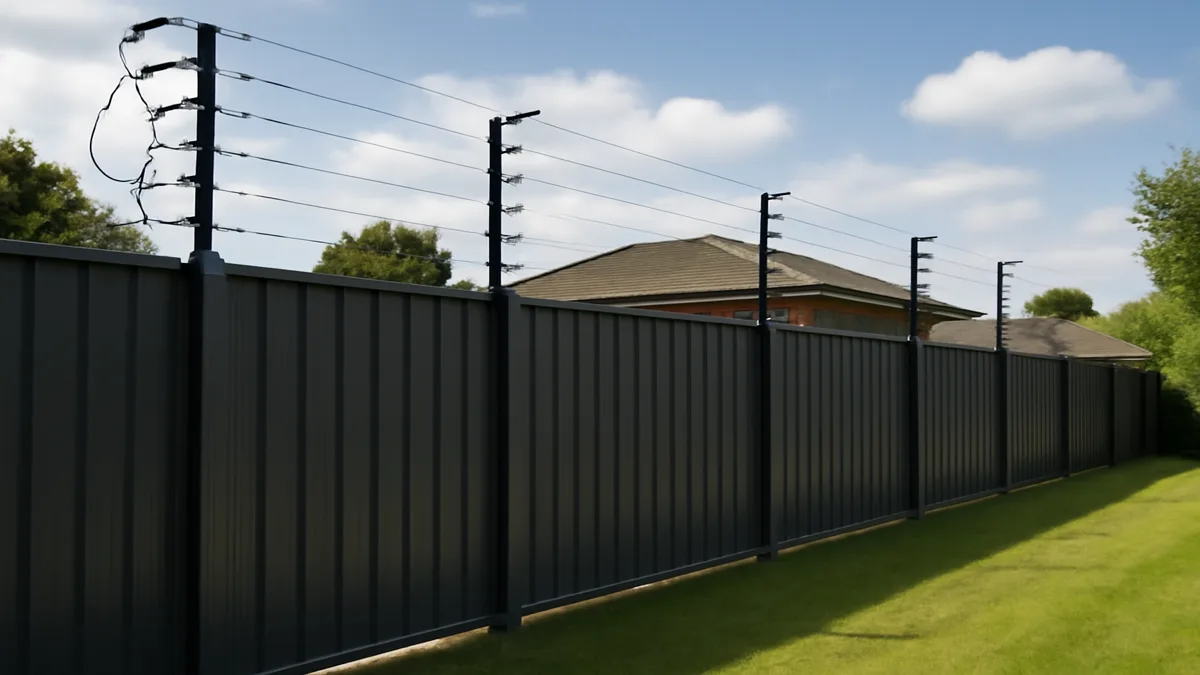
A regular wood or chain-link fence will not stop a raccoon. They climb it like a ladder. But a properly designed wildlife fence will. The standard recommendation from extension services is a four-foot fence topped with a single electrified wire running about eight inches above the top rail. That hot wire is what makes the difference. It does not injure the animal, but it delivers a memorable zap the first time the raccoon tries to climb over.
You do not need to electrify your entire property. Most people only need this kind of fencing around specific targets: the vegetable garden, the chicken coop, the koi pond, or a pollinator garden with fruiting plants that attract wildlife. A simple solar-powered fence charger runs about $60 to $100 and is enough for most backyard setups.
Method 4: Remove Every Food Source You Can Find
Raccoons are opportunists, which is a polite way of saying they will eat literally anything. The whole point of the methods above is to keep them away from the obvious food (trash), but your yard is probably full of secondary food sources you have not thought about. Go through this checklist honestly:
- Pet food: Never leave dog or cat food outside overnight. Even a nearly empty bowl is an invitation.
- Bird feeders: Bring them inside at dusk, or hang them on a thin wire at least eight feet off the ground and five feet from any climbable surface.
- Fallen fruit: If you have apple, pear, fig, or citrus trees, pick up windfalls every evening. A pile of rotting fruit is raccoon heaven.
- Compost bins: Use a sealed, rodent-resistant composter rather than an open pile. Never compost meat, dairy, or cooked food scraps.
- Grubs in the lawn: If your lawn is being torn up, you may have a grub problem. Treating the grubs removes one of the biggest natural food draws.
- Water sources: Empty kiddie pools, pet water bowls, and tip-over buckets at night, especially in dry months.
This step alone can cut raccoon visits by more than half, and it costs you nothing except a little attention at sundown.
Method 5: Seal Your House Against Break-Ins
This is the one most people skip, and it is also the one that causes the most expensive damage. Raccoons do not just want your trash. They want a warm, dry place to raise their kits in the spring, and your attic or chimney is essentially a luxury condo from their perspective. Female raccoons have been known to tear through soffit vents, roof flashing, and even thin shingles to get inside.
Walk around your house in the daylight and look for these weak spots:
| Entry Point | What to Install | Approximate Cost |
|---|---|---|
| Chimney | Stainless steel chimney cap with spark guard | $80-$200 |
| Attic/roof vents | Heavy-gauge galvanized vent covers | $15-$30 each |
| Soffit gaps | Quarter-inch hardware cloth + sealant | $20-$40 |
| Crawl space vents | Metal mesh vent screens | $10-$25 each |
| Pet doors | Electronic or magnetic locking pet door | $80-$250 |
| Deck undersides | Buried hardware cloth skirt (12″ down, 12″ out) | $50-$150 |
If you already hear scratching in the attic in February or March, do not seal the entry yet. There are likely babies inside, and trapping a mother outside while her kits starve in your insulation is both illegal in most states and genuinely awful. Call a licensed wildlife control professional to do a humane eviction first, then seal.
Method 6: Motion-Sensor Lighting (With Realistic Expectations)
Motion-sensor floodlights are one of the most common recommendations you will see online, and they do work, just not as well as people claim. A sudden blast of bright light will absolutely startle a raccoon the first few times. The problem is that raccoons habituate to lights faster than almost any other deterrent, often within 10 to 14 days, because light alone does not actually threaten them.
That said, lights are still worth installing, for two reasons. First, they help your other deterrents work better by removing the cover of darkness that raccoons prefer. Second, they are useful for your own safety and convenience regardless of the wildlife issue. Just do not rely on them as your primary defense, and consider pairing them with sound (a radio set to a talk station on a timer has surprisingly good results).
Method 7: Use Scent and Taste Deterrents (Carefully)
There is a whole industry of commercial raccoon repellents, and the results are genuinely mixed. Predator urine (coyote or fox) can help, as can capsaicin-based sprays on specific plants. What actually matters more than the product is the application. You need to reapply after rain, rotate between different scents so raccoons do not habituate, and target the specific area you want protected rather than spraying indiscriminately.
For similar reasons that work when you try to keep neighborhood cats out of your yard, scent deterrents work best as a supplement to physical barriers, not a replacement for them. A raccoon that is truly motivated by hunger will walk right through an unpleasant smell to get to food.
Method 8: Clean Up the Hiding Spots
Raccoons do not just want food. They want shelter, and a messy yard gives them plenty of it. Woodpiles stacked against the house, overgrown ivy climbing the walls, dense shrubs along the foundation, and that old shed with a broken door are all prime real estate. Spend a weekend doing some aggressive yard cleanup and you remove dozens of potential den sites at once.
Pay particular attention to:
- Stacked firewood, which should be kept at least 20 feet from the house and raised off the ground
- Tree limbs that overhang the roof (trim back at least six feet from the house)
- Dense ground cover like English ivy, which hides nests and travel routes
- Abandoned outbuildings, sheds, and playhouses that are no longer secure
- Gaps under decks, porches, and stairs that are not screened off
- Random brush and debris piles within 30 feet of the house — if you want to support songbirds and small mammals, build a deliberate brush pile for wildlife at the back edge of your property instead, where it benefits beneficial species without staging raccoons next to your foundation
What NOT to Do: Four Methods That Will Backfire
Before you reach for a trap or a bottle of something from the hardware store, please read this section. There are four popular “solutions” that I strongly recommend against, and some of them can get you fined or sued.
Live trapping and relocating: This is illegal in many states without a permit, and even where it is legal, it is ethically questionable. Studies consistently show that relocated raccoons have a mortality rate around 70 percent within the first few weeks, either from starvation, fights with established raccoons, or exposure. You are not giving the animal a new life. You are usually giving it a slow death. Check guidance from the Humane Society of the United States for humane alternatives.
Mothballs: Mothballs are highly toxic to children, pets, and wildlife, and scattering them outdoors is actually illegal under federal pesticide regulations enforced by the EPA because they are labeled for indoor use only. They also do not work well against raccoons.
Poison: Poisoning raccoons is illegal in every U.S. state, full stop. It also routinely kills pets, neighborhood cats, and non-target wildlife like hawks and owls that scavenge the bodies.
DIY hunting or shooting: Raccoons are classified as furbearers in most states, which means they have regulated hunting seasons and require a license. Shooting one out of season, or inside city limits, is a wildlife violation that can come with serious fines. For the legal framework around wildlife damage, the USDA Wildlife Services program is the authoritative reference.
Putting It All Together: A Realistic Timeline
If you do all eight methods tomorrow, you will see results within about two weeks. More realistically, most people tackle this over a month or two. Start with the trash cans and food cleanup because those give you the biggest return on effort. Add sprinklers and lighting next. Save the fence and the house-sealing for when you have a weekend to really dig in. Cleaning up hiding spots is ongoing maintenance that you integrate into your regular yard work.
The single most important mindset shift is understanding that this is not a one-and-done project. Raccoons move through neighborhoods constantly, and new ones will test your defenses every spring. A yard that was raccoon-free last year can have visitors again next April if you stopped reapplying scent deterrents or left a trash can unsecured. Think of it as ongoing property maintenance, like mowing the lawn or cleaning gutters.
Final Thoughts
Keeping raccoons out of your yard is absolutely doable, but it requires layered defenses and a little patience. Start with the food sources, lock up the trash, add a couple of active deterrents like motion sprinklers, and seal the obvious entry points on your house. Skip the traps, skip the poison, skip the mothballs. Within a month you will notice fewer visits, and within a season your yard will stop being on the neighborhood raccoon map entirely. If you want beneficial species like songbirds and pollinators to keep visiting while raccoons stay away, plan a wildlife corridor along your property edges that channels desirable wildlife away from your bins and doors.
If this guide helped you, please share it with a neighbor who is also fighting the good fight. Raccoons are a neighborhood-wide problem, and your efforts work a lot better when the yard next door is also sealed up. Share this article on Facebook, text it to a friend, or pass it along in your local community group, because the more of us who handle this humanely and effectively, the better it is for everyone, including the raccoons.
Quick answers to the usual questions
Will a dog keep raccoons out of my yard?
Sometimes, but not reliably. A large, alert dog that is outside frequently at dusk and dawn can deter raccoons, but small dogs and dogs that stay inside at night do not help much. Raccoons also learn dog routines fast, and a cornered raccoon can seriously injure a dog. Never rely on your dog as your primary defense.
Do ultrasonic repellers actually work on raccoons?
The evidence is weak. Independent testing from multiple university extension services has found that ultrasonic devices marketed for raccoons produce little to no consistent effect. Save your money and spend it on a motion sprinkler or better trash cans instead.
Are raccoons dangerous to my family or pets?
Raccoons are the primary rabies vector in much of North America, and they also carry raccoon roundworm (Baylisascaris), which is genuinely dangerous to humans if eggs are ingested from contaminated feces. Never approach a raccoon, never let children play where raccoons have defecated, and make sure pets are up to date on rabies vaccinations.
What should I do if I find a baby raccoon in my yard?
Leave it alone and watch from a distance for several hours. Mother raccoons often move kits one at a time, and what looks abandoned usually is not. If the mother truly does not return by nightfall, or if the baby is visibly injured, call a licensed wildlife rehabilitator rather than handling it yourself.
How much does professional raccoon removal cost?
Expect to pay between $300 and $600 for a straightforward humane eviction and entry-point sealing, and considerably more if there is attic contamination to clean up. Always ask for a detailed quote in writing, and confirm the company uses humane eviction methods rather than lethal trapping.
Related reading
Want More Wildlife Garden Tips?
Join 5,000+ nature lovers getting our weekly tips on creating wildlife-friendly gardens.
No spam, unsubscribe anytime. Privacy Policy
Emma Harrington
Emma Harrington is a wildlife habitat researcher and content editor with a passion for backyard conservation. She has spent over a decade translating ecological science into practical tips anyone can follow — from selecting native plants to building wildlife-friendly habitats. Her work focuses on helping homeowners transform ordinary yards into thriving ecosystems for bees, butterflies, hummingbirds, and other beneficial wildlife.