
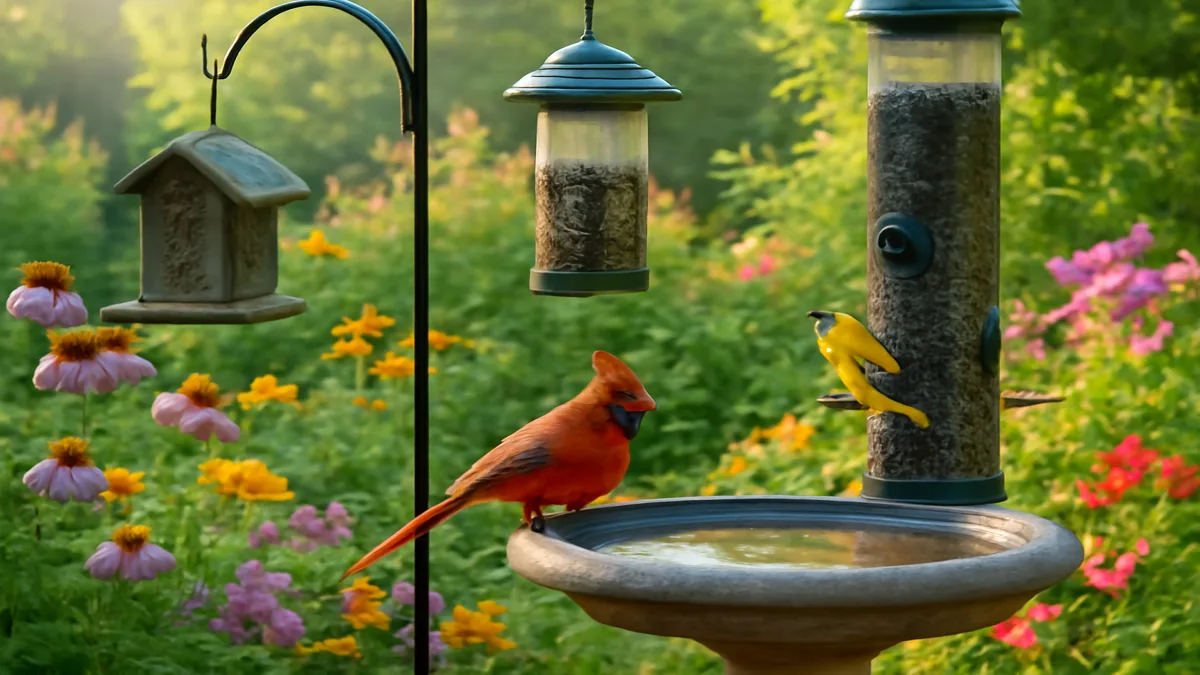
Learning how to attract birds to your yard is one of the most rewarding gardening projects you can undertake. And it turns out the difference between a silent patch of grass and a lively songbird sanctuary comes down to just seven proven strategies. Whether you’re sipping morning coffee and hoping to spot a scarlet cardinal, or you want your grandkids to learn the names of backyard visitors, the good news is you don’t need acres of wilderness. A standard suburban lot can host 30 or more species with the right setup.
I’ve spent the better part of three decades turning backyards into bird havens, and I can tell you the biggest mistake people make is buying a single feeder, filling it with the cheapest seed at the hardware store, and wondering why only a few sparrows show up. Birds have specific needs. Food they can actually digest, water they feel safe using, shelter from the neighbor’s cat, and nesting spots that mimic the native landscape their ancestors knew. Get those four pieces right, layer them across the seasons, and your yard becomes a destination.
This guide walks you through each strategy in plain language, with the numbers and product specs you actually need. No fluff, no guesswork. By the end, you’ll know exactly which feeder to hang, what to plant, where to put the birdbath, and how to keep everyone safe from window strikes and predators. Let’s get your yard ready for feathered visitors.
FREE: Wildlife Garden Starter Guide
Get our 12-page PDF with the 25 best plants for pollinators, simple habitat tips, and a printable checklist — all 100% free.
No spam. Read our Privacy Policy.1. Provide the Right Food (Not Just Any Seed)
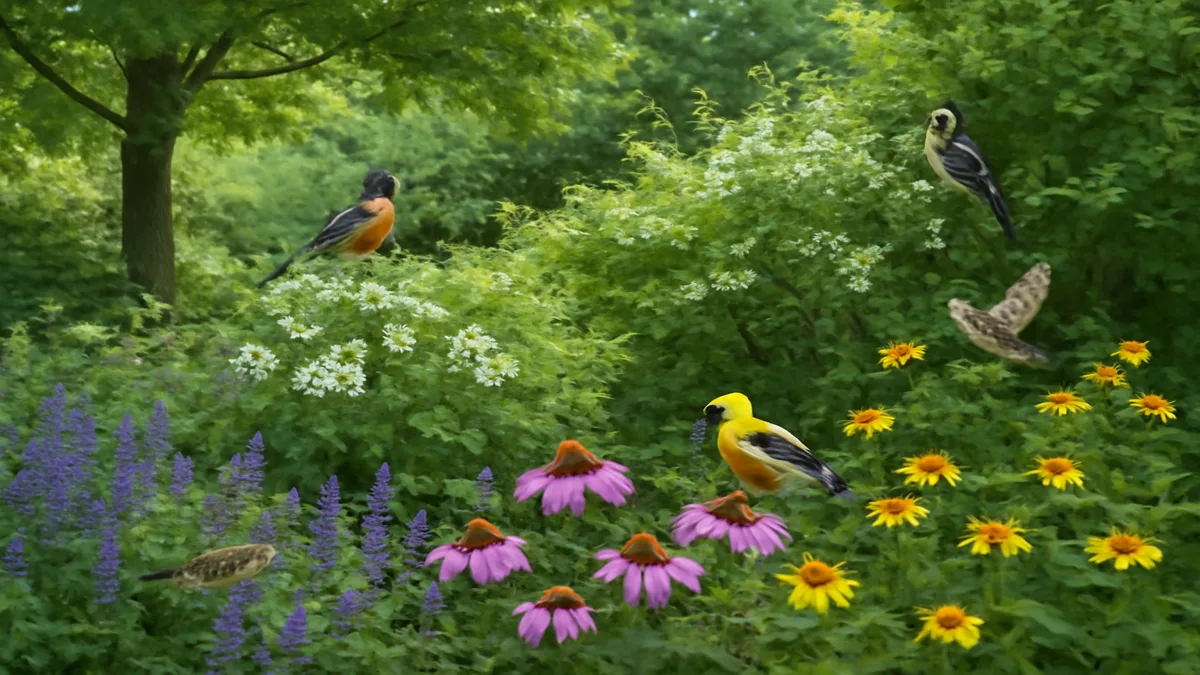
The food you offer determines which birds show up. It’s that simple. Cheap “wild bird mix” from big-box stores is mostly milo, red millet, and cracked corn filler that most songbirds kick to the ground. You end up feeding squirrels and house sparrows while wasting money. Swap it for quality single-ingredient foods and you’ll see results within a week.
Black-oil sunflower seed is the universal favorite. Its thin shell cracks easily and the kernel is rich in fat. Chickadees, cardinals, finches, nuthatches, and woodpeckers all love it. If you only buy one food, buy this.
Nyjer (thistle) seed is a goldfinch magnet. It needs a special tube feeder with tiny ports because the seeds are so small. Suet cakes deliver concentrated fat that woodpeckers, nuthatches, and wrens rely on in cold months. Fruit (orange halves, grape jelly) brings orioles and catbirds in spring. Mealworms. Live or dried. Are irresistible to bluebirds and robins, especially when feeding nestlings.
| Bird Species | Preferred Food | Best Feeder Type |
|---|---|---|
| Northern Cardinal | Black-oil sunflower, safflower | Hopper or platform |
| American Goldfinch | Nyjer, sunflower chips | Tube feeder with small ports |
| Downy Woodpecker | Suet, peanuts | Suet cage, peanut feeder |
| Black-capped Chickadee | Sunflower, peanuts | Tube or hopper |
| Eastern Bluebird | Mealworms, berries | Open dish feeder |
| Ruby-throated Hummingbird | Nectar (4:1 water:sugar) | Nectar feeder |
| Baltimore Oriole | Orange halves, grape jelly | Oriole feeder |
| White-breasted Nuthatch | Sunflower, suet | Tube or suet cage |
Keep feeders clean. Dirty feeders spread salmonella and conjunctivitis. Scrub weekly with a 10% bleach solution (one part bleach to nine parts water), rinse thoroughly, and let dry before refilling. Sick birds at your feeder is worse than no feeder at all.
2. Fresh Water Is the Secret Weapon
If I could only give one piece of advice to beginners, it would be this: add water before you add another feeder. Birds need water for drinking and for keeping their feathers in flight-ready condition, and a clean water source attracts species that never visit seed feeders. Warblers, thrushes, tanagers, even the occasional owl.
The specs matter. A proper birdbath is no more than 2 inches deep at its deepest point, with a gentle slope from shallow edges so small birds can wade in. The surface should be rough (concrete, stone, or textured resin). Slick ceramic or glass baths are dangerous because wet feet slip.
“Moving water attracts up to ten times more birds than still water. Even a small dripper or solar mister transforms a basic birdbath into a songbird magnet overnight.”. A principle echoed by ornithologists at every major bird observatory.
You can buy a simple dripper kit for around $20 at any garden center, or a solar-powered mister for $30. Mount it above your birdbath and the sound of moving water will bring in migrants from blocks away. In winter, a heated birdbath ($40–$60) is a lifesaver. Birds dehydrate quickly from eating snow, and open water in a frozen landscape is worth its weight in gold.
Place the bath about 10 feet from dense shrubs so wet birds (which fly poorly) have a quick escape route from predators, but not so close that a cat can ambush from cover. Clean it every two to three days with a stiff brush. Algae and droppings build up fast in warm weather.
3. Plant in Multiple Layers Like a Real Forest
A lawn is a green desert for birds. To genuinely attract diversity, you need to mimic the vertical structure of a natural woodland edge. Canopy trees on top, understory shrubs in the middle, groundcover and perennials on the bottom. Each layer hosts different species.
Here’s the magic number that changed how I garden: native plants produce 5 to 35 times more insects than non-native ornamentals. That matters because 96% of terrestrial birds feed insects. Especially caterpillars. To their young. A single clutch of chickadees requires 6,000 to 9,000 caterpillars before fledging. No natives, no caterpillars, no baby birds.
- Canopy layer: oak, maple, black cherry, hickory. Oaks alone support over 500 caterpillar species
- Understory: serviceberry, dogwood, viburnum, elderberry. Berries plus nesting cover
- Shrub layer: native roses, blueberry, winterberry holly. Dense twiggy cover birds love
- Groundcover and perennials: goldenrod, asters, coneflower, milkweed. Seed heads and insect habitat
If you’re starting from a blank lawn, don’t panic. Pick three or four native species suited to your zone and add a few each year. Our guide on native pollinator plants walks through the best choices region by region, and most of those same plants feed birds too.
4. Let Nature Provide Natural Food Sources
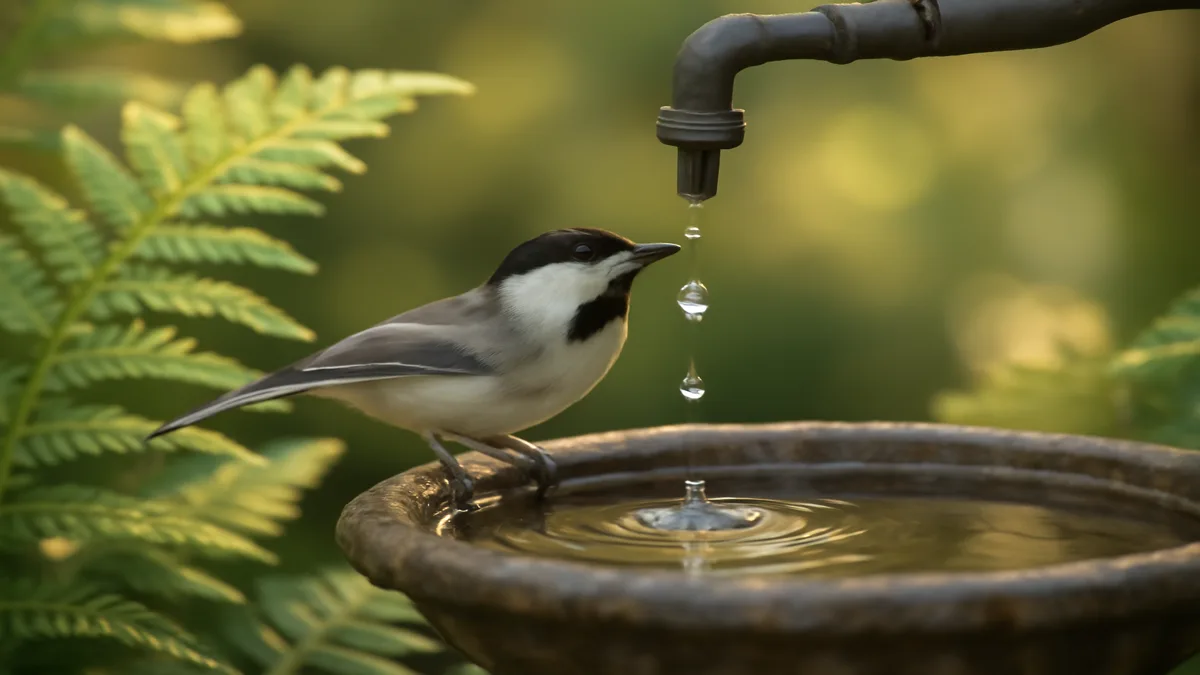
Feeders are wonderful supplements, but a yard packed with natural food sources will hold birds year-round without you lifting a seed scoop. Think of this as growing a pantry rather than serving takeout.
Berry producers are the backbone. Serviceberry ripens in June feeding thrushes and cedar waxwings. Dogwoods drop fatty red berries in fall that migrating birds depend on. Winterberry holly holds its bright red fruit through January, rescuing robins and bluebirds during ice storms.
Seed heads from native perennials feed finches and sparrows all winter. Resist the urge to “tidy up” coneflower and black-eyed Susan stalks in October. Leave them standing until spring. Nectar-rich tubular flowers like bee balm, cardinal flower, and trumpet honeysuckle fuel hummingbirds far better than sugar water alone.
And here’s the hardest rule for tidy gardeners: stop using pesticides. Every spray of broad-spectrum insecticide kills the caterpillars, beetles, and spiders that 80% of backyard birds need to feed their young. A lawn treated with grub killer is a lawn that can’t support robins. If you want birds, you must accept some chewed leaves and a messier garden. That “mess” is the food web working.
5. Give Them Safe Places to Nest
Food and water get birds into your yard; nesting sites make them stay and raise the next generation there. Different species want different structures, and the more variety you offer, the more species will breed on your property.
Native shrubs with dense branching (especially thorny ones like hawthorn, native rose, and raspberry) are preferred by cardinals, catbirds, and mockingbirds. Tall trees with natural cavities host woodpeckers, chickadees, and screech owls. If your trees are young and lack cavities, nest boxes fill the gap beautifully. Bluebird boxes, wren boxes, chickadee boxes, and larger boxes for screech owls and wood ducks.
I tell everyone the same thing about dead branches: leave them alone if they don’t threaten the house. Dead wood, called snags in ecology-speak, is prime real estate. Woodpeckers excavate nest holes, which become homes for secondary cavity nesters once abandoned. One standing dead tree can host a dozen species over its slow decay.
For step-by-step instructions on building proper nest boxes with the right dimensions, hole sizes, and mounting heights, see our guide on how to build a birdhouse. And don’t overlook bats. They’re insectivores that complement birds and work the night shift; check out our bat house plans if you want 24-hour insect control.
6. Make Your Yard Safe From Predators and Windows
You’ve built the buffet. Now protect the diners. Window collisions kill an estimated one billion birds annually in North America, and outdoor cats kill another 2.4 billion. These are staggering numbers, and every yard can reduce them.
Windows are the silent killer because birds don’t perceive glass. They see reflections of sky and trees and fly straight in. The fix is simple and cheap: apply external decals, tape patterns, or UV-reflective film with markings no more than 2 inches apart. Decorative window film from American Bird Conservancy or Feather Friendly works beautifully and is nearly invisible from inside.
Feeder placement also matters. Either place feeders within 3 feet of windows (so birds can’t build up fatal momentum) or more than 30 feet away. The middle distance is the deadliest zone.
Predator-proofing means pole-mounted feeders with baffles. Not dangling from tree branches where squirrels and raccoons raid them. Avoid ground-level platform feeders near shrubs that can hide cats. And please, keep cats indoors. Even well-fed cats hunt by instinct, and bell collars are far less effective than most owners believe. For a deeper dive on collision prevention, the Cornell Lab of Ornithology maintains excellent resources.
Finally, give birds a quiet observation zone. Loud music, barking dogs, and kids running through the feeding area will flush birds repeatedly. Set up viewing from a window or a distant porch so birds relax and return.
7. Think Year-Round, Not Just Summer
The biggest step-change in my own yard came when I stopped thinking of bird-feeding as a winter activity and started planning for all four seasons. Different species have different needs as the calendar turns, and a yard that answers those needs becomes a true sanctuary.
- Spring: Nesting season. Clean and hang nest boxes before March. Offer mealworms, orange halves, and grape jelly for returning migrants. Leave pet hair and short yarn strands in a suet cage. Birds weave them into nests.
- Summer: Fledglings need protein and water. Keep birdbaths filled and clean (every two days in heat). Mealworms and insect-rich suet blends support parents feeding demanding youngsters.
- Fall: Migration fuel. Berries and seed heads are critical. This is when your serviceberry and dogwood earn their keep. Keep feeders stocked with high-fat sunflower and suet for birds bulking up.
- Winter: Survival mode. High-fat suet, peanuts, and sunflower. Heated birdbath. Brush piles from fallen branches give small birds cover from hawks and storms. Leave leaf litter in garden beds. It’s packed with dormant insects that wrens and sparrows scratch out on warm days.
The National Audubon Society publishes regional seasonal guides that are worth bookmarking if you want to fine-tune for your climate.
Common Mistakes to Avoid
Before we wrap up, let’s name the pitfalls I see over and over in yards that “just can’t seem to attract birds.” Fix these and you’ll see the difference within a month:
- Buying cheap mixed seed. It’s mostly filler, wastes money, and attracts unwanted species like European starlings and house sparrows that bully natives.
- Dirty feeders. They spread salmonella and avian conjunctivitis. Clean weekly with a 10% bleach solution.
- Offering only sunflower seeds. Great starter food, but it limits diversity. Add nyjer, suet, and mealworms.
- Platform feeders near the ground. Essentially a cat buffet. Mount everything on poles with baffles.
- No water in winter. Birds dehydrate from melting snow in their bodies. A heated birdbath ($40–$60) saves lives.
- Removing every “messy” leaf and stem. Leaf litter and standing perennials are winter food banks. Delay cleanup until mid-spring.
Conclusion: Start Small, Watch It Grow
Attracting birds to your yard isn’t about spending a fortune or turning your whole lot into a nature preserve. It’s about getting four elements right. Good food, clean water, layered native plants, and safety. And then letting the seasons do their work. You can start this weekend with a single tube feeder of black-oil sunflower, a shallow birdbath with a $20 dripper, and one serviceberry sapling from the local nursery. That’s it. Within a season you’ll have regulars. Within two years you’ll have breeders.
The best time to plant a tree was twenty years ago. The second best time is this weekend. Pick one strategy from this list, act on it this week, and come back next month to add another. Your yard. And the birds that will soon call it home. Will thank you.
Frequently Asked Questions
How long does it take to attract birds to a new feeder?
Most yards see their first regular visitors within 1 to 2 weeks, though it can take a month or more if no birds currently use your neighborhood. Placement matters. Put the feeder within 10 to 15 feet of cover (shrubs or trees) so birds feel safe approaching. If nothing shows up after a month, move the feeder to a different spot and try adding a water source nearby.
What is the single best seed to attract the most birds?
Black-oil sunflower seed wins by a landslide. Its thin shell is easy to crack, the kernel is high in fat, and it appeals to cardinals, chickadees, finches, nuthatches, woodpeckers, titmice, and jays. If you buy one bag of seed, make it this one. Sunflower chips (shells already removed) produce less mess under the feeder and are slightly preferred in small-space yards.
Do I need to stop feeding birds in summer?
No. This is an old myth. Adult birds continue to use feeders in summer and often bring fledglings along, which is a delight to watch. The one adjustment is to avoid whole peanuts and large suet chunks during nesting season because they can choke nestlings if parents feed them whole. Offer chopped nuts, insect-based suet, and plenty of mealworms instead.
How do I keep squirrels off my bird feeders?
The most reliable fix is a pole-mounted feeder with a proper baffle (a dome or cone that squirrels can’t climb past), positioned at least 10 feet from any tree, fence, or roof they could jump from. Weight-activated feeders that close ports under a squirrel’s weight also work well. Spicy “hot pepper” seed is another option. Birds don’t taste capsaicin, but mammals do.
Is it safe to use a heated birdbath in winter?
Yes, heated birdbaths designed for outdoor use are safe when operated per manufacturer instructions on a GFCI-protected outlet. They keep water just above freezing. Not warm. So birds don’t risk feather damage from bathing in actually warm water in subfreezing air. A heated bath in winter is one of the single most effective things you can do to attract birds when natural water is locked in ice.
Related reading
Want More Wildlife Garden Tips?
Join 5,000+ nature lovers getting our weekly tips on creating wildlife-friendly gardens.
No spam, unsubscribe anytime. Privacy Policy
Emma Harrington
Emma Harrington is a wildlife habitat researcher and content editor with a passion for backyard conservation. She has spent over a decade translating ecological science into practical tips anyone can follow — from selecting native plants to building wildlife-friendly habitats. Her work focuses on helping homeowners transform ordinary yards into thriving ecosystems for bees, butterflies, hummingbirds, and other beneficial wildlife.