
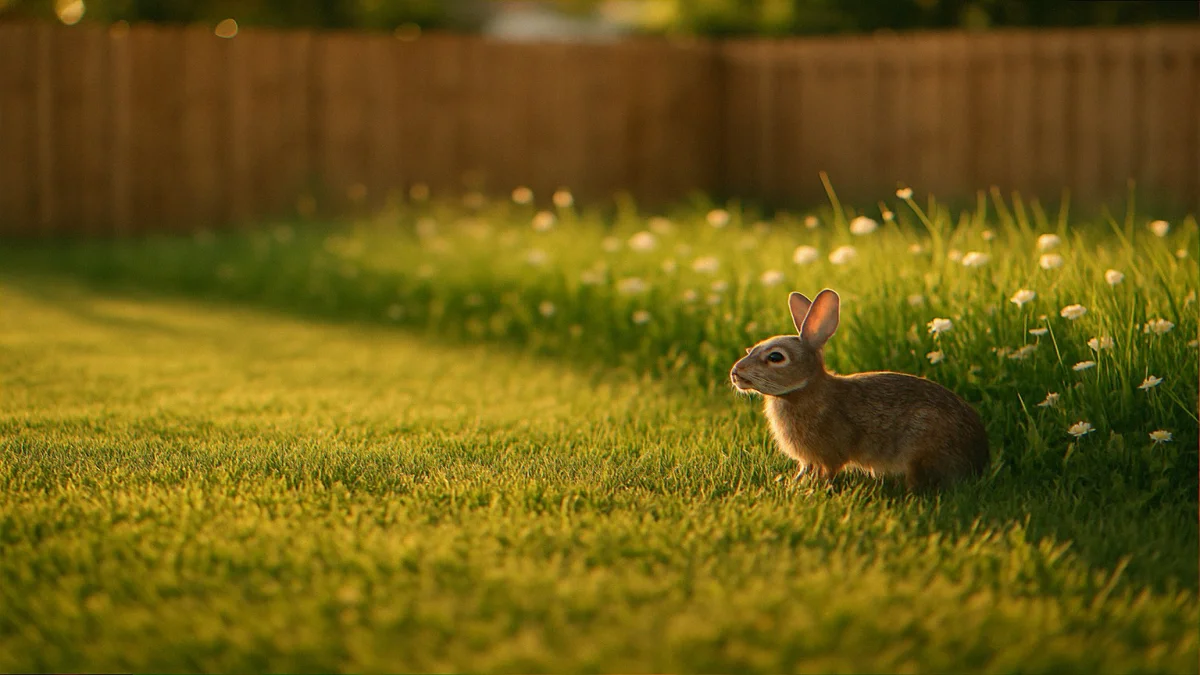
By the last week of May, your yard runs eight wildlife schedules at once: rabbits start a second litter, fireflies begin flashing, monarchs lay their next egg wave, fledglings drop out of nests, native bees swap generations, toads call from any standing water, annual cicadas start their first songs in the southern half of the country, and the warm-season natives finally hit bloom. Track those, not the calendar.
The hardest part of suburban wildlife gardening isn’t installing the plants. It’s that nothing you read in March is still accurate in late May. A reader emailed last month asking why her milkweed had no caterpillars yet, two weeks after a popular podcast said the monarchs had “arrived.” Her zip code was 200 miles north of the host’s. The calendar lied to her. But only because it wasn’t her calendar. Phenology is local, week-by-week, and quietly aggressive once you start tracking it. Below is what late May actually looks like in a planted suburban yard between roughly USDA Zones 5 and 7, with notes for the warmer south and cooler north when timing diverges meaningfully.
What is “wildlife phenology” and why does it matter for my yard?
Phenology is the study of when biological events happen. When leaves emerge, when birds nest, when insects fly. For backyard wildlife it’s the difference between mowing on schedule and accidentally killing a litter of cottontails, or putting away your hummingbird feeder before the second wave shows up. The USA National Phenology Network tracks more than 100 wildlife species and 500 plants nationwide, and its data shows spring events have shifted roughly 2–3 weeks earlier in many parts of the eastern U.S. compared to baselines from the 1980s. That single sentence quietly rewrites every old gardening book on the shelf.
FREE: Wildlife Garden Starter Guide
Get our 12-page PDF with the 25 best plants for pollinators, simple habitat tips, and a printable checklist — all 100% free.
No spam. Read our Privacy Policy.The practical version: your yard is its own micro-calendar. South-facing slope and a 4-foot privacy fence can shift bloom and bug activity a full week against your neighbor’s yard. Once you log a few seasons on iNaturalist or in a paper notebook, you stop trusting generic “spring” advice and start working from what your particular acre has done for the last three years. That’s the only schedule that matters.
Why generic “spring wildlife” advice falls apart in late May
Most backyard wildlife articles lump March through May into one bucket called “spring.” That works for headline writing, not for habitat management. By late May the early-spring tasks are over. You missed the window to cold-stratify seeds, the early bumblebee queens have already chosen their nest sites, and the first wave of warbler migration has rolled north. The mid-spring tasks have shifted too: you’re no longer waiting for fledglings, you’re tripping over them. New tasks open up that nobody mentioned in April, like deciding whether to delay mowing because a rabbit doe just deposited a litter you can’t see.
The principle is the same as deciding what’s actually native to your county: trust local data over national averages. That’s exactly what makes a wildlife calendar work.
1. Cottontail second litters land in tall grass
Eastern cottontail does breed in cycles roughly every 30 days from March through September, which means late May is peak window for the second of four to seven possible litters. The doe digs a shallow scrape in dense grass or under a low shrub, lines it with her own belly fur, and visits the kits only twice a day. At dawn and dusk. To nurse for about five minutes each visit. The rest of the time the nest looks unattended. It is not.
The first time I found a litter in my own yard, I was lifting a tarp I’d left along the fenceline and there were five thumb-sized rabbits in a perfect bowl of grass and fur. I covered them, marked the spot with a flag, and didn’t mow that quarter of the yard for three weeks. All five fledged. The mower keeps killing rabbit nests in late spring because almost nobody believes the doe is still coming back. She is, but only briefly. If you find a nest, the simple rule from the Humane World for Animals nest test is: lay two crossed twigs on top of the fur. If they’re disturbed by the next morning, mom is still visiting. Almost always, she is.
For a fuller walkthrough on managing the lawn around a nest you’ve found, see cottontail nest in your lawn: skip the mow for 3 weeks. The short version: flag the spot, mow around it, and the doe handles the rest.
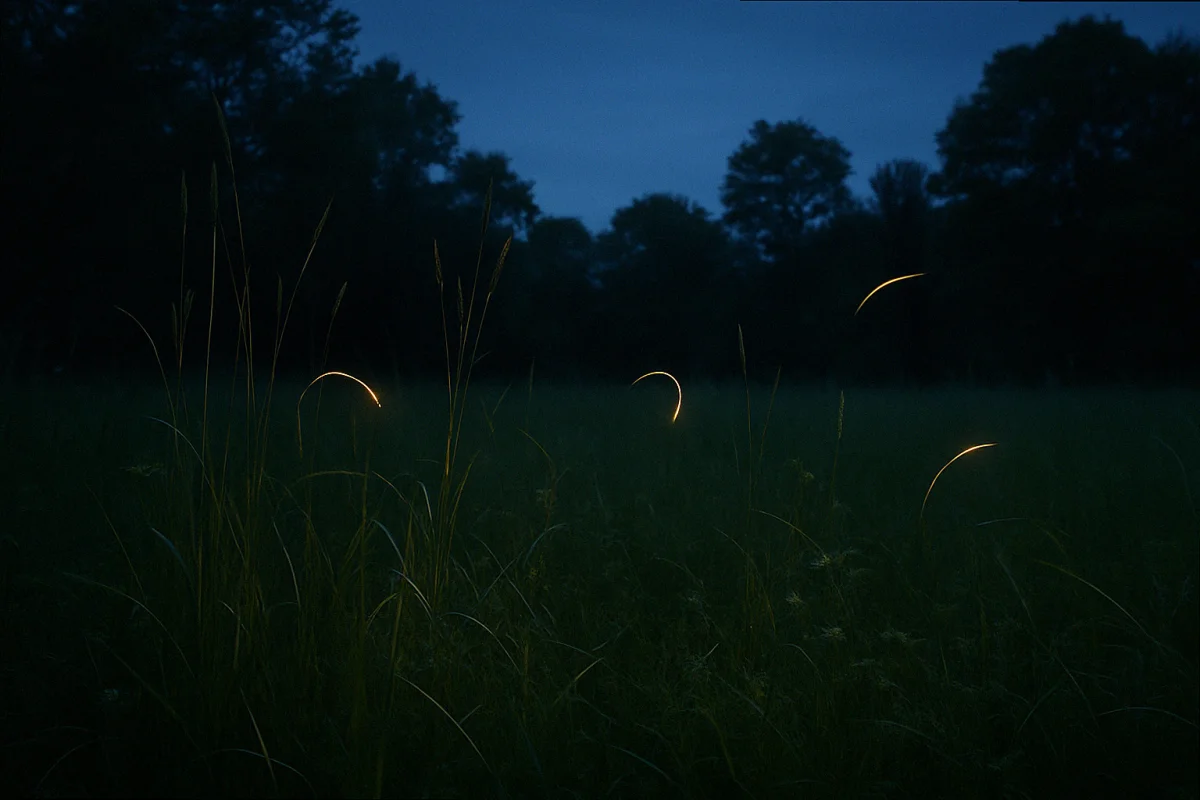
2. Fireflies start flashing. And the window is shorter than you think
Late May is when the first Photinus males begin patrolling lawns and field edges at dusk, flashing the species-specific code their females respond to from the grass. In most of the mid-Atlantic and Midwest, peak firefly activity runs roughly the last week of May through the third week of June, then drops off sharply. Miss the start and you miss two thirds of the season.
Three things kill backyard fireflies faster than anything else: leaving porch lights and landscape lighting on after dusk, mowing the lawn weekly down to two inches, and using broad-spectrum lawn insecticides. The Xerces Society’s firefly conservation guidance recommends leaving at least one corner of the yard unmown from May through July, switching to warm-spectrum bulbs under 2700K or turning outdoor lights off entirely between 9 p.m. and midnight, and skipping any pesticide that targets soft-bodied larvae.
If you want a deeper read on building habitat for them specifically, my full guide is at how to attract fireflies to your yard. The cheat version for this week: shut the outdoor lights off, stop mowing one corner, and start watching ten minutes after sunset.
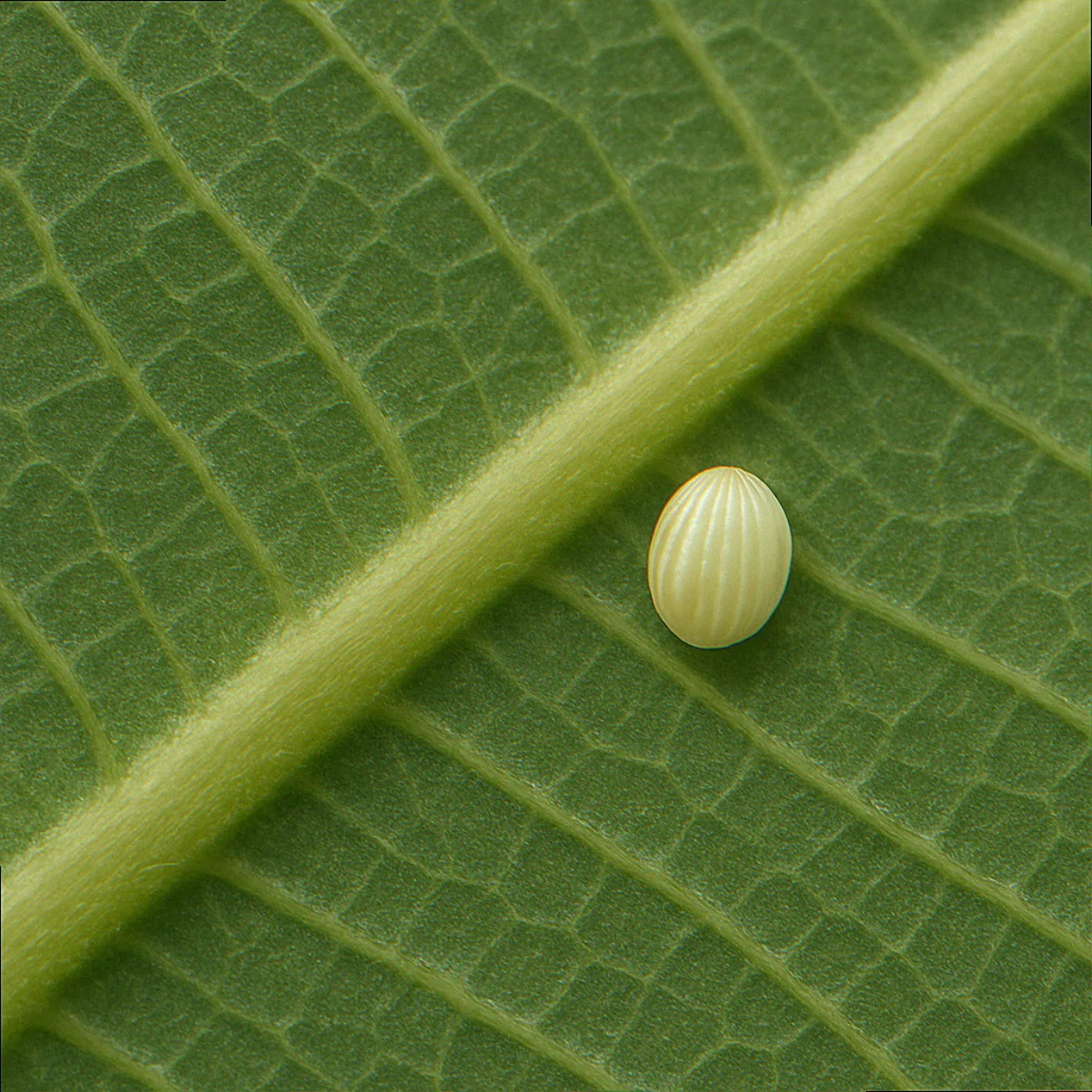
3. Monarchs lay their second-wave eggs on every milkweed you own
The monarch generation that arrived in your yard in late April or early May has already mated and laid the first batch. By late May, generation two adults are emerging and laying their own eggs on whatever milkweed they can find. This is the wave that builds the population that eventually rolls south in October. It is also the wave most likely to die because milkweed gets covered in oleander aphids by the third week of May, and a panicked gardener reaches for the wrong spray.
What you actually want to do this week: walk every milkweed plant in the yard and turn over the upper leaves. Look for cream-colored, ribbed eggs about the size of a pinhead. If you spot eggs and you also have aphid clusters on the same plant, the safe move is a strong spray of plain water from the hose to knock the aphids off. Not soap, not neem, not insecticidal anything. Soap will kill the eggs and any first-instar caterpillars too small to see. A full walkthrough is at aphids on milkweed: safe removal that spares monarchs.
If your milkweed is mostly common milkweed (Asclepias syriaca), expect the second-wave eggs to outnumber the first batch by a wide margin. If you have only swamp milkweed or butterfly weed, both bloom later and may not see heavy egg-laying until mid-June. Big-box garden centers will start clearing out their milkweed flats around Memorial Day at half price. If you’re short on plants, this is the cheap window.
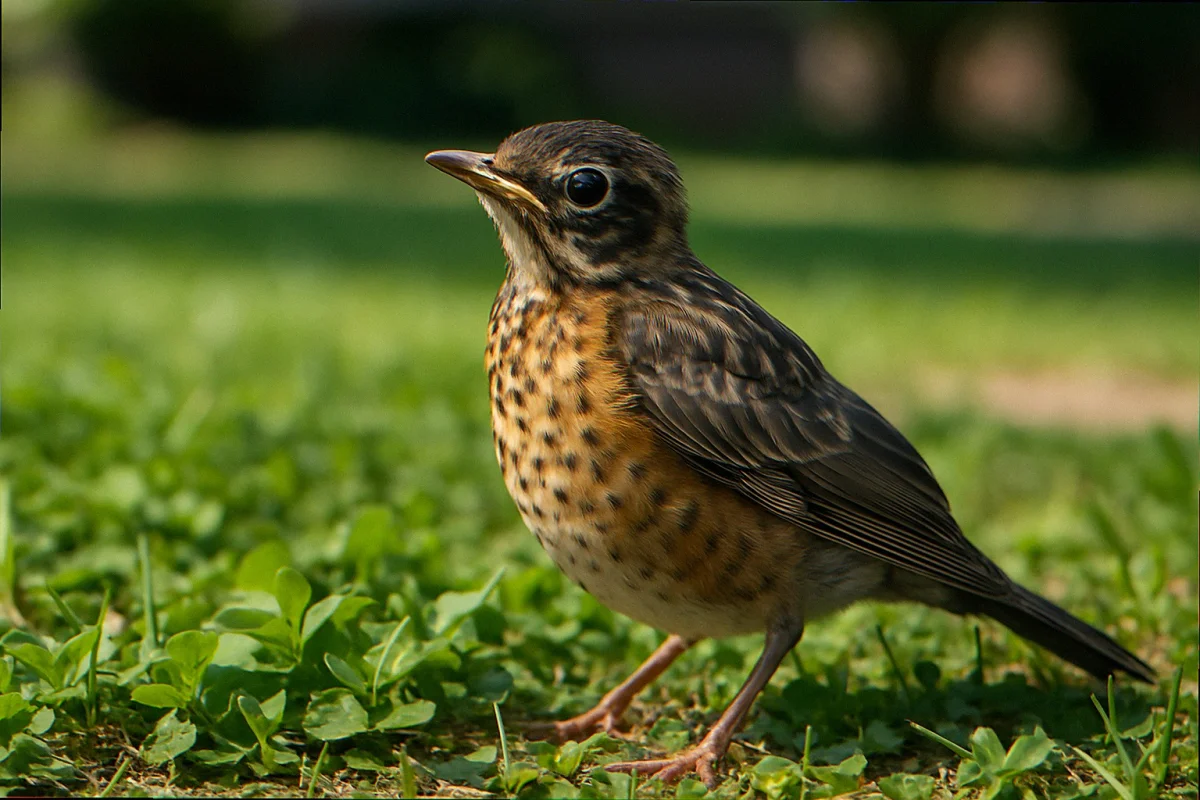
4. Songbird fledglings are on the ground (and that’s normal)
By late May, most local songbird species. Robins, cardinals, mockingbirds, catbirds, house wrens, Carolina chickadees. Are pushing the first brood out of the nest. Fledglings spend two to five days on the ground or in low shrubs before they can fly competently, and the parents continue feeding them the entire time. They look stranded. They are not.
The Cornell Lab All About Birds guidance distinguishes between a nestling (pink, mostly featherless, eyes closed. Needs the nest) and a fledgling (feathered, hopping, eyes open. Leave it alone). If you’re not sure which you’re looking at, the test is whether the bird’s body is covered in real feathers, not just down. If yes, walk away and keep the cat indoors. My full breakdown of the call is at fledgling bird on the ground: help or walk away?.
One subtler late-May situation: nests in odd places. A pair of house finches has built in the wreath on my front door for three years running. They start laying around May 15 in my zone, and by the last week of May the female is sitting tight. The rule there is the same. If she chose that spot, she has reasons you can’t see, and the kindest thing is to use a side door for three weeks. For nests in hanging baskets specifically, the watering workaround is laid out at bird nest in a hanging basket: what to do in late May.
5. Native bees swap generations. Mason bees out, leafcutters in
If you have a cleanable mason bee house in the yard, the adult Osmia generation that pollinated your fruit trees in early April is now dying off. The females have already sealed their cocoons in the tubes and the next generation will not emerge until next spring. This is the week to take the house down, store the tubes in a cool, dry spot through summer, and clean the housing before reinstalling it in early March. The disease pressure on uncleaned mason bee tubes is the single biggest reason most commercial bee hotels do more harm than good. Covered in detail at mason bee houses you can clean: 3 effective options.
At the same time, leafcutter bees (Megachile) are warming up and will be active through August. They look like fat honeybees with black-and-white striped abdomens and they cut perfect half-moon notches out of leaves. Usually rose, redbud, or oak. To line their own nest tubes. If something is making clean curved bites out of your leaves in late May, it’s almost certainly leafcutters and the cosmetic damage is the price of free pollination. Do nothing.
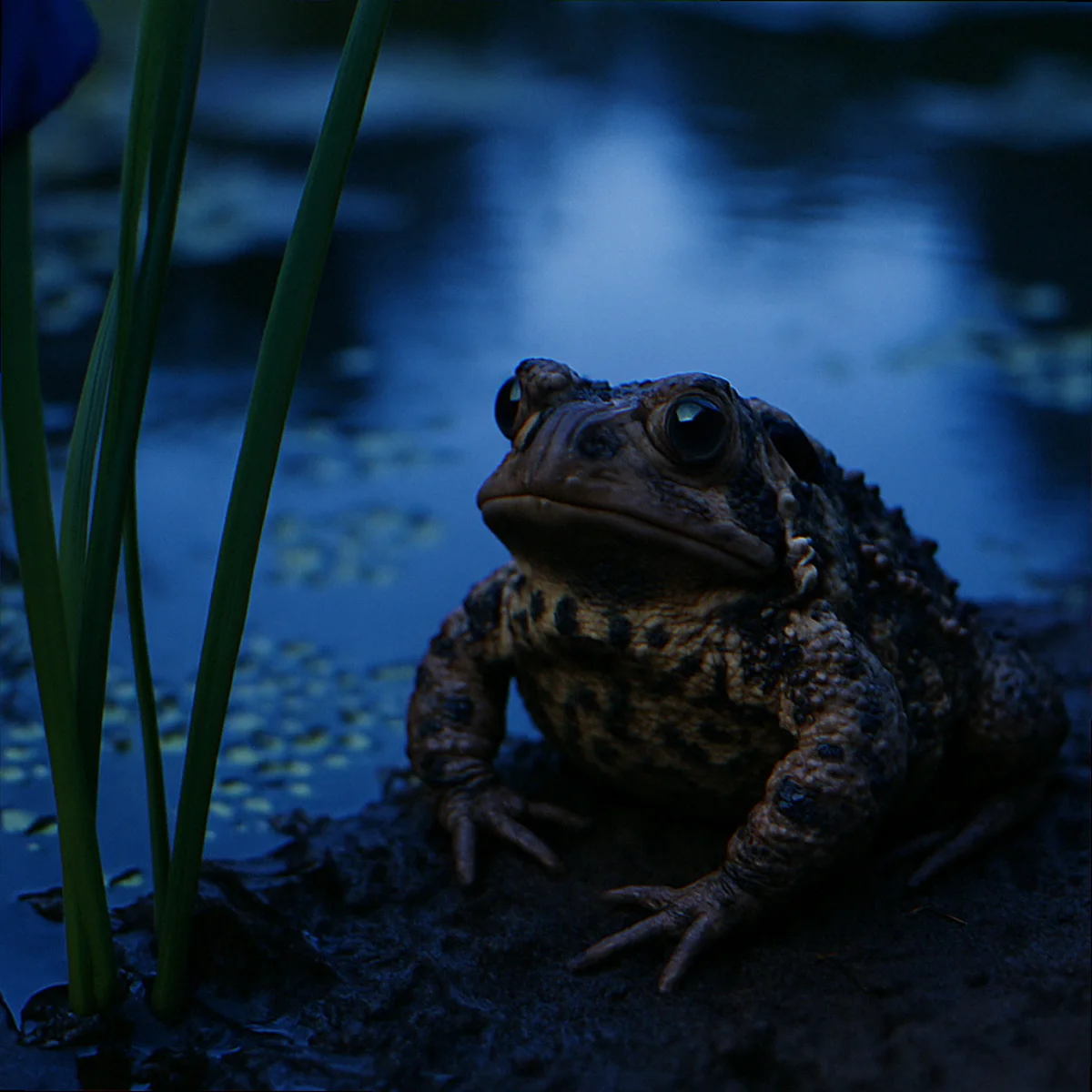
6. Toads start trilling. What does it sound like at night?
American toads call in a long, sustained trill, anywhere from 6 to 30 seconds, in the key of an old telephone ring. They breed in shallow standing water and late May is when most northern populations are still calling at dusk and through the first few hours of darkness. If you have a backyard pond, a stock-tank water feature, or even a half-buried plastic dish that holds water for more than three weeks, you will hear them.
The catch: toads need still water, not flowing water. A bubbler fountain that’s pretty for goldfinches is too turbulent for toad eggs, which look like long strings of black beads laid in shallow margins. If you want toads in the yard, the move is one still-water container at least 18 inches across and 4 inches deep, planted with a few stems of pickerelweed or blue flag iris for tadpole cover. Mosquito control without harming the toad eggs is the trickier part. The full method, including the bacterial-larvicide approach that’s safe for amphibians, is at add water for backyard wildlife without mosquito issues.
7. Annual cicadas begin in the southern half of the country
Annual or “dog-day” cicadas (Neotibicen species) emerge over a long window from mid-May through August depending on latitude. In Florida, Texas, and the Gulf Coast, you’ll start hearing isolated males calling from oaks and pines in the last week of May. In the upper Midwest and Northeast, true annual cicada song doesn’t peak until mid-July. Periodical cicadas (the 13- and 17-year broods) are a separate event with their own scheduled emergence years.
Cicadas don’t damage established trees. The female’s egg-laying slits on pencil-sized twigs can flag tips on young saplings, which looks alarming but is cosmetic. The bigger late-May story is what eats the cicadas: red-bellied woodpeckers, blue jays, and squirrels all shift onto cicada protein heavily during peak song. If your bird feeder traffic drops in late June, this is one reason. The birds are upgrading to bigger prey for a few weeks. It’s not your seed mix.
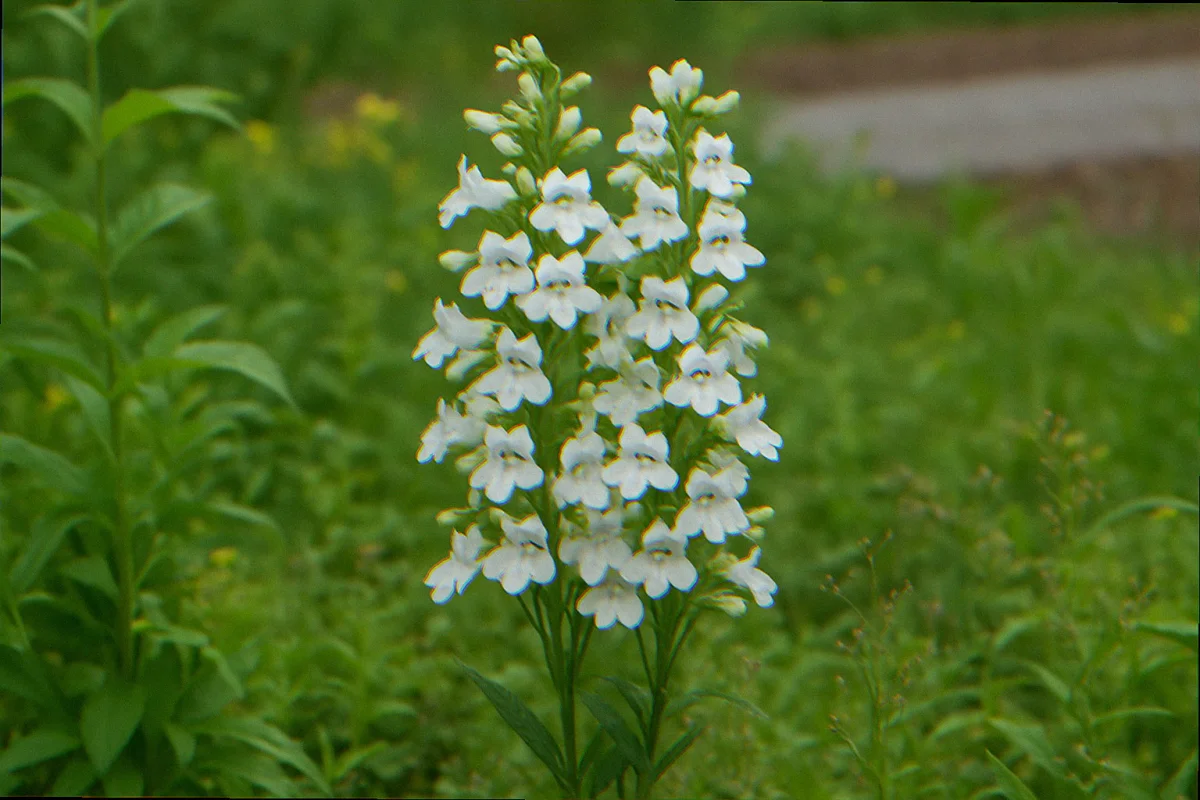
8. Native perennials hit first bloom. And they bloom on a different schedule than tags claim
Late May is when the first honest wave of warm-season native perennials opens: foxglove beardtongue (Penstemon digitalis), wild blue indigo (Baptisia australis), prairie smoke (Geum triflorum) in cooler zones, butterfly milkweed (Asclepias tuberosa) just starting to color up, and spiderwort (Tradescantia ohiensis) opening every morning and shutting by noon. Big-box garden tags routinely claim “May–August bloom.” Local reality: in Zone 6 my own penstemon opens between May 22 and May 28 every year, and my baptisia between May 25 and June 5. The tag is a continent’s worth of averages. Your yard is one zip code’s worth of truth.
If you want a real walkthrough of how slowly natives establish in year one versus what the catalog photos make you expect, see sleep, creep, leap: understanding your native plants’ growth. The short version: late May of year three is when most of these plants finally look like the picture on the tag.
A week-by-week timeline for late May into early June
The table below maps the eight events above against the calendar so you can plan what to watch and what to defer.
| Week | Watch For | Action To Take | Action To Skip |
|---|---|---|---|
| May 18–24 | First firefly flashes; mason bees sealing tubes | Turn off porch lights at dusk; take down mason bee tubes | Mowing the back corner; broad-spectrum insecticide |
| May 25–31 | Cottontail litters; monarch second-wave eggs; first fledglings | Flag any nests, mow around them; water-spray aphids only | Lifting fledglings off the ground; soap on milkweed |
| June 1–7 | Toads calling at water; first leafcutter notches on leaves | Add one still-water container; log first leafcutter date | Spraying any cosmetic leaf damage |
| June 8–14 | Penstemon and baptisia peak; first annual cicada song in south | Photograph blooms; record cicada start date for next year | Deadheading early. Leave seedheads for goldfinches |
What if I don’t see any of this in my yard?
This is the most common objection from readers who have just converted a lawn corner. The honest answer is that a first-year planting will see maybe two of the eight events on this list. A second-year planting catches four or five. By year three, with at least 200 square feet of pollinator-friendly natives and a single still-water source, most yards see all eight in a normal late May. If you’re at year one and feeling behind, you are not behind. You are on schedule.
Two specific things accelerate the curve. First, joining the local Wild Ones chapter (or the equivalent native plant society) for a single growing season puts you in contact with people who’ve been logging their yards for a decade and can tell you what’s normal at your latitude. Second, getting plants into the ground earlier rather than larger. Meaning a flat of plugs from a county-extension sale rather than two gallon-pot specimens. Multiplies the wildlife events you’ll see faster, because biomass beats bloom size for habitat purposes. The budget version is documented at native plant garden on a budget: five affordable sources.
The other quiet obstacle is the neighbors. A planted yard that looks “messy” in late May because it’s deliberately not mowed in a back corner draws complaints in HOA neighborhoods. The defense is signage, a mown border, and a posted wildlife certification badge. Small visual cues that signal “intentional,” not “abandoned.”
What changes after you start tracking the calendar
The first season of phenology logging feels pointless. You write down “first firefly: May 26” and “first monarch egg: May 28” and wonder why. The second season, you start anticipating those dates and watching the right plants. The third season, you realize your firefly start has shifted four days earlier compared to year one and you can name a cause. Maybe you stopped mowing the southwest corner, maybe a neighbor took out a lawn-treatment contract. The fourth season, you stop reading national gardening calendars entirely because yours is more accurate. The whole project is one acre’s worth of citizen science with a return curve measured in years, not weeks.
If you want a low-cost camera setup for catching the events that happen at night. The toads, the fireflies, the cottontail doe nursing at 3 a.m.. The setup that works in real yards is at trail camera for backyard wildlife: nighttime setup. The camera pays for itself in the first season by ending arguments about whether the deer or the rabbits are eating the new plugs.
FAQ
What is the single best week to start tracking backyard wildlife phenology?
Late May. The reason is event density. Eight major wildlife events overlap in a roughly three-week window, which gives a new tracker more data points faster than starting in March or July. Pick a notebook or the iNaturalist app, log a first-observed date for any animal or plant event you notice, and continue weekly through August. By the end of one summer you’ll have a working baseline for your specific yard.
How do I tell whether a baby rabbit is abandoned or just waiting?
Lay two crossed twigs or pieces of yarn across the top of the nest in the morning. Check in 24 hours. If the twigs have been moved, disturbed, or pushed aside, the mother is visiting (she nurses twice a day, briefly, at dawn and dusk). If the twigs are exactly where you left them and the kits look thin or weak, then contact a licensed wildlife rehabilitator. Most “abandoned” rabbit nests are not abandoned.
Why are my fireflies showing up later than my neighbor’s?
Yard-to-yard variation usually comes down to four factors: lawn mowing frequency, outdoor lighting (especially anything above 3000K), broad-spectrum pesticide use within the last three years, and soil moisture. Even a single neighbor still treating for grubs can suppress your firefly larvae, which spend up to two years in moist topsoil before adulthood. The solution is patience plus turning off your own outdoor lights at dusk for the season.
Should I leave milkweed aphids alone or remove them?
Remove them mechanically only. With a strong hose spray or by wiping a wet rag along the stem. Do not use soap, neem, or insecticidal anything in late May, because every milkweed plant in your yard is also carrying monarch eggs or first-instar caterpillars too small to see. The aphids themselves rarely kill an established plant, and a few will attract aphid predators like ladybugs and lacewings that benefit the rest of the garden.
Is it too late in May to plant for this season’s pollinators?
No. Late May is actually the easiest planting window because soil is warm, big-box garden centers begin clearance pricing on native perennials around Memorial Day, and a plug or one-gallon pot planted now still has four months of root development before frost. The plants will not bloom much in year one but will host insects from the week they go in. The trick is heavy mulch (two to three inches of arborist chip), deep weekly watering for the first six weeks, and zero fertilizer.
Want More Wildlife Garden Tips?
Join 5,000+ nature lovers getting our weekly tips on creating wildlife-friendly gardens.
No spam, unsubscribe anytime. Privacy Policy
Emma Harrington
Emma Harrington is a wildlife habitat researcher and content editor with a passion for backyard conservation. She has spent over a decade translating ecological science into practical tips anyone can follow — from selecting native plants to building wildlife-friendly habitats. Her work focuses on helping homeowners transform ordinary yards into thriving ecosystems for bees, butterflies, hummingbirds, and other beneficial wildlife.