
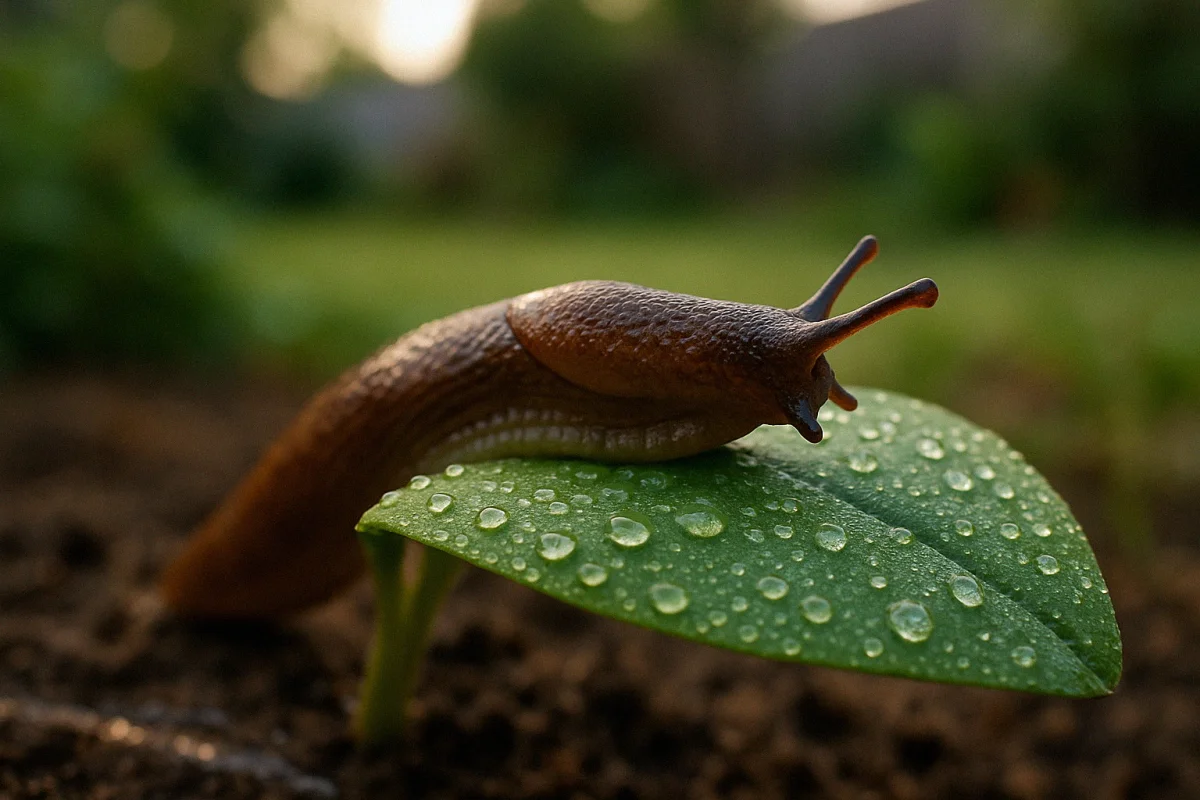
Quick answer: Use iron phosphate slug bait (Sluggo, Escar-Go) instead of metaldehyde, set up rough-texture barriers around freshly transplanted plugs, and stop watering after 3 p.m. so the soil surface dries before slugs feed. Iron phosphate breaks down into soil nutrients within days and stays safe for songbirds, frogs, and pets that share your native garden.
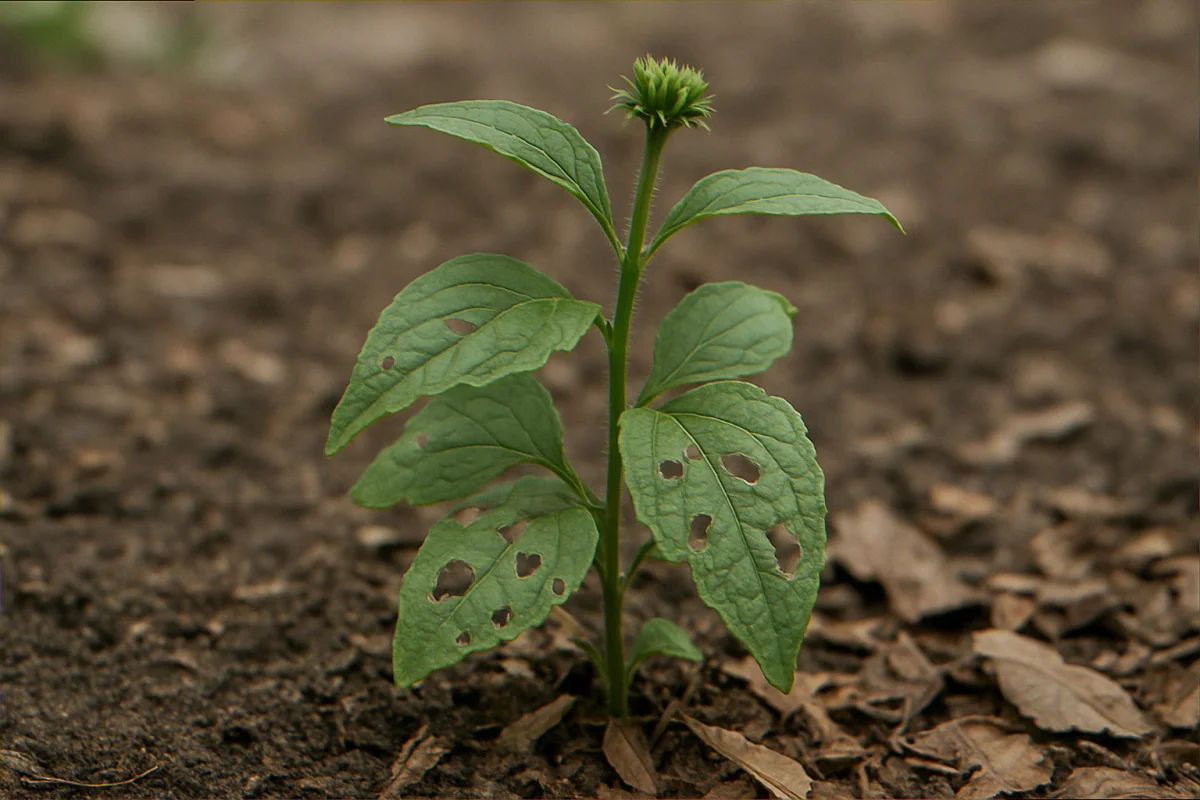
Late-May slug pressure in a young native bed looks like overnight lace work on milkweed seedlings, ragged crescents in baby aster leaves, and chewed-flat woodland sedge plugs that were perfectly upright the morning before. A wildlife-safe response works on three timelines at once: kill the active slugs with iron phosphate bait, harden the soil surface so new slugs can’t easily reach the seedlings, and build up the ground-beetle and toad population that does the long-term policing for free. The hardest part is resisting the metaldehyde products that still dominate big-box garden aisles because they work fast, but they poison the songbirds and box turtles you planted the garden to attract in the first place.
If you converted part of a lawn this spring and spent real money on plugs from a regional nursery, you already know the feeling: a $4 little bluestem reduced to a stub before it could even root. A reader emailed last month to ask, in three lines, what she had done wrong; the answer was nothing, slugs just find tender new tissue faster than tough established crowns. This guide is built for that exact moment, the late-May window when a single rainy night can erase a third of a planting and the temptation to reach for a blue pellet bag is strongest.
Why Slug Damage Hits Native Seedlings the Hardest
A first-year plug or seedling has thin cuticle, soft cell walls, and concentrated nitrogen in its new growth. Slugs taste-test by rasping with a radula (a tongue covered in microscopic teeth), and the soft tissue gives way like wet paper. Established native crowns, by contrast, have built up silica, lignin, and bitter secondary compounds over a season or two of stress; the same slug crawls past them. That asymmetry is why a garden can look fine in year three and disastrous in year one of any new planting block.
FREE: Wildlife Garden Starter Guide
Get our 12-page PDF with the 25 best plants for pollinators, simple habitat tips, and a printable checklist — all 100% free.
No spam. Read our Privacy Policy.Native woodland species are especially vulnerable in May because they tend to emerge into the same cool, damp microclimate that slugs prefer. Wild ginger, foamflower, woodland phlox, large-flowered trillium plugs, golden ragwort, and sedges all break dormancy when the soil is still saturated from spring rains. The slugs that overwintered as eggs hatched in mid-April, fed lightly on decaying mulch through early May, and are now adult-sized and ready to graze hard. According to OSU Extension trials, peak feeding correlates almost perfectly with the first three weeks after sustained soil temperatures above 50°F, which lines up with the late-May to early-June window across most of the upper Midwest and Northeast.
There is a second, less visible cost. Repeated grazing on the same seedling stunts root development, because the plant has to keep diverting carbohydrates from the roots to regrow leaves. A milkweed plug grazed three times in May may survive the season but go into fall with one third the root mass of an ungrazed sibling, meaning a weaker overwinter and a smaller bloom the following year for the monarchs you’re trying to feed. The damage is not just cosmetic, it compounds.
How Do You Tell Slug Damage Apart From Other Pests?
Slug damage has three signatures: irregular holes with smooth edges, holes that often go through the leaf in the middle rather than starting from the margin, and a dried slime trail that catches the morning sun as a faint silver smear on the leaf or surrounding mulch. Look at the underside of the leaf at dawn; a slug feeding through the night will often still be there, tucked against a cool surface.
This matters because the wrong diagnosis sends you to the wrong intervention. Earwig damage looks similar at a glance but lacks the slime trail, and you’ll often find earwigs hiding in curled flower buds rather than on leaf undersides. Rabbit damage gives a clean, almost surgical cut on the stem at about a 45-degree angle, usually higher up. Deer browse leaves jagged, torn tips because they lack upper incisors. Telling seedlings apart from weeds is a cousin skill; once you have an eye for what your natives should look like, the damage signatures become much easier to read.
One field-tested confirmation: lay a damp wooden board flat on the soil near the damaged patch in the evening, leave it overnight, and lift it at first light. Slugs and snails congregate underneath. If you find five or more under a 1-square-foot board, you have an active population that warrants intervention. Two or fewer is background pressure that your existing predators will likely handle.
What’s Wrong With Traditional Slug Bait?
The blue pellet products that dominate hardware-store shelves are usually metaldehyde, sold under names like Deadline, Corry’s, and various store brands. Metaldehyde is fast (slugs die within hours) but it is also a documented neurotoxin for dogs, cats, hedgehogs, and any bird that picks at the pellets directly or eats a poisoned slug. According to peer-reviewed work summarized by extension horticulturists at Washington State University, songbird deaths near treated beds are well-documented in the toxicology literature, and the secondary poisoning route through carrion-feeding wildlife matters even more in a yard where you are actively trying to attract garter snakes, toads, and ground-feeding birds.
The other shelf default is beer traps. They do drown slugs, but they also drown rove beetles, ground beetles, and the predaceous staphylinid larvae that normally eat slug eggs. Replacing a slug census with a beer-funded beetle massacre is a bad trade for a native garden that depends on a balanced soil-surface food web. The same critique applies to broad-spectrum diatomaceous earth applications heavy enough to actually scratch slug bodies; at those rates you are abrading the cuticles of native bees that ground-nest within a few inches of the soil surface.
Salt is the worst of the lot. It works once on the slug you target, and then it stays in the soil indefinitely, raising sodium levels that damage the very plants you are trying to protect. Native woodland species are particularly sensitive to sodium. Anyone offering salt as a “natural” solution has not measured what happens to a soil sample after three seasons of repeat application.
Iron Phosphate Bait: The Wildlife-Safe Default
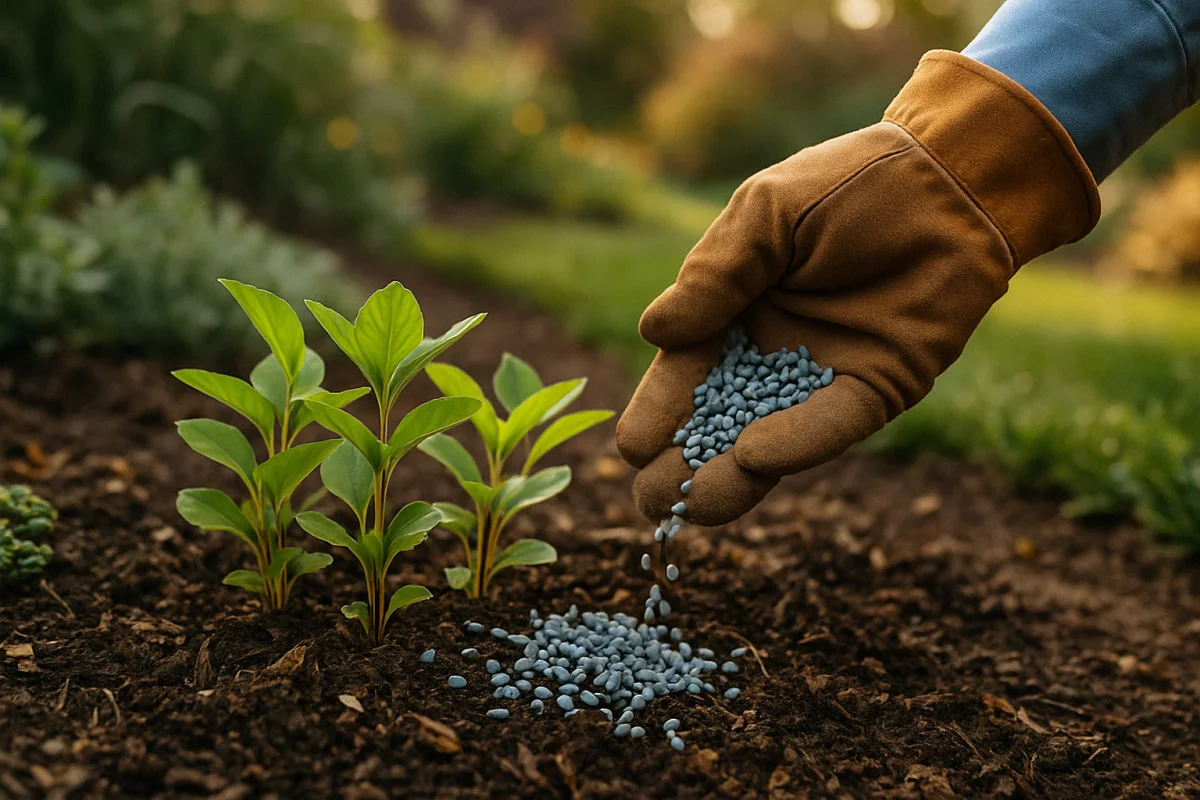
Iron phosphate is the active ingredient in Sluggo, Escar-Go, Slug Magic, and most OMRI-listed slug bait products. The mechanism is simple: slugs eat the bait, the iron interferes with their calcium metabolism, they stop feeding within hours, and they die in 3 to 6 days, usually retreating underground first so you do not see decomposing bodies on the soil surface. The remaining pellets break down into iron and phosphate, both naturally occurring soil nutrients at the concentrations involved.
The wildlife safety profile is well documented. The Xerces Society’s home pollinator guidance places iron phosphate baits in the category of acceptable interventions when integrated pest management calls for more than habitat manipulation. Birds, frogs, and pets that ingest the pellets directly do not show the acute toxicity of metaldehyde, and secondary poisoning from eating treated slugs has not been demonstrated at field application rates.
Application that actually works on native seedlings looks like this:
- Scatter pellets at 1 teaspoon per square yard around the dripline of each cluster of new plugs, not directly on the crown. Slugs will travel to the bait; you do not need to bury the seedlings in pellets.
- Apply in the late afternoon when slugs are about to become active. Bait applied at sunrise gets a full day of UV degradation before any slug encounters it.
- Reapply 7 to 10 days later. The first application kills the active adult population; the second catches the next cohort that hatched from eggs laid before the first treatment.
- Stop applying once you see less than 1 fresh feeding hole per leaf in a week. The goal is not eradication, it is reducing pressure low enough that your seedlings can establish roots.
- Never apply within 24 hours of a thunderstorm forecast. Heavy rain washes the pellets into runoff and wastes the application.
Cost runs about $15 for a 1-pound bag that treats roughly 200 square feet, twice. For most suburban native conversion projects that is one season’s worth. Compared to the price of replacing chewed-up plugs from a regional nursery, the math is straightforward, and a native garden built on a budget cannot afford repeated plug losses to overnight slug pressure.
Physical Barriers That Outlast the Bait
Bait is a knockdown tool; barriers are the structural fix. Slugs hate rough, abrasive, or copper-touching surfaces because of how their soft foot interacts with the texture. Three barrier strategies have proven themselves in long-running native gardens.
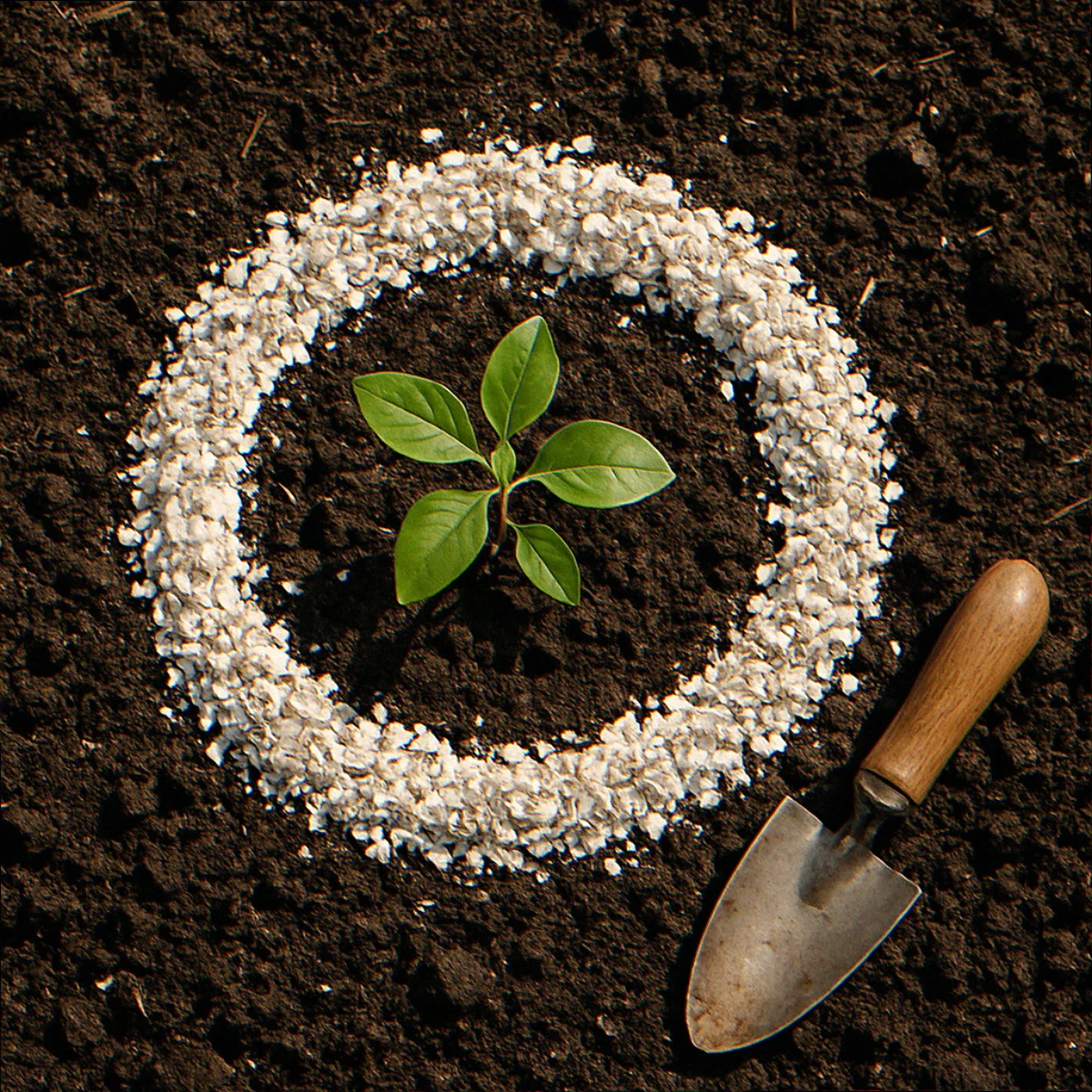
Crushed oyster shell, sold cheaply at feed stores as poultry grit, makes a 2-inch ring around individual plugs that slugs strongly avoid crossing. It doubles as a slow calcium amendment for the soil. Refresh after heavy rain washes it flat. Coarse builder’s sand works similarly but is less effective once wet, because the grains pack down into a smooth surface.
Copper tape applied around the rim of nursery pots, raised beds, or even individual cold frames creates a low-voltage galvanic reaction with slug slime that the slugs find unpleasant enough to turn back. Tape needs to be wide enough (at least three-quarter inch) and must be kept clean of dirt and leaf debris that would let slugs cross over the top. A small container garden of native pollinator plants ringed in copper tape can stay essentially slug-free for entire summers.
Mulch type matters more than gardeners usually realize. Shredded hardwood mulch creates the cool damp interface that slugs love. Composted leaf mulch is better but still slug-friendly when fresh. The mulches slugs actively dislike are pine straw (long needles, scratchy), pea gravel (sharp edges), and well-aged coffee chaff if you can source it from a local roaster. None of these are appropriate for every native species; woodland plants need the moisture retention of leaf mulch, but for sun-loving prairie plugs in their first year, a 2-inch ring of pea gravel under a leaf-mulch outer layer combines slug deterrence with the moisture profile prairie species expect.
One overlooked barrier is timing your overhead watering. Slugs feed at peak intensity in the first 4 hours after sundown on moist soil. If you finish all watering by 2 or 3 p.m. on a sunny day, the top half-inch of soil dries out by dusk and slugs encounter a much less hospitable surface. This single timing change reduces feeding pressure by a noticeable margin without any product application at all.
Build a Slug Predator Crew in Your Yard
Long-term slug control in a native garden looks less like an intervention and more like a working food web. Ground beetles, rove beetles, firefly larvae, toads, garter snakes, opossums, raccoons, ducks, and several song sparrows all eat slugs or their eggs. A yard set up to host these animals has fundamentally lower slug pressure year over year.
Ground beetles are the workhorses. A single adult Carabid eats dozens of slug eggs per night during the spring laying period. They need three things to colonize a yard: undisturbed soil for overwintering (no rototilling), permanent ground cover or leaf litter for daytime shelter, and absence of broad-spectrum insecticides. Once they establish, slug egg pressure drops measurably within two seasons. This is the same logic that drove the recommendation to handle Japanese beetles without broad-spectrum sprays: every spray that knocks out a pest also knocks out the predators that were keeping the next pest in check.
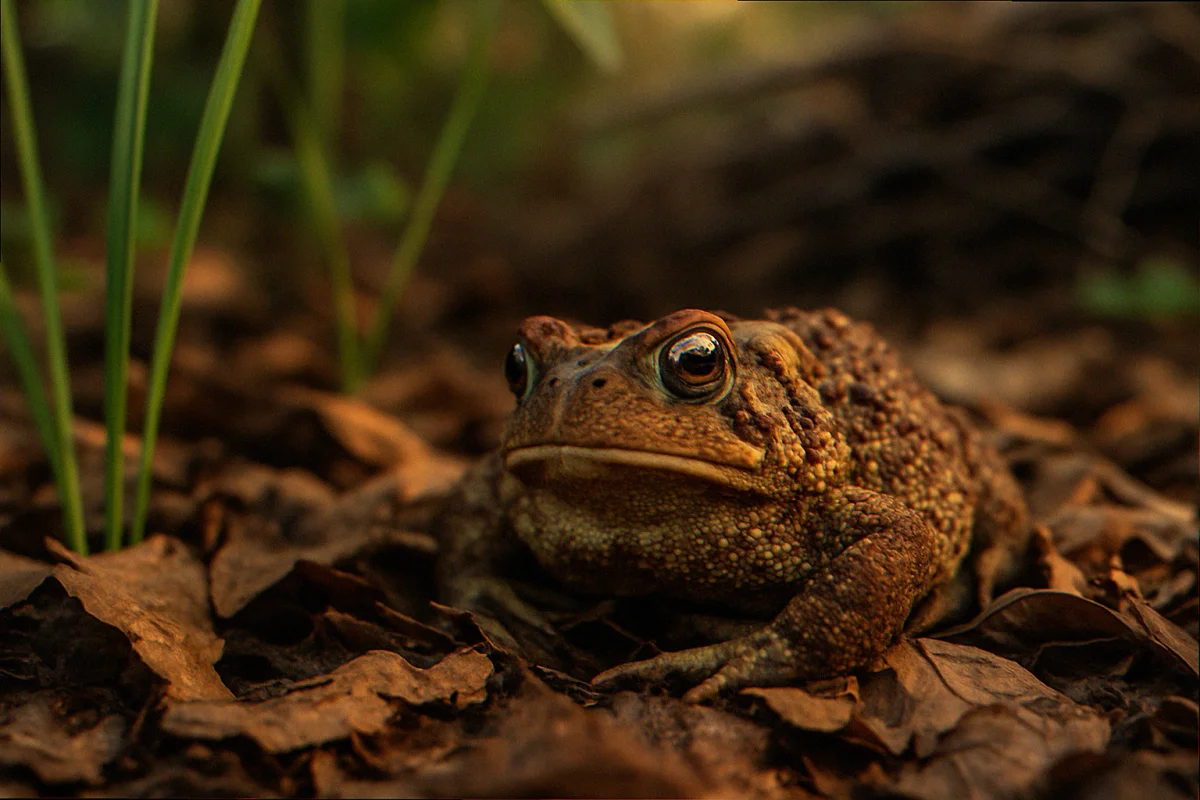
Toads and garter snakes need cool damp shelter close to the planting beds. A brush pile in a back corner is the cheapest and most effective shelter you can build. A flipped-over clay pot with a chip knocked out of the rim makes a toad house. A shallow water dish at ground level (refreshed every few days, no deeper than an inch so it does not become a mosquito vector) keeps a resident toad in residence through dry stretches.
Firefly larvae are the unexpected ally. They are voracious predators of slugs and snails in their pre-adult stage. Encouraging fireflies (which means leaving leaf litter undisturbed in fall, avoiding outdoor lighting near garden beds, and keeping at least one patch of long grass or unmown native sedge) pays off in slug control as a side effect. There is a longer guide on attracting fireflies to your yard that covers the habitat conditions in detail.
| Method | Wildlife safety | Speed | Cost (200 sq ft, 1 season) |
|---|---|---|---|
| Iron phosphate bait | Safe for birds, pets, beneficial insects at label rate | Slugs stop feeding within hours, die in 3-6 days | ~$15 |
| Metaldehyde bait | Toxic to dogs, cats, hedgehogs, songbirds (primary and secondary poisoning) | Slugs die within hours | ~$10 (do not recommend) |
| Beer traps | Drowns beneficial ground beetles and rove beetles | 1-3 nights to fill | $5-10/season |
| Crushed oyster shell ring | Fully safe; amends soil with calcium | Barrier from day 1 | ~$12/bag, 4 seasons |
| Copper tape on beds/pots | Fully safe | Barrier from day 1 | ~$18, lasts 3+ seasons |
| Build predator habitat | Net positive for biodiversity | 2-3 seasons to mature | Effectively free |
Will Your HOA or Neighbors Notice That You Stopped Spraying?
This is the question nobody mentions but everyone with a tidy block thinks about. The honest answer is that the visible signs of a wildlife-managed slug strategy (a small brush pile in a back corner, a shallow water dish in a bed, slightly more leaf litter under shrubs, copper tape around your raised bed rim) sit at the low end of what a typical neighbor will notice or comment on. The chewed-up seedlings in week one are far more visible than any of the management changes.
If you live in a deed-restricted community, the framing that works is “I am managing pests using methods recommended by the local university extension service.” That language puts the conversation in the same register as professional landscapers and removes the perception that you are doing something fringe. If you have already received an HOA letter about the look of your native garden, the slug-management piece is a small addition that does not change the overall regulatory exposure. The bigger structural defense is intentional edges, defined pathways, and a tidy front-yard buffer; those signals communicate intentionality regardless of what is happening in the back beds.
One subtle social benefit: explaining to a neighbor that you stopped using metaldehyde because it kills the songbirds the neighborhood enjoys often shifts the conversation. Most people did not know metaldehyde was an option much less an issue, and they appreciate the practical safety information without it feeling like a sermon. Keep the framing pragmatic (“the wildlife-safer version works just as well”) rather than ideological.
Measure Your Win: What a Slug-Resilient Garden Looks Like
By the end of the first season of doing this properly, the metrics worth tracking are not slug body counts. They are: percentage of new plugs that survived to fall (target above 85%), number of feeding holes per leaf in late summer (target below 1 per leaf for established second-year plants), and presence indicators of slug predators (toad sightings, firefly displays in June, ground beetles visible when you move a piece of bark or mulch).
A more practical sign: by year two, you can usually stop applying iron phosphate bait entirely. The predator community has caught up with the slug population, the established plants are tougher tissue that slugs skip, and the surface barriers around individual plugs are no longer necessary because the plants outgrew vulnerability. Year-one effort builds year-three resilience. The garden that needs ongoing chemical intervention is, almost by definition, missing some part of the food-web architecture that does the work for free.
This is the long return on a native conversion: the protection you build into the system replaces the protection you used to buy in a bag. The same logic governs aphid management on milkweed and mosquito control that does not poison bats and birds; the wildlife-safe answer takes a season longer to prove itself, then quietly outperforms.
FAQ
Can I use iron phosphate slug bait around vegetable plants and herbs my family eats?
Yes. Iron phosphate baits are OMRI-listed for organic production and are approved for use around food crops with no preharvest interval. The pellets break down into iron and phosphate compounds that occur naturally in soil. Apply around the base of plants, not on harvested leaves, and rinse produce normally before eating.
How long does iron phosphate bait take to kill slugs compared to metaldehyde?
Iron phosphate causes slugs to stop feeding within hours of ingestion, and they die over 3 to 6 days, usually retreating underground. Metaldehyde kills within hours but leaves visible dead slugs on the soil surface. The slower kill from iron phosphate is functionally identical for plant protection because feeding stops almost immediately either way.
Does coffee ground mulch actually repel slugs?
Field results are mixed. Caffeine in concentrated solution does affect slugs, but the residual caffeine in used coffee grounds is too dilute to reliably repel a hungry slug. Coffee grounds work mildly as a texture barrier when applied as a 1-inch ring, but they pack down when wet and lose effectiveness within a few days. Crushed oyster shell or pea gravel is a more durable barrier.
Will iron phosphate bait kill earthworms in my soil?
No. Earthworms do not consume slug bait pellets, and iron phosphate at label application rates does not produce soil iron concentrations that affect earthworm populations. Multiple extension studies have looked for this effect and not found it.
What time of year should I start putting out slug bait in a native garden?
Apply when soil temperatures sustain above 50°F overnight and you see fresh feeding holes on new seedling growth. In most of the upper Midwest and Northeast, this falls between mid-May and early June. Apply a second round 7 to 10 days later to catch the next hatch cohort. After two well-timed applications, predator activity and tougher established tissue usually handle the rest of the season without further bait.
Want More Wildlife Garden Tips?
Join 5,000+ nature lovers getting our weekly tips on creating wildlife-friendly gardens.
No spam, unsubscribe anytime. Privacy Policy
Emma Harrington
Emma Harrington is a wildlife habitat researcher and content editor with a passion for backyard conservation. She has spent over a decade translating ecological science into practical tips anyone can follow — from selecting native plants to building wildlife-friendly habitats. Her work focuses on helping homeowners transform ordinary yards into thriving ecosystems for bees, butterflies, hummingbirds, and other beneficial wildlife.