
Learning how to keep chipmunks out of garden spaces is one of those spring chores that sneaks up on you. One morning you walk out with your coffee, ready to admire the tulips you planted last October, and instead you find shallow holes dotting the mulch, bulb scales scattered across the soil, and a suspicious little tunnel running under the patio stones. If that scene feels painfully familiar, you are definitely not alone.
Chipmunks are adorable. Nobody is arguing otherwise. But those striped cheek-stuffers can wreak genuine havoc on a garden, burrowing under foundations, pulling up fresh transplants, stripping strawberries before they ripen, and turning your carefully planted bulb bed into an all-you-can-eat buffet. The good news is you do not have to choose between a beautiful garden and being humane. There are proven, research-backed methods that work without harming the animals, and most of them are things you can install in a single weekend.
In this guide, we will walk through seven humane, science-supported methods to protect your garden from chipmunk damage. We will cover the fencing specs that actually keep them out (many store-bought options do not), which plants chipmunks genuinely avoid, why ultrasonic devices are a waste of money despite aggressive marketing, and how to layer your defenses so you are not stuck reapplying repellent every other day. Grab your coffee, settle in, and let us get your garden back.
FREE: Wildlife Garden Starter Guide
Get our 12-page PDF with the 25 best plants for pollinators, simple habitat tips, and a printable checklist — all 100% free.
No spam. Read our Privacy Policy.Why Chipmunks Are Such a Problem (and Why They Keep Coming Back)
Before we get into the methods, it helps to understand what you are actually dealing with. Eastern chipmunks (Tamias striatus) are small ground squirrels that live in elaborate underground burrow systems, sometimes stretching 30 feet or more with multiple chambers for sleeping, food storage, and waste. They are solitary and territorial, which means if you clear one chipmunk from an area, another will often move in within 2 to 3 weeks unless the habitat itself changes. Audubon’s natural history notes on chipmunks are a good background read if you want the longer biology picture.
They are also relentless hoarders. A single chipmunk can stuff its cheek pouches with the equivalent of its own body weight in seeds, nuts, and bulbs in one trip. When you see holes appearing overnight near your hostas or under the bird feeder, you are looking at a very efficient little creature doing exactly what evolution designed it to do. Understanding this changes how you approach control. You cannot out-stubborn a chipmunk. You have to out-engineer one.
Chipmunks dig straight down and forward when they encounter obstacles, not backward. They are also surprisingly capable climbers on rough surfaces but struggle with smooth ones. They have excellent hearing in frequencies humans cannot perceive, which is why so many gadgets claim to repel them (and why most of those claims fall apart under real testing). Keep these traits in mind as we go through each method, because every recommendation below exists for a specific behavioral reason.
Method 1: Install Proper Hardware Cloth Fencing (The Gold Standard)
If you only do one thing on this list, make it a real fence. Not chicken wire. Not plastic garden netting. Not the flimsy green roll from the dollar store. Chipmunks will chew through, squeeze under, or climb right over all of those. What actually works is hardware cloth, and the specifications matter more than most gardeners realize.
Look for galvanized-after-welding or vinyl-coated hardware cloth in 19 to 23 gauge. The galvanization method matters because cloth that is welded first and galvanized afterward has a protective coating over the joints, which is where rust normally starts. Vinyl-coated versions last even longer in wet climates but cost more. Either way, skip anything labeled “galvanized-before-welding,” which is usually the cheaper option you will find at big-box stores.
Mesh size is where most people go wrong. You want 1/4 inch mesh, not 1/2 inch. Half-inch mesh lets baby chipmunks walk right through, and since mothers often nest near reliable food sources, that means you have just built a nursery with convenient access. Quarter-inch hardware cloth keeps out even the smallest juveniles.
“The single most common mistake I see homeowners make is buying hardware cloth that is the wrong gauge or mesh size. A fence built with 1/2 inch mesh is essentially decorative against chipmunks. Spend the extra money on 1/4 inch, galvanized-after-welding, and you will install it once instead of three times.”, Cooperative Extension wildlife specialist
Here is the installation method that actually stops them. Dig a trench 6 to 12 inches deep around the perimeter of the area you want to protect. Bend the bottom 12 to 18 inches of your hardware cloth outward at a 90-degree angle to form an L-shape footer, with the foot pointing away from the garden. Chipmunks dig straight down and forward, not backward, so when they hit that horizontal barrier, they give up and look for easier food elsewhere. Above ground, your fence should stand 2.5 to 3 feet tall.
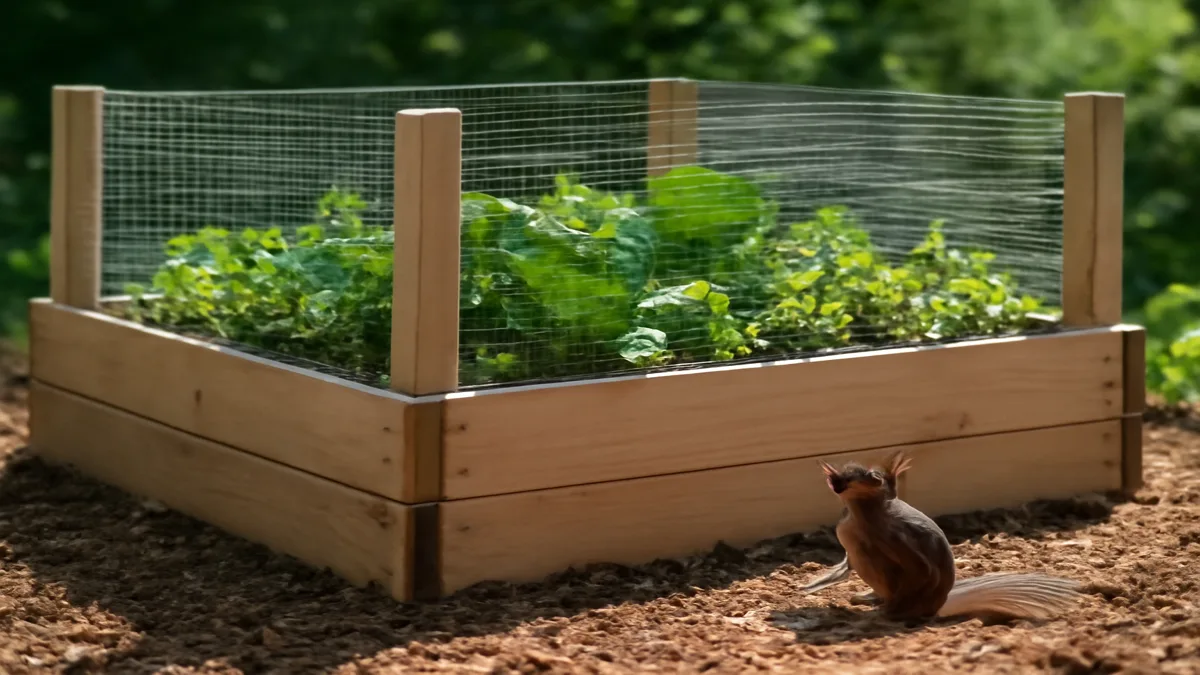
Finally, top the fence with a 12-inch strip of smooth metal flashing angled slightly outward. The wobble when they try to climb deters them from going over the top. For raised beds and smaller garden plots, a complete enclosure with a hardware cloth roof is even more effective and lets you walk away without worry. Yes, it looks a little like a fortress. Yes, it works.
Method 2: Plant Things Chipmunks Genuinely Hate
Smart planting is one of the most overlooked tools for humane deterrence. Chipmunks have strong preferences, and they will avoid certain plants either because the bulbs are toxic to them or because the foliage and roots taste and smell awful. Used as a border or interplanted through vulnerable beds, these plants create a natural barrier.
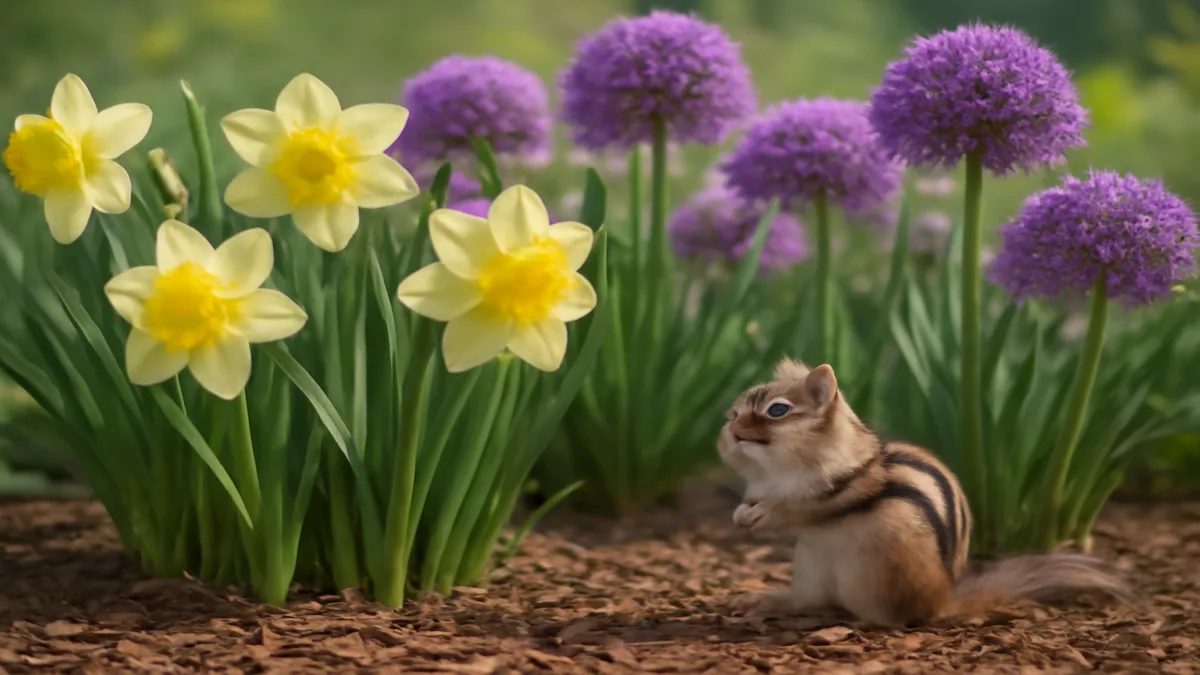
The top performers are daffodils, alliums (which includes ornamental onion, garlic, chives, and leeks), marigolds, and culinary garlic. Daffodils are especially powerful because every part of the plant, including the bulb, contains lycorine, a compound that is toxic to most rodents. Plant them along the edges of your bulb beds and you create a chemical barrier chipmunks will not cross.
- Daffodils (Narcissus), Toxic bulbs, no protection needed, reliable deterrent for surrounding plants
- Alliums, Strong onion smell repels chipmunks and many other rodents
- Marigolds, Pungent foliage; plant as annual borders around vegetable beds
- Garlic, Both the growing plant and scattered cloves provide deterrent effect
- Fritillaria (Crown Imperial), Skunky scent offends rodents; dramatic statement plant
- Hyacinth, Contains oxalic acid in the bulbs; mildly toxic
For bulbs that chipmunks adore (tulips, crocuses, and lily bulbs top the list), plant them inside wire bulb cages made from the same quarter-inch hardware cloth we discussed above. Assemble a small open-topped box, drop your bulbs in, cover with soil, and the shoots grow up through the top while the bulbs stay safe below. Daffodils, as mentioned, do not need cages because they are toxic and chipmunks will not touch them.
If you love flowers that bring wildlife to your yard, you can still have a gorgeous garden while deterring chipmunks. Many of the best flowers for hummingbirds like salvia, bee balm, and agastache are also unpalatable to chipmunks. The same is true of most of the pollinator-friendly plants you can find at any garden center, which means you can build a bee and butterfly garden that doubles as chipmunk deterrence. It is one of those rare win-win situations in gardening.
Method 3: Remove the Food and Shelter Chipmunks Depend On
You can install the best fence in the world, but if your yard is serving a buffet and providing luxury accommodations, chipmunks will keep showing up next door and finding ways in. Habitat modification is the unglamorous but essential foundation of any serious chipmunk strategy.
Start with the bird feeder, which is almost always the number-one chipmunk magnet in suburban yards. Switch to feeders with seed catchers, use sunflower hearts instead of whole seeds (less mess), or move feeders well away from garden areas. Clean up fallen seed daily during peak season. If you feed suet or peanuts, consider stopping during spring and summer when chipmunks are most active.
Next, look at your landscape features. Chipmunks love stone walls, wood piles, dense shrubs with low-hanging branches, and gaps under sheds and decks. You do not have to rip everything out, but you can make targeted improvements. Seal gaps under structures with hardware cloth. Move wood piles away from the garden and elevate them on racks. Trim back ground-hugging shrubs so you can see underneath. Clean up brush piles and old leaf litter from garden edges. (If you actually want a wildlife brush pile on the property, build it well away from the garden using the placement rules in our guide on how to build a brush pile for wildlife.)
| Attractant | Why Chipmunks Love It | Fix |
|---|---|---|
| Bird feeders | Spilled seed is easy high-calorie food | Catch trays, relocate feeders, stop summer feeding |
| Stone walls | Gaps make perfect burrow entrances | Fill voids with mortar or hardware cloth |
| Wood piles | Shelter and nesting material | Elevate on racks, relocate 30+ feet from garden |
| Fallen fruit | High-sugar food source | Daily cleanup during fruit season |
| Dense ground cover | Protected travel corridors | Trim back, expose bare soil along borders |
| Under-deck spaces | Dry, protected burrow sites | Skirt with buried hardware cloth |
| Compost piles | Food scraps and warmth | Use enclosed tumbler-style bins |
| Pet food bowls | Reliable protein source | Feed pets indoors, remove bowls after meals |
Method 4: Use Repellents (But Understand Their Limits)
Repellents have a real place in a layered chipmunk strategy, but gardeners often expect too much from them and get discouraged when they seem to stop working. Here is the honest truth: every scent-based repellent loses effectiveness over time, and rain washes them away almost completely. They are a supplement, not a solution.
That said, when used correctly, repellents can make a meaningful difference. The categories that show the best results in university extension testing are predator urine (fox or coyote), capsaicin-based sprays, castor oil formulations, and garlic-mint concentrates. The commercial brands vary in quality, but the active ingredients matter more than the label.
- Choose granular for perimeters, liquid for foliage. Granular repellents form a scent barrier at the edge of your garden; liquid sprays protect specific plants.
- Reapply every 5 to 7 days during dry weather. Do not wait until you see damage. Put a reminder in your phone.
- Reapply immediately after any significant rain. Even a quarter-inch rainfall washes most products down into the soil where they do no good.
- Rotate between two or three different products. Chipmunks can habituate to a single scent within 2 to 3 weeks.
- Never apply edible crop repellents to leaves you plan to eat. Read the label carefully; some capsaicin products are food-safe, others are not.
- Combine with physical deterrents. Repellents work best as a secondary layer on top of good fencing.
Homemade options work too if you prefer to avoid commercial products. A mix of cayenne pepper, garlic powder, and water sprayed around garden borders is cheap and reasonably effective, though even more rain-vulnerable than commercial formulas. Used coffee grounds scattered in planting beds are pleasant for the soil and mildly off-putting to chipmunks, though on their own they will not stop determined visitors.
Method 5: Skip the Ultrasonic Devices (Here Is Why)
Walk into any garden center in spring and you will see shelves of ultrasonic rodent repellers promising to clear your yard of chipmunks, mice, voles, and squirrels with the flip of a switch. They plug into an outdoor outlet or run on solar panels and emit high-frequency sound humans cannot hear. The marketing is incredibly confident. The evidence is not.
Peer-reviewed research from multiple universities has consistently shown that ultrasonic devices either do not work at all or show effects so short-lived and inconsistent they are not worth the money. Rodents habituate to the sound within a few days. The devices also do not penetrate walls, dense foliage, or soil, which means the chipmunk in your burrow system is not hearing anything useful anyway. The USDA Animal and Plant Health Inspection Service and most state wildlife agencies have explicitly declined to recommend these devices.
I know this is frustrating to hear, especially if you have already bought one. Here is the practical takeaway: do not base your chipmunk strategy around ultrasonics. If you already own one, leave it running (it is not hurting anything), but put your real budget into fencing, habitat modification, and proven repellents. The money you save on not buying more ultrasonic devices can fund a proper hardware cloth installation, which will actually solve the problem.
Method 6: Modify the Soil Surface to Discourage Digging
Chipmunks prefer to dig in loose, soft soil. They also avoid surfaces that hurt their feet or make their digging work frustrating. You can take advantage of both preferences with simple surface modifications that look great, improve your soil structure, and quietly deter digging at the same time.
Sharp-edged crushed gravel worked into the top few inches of soil around vulnerable plants is surprisingly effective. The same goes for turkey grit, crushed oyster shell, and certain sharp mulches. You can also top-dress bulb plantings with a 2-inch layer of gravel before adding regular mulch. When a chipmunk starts digging and hits the gravel layer, the discomfort usually sends it looking for an easier spot.
For raised beds and container gardens, lay hardware cloth across the bottom before filling with soil. This blocks chipmunks from tunneling up into the bed from below, which is one of their favorite strategies with raised beds placed directly on soil. The same technique works for new in-ground bulb plantings: dig the bed, line the bottom and sides with hardware cloth, backfill with your bulbs and soil, and the planting is protected from the first day.
Living mulches of dense groundcover can also help if you choose species chipmunks dislike. Creeping thyme, oregano, and ornamental alliums make beautiful groundcovers that chipmunks tend to avoid. Just keep in mind that if your groundcover gets too thick, it becomes cover for chipmunks rather than a deterrent. Trim it back from garden edges so you maintain a visible, exposed border strip at least 12 inches wide.
Method 7: Understand Why Trapping Is Usually Not the Answer
When nothing else seems to be working, many gardeners think about live trapping and relocating chipmunks. It feels humane. It feels decisive. Unfortunately, it is usually neither, and in most states it is also illegal.
Live trapping and relocation is prohibited in most U.S. states without specific permits from state wildlife agencies. The reasons are ecological and ethical. Relocated chipmunks face extremely high mortality, often over 90 percent within 4 to 6 weeks, because they do not know the new territory, cannot find food caches, and get killed by resident chipmunks defending established burrows. You are not saving the animal; you are giving it a drawn-out death somewhere you do not have to see it.
There are also practical problems. Removing one chipmunk creates a vacant territory that attracts another chipmunk within 2 to 4 weeks. If your yard has good food and shelter, you will be on an endless trapping treadmill. The habitat modifications and fencing described in this article solve the problem at the root and scale much better.
If you have a genuine emergency, like a chipmunk colony undermining a structural foundation, contact a licensed wildlife control professional and your state wildlife agency. They can advise on legal options in your specific state and often have better tools than a homeowner can buy. The eXtension Wildlife Damage Management resource maintained by cooperative extension services nationwide is an excellent place to start if you want to read official guidance for your state.
Building a Complete Garden Defense Strategy
The gardeners who successfully keep chipmunks out long-term almost always use a layered approach rather than relying on any single method. Think of it like home security: you lock the doors, install motion lights, trim shrubs away from windows, and maybe add a camera. No one layer is perfect, but together they make your property a harder target than the neighbors’ and the problem moves along.
Start with habitat modification and hardware cloth fencing as your foundation, because those are the only two interventions that address the root causes. Add deterrent plants along borders and throughout the garden. Use repellents as a flexible supplement, reapplied on schedule. Modify soil surfaces in high-value areas. Keep expectations realistic about ultrasonic devices and trapping. Over a full growing season, this combination reduces chipmunk damage to almost nothing in most gardens.
Chipmunks are not the only garden visitors you might be managing. If you also deal with larger rodents, our guide on how to keep squirrels out of garden spaces covers very similar principles scaled up for bigger climbers. For herbivores, our advice on how to keep rabbits out of garden beds pairs beautifully with chipmunk-proof fencing since both animals respond to similar physical barriers when installed correctly.
Seasonal Timing Matters More Than You Think
One last strategic note before we wrap up: chipmunk pressure is not constant through the year, and your defenses should flex with the seasons. Peak activity runs from early spring through midsummer, with a second pulse in early fall as chipmunks stockpile for winter. Damage is highest when vulnerable plants align with peak activity, which is why spring bulbs and summer strawberries get hit so hard.
Install fencing in late winter or very early spring before the ground thaws fully, so you are ready when the chipmunks emerge. Plant your deterrent species the previous fall so they are established when you need them. Stock up on repellent before spring rush, because garden centers sometimes run out during peak season. Build your bulb cages during the slow summer months so fall planting goes smoothly.
The goal is to have your defenses in place before the problem starts, not to scramble after you see the first holes. Gardens that are defended preemptively suffer almost no chipmunk damage, while gardens defended reactively tend to stay one step behind all season long.
Final Thoughts and a Quick Favor
Chipmunks are not the enemy. They are a natural part of a healthy backyard ecosystem, and many gardeners enjoy watching them (from a distance, preferably in someone else’s yard). The bigger picture is the one you build when you connect the dots between yards, which is exactly what our walkthrough on how to create a wildlife corridor in your yard covers in detail. The goal is not eradication; it is coexistence with clear boundaries. Your garden is your space. Their burrow is theirs. A well-installed hardware cloth fence, the right plant choices, a clean habitat, and a few well-timed repellent applications draw that line clearly and humanely.
If this guide helped you figure out your chipmunk situation, please share it with a gardening friend who is probably fighting the same battle right now. Pin it for reference next spring. Drop a comment below with what has worked in your yard, or the method that surprised you most. Gardeners helping gardeners is how we all get better at this, and your experience might be exactly what someone else needs to finally get their tulips back.
FAQ
What smell do chipmunks hate the most?
Chipmunks strongly dislike the smell of predator urine (fox and coyote), peppermint oil, garlic, and strong alliums like ornamental onion. Of these, predator urine tends to be the most effective in research testing because it triggers an instinctive fear response rather than just mild irritation. However, all scent-based repellents lose strength over time and wash away in rain, so they need regular reapplication to keep working.
Do mothballs keep chipmunks out of the garden?
No, and you should never use mothballs outdoors. Mothballs contain naphthalene or paradichlorobenzene, which are toxic pesticides regulated for indoor use in sealed containers only. Using them in gardens is illegal under EPA label law, poisons soil and groundwater, and endangers children, pets, and wildlife. They are also not particularly effective against chipmunks. Stick to approved repellents specifically labeled for outdoor rodent control.
How deep do I need to bury a chipmunk fence?
Bury your hardware cloth fence at least 6 to 12 inches deep, then bend the bottom 12 to 18 inches outward at a 90-degree angle to form an L-shaped footer. Chipmunks dig straight down and forward, not backward, so when they hit that horizontal barrier they give up rather than continuing to dig outward. This L-footer technique is dramatically more effective than a simple vertical buried fence of the same depth.
Will a cat keep chipmunks away?
Outdoor cats do sometimes hunt chipmunks, but they are not a reliable control method and they create significant ecological problems. Free-roaming cats kill an estimated 2.4 billion native birds and over 12 billion small mammals annually in the United States, including many non-target species you want in your garden, according to the U.S. Fish and Wildlife Service summary on threats to birds from cats. For humane, effective chipmunk control, rely on fencing, habitat modification, and deterrent plants rather than predator pets. Your garden and local wildlife will both be healthier.
Are chipmunks actually bad for gardens, or just annoying?
Chipmunks cause real damage, not just cosmetic issues. They eat bulbs, seeds, and seedlings, strip ripening fruit, and their burrow systems can undermine patios, retaining walls, and foundations when populations grow. That said, they also eat insect pests and help disperse seeds, so a small number of chipmunks is not necessarily a problem. The goal is managing their access to your high-value plantings, not eliminating them from the landscape entirely.
Want More Wildlife Garden Tips?
Join 5,000+ nature lovers getting our weekly tips on creating wildlife-friendly gardens.
No spam, unsubscribe anytime. Privacy Policy
Emma Harrington
Emma Harrington is a wildlife habitat researcher and content editor with a passion for backyard conservation. She has spent over a decade translating ecological science into practical tips anyone can follow — from selecting native plants to building wildlife-friendly habitats. Her work focuses on helping homeowners transform ordinary yards into thriving ecosystems for bees, butterflies, hummingbirds, and other beneficial wildlife.